

Matching-adjusted indirect comparison of zanubrutinib and real-world chemotherapy, rituximab and chemoimmunotherapy in relapsed or refractory marginal zone lymphoma
Abstract
Aim: Traditional management of relapsed or refractory (R/R) marginal zone lymphoma (MZL) comprises chemotherapy, rituximab or rituximab-based chemoimmunotherapy (CIT). Zanubrutinib, a Bruton tyrosine kinase inhibitor, has shown high overall response rates and durable responses across MZL subtypes in two Phase II, single-arm trials. As no head-to-head randomized study exists, an unanchored matching-adjusted indirect comparison was performed to estimate the relative efficacy of zanubrutinib versus traditional agents. Materials & methods: Pooled patient-level data for 86 evaluable patients from zanubrutinib trials were compared with aggregate-level data from 90 patients treated with chemotherapy, rituximab or CIT in the Haematological Malignancy Research Network registry. Logistic propensity score models were used to match the populations for key characteristics. Progression-free survival (PFS) and overall survival (OS) associated with each treatment were estimated from Cox models. Since patients receiving chemotherapy generally have less favorable outcomes, a sensitivity analysis comparing zanubrutinib against CIT or rituximab alone was performed. Leave-one-out analyses were conducted where one covariate at a time was omitted to explore its impact on the results. Results: The effective sample size for zanubrutinib after matching was 38. Compared with chemotherapy, rituximab or CIT, zanubrutinib significantly increased PFS (hazard ratio [HR]: 0.30 [95% CI: 0.15–0.63]; p = 0.001) and OS (HR: 0.23 [95% CI: 0.10–0.50]; p < 0.001) in patients with R/R MZL. Findings were consistent across leave-one-out analyses and when excluding patients who received chemotherapy only. Conclusion: Modeling using clinical trial and real-world data from an unanchored matching-adjusted indirect comparison suggests that zanubrutinib was associated with longer PFS and OS compared with chemotherapy, rituximab or CIT in patients with R/R MZL.
Plain language summary: Comparing zanubrutinib with commonly used treatments in patients with relapsed or refractory marginal zone lymphoma
What is this article about?
Marginal zone lymphoma is a type of blood cancer. Some patients experience relapsed or refractory disease, meaning the cancer returns or does not respond to treatment. Common treatments include chemotherapy, rituximab or chemoimmunotherapy (CIT). Zanubrutinib is a targeted therapy that has shown promising results in clinical trials, but it has not been directly compared with these traditional treatments in a randomized study.
What were the results?
Researchers compared data from clinical trials of zanubrutinib with real-world data from patients with marginal zone lymphoma who received chemotherapy, rituximab or CIT. Statistical methods were used to balance baseline patient differences between treatment groups. After matching, patients treated with zanubrutinib had longer survival than patients treated with traditional therapies. Results remained consistent in additional analyses comparing to rituximab or CIT alone.
What do the results mean?
These findings suggest that zanubrutinib may provide better outcomes than traditional treatment approaches for patients with relapsed or refractory marginal zone lymphoma. This study also shows how clinical trial and real-world data can be combined to help compare treatments when head-to-head studies are not available.
Marginal zone lymphoma (MZL) is a mature B-cell lymphoid neoplasm that originates from lymphocytes, particularly memory B cells, typically found in the marginal zone of secondary lymphoid follicles [1,2]. MZL represents approximately 5–15% of all non-Hodgkin lymphoma cases and comprises three distinct subtypes: extranodal MZL of mucosa-associated lymphoid tissue, nodal MZL and splenic MZL [3,4]. These subtypes present diverse responses to initial treatment strategies as each is characterized by specific diagnostic criteria, unique genetic features and clinical behaviors [3,5,6].
Due to the incurable nature of MZL, patients with asymptomatic disease and low tumor burden may not require immediate treatment and can be actively monitored following initial diagnosis to track progression of disease and need for therapy [7]. Conversely, symptomatic patients, or those with high tumor burden, require treatment and may typically undergo treatment ranging from radiation therapy, chemotherapy, rituximab or rituximab-based chemoimmunotherapy (CIT), depending on disease stage, age and subtype. Advanced-stage disease is considered incurable and is often characterized by a continuing pattern of relapse and remission [8]. Upon relapse, the relevance of disease subtype for decision making diminishes and the emphasis shifts to slowing disease progression rather than treating underlying causes [9].
The current treatment approach to managing relapsed or refractory (R/R) MZL generally involves the use of regimens known to be effective in other indolent non-Hodgkin lymphomas [5,10–12]; most often, MZL is included in trials together with follicular lymphoma or evaluated in broad B-cell malignancy studies. MZL-specific data are further constrained due to its indolent nature and the necessity to plan for extended patient follow-up in trials, which can pose challenges to trial design and funding.
Zanubrutinib is an orally administered, next-generation Bruton tyrosine kinase (BTK) inhibitor; it is characterized by its potent and highly specific mode of action, which overcomes the limitations of first-generation BTK inhibitors. Zanubrutinib was approved in the EU and the USA based on two clinical trials in patients with R/R MZL – MAGNOLIA (NCT03846427) and BGB-3111-AU-003 (NCT02343120) – where it demonstrated a favorable pharmacological and pharmacokinetic profile. In both studies, promising response rates were reported and zanubrutinib was generally well tolerated [13,14].
Although BTK inhibitors have expanded treatment options for patients with R/R MZL, chemotherapy, rituximab monotherapy and CIT remain clinically relevant comparators. These therapies continue to be used in routine practice, particularly where access to BTK inhibitors varies, and where treatment selection is influenced by patient comorbidities, prior therapy, tolerability considerations, reimbursement or clinician preference. Real-world treatment patterns remain heterogeneous, and comparative evidence against these established approaches is still clinically informative. Given the rarity and heterogeneity of MZL subtypes, the indolent disease course, and the relatively small patient population available for enrolment, adequately powered comparative trials are difficult to conduct and require prolonged follow-up to capture progression and survival outcomes.
In the absence of randomized controlled trials directly comparing zanubrutinib to the historical standard of care, the current study aimed to estimate the comparative efficacy of the former versus the latter via an unanchored indirect treatment comparison using data from the single-arm trials of zanubrutinib and real-world data for standard treatment options such as rituximab, chemotherapy and CIT. Given the limited number of clinical trials investigating repeat CIT or chemotherapy in patients with R/R MZL, a matching-adjusted indirect comparison (MAIC) utilizing real-world evidence from the Haematological Malignancy Research Network (HMRN) registry can be considered as appropriate [15]. To increase comparability of populations, this study optimized the identification of the HMRN registry cohort most aligned with the inclusion and exclusion criteria of the two zanubrutinib trials. By accounting for variations in populations that may affect survival outcomes and evaluating the impact of prognostic factor imbalances using leave-one-out analyses, MAICs can help alleviate concerns about potential confounding due to differences in patient attributes.
Materials & methods
Data sources
For this MAIC, the zanubrutinib population was defined as the pooled efficacy-evaluable R/R MZL population from the contributing trials. This included 66 patients from the Phase II, single-arm MAGNOLIA trial and 20 patients from BGB-3111-AU-003 [14]. BGB-3111-AU-003 was a broader Phase I/II, single-arm trial in patients with B-cell malignancies and only the R/R MZL subset was included in the present analysis [14]. In both zanubrutinib trials, patients must have had documented failure to achieve at least a partial response or documented disease progression after their last systemic treatment and received at least one prior line of treatment. In MAGNOLIA, patients were also required to have received a prior anti-CD20 regimen. Both studies were multicenter with sites across Europe, North America, Asia and Oceania. Median study follow-up was 28.0 months in MAGNOLIA (data on file) and 35.2 months for patients with R/R MZL in BGB-3111-AU-003. Disease progression was assessed by an independent review committee using the Lugano 2014 classification criteria [16]; progression-free survival (PFS) in both trials was defined as the time from treatment initiation to date of disease progression or death, whichever occurred first. Given that patients recruited into the two trials were broadly similar, individual patient-level data from MAGNOLIA and BGB-3111-AU-003 were pooled for the analysis (hereafter referred to as MAGNOLIA-003).
The HMRN registry represents one of the largest registries in Europe with information on lymphomas and other blood disorders from a population-based patient cohort. The HMRN registry is a collaborative venture initiated in 2004 by researchers at the University of York, York, UK and National Health Service clinicians working across 14 hospitals in the UK.
Between 2005 and 2020, the registry collected medical-record data from 2039 patients with newly diagnosed MZL treated with an anti-CD20-based therapy, 155 of whom went on to receive further treatment [17]. For the purposes of the current analysis, the data were restricted to 90 patients most comparable to MAGNOLIA-003 based on the following inclusion criteria: patients who enrolled in the registry from 2014 onwards (to align with the recruitment period of the zanubrutinib trials), had an Eastern Cooperative Oncology Group performance status score between 0 and 2 at time of entry into the registry, received at least one anti-CD20-based therapy, and received further treatment recommended by European Society for Medical Oncology 2020 guidelines after receipt of prior anti-CD20-based therapy. Patient groups were not further separated into individual CIT or chemotherapy treatments due to insufficient sample sizes. The individual treatment regimens received in this final cohort of 90 patients are listed in Supplementary Table 1. The HMRN comparator cohort included patients treated with chemotherapy, rituximab monotherapy or rituximab-based CIT. These regimens were combined into a single comparator group because they represent established real-world treatment approaches used in R/R MZL and because the number of patients receiving each individual regimen was insufficient to support robust regimen-specific MAICs. The combined comparator therefore reflects routine-practice treatment heterogeneity rather than a single uniform intervention. Given the potential for differences in outcomes across comparator regimens, a sensitivity analysis excluding patients who received chemotherapy-only regimens was conducted to evaluate whether results were consistent when the comparator was restricted to rituximab monotherapy or rituximab-based CIT. PFS was defined as time from treatment initiation to date of disease progression or death due to any cause based on medical-record data.
The present study was a secondary analysis of aggregate registry data shared according to data use agreement between HMRN and the sponsor. The pivotal study that was used in this analysis had the required ethical approval and informed consent. Detailed study design and patient eligibility criteria from MAGNOLIA, BGB-3111-AU-003 and the HMRN registry are available in Supplementary Table 2.
Statistical analysis
The approach used for the MAIC was in accordance with guidance published by the National Institute for Health and Care Excellence Decision Support Unit Technical Support Document 18 [18]. Because the zanubrutinib trials were single-arm studies and no common comparator arm was available, an unanchored MAIC was performed. This approach assumes that all clinically relevant prognostic factors and treatment-effect modifiers that differ between the trial and external comparator populations are measured and adequately adjusted for. Individual patient data from MAGNOLIA-003 were weighted such that the mean baseline characteristics of greatest prognostic importance matched those in the HMRN registry. This was achieved using propensity scores estimated from a logistic regression model. Candidate variables for the MAIC model were identified based on clinical expert input, published prognostic relevance or clinical plausibility in R/R MZL, and availability across both the zanubrutinib trial datasets and the HMRN registry. Compared with MAGNOLIA-003, fewer patient characteristics were collected in the registry due to the real-world nature of the dataset. The final matching model included variables that were consistently available across datasets and considered relevant to prognosis or treatment context: number of prior lines of therapy, refractory status to last systemic therapy, progression of disease within 24 months of treatment initiation, age and time since diagnosis. Other clinically relevant variables, including MZL subtype, disease burden, lactate dehydrogenase level, disease stage, bone marrow involvement, extranodal involvement, detailed prior treatment regimen and comorbidities, were unavailable or inconsistently reported across datasets and therefore could not be included in the matching model.
In the MAIC model comparing zanubrutinib versus chemotherapy, rituximab or CIT, five characteristics of prognostic importance were included: number of prior lines of therapy (1, 2, >2), refractory to last prior systemic therapy (yes vs no), progression of disease within 24 months of treatment initiation, mean age (<65 vs ≥65 years) and median time since diagnosis. Weights to balance these characteristics were applied to the individual patient data from MAGNOLIA-003 prior to estimating relative treatment effects. Sensitivity analyses using the leave-one-out method, whereby one covariate was removed from the model at a time, were performed to assess the impact of each covariate on the results. As patients receiving non-rituximab-based chemotherapy have a generally less favorable prognosis compared with a rituximab monotherapy or rituximab-based chemotherapy regimen [17], an additional sensitivity analysis was performed to estimate the comparative efficacy of zanubrutinib versus rituximab only or CIT, whereby patients receiving chemotherapy alone were removed from the HMRN registry cohort.
The degree of overlap in the distribution of covariates between the zanubrutinib population and the comparison population was expressed in terms of the effective sample size (ESS) [18]. A Cox proportional hazards model was applied to weighted zanubrutinib individual patient data and registry data with overall survival (OS) and PFS results expressed as hazard ratios (HRs) with 95% CIs. Assessment of the proportional hazards assumption was performed using log-cumulative hazard plots and Schoenfeld residual tests [19,20]. All analyses were performed using R version 4.0.2 and using the ‘survival’ package to compare time-to-event outcomes.
Results
Study populations
Prior to matching, compared with the HMRN registry cohort, the MAGNOLIA-003 population was younger (mean age 68 vs 73 years), more heavily pretreated (55.8% vs 21.1% with two or more prior lines of therapy), and had a longer time since diagnosis (65.1% vs 50.0% with greater than or equal to median time since diagnosis). MAGNOLIA-003 also had a higher proportion of patients who were refractory to their last systemic therapy (30.1% vs 25.6%) and a lower proportion who had progressed within 24 months of treatment initiation (44.7% vs 51.1%). After applying weights, convergence was achieved using the full set of covariates, resulting in key prognostic characteristics being balanced (Table 1). The sample size of MAGNOLIA-003 was reduced by 56% after matching, resulting in an ESS of 38. The reduced ESS reflects the degree of overlap between the trial and registry populations after matching and should be considered when interpreting the precision of the adjusted estimates. In the sensitivity analysis of MAGNOLIA-003 versus the HMRN registry population receiving rituximab-based therapies (rituximab only or CIT), the ESS increased to 40, a 53% reduction from the sample size of 86 (Supplementary Table 3).
| Characteristic | Zanubrutinib (MAGNOLIA-003) | Rituximab, chemotherapy or CIT (HMRN registry) | ||
|---|---|---|---|---|
| Unweighted, n = 86 | Weighted, ESS = 38 | n = 90 | ||
| Prior therapies, n, % | 1 | 44.2 | 78.9 | 78.9 |
| 2 | 30.2 | 18.9 | 18.9 | |
| >2 | 25.6 | 2.2 | 2.2 | |
| Refractory to last therapy, % | 30.1 | 25.6 | 25.6 | |
| POD24, % | 44.7 | 51.1 | 51.1 | |
| Mean age, years | 68.0 | 73.3 | 73.3 | |
| Time since diagnosis ≥43.4 months, % | 65.1 | 50.0 | 50.0 | |
CIT: Chemoimmunotherapy; ESS: Effective sample size; HMRN: Haematological Malignancy Research Network; POD24: Progression of disease within 24 months of treatment initiation; R/R MZL: Relapsed/refractory marginal zone lymphoma.
Indirect comparisons
In the unadjusted comparison and MAIC, zanubrutinib was associated with significantly increased PFS (unadjusted HR: 0.47 [95% CI: 0.29–0.76]; adjusted HR: 0.30 [95% CI: 0.15–0.63]; Figure 1 & Table 2) and OS (unadjusted HR: 0.34 [95% CI: 0.19–0.61]; adjusted HR: 0.23 [95% CI: 0.10–0.50]; Figure 2 & Table 2) relative to chemotherapy, rituximab and CIT combined. Outcomes were generally consistent across the leave-one-out analyses (Table 2). Results of these analyses suggest that the number of prior lines of therapy had the largest impact on prognosis. In the unadjusted comparison and MAIC for the comparison with therapies containing rituximab, zanubrutinib was associated with significantly increased PFS (unadjusted HR: 0.51 [95% CI: 0.31–0.83]; adjusted HR: 0.28 [95% CI: 0.14–0.57]; Supplementary Figure 1) and OS (unadjusted HR: 0.37 [95% CI: 0.20–0.68]; adjusted HR: 0.23 [95% CI: 0.10–0.49]; Supplementary Figure 2) relative to rituximab or CIT.
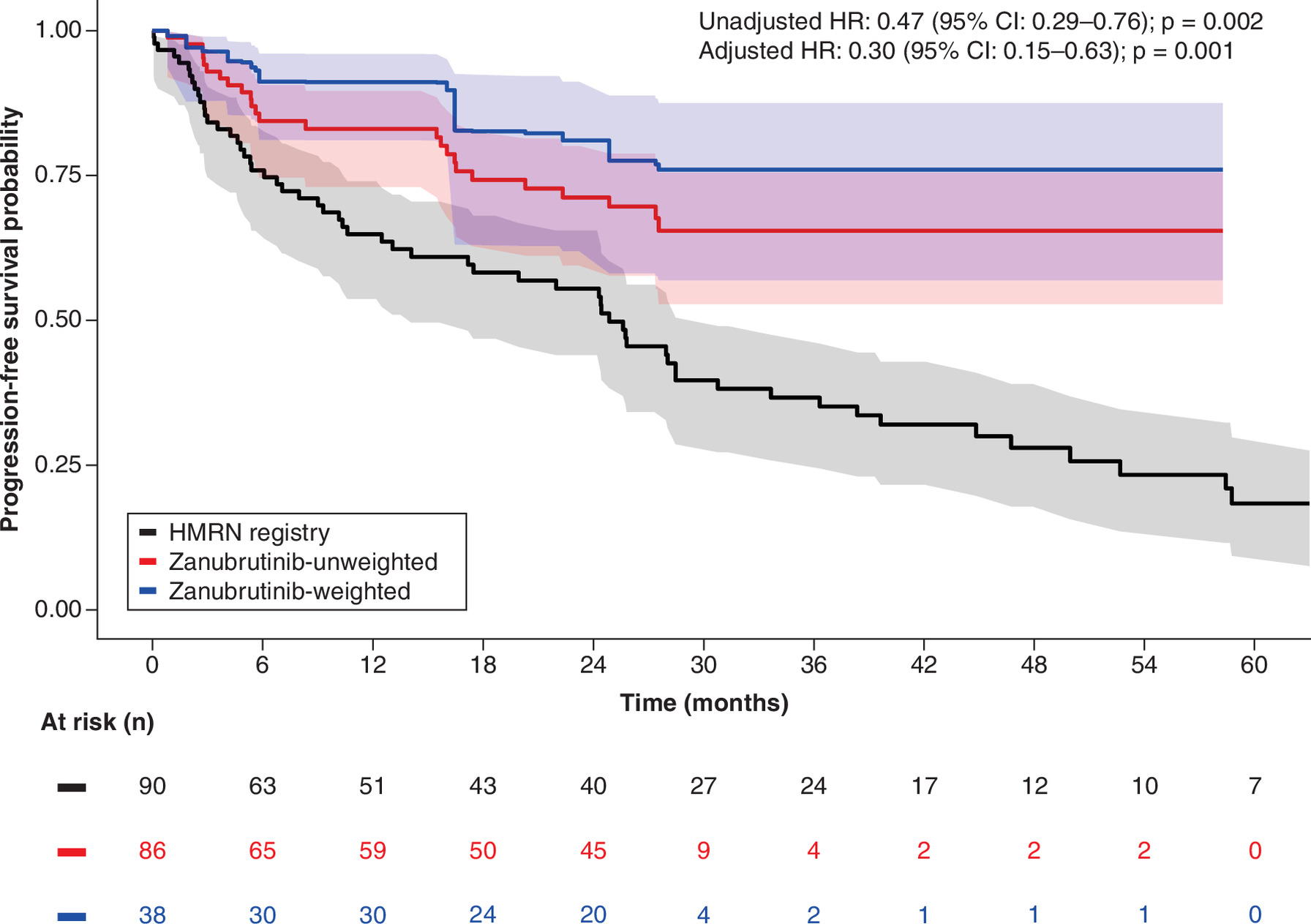
Figure 1. Progression-free survival of zanubrutinib versus chemotherapy, rituximab or chemoimmunotherapy before and after matching adjustment.
Values reported in parentheses are 95% CIs.
HMRN: Haematological Malignancy Research Network; HR: Hazard ratio.
| Covariates in model, n | Covariate removed from model | Zanubrutinib, n/ESS | Zanubrutinib vs rituximab, chemotherapy or CIT | |
|---|---|---|---|---|
| PFS HR (95% CI) | OS HR (95% CI) | |||
| 0 (unadjusted) | NA | 86 | 0.47 (0.29–0.76) p = 0.0019 | 0.34 (0.19–0.61) p = 0.0004 |
| 4 (adjusted) | None | 38 | 0.30 (0.15–0.63) p = 0.0014 | 0.23 (0.10–0.50) p = 0.0002 |
| Leave-one-out analyses | ||||
| 3 | Number of prior lines of therapy | 49 | 0.48 (0.26–0.87) p = 0.0155 | 0.37 (0.19–0.74) p = 0.0048 |
| 3 | Refractory to last therapy | 39 | 0.29 (0.15–0.57) p = 0.0003 | 0.22 (0.10–0.46) p = 0.0001 |
| 3 | Age | 52 | 0.31 (0.16–0.59) p = 0.0003 | 0.20 (0.09–0.43) p < 0.0001 |
| 3 | POD24 | 39 | 0.29 (0.14–0.62) p = 0.0013 | 0.21 (0.09–0.45) p = 0.0001 |
| 3 | Time since diagnosis | 41 | 0.26 (0.14–0.51) p = 0.0001 | 0.24 (0.11–0.53) p = 0.0005 |
CIT: Chemoimmunotherapy; ESS: Effective sample size; HR: Hazard ratio; NA: Not applicable; OS: Overall survival; PFS: Progression-free survival; POD24: Progression of disease within 24 months of treatment initiation; R/R MZL: Relapsed/refractory marginal zone lymphoma.
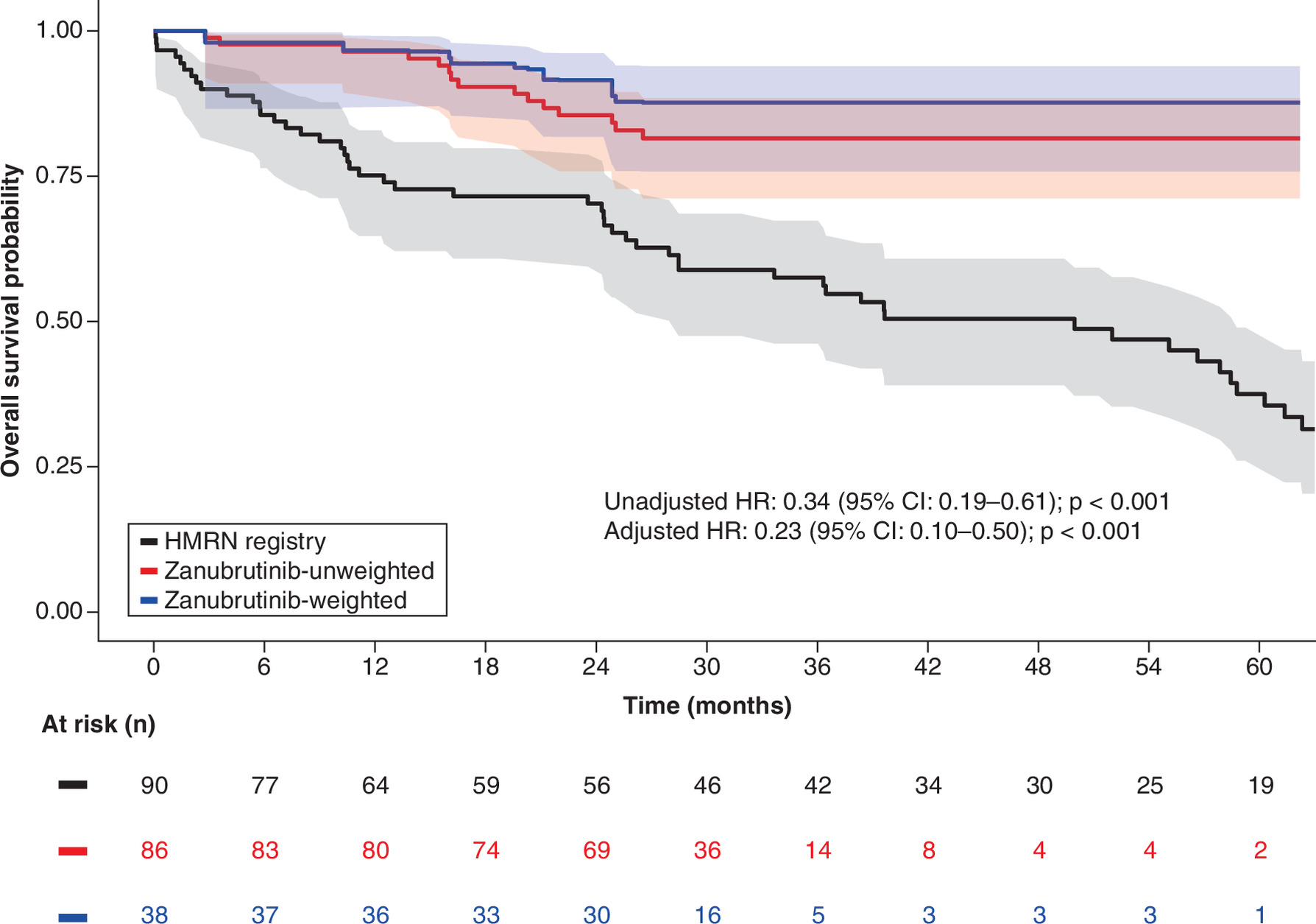
Figure 2. Overall survival of zanubrutinib versus chemotherapy, rituximab or chemoimmunotherapy before and after matching adjustment.
Values reported in parentheses are 95% CI.
HMRN: Haematological Malignancy Research Network; HR: hazard ratio.
Discussion
Using pooled data from the MAGNOLIA and BGB-3111-AU-003 trials, zanubrutinib demonstrated significantly increased PFS and OS compared with chemotherapy, rituximab or CIT in patients with R/R MZL. These findings were consistent across leave-one-out analyses and when excluding patients who received chemotherapy only. The consistency of the results using both clinical and real-world data supports zanubrutinib as a more efficacious intervention to manage MZL compared with rituximab among patients with R/R disease.
Other trials in R/R MZL support the current study's findings. In the AUGMENT trial, median PFS was reported to be 25.2 months in patients with relapsed MZL treated with rituximab [21], while the CHRONOS-3 trial showed a median PFS of 11.5 months in rituximab-treated patients who had relapsed MZL [22]. Of note, no patients from AUGMENT or CHRONOS-3 were refractory to prior regimens, while 30% of patients in MAGNOLIA-003 were considered refractory. Published MAIC results of MAGNOLIA-003 versus CHRONOS-3 clinical trial data suggested that zanubrutinib improved response and reduced the risk of progression compared with rituximab monotherapy [23]. Additionally, the availability of a larger population dataset with longer follow-up from the HMRN registry allowed the current study to better capture the OS benefit with zanubrutinib intervention, which was a limitation of the study by Thieblemont et al. [23] when performing MAICs with clinical trial data only.
Limitations inherent to all MAICs should be recognized to ensure a balanced interpretation of these results. Comparative analyses of data from non-comparative studies carry the risk of including unknown or unmeasured prognostic factors and treatment-effect modifiers. Although the matching model included clinically important baseline characteristics that were available across datasets, several potentially relevant variables – including MZL subtype, disease burden, laboratory markers, prior treatment regimens, genetic abnormalities, extranodal involvement and comorbidities – were unavailable or could not be consistently balanced. Residual confounding from these unmeasured or unbalanced factors may therefore remain and could influence the estimated comparative treatment effects. The precision of MAIC estimates can be challenged by the degree of patient overlap across matched factors, and this can be observed in the adjusted model, whereby a 56% reduction from the original sample size of 86 patients was observed. This reduction may decrease the precision and stability of the adjusted MAIC estimates and increases uncertainty around the magnitude of the observed treatment effect.
The HMRN comparator cohort also reflected real-world treatment heterogeneity, including chemotherapy, rituximab monotherapy and multiple rituximab-based CIT regimens. Combining these regimens increased the available comparator sample size and reflected treatments used in routine practice for R/R MZL; however, it may also have introduced variability in treatment effectiveness, patient selection, and prognosis. The sensitivity analysis excluding patients receiving chemotherapy only was performed because chemotherapy-only regimens may be associated with less favorable outcomes than rituximab-containing regimens. Results remained consistent when the comparator was restricted to rituximab monotherapy or rituximab-based CIT, suggesting that the observed association was not driven solely by inclusion of patients on a chemotherapy-only regimen. However, heterogeneity among rituximab-containing regimens remained and should be considered when interpreting the estimated comparative treatment effects.
These challenges are partly inherent to evidence generation in a rare lymphoma subtype in which large comparative datasets and randomized head-to-head trials are difficult to obtain. Future analyses incorporating larger clinical trial populations, registry-based cohorts or other real-world evidence sources would help confirm the robustness of these findings. Clinical trial and real-world data also offer distinct insights into disease progression and survival outcomes. The controlled environment of clinical trials results in more homogenous patient populations managed under ideal conditions (e.g., protocol-defined eligibility criteria, treatment administration, monitoring schedules, follow-up procedures), whereas real-world settings reflect broader routine clinical practice and a more diverse patient population within a specific healthcare system. In this analysis, the zanubrutinib data were derived from multinational clinical trials, while the comparator data were derived from a UK-based registry. Differences in regional clinical practice, supportive care, treatment sequencing, access to subsequent therapies, follow-up intensity and outcome assessment may influence PFS and OS and may not be fully captured through baseline covariate adjustment. While combining clinical trial and real-world evidence can enhance the clinical relevance of treatment comparisons when head-to-head trials are unavailable, results should be interpreted within the context of these setting-level differences and the fundamental design differences between compared studies.
No comparison of safety outcomes was performed in MAGNOLIA-003 as well-defined safety end points were not available from the HMRN registry. Zanubrutinib is known to be a well-tolerated treatment in lymphoma. In the MAGNOLIA trial, 26 (38%) patients treated with zanubrutinib experienced serious adverse events that were manageable with temporary interruptions and no recorded treatment-related discontinuation, dose reduction, or fatalities [13]. In the BGB-3111-AU-003 study, one (5%) patient experienced an adverse event that led to discontinuation of zanubrutinib and there were no treatment-related fatalities [14]. These reports of safety outcomes are consistent with published studies of zanubrutinib in B-cell malignancies [24], and are considered more favorable than those for the first-generation BTK inhibitor ibrutinib [25]. The adverse events from zanubrutinib were predominantly mild in nature in MAGNOLIA-003 and were managed with only temporary interruptions in treatment.
Conclusion
By integrating data from clinical trials and real-world settings through an unanchored MAIC, these results suggest that zanubrutinib was associated with an improved PFS and OS compared with chemotherapy, rituximab or CIT for the treatment of patients with R/R MZL. Given the assumptions of the unanchored MAIC approach and the potential for residual confounding, these findings should be interpreted as supportive comparative evidence and warrant confirmation in future prospective comparative studies.
Summary points
•
Marginal zone lymphoma (MZL) is an indolent B-cell lymphoma that may relapse or become refractory after treatment.
•
Traditional treatment options for relapsed or refractory (R/R) MZL include chemotherapy, rituximab and rituximab-based chemoimmunotherapy (CIT).
•
Zanubrutinib is a Bruton tyrosine kinase inhibitor that has shown promising efficacy in patients with R/R MZL.
•
No randomized head-to-head trials comparing zanubrutinib with traditional therapies in R/R MZL are currently available.
•
This study used a matching-adjusted indirect comparison to compare zanubrutinib with real-world chemotherapy, rituximab or CIT.
•
Patient-level data from zanubrutinib clinical trials were compared with real-world registry data from patients with R/R MZL.
•
Statistical matching methods were used to balance differences in baseline characteristics between treatment groups.
•
Zanubrutinib was associated with significantly longer progression-free survival and overall survival compared with chemotherapy, rituximab or CIT.
•
Results remained consistent across sensitivity and leave-one-out analyses, supporting the robustness of the findings.
Author contributions
All authors contributed to the conception and/or design of this study. K Wang performed statistical analyses. All authors contributed to interpretation of data. The first manuscript draft was written by I Zhang, C Smare and S Keeping. All authors contributed to the critical and editorial review of subsequent manuscript drafts. All authors reviewed, revised and approved the final manuscript for submission.
Financial disclosure
Research funding and publication fees were sponsored by BeOne Medicines Ltd (CA, USA).
Competing interests disclosure
R Walewska has received compensation as a speaker and advisory board member for BeOne, Janssen, AstraZeneca and AbbVie; received meeting sponsorship from Janssen and AbbVie; served on the advisory board for SecuraBio; and developed educational materials for Medscape and Limbic. HS Walter has received research funding from BeOne and Pfizer, and serves on the advisory boards for Genmab, AstraZeneca, BeOne and Loxo (Eli Lilly). KM Linton has received research support from AbbVie/Genmab, Roche and BeOne; served as a consultant for AbbVie/Genmab; participated in the Speaker's Bureau for AbbVie/Genmab and Nurix; and is a member of the Scientific Advisory Board for AbbVie/Genmab, Roche, BeOne and BMS. L Mohseninejad, S Mardiguian and K Wang are employees of BeOne and own stock in BeOne Medicines Ltd. C Smare, I Zhang and S Keeping are employees of Precision AQ, a consulting firm, which received funding from BeOne Medicines Ltd to support this work. The authors have no other competing interests or relevant affiliations with any organization or entity with the subject matter or materials discussed in the manuscript apart from those disclosed.
Writing disclosure
Editorial assistance was provided by Twist Medical and supported by BeOne Medicines Ltd (CA, USA).
Data availability statement
On request, and subject to certain criteria, conditions and exceptions, BeOne Medicines Ltd will provide access to individual de-identified participant data from BeOne-sponsored global interventional clinical studies conducted for indications that have been approved based on the BeOne data sharing policy or in programs that have been terminated. BeOne shares data only when permitted by applicable data privacy and security laws and regulations, and when it is feasible to do so without compromising the privacy of the study participants and other considerations. Data requests may be submitted to [email protected].
Open access
This work is licensed under the Attribution-NonCommercial-NoDerivatives 4.0 Unported License. To view a copy of this license, visit https://creativecommons.org/licenses/by-nc-nd/4.0/
Supplementary Material
File (supplementary figure 1.eps)
File (supplementary figure 2.eps)
File (supplementary table 1.docx)
File (supplementary table 2.docx)
File (supplementary table 3.docx)
References
Papers of special note have been highlighted as: • of interest; •• of considerable interest
1.
Kahl B, Yang D. Marginal zone lymphomas: management of nodal, splenic, and MALT NHL. Hematology Am. Soc. Hematol. Educ. Program 2008(1), 359–364 (2008).
2.
Weill J-C, Weller S, Reynaud C-A. Human marginal zone B cells. Ann. Rev. Immunol. 27, 267–285 (2009).
3.
Zucca E, Arcaini L, Buske C et al. Marginal zone lymphomas: ESMO Clinical Practice Guidelines for diagnosis, treatment and follow-up. Ann. Oncol. 31(1), 17–29 (2020).
•• Provides comprehensive international guidance on the diagnosis and management of marginal zone lymphoma (MZL) and serves as a key reference for standard treatment approaches in relapsed/refractory disease.
4.
Swerdlow SH, Campo E, Harris NLet al. et al. (Eds). WHO Classification of Tumours of Haematopoietic and Lymphoid Tissues. International Agency for Research on Cancer, France (2017).
5.
Walewska R, Eyre TA, Barrington S et al. Guideline for the diagnosis and management of marginal zone lymphomas: A British Society of Haematology Guideline. Br. J. Haematol. 204(1), 86–107 (2024).
•• Recent UK guideline summarizing evidence-based recommendations for the diagnosis and treatment of MZL, including management considerations for relapsed disease.
6.
Zelenetz AD, Gordon LI, Abramson JS et al. NCCN Guidelines® Insights: B-Cell Lymphomas, Version 6.2023: Featured Updates to the NCCN Guidelines. J. Natl Compr. Canc. Netw. 21(11), 1118–1131 (2023).
•• Summarizes updated NCCN recommendations for B-cell lymphomas and reflects the evolving role of Bruton tyrosine kinase inhibitors, including zanubrutinib, in MZL treatment pathways.
7.
Merli M, Arcaini L. Management of marginal zone lymphomas. Hematology 2022(1), 676–687 (2022).
8.
Zinzani PL. The many faces of marginal zone lymphoma. Hematology Am. Soc. Hematol. Educ. Program 2012(1), 426–432 (2012).
9.
Sindel A, Al-Juhaishi T, Yazbeck V. Marginal zone lymphoma: state-of-the-art treatment. Curr. Treat. Options Oncol. 20, 1–15 (2019).
10.
McNamara C, Montoto S, Eyre TA et al. The investigation and management of follicular lymphoma. Br. J. Haematol. 191(3), 363–381 (2020).
11.
Roberts M, Tripathy D, Martin P. Current treatment options in marginal zone lymphoma. Am. J. Hematology/Oncology 13(5), 28–33 (2017).
12.
Davis TA, Grillo-López AJ, White CA et al. Rituximab anti-CD20 monoclonal antibody therapy in non-Hodgkin's lymphoma: safety and efficacy of re-treatment. J. Clin. Oncol. 18(17), 3135–3143 (2000).
13.
Opat S, Tedeschi A, Linton K et al. The MAGNOLIA trial: zanubrutinib, a next-generation Bruton tyrosine kinase inhibitor, demonstrates safety and efficacy in relapsed/refractory marginal zone lymphoma. Clin. Cancer Res. 27(23), 6323–6332 (2021).
•• Pivotal Phase II trial demonstrating high response rates and durable efficacy of zanubrutinib in patients with relapsed/refractory MZL.
14.
Phillips T, Chan H, Tam CS et al. Zanubrutinib monotherapy in relapsed/refractory indolent non-Hodgkin lymphoma. Blood Adv. 6(11), 3472–3479 (2022).
• Provides additional clinical evidence supporting zanubrutinib efficacy and safety across indolent non-Hodgkin lymphoma subtypes, including MZL.
15.
NICE. Guide to the methods of technology appraisal 2013. The reference case. (2013). (Accessed 24 March 2024). https://www.nice.org.uk/process/pmg9/chapter/the-reference-case
16.
Cheson BD, Fisher RI, Barrington SF et al. Recommendations for initial evaluation, staging, and response assessment of Hodgkin and non-Hodgkin lymphoma: The Lugano Classification. J. Clin. Oncol. 32(27), 3059–3067 (2014).
17.
HMRN. The Clinical management and outcome of marginal zone lymphoma (MZL) with a focus on relapsed/refractory disease: a report from the Haematological Malignancy Research Network 2024. Updated: 24 February 2024. https://hmrn.org/publications/reports
•• Real-world registry analysis describing treatment patterns and outcomes in patients with relapsed/refractory MZL and providing the comparator population for the present study.
18.
Phillippo DM, Ades AE, Dias S et al. NICE DSU Technical Support Document 18: methods for population-adjusted indirect comparisons in submission to NICE. (2016). https://sheffield.ac.uk/nice-dsu/tsds/full-list
19.
Grambsch PM, Therneau TM. Proportional hazards tests and diagnostics based on weighted residuals. Biometrika 81(3), 515–526 (1994).
20.
Therneau TM, Grambsch PM, Fleming TR. Martingale-based residuals for survival models. Biometrika 77(1), 147–160 (1990).
21.
Leonard J, Trneny M, Izutsu K et al; AUGMENT trial investigators. AUGMENT: a Phase III study of lenalidomide plus rituximab versus placebo plus rituximab in relapsed or refractory indolent lymphoma. J. Clin. Oncol. 37(14), 1188–1199 (2019).
22.
Matasar MJ, Capra M, Özcan M et al. Copanlisib plus rituximab versus placebo plus rituximab in patients with relapsed indolent non-Hodgkin lymphoma (CHRONOS-3): a double-blind, randomised, placebo-controlled, Phase III trial. Lancet Oncol. 22(5), 678–689 (2021).
23.
Thieblemont C, Wang K, Keeping S et al. Comparative efficacy of zanubrutinib (ZANU) versus rituximab (RTX) in relapsed marginal zone lymphoma (MZL): matching-adjusted indirect comparison (MAIC). J. Clin. Oncol. 41(Suppl. 16), e19526 (2023).
• Previous matching-adjusted indirect comparison analysis comparing zanubrutinib with rituximab alone, supporting the rationale for broader comparative analyses against real-world standard therapies.
24.
Tam CS, Dimopoulos M, Garcia-Sanz R et al. Pooled safety analysis of zanubrutinib monotherapy in patients with B-cell malignancies. Blood Adv. 6(4), 1296–1308 (2022).
25.
Brown JR, Ghia P, Jurczak W et al. Characterization of zanubrutinib safety and tolerability profile and comparison with ibrutinib safety profile in patients with B-cell malignancies: post-hoc analysis of a large clinical trial safety database. Haematologica 109(7), 2277–2283 (2024).
Information & Authors
Information
Published In
Copyright
© 2026 The authors. This work is licensed under the Attribution-NonCommercial-NoDerivatives 4.0 Unported License
History
Received: 25 June 2026
Accepted: 15 September 2026
Published online: 6 October 2026
Keywords:
Topics
Authors
Metrics & Citations
Metrics
Article Usage
Article usage data only available from February 2023. Historical article usage data, showing the number of article downloads, is available upon request.
Citations
How to Cite
Matching-adjusted indirect comparison of zanubrutinib and real-world chemotherapy, rituximab and chemoimmunotherapy in relapsed or refractory marginal zone lymphoma. (2026) Journal of Comparative Effectiveness Research. DOI: 10.57264/cer-2026-0132
Export citation
Select the citation format you wish to export for this article or chapter.