

Contents:
- What are publication extenders?
- What are the benefits of including publication extenders?
- How do Becaris journals publish publication extenders?
- What types of publication extender do Becaris journals publish?
What are publication extenders?
Publication extenders allow authors to provide a succinct, engaging overview of their article to help readers discover and learn about their research. They are also useful tools to help authors share details of their article with colleagues and peers as well as for dissemination on social media platforms. Publication extenders published in Becaris journals can include graphical abstracts, infographics, videos, podcasts and plain language summaries. Authors can also explain their paper in a ‘Peek Behind the Paper’ interview published on our partner site, The Evidence Base.
What are the benefits of including publication extenders?
Several studies have shown the wide benefits to authors for including publication extenders to increase visibility of and engagement with published content. A study by Huang et al. showed that including an infographic led to increased Altmetric scores and abstract views; Bredbenner and colleagues also demonstrated the value of featuring video abstracts and plain language summaries.
How do Becaris journals publish publication extenders?
All authors are encouraged to consider submitting a publication extender alongside their article. Authors can submit their own publication extenders for publication alongside their article or, where possible, we can provide assistance in creating these. For any queries relating to the creation of this content, please contact Joanne Walker at any stage.
All publication extenders must accurately reflect the original article. To ensure this, all features undergo external and internal peer review alongside the original article and should ideally be submitted with the first draft, even if not in the final version (e.g., a draft/sketch of a graphical abstract). The final version can then be created whilst the draft is being reviewed and finalized based on the reviewers’ feedback.
Publication extenders are published alongside the article online, where they are embedded into the article page, and can be accessed directly on the article page. They are also published on the Becaris Publishing Figshare platform, where each extender is deposited on the platform and assigned its own digital object identifier (DOI). This ensures that extenders are independently citable and discoverable.
Publication extenders are published under the same license terms as supplementary materials. For further details, please refer to the Open Access License Form, available in the Author Form Package here.
Publication extenders can also be added after publication, in which case they will be peer reviewed separately (where possible, by the same reviewers as the manuscript). There is a publication extender processing fee of $500 for all publication extenders that are added post-publication.
Becaris journals, in partnership with Editage, offers professional support for authors who want to include publication extenders with their articles. A team of highly skilled experts proficient in editing, design, and promotion techniques will work on your article and ensure that it is transformed into an attractive visual summary that can help improve the reach, visibility, and impact of your research. To learn more, click here.
What types of publication extender do Becaris journals publish?
Graphical abstracts
Becaris journals encourage the use of graphical abstracts; a concise, visual summary of the main findings of the article, helping readers to quickly understand the findings of the paper and its relevance to them.
Graphical abstracts feature on the article webpage alongside the main abstract. They are also used to promote articles to audiences via social media.
Requirements: please supply as a single image or split panels in one image, ideally using font HELVETICA; size 8pt. Files should be supplied as a .jpg, .pdf or .tif file. Full colour graphical abstracts are encouraged.
Authors seeking professional guidance in creating captivating and precise graphic abstracts that conform to journal artwork standards are encouraged to explore our author services platform. Click here to find out more.
Infographics
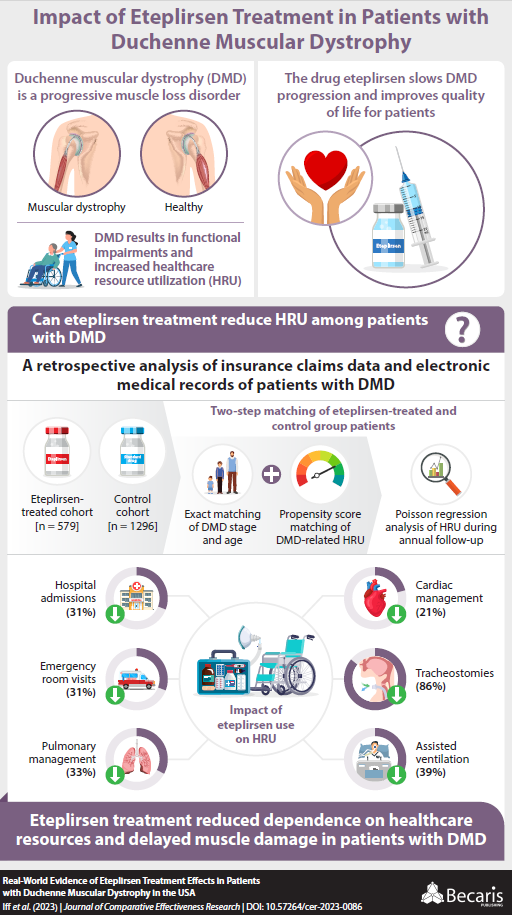
Infographics provide a more detailed, graphical, at-a-glance overview of the information summary of a published article that should encourage readers to go on and read the full article. An published example is available here. Infographics appear online alongside the article and are often used by the Journal Editor when sharing details of the article via social media.
Requirements: Infographics should include:
- Title of the article and authors
- DOI and link to the original article
- Brief details of the aim, methods, findings and conclusion
- Icons and other graphics instead of long sentences
Infographics should be in full colour and can be vertical or horizontal; there are no limits on size. Please supply as a PDF and Illustrator file (if possible). The font size should be minimum 9pt (clearly legible).
Some useful tips to create an infographic can be found here:
Authors seeking professional guidance in crafting a compelling visual infographic to enhance their research findings are encouraged to explore our author services platform. Click here to find out more.
Videos & Podcasts
Video Snapshot
What is a Video Snapshot?
A Video Snapshot is a short, narrated “explainer” video (typically 2–5 minutes) that walks viewers through the key takeaways of an article in a clear, accessible format. Created with the support of AI technology, it offers a distinctive, shareable way to present an article, making it easier to discover and quicker to understand. We are pleased to partner with LCP Health Analytics to deliver this service using their cutting-edge AI tool, Transpose™, designed to enhance content discoverability and accessibility. Authors retain full editorial control of the video, with the opportunity to review and approve both the script and the final video to ensure accuracy and alignment with the published article. Video Snapshots are available for all article types.
Key benefits include:
A published example can be viewed here: /doi/10.57264/cer-2024-0213
Video Snapshot fee
The fee for the Video Snapshot is $3,000 (plus VAT where applicable). This fee is payable only if the article is accepted following the peer-review process.
Video Snapshot copyright
Copyright of Video Snapshots created using Transpose™ is retained by LCP Health Analytics.
Other types of video & podcast
Videos and podcasts help authors summarize their paper for readers and appear online alongside the article. We publish a wide range of videos including ‘talking head’ videos abstracts, with the author discussing their work, animated videos explaining a concept within the article and more.
Examples are available here:
Requirements: For both videos and podcasts, authors should first submit a transcript/storyboard prior to recording, which will be peer reviewed with the article. For podcasts, detailed talking points instead of a verbatim script can be submitted. Authors may provide the final video/podcast for peer review, but authors should take into consideration these may need to be re-recorded depending on the comments provided by the peer reviewers.
Ideally videos should be no longer than 8 minutes in length, but longer videos will be considered. There are no limits on the length of podcasts.
Final videos/podcasts should be provided in .mp4 or .wmv format and should not exceed 25 GB. Authors can also host their peer-reviewed video on YouTube and provide us with the embed code. Likewise, we can also link to a podcast hosted on any well-known podcast streaming platform.
Authors seeking professional guidance in creating an engaging video to summarize their research and boost visibility and readership are encouraged to explore our author services platform. Click here to find out more.
Plain Language Summaries
For more information, see 'Plain Language Summaries'.
Authors seeking professional guidance in crafting a compelling and concise research summary to boost awareness and promote their work, are encouraged to explore our author services platform. Click here to find out more.
Peek Behind the Paper
Becaris journals are partnered with The Evidence Base, a free-to-access online hub with an audience of ~8000, uniting the diverse stakeholders involved in real-world evidence, HEOR and decision making. The site offers easy access to breaking news, peer-reviewed articles and multimedia content.
One of the features on the site are ‘Peek Behind the Paper’ interviews that provide authors with the opportunity to discuss their latest article via a Q&A format. The interview allows authors to summarize their work and discuss its implications, enabling a wider audience to understand the content. The interview can be undertaken by email or via phone and appears on The Evidence Base homepage, is shared via social media and highlighted in the site’s weekly newsletter.
Authors that are interested in Peek Behind the Paper feature should let the Journal Editor know at or following acceptance of their article.
To view previous examples, visit: /topic/pbt-paper