
Contents:
- Editorial policies
- Editorial contacts
- Submission, review & publication process
- At-a-glance article formatting checklist
- Article types
- Article sections
- More information on authorship
- More information for articles presenting original research
- Negative data
- Methodology details
- Patient engagement
- Reporting of sex & gender information
- Reporting of race & ethnicity information
- Data & materials transparency & sharing
- Data deposition
- Clinical trial & real-world evidence study registration
- Secondary outcomes, exploratory & post hoc analyses
- Observational studies
- References
- People-centered language
- Publication extenders
- Plain language summaries
- Open access
- Required forms
- Author services
Editorial policies
Full editorial policies for Becaris journals can be viewed on the 'Editorial Policies' page.
Editorial contacts
The Journal Editors for Becaris Publishing can be contacted here:
- Journal of Comparative Effectiveness Research: Laura Dormer
- Journal of Patient Centricity: Sankeetha Nadarajah
Submission, review & publication process
Submissions are treated as confidential, and the Editor will not share information about manuscripts with anyone other than the appropriate authors and reviewers. The journal will not make use of artificial intelligence (AI)-assisted technologies in any way that may violate this confidentiality.
Pre-submission enquiries
Becaris journals welcome pre-submission enquiries, which can help authors assess whether their manuscript is a good fit for the journal before formal submission. To be most effective, enquiries should include a brief summary of the manuscript (e.g., research question, study design, key outcomes, etc.), together with an explanation of the article’s relevance to the journal’s aims and scope. Based on this information, the editorial team can advise whether the topic is in scope and likely to be of interest to the journal’s readership. However, please note that a positive response to a pre-submission enquiry does not guarantee that a manuscript will be sent for external peer review or accepted for publication; this decision can only be made following receipt and full editorial assessment of the complete manuscript.
Where a pre-submission enquiry has been made, there is no need to include a full cover letter during submission unless desired by the authors. Please feel free to simply include a note to indicate this is the case in the 'Author notes to editor' box during the submission process.
Format-free submission
Becaris journals operate a format-free submission policy. At the point of initial submission, manuscripts do not need to be fully formatted to the journal’s house style. For example, precise word counts, reference formatting and layout will not be assessed at this stage.
However, to support an efficient and timely peer-review process, authors are encouraged to include all core sections required for the article type being submitted where possible (please see the indicated core sections in the 'At-a-glance article formatting checklist' below). This includes any mandatory elements that form part of the scientific or interpretive assessment of the manuscript (e.g., a Plain Language Summary abstract where required). Omission of core sections may necessitate additional rounds of review once they are supplied, which can delay editorial decisions.
Full formatting to journal style will be requested only after a manuscript has been returned for revisions following external peer review.
Becaris journals only consider submissions written in English.
Submission site & required files
Submissions can be made via the links below:
At a minimum, you will require the following items to complete submission (for further information on what to include in these files, see ‘Article sections’ below):
- Title page file
- Containing the article title, author list, author affiliations (including organization name, city, state and country) and any disclosure information, ethics statement and data sharing/transparency statement, where relevant
- Please also see further information below regarding patient authorship
- Saved as ‘Title.docx’ or ‘Title.doc’
- Containing the article title, author list, author affiliations (including organization name, city, state and country) and any disclosure information, ethics statement and data sharing/transparency statement, where relevant
- Anonymized manuscript file
- Containing the body of the article with any identifying information (author names, affiliations, disclosures, etc.) removed
- Page and line numbered, if possible
- Any figure/table/supplementary materials files
- Cover letter
- Can be entered as free text in the 'Author notes to editor' box during the submission process, or uploaded as a separate document on the 'Upload Supplementary File(s)' page (if the latter, please simply include a note to indicate this is the case in the 'Author notes to editor' box)
- Should include:
- A brief explanation of why the work is relevant to the journal and its audience
- Confirmation that the manuscript is original, has not been published elsewhere, and is not under consideration by another journal
- Disclosure of the use of any AI-assisted technologies in the work, where relevant (see 'Artificial intelligence-assisted technologies' below)
- Suggestions for potential peer reviewers (optional)
- Where a submission has already been discussed with the Journal Editor (i.e., a pre-submission enquiry), there is no need to include a full cover letter during submission unless desired by the authors. Please feel free to simply include a note to indicate this is the case in the 'Author notes to editor'.
- Author form package (for more information, see 'Required forms' below)
- Can be uploaded on the 'Upload Supplementary File(s)' page of the submission site, or emailed to the Editor directly
Submitting agents
Any third party (such as a medical writer or assistant) can submit via the submission site as a Submitting Agent. Please select this option during the submission process, and add the authors (including corresponding author) in the ‘Co-author’ section. The corresponding author should also be clearly indicated on the Title page file.
Internal quality review & external peer review
Once the manuscript has been submitted, it will undergo initial internal quality review by the Journal Editor (e.g., ensuring the submission is within-scope, is novel, has been clearly written, meets journal quality criteria, and includes any relevant disclosures, ethical approval information and data sharing/transparency statements). Articles deemed suitable for consideration will then proceed to external, double-anonymized peer review (dependent on article type). This usually takes around 4–6 weeks, although a Rapid Review option is also available.
Becaris Publishing partners with Cactus to provide peer review services. At the editor's discretion, articles may be shared with Cactus for confidential peer review, leveraging their network of experienced reviewers and advanced AI-assisted technologies. Any AI tools used in the process are run in privacy protecting mode, whereby neither the input nor the output is used to train the underlying model. All manuscript decisions remain with the Journal Editor.
Please note, double-anonymized peer review cannot be guaranteed where a paper has been previously posted to a preprint server.
Rapid Review & Rapid Publication options
Becaris journals have the following optional services:
- Rapid Review: Accelerating the entire process from submission through peer review to publication, the Rapid Review option provides prioritized peer review and expedited online publication (subject to acceptance following peer review and article revisions). This service provides prioritized peer review, followed by an agreed period for subsequent author revisions (usually 2 weeks). For accepted articles, online publication will take place within 3 weeks from acceptance of the revised manuscript, subject to turnaround of proofs by the author within 3 working days. Rapid Review can be selected by authors during article submission. Please note that the Rapid Review option is not available for Letters (Letter to the Editor or Letter in Reply).
- Rapid Publication: Following article acceptance, the Rapid Publication option provides online publication within 3 weeks of acceptance (subject to receiving a signed Rapid Publication Agreement form on the day of acceptance, and turnaround of proofs by the author within 3 working days). Rapid Publication can be selected by authors once an article has been accepted.
Pricing information for these optional services can be found on our Journal Information pages for the Journal of Comparative Effectiveness Research here, and the Journal of Patient Centricity here.
Becaris journals use a third-party payment system, managed by SciPris. Authors will receive an email at acceptance detailing how to pay their fees. Authors should follow the instructions in the email and on SciPris, or forward the email to the individual responsible for payment of the fee to complete.
Revision
After peer review is complete, a further period of time is allowed for any revisions (suggested by the reviewers/Editor) to be made.
When re-submitting a revised manuscript, authors are asked to provide:
- The revised article with tracked changes (Please note: while the track changes in the document will not appear in the PDF automatically generated by the submission system, the Editor reviews the original file directly, so all tracked changes will be taken into account)
- A clean copy of the revised article
- An author response letter, detailing how each of the reviewer and editorial points have been responded to
- Any additional files (figures, tables, supplementary materials, etc.)
Production
Accepted manuscripts will then be sent to the journal production team. This will involve typesetting, copyediting, proof-reading, and re-drawing of any graphics. Authors will receive proofs of their article for approval and sign off.
Please note that once the author receives the copy of their article for approval, our production department will need to hear from them within a tight deadline to ensure the issue is published on schedule. If you believe you may be away and unable to check the galley proofs at any point, please let the Journal Editor know.
Production process
- Manuscript is accepted by Journal Editor, and sent to the Production team
- Manuscript is typeset, figures/tables formatted, and house styles applied
- Manuscript is imported into the PXE Digital Publishing Platform (see: https://powerxeditor.aptaracorp.com/), and copyedited
- Author receives an email with information on how to access their article on the PXE platform (please be vigilant in case the email goes into your junk email folder). They are asked to:
- Answer any queries highlighted by the Production Editor
- Conduct any final minor edits to the text that they wish to make
- Sign the article back over to the Production Editor
- The Production Editor will look over their edits, add in any figures that are pending and return the proof to the author for approval
- This process may be repeated, until all the Production Editor’s queries have been addressed
- The Production Editor then creates a final PDF of the article from the PXE platform, and conducts any final edits to the layout etc. – at this point the article content and layout is finalized
- XML files of the final article are produced
- Article is published online, in the journal’s ‘Latest articles’ section
- Once all the articles for a journal issue are complete, they are compiled into the final journal issue
At-a-glance article formatting checklist
Further details can be found in ‘Article sections’ below.
| Article type | Word count* | Abstract | Plain language summary abstract | Shareable abstract | Keywords | Summary Points | Reference limit | Reference annotations | Figures & Tables permitted** |
| Conference Report | 1500 | Yes† | × | × | Yes† | × | 20 | × | × |
| Editorial | 1500 | × | × | × | Yes† | × | 20 | × | × |
| Letters | 1500 | × | × | × | Yes† | × | 20 | × | × |
| Meta-Analysis | 4000–8000 | Yes (structured)† | Yes† | Yes (optional) | Yes† | Yes | ~80 | Yes | Yes |
| Methodology | 4000–8000 | Yes (structured)† | Yes† | Yes (optional) | Yes† | Yes | ~40–80 | Yes | Yes |
| Perspective | 4000–8000 | Yes† | Yes (optional) | Yes (optional) | Yes† | Yes | ~80 | Yes | Yes |
| Protocol | 4000–8000 | Yes (structured)† | Yes† | Yes (optional) | Yes† | Yes | ~40–80 | Yes | Yes |
| Research Article | 5000–8000 | Yes (structured)† | Yes† | Yes (optional) | Yes† | Yes | ~80 | Yes | Yes |
| Review | 4000–8000 | Yes† | Yes (optional) | Yes (optional) | Yes† | Yes | ~80 | Yes | Yes |
| Short Report | 2000–4000 | Yes (structured)† | Yes† | Yes (optional) | Yes† | Yes | ~20–40 | Yes | Yes |
| Systematic Review | 4000–8000 | Yes (structured)† | Yes (optional) | Yes (optional) | Yes† | Yes | ~80 | Yes | Yes |
| White Paper | 1500–3000 | Yes† | Yes (optional) | Yes (optional) | Yes† | Yes | ~20–40 | Yes | Yes |
|
*Word count excludes abstract, summary points, references/reference annotations and figure/table legends. **For article types where Figures & Tables are permitted, Becaris journals have no strict limit on the number included (we prefer these to be included as needed to represent the data appropriately); however, in some cases where there is a high number of figures/tables (generally >8 Figures/Tables combined) the Editor may recommend that some are included as supplementary materials. †Core sections authors are encouraged to include in their 1st draft submission to support an efficient and timely peer-review process. |
|||||||||
Article types
Descriptions and requirements for the different article types considered are included below. Authors are also recommended to consult relevant industry guidelines for more detailed advice, including:
- International Committee of Medical Journal Editors (ICMJE):
- Good Publication Practice (GPP) Guidelines for Company-Sponsored Biomedical Research: 2022 Update
- CONSORT (clinical trials)
- SPIRIT (clinical trial protocols)
- CHEERS (economic evaluations)
- STROBE (observational studies)
- TARGET (observational studies emulating a target trial)
- HARPER (real-world evidence study protocols)
- PRISMA (systematic reviews and meta-analyses)
- PRISMA-P (systematic review and meta-analysis protocols)
- RECORD (studies conducted using routinely-collected health data, e.g., health administrative data, electronic medical record data, primary care surveillance data, and disease registries)
- Other relevant reporting guidelines available by study type via The Equator Network
Conference Report
Conference Reports should summarize the key work/discussions presented at a recent relevant meeting or event, and ideally submitted within 1–2 months of the meeting being held. While it may not be possible for full coverage of the conference, authors can focus on discussions that are most topical and of relevance to the publication. Conference Reports undergo internal editorial review.
Editorial
Editorials are short articles that provide an insight into, or snapshot of issues of topical importance to the journal’s audience. The intention is that the article should offer an expert perspective on a topic of recent interest. Invited Editorial articles undergo internal review; unsolicited Editorials will undergo external peer review at the Editor’s discretion.
Letter
Readers may submit Letters to the Editor, commenting on an article published in the journal. The author(s) of an article that is the subject of a submitted Letter to the Editor are given 28 days to provide a Letter in Reply to be published alongside the Letter to the Editor.
Inclusion of Letters in the journal is at the discretion of the Editor, and they may undergo external review. Please note that the Rapid Review option is not available for Letters (Letter to the Editor or Letter in Reply).
Meta-Analysis
Meta-Analysis articles use statistical methods to combine data from multiple, systematically selected studies. Meta-Analysis articles undergo external peer review.
Meta-Analysis articles should be conducted following the recommendations of PRISMA (http://www.prisma-statement.org/). A completed PRISMA checklist should be provided as Supplementary Materials on submission of the article.
Methodology
Methodology articles provide an overview of a novel study method, test or procedure. The method described may be either completely novel or may offer a demonstrable improvement on an existing method. The significance and potential implications of the developments must be explicit. Methodology articles undergo external peer review.
Perspective
Perspectives have the same basic structure and length as Review articles; however, they should be more speculative and forward-looking. They offer the author the opportunity to present criticism, address controversy or provide a personal angle on a significant issue. Perspective articles undergo external peer review; however, reviewers will be briefed to review these articles for quality and relevance of argument only. They will not necessarily be expected to agree with the author’s position.
Protocol
Protocols are a full description of a research study, including its intended design and implementation methods. Becaris journals welcome the submission of study design protocols to foster transparency and trust in real-world evidence – see this Editorial for more information.
Protocol articles should be presented based on relevant industry guidelines (e.g., HARPER, SPIRIT, PRISMA-P).
Research Article
Research Articles present novel work that makes a significant impact within the scope of the journal, and which represents an important advancement in knowledge or understanding. Research articles undergo external peer review.
Review
Narrative Reviews highlight recent significant advances in research, ongoing challenges and unmet needs. See also ‘Systematic Review’ below. Review articles undergo external peer review.
Short Report
Short Reports are a type of original research article that present promising improvements or developments on existing areas of research, build on a previously published study, document partial research results from an ongoing study, or discuss results from studies limited in scope. Short Reports undergo external peer review.
Systematic Review
Systematic Reviews systematically gather, appraise and synthesize evidence around a specific question. Systematic Review articles undergo external peer review.
Systematic Reviews should be conducted following the recommendations of PRISMA (http://www.prisma-statement.org/). A completed PRISMA checklist should be provided as Supplementary Materials on submission of the article.
White Paper
White Papers are authoritative reports that bring together the opinions and current thinking of leading stakeholders or recognized experts. They may offer recommendations, outline proposals or aim to set out current consensuses on an issue. The issue under discussion should be of immediate importance to the advancement of the field. White Papers may undergo external peer review and will be accepted at the discretion of the Editor.
Plain Language Summary of Publication
Plain Language Summary of Publication articles (PLSPs) are standalone articles with their own unique DOI and are thus fully citable. They are plain language, visually enriched articles that provide a summary of a key publication (or group of related publications) from a Becaris journal or elsewhere. For more information, see 'Plain Language Summaries'.
Article sections
Authors should consult the ‘At-a-glance article formatting checklist’ to determine which sections are required for their submission. If not otherwise stated, a section is required for all article types.
Title page file
- Article title
- Up to 200 characters (inc. spaces)
- Should not include abbreviations, if this is possible within the character limit
- Author information (see ‘More information on authorship’ below for further details)
- All authors: full name and affiliation (including organization name, city, state and country)
- Corresponding author: full name, affiliation and email
- Where patient authors are included, an affiliation of ‘Patient author’ should be included (alongside any additional affiliation desired), to facilitate discoverability on indexing services such as PubMed
- Author contributions
- Brief summary of the contribution of each individual meeting the criteria to be listed as an author on the manuscript. For example: “Author X was responsible for study conception and design; authors X and Y were responsible for acquisition of data; authors X, Y and Z were responsible for data analysis, and drafting and revision of the manuscript.”
- Acknowledgements
- Author acknowledgements (thanks, etc.)
- Where relevant, details of individuals who contributed to the article, such as study group members, or those who contributed but who did not fulfill the criteria to be listed as authors.
- Disclosures – Click here to view our full 'Disclosure & competing interest policy'.
- Financial disclosure (or lack of) – disclosing any information about financial support for the current work, as well as the interests of the author(s) that could influence how readers receive and understand the work. This includes information related to:
- The work under consideration for publication – detailing any resources received directly or indirectly (via your institution) to enable the completion of the work (with a timeframe from the initial conception of the work, to the present) – such as grants. This includes funding for any writing assistance that has been used in the creation of the manuscript, which should be stated along with the sources of funding for such assistance.
- Example financial disclosure: “This work was supported by a grant from [FUNDING BODY] (grant no.: XYZ12345). The authors have received no other financial and/or material support for this research or the creation of this work apart from that disclosed.”
- Writing assistance disclosure (or lack of) – including any sources of funding for such assistance. Writing assistance may be received from e.g., a medical writer or other individual, or AI-assisted technologies may have been used.
- Example writing assistance disclosures:
- “Medical writing and editorial support were provided by [WRITER] of [MEDICAL COMMUNICATIONS COMPANY], and were funded by [COMPANY A].”
- "[AI TOOL NAME] was used for writing assistance on this manuscript."
- Example writing assistance disclosures:
- Competing interest disclosure (or lack of) – disclosing any information about the interests of the author(s) that could influence how readers receive and understand the work. This includes information related to:
- Relevant financial activities outside the submitted work – disclosing interactions (e.g., personal, academic or financial relationships) with any entity that could be considered broadly relevant to the work, that could be perceived to influence, or that gives the appearance of potentially influencing, the submitted work. Authors should disclose any such interactions that have occurred for a period of 36 months prior to the submission.
- Intellectual property
- Any other relationships not covered above that could be perceived by readers to have influenced, or give the appearance of potentially influencing, the work.
- Example competing interest disclosure: "[AUTHOR 1] has received consultancy fees from [COMPANY A] and [COMPANY B]. [AUTHOR 2] has received speaker fees from [COMPANY C], has been an advisory board member for [COMPANY D], and owns stock in [COMPANY E]. Author 3 holds a patent for XXX (patent number: XXX). The authors have no other competing interests or relevant affiliations with any organization/entity with a financial interest in or financial conflict with the subject matter or materials discussed in the manuscript apart from those disclosed."
- Ethical conduct of research disclosure (where relevant) – for studies involving data relating to human or animal experimental investigations, authors should obtain appropriate institutional review board approval and state this within the article (for those investigators who do not have formal ethics review committees, the principles outlined in the Declaration of Helsinki should be followed, and this should be stated accordingly). In addition, for investigations involving human subjects, authors should obtain informed consent from the participants involved and include an explanation of how this was obtained in the manuscript. Where ethical approval was not required, or a waiver or exemption was granted, the statement should explain the basis for this, including for articles describing Patient and Public Involvement activities. Click here to view our full 'Research ethics polices'.
- Example ethical conduct of research disclosure: “The authors state that they have obtained institutional review board approval from INSTITUTION for the research described. In addition, they have obtained verbal and written informed consent from the patients for the inclusion of their medical and treatment history within this work.”
- Financial disclosure (or lack of) – disclosing any information about financial support for the current work, as well as the interests of the author(s) that could influence how readers receive and understand the work. This includes information related to:
- Data sharing statement (where relevant) – for studies reporting the original results of a clinical trial. Click here to view our full 'Data & materials transparency & sharing' policies.
- Example data sharing statements:
- “The authors certify that this manuscript reports original clinical trial data. The data will not be made publicly available.”
- “The authors certify that this manuscript reports original clinical trial data. Individual, de-identified participant data that underlie the results reported in this article (text, tables, figures, and appendices) are available from the corresponding author following publication, including the clinical study report and study protocol.”
- “The authors certify that this manuscript reports original clinical trial data. Data reported in this manuscript are available within the article or posted publicly at clinicaltrials.gov, according to the required timelines. Additional data from the study (e.g., study protocol) are available upon reasonable request.”
- Example data sharing statements:
- Secondary analysis of shared clinical trial data (where relevant) – for studies reporting the secondary analyses of clinical trial data that have been shared with the authors, including the source of the data.
- Example secondary analysis statement: “The authors certify that this manuscript reports the secondary analysis of clinical trial data that have been shared with them, and that the use of this shared data is in accordance with the terms (if any) agreed upon their receipt. The source of this data is: *****.”
- Data transparency statement (where relevant) – for manuscripts reporting findings from real-world evidence studies. Authors are encouraged to include a brief statement summarizing the availability of study protocols, preregistration details, data access details, analytical code and reporting checklists. See here for further details.
- Example data transparency statements:
- “This manuscript reports the results of a real-world evidence study. The study protocol and reporting checklist (*****) are available in the Supplementary Materials. The analytical code is available at [link], and guidance for data access is included in Appendix A.”
- “This manuscript reports the results of a real-world evidence study. The protocol was not publicly registered, and the data are not available due to contractual restrictions. The analytic code and synthetic dataset are available upon request.”
- “This manuscript reports the results of a database study. A time-stamped version of the study protocol is available in an open-access repository [link], and the ***** checklist has been completed and submitted. Due to data use agreements, the original dataset cannot be shared; however, data access instructions are included in the supplementary materials.”
- Example data transparency statements:
Anonymized manuscript file
- Abstract
- 200–2000 characters (inc. spaces)
- No references should be cited in the abstract
- For article types requiring a structured abstract, this should be broken down into:
- Aims
- Patients & Methods/Materials & Methods
- Results
- Conclusions
- Where relevant: clinical trial registration number
- Where relevant: where data have been deposited in a public repository, authors should state at the end of the abstract the data set name, repository name and number
- Plain language summary (PLS) abstract
- Please note, from 2025 all new original research submissions (including Meta-Analyses, Methodologies, Protocols, Research Articles and Short Reports) must include a PLS abstract.
- A PLS summarizing the key points from the article with any technical jargon removed
- 120–250 words
- Structured as follows:
- Plain language version of the article title
- Article summary as a series of questions, such as:
- What is this article about?
- What were the results? / What methodology/protocol is described?
- What do the results mean? / Why is this important?
- No references should be cited in the PLS
- For links to some useful resources when writing PLS, see here
- Authors who are looking for professional support in creating an attractive PLS that accurately summarizes their article and meets the journal guidelines may be interested in our author services. To learn more, click here
- Shareable abstract
- Authors are encouraged to provide a shareable abstract for the Journal Editor to use when sharing their article via social media, summarizing the key message of the article and including any relevant hashtags
- Maximum of 280 characters (inc. spaces)
- Please consult Becaris Publishing's policy on 'Social media'
- Keywords
- Up to ten keywords (minimum of three)
- Body of the article
- Article content arranged under relevant headings and subheadings
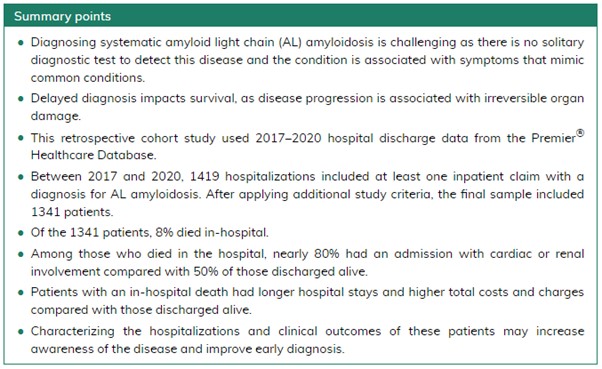
- Summary points
- 8–10 bullet point sentences highlighting the key points of the article
- Example:
- References
- For further information, see ‘References’ below
- Reference annotations
- 6–8 references should be highlighted that are of particular significance to the subject of the article as “* of interest” or “** of considerable interest”, along with a brief (1–2 line) synopsis
- Example:

Additional files
- Figures and Tables
- Should be uploaded as separate files (i.e., not within the main manuscript file).
- Should be numbered consecutively according to the order in which they have been first cited in the text.
- Should be self-contained; i.e., the title/contents/legend should provide enough information for the reader to fully understand the figure/table on its own, without referring to the manuscript text.
- Should include a brief, descriptive title.
- Should include a legend including, where relevant:
- Definitions of any abbreviations used in the figure/table (even if previously defined in the body of the manuscript).
- Explanation of any symbols used in the figure/table.
- Any notes required to explain the figure/table that cannot be understood from the title, figure/table contents and the above elements alone.
- Alt-text: To enhance accessibility, alt-text descriptions will be added to all figures during the article production process. Authors will have the opportunity to review and provide feedback on the alt-text during the proofing stage. If you have specific preferences for alt-text content, please feel free to include these with your figure captions at submission.
- File format: should be submitted in an editable format where possible. Figures that can be included without editing (e.g., photos, imaging data, etc.) can be submitted as raster files (.jpg or .tif). Other figures (e.g., graph/bar charts or complex illustrations) should ideally be provided as vector files (.eps) if possible, otherwise as a .jpg or .tif. Tables should be provided as e.g., Microsoft Word or Microsoft Excel files, and must be editable. If you are uncertain whether the format of your files is appropriate, please check with the Journal Editor.
- Figure resolution: Figure resolution should be as high as possible, ideally 300 dpi or higher for a .jpg. Images that are blurry or illegible in any way will not be accepted.
- Figure font: If possible, please use Helvetica 8pt.
- File size: the maximum individual file size is 30 MB (with a combined maximum of 100 MB for all files).
- Editing of figures: Becaris journals apply the Council of Science Editors recommendations for digital images, specifically:
- No specific feature within an image may be enhanced, obscured, moved, removed, or introduced.
- Adjustments of brightness, contrast, or color balance are acceptable if they are applied to the whole image and as long as they do not obscure, eliminate, or misrepresent any information present in the original.
- The grouping of images from different parts of the same gel, or from different gels, fields, or exposures must be made explicit by the arrangement of the figure (e.g., dividing lines) and in the text of the figure legend.
- If the original data cannot be produced by an author when asked to provide it, acceptance of the manuscript may be revoked.
- Reproduced/adapted content: authors should ensure they have obtained the relevant permissions from the copyright holder to reproduce/adapt any content included in their submission, and that appropriate acknowledgement to the original source is included in the Figure/Table legend. Please email any permission documents to the Journal Editor when you submit your article.
- Supplementary materials
- Should not contain any identifying information that would compromise anonymous peer review of the manuscript (including the file name).
- File size: the maximum file size is 100 MB.
More information on authorship
Authorship criteria
Becaris journals follow the recommendations of the ICMJE as regards authorship – authorship should be based on the following four criteria:
- Substantial contributions to the conception or design of the work; or the acquisition, analysis, or interpretation of data for the work; AND
- Drafting the work or reviewing it critically for important intellectual content; AND
- Final approval of the version to be published; AND
- Agreement to be accountable for all aspects of the work in ensuring that questions related to the accuracy or integrity of any part of the work are appropriately investigated and resolved.
Contributors who do not fulfill all four criteria should be listed in the acknowledgements section.
Becaris Publishing is supportive of diverse authorship groups and collaboration. We support the ICMJE recommendations that individuals who meet the first authorship criterion should be given the opportunity to meet the other criteria wherever possible, and encourage collaboration and co-authorship with colleagues in the locations where the research is conducted.
Artificial intelligence-assisted technologies
Becaris journals follow the recommendations of the ICMJE as regards AI-assisted technologies and the 'WAME Recommendations on Chatbots and Generative Artificial Intelligence in Relation to Scholarly Publications', including that:
- Large language models (LLMs) such as ChatGPT and chatbots cannot meet authorship criteria
- Authors should be transparent when AI-assisted technologies (such as LLMs, chatbots or image creators) are used. They should disclose how they were used in the cover letter to the Editor, and in the appropriate place in the submitted work itself as follows:
- For use of AI for writing assistance: in the manuscript acknowledgements section
- For use of AI for research e.g., data collection, analysis, figure generation: in the manuscript methods section
- Authors are responsible for the work performed by AI-assisted technologies in their paper, including ensuring no plagiarism and appropriate attribution of all quoted material (including full citations)
Fair accreditation of authorship
Becaris journals will endeavor to identify papers during the submission process where authorship/contributorship has not been appropriately designated. Where data are presented from low-income and middle-income countries (LMICs) without local authors, the submitting author will be asked to provide reasoning for this; authors should be aware that this could lead to rejection. In addition, we encourage readers who have concerns on this issue to contact the Journal Editor.
Patient authorship
Becaris journals are supportive of the inclusion of patients in all stages of research, including in the authorship of papers. We consider a broad definition of patient authors, which can include:
- A person who lives with or is affected by a disease or condition (including those with lived conditions or receiving health or social care, caregivers, family members and members of patient advocacy groups who represent them).
- A person who provides unique and valuable input from the patient perspective to the publication.
- A person who meets all the criteria required for authorship, as listed above. Authors are encouraged to refer to this tool, which highlights how each of the four criteria above can be interpreted from the patient author perspective.
Useful resources:
- WECAN training module on “Patients in Publications”
- Involving Patients as Authors of Company-Sponsored Journal Publications
- Patient Authorship: Three Key Questions (& Answers!) for Medical Communication Professionals
Early career researchers
Becaris journals encourage submissions from early career researchers (ECRs). An ECR is defined as a researcher who is either currently undertaking a doctoral degree (e.g., PhD or equivalent) or is within 7 years of completing their doctoral degree at the time of submission. This timeframe may be extended to account for career breaks, including parental leave, clinical training or other significant interruptions to a research career.
Group authorship
When a group name is included as an author (e.g., the XYZ Study Group), the respective group member names should be listed in the acknowledgements section. These individuals are acknowledged as contributors to the article on Medline/PubMed. The submitting author/agent should therefore ensure that group member names are included in full, are spelled correctly, and appear in the order they wish them to be listed on Medline/PubMed. More guidance from Medline can be found here: https://www.nlm.nih.gov/bsd/policy/authorship.html.
Changes to authorship
Should a change to authorship be required either before or after article publication, this should be brought to the attention of the Journal Editor. This will then be investigated, and corrections made if deemed appropriate by the Editor and with the agreement of all authors involved (including those being added/removed).
Click here for information on ours 'Author name change policy'.
Guidance on author sequence
Author sequence is at the authors’ discretion; however, we suggest following the recommendations in GPP Supplement Table 5 (https://www.acpjournals.org/doi/suppl/10.7326/M22-1460), and consulting CRediT and the ISMPP Authorship Algorithm Tool. The corresponding author should always be indicated.
Guidance on a change of affiliation during writing
Where an author has changed their affiliation prior to the publication of an article, the affiliation should reflect where the major part of the work was completed. Current affiliation and contact information should be listed in an acknowledgement.
More information for articles presenting original research
Negative data
Becaris journals will consider studies presenting positive, negative or inconclusive data.
Methodology details
Where a novel methodology has been used, full details must be provided, such that a skilled researcher would be able to reproduce the work. As mentioned above, use of AI-assisted technologies to conduct research should be described in the methods section, in sufficient detail to enable replication of the approach (e.g., tool used, version, prompts used, etc.). Details of routine or previously reported methodology should be provided via references.
Organizations that have been paid/contracted to help conduct the research should be detailed in the methods section.
Where relevant, the methods section should include an ethics statement detailing approval by an independent local, regional or national review body (e.g., an ethics committee or institutional review board). Where ethical approval was not required, or a waiver or exemption was granted, authors should explain the basis for this. For articles describing Patient and Public Involvement activities, please see our 'Research ethics polices'.
Patient engagement
As discussed, Becaris journals are supportive of the inclusion of patient authors. In addition, where patient engagement activities have occurred during the research process, authors are encouraged to describe this within the article (e.g., in the methodology or within the supplementary materials) to aid best practice in patient engagement to be established and improved.
In particular for research examining patient-relevant outcomes (e.g., quality of life), authors are encouraged to engage with patients during the research process and describe how this engagement was carried out within the article (and include patient authors on the resulting publications, where appropriate), or describe why this was not carried out.
For articles reporting Patient and Public Involvement activities, please consult the ‘Patient and Public Involvement’ section of our Editorial Policies, which explains when ethical approval is not required and what authors should report.
Reporting of sex & gender information
Authors are encouraged to consult the Sex and Gender Equity in Research (SAGER) Guidelines to ensure the accurate reporting of sex and gender information in study design, data analysis, results and interpretations of findings.
Reporting of race & ethnicity information
Authors should use accurate, respectful and contextually appropriate language when reporting race and ethnicity. These are distinct social constructs and should not be used interchangeably or treated as proxies for genetic ancestry or biological differences.
Where race or ethnicity information is reported or used in analyses, authors should explain its relevance, define the categories used and describe how the information was obtained (e.g., self-reported, assigned by an observer or extracted from existing records). Specific group descriptions should be used where possible, respecting self-identification and the geographical and cultural context.
Authors should explain any grouping or recoding of categories and describe relevant missing information and limitations in data quality. For studies using existing datasets, the categories recorded in the source data should be distinguished from any categories adopted for analysis or reporting.
Interpretation should consider relevant social, environmental and structural factors, including racism and inequities where appropriate, and avoid attributing observed differences to innate biological characteristics without supporting evidence.
Authors are encouraged to consult the JAMA/AMA guidance on reporting race and ethnicity in medical and science journals and the ICMJE recommendations on the selection and description of research participants for further guidance.
Data & materials transparency & sharing
Click here to view our full 'Data & materials transparency & sharing' policies.
We strongly encourage authors to share study protocols, data and any other materials that support the findings within a manuscript, where it is ethical to do so.
The ICMJE requires that all manuscripts that report the results of clinical trials must contain a data sharing statement, as described on their website here: https://www.icmje.org/recommendations/browse/publishing-and-editorial-issues/clinical-trial-registration.html.
Becaris journals endorse the joint ISPOR–ISPE position statement on scientific transparency for real-world evidence studies; please see the ‘Data & materials transparency & sharing’ section of our Editorial Policies for further details. We encourage authors of manuscripts that report the results of real-world evidence studies to include a data transparency statement summarizing the availability of study protocols, preregistration details, data access details, analytical code and reporting checklists, as described by Wang and Pottegard here: Developing a transparency framework for real-world evidence studies: an interview with Shirley Wang and Anton Pottegård. The full publication outlining these recommendations is here: Building transparency and reproducibility into the practice of pharmacoepidemiology and outcomes research.
Authors should be able to provide additional relevant original data underpinning their research, if requested by the Editor or reviewers.
Authors are encouraged to consult the FAIR Principles (guidelines to improve the Findability, Accessibility, Interoperability, and Reuse of digital assets).
Data deposition
Authors are encouraged to share underlying data and code, where this is possible. We also encourage the deposition of data/materials to a discipline-specific, community-recognized repository where one exists, or a generalist repository if no suitable specific resource is available, in order to aid in the future replication of methods or the completion of follow-on studies. Repositories can be found via sites such as re3data.org. Where data have been deposited in a public repository, authors should state at the end of the abstract the dataset name, repository name and number.
Clinical trial & real-world evidence study registration
Becaris Publishing strongly encourages the preregistration of clinical trials and real-world evidence studies.
For clinical trials, we encourage registration on publicly accessible registries, such as ClinicalTrials.gov. Clinical trial registration numbers should be included at the end of the abstract, and on the first mention of the trial in the main body of text.
To promote the transparent reporting and increase trust in the findings of real-world evidence studies, we encourage authors to preregister their study protocols (for example in the OSF-hosted Real World Evidence Registry, HMA-EMA Catalogue of real-world data sources and studies, or on ClinicalTrials.gov). A link to the protocol/registration number should be included in the article methods section, where available.
Unregistered clinical trials and real-world evidence studies should be declared as such, and the reason for nonregistration should be provided.
Secondary outcomes, exploratory & post hoc analyses
These should be clearly identified as such; these may be included in the primary publication or published separately, in which case they should clearly reference the primary publication and should not be published before it.
Observational studies
Where observational research has been carried out, authors should follow the recommendations of STROBE (https://www.strobe-statement.org/).
References
Literature references, and any patents or websites, should be numerically listed in the reference section in the order that they occur in the text (including any references that only appear in figures/tables/boxes).
Websites should only be cited where necessary and a peer-reviewed source is unavailable (authors should be aware that websites can subsequently become obsolete). Where included, a title and full web address should be provided, along with the date the site was accessed by the author(s).
Information from manuscripts submitted but not accepted should be cited in the text as ‘unpublished observations’ with written permission from the source.
Avoid citing a ‘personal communication’ unless it provides essential information not available from a public source, in which case the name of the person and date of communication should be cited in the text, with written permission from the source.
Referencing AI-generated material as the primary source is not acceptable.
Authors are responsible for citing references accurately and should be able to attest that the references cited support the associated statement. To minimize bibliographic citation errors, references should be verified using either a bibliographic source (e.g., PubMed) or original sources.
Referencing preprints
Becaris journals permit the citation of preprints in the reference list, but these should be clearly identified as such by including the article's web address on the preprint server. Preprints should only be cited where necessary and a peer-reviewed source is unavailable (authors should be mindful of this when revising their manuscript following peer review, should a peer-reviewed source have become available since submission). The citation should include the author names (in the same style as the journal example below), article title and the web address where the preprint can be found.
Preprint example: Carter H, Lee X, Dwyer T et al. The effectiveness and cost effectiveness of a hospital avoidance program in a residential aged care facility. Available at: https://www.biorxiv.org/content/10.1101/523969v1 (Accessed: 6 January 2023).
Format
- References should be numerically listed in the reference section in the order that they occur in the text.
- References should appear in the text as a number in square brackets, i.e., [1,2], [1,2,5-7] or [1-5], etc. (not superscript).
- Authors' names should appear without full stops in their initials.
- Quote up to a maximum of six authors’ names. If there are more than six, then quote first three et al.
- A full stop follows the authors’ names.
- The article title should appear in sentence case, and end in a full stop.
- The journal name should be in italics and abbreviated to standard format, including full stops (i.e., NLM catalog abbreviation).
- Include the journal volume number followed by a comma, not bold (if an issue number is known, this can be included in brackets after the volume number, followed by a comma).
- The page number range should be given in full and separated by a hyphen with no spaces, followed by the year in brackets, and then a full stop.
Example: Flory JH, Roy J, Gagne JJ et al. Missing laboratory results data in electronic health databases: implications for monitoring diabetes risk. J. Comp. Eff. Res. 6(1), 25–32 (2017).
People-centered language
Becaris journals endorse the use of people-centered language, and ask that authors are mindful of this when writing. People-centered language puts people first, is precise and neutral, and respects autonomy.
Some examples include:
- ‘Patients with diabetes’ instead of ‘diabetes patients’
- ‘experiences’ instead of ‘suffers from’
- ‘participants’ instead of ‘subjects’
A useful article on this can be found here: People-Centered Language Recommendations for Sleep Research Communication
Publication extenders
Becaris journals encourage the use of publication extenders, within the journal and on our partner website The Evidence Base. For more information, see 'Publication extenders'.
Plain language summaries
Becaris journals provide several plain language options for authors, all of which are peer reviewed prior to acceptance for publication. For more information, see 'Plain Language Summaries'.
Please note, from 2025 all new original research submissions (including Meta-Analyses, Methodologies, Protocols, Research Articles and Short Reports) must include a PLS abstract.
Authors who are looking for professional support in creating an attractive PLS that accurately summarizes their article and meets the journal guidelines may be interested in our author services. To learn more, click here.
Open access
Becaris journals are fully open access. For more information, see 'Open access'.
Required forms
The Author Form Package should be completed and sent to the Journal Editor as soon as possible when an article has been submitted.
NOTE: Only one Author Form Package is required per submission. One author (e.g., the submitting or corresponding author) should complete this on behalf of all co-authors.
The Author Form Package can be uploaded on the 'Upload Supplementary File(s)' page of the submission site, or emailed to the Journal Editor directly.
The Author Form Package includes:
- Author disclosure form
- Open access license form
- Rapid Review form (only to be completed by authors choosing this optional, fee-based service)
The Author Form Package can be downloaded here.
Author services
Becaris journals, in partnership with Editage, offers research communication services for authors looking for professional support to create plain language summaries, infographics, video shorts and graphical abstracts.
A team of highly skilled experts proficient in editing, design, and promotion techniques will work on your article and ensure that it is transformed into an attractive visual summary that can help improve the reach, visibility and impact of your research. To learn more, click here.