

Development and implementation of a living network meta-analysis framework for comparative effectiveness research: a case study in chronic venous insufficiency treatment
Abstract
Aim: To develop, implement and evaluate a living network meta-analysis (NMA) framework for comparative effectiveness research, using chronic venous insufficiency treatment as a case study. The framework addresses key barriers to sustained evidence synthesis: resource sustainability, methodological consistency and transparent dissemination. Materials & methods: A four-phase living NMA framework was established with prospective protocol registration, quarterly literature surveillance and annual update cycles. The baseline systematic review, registered in PROSPERO, searched English-language publications (2000–2023) per PRISMA guidelines. Eligible studies included randomized and non-randomized comparisons of polidocanol 1% endovenous microfoam (PEM) or endovenous thermal ablation versus any comparator. Network connectivity relied on common comparators (surgery, physician-compounded foam) and head-to-head PEM versus endovenous thermal ablation studies. The protocol specifies predetermined eligibility criteria, standardized data extraction and consistent statistical methods, with results posted to a publicly accessible website. Results: The baseline NMA (13 studies; 233,801 patients) was published in a peer-reviewed journal and simultaneously posted publicly. The first update identified seven new eligible studies, expanding the evidence base to 20 studies and 235,093 patients. Effect estimates remained stable with no change in primary conclusions, demonstrating robustness to new evidence incorporation. Update-cycle workload was substantially less than the initial NMA effort, with efficiency gains attributable to team continuity, accrued clinical expertise and stable data definitions. Conclusion: This living NMA framework balances scientific rigor with practical sustainability through industry partnership and transparent dissemination. The successful first update confirms feasibility, though the framework was developed with a single sponsor in one clinical area and transferability to other contexts has not been tested.
Plain language summary: Keeping medical evidence up to date: a ‘living’ review of treatments for chronic venous insufficiency
What is this article about?
Doctors rely on summaries of research to choose treatments, but these summaries go out of date quickly as new studies are published. This article describes a ‘living’ review, one that is updated on a regular schedule so the evidence stays current. The authors built and tested this approach for treatments of chronic venous insufficiency, a common vein condition of the legs.
What methodology is described?
The team set up a four-step process: register a plan in advance, complete a first full review, post the results on a free public website, and then check for new studies every few months with a full update each year. The same methods are used every time so the results stay consistent.
What were the results?
The first review included 13 studies and more than 233,000 patients. One year later, seven new studies were added, for a total of 20 studies. The conclusions did not change, and each quarterly search averaged less than 10% of the of the original volume.
What do the results mean?
A living review can be kept current without repeating the full original workload.
Why is this important?
It offers a practical, lower-cost way to give doctors, payers and patients access to up-to-date treatment comparisons.
Systematic reviews and meta-analyses are foundational to evidence-based healthcare decision-making, yet they face a fundamental challenge: the evidence base continues to evolve after publication. Studies have demonstrated that systematic reviews can become outdated within 1–2 years [1]. To address this limitation, living systematic reviews have been proposed, incorporating continual literature surveillance to maintain evidence syntheses in a current state [2,3]. This concept has been extended to network meta-analysis (NMA), which enables both direct and indirect comparisons across treatment network [4,5]. Créquit and colleagues demonstrated that living NMA is feasible from a workload perspective, with updates requiring approximately 10% of the initial effort [4].
Despite demonstrated feasibility, practical implementations of living NMAs remain limited. A recent review found that of 168 known living systematic reviews, more than half of which were related to the COVID-19 pandemic, only 16 were NMAs [6]. Lansky and Wethington, writing from a public health perspective, identified criteria for when living reviews are appropriate: when the topic is a priority for decision-making, when there is likely to be emerging evidence, and when existing evidence is uncertain [7]. Chronic venous insufficiency (CVI) treatment meets these criteria: a prevalent condition with multiple treatment options and new comparative studies continuing to be published. Thus, CVI treatment presents an ideal setting to develop and test a framework for living NMAs. Multiple treatment modalities exist – including endovenous thermal ablation (ETA), commercially manufactured polidocanol 1% endovenous microfoam (PEM), physician-compounded foam sclerotherapy (PCF) and surgery – but few randomized trials directly compare the most commonly used contemporary treatments [8]. Prior analyses have been hampered by failure to distinguish US FDA approved PEM from nonstandardized PCF, despite differences in pharmacologic properties and safety profiles [9,10]. Additionally, new comparative studies continue to be published worldwide and under different standards of care, making this a clinically relevant domain requiring ongoing evidence synthesis.
In the absence of a living meta-analysis, evidence synthesis is most commonly conducted using static systematic reviews, pairwise or network meta-analyses, and, in some cases, periodic rapid reviews, which provide a fixed summary of the available evidence at a single time point. However, such approaches may become outdated as new studies emerge, particularly in rapidly evolving therapeutic areas. Living systematic reviews and living (network) NMAs were developed to address this limitation by incorporating continual literature surveillance and predefined updates, thereby maintaining the currency of pooled effect estimates over time. Methodological evaluations have shown that living evidence syntheses can improve the timeliness and relevance of evidence for clinical and policy decision-making without compromising rigor when conducted using transparent, protocol-driven methods. As a result, living meta-analyses are increasingly recognized as advantageous when ongoing evidence generation is expected and up-to-date comparative estimates are required [3,11].
The objective of this study was to develop, implement and evaluate a living NMA framework that addresses key barriers to sustained evidence synthesis: resource sustainability, methodological consistency and transparent dissemination. This framework was applied to comparative effectiveness research in CVI treatment, and the baseline NMA results, first full update cycle, and lessons learned for researchers considering living evidence synthesis in other clinical domains are reported.
Materials & methods
Framework overview
A four-phase living NMA framework was designed prospectively to accommodate ongoing evidence synthesis. The complete framework is illustrated in Figure 1, which serves as a visual roadmap for the methods described below. The framework addresses three key requirements for sustainable living evidence synthesis: resource commitment for ongoing surveillance and analysis, methodological consistency across update cycles and transparent dissemination to stakeholders. Phase I establishes the foundation, including protocol registration, sponsor commitment and prespecification of methods. Phase II comprises the baseline systematic review and NMA. Phase III activates the living framework through public website launch and documentation. Phase IV implements the ongoing surveillance and update cycle. Each phase is described below.
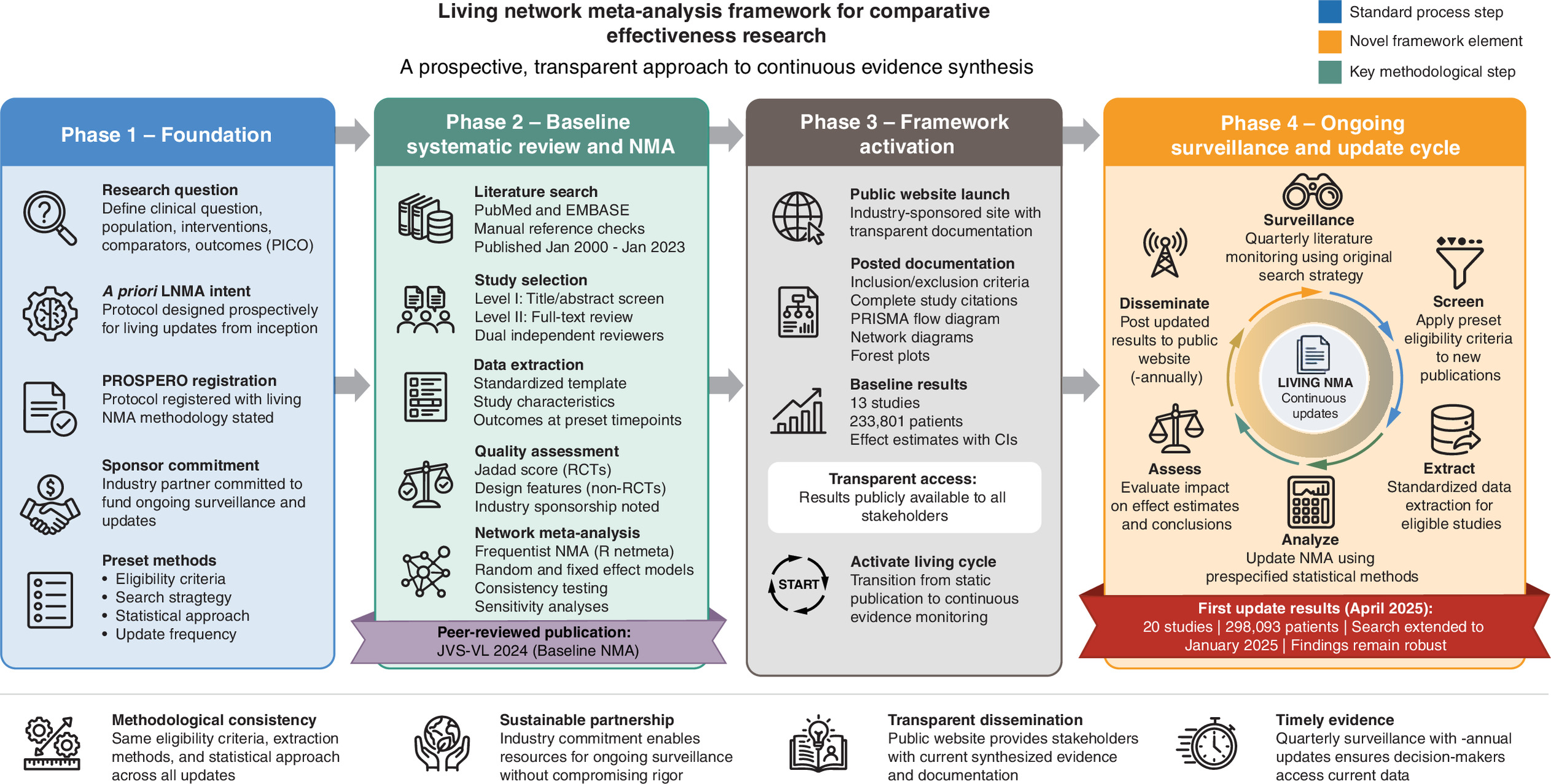
Figure 1. Living network meta-analysis framework for comparative effectiveness research.
EMBASE: Excerpta medica database; JVS-VL: Journal of vascular surgery- venous and lymphatic disorders; LNMA: Living network meta analysis; PICO: Patient (or population), intervention, comparison, and outcome; PRISMA: Preferred reporting Items for systematic reviews and meta analyses; NMA: Network meta-analysis; RCT: Randomized controlled trial.
Phase I: Foundation (Figure 1, Phase I)
Research question
The clinical question was defined in consultation with clinical experts using the PICO framework: adult patients with venous insufficiency caused by lower extremity truncal vein incompetence (population); PEM (intervention), and ETA (comparator); and vein closure rate, Venous Clinical Severity Score (VCSS) change, deep vein thrombosis (DVT) and patient-reported outcomes (Outcomes) [8].
Protocol registration
The initial systematic review protocol was registered in PROSPERO (CRD42023406807) prior to initiating the baseline review [12]. A subsequent protocol for the living meta-analysis was developed following Cochrane guidance for living systematic reviews [13], specifying the intent to conduct quarterly literature surveillance with periodic NMA updates.
Sponsor commitment
The research sponsor (Boston Scientific) committed to funding ongoing literature surveillance and periodic updates for at least 3 years. This commitment was established before the baseline NMA was completed, ensuring resources for sustained evidence synthesis independent of initial findings.
Preset methods
To ensure methodological consistency across update cycles, analytic methods were prespecified in the living meta-analysis protocol: eligibility criteria, search strategy, data extraction templates, quality assessment tools and statistical approaches. The protocol specifies quarterly literature surveillance with annual integration of new evidence and website updates over a 3-year commitment period. Continuation beyond the 3 years will be assessed jointly by the research team and sponsor based on the rate of new evidence generation, stability of effect estimates across update cycles and ongoing clinical relevance of the research question.
Phase II: Baseline systematic review & network meta-analysis (Figure 1, Phase II)
The baseline systematic review and NMA follow current best practices [14–16] and are described in detail elsewhere [8]. Key methodological elements are summarized here.
Eligibility criteria
Studies published in English-language peer-reviewed journals between January 2000 and the search cut-off date were eligible for inclusion. Eligible studies were randomized or non-randomized comparative studies of CVI treatment reporting outcomes for at least 10 patients treated with PEM or ETA (not in combination). Exclusions included meeting abstracts, reviews without meta-analysis, editorials, animal or in vitro studies, studies in settings other than CVI/truncal vein incompetence, mixed treatments with no separable data and studies without outcomes of interest. Primary effectiveness outcomes (vein closure, VCSS) required a minimum of 3 months follow-up; safety outcomes and patient-reported outcomes were extracted at any available timepoint.
Information sources
The National Library of Medicine’s PubMed database was the primary source for the electronic search. EMBASE, the Cochrane Library CENTRAL register and manual reference checks of eligible studies and relevant systematic reviews supplemented the PubMed search.
Study selection
Two levels of screening were performed. Level I screening of titles and abstracts was conducted by a single reviewer, with questions resolved by consultation with a second reviewer. Level II full-text screening was conducted by one reviewer and verified independently by a second reviewer. Discrepancies were resolved by discussion or consultation with a third reviewer familiar with the clinical setting and study objective.
Data extraction & quality assessment
Data were extracted from each eligible study by one reviewer using a standardized template and independently verified back to the source article by a second reviewer. Discrepancies were resolved through discussion or consultation with a third analyst. Separate publications reporting outcomes for overlapping patient populations were grouped together to avoid double-counting. Randomized trials were assessed using the Jadad score [17], nonrandomized studies were evaluated for allocation method, prospective versus retrospective design and reporting of losses to follow-up. Industry sponsorship was captured for all studies.
Statistical analysis
Network meta-analyses were conducted using frequentist methods with the R netmeta package (version 2.8-2) [18] for all protocol-specified outcomes with sufficient data. Categorical outcomes (vein closure, DVT) were summarized using odds ratios (ORs) with 95% CIs. Vein closure analysis used an inverse-variance weighting random-effects model since between-study variation was expected across the included randomized and nonrandomized comparative studies. DVT analysis used the Mantel–Haenszel odds ratio method, with continuity correction. Mantel–Haenszel is the preferred estimation method when data are sparse, especially when studies are small or event likelihoods are low [14]. The continuity correction was required to maintain network connections. By default, studies with zero events in all treatment groups are excluded from Mantel–Haenszel analysis. Continuous outcomes, such as VCSS and patient-reported improvement, were to be estimated using standardized mean differences between baseline and follow-up, data permitting. The network for each outcome was assembled from all head-to-head ETA versus PEM studies, plus all ETA and PEM studies with a common comparator (surgery, physician-compounded foam). The resulting networks were evaluated on their geometry, heterogeneity and any inconsistency found using local and global approaches appropriate to the analysis method [19,20]. If inconsistency was found, the network was inspected to determine the source(s) and assess its influence on the estimates. Publication bias and heterogeneity related to sample size was assessed using comparison-adjusted funnel plots and Egger’s regression test. Finally, a vein closure sensitivity analyses examined longest available follow-up time ≥12 months.
Peer-reviewed publication
Results from the baseline NMA were published in a peer-reviewed journal, providing external validation of methods and findings [8]. The decision to publish was made in advance of completion of the baseline NMA, and clinical experts who provided guidance during protocol development formed the author group on the publication.
Phase III: Framework activation (Figure 1, Phase III)
Public website launch
A publicly accessible website (https://www.varithena.com/en-us-hcp/clinical-evidence/living-meta-analysis.html) was launched at the time of online publication of the initial NMA (May 2024). The sponsor agreed to host details of the initial NMA on this site as well as the living NMA results. The website provides free access to current findings without registration requirements, enabling clinicians, payers, guideline developers and researchers to access updated evidence.
Posted documentation
To support transparency and enable external verification, comprehensive documentation is posted on the website: inclusion and exclusion criteria, complete study citations with linked publications, the cumulative study attrition diagram, network diagrams showing treatment connections and forest plots displaying effect estimates. This documentation allows stakeholders to evaluate the methodology and trace results to source data.
Transition to living mode
With baseline results established and publicly disseminated, the framework transitioned from a static publication to continuous evidence monitoring. The website displays the date of the original publication and the most recent web update, along with the literature search cut-off date for each, allowing users to assess the currency of each iteration of the evidence.
Phase IV: Ongoing surveillance & update cycle (Figure 1, Phase IV)
The ongoing surveillance and update cycle consists of six iterative steps, repeated at regular intervals. To ensure methodological consistency, each step applies the identical methods used in the baseline NMA.
Surveillance
Literature surveillance is conducted quarterly using the original search strategy and removing already-captured duplicates. PubMed searches and manual reference checks are repeated with each cycle, and EMBASE and CENTRAL searches are completed annually. This frequency balances timely identification of new evidence against resource efficiency, consistent with recommendations for clinical questions with moderate evidence generation rates [4].
Screen
Newly identified records are screened against the preset eligibility criteria: Level I by a single reviewer with consultation as needed, Level II by one reviewer with independent verification by a second reviewer.
Extract
For eligible studies, data are extracted by one reviewer with independent verification by a second reviewer, ensuring comparability across original and newly added studies.
Analyze
The NMA is updated, incorporating newly eligible studies into the existing analysis scripts. Changes in effect estimates result from new evidence rather than unpredictable analytical variation, minimizing bias.
Assess
Updated effect estimates are compared with previous results. Changes in point estimates, confidence interval widths and statistical significance are examined to evaluate robustness. Clinical experts involved in the initial NMA review the new findings for any changes to clinical relevance.
Disseminate
Updated results are posted to the free, open access, public Boston Scientific-hosted website approximately annually. When new data meeting the inclusion criteria of the original NMA published in Journal of Vascular Surgery: Venous and Lymphatic Disorders is aggregated and analyzed, the website is updated with revised effect estimates, network and forest plots, the expanded study list and a revised PRISMA flow diagram. When substantive changes in conclusions are identified and/or the evidence base has grown substantially, republication may be considered to validate conclusions through standard peer-reviewed journalistic rigor.
Results
The living NMA framework was successfully implemented across all four phases. The baseline systematic review identified 13 studies composed of 233,801 patients; complete baseline results have been published [8]. Following publication, the public website was launched with full documentation including study citations, study attrition diagram, network diagrams and forest plots.
Newly identified records were screened and added at each quarterly surveillance cycle. The first update cycle was completed in April 2025, comprising four separate surveillance searches (one conducted in April 2024, and quarterly thereafter through the search cut-off date of 31 January 2025). This literature surveillance identified seven new studies meeting eligibility criteria, bringing the total evidence base to 20 studies and 235,093 patients. One study was added in the April 2024 search and six were added in the January 2025 search. Six of the seven new studies reported ETA versus surgery comparisons [21–26]. One new study compared PEM to ETA [27]. This head-to-head study was a retrospective study from the University of California, Los Angeles. Multiple publications from this center with overlapping patient populations were available (linked studies), which were extracted alongside the primary study for any additional outcomes or subgroups with relevant data [28–30]. No new studies compared PEM to PCF or to surgical techniques. Newly added studies in this update were smaller on average than studies in the initial meta-analysis (median n = 143, range 74–522), due to large patient numbers in three real-world data studies in the initial NMA [31–33]. No new studies reported industry sponsorship. Two were randomized trials [25,26].
The updated NMA was conducted using the pre-specified statistical methods, and results were posted to the public website (see Table 1). Effect estimates remained stable across the first update cycle. For the primary comparison of PEM versus ETA, the odds ratio for vein closure changed from 0.65 (95% CI: 0.36, 1.18), p = 0.16 at baseline to 0.72 (95% CI: 0.41, 1.27), p = 0.26 after the first update. Corresponding odds ratio estimates for DVT changed from 0.64 (95% CI: 0.18, 2.25), p = 0.49 to 0.83 (95% CI: 0.29, 2.43, p = 0.74). Neither comparison changed in direction or crossed the threshold of statistical significance. Confidence interval width was essentially unchanged for both comparisons. The results for the vein closure sensitivity analysis were also stable (see Table 2). These results demonstrate the robustness of the findings to the new evidence. Evaluation of the resulting networks found that network inconsistency was low with little evidence of publication bias or small-study effects. A forthcoming paper will present detailed NMA results from the second update cycle for a clinical audience, including tests of network inconsistency and funnel plots; this article focuses on practical aspects of implementing the living NMA. In the meantime, results from the first update cycle discussed here are available at the living meta-analysis website [33].
| Baseline NMA | Updated NMA | |
|---|---|---|
| Literature search period | January 2000 to January 2023 | January 2000 to January 2025 |
| Studies, n | 13 | 20 |
| Total patients, n | 233,801 | 235,093 |
| Publication or posting date | April 2024 | April 2025 |
Includes three large real-world data studies [31–33].
NMA: Network meta-analysis.
| Baseline NMA | Updated NMA | |
|---|---|---|
| Vein closure | ||
| PEM vs ETA estimate: OR (95% CI) | 0.65 (0.36, 1.18) | 0.72 (0.41, 1.27) |
| Corresponding p-value | 0.16 | 0.26 |
| Analysis studies, n | 12 | 16 |
| Total patients, n | 3450 | 4256 |
| Sensitivity estimate: OR (95% CI) | 0.69 (0.38, 1.24) | 0.72 (0.45, 1.15) |
| Deep venous thrombosis | ||
| PEM vs ETA estimate: OR (95% CI) | 0.64 (0.18, 2.25) | 0.83 (0.29, 2.43) |
| Corresponding p-value | 0.49 | 0.74 |
| Analysis studies, n | 14 | 17 |
| Total patients, n | 107,339 | 107,709 |
Study and patient counts indicate number of studies contributing data to the network for the listed outcome; not all studies eligible for the NMA reported each outcome.
Longest available follow-up time ≥12 months.
ETA: Endovenous thermal ablation; NMA: Network meta-analysis; OR: Odds ratio; PEM: Polidocanol 1% endovenous microfoam.
Workload varied for each quarterly search update depending upon the number and details of the new studies. Formal effort/time tracking was not conducted during the baseline analysis or first update cycle in this project, and thus an explicit reporting of the reduction in person-hours by workflow component is not possible. There was, however, an unambiguous reduction in the screening and extraction volume. The baseline review screened 2157 unique records at Level I and 767 full-text articles at Level II, from which 13 studies were extracted for inclusion in the NMA. The four separate surveillance searches comprising the first update cycle cumulatively screened 304 new nonduplicate records and 141 full-text articles, from which seven studies were extracted for use in the updated NMA. Screening volume for each surveillance search therefore averaged 3–5% of baseline volume, with data extraction volume averaging 13% of baseline volume.
In addition to the reduced volume of literature, there were other sources of efficiency in the living NMA update. The study eligibility criteria were established and the surveillance used the baseline search strategy with deduplication against previously captured records. Data extraction applied the same standardized template and data conventions, streamlining effort and reducing need for the reviewers to confer on questions about specific studies. The statistical analysis utilized the previously validated R netmeta script coding. Programming to maintain and update the public website was less extensive than the initial creation. Finally, and importantly, the literature search, extraction and statistical teams remained unchanged across the update cycle, avoiding retraining and preserving accrued familiarity with the clinical area.
Discussion
Principal findings
The successful completion of the first update cycle demonstrates that a living NMA framework is practical to implement and sustain. The initial NMA in the setting of CVI showed that PEM was not significantly different statistically from ETA for venous closure or deep venous thrombosis [8]. These results remained unchanged in the first update cycle, despite the addition of seven new studies (54% increase in the total number of studies; less than 1% increase in total patient numbers due to several large real-world studies in the initial search). Nearly 2 years post-publication, the top-line conclusions remain unchanged, which should not be seen as wasted effort in a living NMA. On the contrary, robust findings upon subsequent updates, supported by a transparent and prospectively determined process, can increase confidence in the evidence base. These findings demonstrate consistency and durability of clinical outcomes across the spectrum of provider sites of service and physician techniques utilized over more than two decades of clinical practice.
The sustainability challenge
Despite demonstrated theoretical feasibility [4], practical implementation of living NMAs has remained limited. Several barriers impede widespread adoption. Methodological consistency must be maintained across update cycles to ensure that evolving results reflect new evidence rather than analytical drift. Much attention has been paid to maintaining rigor in living systematic reviews and meta-analyses through use of prospective protocols [13,34], but fewer sources address the need for payment models to support this continued rigor. Much like long-term randomized clinical trials and clinical registries, sustained resource commitment is required for ongoing surveillance, screening, data extraction and analysis – activities that extend indefinitely beyond traditional project timelines. Grant-based funding mechanisms, which typically support discrete projects with defined end points, can be poorly suited to this continuous maintenance model without budget lines to finance these future updates. Additionally, a dissemination mechanism is needed that provides stakeholders with timely access to updated findings while maintaining scientific credibility. This work to maintain transparency cannot be an afterthought and also requires substantial resource commitments. While conventional systematic reviews and network meta-analyses summarize evidence at a single time point, their findings may lose relevance in rapidly evolving therapeutic areas. Living NMA addresses this limitation through continual evidence surveillance and predefined updates, maintaining the currency and usefulness of comparative estimates for clinical and policy decision-making, at significantly lower costs than alternative methodologies. Clinical registries offer prospective, real-world data collection but require substantial infrastructure investment, multi-site coordination, extended enrollment timelines and ongoing regulatory oversight. Living NMA offers a complementary alternative that synthesizes existing published comparative evidence without the need for prospective enrollment or site-level infrastructure. By continuously incorporating new evidence as it emerges from real-world practice and clinical trials alike, a living NMA can provide timely, updatable comparative effectiveness estimates at a fraction of the cost and time required to establish and maintain a dedicated registry. This approach is particularly well-suited to clinical areas such as CVI treatment, where a growing body of published comparative evidence already exists and new studies continue to emerge.
Continuation beyond the initial 3-year commitment will be assessed against three criteria specified at the outset: the rate at which new eligible evidence is generated, the stability of effect estimates across completed update cycles, and the continued clinical relevance of the research question. A declining rate of new evidence combined with stable estimates across successive cycles would indicate that the evidence base has matured and that less frequent updating, or transition back to static status, is appropriate. Should funding end before those conditions are met, the posted analyses, documentation and study list would remain publicly accessible with the search cut-off date displayed, allowing users to assess currency and permitting another group to resume updating from a documented position.
Industry partnership as a solution
Industry sponsorship offers one potential solution to the sustainability challenge. Manufacturers of medical technologies have ongoing interest in current, rigorous comparative effectiveness evidence for their products, particularly when that evidence informs appropriate clinical use and supports payer medical policy decisions. Scholars, however, have repeatedly raised legitimate bias and independence concerns about industry-sponsored medical research [35,36]. Of particular interest to this project are the Veroniki et al. findings that pharmacologic industry-sponsored NMAs reach favorable results more frequently and report model details less completely compared with matched non-industry-sponsored NMAs [36]. These concerns motivated the safeguards in this framework which combine prospective protocol registration, pre-specified methods, peer-reviewed publication and transparent public dissemination of all results and documentation – creating conditions for accountability that make bias difficult to conceal. In this implementation, the sponsor committed to funding ongoing updates before the baseline NMA was completed, ensuring resources independent of initial findings. The protocol was registered in PROSPERO, and the baseline NMA was published in a peer-reviewed journal, with intent to update results stated a priori. Project documentation – including eligibility criteria, study citations, study attrition diagrams and forest plots – is posted publicly. This transparency enables stakeholders to evaluate the methodology and reach their own conclusions.
Comparison with existing literature
Elliott and colleagues outlined the rationale for living systematic reviews, emphasizing their value when evidence is rapidly evolving and critical clinical and policy decisions are being made [2]. Créquit and colleagues demonstrated that living NMA is theoretically feasible, with update workload representing approximately 10% of baseline effort and most clinical questions generating fewer than four new eligible trials per year [4]. This current study is consistent with these predictions in terms of the rate of new evidence: The first update cycle added seven studies over approximately 2 years of surveillance, a manageable evidence generation rate. The framework operationalizes what Créquit showed was possible and adds practical, step-by-step guidance. This study supports recommendations from various national and international agencies that analyses used for clinical decision-making should be informed by the best and most up-to-date evidence, generated using systematic approaches to evidence assessment [11].
Transparency & governance
To preserve scientific integrity, roles were prospectively defined. Under the funding agreement, the sponsor reviews analyses and manuscripts prior to public posting or submission, and sponsor input during this review is advisory. Decisions regarding study selection, statistical methods, effect estimates and interpretation rest with the analytic team and the author group, and no such decision was altered at the sponsor’s direction during the baseline analysis or the first update cycle. Because the protocol was registered prospectively, the methods pre-specified, and the complete study list and documentation posted publicly, departure from the prespecified analysis or withholding of an unfavorable result would be externally detectable.
Statistical code was maintained by the analytic team, and methodological decisions were documented in the registered protocol prior to review initiation. All authors had access to the data and participated in interpretation and manuscript development. These governance safeguards aim to reduce risk of sponsor-driven analytical drift while enabling sustained resource commitment.
Limitations
Several limitations should be acknowledged. The framework depends on a single sponsor; sustainability would be threatened if that commitment ended. Multisponsor or consortium models might provide greater stability but would introduce coordination challenges and additional resource needs. The current implementation relies on published data only. Unpublished studies or individual patient data meta-analyses using registry data may exist that are not able to be included. Head-to-head studies and common comparators for PEM and ETA both remain limited, resulting in sparse data for some comparisons and preventing most sensitivity or subgroup analysis. The framework has been tested in one clinical domain; generalizability to other conditions, particularly those with different evidence generation rates, requires further evaluation. The approximately annual website update frequency, while practical, may not capture rapidly emerging evidence in fast-moving fields. Finally, effort/time was not tracked prospectively at the task level during the baseline analysis or first update cycle, and workload comparisons are therefore based on screening and extraction volume rather than person-time. We recommend that groups implementing a new living evidence syntheses in the future record task-level effort from the outset, as such data would substantially strengthen the evidence base on the sustainability of living methods.
Future directions
Marshall and colleagues demonstrated that artificial intelligence (AI) tools can assist with living review surveillance, achieving high recall with reduced screening burden [37]. Because this four-phase living NMA framework relies on prespecified eligibility criteria, stable statistical methods, recurring literature surveillance and transparent public dissemination, AI may reduce operational burden by supporting literature surveillance, citation screening, data extraction, study classification, PRISMA documentation and preparation of recurring update materials. However, using AI as an augmentation tool with rigorous human oversight is critical, especially during framework development. The most credible future model is therefore a human-governed, AI-assisted living NMA process in which AI improves efficiency and consistency for repetitive tasks, while clinical, methodological, and statistical experts retain responsibility for framework design, evidence validation, model interpretation and final conclusions.
Validation of this human-governed, AI-assisted living NMA process could proceed by parallel operation. In a subsequent update cycle, AI-assisted screening and extraction would be run alongside the established human process, with human decisions retained as the reference standard. Performance would be assessed by recall for eligible studies at Level I screening, agreement with human decisions at Level II and field-level concordance for extracted data. Where AI and human outputs disagree, the human determination would govern, and discrepancies would be reviewed to identify systematic error patterns. Because a living framework repeats an identical workflow across cycles against a human-adjudicated record, it provides an unusually direct setting for this comparison. Adoption of any AI-assisted step would be contingent on demonstrated performance in such a parallel cycle rather than on assumed efficiency gains.
Another anticipated future opportunity is the inclusion of additional CVI clinical outcomes, including improvement in symptoms and quality of life and potentially valuable sensitivity or subgroup analysis, as the evidence base matures. More generally, the model could be extended to other clinical domains with multiple treatment options and ongoing evidence generation, such as comparative effectiveness of devices or biosimilars. Groups establishing similar frameworks would also benefit from specifying, at the outset, a mechanism for resolving disagreement between the analytic team and sponsor regarding results or their interpretation. Finally, linkage to living clinical practice guidelines could translate continuously updated evidence into actionable recommendations for clinicians and medical policy determinations.
Conclusion
This living NMA framework was developed and implemented for comparative effectiveness research that addresses key barriers to sustained evidence synthesis through prospective design, prespecified methods, industry partnership and transparent public dissemination. Applied to CVI treatment, the framework demonstrates feasibility with a successful first update cycle and stable findings. This approach may be adapted for maintaining current evidence synthesis in other clinical domains where treatment landscapes evolve and stakeholders require access to up-to-date comparative effectiveness data, though it was developed with a single sponsor in a clinical area with a moderate rate of evidence generation, and transferability to settings with different sponsorship structures or faster evidence accrual has not been tested.
Summary points
•
Systematic reviews and meta-analyses become outdated within a few years, creating a gap between published evidence and current clinical practice.
•
Living network meta-analyses (NMAs) address this by combining continual literature surveillance with scheduled updates, but real-world implementations remain rare.
•
A four-phase living NMA framework was prospectively registered and applied to chronic venous insufficiency treatment, covering foundation, baseline review, public activation, and an ongoing update cycle.
•
The framework rests on three pillars: sustained resource commitment, methodological consistency across updates, and transparent public dissemination.
•
The baseline NMA included 13 studies and more than 233,000 patients and was published in a peer-reviewed journal.
•
The first annual update added seven studies, expanding the base to 20 studies and 235,093 patients, with no change in the direction or significance of primary comparisons.
•
Update workload was much less than the initial NMA effort, driven by team continuity, accumulated clinical familiarity, and stable data definitions.
•
Industry sponsorship, paired with prospective registration, pre-specified methods, peer review, and public posting of all documentation, can fund sustainability while limiting bias concerns.
•
Living NMAs offer a complementary, lower-cost alternative to clinical registries for generating up-to-date comparative effectiveness evidence.
•
The framework may be adapted for other clinical areas with multiple treatments and ongoing evidence generation, though transferability has not yet been tested.
Author contributions
All authors contributed to the conception and design of the living NMA framework. D Frame led the systematic review, study selection, and data extraction. L Gache conducted the network meta-analyses. C Gunnarsson and D Frame drafted the manuscript. W Wifler and D Sutherland contributed to study design, interpretation of findings and critical revision for important intellectual content. All authors reviewed and approved the final manuscript and agree to be accountable for all aspects of the work.
Financial disclosure
This work was sponsored by Boston Scientific (MN, USA).
Competing interests disclosure
W Wifler and D Sutherland are both employees of Boston Scientific. D Frame, L Gache and C Gunnarsson are paid consultants to Boston Scientific. The authors have no other competing interests or relevant affiliations with any organization or entity with the subject matter or materials discussed in the manuscript apart from those disclosed.
Writing disclosure
No funded writing assistance was utilized in the production of this manuscript.
Data transparency statement
This manuscript reports a living network meta-analysis. The systematic review protocol was prospectively registered in PROSPERO (CRD42023406807) prior to the baseline review, and the living meta-analysis protocol was developed following Cochrane guidance for living systematic reviews. The baseline analysis was peer-reviewed and published. Reporting adheres to the PRISMA 2020 and PRISMA-NMA guidelines; completed checklists are provided in the Supplementary Materials. Because this analysis synthesizes previously published studies, all source data are available in the original publications, which are cited and linked. The eligibility criteria, complete study list, cumulative study attrition diagram, network diagrams and forest plots for the baseline analysis and each update are freely available without registration at the public living meta-analysis website. Analytic code (R netmeta package) is available from the corresponding author upon reasonable request.
Open access
This work is licensed under the Creative Commons Attribution 4.0 License. To view a copy of this license, visit https://creativecommons.org/licenses/by/4.0/
References
Papers of special note have been highlighted as: • of interest; •• of considerable interest
1.
Shojania KG, Sampson M, Ansari MT, Ji J, Doucette S, Moher D. How quickly do systematic reviews go out of date? A survival analysis. Ann. Intern. Med. 147(4), 224–233 (2007).
2.
Elliott JH, Synnot A, Turner T et al. Living systematic review: 1. Introduction—the why, what, when, and how. J. Clin. Epidemiol. 91, 23–30 (2017).
• Articulates why and when living evidence synthesis is warranted.
3.
Elliott JH, Turner T, Clavisi O et al. Living systematic reviews: an emerging opportunity to narrow the evidence-practice gap. PLoS Med. 11(2), e1001603 (2014).
4.
Créquit P, Martin-Montoya T, Attiche N, Trinquart L, Vivot A, Ravaud P. Living network meta-analysis was feasible when considering the pace of evidence generation. J. Clin. Epidemiol. 108, 10–16 (2019).
•• Demonstrates that living network meta-analyses (NMA) is feasible, with updates requiring roughly 10% of baseline effort; the conceptual foundation this study operationalizes.
5.
Mills EJ, Thorlund K, Ioannidis JP. Demystifying trial networks and network meta-analysis. BMJ 346, f2914 (2013).
6.
Nevill CR, Sharifan A, O'Mahony A et al. Capturing the influx of living systematic reviews: a systematic methodological survey. J. Clin. Epidemiol. 186, 111904 (2025).
• Methodological survey showing how few living systematic reviews are NMAs, underscoring the gap this work fills.
7.
Lansky A, Wethington H. Living systematic reviews and other approaches for updating evidence. Am. J. Public Health 110(11), 1687–1688 (2020).
• Defines the decision-making criteria for when a living review is appropriate, which chronic venous insufficiency treatment meets.
8.
Kabnick LS, Jimenez JC, Coogan SM et al. Comparative effectiveness of non-compounded polidocanol 1% endovenous microfoam (Varithena) ablation versus endovenous thermal ablation utilizing a systematic review and network meta-analysis. J. Vasc. Surg. Venous Lymphat. Disord. 12(6), 101896 (2024).
•• The peer-reviewed baseline analysis on which this living framework is built; establishes the baseline comparative effectiveness findings for polidocanol 1% endovenous microfoam (PEM) versus thermal ablation.
9.
Carugo D, Ankrett DN, Zhao X et al. Benefits of polidocanol endovenous microfoam (Varithena) compared with physician-compounded foams. Phlebology 31(4), 283–295 (2016).
10.
Star P, Connor DE, Parsi K. Novel developments in foam sclerotherapy: focus on Varithena (polidocanol endovenous microfoam) in the management of varicose veins. Phlebology 33(3), 150–162 (2018).
11.
Hodder RK, Vogel JP, Wolfenden L, Turner T. Living systematic reviews and living guidelines to maintain the currency of public health guidelines. Am. J. Public Health 114, 21–26 (2024).
12.
Gunnarsson C, Frame D, Gache L. Effectiveness of polidocanol microfoam (Varithena) for the treatment of chronic venous insufficiency. PROSPERO 2023 CRD42023406807. (Accessed 18 June 2026). https://www.crd.york.ac.uk/prospero/display_record.php?ID=CRD42023406807
13.
Brooker J, Synnot A, McDonald S et al. Guidance for the production and publication of Cochrane living systematic reviews: cochrane reviews in living mode. (2019) (Accessed 20 February 2026). https://resources.cochrane.org/sites/resources.cochrane.org/files/uploads/inline-files/Transform/201912_LSR_Revised_Guidance.pdf
• The Cochrane guidance the living protocol was built to follow.
14.
Higgins JPT, Thomas J, Chandler Jet al. et al. (Eds). Cochrane Handbook for Systematic Reviews of Interventions. 2nd Edition. John Wiley & Sons, NJ, US, (2019).
15.
Page MJ, McKenzie JE, Bossuyt PM et al. The PRISMA 2020 statement: an updated guideline for reporting systematic reviews. BMJ 372, n71 (2021).
16.
Hutton B, Salanti G, Caldwell DM et al. The PRISMA extension statement for reporting of systematic reviews incorporating network meta-analyses of health care interventions: checklist and explanations. Ann. Intern. Med. 162, 777–784 (2015).
17.
Jadad AR, Moore RA, Carroll D et al. Assessing the quality of reports of randomized clinical trials: is blinding necessary? Control. Clin. Trials 17, 1–12 (1996).
18.
Balduzzi S, Rücker G, Nikolakopoulou A et al. netmeta: an R package for network meta-analysis using frequentist methods. J. Stat. Softw. 106, 1–40 (2023).
19.
Dias S, Welton NJ, Caldwell DM, Ades AE. Checking consistency in mixed treatment comparison meta-analysis. Stat. Med. 29(7–8), 932–944 (2010).
20.
Krahn U, Binder H, König J. A graphical tool for locating inconsistency in network meta-analyses. BMC Med. Res. Methodol. 13, 35 (2013).
21.
Erdinc I. Efficiency of endovenous laser and glue ablation methods in comparison with conventional surgery for the treatment of venous ulcers. Phlebology 37(9), 670–677 (2022).
22.
Kanber EM, Cetin HK. Comparison of radiofrequency ablation and saphenous vein stripping for the treatment of recurrent lower extremity venous insufficiency. Vasc. Endovascular Surg. 57(7), 726–731 (2023).
23.
Kuserli Y, Kavala AA, Turkyilmaz S. Comparison of high saphenous ligation and stripping, radiofrequency ablation, and subfascial endoscopic perforator surgery for the treatment of active venous ulcers: retrospective cohort with five-year follow-up. Vascular 30(2), 375–383 (2022).
24.
Li Q, Zhang C, Yuan Z, Shao ZQ, Wang J. Endovenous laser treatment vs conventional surgery for great saphenous vein varicosities: a propensity score matching analysis. World J. Clin. Cases 11(35), 8291–8299 (2023).
25.
Rajendran S, Nair HR, Irshad KM, Unais TM, Thaikattil NJ. Ultrasound-assisted varicose vein surgery and endovenous laser ablation using 1470-nm laser for treatment of great saphenous vein incompetence has similar outcomes at 1 year in a single-center prospective randomized study. J. Vasc. Surg. Venous Lymphat. Disord. 10(2), 370–375 (2022).
26.
Skoog J, Zachrisson H, Nelzén POE. Quantifiable remaining reflux 1 year after treatment of superficial venous incompetence is associated with impaired clinical outcome. J. Vasc. Surg. Venous Lymphat. Disord. 11(6), 1130–1138 (2023).
27.
Talutis SD, Chin AL, Lawrence PF, Woo K, Jimenez JC. Comparison of outcomes following polidocanol microfoam and radiofrequency ablation of incompetent thigh great and accessory saphenous veins. J. Vasc. Surg. Venous Lymphat. Disord. 11(5), 916–920 (2023).
28.
Chin AL, Talutis SD, Lawrence PF, Jimenez JC. Early results following comparison of radiofrequency and microfoam ablation of large diameter truncal veins demonstrate high closure rates and symptomatic relief. J. Vasc. Surg. Venous Lymphat. Disord. 11(4), 716–722 (2023).
29.
Chin AL, Talutis SD, Lawrence PF et al. Factors associated with ablation-related thrombus extension following microfoam versus radiofrequency saphenous vein closure. J. Vasc. Surg. Venous Lymphat. Disord. 12(3), 101815 (2024).
30.
Talutis SD, Chin AL, Lawrence PF et al. Increased body mass index and vein diameter are associated with incomplete target vein closure following microfoam ablation of incompetent saphenous veins. J. Vasc. Surg. Venous Lymphat. Disord. 12(2), 101690 (2024).
31.
Mallick R, Raju A, Campbell C et al. Treatment patterns and outcomes in patients with varicose veins. Am. Health Drug Benefits 9(8), 455–465 (2016).
32.
Pappas PJ, Lakhanpal S, Nguyen KQ, Fernandez E, Sufian S. Extended Center for Vein Restoration study assessing comparative outcomes for the treatment of chronic venous insufficiency in Medicare- and non-Medicare-eligible patients. J. Vasc. Surg. Venous Lymphat. Disord. 9(6), 1426–1436 (2021).
33.
Boston Scientific Corporation. Varithena: a living network meta-analysis. (2026) (Accessed 20 February 2026). https://www.varithena.com/en-us-hcp/clinical-evidence/living-meta-analysis.html
34.
Moher D, Shamseer L, Clarke M et al. Preferred reporting items for systematic review and meta-analysis protocols (PRISMA-P) 2015 statement. Syst. Rev. 4(1), 1 (2015).
35.
Lundh A, Lexchin J, Mintzes B, Schroll JB, Bero L. Industry sponsorship and research outcome. Cochrane Database Syst. Rev. 2(2), MR000033 (2017).
• Reviews how industry sponsorship relates to research outcomes; frames the bias-mitigation argument.
36.
Veroniki AA, Wong EKC, Lunny C et al. Does type of funding affect reporting in network meta-analysis? A scoping review of network meta-analyses. Syst. Rev. 12(1), 81 (2023).
37.
Marshall IJ, Nye B, Kuber J et al. Automating risk of bias assessment in systematic reviews: a real-time machine learning approach. J. Clin. Epidemiol. 157, 42–52 (2023).
• Shows AI-assisted surveillance can reduce screening burden, supporting the future-directions discussion.
Information & Authors
Information
Published In
Copyright
© 2026 The authors. This work is licensed under the Creative Commons Attribution 4.0 License
History
Received: 1 July 2026
Accepted: 3 September 2026
Published online: 8 October 2026
Keywords:
Topics
Authors
Metrics & Citations
Metrics
Article Usage
Article usage data only available from February 2023. Historical article usage data, showing the number of article downloads, is available upon request.
Citations
How to Cite
Development and implementation of a living network meta-analysis framework for comparative effectiveness research: a case study in chronic venous insufficiency treatment. (2026) Journal of Comparative Effectiveness Research. DOI: 10.57264/cer-2026-0142
Export citation
Select the citation format you wish to export for this article or chapter.