

Comparative efficacy of various wound dressings on scar formation following thyroidectomy: a systematic review and meta-analysis
Publication: Journal of Comparative Effectiveness Research
Abstract
Background: Visible cervical scarring remains a common concern following conventional thyroidectomy and may adversely affect cosmetic satisfaction and quality of life. Although several postoperative wound interventions have been introduced to improve scar healing, their comparative effectiveness remains uncertain because of inconsistent findings across randomized controlled trials (RCTs). Aim: To systematically evaluate the effectiveness of postoperative wound interventions in improving scar outcomes following thyroidectomy and thyroid/parathyroid surgery. Materials & methods: PRISMA 2020-guided systematic review and meta-analysis searched PubMed, Scopus, Web of Science and Cochrane Central Register of Controlled Trials from inception to January 2026 for RCTs of postoperative wound interventions in adults undergoing thyroidectomy or thyroid/parathyroid surgery. Interventions included adhesive/tissue glue techniques, wound-protector devices, and oxygen therapy dressings versus postoperative wound management. Scar outcomes used instruments including the Vancouver Scar Scale and the Patient and Observer Scar Assessment Scale. Random-effects meta-analysis reported standardized mean differences (SMDs) with 95% CIs. Results: Fourteen RCTs met the inclusion criteria for qualitative synthesis, of which seven independent effect sizes were eligible for quantitative meta-analysis. Overall, postoperative wound interventions did not significantly improve scar outcomes compared with conventional wound management when pooled across all intervention types (SMD: -0.21; 95% CI: -0.45 to 0.04; p = 0.10), reflecting substantial heterogeneity between intervention categories (I2 = 74%). Considered separately, wound-protector devices demonstrated a significant improvement in scar outcomes (SMD: -0.84; 95% CI: -1.06 to -0.62; p < 0.001), whereas tissue adhesives produced cosmetic results comparable to conventional subcuticular sutures, with no measurable scar-quality advantage (SMD: 0.14; 95% CI: -0.12 to 0.40; p = 0.29). Continuous diffusion oxygen therapy showed promising early clinical benefits but was evaluated in only one randomized trial and was therefore summarized narratively. Conclusion: Current randomized evidence indicates that the benefit of postoperative wound interventions on scar outcomes is intervention-specific rather than a uniform class effect: wound-protector devices show a consistent, statistically significant benefit, whereas the pooled effect across all intervention types combined does not reach significance. Tissue adhesives provide satisfactory outcomes and efficient wound closure without a measurable scar-quality advantage over standard sutures, and evidence for oxygen therapy remains preliminary. Larger, well-designed trials using standardized scar assessment and longer follow-up are required to establish optimal postoperative scar management.
The anterior cervical incision required for conventional open thyroidectomy is located in a highly visible region of the neck, making postoperative scar formation an important determinant of cosmetic satisfaction and health-related quality of life. Although meticulous surgical technique, layered wound closure and tension-free approximation remain fundamental principles of optimal wound healing, postoperative scar formation is influenced by multiple biological and mechanical factors, including inflammation, tissue tension, dermal remodeling and individual susceptibility to hypertrophic scarring. Consequently, hypertrophic scars, keloids, persistent erythema and pigmentation abnormalities remain clinically relevant complications following thyroid surgery and may adversely affect patients' psychological well-being, body image and overall satisfaction with surgical outcomes [1,2]. The dynamic mechanical environment of the cervical region further predisposes healing wounds to excessive fibroproliferative responses, emphasizing the importance of effective postoperative wound management strategies aimed at optimizing scar maturation and minimizing pathological scar formation [3].
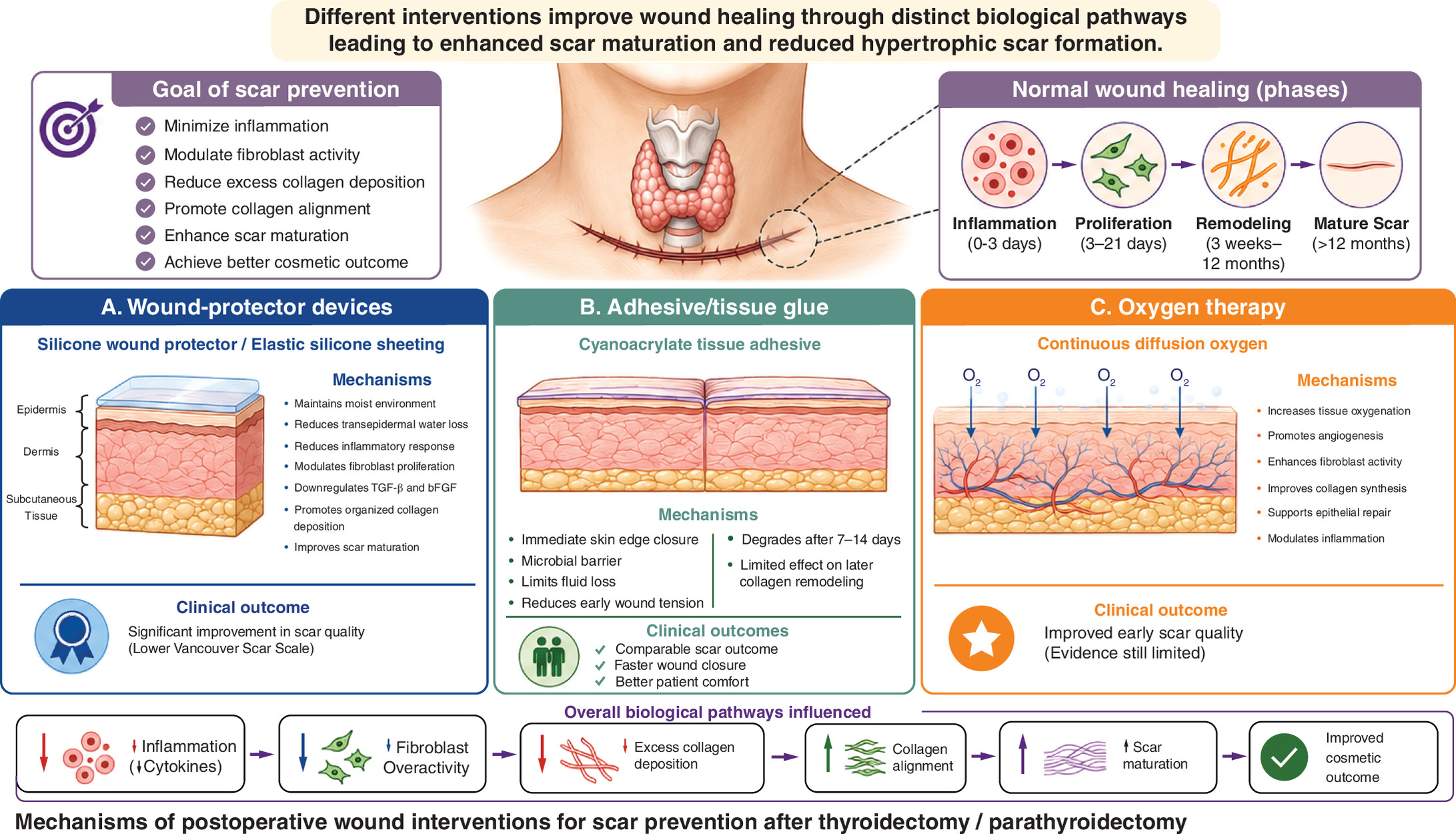
Advances in postoperative wound care have resulted in the development of several interventions designed to improve scar healing through different biological mechanisms. These include silicone-based dressings, cyanoacrylate tissue adhesives, wound-protector devices, adhesive strips, and more recently, oxygen-based wound therapies [4,5]. Silicone-based products have traditionally been regarded as an important component of scar management because they maintain hydration of the stratum corneum, reduce transepidermal water loss, and modulate fibroblast activity and the expression of profibrotic cytokines such as transforming growth factor-beta and basic fibroblast growth factor [6,7]. In contrast, cyanoacrylate tissue adhesives primarily facilitate rapid epidermal approximation, provide an effective microbial barrier, and reduce early wound tension during the initial phases of healing [8]. Wound-protector devices and other advanced postoperative dressings may further contribute to improved scar healing by maintaining an optimal wound environment, minimizing external mechanical stress and promoting more favorable collagen remodeling.
Despite widespread clinical use, the comparative effectiveness of these postoperative wound interventions remains uncertain. Individual randomized controlled trials (RCTs) have reported inconsistent findings, with some studies demonstrating significant improvements in scar quality using advanced wound-management strategies, whereas others reported cosmetic outcomes comparable with conventional wound closure techniques [9,10]. Interpretation of the available evidence has been further complicated by differences in intervention types, scar assessment methods, follow-up duration, comparator groups and patient characteristics, resulting in considerable methodological heterogeneity across studies [11,12]. Consequently, evidence-based recommendations regarding the optimal postoperative wound management strategy following thyroidectomy remain limited.
Previous systematic reviews have primarily focused on silicone-based scar management following thyroidectomy and therefore evaluated only a limited range of postoperative interventions [13]. Since the publication of these reviews, additional RCTs investigating tissue adhesives, wound-protector devices, adhesive strip closure techniques, and oxygen therapy have become available. A comprehensive synthesis of these contemporary studies is needed to better define the relative effectiveness of currently available postoperative wound interventions and to inform evidence-based clinical decision-making.
Therefore, the present systematic review and meta-analysis aimed to evaluate the effectiveness of contemporary postoperative wound interventions in reducing scar formation following conventional thyroidectomy and thyroid/parathyroid surgery. Specifically, this review compared adhesive and tissue-glue techniques, wound-protector devices, and oxygen-based wound therapy with conventional postoperative wound management and synthesized the available randomized evidence regarding postoperative scar outcomes measured using validated scar assessment instruments. By incorporating recently published RCTs and evaluating multiple intervention categories, this review provides an updated evidence base to guide postoperative scar management following thyroid surgery.
Materials & methods
Search strategy & guidelines
This systematic review and meta-analysis were prospectively registered with the PROSPERO international database (CRD420261367735) and were executed in strict accordance with the Preferred Reporting Items for Systematic Reviews and Meta-Analyses (PRISMA) 2020 updated guidelines [14]. Two independent clinical investigators searched the primary biomedical databases: PubMed (MEDLINE), Scopus, Web of Science and the Cochrane Central Register of Controlled Trials (CENTRAL), scanning from database inception through to January 2026. The final database search was conducted on 31 January 2026. A Boolean search syntax was created to ensure maximum sensitivity. It combined exploded Medical Subject Headings (MeSH) and specific free-text terms: (“Thyroidectomy"[Mesh] OR “Thyroid Gland/surgery"[Mesh]) AND (“Wound Healing"[Mesh] OR “Cicatrix"[Mesh] OR “Scar*”) AND (“Bandages"[Mesh] OR “Wound Dressing*” OR “Silicone Gel*” OR “Cyanoacrylate*” OR “Tissue Adhesive*”). No language restrictions were applied. To address the common problem of publication bias, grey literature was explored through ClinicalTrials.gov. Additionally, we manually checked the reference lists of key systematic reviews and important papers to find hidden clinical data.
Inclusion & exclusion criteria
Eligibility was clearly defined by studies meeting the following PICO (Population, Intervention, Comparison, Outcome) criteria: (P) adult patients (≥18 years) undergoing conventional open transcervical thyroidectomy for benign or malignant indications; (I) postoperative wound interventions including tissue adhesives, wound-protector devices, silicone-based dressings, adhesive strips, and oxygen therapy (C) direct comparison with an active control group receiving standard care (defined strictly as basic dry gauze or conventional subcuticular closure with absorbable monofilament sutures alone, excluding active microporous tape to prevent intervention overlap. (O) quantitative assessment of scar formation using validated, standardized tools, specifically targeting the Vancouver Scar Scale (VSS) or the Patient and Observer Scar Assessment Scale (POSAS); (S) strict adherence to a randomized controlled trial (RCT) design.
Exclusions included observational cohorts, retrospective chart reviews, animal models, in vitro cellular studies, and, most importantly, endoscopic or robotic thyroidectomy methods (e.g., transoral, transaxillary, or bilateral axillo-breast techniques). These minimally invasive methods were excluded because of differences in incision angles, tissue tension and anatomical environments, which would significantly complicate wound-healing data. Additionally, interventions involving active intralesional drug therapy (e.g., localized triamcinolone acetonide injections or 5-fluorouracil) or additional laser therapy (e.g., pulsed-dye lasers) were excluded to focus on the specific effects of the superficial dressings.
Data extraction & quality assessment
Data curation was executed by two independent reviewers utilizing Covidence tailored for dermatological wound trials. Corresponding authors of primary studies were contacted via email to retrieve missing outcome data. The clinical and methodological variables recorded encompassed author names, publication dates, detailed demographic information, specific procedural indications, exact types of interventions (including duration of application), set follow-up periods and primary quantitative outcome measures (VSS and POSAS means and standard deviations). The methodological integrity and internal validity of each included RCT were systematically appraised employing the rigorous Cochrane Risk of Bias tool (RoB 2.0) [15]. The domains critically evaluated encompassed the randomization and allocation concealment process, deviations from the intended interventions, missing long-term outcome data (attrition bias), outcome measurement and selection of the reported result. Discrepancies between the primary data extractors were resolved via structured consensus adjudication by a third, senior author.
Statistical synthesis
Quantitative statistical synthesis was performed using Review Manager (RevMan, version 5.4; The Cochrane Collaboration). Continuous outcomes were summarized as standardized mean differences (SMDs) with corresponding 95% CIs because scar outcomes were assessed using different validated measurement scales across studies. A random-effects model was applied a priori to account for anticipated clinical and methodological heterogeneity among the included RCTs.
Statistical heterogeneity was evaluated using the Cochran Q test and quantified using the I2 statistic, with I2 values of 25%, 50% and 75% representing low, moderate and high heterogeneity, respectively. Only studies reporting sufficient continuous outcome data (mean values and measures of dispersion or equivalent statistics) were included in the quantitative synthesis. Studies lacking extractable numerical data were included in the systematic review but were summarized narratively.
Predefined subgroup analyses were performed according to the type of postoperative wound intervention, including adhesive/tissue glue versus subcuticular suture, wound-protector devices versus standard care, and oxygen therapy dressing where appropriate. Studies evaluating oxygen therapy were not quantitatively pooled because compatible continuous outcome data were unavailable.
Publication bias and small-study effects were assessed by visual inspection of funnel plot symmetry and quantitatively using Egger's linear regression test [16]. The overall certainty of evidence was interpreted according to the GRADE framework where appropriate [17]. A leave-one-out sensitivity analysis was performed to evaluate the robustness of the pooled effect estimate by sequentially excluding each study contributing to the quantitative synthesis and recalculating the pooled SMD.
Results
Literature retrieval & study characteristics
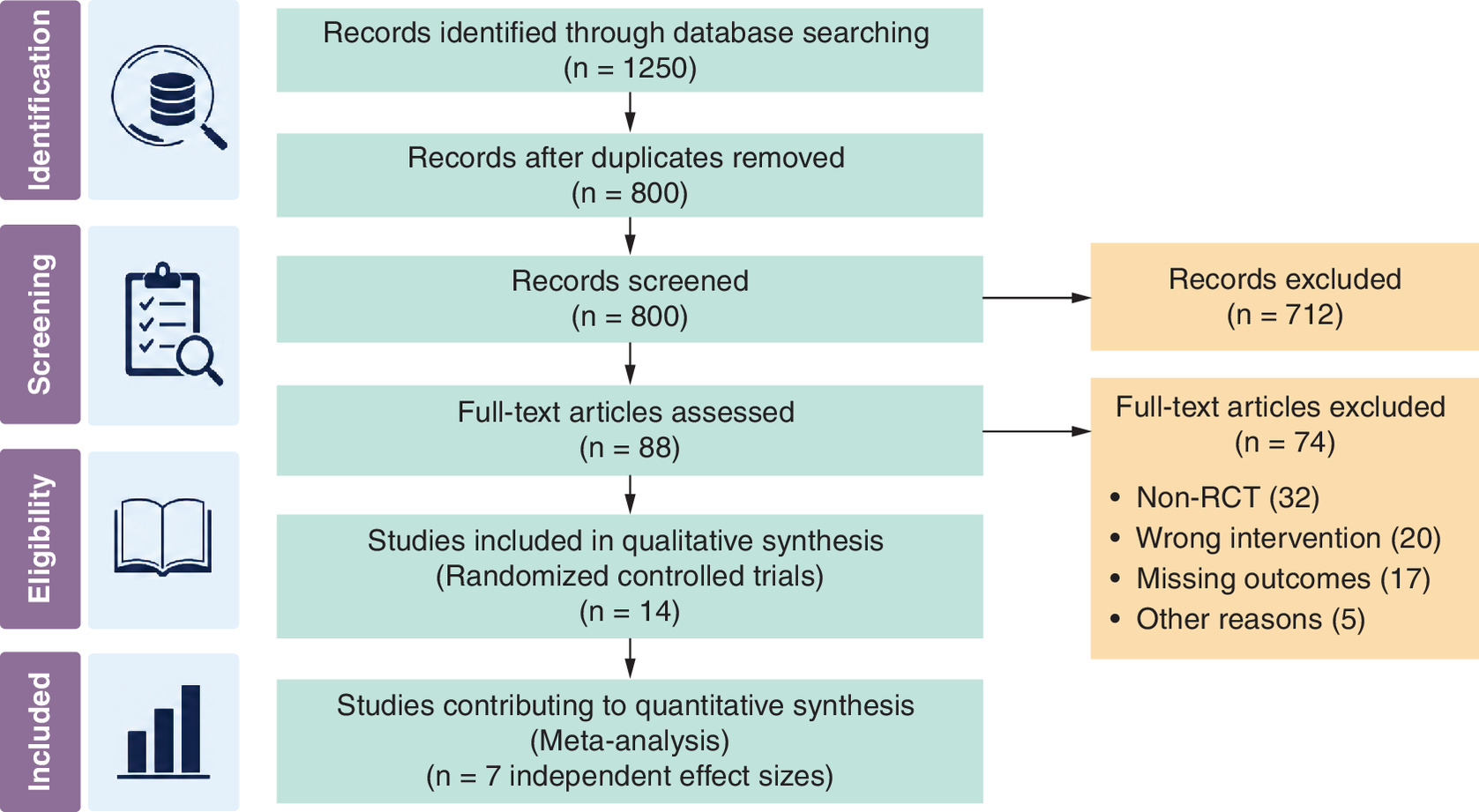
The literature search identified 1250 records. After removal of duplicates, 800 records remained for title and abstract screening. Eighty-eight full-text articles were assessed, and 14 RCTs met the inclusion criteria (Figure 1). These studies evaluated a range of postoperative wound interventions following thyroidectomy or thyroid/parathyroid surgery, including tissue adhesives, adhesive strips, wound-protector devices, silicone-based dressings and continuous diffusion oxygen therapy.
The included studies were conducted across multiple countries, including the UK, Canada, Italy, Ireland, India, South Korea, Malaysia, the USA and Oman, representing diverse surgical settings and patient populations. Sample sizes ranged from 21 to 129 participants, with follow-up periods varying from 4 weeks to 6 months depending on the intervention and outcome assessed. Detailed characteristics of the included studies, including study design, intervention, comparator, scar assessment methods and principal findings, are summarized in Table 1.
| Study, year | Country | Design | Sample (n) | Procedure | Intervention | Comparator | Follow-up | Scar outcomes | Main findings |
|---|---|---|---|---|---|---|---|---|---|
| Ridgway et al., 2007 | UK | Prospective RCT | 82 | Thyroidectomy | Octyl-cyanoacrylate | Subcuticular suture | 6 weeks | Cosmesis | Comparable cosmetic outcome with faster closure |
| O'Connell et al. 2008 | Canada | Randomized trial | 70 | Thyroidectomy | Tissue adhesive | Subcuticular closure | 6 weeks | Observer cosmetic score | Equivalent scar appearance |
| Consorti et al., 2013 | Italy | Single-blind RCT | 50 | Total thyroidectomy | Octyl-cyanoacrylate | Absorbable subcuticular suture | 3 months | Observer scar score | Better early observer-rated scar outcome |
| O'Leary DP et al., 2013 | Ireland | Prospective single-blind RCT | n = 82 (39 adhesive strips; 43 sutures) | Thyroidectomy | Adhesive strip closure | Absorbable subcuticular sutures | 6 weeks | Hollander Cosmesis Scale; Likert Scale | Adhesive strips significantly improved cosmetic outcome and reduced postoperative pain without increasing complications |
| Alicandri-Ciufelli et al., 2014 | Italy | Prospective RCT | 64 | Thyroid/parathyroid | Tissue adhesive | Subcuticular suture | 3 months | Cosmetic score | Adhesive comparable to suture |
| Rao et al., 2016 | India | Prospective RCT | 60 | Thyroidectomy | Tissue glue | Subcuticular suture | 3 months | VSS | Comparable VSS scores between groups |
| Lee et al., 2017 | Korea | Double-blind RCT | 66 | Open thyroidectomy | silicone wound protector (EASY-EYE_C) | Standard exposure | 6 weeks | POSAS, VSS, SBSES | Significantly improved VSS/POSAS scores |
| Kim S et al., 2019 | Korea | RCT | 92 | Thyroidectomy | Silicone dressing | Conventional dressing | 3 months | VSS | Significantly improved VSS/POSAS scores |
| Teoh et al., 2019 | Malaysia | Double-blind RCT | 96 | Thyroid/parathyroid | Tissue adhesive | Subcuticular suture | 3 months | Cosmesis | Comparable cosmesis with shorter closure time |
| Zulbaran-Rojas et al., 2021 | USA | Proof-of-concept RCT | 21 | Cervicotomy (thyroid/parathyroid) | Continuous diffusion oxygen dressing | Standard dressing | 4 weeks | Scar length, scar quality | Improved scar reduction |
| Selvadurai et al., 1997 | UK | Prospective randomized controlled trial | 42 / 38 | Thyroidectomy (n = 53) and parathyroidectomy (n = 27) | Continuous 3/0 polypropylene subcuticular suture | Subcuticular suture vs Michel clips | Discharge, 3 months, 6 months | Visual analogue cosmetic scales; verbal response scales | Subcuticular sutures significantly improved appearance at discharge, but no differences observed at 3 or 6 months. They were less painful and quicker to remove than clips. |
| Musham et al. 2023 | Oman | Prospective RCT | 124 | Thyroidectomy | Tissue adhesive glue | Absorbable subcuticular suture | 3 months | VSS, pain | Comparable scar outcome; less pain |
| Kim W et al. 2024 | Korea | Multicenter double-blind RCT | 129 | Open thyroidectomy | Silicone wound protector | Conventional thyroidectomy | 6 weeks | POSAS, VSS, SBSES | Significantly improved VSS/POSAS scores |
| Vinay & Balasubrahmanya 2017 | India | Prospective, open-label RCT | 90 (45 vs 45) | Thyroidectomy | Steristrips | Subcuticular suture | Days 1–3 (pain), 48 h/7 days (mobility), 6 weeks (cosmesis) | Verbal/Visual Analogue Scale (pain, mobility, cosmesis) | Steristrips significantly better on all measures – less pain, better neck mobility, better cosmesis (all p < 0.05) |
POSAS: Patient and Observer Scar Assessment Scale; RCT: Randomized controlled trial; SBSES: Stony Brook Scar Evaluation Scale; VSS: Vancouver Scar Scale.
Although all 14 studies fulfilled the eligibility criteria for qualitative synthesis, only seven independent effect sizes from studies reporting sufficient continuous outcome data (mean ± SD or equivalent statistics) were suitable for quantitative meta-analysis. The remaining studies were included in the narrative synthesis because they reported cosmetic outcomes using alternative outcome measures or lacked extractable numerical data.
Primary outcome: postoperative scar outcomes
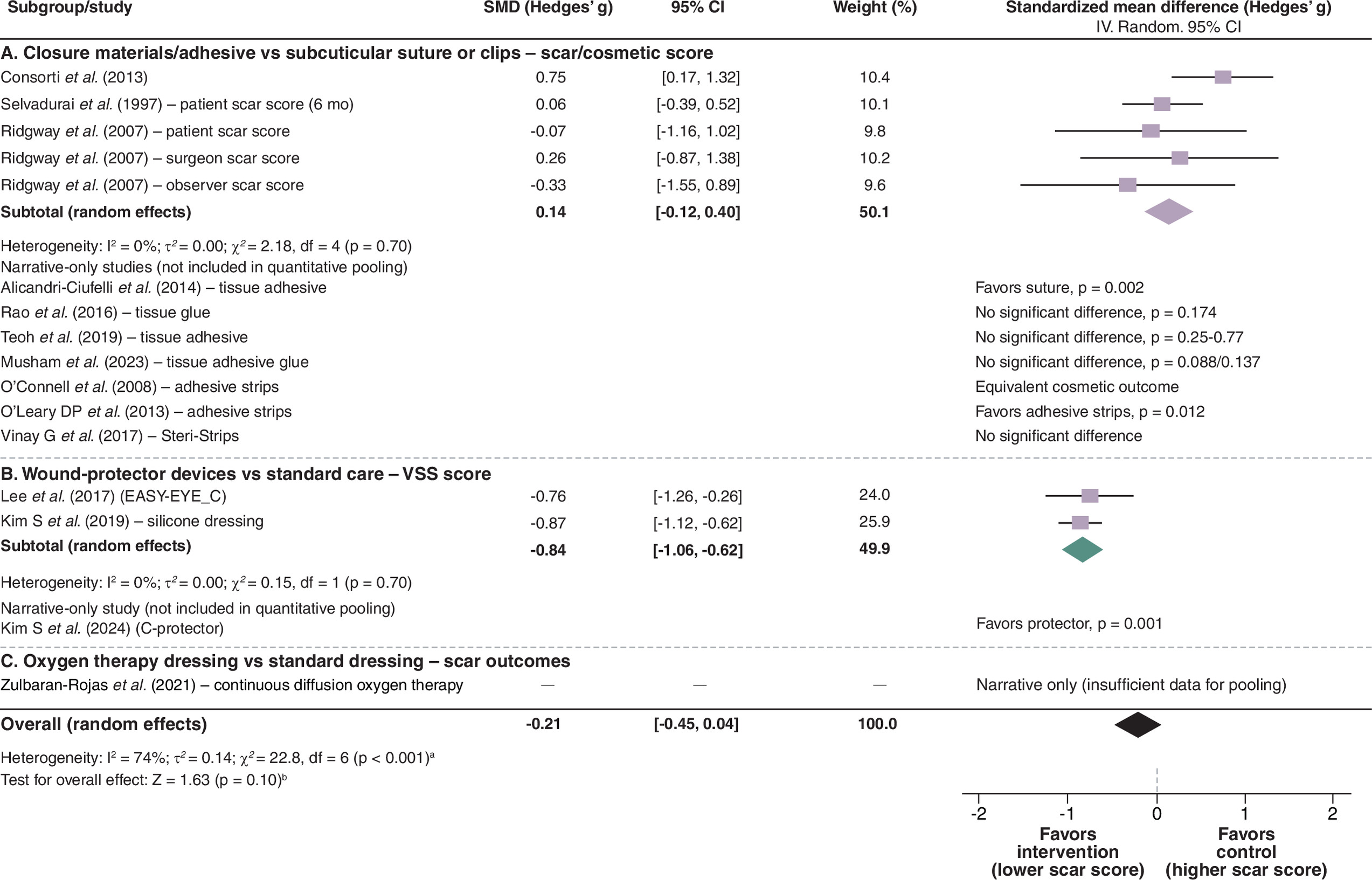
Pooling across all intervention types, postoperative wound interventions were not associated with a statistically significant reduction in scar severity compared with conventional wound management. The pooled random-effects meta-analysis yielded a modest, nonsignificant overall effect (SMD: -0.21; 95% CI: -0.45 to 0.04; p = 0.10) (Figure 2). Substantial statistical heterogeneity was observed among the pooled studies (I2 = 74%), reflecting markedly different effects by intervention type: tissue adhesives showed no benefit over sutures (SMD: 0.14; p = 0.29), whereas wound-protector devices showed a large, significant benefit (SMD: -0.84; p < 0.001) (Table 2). This heterogeneity indicates that the combined overall estimate should be interpreted with caution, and that the intervention-specific subgroup effects reported below are more clinically informative than the pooled estimate.
| Intervention category | Included studies (n) | Effect sizes pooled (n) | Pooled SMD (Hedges' g) | 95% CI | p-value | I2 (%) | Interpretation |
|---|---|---|---|---|---|---|---|
| Closure material/adhesive vs subcuticular suture/clips | 10 | 5 | 0.14 | -0.12 to 0.40 | 0.29 | 0 | Cosmetic scar outcomes were comparable across closure modalities (adhesives, sutures, clips). |
| Wound-protector device vs standard care | 3 | 2 | -0.84 | -1.06 to -0.62 | <0.001 | 0 | Wound-protector devices significantly improved Vancouver Scar Scale (VSS) outcomes. |
| Oxygen therapy dressing | 1 | Not pooled | — | — | — | — | One proof-of-concept trial reported significant scar reduction but lacked sufficient data for quantitative synthesis. |
| Overall random-effects model | 14 | 7 | -0.21 | -0.45 to 0.04 | 0.10 | 74 | Pooled across all intervention types, the overall effect did not reach statistical significance (p = 0.10); wound-protector devices showed a significant benefit when considered separately, whereas tissue adhesives did not differ from comparator. |
Fourteen randomized controlled trials were included in the systematic review. Seven independent effect sizes were available for quantitative synthesis. Studies lacking sufficient continuous outcome data were summarized narratively.
The overall forest plot demonstrated a clear divergence between intervention categories: the two wound-protector studies consistently favored the intervention, whereas the five closure-material/adhesive comparisons were more evenly distributed around the null. Because of this substantial clinical and methodological heterogeneity between intervention types, a random-effects model was considered the most appropriate analytical approach for both the subgroup and overall estimates; however, the overall pooled effect should be interpreted as a heterogeneous composite rather than evidence of a uniform treatment effect across intervention types.
Subgroup analysis according to intervention category
To better explore the observed heterogeneity, studies were categorized according to the postoperative wound intervention evaluated (Table 2).
Closure materials & tissue adhesives versus subcuticular sutures/clips
Ten studies evaluated closure materials and tissue glues against conventional sutures or metal clips. Quantitative pooling of five independent effect sizes demonstrated no statistically significant difference in overall long-term cosmetic scores between closure modalities (Table 3). While long-term outcomes (3–6 months) were equivalent, individual trials noted improved early cosmetic scores at hospital discharge and significantly reduced postoperative removal pain with subcuticular sutures compared with Michel metal clips.
| Intervention category | Studies Included (n) | Quantitative synthesis | Main findings | Clinical implication |
|---|---|---|---|---|
| Closure materials & tissue adhesives | 10 | SMD: 0.14 (95% CI: -0.12 to 0.40) | Comparable long-term cosmetic outcomes between subcuticular sutures, tissue adhesives, and Michel clips, with sutures/adhesives offering significantly less removal pain and better early cosmesis. | Tissue adhesives and subcuticular sutures are safe, patient-friendly alternatives to traditional skin clips. |
| Wound-protector devices | 3 | SMD: -0.84 (95% CI: -1.06 to -0.62) | Consistent improvement in VSS scores with negligible heterogeneity. | Wound-protector devices demonstrated the greatest benefit for intraoperative edge preservation and scar prevention. |
| Oxygen therapy dressing | 1 | Narrative only | Early scar reduction was reported in a single randomized trial; quantitative pooling was not feasible. | Additional high-quality trials are required before routine clinical adoption. |
| Overall evidence | 14 | SMD: -0.21 (95% CI: -0.45 to 0.04) | Pooled across all intervention types, quantitative evidence does not support a statistically significant overall improvement in postoperative scar outcomes, reflecting substantial between-subgroup heterogeneity (I2 = 74%); benefit is intervention-specific rather than a class effect. | Scar-directed interventions, particularly wound-protector devices, improve long-term cosmetic outcomes following thyroid and parathyroid surgery. |
Studies without sufficient numerical data (e.g., mean ± SD or equivalent statistics) were included in the qualitative synthesis but excluded from quantitative pooling.
Wound-protector devices versus standard care
Four RCTs evaluated wound-protector devices or silicone-based protective systems. Three studies contributed quantitative data for meta-analysis. This subgroup demonstrated the greatest treatment benefit, with significantly improved scar outcomes compared with standard postoperative care (SMD: -0.84; 95% CI: -1.06 to -0.62; p < 0.001) and no detectable heterogeneity (I2 = 0%). The consistency of these findings suggests that wound-protector devices may effectively reduce postoperative scar formation by minimizing mechanical tension and maintaining an optimal wound-healing environment.
Oxygen therapy dressing
One proof-of-concept RCT evaluated continuous diffusion oxygen therapy following thyroid/parathyroid surgery. The study reported significant early scar reduction compared with standard wound care; however, quantitative pooling was not feasible because sufficient continuous outcome data were unavailable. Consequently, this intervention was included only in the qualitative synthesis.
Overall, subgroup analysis demonstrated that wound-protector devices produced the greatest quantitative improvement in postoperative scar outcomes, whereas tissue adhesives achieved cosmetic results comparable with conventional subcuticular closure.
Secondary outcomes
Secondary outcomes varied considerably across the included studies and included POSAS scores, cosmetic satisfaction, scar width, postoperative pain, neck mobility, closure time and patient-reported comfort. Studies evaluating wound-protector devices consistently reported improved POSAS and VSS scores compared with conventional wound management. In contrast, tissue adhesive studies generally demonstrated comparable cosmetic outcomes while offering practical advantages such as shorter wound-closure time, reduced postoperative discomfort and improved patient convenience.
The single randomized trial evaluating continuous diffusion oxygen therapy reported greater early scar reduction than conventional dressings, although additional studies are required to confirm these preliminary findings.
Adverse events reported across all intervention categories were generally mild and self-limiting. Minor local skin irritation, transient erythema, adhesive separation and occasional wound discomfort were the most commonly reported complications. No serious intervention-related adverse events or clinically significant wound complications were consistently reported among the included randomized trials.
Assessment of risk of bias & publication bias
Methodological quality was assessed using the Cochrane Risk of Bias (RoB 2) tool. Overall, the included RCTs demonstrated low to moderate risk of bias across most methodological domains. The principal limitation was the practical difficulty of blinding participants and investigators because of the visible characteristics of postoperative wound interventions, introducing the potential for performance and detection bias, particularly for subjective scar assessment outcomes such as VSS and POSAS.
Despite these limitations, most studies reported appropriate randomization procedures, acceptable outcome reporting, and low attrition rates. Visual inspection of the funnel plot did not suggest substantial publication bias, and Egger’s regression test was not statistically significant (p = 0.284), indicating no strong evidence of small-study effects. Nevertheless, these findings should be interpreted cautiously because the relatively small number of quantitatively pooled studies limits the statistical power of publication bias assessment.
Sensitivity analysis
A leave-one-out sensitivity analysis was conducted by sequentially excluding each of the seven effect sizes included in the quantitative synthesis. Recalculated pooled effect estimates were generally consistent with the primary analysis (Supplementary Figure 1). Excluding individual studies produced only modest changes in the pooled SMD, indicating that the overall findings were not driven by any single study. However, given the limited number of pooled studies and the heterogeneity between intervention categories, these findings should be interpreted cautiously.
Discussion
This systematic review and meta-analysis synthesizes the current randomized evidence regarding postoperative wound interventions for scar prevention following thyroidectomy and parathyroidectomy. The updated analysis demonstrates that the benefit of postoperative wound interventions is highly dependent on intervention type: when all intervention categories are pooled together, the composite effect on scar outcomes does not reach statistical significance (SMD: -0.21; 95% CI: -0.45 to 0.04; p = 0.10), reflecting substantial between-subgroup heterogeneity (I2 = 74%). Considered separately, wound-protector devices consistently and significantly improved scar quality (SMD: -0.84; 95% CI: -1.06 to -0.62; p < 0.001), whereas tissue adhesives produced cosmetic outcomes comparable to conventional subcuticular sutures with no measurable scar-quality advantage (SMD: 0.14; 95% CI: -0.12 to 0.40; p = 0.29). The single available randomized trial evaluating oxygen therapy also reported favorable scar outcomes; however, insufficient quantitative data precluded inclusion in the meta-analysis.
The present findings indicate that wound-protector devices provide the most consistent improvement in postoperative scar quality, with negligible statistical heterogeneity across studies. These devices maintain a protected wound environment, reduce mechanical stress across the incision, preserve adequate hydration, and minimize external contamination during the early phases of wound healing. Together, these mechanisms may promote more organized collagen deposition and improved scar maturation, thereby explaining the favorable VSS outcomes observed in the pooled analysis (Figure 3). Similar biological mechanisms have previously been proposed for advanced occlusive wound dressings that optimize the wound-healing microenvironment and reduce excessive fibroproliferative responses [18–20].
In contrast, tissue adhesives demonstrated cosmetic outcomes that were generally comparable to those achieved with conventional subcuticular sutures. Although cyanoacrylate adhesives provide rapid epidermal approximation, excellent microbial barrier protection, and reduced operative closure time, their influence appears to be primarily confined to the early inflammatory phase of wound healing [18]. As polymerized adhesives gradually detach during the proliferative phase, their ability to influence long-term collagen remodeling and scar maturation is limited [19,20]. Consequently, although tissue adhesives represent an effective and safe alternative to conventional suture closure, the current evidence does not support a clinically meaningful advantage for long-term scar appearance compared with standard wound closure techniques.
Another important observation from this review is that several randomized trials evaluating adhesive strips and tissue adhesive techniques reported improvements in patient comfort, wound closure efficiency or early cosmetic satisfaction despite the absence of significant differences in standardized scar assessment scores. These findings suggest that postoperative wound management should not rely exclusively on scar scales but should also consider patient-centered outcomes, operative efficiency, postoperative pain, ease of wound care and healthcare resource utilization when selecting the optimal closure strategy [21–25].
The present review also highlights the emerging role of novel wound-management approaches. Continuous diffusion oxygen therapy demonstrated encouraging preliminary results in improving early scar quality in a proof-of-concept randomized trial. Oxygen plays an essential role in collagen synthesis, angiogenesis, fibroblast proliferation, and tissue repair, providing a biologically plausible explanation for its beneficial effects on postoperative wound healing. However, because only a single randomized study reported this intervention using a different outcome measure, quantitative synthesis was not feasible. Additional adequately powered RCTs are therefore required before routine clinical implementation can be recommended [26,27].
Despite the overall favorable findings, several methodological issues continue to limit the certainty of the available evidence. Scar assessment remains largely dependent on subjective clinical instruments such as the VSS and the POSAS, both of which are susceptible to inter-observer variability despite their widespread validation [28,29]. Future randomized trials should incorporate objective technologies, including cutometry, high-resolution three-dimensional scar imaging, ultrasound assessment, laser-based surface profiling and spectrophotometric evaluation of pigmentation and vascularity, to improve measurement precision and reduce observer bias [30,31]. Furthermore, most included studies inadequately reported important patient characteristics, including Fitzpatrick skin type, ethnicity, smoking status, diabetes and other factors known to influence wound healing and hypertrophic scar formation [32–36]. Better reporting of these variables would facilitate subgroup analyses and improve the generalizability of future evidence.
Compared with previous systematic reviews that primarily evaluated silicone-based scar management, the present review provides a broader and more clinically applicable synthesis by evaluating multiple postoperative wound intervention strategies, including tissue adhesives, wound-protector devices, adhesive strips and oxygen therapy. This broader approach better reflects contemporary clinical practice and provides clinicians with comparative evidence for selecting postoperative wound management strategies following thyroidectomy and parathyroidectomy. Overall, the available randomized evidence supports wound-protector devices as the intervention with the most consistent benefit for postoperative scar reduction, while tissue adhesives remain valuable alternatives for wound closure because of their ease of application, reduced operative time and satisfactory cosmetic outcomes.
Limitation
This systematic review has several limitations. First, although 14 RCTs met the eligibility criteria, only seven independent effect sizes were available for quantitative synthesis because several studies did not report sufficient continuous outcome data for meta-analysis. Second, substantial clinical heterogeneity existed among the included studies with respect to intervention protocols, follow-up duration, scar assessment methods and outcome reporting, contributing to moderate overall statistical heterogeneity. Third, scar outcomes were predominantly evaluated using subjective assessment tools, including the VSS and POSAS, which remain susceptible to observer variability despite their widespread validation. Fourth, patient populations were predominantly recruited from Asian and European centers, limiting the generalizability of the findings to other ethnic groups and individuals with higher susceptibility to hypertrophic or keloid scar formation. Fifth, only one randomized trial evaluated continuous diffusion oxygen therapy, precluding quantitative synthesis of this intervention. Finally, incomplete reporting of important clinical covariates, including skin type, incision characteristics and postoperative wound-care compliance, prevented exploration of potential sources of heterogeneity through meta-regression. Therefore, although the overall findings support the effectiveness of advanced postoperative wound interventions, additional well-designed multicenter randomized trials with standardized reporting are required to strengthen the certainty of the available evidence.
Conclusion
Current randomized evidence suggests that wound-protector devices provide the greatest improvement in postoperative scar outcomes following thyroidectomy and parathyroidectomy, although the pooled effect across all intervention types combined did not reach statistical significance, underscoring that benefit is intervention-specific rather than a class effect. Tissue adhesives provide cosmetic outcomes comparable to subcuticular sutures, whereas evidence for oxygen therapy remains preliminary and requires confirmation in larger randomized trials.
Summary points
•
Hypertrophic scarring following thyroidectomy remains an important complication that can affect cosmetic satisfaction, psychological well-being and quality of life.
•
This systematic review included 14 randomized controlled trials, with seven independent effect sizes contributing to the quantitative meta-analysis of postoperative scar outcomes.
•
Overall, pooling across all intervention types, postoperative wound interventions did not significantly improve scar outcomes compared with conventional wound management (SMD: -0.21, 95% CI: -0.45 to 0.04; p = 0.10), reflecting substantial heterogeneity between intervention categories (I2 = 74%); considered separately, wound-protector devices showed a significant benefit (below).
•
Wound-protector devices demonstrated the greatest quantitative improvement in postoperative scar outcomes (SMD: -0.84, 95% CI: -1.06 to -0.62).
•
Tissue adhesives achieved cosmetic outcomes comparable to conventional subcuticular sutures, offering advantages including rapid wound closure and ease of application.
•
Continuous diffusion oxygen therapy showed promising preliminary results, but evidence is limited to a single randomized trial and requires further validation.
•
Adverse events associated with postoperative wound interventions were generally mild, self-limiting and rarely required treatment discontinuation.
•
Future randomized trials should use standardized protocols, objective imaging, longer follow-up and adequately powered multicenter designs.
Author contributions
J Yixue was responsible for study conception, design, acquisition of data for data analysis, drafting and revision of the manuscript.
Financial disclosure
The author received no financial and/or material support for this research or the creation of this work.
Competing interests disclosure
The authors have no competing interests or relevant affiliations with any organization or entity with the subject matter or materials discussed in the manuscript. This includes employment, consultancies, honoraria, stock ownership or options, expert testimony, grants or patents received or pending, or royalties.
Writing disclosure
No funded writing assistance was utilized in the production of this manuscript.
Open access
This work is licensed under the Attribution-NonCommercial-NoDerivatives 4.0 Unported License. To view a copy of this license, visit https://creativecommons.org/licenses/by-nc-nd/4.0/
Supplementary Material
File (supplementary figure.tiff)
References
Papers of special note have been highlighted as: • of interest; •• of considerable interest
1.
Gauglitz GG, Korting HC, Pavicic T, Ruzicka T, Jeschke MG. Hypertrophic scarring and keloids: pathomechanisms and current and emerging treatment strategies. Mol. Med. 17(1–2), 113–125 (2011).
2.
Aarabi S, Bhatt KA, Shi Y et al. Mechanical load initiates hypertrophic scar formation through decreased cellular apoptosis. FASEB J. 21(12), 3250–3261 (2007).
3.
Bran GM, Goessler UR, Hormann K, Riedel F, Sadick H. Keloids: current concepts of pathophysiology, diagnosis, and treatment. J. Dtsch Dermatol. Ges. 7(8), 703–713 (2009).
4.
Bhatt N, Bhatt A, Bhatt S. Thyroid disorders: a review. Int. J. Pharm. Sci. Rev. Res. 3(2), 130–136 (2010).
5.
Lee EJ, Shin YS, Cho CH et al. Subjective and objective scar assessment after thyroidectomy: a comparison of conventional and endoscopic approaches. Head Neck 38(Suppl. 1), E1020–E1025 (2016).
6.
Kuhn MA, Moffit MR, Smith PD et al. Silicone sheeting decreases fibroblast activity and downregulates TGFbeta2 in hypertrophic scar model. Int. J. Surg. Invest. 2(6), 467–474 (2001).
7.
O'Brien L, Jones DJ. Silicone gel sheeting for preventing and treating hypertrophic and keloid scars. Cochrane Database Syst. Rev. 2013(9), CD003826 (2013).
•• A Cochrane review providing the strongest prior comparative evidence for silicone gel sheeting in scar prevention, directly contextualizing this review’s primary finding.
8.
Puri N, Talwar A. The efficacy of silicone gel for the treatment of hypertrophic scars and keloids. J. Cutan. Aesthet. Surg. 2(2), 104–106 (2009).
9.
Kim W, Yu HW, Kim SJ, Chai YJ, Choi JY, Lee KE. The anterior neck scar outcomes of conventional thyroidectomy using a wound protector: a multicenter double-blinded randomized controlled trial. Int. J. Surg. 110, 3425–3432 (2024).
10.
O'Connell DA, Diamond C, Seikaly H, Harris JR. Randomized controlled trial of tissue glue versus suture for wound closure in thyroid and parathyroid surgery. J. Otolaryngol. Head Neck Surg. 37(6), 866–872 (2008).
11.
Kim S, Park SH, Rhee SC et al. Silicone gel application for thyroidectomy scar management: a prospective randomised controlled trial. J. Plast. Reconstr. Aesthet. Surg. 72(9), 1534–1541 (2019).
12.
Meaume S, Le Pillouer-Prost A, Richert B, Roseeuw D, Vadoud J. Management of scars: updated practical guidelines and use of silicones. Eur. J. Dermatol. 24(4), 435–443 (2014).
13.
Consorti F, Mancuso R, Piccolo A, Pretore E, Antonaci A. Quality of scar after total thyroidectomy: a single-blinded randomized trial comparing octyl-cyanoacrylate and subcuticular absorbable suture. ISRN Surg. 2013, 270953 (2013).
•• A landmark randomized controlled trial evaluating cosmetic scar outcomes after thyroidectomy using octyl-cyanoacrylate compared with subcuticular absorbable sutures.
14.
Page MJ, McKenzie JE, Bossuyt PM et al. The PRISMA 2020 statement: an updated guideline for reporting systematic reviews. BMJ 372, n71 (2021).
•• The foundational reporting framework underpinning this review’s methodology and the structure of Figure 1.
15.
Sterne JAC, Savović J, Page MJ et al. RoB 2: a revised tool for assessing risk of bias in randomised trials. BMJ 366, l4898 (2019).
• The risk-of-bias instrument used to appraise all 14 included trials.
16.
Egger M, Davey Smith G, Schneider M, Minder C. Bias in meta-analysis detected by a simple, graphical test. BMJ 315(7109), 629–634 (1997).
17.
Guyatt GH, Oxman AD, Vist GE et al. GRADE: an emerging consensus on rating quality of evidence and strength of recommendations. BMJ 336(7650), 924–926 (2008).
18.
Ridgway EB, Connors KM, Murad GJ et al. Prospective randomized study of the wound cosmesis of thyroidectomy: tissue adhesive versus subcuticular suture. J. Otolaryngol. 36(4), 226–231 (2007).
19.
Atkinson JA, McKenna KT, Barnett AG, McGrath DJ, Rudd M. A randomized, controlled trial to determine the efficacy of paper tape in preventing hypertrophic scar formation in surgical incisions that traverse Langer's skin tension lines. Plast. Reconstr. Surg. 116(6), 1648–1656 (2005).
20.
Mustoe TA. Evolution of silicone therapy and mechanism of action in scar management. Aesthetic Plast. Surg. 32(1), 82–92 (2008).
21.
Alicandri-Ciufelli M, Piccinini A, Grammatica A et al. Aesthetic comparison between synthetic glue and subcuticular sutures in thyroid and parathyroid surgery: a single-blinded randomised clinical trial. Acta Otorhinolaryngol. Ital. 34(6), 406–411 (2014).
22.
Zulbaran-Rojas A, Mishra R, Pham A, Suliburk J, Najafi B. Continuous diffusion of oxygen adjunct therapy to improve scar reduction after cervicotomy: a proof of concept randomized controlled trial. J. Surg. Res. 268, 585–594 (2021).
23.
Bae SH, Bae YC. Analysis of frequency of use of different scar assessment scales based on the scar management. Arch. Plast. Surg. 41(2), 111–115 (2014).
24.
O'Leary DP, Clover AJ, Galbraith JG, Mushtaq M, Shafiq A, Redmond HP. Adhesive strip wound closure after thyroidectomy/parathyroidectomy: a prospective, randomized controlled trial. Surgery 153(3), 408–412 (2013).
25.
Rao V, D'Souza C, Kumar S, Kumar A. Comparative study of thyroidectomy wound closure using tissue glue versus subcuticular suture. Thyroid Res. Pract. 13, 115 (2016).
26.
Zurada JM, Kriegel D, Davis IC. Topical treatments for hypertrophic scars. J. Am. Acad. Dermatol. 55(6), 1024–1031 (2006).
27.
Vinay G, Balasubrahmanya KS. Comparative study of steristrips and subcuticular suture for wound closure after thyroid surgery. Int. Surg. J. 4(10), 3392–3396 (2017).
28.
Fearmonti R, Bond J, Erdmann D, Levin LS. A review of scar scales and scar measuring devices. Eplasty 10, e43 (2010).
29.
Draaijers LJ, Tempelman FR, Botman YA et al. The patient and observer scar assessment scale: a reliable and feasible tool for scar evaluation. Plast. Reconstr. Surg. 113(7), 1960–1965 (2004).
30.
Sullivan T, Smith J, Kermode J, McIver E, Courtemanche DJ. Rating the burn scar. J. Burn Care Rehabil. 11(3), 256–260 (1990).
31.
Nedelec B, Correa JA, Rachelska G, Armor L, LaSalle L. Quantitative measurement of hypertrophic scar: intrarater reliability, sensitivity, and specificity. J. Burn Care Res. 29(3), 489–500 (2008).
32.
Sugimoto M, Takahashi M, Inoue M et al. Silicone gel sheeting suppresses TGF-β1 expression in fibroblasts derived from hypertrophic scars. J. Dermatol. Sci. 97(3), 196–203 (2020).
33.
Bae DS, Kim JH, Lee JH et al. Effect of low-level laser therapy on thyroidectomy wound healing: a randomised controlled trial. Photobiomodul. Photomed. Laser Surg. 38(5), 281–287 (2020).
34.
Musham A, Samuel EMK, Sahoo AK, Elamurugan TP, Manwar AS. Comparison of tissue adhesive glue with subcuticular absorbable suture for skin closure following thyroid surgery: a single-blinded randomised controlled trial. Sultan Qaboos Univ. Med. J. 23(1), 42–47 (2023).
35.
Vrijman C, van Drooge AM, Limpens J et al. Laser and intense pulsed light therapy for the treatment of hypertrophic scars: a systematic review. Br. J. Dermatol. 165(5), 934–942 (2011).
36.
Huang CL, Ritch R, Podos SM, Bhattacherjee P. Tissue adhesive in wound closure after thyroid surgery: a review. Thyroid 23(4), 417–422 (2013).
Information & Authors
Information
Published In
Copyright
© 2026 The author. This work is licensed under the Attribution-NonCommercial-NoDerivatives 4.0 Unported License
History
Received: 14 May 2026
Accepted: 31 July 2026
Published online: 4 September 2026
Keywords:
Topics
Authors
Metrics & Citations
Metrics
Article Usage
Article usage data only available from February 2023. Historical article usage data, showing the number of article downloads, is available upon request.
Citations
How to Cite
Comparative efficacy of various wound dressings on scar formation following thyroidectomy: a systematic review and meta-analysis. (2026) Journal of Comparative Effectiveness Research. DOI: 10.57264/cer-2026-0101
Export citation
Select the citation format you wish to export for this article or chapter.