

US population-level model of clinical impact of lorlatinib treatment on ALK+ metastatic non-small cell lung cancer outcomes
Publication: Journal of Comparative Effectiveness Research
Abstract
Aim: Lorlatinib and alectinib are next-generation anaplastic lymphoma kinase (ALK) tyrosine kinase inhibitors (TKIs) approved for the treatment of ALK-positive (ALK+) advanced/metastatic non-small cell lung cancer (NSCLC) after demonstrating superior efficacy over crizotinib (first-generation ALK TKI) in the CROWN and ALEX trials, respectively. This analysis estimated the US population-level clinical impact of first-line (1L) lorlatinib versus alectinib treatment for ALK+ advanced/metastatic NSCLC. Materials & methods: We developed a decision-analytic model comparing lorlatinib versus alectinib use in 1L. We used a three-state partitioned survival model (pre-progression, post-progression and death) and tracked incidence of brain metastases (BMs). Lorlatinib-eligible population estimates were derived from published literature and market forecasts; treatment effectiveness for lorlatinib was derived from CROWN; alectinib comparative effectiveness was informed using a match-adjusted indirect comparison (CROWN vs ALEX). We assumed lorlatinib uptake of 38% in the base case; selected scenarios included different survival extrapolations, assuming 100% lorlatinib uptake and applying risk of BM post-discontinuation. Results: We estimated that 3096 patients in the US would be eligible for lorlatinib. Compared with 1L alectinib use only, our model projected that 1L lorlatinib treatment results in 1620–5170 and 1590–4880 more life-years and quality-adjusted life-years, respectively, over a 20-year time horizon across scenarios. Per-patient incidence of BM ranged from 0.14–0.18 and 0.21–0.40 for lorlatinib and alectinib, respectively, resulting in 68–256 fewer BMs. Separately, for every 5–15 patients treated with 1L lorlatinib instead of 1L alectinib, one BM would be avoided. Conclusion: This analysis projected that 1L lorlatinib treatment in the US could result in more LYs and quality-adjusted life-years and fewer BMs versus 1L alectinib in ALK+ advanced/metastatic NSCLC.
Plain language summary
Lorlatinib and alectinib are newer drugs approved for the first-line (1L) treatment of anaplastic lymphoma kinase-positive (ALK+) advanced/metastatic non-small cell lung cancer (NSCLC). Although both lorlatinib and alectinib have demonstrated better efficacy over crizotinib, an older drug in the same class, no head-to-head trials have been conducted to compare lorlatinib and alectinib to each other. While modeling studies have been conducted to compare these two drugs, the population-level clinical impact of adopting lorlatinib over alectinib has not been quantified.
This study estimated the US population-level clinical impact in terms of life years (LYs), quality-adjusted life years (QALYs) and incidence of brain metastases (BMs), of selecting 1L lorlatinib versus 1L alectinib in ALK+ advanced/metastatic NSCLC populations. QALYs are estimated by weighting time in each health state (progression-free, progressed disease) by the quality of life weight for each health state. Lorlatinib was associated with gains in LYs, QALYs, and reductions in BMs, compared with alectinib. Overall, lorlatinib availability was projected to yield meaningful population-level benefits under different modeled assumptions.
The findings provide quantitative evidence supporting lorlatinib as a 1L treatment for ALK+ advanced/metastatic NSCLC. With consistent gains in LYs and QALYs and a reduction in BMs, the results can help inform reimbursement decisions, clinical guideline updates and formulary considerations favoring broader access to lorlatinib.
Lung cancer is among the most common and deadly cancers in both men and women in the USA, with an estimated 226,650 new cases and 124,730 deaths in 2025 [1]. Approximately 85% of lung cancers are non-small cell lung cancer (NSCLC), with 5-year survival rates ranging from 12% for cases diagnosed in advanced stages to 67% when diagnosed at a localized stage [1]. Brain metastases (BMs) are highly prevalent in advanced NSCLC, having been shown to present in up to 36% of patients over the course of the disease [2], which incur a clinical burden and decreased quality of life for patients [2].
Anaplastic lymphoma kinase (ALK) gene rearrangements are present in approximately 5% of NSCLC cases [3,4]. Current guidelines recommend that patients with untreated ALK-positive (ALK+) advanced/metastatic NSCLC receive a third generation ALK tyrosine kinase inhibitor (TKI) such as lorlatinib or a select second generation ALK TKI, such as alectinib, brigatinib or ensartinib [5]. Among the ALK+ population, the clinical burden of BMs remains prevalent. In a large US claims study of Medicare patients treated with a second-generation TKI, 28% had BMs at baseline. Among patients without BM at baseline, the 5-year cumulative incidence of developing a BM was 20%, and those who developed an incident BM had a 2.6-fold higher risk of mortality versus those who did not [6].
In the Phase III ALEX trial in 2017, alectinib in the first-line (1L) setting showed significant improvement in progression-free survival (PFS) versus crizotinib (34.8 vs 10.9 months) and improved 12-month cumulative incidence of CNS progression (9.4% vs 41.4%) [7]. Lorlatinib was later approved, on 3 March 2021, to treat 1L ALK+ advanced/metastatic NSCLC [8] following positive read-out from the CROWN Phase III trial in 2020 [9]. In the 5-year CROWN update, median PFS was not reached (NR [95% CI: 64.3 to NR]) in the lorlatinib arm, versus 9.1 months (95% CI: 7.4 to 10.9) in the crizotinib arm (hazard ratio [HR] 0.19 [95% CI: 0.13 to 0.27]) [10]. Median time to intracranial progression was NR with lorlatinib (95% CI: NR to NR) and was 16.4 months (95% CI: 12.7 to 21.9) with crizotinib (HR 0.06 [95% CI: 0.03 to 0.12]) [10].
Although no head-to-head studies have been conducted, a match-adjusted indirect comparison (MAIC) was recently published comparing lorlatinib (using PFS reported from the CROWN study at 5 years) and alectinib (using PFS reported from the ALEX trial at 4 years) [11]. While MAIC estimates remain susceptible to residual confounding from unmeasured differences between trial populations, in this analysis, lorlatinib was estimated to significantly improve PFS versus alectinib (HR: 0.55 [95% CI: 0.34, 0.88]) [11].
Adopting lorlatinib as the standard 1L treatment option in ALK+ advanced/metastatic NSCLC can potentially improve population-level outcomes substantially given its strong clinical efficacy, but this impact has yet to be quantified. The objective of this study was to estimate the clinical impact of 1L lorlatinib treatment versus 1L alectinib treatment at the US population level.
Materials & methods
Model structure & approach
We developed a decision model to estimate the long-term clinical outcomes in a cohort of ALK+ NSCLC patients eligible for 1L treatment with lorlatinib over 20 years, ensuring that long-term survival benefits are captured. We compared the clinical outcomes in scenarios where eligible patients in the US had access or no access to 1L lorlatinib treatment. The model structure is presented in Figure 1 and contains two components: a population model and a treatment model. The main outcomes of interest included total life years (LYs), quality-adjusted life years (QALYs) and incidence of BMs. We additionally captured the number needed to treat (NNT) for the incidence of BMs on a per-patient level. We used monthly cycles and a 20-year time horizon to estimate long-term clinical outcomes. The model was developed using Microsoft Excel®.
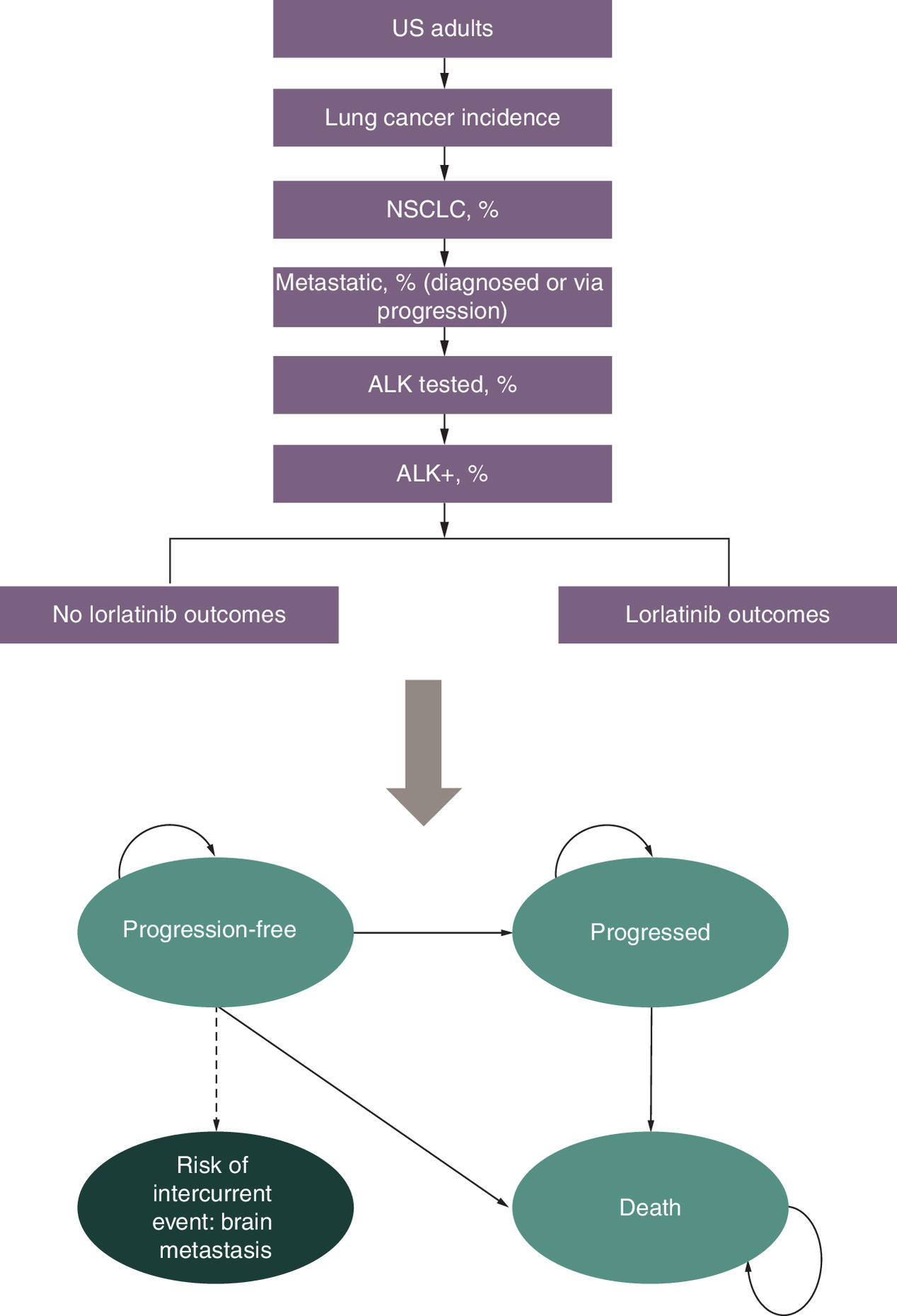
Figure 1. Model structure.
ALK+: Anaplastic lymphoma kinase positive; NSCLC: Non-small cell lung cancer.
We used published data from real-world epidemiology studies and cancer databases to estimate the eligible patient population; clinical inputs for each treatment were informed by the CROWN trial [7] and the recently published 5-year MAIC comparing lorlatinib and alectinib. Alectinib was available for use in both scenarios with an assumed 100% uptake in the scenario without lorlatinib. We used alectinib as the comparator of interest given that it was shown to have a >95% utilization rate among patients treated with a second-generation ALK TKI in this population in a recent claims analysis [12].
Population model inputs
Patient population eligibility inputs are presented in Table 1. To estimate the annual number of patients eligible for treatment, we first derived the number of adults in the US using the proportion of the population aged ≥18 years from US Census Bureau [13], applied to the total US population [14]. Annual lung cancer incidence (49.0/100,000) in 2025 was collected from the Surveillance, Epidemiology and End Results (SEER) [15] website and applied to the US adult population, and the proportion of incident lung cancers that are NSCLC (85.0%) was informed by the American Cancer Society [16]. We used SEER [17] to inform the distribution of lung cancer stages at diagnosis, assuming that localized was equivalent to stage I–II, regional was equivalent to stage III, and distant was equivalent to stage IV. Stage IIIB–IV patients were followed through the rest of the funnel; we applied an annual progression rate to stage I–IIIA patients from Sasaki et al. [18] to include patients who were not initially diagnosed at an advanced/metastatic stage who eventually progress. We assumed 70% [19] of advanced/metastatic NSCLC would receive an ALK test; of those 5.4% [3] were ALK+, resulting in 3096 total patients eligible for treatment with lorlatinib.
| Parameter | Base case value | OWSA/Scenario analysis values | PSA distribution | Source, year | Ref. |
|---|---|---|---|---|---|
| Population inputs | |||||
| US population size | 341,554,233 | N/A | N/A | US Census Bureau | [14] |
| Proportion adults | 78.0% | N/A | N/A | US Census Bureau | [13] |
| Lung cancer incidence | 49.0/100,000 | ±10% | N/A | SEER | [15] |
| NSCLC among lung cancer | 85.0% | ±10% | N/A | American Cancer Society | [1] |
| Stage I–IIIA at diagnosis | 32.7% | ±10% | N/A | SEER; Hansen et al., 2020 | [17,20] |
| Progression to Stage IIIB–IV | 19.9% | ±10% | N/A | Sasaki et al., 2014 | [18] |
| Proportion with ALK test | 70.0% | ±10% | N/A | Shah-Manek et al., 2018 | [19] |
| ALK+ | 5.4% | 3–7% | N/A | Lovly et al., 2018 | [3] |
| Clinical inputs | |||||
| Lorlatinib PFS model | Gamma | Exponential, Weibull, Log-logistic | Multivariate normal | CROWN 5-year data | [10] |
| Lorlatinib OS model | Log-logistic | Gompertz, Log-normal | Multivariate normal | CROWN 18-month data | [21] |
| Exponential rate of developing BM | 0.0015 | 0.0008–0.0029 | Normal | CROWN 5-year data | [10] |
| Lorlatinib PFS HR vs alectinib | 0.55 | 95% CI: 0.34–0.88 | Log-normal | 5-year MAIC | [11] |
| Lorlatinib intracranial progression HR vs alectinib | 0.38 | 95% CI: 0.10–1.37 | Log-normal | 5-year MAIC | [11] |
| 2L chemotherapy exponential monthly mortality rate† | 0.084 | 0.077–0.092 | Log-normal (SE: 0.048) | PROFILE 1001/1005 | [22] |
| 2L lorlatinib exponential monthly mortality rate† | 0.016 | 0.014–0.018 | Log-normal (SE: 0.067) | Study 1001 | [23] |
| 2L chemotherapy utilization after progression on 1L alectinib† | 12.0% | ±10% | Beta | Assumption based on Bauman et al., 2024 | [12] |
| 2L lorlatinib utilization after progression on 1L alectinib† | 88.0% | ±10% | Beta | Assumption based on subsequent TKI utilization in Bauman et al., 2024 | [12] |
| Utility Inputs | |||||
| Progression-free | 0.81 | ±10% | Beta | Derived using mixed-model from ALEX EQ-5D data in NICE TA536 | [24] |
| Progressed disease | 0.73 | ||||
| BM multiplier | 75% | ±10% | Beta | Roughley et al., 2014 | [25] |
†
2L treatment utilization and mortality rate were used to define post-progression survival for those who progressed and were still alive after 1L alectinib.
1L: First-line; 2L: Second-line; ALK+: Anaplastic lymphoma kinase positive; BM: Brain metastasis; HR: Hazard ratio; MAIC: Match-adjusted indirect comparison; NSCLC: Non-small cell lung cancer; OS: Overall survival; OWSA: One-way sensitivity analysis; PFS: Progression-free survival; PSA: Probabilistic sensitivity analysis; SE: Standard error; TKI: Tyrosine kinase inhibitor.
In the scenario where lorlatinib is not available in 1L, we assumed that 100% of patients would receive alectinib. In the scenario with 1L lorlatinib, we assumed a base case uptake of 37.7%, based on a forecasted estimate among patients receiving 1L treatment for ALK+ NSCLC. Given the high level of uncertainty in this uptake assumption, we ran several alternative scenario analyses with varying levels of uptake.
Treatment model approach & inputs
Input estimates for clinical outcomes, including LYs, QALYs and incidence of BMs, can be found in Table 1. We utilized a partitioned survival model (PSM) with progression-free, progressed and dead health states to derive clinical outcomes for each arm. PSMs are a commonly used method in oncology to project long-term outcomes in cost-effectiveness analysis and health technology assessment [26]. In the model, all patients start in the progression-free state and can remain progression-free, progress or die. Patients whose disease has progressed can remain alive with progressed disease or die; death is an absorbing state.
Parametric curves were fit to PFS and overall survival (OS) patient-level data from the CROWN [10,21] study to extrapolate outcomes beyond the observed trial period for lorlatinib. Standard parametric models were fit in line with health technology assessment guidance [27]. We selected the gamma PFS model (estimated median: 87.7 months) and log-logistic OS (estimated median: 98.6 months) model in our base case; these selections were based on a combination of long-term model plausibility, statistical fit to the data based on Akaike information criteria and visual inspection. Extrapolation of all PFS models, OS models and their corresponding Akaike information criteria and Bayesian information criteria values are presented in the Supplementary Figures A1 & A2 & Supplementary Tables A1 & A2.
For modeling the incidence of BM, we used the patient-level data from CROWN to fit curves to intracranial time to progression, which captures time from randomization to the development of BM for those without BM at baseline or intracranial progression for those with BM at baseline. Given that intracranial progression data was immature (at 5 years, 92% were without progression in the lorlatinib arm), we modeled CNS progression as an intercurrent event, as was conducted and recommended by clinical experts in the recent National Institute for Health and Care Excellence (NICE) assessment for lorlatinib [28]. As a simplifying assumption, we used the constant, monthly rate of intracranial time to progression (0.15%) from the exponential model and applied this to all patients alive and progression-free. In a separate scenario, we applied the risk of BM to all patients alive, including those in the progressed disease health state, for the population impact and NNT analysis.
We used a recently published long-term MAIC [11] to inform comparative effectiveness estimates of PFS and incidence of BM for alectinib versus lorlatinib. Given that the ALEX trial only reported 4-year PFS estimates and no long-term outcomes on intracranial events [7], an MAIC was necessary to compare the treatments over the extended follow-up period from CROWN. Effectiveness estimates in the MAIC were informed by CROWN [7] for lorlatinib and the ALEX trial [7] for alectinib. In this analysis, the HR for investigator-assessed PFS of lorlatinib versus alectinib was 0.55 (95% CI [0.34, 0.88]); the HR for development of BMs was 0.38 (95% CI [0.10, 1.37]). Since results of this analysis used alectinib as the reference arm, we used the reciprocal of the MAIC HRs and applied these to the lorlatinib-derived PFS and BM estimates described above for alectinib.
In the ALEX trial [7,29], a small proportion of progressed patients received subsequent lorlatinib or another TKI, likely biasing post-progression survival relative to CROWN where access to second-generation TKIs was more common. To reduce time-varying confounding introduced by use of subsequent TKIs, we used a semi-PSM approach for alectinib, where we defined OS as the sum of PFS and post-progression survival, rather than the traditional PSM approach where post-progression survival is defined by the difference in OS and PFS. This approach, rather than using OS from ALEX, was also preferred in the original NICE assessment for lorlatinib [30], since it more accurately reflects treatment options utilized in clinical practice post-progression versus what was seen in the ALEX study [7,29]. Similarly in the US context, most second-line (2L) treatments used after 1L alectinib are lorlatinib and other TKIs as was shown in Bauman et al. [12], which evaluated treatment patterns using electronic health record data in Flatiron.
Given this, post-progression survival for alectinib was informed by Study 1001 [23], a Phase II study evaluating lorlatinib in the 2L ALK+ setting, and PROFILE 1001/1005 [31], a Phase II study evaluating crizotinib versus chemotherapy in the 2L ALK+ setting. We utilized a weighted average of OS outcomes from lorlatinib in Study 1001 and the chemotherapy arm in PROFILE 1001/1005 to derive an OS estimate for 1L alectinib. Weights of 2L lorlatinib and chemotherapy survival were based on US real-world subsequent treatment utilization following 1L alectinib reported in Bauman et al. [12]. In this study, 97% of patients received alectinib in 1L. Of those progressing to 2L treatment, 86% (n = 101) received an ALK TKI or ALK TKI in combination with chemotherapy, which we used to assume the weight of those receiving lorlatinib in 2L. We allocated 10% receiving chemotherapy or pembrolizumab regimens without a TKI (n = 12) to the weight of those receiving 2L chemotherapy. Since remaining 2L treatments received in this sample were a clinical study drug with uncertain impact on survival, they were excluded and we normalized the TKI and chemotherapy proportions to sum to 100% to weight survival. For lorlatinib 2L survival from Study 1001 [23], we used the OS estimations from the 3B–5 cohorts, which included patients receiving 2L lorlatinib following progression on a 1L TKI as representative of 2L lorlatinib following 1L alectinib. From both studies, a constant, monthly rate of mortality was derived assuming an exponential distribution (Table 1). The resulting weighted average rate of post-progression death per monthly cycle for alectinib was 2.4% and was applied to the proportion of patients in the progressed disease health state.
We used utilities over the duration patients spent in each health state to estimate QALYs over the time horizon. We applied health state utilities for patients in the progression-free and progressed health states and estimated a one-time QALY loss for patients with incident BM. Health state utilities were informed using the mixed-model from ALEX EQ-5D data in NICE technology appraisal 536 [24]. These utilities were applied by health state to both treatments. Additionally, in the first cycle, we applied a disutility based on grade 3+ adverse events observed in CROWN and ALEX in at least 5% of patients; this resulted in a one-time QALY loss of 0.1907 and 0.0002 for lorlatinib and alectinib, respectively. Adverse event incidence, duration, and disutility are presented in Supplementary Table A4 and were based on inputs and approaches used in the NICE submission [28]. For BM events, we used a multiplier based on the ratio of utilities in Roughley et al. [25], which was incurred for the assumed duration of a BM (24 months). Utility values are presented in Table 1.
Sensitivity analyses
We ran a one-way sensitivity analysis (OWSA), probabilistic sensitivity analysis (PSA) and several scenario analyses to test how robust our model’s results were to alternate assumptions and parameter ranges. We ran an OWSA to explore uncertainty around all key model parameters and presented the outcome using a tornado diagram of the top 10 parameters. OWSA ranges for each parameter are presented in Table 1.
The PSA jointly varied all clinical parameters by their chosen distribution based on available uncertainty information like standard errors, or where unavailable, confidence intervals which were used to derive standard errors. Scenario analyses included varying the time horizon, selection of different survival models, applying different levels of lorlatinib uptake, and applying treatment effect of developing incident BM beyond 1L treatment.
Results
Base case results
We estimated that 3096 patients in the US would be eligible for treatment with 1L lorlatinib or alectinib in 2025. Based on treatment uptake forecasting estimates, we assumed that 1168 (38%) patients would receive lorlatinib and 1928 (62%) patients would receive alectinib in the scenario where lorlatinib was available.
Projecting over a 20-year time horizon, on a per patient basis, the lorlatinib and alectinib arms accrued 10.14 and 8.47 LYs, 8.12 and 6.55 QALYs and 0.14 and 0.21 incident BMs, respectively (Table 2). Compared with a scenario where only alectinib is available, we estimated a gain of 1949 LYs and 1836 QALYs in the scenario with a 38% uptake of lorlatinib. Lorlatinib availability also resulted in 81 fewer incident BMs (Table 2).
| Treatment Scenario | Patients on Treatment | Total LYs | Total QALYs | Total Incident BM |
|---|---|---|---|---|
| Patient level | ||||
| Lorlatinib | Per patient | 10.14 | 8.12 | 0.14 |
| Alectinib | Per patient | 8.47 | 6.55 | 0.21 |
| Population level (US) | ||||
| Lorlatinib | 1168† | 11,838 | 9486 | 164 |
| Alectinib | 1928‡ | 16,328 | 12,632 | 403 |
| Total with lorlatinib | 3096 | 28,166 | 22,118 | 566 |
| Total without lorlatinib | 3096 | 26,217 | 20,282 | 647 |
| Population impact | +1949 | +1836 | -81 | |
†
Based on 37.7% uptake among total population of 3096. Estimates may not sum due to rounding.
‡
Based on 62.3% uptake among total population of 3096. Estimates may not sum due to rounding.
BM: Brain metastasis; LY: life year; QALY: Quality-adjusted life year.
Lorlatinib and alectinib accrued 0.14 and 0.21 incident BMs per patient, respectively. The NNT for avoiding a BM on a per-patient level was 15.
Sensitivity & scenario analyses results
The OWSA identified OS curve parameters and the PFS HR for lorlatinib versus alectinib as the most influential parameters on the change in QALYs for the base case population impact analysis. Results ranged from a loss in QALYs of 1493 to a gain of 3837 QALYs; QALY gains remained within a positive range across most, but not all key parameters (Figure 2). Over 1000 PSA iterations, the likelihood that lorlatinib resulted in a positive LY and QALY gain and prevented BMs on a population level was 81%, 84% and 72%, respectively. The LY and QALY scatterplot for the PSA is presented in Supplementary Figure A3.
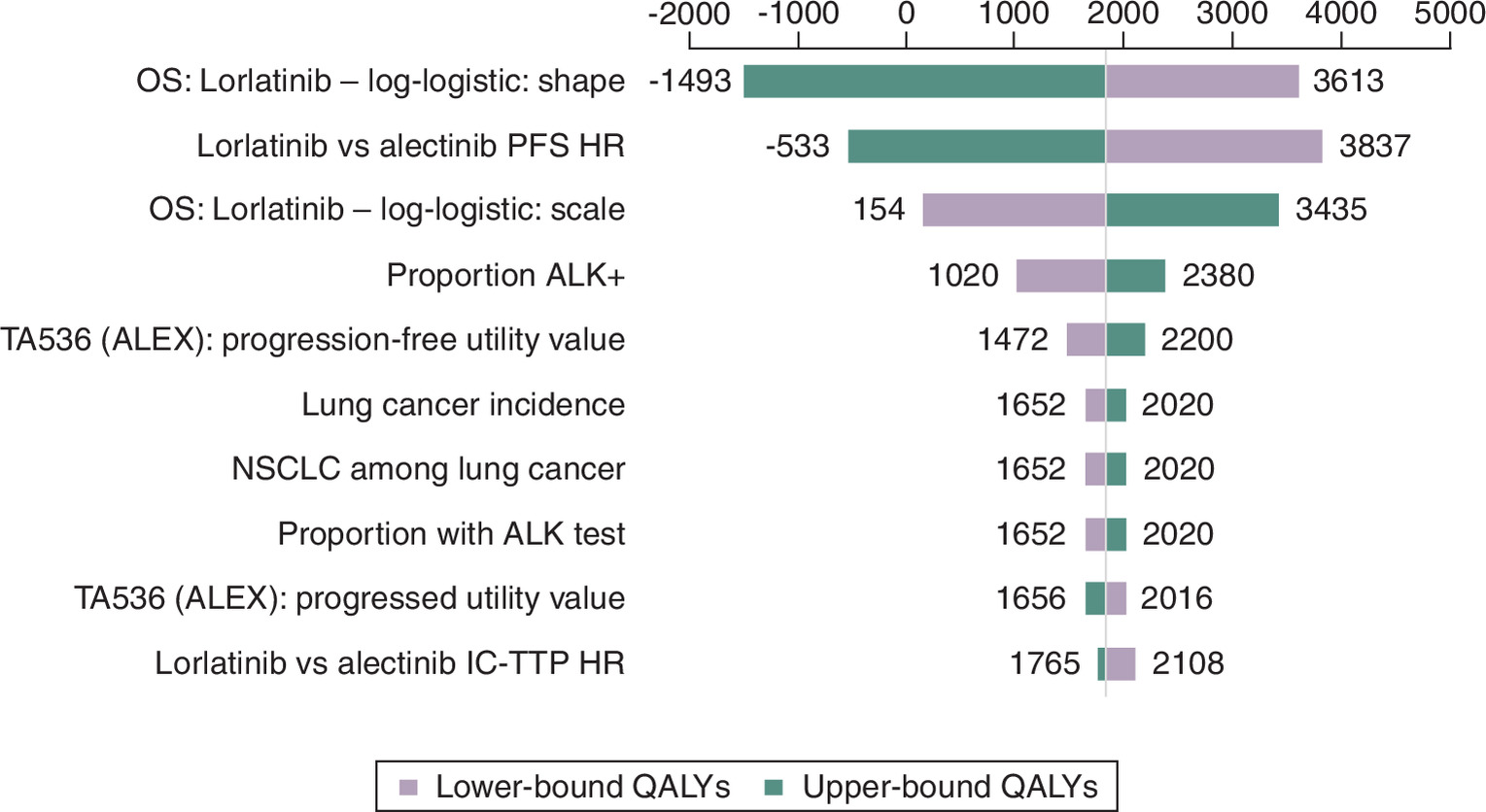
Figure 2. OWSA results on gain in quality-adjusted life-years*.
*Negative values represent QALY loss relative to the scenario without lorlatinib.
ALK: Anaplastic lymphoma kinase-positive; HR: Hazard ratio; IC-TTP: Intracranial time to progression; NSCLC: Non-small cell lung cancer; OS: Overall survival; OWSA: One-way sensitivity analysis; PFS: Progression-free survival; QALY: Quality-adjusted life-year; TA: Technology assessment.
Across scenario analyses, we observed a population-level clinical benefit with lorlatinib. Compared with the base case time horizon of 20 years, the population impact on incremental QALYs and LYs increased with the time horizon, while incremental BMs decreased marginally. This was because, under our base case assumption, risk of BM is only applied to those in progression-free, and under shorter time horizons, a greater proportion of patients in the lorlatinib arm remain progression-free compared with alectinib. Additionally, using different OS and PFS parametric models demonstrated a maintained clinical impact of lorlatinib. The most substantial difference versus base case result was under the assumption of full lorlatinib uptake versus alectinib; this resulted in a gain of 5167 and 4867 LYs and QALYs, respectively, with 215 BMs avoided. Additionally, when we applied the risk of BM to patients in the progression-free and progressed health state, the number of BMs avoided was 256. This translated into an NNT of 5 to avoid a BM on a per-patient level. Scenario analysis results are presented in Table 3.
| Scenario | Difference in LYs | Difference in QALYs | Difference in BMs† |
|---|---|---|---|
| Base case | +1949 | +1836 | -81 |
| Time horizon set to 10 years | +208 | +376 | -87 |
| Time horizon set to 30 years | +3632 | +3188 | -71 |
| Time horizon set to 40 years | +4165 | +3618 | -68 |
| OS model – Gompertz | +2161 | +1989 | -81 |
| OS model – Log-normal | +3407 | +2893 | -81 |
| PFS model – Exponential | +2708 | +2318 | -77 |
| PFS model – Weibull | +1809 | +1745 | -83 |
| PFS model – Log-logistic | +1627 | +1589 | -87 |
| 20% lorlatinib uptake | +1033 | +973 | -43 |
| 30% lorlatinib uptake | +1550 | +1460 | -65 |
| 50% lorlatinib uptake | +2584 | +2434 | -108 |
| 100% lorlatinib uptake | +5167 | +4867 | -215 |
| Apply risk of BM to all alive patients | +1949 | +1906 | -256 |
†
Negative difference denotes an avoidance of BMs.
BM: Brain metastasis; LY: Life year; OS: Overall survival; PFS: Progression-free survival; QALY: Quality-adjusted life year.
Discussion
The goal of this study was to estimate the US population-level clinical impact of using lorlatinib versus alectinib as a 1L treatment for ALK+ advanced/metastatic NSCLC. On a per-patient basis, lorlatinib was projected to be associated with higher LYs (10.14 vs 8.47), higher QALYs (8.12 vs 6.55) and fewer incident BMs (0.14 vs 0.21) than alectinib. At the US population level in 2025, we estimated that access to lorlatinib would yield a gain of 1949 LYs, 1836 QALYs and 81 fewer BMs compared with a scenario where only alectinib was available in an annual cohort.
The modeled gains in survival and QALYs, along with reduced BMs, suggest that lorlatinib as a 1L option could meaningfully improve long-term outcomes for patients with ALK+ advanced/metastatic NSCLC. The NNT of 15 to prevent one brain metastasis (and as low as 5 when including post-progression benefit) highlights a clinically relevant reduction in neurologic complications that are often morbid, resource-intensive and costly to manage. These findings support prioritizing lorlatinib among next-generation ALK TKIs for appropriate patients, particularly where intracranial control and prolonged PFS are key goals. The modeled gains in LYs and QALYs and reductions in BMs provide quantitative evidence that can inform reimbursement decisions and guideline updates favoring access to lorlatinib as standard 1L therapy.
As with any health economic analysis, our model relies on assumptions and input parameters that carry considerable uncertainty. A key limitation of this study is the absence of a head-to-head randomized trial directly comparing lorlatinib and alectinib; instead, we relied on MAIC-based estimates to align patient characteristics across studies, which are still subject to unmeasured differences across clinical trials. Additionally, we extrapolated long-term PFS, OS and intracranial progression outcomes in CROWN beyond the observed trial period [10]. We assessed both of these limitations by evaluating multiple parametric survival models in scenario analyses. Across alternative PFS and OS models, we observed a consistent increase in LYs and QALYs, and decrease in patients developing a BM. Uncertainty was also introduced when estimating OS for alectinib using the semi-partitioned survival approach rather than directly observed OS data as was done with lorlatinib. This approach was taken since using an indirect comparison with lorlatinib OS outcomes would introduce bias, given that there was higher use of later-line ALK TKI in the control arm of CROWN [9] versus ALEX [7] that could impact OS outcomes. That said, under our approach, we projected a median OS of 81.8 months, which was nearly equal to the final, recently published alectinib OS in the ALEX trial of 81.1 months [32]. In addition, input assumptions about lorlatinib uptake, 2L therapy use, and epidemiologic inputs may not fully capture regional practice variation or future changes in standards of care. Despite these limitations, clinical impact remained robust when varying these inputs in OWSA and PSA.
This is the first study to evaluate the population-level clinical impact of lorlatinib in 1L ALK+ advanced/metastatic NSCLC. Mudumba and colleagues [33] estimated the cost-effectiveness of lorlatinib, alectinib and brigatinib in the US. Over a 5-year time horizon, they estimated 2.88 and 2.85 QALYs for lorlatinib and alectinib, respectively, per patient. Additionally, He et al. [34]. evaluated the cost-effectiveness of lorlatinib versus alectinib in China and estimated that lorlatinib increased lifetime QALYs (5.28 vs 3.90) compared with alectinib. Naik et al. [35] and Presa et al. [36] developed cost-effectiveness analyses for lorlatinib versus alectinib in Sweden and Spain, respectively. Their analyses found that lorlatinib produced increased LYs (+1.13 and +0.70) and QALYs (+1.22 and +1.42), respectively, consistent with our findings on a per patient level. While the designs of these studies are not directly comparable to ours in terms of time horizon and incorporation of discounting, their findings support increased LYs and QALYs for lorlatinib in this indication, supporting one of our key findings. Luo et al. [37] and Zhang et al. [38] both evaluated the cost-effectiveness of all 6 ALK TKIs in China, and found that treatment with alectinib had a marginal QALY gain versus lorlatinib (+0.03 and +0.04, respectively). It should be noted that both models were published before the CROWN 5-year update and therefore rely on less mature data than our analysis. This can be seen with the PFS HR applied in Luo 2022 [37] versus crizotinib of 0.28, whereas the reported CROWN 5-year PFS HR versus crizotinib was 0.19. Additionally, Zhang et al. [38] fit survival curves to trial data directly rather than using formal indirect comparison methods to account for cross-trial differences versus alectinib.
Beyond survival and BMs, it should be noted that lorlatinib and alectinib differ meaningfully in their toxicity profiles, which is relevant to individualized treatment selection. In the CROWN and ALEX trials, lorlatinib was associated with higher rates of metabolic and neurocognitive adverse events than alectinib, including hypertriglyceridemia, hypercholesterolemia, peripheral neuropathy and cognitive and mood effects, which can be seen in Supplementary Table A4. Our model accounted for these differences by applying a first-cycle disutility derived from adverse events observed in each trial, yielding a larger one-time quality-of-life decrement for lorlatinib than for alectinib (0.1907 vs 0.0002 QALYs). Notably, lorlatinib retained a net per-patient gain of 1.57 QALYs even after this toxicity penalty, indicating that its efficacy advantage outweighed the modeled adverse-event burden.
This analysis found that 1L lorlatinib for ALK+ advanced/metastatic NSCLC in the US was projected to substantially increase LYs and QALYs while reducing the burden of BM compared with alectinib. Although population-level projections of clinical benefit are only one input to treatment recommendations and reimbursement decisions – which also depend on additional considerations, including safety, costs, patient preferences and budget impact – these results provide a compelling clinical rationale for adopting lorlatinib as a standard 1L treatment among the ALK+ advanced/metastatic NSCLC population.
Summary points
•
This study is the first to quantify the US population-level clinical impact of first-line (1L) lorlatinib versus 1L alectinib in anaplastic lymphoma kinase-positive (ALK+) advanced/metastatic non-small cell lung cancer using a decision-analytic model.
•
An estimated 3096 US patients were eligible for 1L lorlatinib or alectinib treatment in 2025, derived from published epidemiology sources.
•
A three-state partitioned survival model (pre-progression, post-progression, death) was used to project life years (LYs) and quality-adjusted life years (QALYs) over a 20-year time horizon. Incidence of brain metastases (BMs) was modeled separately as an intercurrent event using published data on intracranial time to progression.
•
Comparative effectiveness was informed by a recently published match-adjusted indirect comparison of the CROWN (lorlatinib) and ALEX (alectinib) trials, which estimated a progression-free survival hazard ratio of 0.55 (95% CI: 0.34–0.88) favoring lorlatinib.
•
On a per-patient basis, lorlatinib was associated with 10.14 LYs versus 8.47 for alectinib, and 8.12 QALYs versus 6.55 for alectinib in the base case.
•
At the population level (assuming 38% lorlatinib uptake), lorlatinib availability yielded an estimated 1949 additional LYs, 1836 additional QALYs and 81 fewer incident BMs compared with an alectinib-only scenario.
•
The number needed-to-treat to prevent one brain metastasis ranged from 15 in the base case to as low as 5 when post-progression intracranial progression risk was included.
•
Under a full (100%) lorlatinib uptake scenario, gains increased to 5167 LYs, 4867 QALYs and 215 fewer BMs over a 20-year time horizon.
•
One-way sensitivity analysis, probabilistic sensitivity analysis, and scenario analyses, including varying survival extrapolation models, time horizons, utilities and uptake assumptions, demonstrated that the clinical benefit of lorlatinib was robust across a wide range of inputs.
•
Results provide quantitative evidence to support reimbursement decisions, clinical guideline updates, and formulary considerations favoring broader 1L access to lorlatinib in ALK+ advanced/metastatic non-small cell lung cancer.
Financial disclosure
The study was sponsored by Pfizer (NY, USA). The sponsor collaborated with authors on the study design and collection, analysis, and interpretation of data. The final decision to publish was up to the authors.
Competing interests disclosure
A Kasle and D Veenstra are employees of Curta, which was a paid consultant for Pfizer in connection with the study and the development of this manuscript. R Mak received honorarium from Pfizer in connection with the study and development of the manuscript. The authors have no other competing interests or relevant affiliations with any organization or entity with the subject matter or materials discussed in the manuscript apart from those disclosed.
Writing disclosure
Curta received financial support from Pfizer in connection with the study and the development of this manuscript.
Ethical conduct of research
The study was conducted in accordance with legal and regulatory requirements, as well as with scientific purpose, value and rigor and followed generally accepted research practices described in the International Society for Pharmacoeconomics and Outcomes Research (ISPOR) Code of Ethics and ISPOR Good Practices for outcomes research.
Data sharing statement
Upon reasonable request and subject to review, Pfizer will provide the data that support the findings of this article. Subject to certain criteria, conditions, and exceptions, Pfizer may also provide access to the related individual de-identified participant data. See https://www.pfizer.com/science/clinical-trials/trial-data-and-results for more information.
Open access
This work is licensed under the Attribution-NonCommercial-NoDerivatives 4.0 Unported License. To view a copy of this license, visit https://creativecommons.org/licenses/by-nc-nd/4.0/
Supplementary Material
File (supplementary materials.docx)
References
1.
American Cancer Society. Key statistics for lung cancer. Updated 16 January 2025. (Accessed 29 July 2025). https://www.cancer.org/cancer/types/lung-cancer/about/key-statistics.html
2.
Hsiao S-H, Chung C-L, Chou Y-T, Lee H-L, Lin S-E, Liu HE. Identification of subgroup patients with stage IIIB/IV non-small cell lung cancer at higher risk for brain metastases. Lung Cancer 82(2), 319–323 (2013).
3.
Lovly CHL, Pao W. My cancer genome – non-small cell lung carcinoma. (Accessed 12 April 2025). https://www.mycancergenome.org/content/disease/non-small-cell-lung-carcinoma/
4.
Gerber DE, Minna JD. ALK inhibition for non-small cell lung cancer: from discovery to therapy in record time. Cancer Cell 18(6), 548–551 (2010).
5.
NCCN Clinical Practice Guidelines in Oncology (NCCN Guidelines®) for NSCLC V3.2026. © National Comprehensive Cancer Network, Inc. (2025). All rights reserved. (Accessed21 January 2026). https://www.nccn.org/professionals/physician_gls/pdf/nscl.pdf
6.
Uprety D, Abrahami D, Marcum ZA et al. Brain metastases and mortality in patients with ALK+ metastatic non-small cell lung cancer treated with second-generation ALK tyrosine kinase inhibitors as first-line targeted therapies: an observational cohort study. Lung Cancer 201, 108436 (2025).
7.
Mok T, Camidge DR, Gadgeel SM et al. Updated overall survival and final progression-free survival data for patients with treatment-naive advanced ALK-positive non-small-cell lung cancer in the ALEX study. Ann. Oncol. 31(8), 1056–1064 (2020).
8.
Pfizer. LORBRENA- lorlatinib tablet, film coated Updated 8/2024. (Accessed 29 July 2025). https://labeling.pfizer.com/ShowLabeling.aspx?id=11140
9.
Shaw AT, Bauer TM, de Marinis F et al. First-line lorlatinib or crizotinib in advanced ALK-positive lung cancer. N. Engl. J. Med. 383(21), 2018–2029 (2020).
10.
Solomon BJ, Liu G, Felip E et al. Lorlatinib versus crizotinib in patients with advanced ALK-positive non–small cell lung cancer: 5-year outcomes from the Phase III CROWN Study. J. Clin. Oncol. 42(29), 3400–3409 (2024).
11.
Bauer T, Abrahami D, Polli A et al. Long-term efficacy and safety of lorlatinib versus alectinib in anaplastic lymphoma kinase-positive advanced/metastatic non-small cell lung cancer: matching-adjusted indirect comparison. J. Comp. Eff. Res. 15(1), e250117 (2026).
12.
Bauman JR, Liu G, Preeshagul I et al. Real-world treatment sequencing and effectiveness of second- and third-generation ALK tyrosine kinase inhibitors for ALK-positive advanced non-small cell lung cancer. Lung Cancer 195, 107919 (2024).
13.
US Census Bureau. Age and sex composition in the United States: 2023. (Accessed 15 June 2025). https://www.census.gov/data/tables/2023/demo/age-and-sex/2023-age-sex-composition.html
14.
US Census Bureau. U.S. and world population clock. (Accessed 1 April 2025). https://www.census.gov/popclock/
15.
SEER. Cancer stat facts: lung and bronchus cancer. (Accessed 10 April 2025). https://seer.cancer.gov/statfacts/html/lungb.html
16.
American Cancer Society. What is lung cancer? (Accessed 10 April 2025). https://www.cancer.org/cancer/types/lung-cancer/about/what-is.html
17.
Surveillance Research Program - National Cancer Institute. SEER*Explorer: an interactive website for SEER cancer statistics. Data source(s): SEER Incidence Data, November 2024 Submission (1975–2022), SEER 21 registries. (Accessed 10 April 2025). https://seer.cancer.gov/statistics-network/explorer/
18.
Sasaki H, Suzuki A, Tatematsu T et al. Prognosis of recurrent non-small cell lung cancer following complete resection. Oncol. Lett. 7(4), 1300–1304 (2014).
19.
Shah B, Karki C, Whitmire S et al. Trends in non-small cell lung cancer biomarker testing rates in the US and Western Europe from 2014–2017. J. Clin. Oncol. 36, e20515 (2018).
20.
Hansen RN, Zhang Y, Seal B et al. Long-term survival trends in patients with unresectable stage III non-small cell lung cancer receiving chemotherapy and radiation therapy: a SEER cancer registry analysis. BMC Cancer 20(1), 276 (2020).
21.
Shaw AT, Bauer TM, Marinis Fd et al. First-line lorlatinib or crizotinib in advanced ALK-positive lung cancer. N. Engl. J. Med. 383(21), 2018–2029 (2020).
22.
Blackhall F, Ross Camidge D, Shaw AT et al. Final results of the large-scale multinational trial PROFILE 1005: efficacy and safety of crizotinib in previously treated patients with advanced/metastatic ALK-positive non-small-cell lung cancer. ESMO Open 2(3), e000219 (2017).
23.
Solomon BJ, Besse B, Bauer TM et al. Lorlatinib in patients with ALK-positive non-small-cell lung cancer: results from a global Phase II study. Lancet Oncol. 19(12), 1654–1667 (2018).
24.
NICE. Alectinib for untreated anaplastic lymphoma kinase positive advanced nonsmall-cell lung cancer [ID925]. (Accessed 10 April 2025). https://www.nice.org.uk/guidance/ta536/documents/committee-papers
25.
Roughley A, Damonte E, Taylor-Stokes G, Rider A, Munk VC. Impact of brain metastases on quality of life and estimated life expectancy in patients with advanced non-small cell lung cancer. Value Health 17(7), A650 (2014).
26.
NICE. NICE DSU Technical Support Document 19: partitioned survival analysis for decision modelling in health care: a critical review. (Accessed 11 August 2025). https://sheffield.ac.uk/sites/default/files/2022-02/TSD19-Partitioned-Survival-Analysis-final-report.pdf
27.
NICE. NICE DSU Technical Support Document 14: survival analysis for economic evaluations alongside clinical trials - extrapolation with patient-level data. Updated March 2013. (Accessed 22 April 2025). https://www.ncbi.nlm.nih.gov/books/NBK395885/pdf/Bookshelf_NBK395885.pdf
28.
NICE. Single technology appraisal lorlatinib for untreated ALK-positive advanced non-small-cell lung cancer (review of TA909) [ID6434] committee papers. (Accessed 10 March 2026). https://www.nice.org.uk/guidance/ta1103/documents/committee-papers
29.
Peters S, Camidge R, Dziadziuszko R et al. Alectinib versus crizotinib in previously untreated ALK-positive advanced non-small cell lung cancer: final overall survival analysis of the Phase III ALEX study. Ann. Oncol. 37(1), 92–103 (2026).
30.
NICE. Lorlatinib for untreated ALK-positive advanced non-small-cell lung cancer (Accessed December 2025). https://www.nice.org.uk/guidance/ta1103/documents/final-appraisal-determination-document
31.
Ou SHI, Jänne PA, Bartlett CH et al. Clinical benefit of continuing ALK inhibition with crizotinib beyond initial disease progression in patients with advanced ALK-positive NSCLC. Ann. Oncol. 25(2), 415–422 (2014).
32.
Peters S, Camidge R, Dziadziuszko R et al. Alectinib versus crizotinib in previously untreated ALK-positive advanced non-small cell lung cancer: final overall survival analysis of the Phase III ALEX study. Ann. Oncol. 37(1), 92–103 (2026).
33.
Mudumba R, Nieva JJ, Padula WV. First-line alectinib, brigatinib, and lorlatinib for advanced anaplastic lymphoma kinase-positive non-small cell lung cancer: a cost-effectiveness analysis. Value Health 28(7), 1018–1028 (2025).
34.
He X, Fu S. EE69 Cost-utility analysis of lorlatinib for first-line treatment for ALK positive advanced non-small cell lung cancer in China. Value Health 26(12), S63 (2023).
35.
Naik J, Beavers N, Nilsson FOL, Iadeluca L, Lowry C. Cost-effectiveness of lorlatinib in first-line treatment of adult patients with anaplastic lymphoma kinase (ALK)-positive non-small-cell lung cancer in Sweden. Appl. Health Econ. Health Pol. 21(4), 661–672 (2023).
36.
Presa M, Vicente D, Calles A et al. Cost-effectiveness of lorlatinib for the treatment of adult patients with anaplastic lymphoma kinase positive advanced non-small cell lung cancer in Spain. Clinicoecon. Outcomes Res. 15, 659–671 (2023).
37.
Luo X, Zhou Z, Zeng X, Peng L, Liu Q. Cost-effectiveness of ensartinib, crizotinib, ceritinib, alectinib, brigatinib and lorlatinib in patients with anaplastic lymphoma kinase-positive non-small cell lung cancer in China. Front. Public Health 10, 985834 (2022).
38.
Zhang M, Zheng B, Yang W et al. Cost-effectiveness analysis of 6 tyrosine kinase inhibitors as first-line treatment for ALK-positive NSCLC in China. Clin. Med. Insights Oncol. 18, 11795549241257234 (2024).
Information & Authors
Information
Published In
Copyright
© 2026 The authors. This work is licensed under the Attribution-NonCommercial-NoDerivatives 4.0 Unported License
History
Received: 4 May 2026
Accepted: 17 August 2026
Published online: 3 September 2026
Keywords:
Topics
Authors
Metrics & Citations
Metrics
Article Usage
Article usage data only available from February 2023. Historical article usage data, showing the number of article downloads, is available upon request.
Citations
How to Cite
US population-level model of clinical impact of lorlatinib treatment on ALK+ metastatic non-small cell lung cancer outcomes. (2026) Journal of Comparative Effectiveness Research. DOI: 10.57264/cer-2026-0096
Export citation
Select the citation format you wish to export for this article or chapter.