

Cost-effectiveness of a connected injection device for daily somatropin therapy in pediatric growth hormone deficiency in Spain: a scenario-based microsimulation analysis using real-world data
Publication: Journal of Comparative Effectiveness Research
Abstract
Aim: Growth hormone deficiency (GHD) in pediatric patients is characterized by impaired growth and reduced quality of life. Recombinant human growth hormone therapy requires consistent daily administration, yet adherence remains challenging. Electronic injection devices with adherence monitoring, like Easypod®, may support more consistent administration and enable more accurate assessment of treatment response. This study evaluated the cost-effectiveness of somatropin administered via a connected injection device (EasyPod) compared with nonconnected devices in pediatric patients with GHD in Spain. Materials & methods: A microsimulation model simulated 10,000 pediatric patients aged 2–13 years and incorporated adherence-dependent growth response, treatment discontinuation, costs and utilities. Outcomes included final height, height gain, cost per cm gained and incremental cost per quality-adjusted life year gained. Scenario and sensitivity analyses assessed the impact of parameter and structural uncertainty. Results: Easypod was associated with greater height gains than nonconnected devices. Projected final height at bone maturation was 163.04 cm with Easypod versus 159.21 cm with nonconnected devices, an incremental gain of 3.83 cm. Cost per cm gained was €2625 with Easypod and €3158 with nonconnected devices, a saving of €534 per cm. The incremental cost per quality-adjusted life year gained was €27,200 within Spain’s willingness-to-pay threshold. Scenario and sensitivity analyses showed consistent results. Conclusion: In this model-based analysis, Easypod was associated with improved growth outcomes and was cost-effective compared with nonconnected devices in pediatric GHD patients in Spain. Continuous adherence monitoring may support treatment optimization and more efficient healthcare resource utilization.
Plain language summary
What is this article about?
Children with growth hormone deficiency require daily administration of treatment over many years, posing challenges on adherence. Easypod is the only electronic, connected injection device that enables objective monitoring of treatment administration for patients, their families and physicians. This study evaluated whether use of a digital device like Easypod is associated with improved growth outcomes and is cost-effective compared with treatments administered with nonconnected devices in Spain.
What were the results?
In this study, children using Easypod grew taller than those using nonconnected devices (about 4 cm more on average: 163.0 cm vs 159.2 cm). Easypod also provided better value for money. The cost per cm of height gained was lower with Easypod. When overall health benefits and costs were assessed together, Easypod provided good value for the Spanish Healthcare System.
What do the results mean?
Using an innovative digital device like Easypod may improve treatment adherence, help children achieve better growth, and represent a cost-effective option in Spain.
Growth hormone deficiency (GHD) in children and adolescents is a rare endocrine disorder that results in impaired linear growth, reduced final adult height, and reduced health-related quality of life [1–4]. Recombinant human growth hormone (r-hGH) therapy, which is administered via subcutaneous (SC) injection, is the standard treatment for GHD [1] and has been shown to promote catch-up growth when administered consistently [2,5]. However, daily administration of r-hGH via SC injection over prolonged periods represents a substantial treatment burden for pediatric patients and their caregivers [6].
Despite the well-established efficacy of r-hGH, treatment outcomes remain suboptimal in a proportion of patients, with many failing to achieve their target adult height [6,7]. Treatment effectiveness is influenced by multiple factors, including age at initiation, baseline height deficit, individual responsiveness and adherence to therapy [8,9]. Nonadherence to the prescribed daily regimen is widely recognized as a key contributor to suboptimal outcomes. Reported adherence rates vary considerably across studies, with a substantial proportion of patients missing doses, underscoring the challenges of maintaining consistent long-term treatment [6,7,10].
Barriers to adherence include injection-related discomfort, treatment fatigue, and the practical challenges of daily administration over a long period of time. Children with suboptimal adherence have reduced height gains, may undergo unnecessary dose escalation and incur higher overall treatment costs than those who maintain regular dosing [8,11]. Together, these findings underscore the importance of sustained adherence for achieving optimal clinical outcomes and the need for ongoing support for patients and caregivers throughout long-term r-hGH therapy [3,8,9,12,13].
Various devices are available for safe and effective SC delivery of r-hGH; these can be broadly categorized as manual and electronic devices [12,14]. Manual devices, such as injection pens, are portable and easy to use, with pre-filled cartridges and adjustable dosing via a dial. Electronic devices share the pen format but incorporate digital features that enhance dosing accuracy and ease of use. However, not all electronic devices are connected or capable of monitoring adherence.
Easypod® is currently the only connected device for r-hGH administration with a wireless transmitter connected to an eHealth-based ecosystem that electronically records injections, allowing clinicians and patients to monitor adherence to r-hGH therapy in real time [9,13,15–17], thereby facilitating earlier identification of declining adherence and helping distinguish suboptimal adherence from a true biological low response before unnecessary dose escalation is considered [9]. Evaluating the long-term clinical and economic impact of connected injection devices is especially relevant for therapies that require frequent administration over extended periods, where adherence is often difficult to sustain – a challenge that pediatric GHD, with its requirement for daily injections over many years, exemplifies well.
Real-world evidence (RWE) provides insights into patient behavior in routine clinical settings and can be used to estimate the economic implications of differences not captured in clinical trials. In Spain, a retrospective RWE study by de Arriba et al. [12], including 174 children with either GHD or small for gestational age (SGA) conditions, provided data on height gains in pediatric patients treated with r-hGH therapy using Easypod compared with manual or electronic, nonconnected (without a monitoring system) devices over 4 years in routine clinical practice. Pediatric patients using Easypod had greater height gains, measured as height standard deviation score (HSDS), throughout the study duration than those using nonconnected devices, with a mean change of +0.23 after 4 years of treatment, corresponding to a difference in height of 1.7 cm for males and 1.5 cm for females [12]. The authors estimated that with continuous treatment up to bone maturation, a height difference of 3.5 cm for males and 2.4 cm for females with GHD could be achieved for children using Easypod compared with children using other devices. The authors also suggested that the higher adherence observed with Easypod may partly, even if not totally, be explained by the Hawthorne effect, whereby awareness of adherence monitoring positively influences treatment behavior [12]. Regardless of the underlying mechanism, these findings suggest that objective adherence monitoring may influence long-term growth outcomes and justify further evaluation of its economic implications.
Several health economic evaluations have investigated the impact of device type and dosing frequency on the adherence and final height of children with GHD [8,9,18]. In Spain, Alcón Sáez et al. [9] conducted a cost-consequence analysis of Easypod compared with nonconnected devices (either manual or electronic), reporting greater adherence and height outcomes with Easypod; however, management costs and utility values were not included, reflecting the lack of detailed information and established utility estimates for pediatric populations. In Italy, Foo et al. [8] developed the first device-based model, which showed that differences in adherence across injection devices substantially influenced growth and associated treatment costs. Together, these analyses emphasize the importance of adherence as a determinant of both clinical and economic outcomes in the treatment of children with GHD. However, evidence evaluating the long-term cost-effectiveness of connected adherence-monitoring technologies using comparative real-world data remains limited.
The present study builds on previous literature and published models to generate estimates of growth outcomes, quality-adjusted life years (QALYs), costs per cm gained and incremental cost-effectiveness ratios (ICERs), while incorporating Spanish RWE from the study by de Arriba et al. [12] to inform long-term adherence and growth outcomes.
The aim of this study was to assess the cost-effectiveness of r-hGH treatment administered via Easypod compared with treatment administered via nonconnected injection devices in pediatric patients with GHD from the Spanish national healthcare perspective, using evidence from real-world clinical practice.
Materials & methods
Model design
A microsimulation model was developed from the perspective of the Spanish healthcare system to evaluate the cost-effectiveness of Easypod compared with nonconnected injection devices used for the administration of r-hGH treatment in pediatric patients with only GHD in Spain. The primary outcome of this analysis is the average height gain achieved with each treatment comparator in a simulated cohort, assessed at the age of bone maturation. The model was implemented in Microsoft Excel with additional programming in Visual Basic for Applications.
The model combined a 1-year decision tree (Figure 1) with a 6-month cycle Markov model (Figure 2), consistent with previously published approaches [8,9]. In the decision tree, patients were classified as responders or poor responders based on initial treatment response. For children treated with nonconnected devices, four additional branches were incorporated before entering the Markov model. These branches reflected the diagnostic uncertainty physicians face in the absence of objective adherence data. Minimal growth may be incorrectly attributed to poor responsiveness rather than suboptimal adherence, which may lead to unnecessary dosage increases.
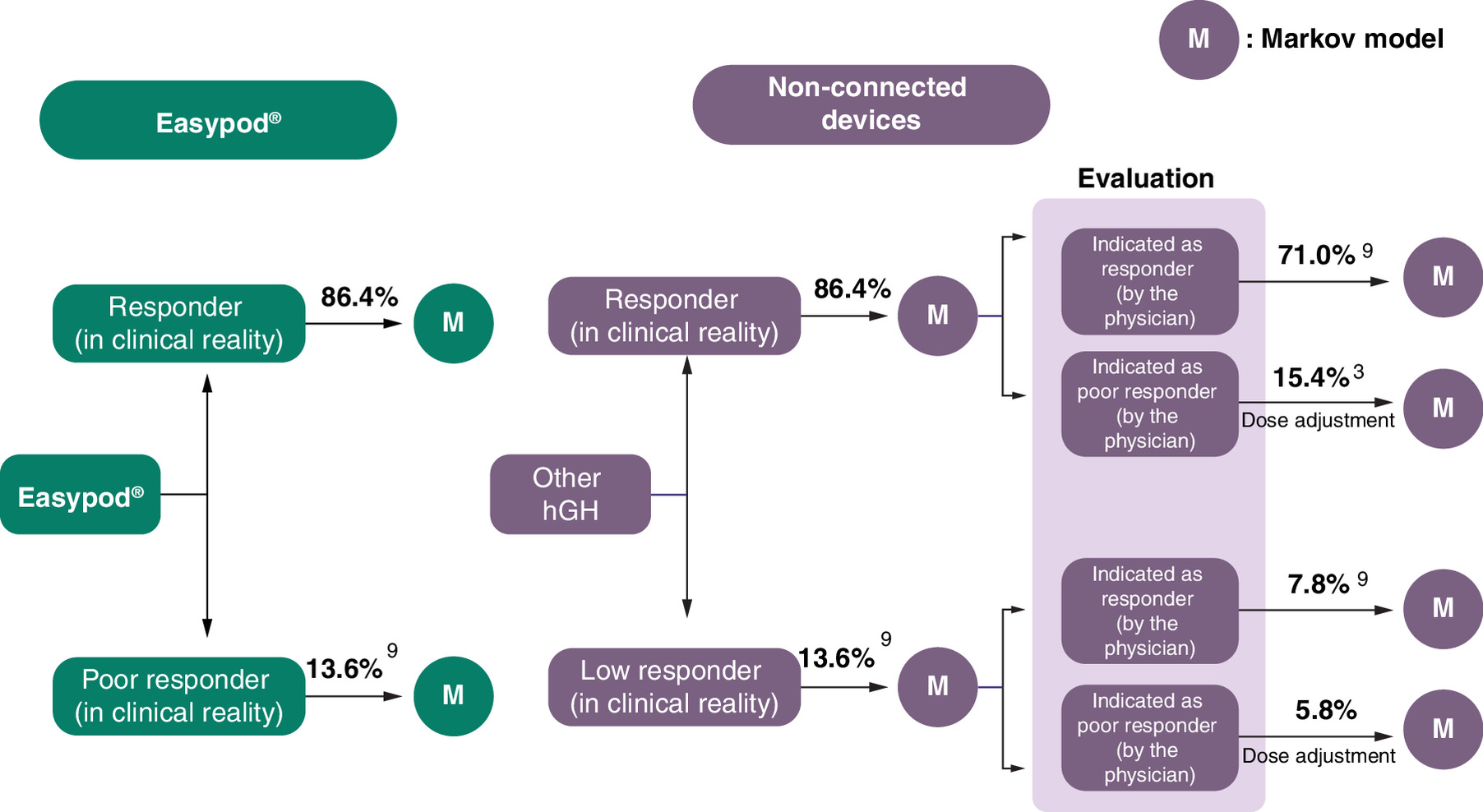
Figure 1. Illustrates a 1-year decision tree combined with a Markov model with 6-month cycles.
In the decision tree, patients are classified as responders or poor responders. For nonconnected devices, four additional branches are included prior to entry into the Markov model to reflect the uncertainty faced by physicians in the absence of objective adherence monitoring, including the risk of misclassifying a true responder as a poor responder (15.4%), which may lead to an unnecessary dose increase.
hGH: human growth hormone.
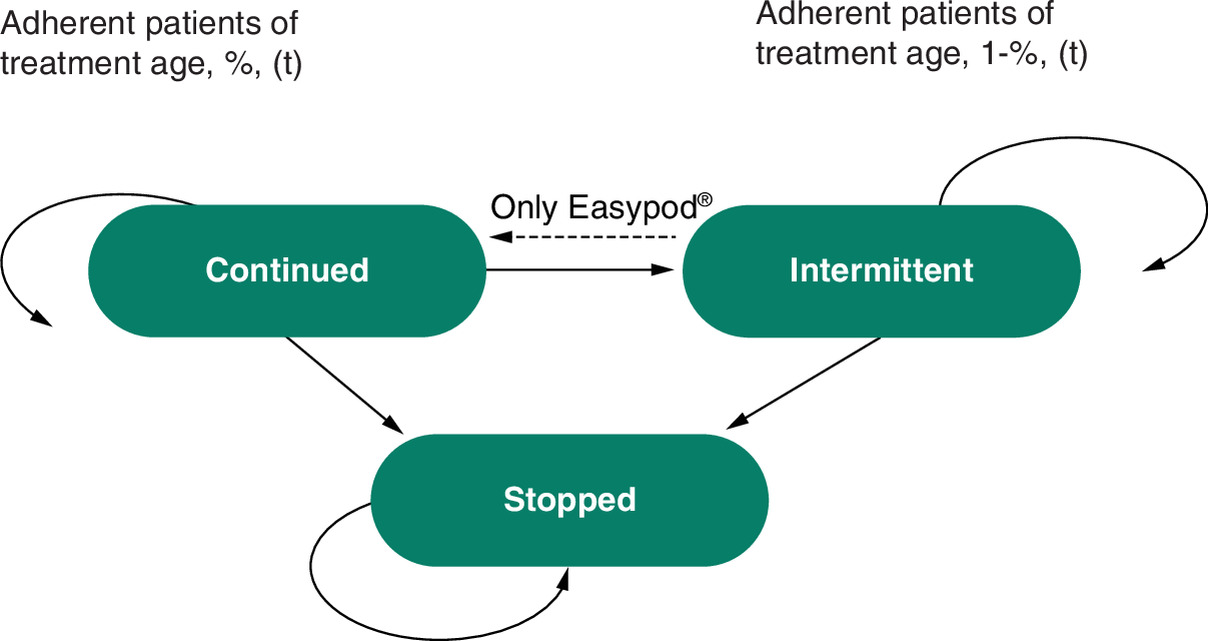
Figure 2. Six-month cycle Markov model simulating treatment pathways, including continuous adherence, intermittent adherence and treatment discontinuation.
Continuous adherence (≥85.7%) was defined as at least 6 weekly injections. Adherence transitions were allowed every 6 months during the first 4 years; thereafter, transitions from Intermittent adherence to Continuous adherence were permitted only for Easypod (50% probability). Treatment was stopped only if growth velocity fell below 2 cm/year for two consecutive years or at bone maturation (15 years for girls, 17 years for boys).
The Markov model simulated treatment with r-hGH over time, capturing different adherence patterns. These adherence patterns were continuous, intermittent adherence and stopping treatment (Figure 2). Continuous adherence (≥85.7%) was defined as administering at least six of seven prescribed weekly injections, consistent with standard r-hGH dosing practice in Spain, previous cost-effectiveness models [8,9], and medical expertise. Patients entered the appropriate adherence state following classification in the decision tree. The probability of being in continuous or intermittent status (<85.7%, equivalent to less than 6 doses per week) for the first 4 years among patients with GHD was based on data collected by Growzen Connect in the de Arriba et al. [12] RWE study. For following years, the same reduction was applied independently of the mode of administration. Treatment discontinuation occurred when growth velocity fell below 2 cm/year for at least 2 consecutive years, or when bone maturation was reached (15 years for girls, 17 years for boys) [10].
The simulated cohort comprised 10,000 children aged 2–13 years with GHD, reflecting the Spanish pediatric population. The time horizon extended until bone maturation [2,18]. Both costs and health outcomes were discounted at an annual rate of 3%, in accordance with Spanish health economic evaluation guidelines [9,19].
Inputs
Clinical inputs
Baseline patient characteristics were derived, whenever possible, from the de Arriba et al. RWE study [12], using data only from children with GHD (100 patients, 45 boys and 55 girls) (Table 1). These data were then complemented with other sources leveraged in previous models in alignment with guidelines for cost-effectiveness modeling [20].
| Patient characteristic | Minimum | Maximum | Scenario analysis | Source/notes | Ref. |
|---|---|---|---|---|---|
| Boys | 45% | 55% | de Arriba et al. | [12] | |
| Age at treatment initiation (years) | 2.00 | 13.15 | 2–4; 5–7; 8–11; 12+ | de Arriba et al. | [12] |
| Highest treatment initiation age (years) | 13.15 | de Arriba et al. | [12] | ||
| Start HSDS | -4.49 | -1.98 | de Arriba et al. | [12] | |
| Highest treatment stop age (years) | 15 (girls) | 17 (boys) | Lonero et al. | [21] | |
| Time horizon (years) | 15 (girls) | 17 (boys) | 17 girls; 19 boys | Expert opinion | |
HSDS: Height standard deviation score.
The probability of initiating treatment was age dependent [22], and was derived from the Spanish RWE study where 17% of children initiated treatment before 5 years of age, 26% between ages 5 and 7 years, 46% between ages 8 and 11 years, and 11% after age 12 years [12]. Different scenario analyses were assessed given the differences observed between Easypod and nonconnected devices in treatment age initiation.
Final height at bone maturation, the primary outcome of the study, was measured using HSDS. HSDS expresses an individual's height relative to the mean height of a reference population of the same age and sex, in standard deviation (SD) units. In pediatric patients with GHD, efficacy is assessed as an increase in HSDS over time, indicating catch-up growth. HSDS gain is associated with adherence. Longitudinal growth response was simulated by estimating height at each cycle using age- and sex-specific population height references for Spain [8], assuming a constant reduction in HSDS over time based on adherence level and aligned with a previously published GHD-specific growth prediction model [2].
Height (t) = Mean population height (t) + HSDS (t) * Population SD (t) where t denotes age. Children in the continuous adherence state were assumed to experience a 25% reduction in HSDS gain per cycle until bone age maturation or treatment discontinuation, consistent with previous publications [8,9]. For children with sub-optimal adherence (intermittent status), it was assumed that the HSDS gain was reduced by 50% in each cycle [8,9]. The difference in HSDS gains between children on connected versus not connected devices based on the De Arriba study [12] varied from 31% in year 2 and 4, to 18% in year 3, as reported in Table 2. Given the small sample size, it was not possible to derive the data by adherence status from the RWE analysis; however, sensitivity analyses and a scenario analysis were performed to understand the impact this input may have on the overall results.
| HSDS Change | Year 1 | Year 2 | Year 3 | Year 4 |
|---|---|---|---|---|
| Easypod | -0.49 | -0.26 | -0.24 | -0.16 |
| Other r- hGH | -0.64 | -0.37 | -0.30 | -0.23 |
†
Estimated adjustment for age, gender and height standard deviation score at treatment initiation.
For responders, height gain began in the first cycle, while for low responders it began in the third cycle, assuming it would take up to two cycles to adjust dosage (1 year). In children using nonconnected devices who were not identified as poor responders, height gains were delayed until the fourth cycle [2]. These assumptions were further tested in scenario analyses. The model also allowed treatment discontinuation in cases of persistently poor growth (<2 cm/year after 2 years), in alignment with label and guidelines.
Adherence inputs
For adherence, during the first 4 years of follow-up, data were extracted from the Spanish RWE study [12] among children with GHD, as complete adherence information for Easypod was available through the eHealth-based ecosystem.
The data showed a decreasing adherence over time for Easypod (97% by the end of year 1, 92% in year 2, 91% in year 3 and 86% in year 4). The data are aligned with a previous Spanish publication, showing an adherence of 95.3% at year 1 and 95.5% at year 4 [23], and other international publications [17]. In the Markov model, continuous adherence was defined as ≥85.7% of scheduled injections per cycle [23]. To align with this definition, the proportion of children with 6 doses or more per week was calculated, and the 6-month adherence estimates used in the model are reported in Table 3.
| Adherence | Year 1 | Year 2 | Year 3 | Year 4 | Source | Ref. |
|---|---|---|---|---|---|---|
| Easypod | S1 96%; S2 90% | S1 88%; S2 84% | S1 90%; S2 84% | S1 74%; S2 80% | de Arriba et al. | [12] |
| Other r- hGH Basecase | S1 74%; S2 69% | S1 61%; S2 58% | S1 66%; S2 61% | S1 54%; S2 59% | Estimated de Arriba et al. | [12] |
| Other r- hGH Scenario 1 | S1 79%; S2 74.1% | S1 72.4%; S2 69.1% | S1 69.1%; S2 69.1% | S1 60.9%; S2 60.9% | de Pedro et al. & de Arriba et al. | [3,12] |
| Other r-hGH Scenario 2 | S1 84%; S2 74% | S1 70%; S2 68% | S1 65%; S2 63% | S1 61%; S2 58% | de Pedro et al. & experts' opinion | [3] |
r-hGH: Recombinant human growth hormone; S1: First semester; S2: 2nd semester.
For nonconnected devices, adherence was not reported in the RWE study by de Arriba [12] given the absence of a monitoring device able to record it. However, this being a comparative study, adherence was estimated using multiple imputation by chained equations with predictive mean matching (10 imputations, 50 iterations). The imputation model included baseline and follow-up demographic and clinical characteristics, treatment dose, adherence and height SDS, excluding the connected/unconnected group indicator. Mean adherence for the unconnected group was estimated by averaging results across the imputed datasets. For nonconnected devices, the estimated adherence declined from 74.5% at the end of year 1 to 63.7% in year 2, 66.9% in year 3, to 63.2% at the end of year 4. These results are aligned with previous studies showing an adherence of 79% in the first year of treatment across all devices in Spain [3]. The estimated proportion of children with 6 or more doses for nonconnected devices is reported in Table 3, and it was derived by applying the same % reduction derived for the yearly adherence. Given the small sample size used for estimating nonconnected devices adherence, scenario analyses based on expert opinions and previous studies [3] were also considered.
For subsequent years (beyond year 4), the model assumed an annual decline of 0.434% [23] for both Easypod and nonconnected devices, in alignment with previously published models. For Easypod, transitions between continuous and intermittent adherence were permitted, reflecting the trend observed in the real-world study and the potential impact of the Hawthorne effect when patients are monitored [12], although this was tested in a scenario analysis.
Cost inputs
Direct medical costs included pharmacological treatment and patient management (Table 4). The reimbursed unit price of r-hGH was €17.5 per mg for all somatropin, as for the last pricing tendering submission. Daily dosing was assumed to be 0.0275 mg/kg/day, with a maximum increase of 23.5% for poor responders [12]. For calculating pharmaceutical costs, we assumed that continuous adherers (children using 6 doses or more per week) utilized 92.9% of medications (averaging 6.5 doses per week), while intermittent adherers utilized only 80% of medications (averaging 5.6 doses per week). No drug wastage was included in the model, making the conservative assumption of no difference in wastage between devices. Management costs, including endocrinology visits and monitoring, were sourced from official Spanish gazettes [24] and validated by expert consultation. Indirect costs such as transportation and productivity losses were not considered in this study [9].
| Cost category | Frequency of use | Unit cost | ||
|---|---|---|---|---|
| Continuous | Intermittent | Stopped | ||
| Endocrinologist visit: in person | 2.5 | 3.5 | 1.5 | €153.94 |
| Endocrinologist visit: Telehealth | 0 | 1 | 0 | €46.00 |
| Blood test + general biochemistry + pituitary function test | 1.5 | 2 | 0 | €117.2 |
| Hand radiography | 1 | 1 | 0.5 | €19.5 |
| Hospital pharmacy treatment collection | 12 | 12 | 0 | €7.67 |
| Pharmaceutical care | 1 | 1.5 | 0 | €13.89 |
| Total | €686.08 | €951.57 | €240.66 | |
Utility inputs
QALYs were estimated using the relationship between HSDS and adult utility values reported in previous evaluations [18]. In the absence of pediatric-specific utility weights, adult-derived estimates were applied in each cycle to approximate quality-of-life changes associated with pediatric patients with GHD in Spain (Table 5). Sensitivity analyses and an ad hoc scenario analysis were performed to explore potential structural uncertainty associated with this assumption.
| HSDS score minimum | HSDS score maximum | Utility | SE | Scenario analysis |
|---|---|---|---|---|
| -5 | -3 | 0.69 | 0.03 | -15% |
| -3 | -2.5 | 0.74 | 0.02 | -15% |
| -2.5 | -2 | 0.8 | 0.01 | -15% |
| -2 | -1.5 | 0.82 | 0.01 | -10% |
| -1.5 | -1 | 0.83 | 0.01 | -10% |
| -1 | -0.5 | 0.85 | 0.01 | -5% |
| -0.5 | 0 | 0.86 | 0.01 | 5% |
| 0 | 0.5 | 0.88 | 0.01 | 0% |
| 0.5 | 1 | 0.89 | 0.01 | 0% |
| 1 | 1.5 | 0.89 | 0.01 | +5% |
| 1.5 | 2 | 0.9 | 0.01 | +5% |
| 2 | 2.5 | 0.9 | 0.02 | +5% |
HSDS: Height standard deviation score; SE: Standard error.
Model outputs & scenario & sensitivity analyses
The base-case analysis incorporated Spanish RWE adherence data for Easypod and estimated adherence data for nonconnected devices. Model outcomes included average final height gain (cm), cost per cm gained, and incremental cost per QALY.
Uncertainty in model inputs was explored through sensitivity and scenario analyses. These analyses included variations in adherence patterns for nonconnected devices as well as demographic and clinical factors. Two alternative scenarios were assessed regarding adherence for the nonconnected arm. In Scenario 1, adherence estimates combined data from de Pedro et al. [3] for the first 6 months of treatment with the Easypod trend observed up to year 4, representing a conservative assumption as it is likely that adherence declines more steeply with nonconnected devices compared with Easypod. Scenario 2 assumed a higher initial adherence of 84% for an average rate of 79% in the first year, as per de Pedro et al. [3] with subsequent reductions based on expert clinical opinion. Moreover, a scenario assessed the impact of removing for children using Easypod the possibility of transitioning between continuous and intermittent adherence status after the first 4 years.
The impact of alternative assumptions regarding the relationship between adherence and growth was tested via sensitivity analyses and scenario analyses. The reduction in HSDS gain per cycle among children in the continuous status was varied from 20% to 30%. Moreover, we tested a scenario with a HSDS gain of 15%, instead of 25%, for children in the continuous adherence state and 30%, instead of 50%, for those in the intermittent adherence state until bone age maturation or treatment discontinuation. Finally, an additional scenario analysis tested the impact of initiating HSDS gain in the second rather than third cycle for low responders, independently of the device used.
Regarding QALYs, we tested the results, using both sensitivity analysis (+/-10%) and a scenario analysis, assuming a nonlinear difference in the QALY distribution between adults and children/adolescents, based on key experts’ advice (Table 5).
Finally, uncertainty in other key inputs was tested including demographic distributions (including age and gender distribution), and time horizon (up to 19 years for boys and 17 years for girls).
Results
In the base-case analysis, Easypod was associated with greater height gains compared with nonconnected devices. At bone maturation, the average final height for children treated with Easypod was 163.04 cm, compared with 159.21 cm for those using nonconnected devices, corresponding to an incremental benefit of 3.83 cm (Table 6). Over the treatment course, cumulative height gain was 18.17 cm with Easypod and 14.34 cm with nonconnected devices. When incremental costs were related to the additional 3.83 cm of final height achieved, the resulting cost per cm gained was €2625 with Easypod and €3158 with nonconnected devices, corresponding to an incremental saving of €534 per cm gained.
| Parameter | Base case | ||
|---|---|---|---|
| Easypod® | Nonconnected | Difference | |
| Final height (cm) | 163.04 | 159.21 | |
| Height gained (cm) | 18.17 | 14.34 | 3.83 |
Children treated with Easypod spent on average 5.5 years in the continuous state versus 1.5 years for children treated with nonconnected devices, incurring substantially higher treatment costs in this status (€29,629 vs €6256; difference €23,373) and lower costs in the intermittent status (€11,593 vs €30,492; difference –€18,899) (Table 7). The difference in drug costs was therefore driven by adherence. The possibility of accessing data recorded on the eHealth ecosystem enables constant monitoring and adjustment by caregivers and physicians with more consistent treatment adherence compared with nonconnected devices, and helping differentiate poor adherence from true nonresponse, preventing unnecessary dose escalation. As a result, approximately 13.7% of children treated with Easypod incurred a dose increase for an overall cost of €1246, versus 29.0% of children on nonconnected devices, for a total cost of €2406, a difference of -€1160. The reduction in total management costs is associated with lower number of visits and tests for adherent children as per expert opinions.
| Drug | Normal dose | Dose increase | ||||
|---|---|---|---|---|---|---|
| Continue | Intermittent | Total | Continue | Intermittent | Total | |
| Easypod® | €29,629 | €11,593 | €41,222 | €912 | €335 | €1246 |
| Nonconnected | €6256 | €30,492 | €36,748 | €346 | €2060 | €2406 |
| Difference | €23,373 | -€18,899 | €4474 | €565 | -€1725 | -€1160 |
The ICER per QALY gained with Easypod was estimated at €27,200, based on an incremental gain of 0.1 QALYs compared with nonconnected devices. This value falls within the commonly cited Spanish national healthcare system willingness-to-pay threshold range of €20,000–30,000 per QALY [25,26].
In the adherence scenario analysis (Table 8), Easypod remained associated with greater height gains and lower costs per cm gained compared with nonconnected devices across all scenarios. In the adherence Scenario 1, incremental height gain was 3.23 cm (163.04 cm with Easypod vs 159.81 cm with nonconnected devices), with a cost saving of €432 per cm gained and an ICER of €28,374. In the adherence Scenario 2, incremental height gain was 3.08 cm, with a saving of €406 per cm gained and an ICER of €31,565. When the possibility of transitioning between continuous and intermittent adherence status after year 4 was removed for Easypod, incremental height gain fell to 3.09 cm, but the cost saving per cm gain increased to €524 and the ICER fell substantially to €7739.
| Difference cm | Cost per cm difference | Cost per QALYs | |
|---|---|---|---|
| Base case analysis | 3.83 | -€534 | €27,200 |
| Adherence | |||
| Adherence scenario 1 | 3.23 | -€432 | €28,374 |
| Adherence scenario 2 | 3.08 | -€406 | €31,565 |
| No switching between status from year 4 for Easypod | 3.09 | -€524 | €7739 |
| Patient characteristics | |||
| Boys (55%) | 3.93 | -€549 | €27,280 |
| Time horizon 17 girls, 19 boys | 3.76 | -€552 | €20,432 |
| Years 2–4 | 6.92 | -€550 | €30,929 |
| Years 5–7 | 4.67 | -€612 | €27,368 |
| Years 8–11 | 2.81 | -€484 | €23,894 |
| Years 12+ | 1.29 | -€358 | €27,852 |
| Effectiveness | |||
| Higher HSDS gain (20%) | 4.92 | -€635 | €27,859 |
| Lower HSDS gain (30%) | 2.93 | -€434 | €27,261 |
| HSDS gain continuous 15%; intermittent 30% | 5.11 | -€438 | €40,870 |
| Low response effect from cycle 2 | 3.74 | -€526 | €26,797 |
| QALYs | |||
| QALYs +10% | 3.84 | -€537 | €25,515 |
| QALYs -10% | 3.84 | -€537 | €31,185 |
| QALYs not continuous | 3.84 | -€537 | €13,986 |
HSDS: Height standard deviation score; QALY: Quality-adjusted life year.
The scenario and sensitivity analysis testing the relationship between adherence and HSDS gain showed the greatest influence on results among the assumptions tested. Varying the reduction in HSDS gain per cycle for continuously adherent children between 20% and 30% produced incremental height gains ranging from 2.93 to 4.92 cm. In the scenario assuming a smaller HSDS gain reduction for both adherence states (15% for continuous, 30% for intermittent, vs 25%/50% in the base case), incremental height gain increased to 5.11 cm, with a saving of €438 per cm gained but a substantially higher ICER of €40,870, reflecting the combined effect on both costs and QALYs. When the height benefit for low responders was assumed to begin in the second rather than the third cycle, incremental height gain was similar to the base case (3.74 cm), with a lower ICER of €26,797.
Regarding utility assumptions, a scenario assumed a nonlinear relationship between height and health-related quality of life. This reflected the hypothesis that deviations below average height may have a disproportionately greater impact on quality of life during childhood and adolescence than implied by the adult-derived utility function. This scenario increased the estimated QALY difference between treatment strategies from 0.09 to 0.17, reducing the ICER to €13,986, underscoring the sensitivity of the cost-effectiveness result to how utility benefits are assumed to accrue over time (Table 8). A one-way sensitivity analysis varying QALYs by ± 10% produced ICERs ranging from €25,515 to €31,185.
Across the patient-characteristic and time-horizon subgroups tested, Easypod was associated with incremental height gains ranging from 1.29 cm (treatment initiated at age 12 years or older) to 6.92 cm (treatment initiated at ages 2–4 years), with ICERs ranging from €23,894 to €30,929 across these subgroups. Assuming a higher proportion of boys (55%) increased the incremental height gain slightly to 3.93 cm, with an ICER of €27,280.
The results were most sensitive to structural assumptions regarding the relationship between adherence and HSDS gain, the persistence of the Hawthorne effect reflected in the adherence-transition structure, and the accrual pattern of utility gains, rather than to demographic characteristics or the ±10% parameter variations applied to costs and QALYs individually.
Discussion
This study evaluated the cost-effectiveness of administering r-hGH using Easypod compared with nonconnected injection devices in children with GHD in Spain. Using a microsimulation model informed by Spanish RWE, Easypod was associated with greater projected final height, lower costs per centimeter gained, and an ICER of approximately €27,200 per QALY gained. These findings suggest that improved adherence associated with data monitoring has the potential to translate into improved long-term clinical outcomes while remaining within commonly cited willingness-to-pay thresholds in Spain.
Adherence is widely recognized as one of the principal determinants of treatment effectiveness in children receiving daily r-hGH therapy for a long period of time. Previous studies have consistently reported suboptimal adherence, with rates ranging from approximately 50% to 80% [3,10], and have shown that missed injections reduce growth response and may contribute to unnecessary dose escalation [8]. Easypod is currently the only connected r-hGH injection device capable of objectively recording injections, allowing healthcare professionals to monitor adherence throughout treatment and intervene when adherence declines.
Several real-world studies have demonstrated high adherence, more than 90% with Easypod [13,17,23]; however, none directly compared Easypod with other devices for r-hGH administration. De Arriba et al. [12,27] showed that Easypod was associated with higher HSDS gains compared with other injection devices, projecting additional adult height gains of 3.5 cm for boys and 2.4 cm for girls with GHD, assuming continuation of the estimated mean HSDS trend over an average treatment duration of approximately 8.5 years for boys and 6.5 years for girls [12].
The present model extends the findings from the Spanish RWE study by de Arriba et al. [12]. While that study reported differences over 4 years of follow-up and projected adult height based on observed HSDS trajectories, the present analysis estimated the long-term clinical and economic consequences of these adherence differences over the entire treatment period until bone maturation. The projected incremental height gain of approximately 3.8 cm is therefore directionally consistent with the previous real-world estimates, with expected differences arising from the longer model horizon and inclusion of treatment pathways, adherence transitions, healthcare resource utilization and dose escalation.
These findings are consistent with previous health economics evaluations identifying adherence as the major driver of treatment effectiveness in pediatric GHD. Alcón-Sáez et al. [9] demonstrated improved treatment efficiency with Easypod in Spain using a cost-consequence framework, while Foo et al. [8] reported similar adherence-driven differences across devices in Italy. More recently, Rivolo et al. [18] highlighted the importance of adherence when comparing daily and long-acting growth hormone formulations. By incorporating Spanish real-world adherence data into a cost-effectiveness framework, the present study complements these previous evaluations and provides context-specific evidence.
One notable finding is that the higher overall treatment costs associated with Easypod were primarily driven by greater medication utilization resulting from sustained adherence. However, these higher pharmaceutical costs were partially offset by lower costs associated with unnecessary dose escalation and disease management. This reflects an important distinction between increased drug expenditure resulting from better adherence and increased expenditure resulting from inefficient care. Access to objective adherence information has the potential to help clinicians distinguish poor adherence from true biological nonresponse [8], thereby supporting more appropriate dose adjustments and potentially improving both treatment effectiveness and healthcare resource utilization.
A major strength of this study is the use of Spanish real-world data to inform the model, particularly for adherence among children treated with Easypod [12]. Nevertheless, several limitations should be acknowledged. The de Arriba et al. [12] study was conducted at a single center and included both GHD and small-for-gestational-age children; however, in our analysis we included only GHD children, and the results should be interpreted accordingly. To improve generalizability, multi-center studies with larger sample sizes may be warranted. Adherence for children using nonconnected devices was not directly measured and therefore had to be estimated using multiple imputation and adjusting for confounding factors. However, some residual association between imputed adherence and growth outcomes cannot be fully excluded. Two scenario analyses (Table 8) were considered, and although the overall conclusions remained unchanged, larger comparative studies including objective adherence measurements across different injection devices would provide more robust estimates of long-term adherence differences.
Importantly, the relationship between adherence and growth outcomes remains incompletely understood. In the absence of direct empirical evidence, reductions in HSDS gain associated with continuous and intermittent adherence were based on assumptions adopted from previous economic evaluations [8,9]. Scenario analyses demonstrated that these assumptions were among the principal drivers of projected height gain and cost-effectiveness (Table 8). This finding highlights that future longitudinal studies should not only compare adherence across devices but also quantify how different levels of adherence translate into HSDS gains over time and determine the extent to which sustained adherence enables children with GHD to achieve catch-up growth and reduce the height deficit relative to their healthy peers.
Moreover, uncertainty remains regarding health-related quality of life in pediatric GHD. Because pediatric preference-based utility values associated with stature are currently unavailable, adult-derived utility values were used to estimate QALYs [18]. While this approach is consistent with previous economic evaluations, the scenario analysis assuming a nonlinear relationship between height and quality of life during childhood resulted in larger incremental QALY gains and more favorable cost-effectiveness estimates. These findings suggest that the relationship between stature and quality of life during childhood may have an important influence on economic evaluations and highlight the need for studies collecting pediatric utility values that better capture the impact of stature, catch-up growth and social functioning throughout childhood and adolescence.
Additional limitations should also be considered. The underlying RWE was derived from a single-center observational study with a relatively small sample size, limiting generalizability. Indirect costs such as caregiver productivity losses and transportation were not assessed in this study, which may lead to an underestimation of the broader societal impact. The Hawthorne effect associated with connected-device monitoring was assumed to persist throughout the simulation horizon. Because behavioral effects of observation often attenuate over time, this assumption may overstate long-term benefits; this uncertainty should be further explored in future model refinement. Uncertainty was explored using deterministic sensitivity analyses and structural scenario analyses rather than a probabilistic sensitivity analysis because insufficient evidence was available to define robust probability distributions for several key model inputs. Furthermore, long-acting growth hormone formulations were not evaluated because the objective of this study was to compare connected and nonconnected daily injection devices. Future economic evaluations should compare connected daily devices with long-acting formulations to better understand the relative contributions of adherence monitoring and reduced injection frequency to long-term outcomes.
Overall, this analysis suggests that Easypod may improve long-term growth outcomes and represent a cost-effective use of healthcare resources in Spain. In addition to informing current decision-making, the study identifies key priorities for future research. Larger, multicenter comparative real-world studies are needed to quantify adherence differences across injection devices, better characterize the relationship between adherence and HSDS gains, and develop pediatric utility estimates that capture the effects of stature and catch-up growth on health-related quality of life. Addressing these evidence gaps would improve the precision of future economic evaluations and strengthen the evidence base for connected adherence-monitoring technologies in pediatric GHD.
Conclusion
Easypod is currently the only connected r-hGH injection device capable of objectively recording adherence throughout treatment, providing clinicians with information that may help distinguish poor adherence from true biological nonresponse and support more informed treatment decisions. Using Spanish RWE and a cost-effectiveness model, this study suggests that the higher adherence observed with Easypod compared with nonconnected devices may translate into greater height gains, improved QALYs, lower costs per centimeter gained and cost-effectiveness within commonly accepted Spanish willingness-to-pay thresholds. The findings also highlight important evidence gaps regarding comparative adherence across devices, the relationship between adherence and growth outcomes, and pediatric health-related quality of life, supporting the need for further comparative real-world studies to strengthen future economic evaluations.
Summary points
•
Growth hormone deficiency (GHD) in children and adolescents requires long-term recombinant human growth hormone treatment, and adherence is a key determinant of growth outcomes and costs.
•
Easypod® is a connected electronic injection device that records real-time adherence data, enabling clinicians and families to monitor treatment use.
•
A cost-effectiveness model using Spanish real-world data compared somatropin administered via Easypod versus nonconnected devices from the perspective of the Spanish National Health System.
•
Children using Easypod achieved greater final height at bone maturation (163.04 vs 159.21 cm), corresponding to an incremental gain of 3.83 cm.
•
The cost per centimeter of height gained was lower with Easypod (€2625 vs €3158), resulting in savings of €534 per cm gained.
•
Easypod reduced unnecessary dose escalations (13.7 vs 29.0%) and was associated with lower management costs due to improved adherence monitoring.
•
The incremental cost-effectiveness ratio was €27,200 per QALY gained, within commonly accepted Spanish willingness-to-pay thresholds.
•
Across scenario and sensitivity analyses, Easypod consistently demonstrated improved growth outcomes and favorable cost-effectiveness compared with nonconnected devices.
Author contributions
H de los Santos Real, I Sánchez-Collado and F Boehm were responsible for study conception. C Roeder and C Masseria were responsible for study design and execution; E Nivelle and C Masseria developed the cost-effectiveness model; A de Arriba was the main investigator for the RWE study, source of data for the analysis; P van Dommelen was responsible for the ad hoc RWE data analysis to input into the cost-effectiveness analysis; A de Arriba, JA Sáez and CL Gorbe provided their expertise on the management of children with GHD and insights on the best scenario and sensitivity analysis as well as interpretation of data; C Masseria drafted the manuscript and all authors contributed to its final version.
Acknowledgments
The authors acknowledge Y-F (Ashley) Lee and M Juniper for the support received in drafting and critically reviewing the manuscript.
Financial disclosure
This work was funded by Merck Healthcare (Darmstadt, Germany). The authors have received no other financial and/or material support for this research or the creation of this work apart from that disclosed.
Competing interests disclosure
A de Arriba Antonio has received speaker fees from Merck KGaA, Pfizer, Novo Nordisk and Sandoz. P van Dommelen has received fees by Merck KGaA for statistical analyses. JJA Sáez has received speaker fees from Merck KGaA, Pfizer, Lilly and Novo Nordisk and has been an advisory board member for Merck KGaA and Pfizer. CL Gorbe has been an advisory board member for Merck S.L, Spanish affiliate of Merck KGaA. H de los Santos Real, I Sánchez-Collado and F Boehm are employees of Merck KGaA. C Masseria and E Nivelle were hired by Merck KGaA as consulting partners to support the execution of the project. The authors have no other competing interests or relevant affiliations with any organization or entity with the subject matter or materials discussed in the manuscript apart from those disclosed.
Writing disclosure
OpenAI’s ChatGPT was used to assist in generating draft text based on materials provided by the authors. All AI-assisted content was reviewed, edited and validated by the authors, who take full responsibility for the scientific accuracy and integrity of the manuscript.
Data sharing statement
The authors certify that the data supporting the findings of this study are available in this article.
Open access
This work is licensed under the Attribution-NonCommercial-NoDerivatives 4.0 Unported License. To view a copy of this license, visit https://creativecommons.org/licenses/by-nc-nd/4.0/
References
Papers of special note have been highlighted as: • of interest; •• of considerable interest
1.
Grimberg A, DiVall SA, Polychronakos C et al; Drug and Therapeutics Committee and Ethics Committee of the Pediatric Endocrine Society. Guidelines for growth hormone and insulin-like growth factor-I treatment in children and adolescents: growth hormone deficiency, idiopathic short stature, and primary insulin-like growth factor-I deficiency. Horm. Res. Paediatr. 86(6), 361–397 (2016).
2.
Ranke MB, Lindberg A, KIGS International Board. Observed and predicted growth responses in prepubertal children with growth disorders: guidance of growth hormone treatment by empirical variables. J. Clin. Endocrinol. Metab. 95(3), 1229–1237 (2010).
• Growth hormone deficiency-specific growth prediction model supplying the first-year height standard deviation score gain inputs to the microsimulation.
3.
De Pedro S, Murillo M, Salinas I et al. Variability in adherence to rhGH treatment: socioeconomic causes and effect on children's growth. Growth Horm. IGF Res. 26, 32–35 (2016).
4.
Geisler A, Lass N, Reinsch N et al. Quality of life in children and adolescents with growth hormone deficiency: association with growth hormone treatment. Horm. Res. Paediatr. 78(2), 94–99 (2012).
5.
van Dommelen P, Koledova E, Wit JM Effect of adherence to growth hormone treatment on 0–2-year catch-up growth in children with growth hormone deficiency. PLOS One 13(10), e0206009 (2017).
6.
Gomez R, Ahmed SF, Maghnie M, Li D, Tanaka T, Miller BS. Treatment adherence to injectable treatments in pediatric growth hormone deficiency compared with injectable treatments in other chronic pediatric conditions: a systematic literature review. Front. Endocrinol. (Lausanne) 13, 795224 (2022).
7.
Graham S, Weinman J, Auyeung V. Identifying potentially modifiable factors associated with treatment non-adherence in paediatric growth hormone deficiency: a systematic review. Horm. Res. Paediatr. 90(4), 221–227 (2018).
8.
Foo J, Maghnie M, Colao A, Vlachaki I, Colombo G. Cost-consequence analysis for human recombinant growth hormone (r-hGH) treatment administered via different devices in children with growth hormone deficiency in Italy. Clinicoecon. Outcomes Res. 11, 525–537 (2019).
•• Key prior economic evaluation of recombinant human growth hormone across delivery devices; the closest methodological precedent for the present cost-effectiveness analysis.
9.
Alcón Sáez J, Muñoz A, Gorbe C, Pérez-Carbonell L, Villalobos T, Morán O. Cost-consequence analysis for recombinant human growth hormone treatment administered via different devices in children in Spain. Economía de la Salud 17, 91–107 (2022).
• Spanish cost-consequence analysis across devices, directly relevant to the local comparator and cost framing.
10.
Kappelgaard AM, Laursen T. The benefits of growth hormone therapy in patients with Turner syndrome, Noonan syndrome and children born small for gestational age. Growth Horm. IGF Res. 21(6), 305–313 (2011).
11.
Saz-Parkinson Z, Granados MS, Amate Blanco JM. Adherencia al tratamiento con hormona de crecimiento recombinante en niños deficitarios: control terapéutico e impacto económico. Madrid: Agencia de Evaluación de Tecnologías Sanitarias (AETS), Instituto de Salud Carlos III, Madrid, Spain (2013).
12.
de Arriba A, van Dommelen P, Savage MO. Use of connected injection device has a positive effect on catch-up growth in patients with growth disorders treated with growth hormone therapy. Front. Endocrinol. (Lausanne) 15, 1450573 (2024).
•• Primary Spanish real-world evidence source informing the model’s connected-device adherence and catch-up growth inputs; the analysis is built directly on these data.
13.
Koledova E, Tornincasa V, van Dommelen P. Analysis of real-world data on growth hormone therapy adherence using a connected injection device. BMC Med. Inform. Decis. Mak. 20(1), 176 (2020).
14.
Bozzola M, Colle M, Halldin-Stenlid M, Larroque S, Zignani M, Easypod™ Survey Study Group. Treatment adherence with the easypod™ growth hormone electronic auto-injector and patient acceptance: survey results from 824 children and their parents. BMC Endocr. Disord. 11, 4 (2011).
15.
Labarta JI, Dimitri P, Keiser M, Koledova E, Rivera-Romero O. Evaluating the usefulness and ease of use of a next-generation-connected drug delivery device for growth hormone therapy: qualitative study of health care professionals' perceptions. JMIR Hum. Factors 10, e46893 (2023).
16.
Rodríguez-Arnao MD, Sánchez AR, López ID, Fernández JR, Vega JAB, Muñoz RP. ECOS Study Analysis: Injection Settings and Adherence Data from Spain. (2016).
17.
Maggio MC, Vergara B, Porcelli P, Corsello G. Improvement of treatment adherence with growth hormone by easypod™ device: experience of an Italian centre. Ital. J. Pediatr. 44(1), 113 (2018).
18.
Rivolo S, Loftus J, Peter B, Fahey M, Kongnakorn T. Cost-effectiveness and cost-utility analysis of somatrogon once-weekly injections vs. daily growth hormone injection for treating paediatric growth hormone deficiency in Ireland. J. Med. Econ. 26(1), 963–972 (2023).
19.
López-Bastida J, Peña-Longobardo LM, Aranda-Reneo I, Tizzano E, Sefton M, Oliva-Moreno J. Social/economic costs and health-related quality of life in patients with spinal muscular atrophy (SMA) in Spain. Orphanet J. Rare Dis. 12(1), 141 (2017).
20.
Ramsey S, Willke R, Briggs A et al. Good research practices for cost-effectiveness analysis alongside clinical trials: the ISPOR RCT-CEA Task Force report. Value Health 8(5), 521–533 (2005).
21.
Lonero A, Giotta M, Guerrini G et al. Isolated childhood growth hormon deficiency: a 30-year experience on final height and a new prediction model. J. Endocrinol. Invest. 45(9), 1709–1717 (2022).
22.
Polak M, Konrad D, Tønnes Pedersen B, Puras G, Šnajderová M. Still too little, too late? Ten years of growth hormone therapy baseline data from the NordiNet® International Outcome Study. J. Pediatr. Endocrinol. Metab. 31(5), 521–532 (2018).
23.
Rodríguez Arnao MD, Rodríguez Sánchez A, Díez López I et al. Adherence and long-term outcomes of growth hormone therapy with easypod™ in pediatric subjects: Spanish ECOS study. Endocr. Connect. 8(9), 1240–1249 (2019).
•• Provides the long-term Easypod® adherence and outcome data used to validate the model against real-world Spanish practice.
24.
Oblikue Consulting SL. Base de conocimiento de costes y precios del sector sanitario. (2015). Available From: https://esalud.oblikue.com/
25.
Reckers-Droog V, van Exel J, Brouwer W. Willingness to pay for health-related quality of life gains in relation to disease severity and the age of patients. Value Health 24(8), 1182–1192 (2021).
26.
Vallejo-Torres L, García-Lorenzo B, Castilla I et al. On the estimation of the cost-effectiveness threshold: why, what, how? Value Health 19(5), 558–566 (2016).
27.
de Arriba Muñoz A, Muñiz VC, Saez JJA, Beisti A, Llovet E, Aizpún JIL. Impact of adherence on growth response during the first 2 years of growth hormone treatment. Endocrine 72(2), 513–523 (2021).
Information & Authors
Information
Published In
Copyright
© 2026 The authors. This work is licensed under the Attribution-NonCommercial-NoDerivatives 4.0 Unported License
History
Received: 29 April 2026
Accepted: 11 August 2026
Published online: 10 September 2026
Keywords:
Topics
Authors
Metrics & Citations
Metrics
Article Usage
Article usage data only available from February 2023. Historical article usage data, showing the number of article downloads, is available upon request.
Citations
How to Cite
Cost-effectiveness of a connected injection device for daily somatropin therapy in pediatric growth hormone deficiency in Spain: a scenario-based microsimulation analysis using real-world data. (2026) Journal of Comparative Effectiveness Research. DOI: 10.57264/cer-2026-0093
Export citation
Select the citation format you wish to export for this article or chapter.