

Systematic review and network meta-analysis of the efficacy, safety and tolerability of xanomeline plus trospium chloride compared with eight oral antipsychotics for the acute treatment of schizophrenia
Publication: Journal of Comparative Effectiveness Research
Abstract
Aim: The recently approved first-in-class combination therapy xanomeline/trospium chloride (KarXT) demonstrated superiority over placebo in three randomized controlled trials (RCTs) of adults with schizophrenia. This analysis investigates its relative efficacy, safety and tolerability compared with eight second-generation antipsychotics for the acute treatment of schizophrenia via network meta-analyses (NMAs). Materials & methods: A 2019 systematic literature review was adapted and updated to identify RCTs of eight antipsychotics in adults with schizophrenia. NMAs were conducted to compare KarXT against these antipsychotics for 11 endpoints of interest, measured at 4–6 weeks, covering efficacy (Positive and Negative Syndrome Scale [PANSS]; Clinical Global Impressions – Severity [CGI-S]), safety (weight change, sedation and somnolence) and tolerability (discontinuation; all-cause and due to adverse events). Results: A network of 49 RCTs including 14,680 patients was formed. KarXT was associated with greater odds of clinical response (≥30% improvement in PANSS total score) than aripiprazole (odds ratio [OR]: 1.85; 95% credible interval [CrI]: 1.11, 3.11), brexpiprazole (OR: 2.23; 95% CrI: 1.34, 3.83) and cariprazine (OR: 2.05; 95% CrI: 1.19, 3.57); improved change from baseline (CFB) PANSS positive symptoms score versus brexpiprazole; improved CFB CGI-S score against aripiprazole, brexpiprazole, cariprazine and olanzapine; reduced odds of clinically significant (≥7%) weight gain over all comparators except clozapine (no data); improved CFB weight against brexpiprazole, clozapine, olanzapine, quetiapine and risperidone; and greater odds of all-cause discontinuation than aripiprazole, brexpiprazole, clozapine, lumateperone, olanzapine, quetiapine and risperidone. Conclusion: In this NMA, for patients receiving acute treatment for schizophrenia, KarXT compared favorably with second-generation antipsychotics on key efficacy endpoints and in terms of unwanted weight gain.
Plain language summary
What is this article about?
This study compared a newly approved medication, xanomeline/trospium chloride (KarXT), with eight oral antipsychotics commonly used in the US for the treatment of adults during acute episodes of schizophrenia. KarXT works differently than existing antipsychotics and has been shown in clinical trials to be effective versus placebo. In this study, an existing systematic literature review was adapted to find clinical trials of antipsychotics that were high-quality and had comparable study designs. An established statistical technique (network meta-analysis) was used to compare data from these trials with data from three KarXT trials, focusing on symptom improvement, adverse events and treatment tolerability after 4–6 weeks.
What were the results?
The analyses found that KarXT led to a higher chance of meaningful symptom improvement than aripiprazole, brexpiprazole and cariprazine. It also showed that KarXT led to larger improvements in some symptom severity scores compared with several other drugs. Importantly, it was less likely to cause significant weight gain than most comparators, a side effect that often reduces antipsychotic adherence. Safety and tolerability outcomes were generally comparable between the treatments, though findings suggested KarXT had a higher chance of all-cause discontinuation.
What do the results mean?
The results suggest KarXT could be a valuable option for patients and clinicians. Its use is associated with potential improvements in certain symptoms and a lower risk of problematic weight gain compared with other therapies, which may help support ongoing treatment and quality of life for adult patients.
Schizophrenia is a complex, chronic mental health condition associated with a substantial burden on patients and their families [1,2]. Schizophrenia symptoms vary and include positive symptoms (delusions, hallucinations and disorganized behavior); negative symptoms (flattened affect, social isolation); and cognitive impairment [1,3]. It affects approximately 23.1 million people globally and results in 15.1 million disability-adjusted life years [4], making it a leading cause of mental-disorder-associated disability [5,6]. Approximately 1.2% of US adults meet the criteria for a schizophrenia-spectrum disorder [7], and US adults with schizophrenia are 3.5-times more likely to die prematurely than the general population [8].
American Psychiatric Association guidelines recommend a patient-centric approach involving pharmacological and nonpharmacological treatments, with current standard of care centering around first-generation (FGA) and second-generation (SGA) antipsychotics targeting dopamine receptors [9]. Although effective at treating positive symptoms, FGAs can exacerbate negative symptoms, do not improve cognition, and result in well-known drug-induced movement disorders including extrapyramidal side effects (such as dystonia, parkinsonism and tardive dyskinesia) [10]. While SGAs have a reduced likelihood of extrapyramidal symptoms and tardive dyskinesia, they are associated with metabolic adverse events (AEs) such as weight gain and metabolic syndrome (including glucose and lipid abnormalities) [11]. The range of AEs resulting from these drugs' action on dopaminergic receptors leads to low treatment tolerability, poor adherence and subsequent symptom relapses [12,13]. There is therefore a need for treatment options with novel modes of action, better safety profiles and improved clinical outcomes.
Several pharmacological approaches have been researched, including targeting muscarinic receptors, trace amine-associated receptor 1 (TAAR1), serotonin 5-HT1A and 5-HT2A receptors and glycine transporter 1 [14]. However, few candidates have demonstrated efficacy in clinical trials including adults with schizophrenia, and only one of these has received US FDA approval [15–18]. In September 2024 the FDA approved xanomeline/trospium chloride (KarXT) [19] based on efficacy and safety data from three double-blind, placebo-controlled trials: EMERGENT-1/-2/-3 [20–22]. Xanomeline is an agonist of M1 and M4 muscarinic receptors that crosses the blood–brain barrier, while trospium chloride is a nonselective, peripherally restricted muscarinic receptor antagonist [23]. Xanomeline is thought to ameliorate psychotic symptoms by indirectly modulating neurotransmitter levels including dopamine, gamma-aminobutyric acid and glutamate [24], whereas trospium chloride mitigates the peripheral cholinergic (especially gastrointestinal) side effects of xanomeline.
Given these advances, it would be beneficial to individuals living with schizophrenia, clinicians and healthcare decision-makers to understand how KarXT compares against existing antipsychotics for schizophrenia. As EMERGENT-1/-2/-3 were placebo-controlled, there is a lack of head-to-head evidence comparing KarXT with common antipsychotics. Huhn et al. conducted the largest network meta-analysis (NMA) to date indirectly comparing antipsychotics used for the treatment of acute schizophrenia; however, this study predated the EMERGENT-1/-2/-3 studies and hence did not include KarXT [25]. Three more recent NMAs included KarXT but considered a substantially smaller group of comparators. These are our previous work comparing KarXT with aripiprazole and cariprazine for eight endpoints of interest [26], an NMA performed for an Institute for Clinical and Economic Review technology appraisal comparing KarXT with aripiprazole, olanzapine and risperidone [27], and another independent NMA comparing KarXT with cariprazine, lumateperone and asenapine [28].
Objective
The objective of the present work was to build on earlier efforts by integrating data from EMERGENT-1/-2/-3 into an updated evidence base of blinded randomized controlled trials (RCTs) and to compare, via a suite of NMAs, KarXT against an expanded group of eight clinically relevant oral SGAs (aripiprazole, brexpiprazole, cariprazine, clozapine, lumateperone, olanzapine, quetiapine and risperidone) used for the treatment of acute schizophrenia in the US. Building on the comprehensive evidence base established by Huhn et al. [25], the present work incorporated data from that systematic review to ensure alignment with a rigorously curated set of clinical trial evidence in schizophrenia. Outpatient populations and long-acting injectable SGA formulations were not included in the scope of the present work to align with the acute schizophrenia setting of the EMERGENT-1/-2/-3 trials. The review and analyses focused on 12 prespecified endpoints of interest, covering efficacy (PANSS response [≥30% improvement in PANSS total score from baseline]; change from baseline [CFB] total PANSS score; CFB PANSS positive symptoms score; CFB PANSS negative symptoms score; Clinical Global Impressions – Severity [CGI-S] response [achieving CGI-S of 1 or 2]; CFB CGI-S score), safety (clinically meaningful weight gain [≥7% CFB]; CFB weight; sedation; somnolence), and tolerability (all-cause discontinuation; discontinuation due to AEs). Extrapyramidal symptom and subtype AEs (i.e., akathisia, tardive dyskinesia, etc.) were considered clinically relevant safety outcomes but were excluded from the current scope as previous work had demonstrated that there were insufficient events observed over the 5-week EMERGENT-1/-2/-3 studies to support meaningful indirect treatment comparison [26]. By updating the evidence base established by Huhn et al. with newly available trial data and focusing indirect treatment comparisons on eight comparators reflective of current US treatment practice, this work aimed to inform clinical decision-making, support cost-effectiveness assessments, guide formulary evaluations and delineate remaining evidence gaps, with findings expected to be informative beyond the US schizophrenia treatment setting.
Materials & methods
Systematic literature review
An adaptation of the published SLR by Huhn et al. [25] was undertaken, covering the period from database inception to 20 March 2024. While retaining the general methodological framework of Huhn et al. the scope was deliberately focused to ensure that the included studies were comparable to the EMERGENT-1, -2 and -3 trials in key respects, including trial design, therapeutic mechanism and comparator relevance. Specifically, the update incorporated inclusion of the three recently completed EMERGENT trials; restriction to a comparator set of eight key oral SGAs representing current standard of care for acute schizophrenia in the US (aripiprazole, brexpiprazole, cariprazine, olanzapine, quetiapine, risperidone, lumateperone and clozapine) and restriction to blinded RCTs enrolling hospitalized adults with acute schizophrenia and reporting outcome data for the early acute treatment phase. This alignment in design and population was intended to facilitate valid indirect comparisons with EMERGENT-1, -2 and -3 trial results while minimizing heterogeneity from differences in treatment setting, study design or intervention class. The updated review searched the following bibliographic databases: MEDLINE®, Embase®, MEDLINE In-Process, PsycInfo® and CENTRAL. Full search strings for all databases are provided in Appendix 2. In addition, the World Health Organization International Clinical Trials Registry Platform and ClinicalTrials.gov were both searched and considered as sources of grey literature, alongside planned citation chasing from relevant reviews and reference lists.
Retrieved publications were evaluated against pre-defined PICOS (population, intervention, comparators, outcomes, study design) criteria. Table 1 presents the inclusion/exclusion criteria. The screening process was conducted by two independent reviewers, with discrepancies resolved by a third reviewer.
| Category | Inclusion criteria | Exclusion criteria |
|---|---|---|
| Population | Adult (≥18 years) hospitalized patients with schizophrenia† | Pediatric population Healthy volunteers Patients with other diseases Outpatients |
| Interventions | Oral formulations for the acute treatment of schizophrenia, specifically: aripiprazole, cariprazine, olanzapine, risperidone, brexpiprazole, quetiapine, clozapine, lumateperone and KarXT‡ | Interventions not mentioned in the list Long-acting injectables Studies where interventions were used for chronic or maintenance therapy |
| Comparators | Any comparator | Not applicable |
| Outcomes | Change from baseline total PANSS score Achieving ≥30% improvement in PANSS total score from baseline (PANSS response) Change from baseline PANSS positive score Change from baseline PANSS negative score Treatment discontinuation due to all causes Treatment discontinuation due to AEs Change from baseline weight ≥7% increase in weight from baseline Change from baseline CGI-S score Achieving CGI-S of 1 or 2 during acute treatment (CGI-S response) Experienced sedation Experienced somnolence | Trials assessing outcomes not relevant to the review |
| Trial design | Blinded RCTs Systematic reviews§ | Open-label RCTs Single-arm trials Observational studies (cohort, case-control) Reviews, letters, comments, and editorials Case studies or case reports Pharmacokinetic studies Economic studies |
| Language | No restrictions | None |
| Timeframe | 2019 onwards for full-text articles and conference abstracts | Full-text articles and conference abstracts published before 2019 |
†
Studies assessing mixed populations (any schizoaffective disorder) with >80% of the population of interest or reporting separate subgroup data for the population of interest were included and extracted.
‡
The efficacy and safety data for KarXT were derived from clinical study reports (CSRs) from the EMERGENT-1, EMERGENT-2 and EMERGENT-3 trials.
§
Relevant SLRs and meta-analyses were included at the title/abstract review stage to identify any additional studies not found in the database searches. Reference lists were hand-searched, and studies were excluded at full-text review unless they reported primary, original research.
AE: Adverse event; CGI-S: Clinical Global Impressions – Severity; KarXT: xanomeline and trospium chloride; PANSS: Positive and Negative Syndrome Scale; RCT: Randomized controlled trial; SLR: Systematic literature review.
Because full data extraction grids from Huhn et al. were not available in the published Supplementary Materials, and additional endpoint and study characteristic information was required for the feasibility assessment, all data were newly extracted for this update. Data extraction was performed using pre-specified forms designed to systematically capture all relevant study details. One reviewer extracted the data, which were independently verified by a second reviewer to ensure accuracy and consistency with the source articles. In cases of discrepancies, a consensus was reached through discussion or by arbitration from a third reviewer.
Risk of bias for studies included in NMAs was assessed using the Cochrane Risk of Bias tool version 2 (RoB 2), which evaluates potential bias across domains such as randomization process, deviations from intended interventions, missing outcome data, measurement of the outcome and selection of the reported results [29]. This assessment was conducted using the same two-reviewer process described above. Comparison-adjusted funnel plots were additionally used to evaluate publication bias [30].
Feasibility assessment for indirect comparison
A feasibility assessment was conducted to evaluate the identified studies' heterogeneity and, ultimately, suitability to form networks with EMERGENT-1/-2/-3. Reflecting the process outlined by Cope et al. [31], study differences were considered in terms of trial design, treatment dose/regimen and patient population characteristics, in addition to endpoint data availability, definition (i.e., response or clinically relevant weight gain thresholds), and assessment timepoints. Studies with clear differences in likely treatment effect modifiers (study sample size, severity of illness at baseline, mean age, sex, degree of placebo response) were excluded from the NMAs to avoid transitivity violations [25]. Outpatient treatment was also considered a likely indirect treatment effect modifier, given its association with high nonadherence [32]. Supplementary Tables 3-1 & 3-2 of Appendix 3, Supplementary Table 4-1 & Supplementary Figures 4-1–4-11 of Appendix 4 provide comparative summaries of SLR-identified studies.
Indirect comparison methods
Endpoint-specific network diagrams were produced to investigate network geometry. Several key assumptions were implemented to aid network connectivity:
•
Comparator study endpoint data reported following 4–6 weeks of acute treatment were included in the NMA, under the assumption that results would be reasonably comparable with the Week 5 data available from EMERGENT-1/-2/-3. This avoided the need to substantially restrict the evidence base to the few studies reporting Week 5 data. Where qualifying data were available for multiple timepoints, Week 5 data were preferred.
•
Within studies, endpoint data were pooled for treatment arms sharing the same treatment but with different dosing regimens within FDA-label dose ranges. Study arms investigating doses outside FDA-label ranges were excluded (see Supplementary Table 3-2, Appendix 3 for details of excluded treatment arms and Appendix 12 for pooling methods).
•
For studies that reported no uncertainty information for a continuous endpoint, the ‘prognostic method’ from Ma et al. [33] was used to impute missing standard errors, to facilitate inclusion of these studies (see Appendix 12 for details).
Studies selected from the feasibility assessment were included in Bayesian random-effects and fixed-effects NMAs. Summary relative effect measures were odds ratios (ORs) for binary endpoints, and mean differences (MDs) for continuous endpoints. 95% credible intervals (CrIs) captured the associated uncertainty. NMAs were conducted according to National Institute for Health and Care Excellence Technical Support Document 2, a widely used standard for health technology assessment and regulatory reviews [34]. Analyses were conducted using the gemtc package in R [35]. I2 statistics estimated from pairwise meta-analysis in each network were used to assess statistical heterogeneity [36], while inconsistency factors (IFs) from node-splitting analyses were used to assess consistency [37]. Transitivity within each network was assessed comparing key treatment effect modifiers across treatment nodes via analysis of variance or Kruskal–Wallis tests [38]. Full details of the analysis methods used are provided in Appendix 12, and all items of the PRISMA extension checklist for NMA reporting are addressed (see Supplementary Table 1-1, Appendix 1) [39].
Planned sensitivity analyses excluded studies with potential to contribute heterogeneity or inconsistency to base-case networks. Where this was found for a base-case network but resolved or improved by a sensitivity analysis, that sensitivity analysis is preferred and highlighted in the Results.
Results
Systematic literature review & feasibility assessment
Results of systematic literature review
The SLR database searches identified 3664 references. After de-duplication, 2232 records were available for title and abstract screening, which excluded 1836 records. Full-text evaluation excluded 368 records, leaving 28 studies eligible for inclusion. Additionally, 520 records were identified through other sources, including references cited in Huhn et al. [25]. Of these, 114 met the inclusion criteria, reflecting the more focused scope of this SLR. Combining references from database searches and other sources, 142 total publications representing 111 unique studies were included (Appendix 33, Supplementary Table 3-1). Figure 1 provides the PRISMA diagram.
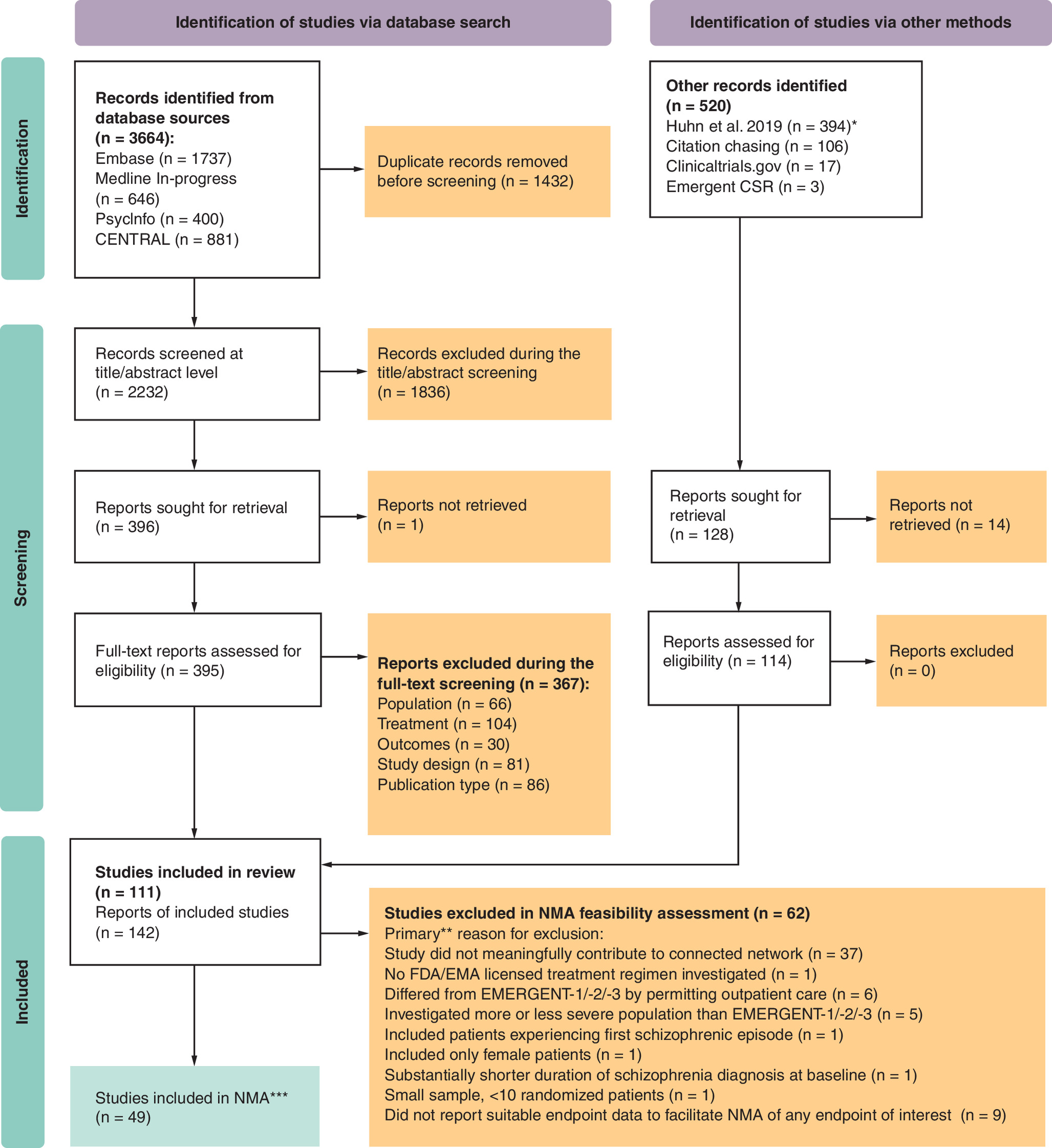
Figure 1. PRISMA flow diagram.
*Huhn et al. [25] listed 394 references, which were screened. This number is lower than the total number of included studies (n = 402) because some publications reported results from more than one study.
**Some studies were excluded from NMA for multiple reasons. See Appendix 6 for detailed reasons of study exclusion.
***No single NMA included all 49 studies, rather a subset of these studies which reported the relevant endpoint data were included in each endpoint-specific NMA.
CSR: Clinical study report; EMA: European Medicines Agency; FDA: US Food and Drug Administration; NMA: Network meta-analysis; PRISMA: Preferred Reporting Items for Systematic Reviews and Meta-Analyses.
Feasibility assessment
The feasibility assessment led to 62 of 111 studies being excluded prior to conducting NMAs (Figure 1). Of these, 37 were excluded because they could not be connected to a network via any comparator arm; they could only form ‘spider arms’ in a network, adding only redundant comparative effectiveness information for comparator treatments not captured by the NMA decision problem; or their inclusion would have added interventions not captured by the PICOS criteria to the network and added no relevant comparative effectiveness information that was not already provided via a more direct and robust link (i.e., placebo or another intervention named in the PICOS). Six further studies were excluded as they permitted patients to be treated in an outpatient setting throughout the acute treatment study – a key difference from the inpatient-only EMERGENT-1/-2/-3. Another five excluded studies enrolled populations with substantially better or worse baseline severity, as determined by baseline PANSS (total, positive or negative) or CGI-S scores. Appendix 6, Supplementary Table 6-1 details less common reasons for exclusion. Several studies were excluded for multiple reasons.
Of the remaining 58 studies, all were considered suitably similar for NMA, but a further nine studies were excluded due to lack of reporting appropriate endpoint data to facilitate inclusion in NMA for any of the endpoints of interest (detailed in Appendix 5). This was predominantly due to studies only reporting endpoint data for timeframes outside of the 4–6 week range. Networks could be constructed for 11 of the 12 endpoints of interest; comparator studies reported insufficient endpoint data to facilitate an NMA for achieving a CGI-S score of 1 or 2 at Week 5.
The feasibility assessment motivated several sensitivity analyses:
•
Excluding studies with predominantly Asian populations. This represents a considerable point of heterogeneity in the evidence base, which predominantly comprises studies with populations spanning multiple racial categories (Appendix 4, Supplementary Figure 4-3).
•
Specific to the ≥7% increase in weight from baseline endpoint, investigating exclusion of those studies reporting weight gain data without a defined threshold.
•
Excluding studies considered to have outlier placebo effect size (relative to EMERGENT-1/-2/-3), as this could indicate population or trial design differences that were unidentifiable due to lack of reporting (see Appendix 8).
Risk of bias assessment
Top-line results of the quality assessments of studies included in the NMA are presented in Appendix 7, Supplementary Table 7-1. Quality evaluations were conducted using the RoB 2.0 tool and were based solely on data extracted from published RCTs identified in the SLR.
Most trials were judged as having an overall bias judgement of ‘Some concerns’. The included RCTs were generally well designed and blinded, with most using a double-blind design that reduced the likelihood of performance and detection bias. Remaining issues were mainly linked to incomplete reporting of allocation concealment, randomization procedures and prespecified analysis plans rather than problems in study conduct. Domain 3 (missing outcome data) was also frequently judged as raising concerns across studies due to high dropout rates and a reliance on imputation methods rather than observed data for primary and secondary analyses.
A smaller number of studies were judged as ‘High risk’, and these were almost entirely studies available only in abstract format or clinical trial registries, where methodological and outcome information was limited compared with full peer-reviewed publications. In some cases, a high-risk judgement was also assigned where dropout exceeded 70%, which affected the credibility of the results. Overall, the evidence base is characterized by ‘Some concerns’ for most RCTs, with ‘High risk’ assessments occurring where reporting was insufficient or where dropout rates were very high. The scatter of individual study effect size on comparison-adjusted funnel plots (provided in Appendix 13) was broadly symmetrical for all endpoints, indicating little evidence of publication bias.
Network meta-analyses
Construction of analysis networks
A master network was formed from 49 RCTs and 14,680 patients (Figure 2). Since data for all endpoints of interest were not available from all 49 RCTs, endpoint-specific networks (provided in Appendix 9) were formed including the subset of RCTs that reported the relevant endpoint data (between 17 and 45) for the 11 endpoints of interest for which NMA was feasible. Appendix 11, Supplementary Table 11-1 details all analyses conducted (base-case and sensitivity analyses) for each endpoint along with the number of included studies and patients in each network. The master network connected treatment nodes for KarXT, clozapine, lumateperone, aripiprazole, brexpiprazole, risperidone, cariprazine, quetiapine, olanzapine and placebo. The majority were directly connected to more than one other treatment node with two exceptions: lumateperone and KarXT were only directly connected to placebo. As such, only indirect evidence was available to inform comparisons of lumateperone or KarXT with any other active treatment in the network. Clozapine data were only available for discontinuation due to all causes, discontinuation due to AEs, and CFB weight. Therefore, clozapine was only included in endpoint-specific networks for these three endpoints.
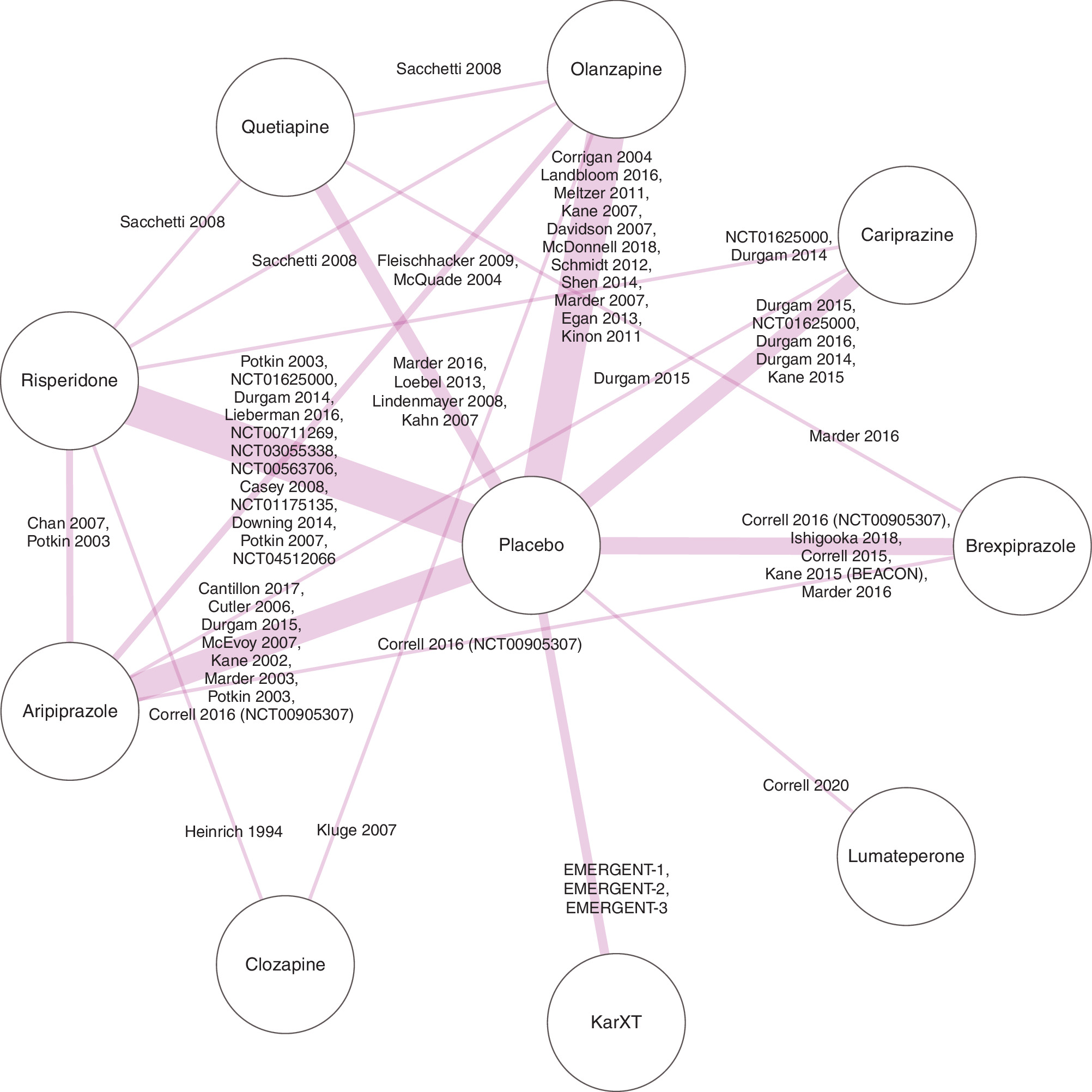
Figure 2. Master network diagram.
The thickness of each connection in the network graph is proportional to number of studies informing that treatment comparison.
KarXT: Xanomeline plus trospium chloride.
Efficacy endpoints
KarXT demonstrated improved odds of achieving ≥30% improvement in PANSS total score from baseline (Figure 3) versus aripiprazole (OR: 1.85; 95% CrI: 1.11, 3.11), brexpiprazole (OR: 2.23; 95% CrI: 1.34, 3.83) and cariprazine (OR: 2.05; 95% CrI: 1.19, 3.57). CrIs exceeded 1, indicating a greater than 95% probability that the true relative treatment effect favors KarXT. OR point estimates versus lumateperone, olanzapine, quetiapine and risperidone were numerically favorable for KarXT, but the 95% CrIs included one.
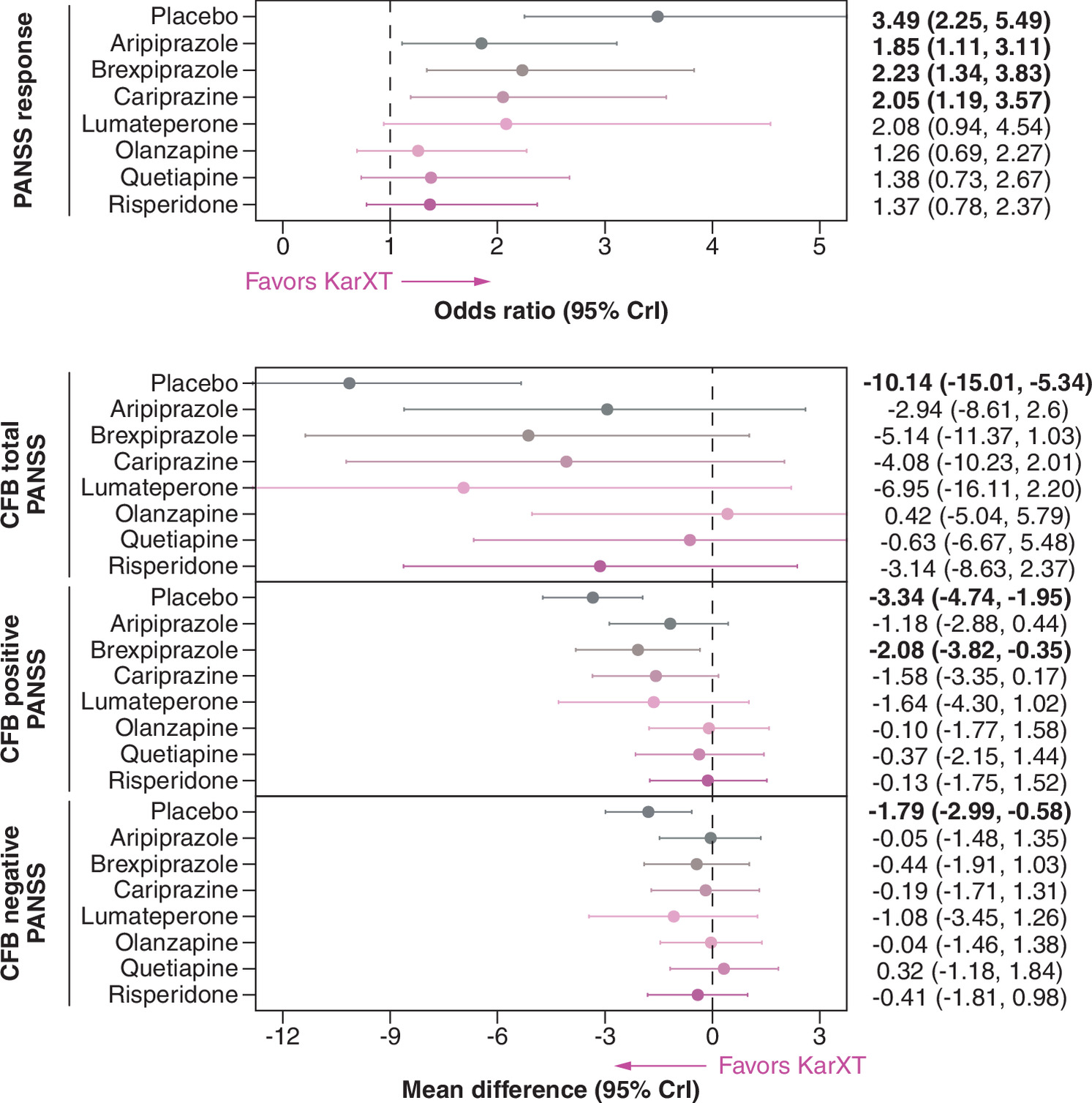
Figure 3. Network meta-analysis results – KarXT versus comparators, PANSS endpoints.
Results shown for CFB PANSS total score endpoint are from the sensitivity analysis excluding studies with predominantly Asian populations, preferred to the base-case analysis due to the presence of inconsistency in the base-case network. Of note however, the base-case analysis produced similar results with only minimal differences in mean difference point estimates produced.
Bold values indicate relative effect estimates where 95% CrIs exclude 0 for continuous outcomes, or 1 for binary endpoints.
CFB: Change from baseline; CrI: Credible interval; KarXT: Xanomeline/trospium chloride; NMA: Network meta-analysis; PANSS: Positive and Negative Syndrome Scale.
Figure 3 also shows the results of NMAs for CFB PANSS total score, positive symptoms score and negative symptoms score. For the base-case analysis of CFB PANSS total score, node-splitting analyses produced strong evidence of network inconsistency (IF: -7.58; 95% CrI: -14.35, -0.81), while the sensitivity analysis excluding studies with predominantly Asian populations did not (Appendix 13, Supplementary Table 13-1). This sensitivity analysis was therefore preferred over the base-case. KarXT had numerically favorable point estimates versus aripiprazole, brexpiprazole, cariprazine, lumateperone, quetiapine and risperidone; however, the CrIs all crossed zero. KarXT was associated with a greater improvement in PANSS positive symptoms score from baseline versus brexpiprazole (MD: -2.08; 95% CrI: -3.82, -0.35). The CrI fell below 0, indicating a greater than 95% probability that the true treatment effect difference favors KarXT. Although point estimates versus aripiprazole, cariprazine, lumateperone, olanzapine, quetiapine and risperidone were similar to or numerically favorable for KarXT, the CrIs all crossed zero. Point estimates for CFB negative symptoms score were either numerically favorable for or similar to KarXT versus all active comparators except clozapine (no data available); all 95% CrIs crossed zero.
KarXT demonstrated greater improvement in CFB CGI-S score compared with aripiprazole (MD: -0.33; 95% CrI: -0.57, -0.11), brexpiprazole (MD: -0.38; 95% CrI: -0.62, -0.15), cariprazine (MD: -0.37; 95% CrI: -0.61, -0.13) and olanzapine (MD: -0.28; 95% CrI: -0.52, -0.03) (Figure 4). CrIs fell below 0, indicating a greater than 95% probability that the true treatment effect difference favors KarXT. Point estimates against lumateperone, quetiapine and risperidone were numerically favorable for KarXT, but the CrIs crossed zero.
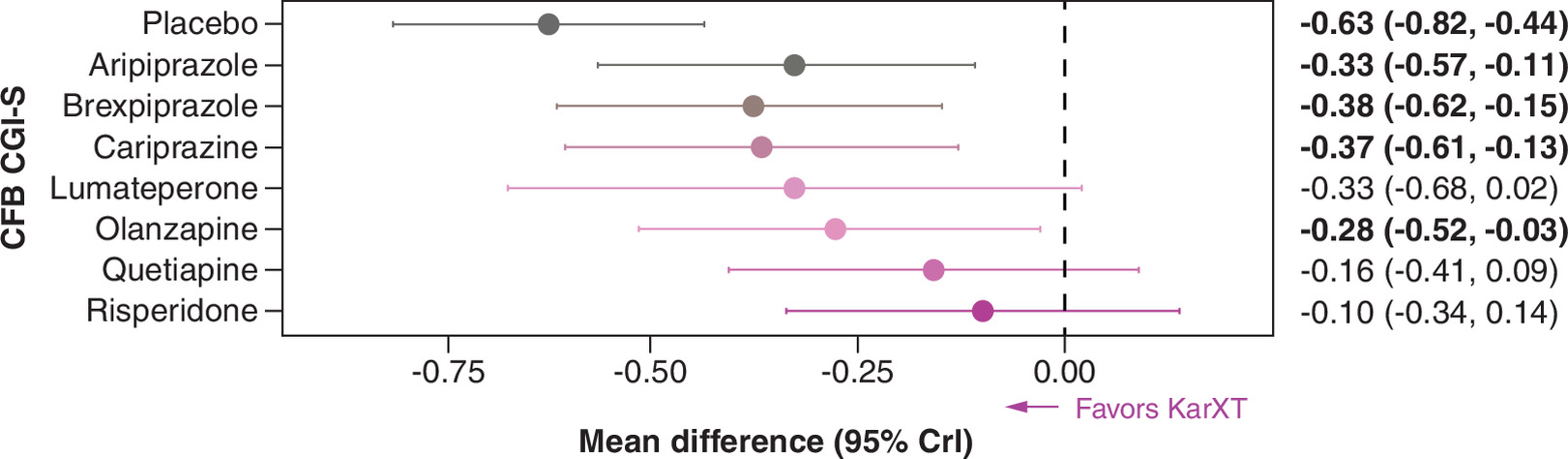
Figure 4. Network meta-analysis results – KarXT versus comparators, CGI-S score.
Bold values indicate relative effect estimates where 95% CrIs exclude 0.
CFB: Change from baseline; CGI-S: Clinical Global Impressions – Severity; CrI: Credible interval; KarXT: Xanomeline/trospium chloride; NMA: Network meta-analysis.
Safety & tolerability endpoints
KarXT had higher odds of all-cause discontinuation (Figure 5) than all active comparators (CrIs exceeded 1, indicating a greater than 95% probability that the true relative treatment effect favors KarXT) except cariprazine; for this cariprazine comparison, KarXT had numerically higher odds, but the 95% CrI crossed one.
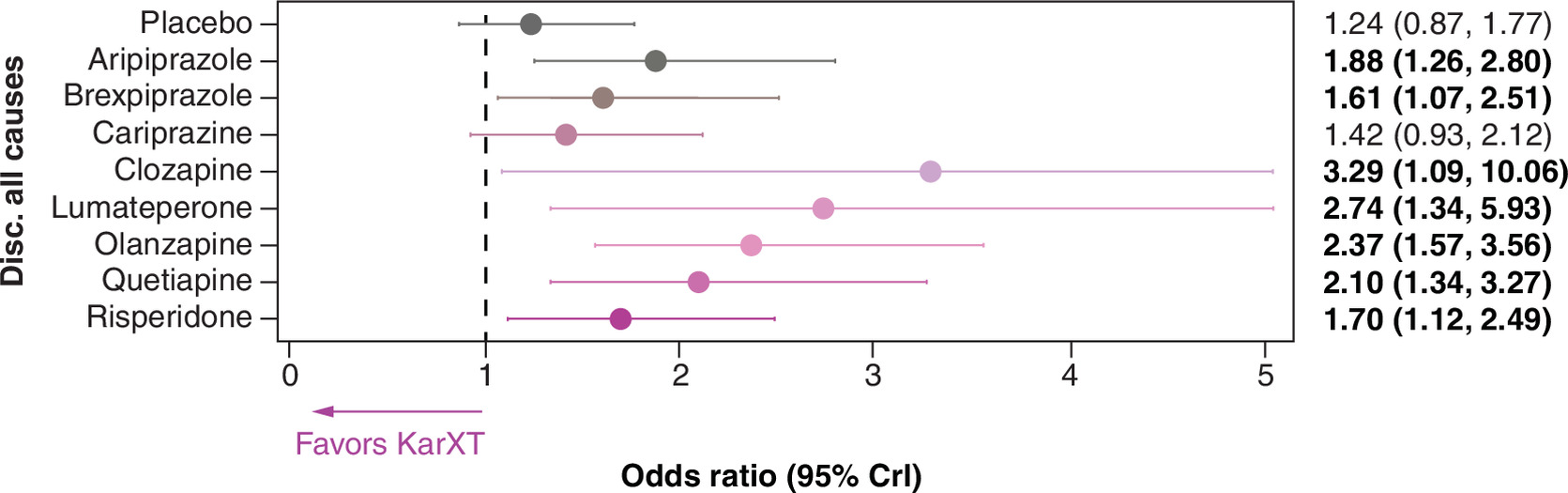
Figure 5. Network meta-analysis results – KarXT versus comparators, all-cause discontinuation.
Bold values indicate relative effect estimates where 95% CrIs exclude 1.
CrI: Credible interval; KarXT: Xanomeline/trospium chloride; NMA: Network meta-analysis.
Point estimate ORs of experiencing sedation (Figure 6) versus aripiprazole, brexpiprazole, cariprazine, lumateperone, olanzapine, quetiapine and risperidone were numerically favorable for KarXT; however, 95% CrIs for each comparison crossed one, indicating a less than 95% probability the true relative treatment effect favors KarXT.
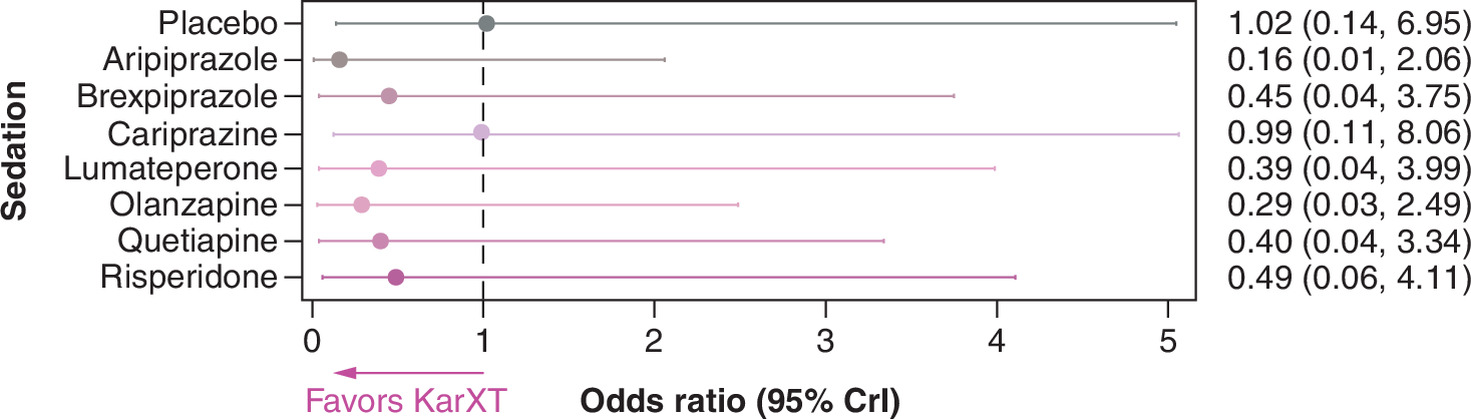
Figure 6. Network meta-analysis results – KarXT versus comparators, sedation.
CrI: Credible interval; KarXT: Xanomeline/trospium chloride; NMA: Network meta-analysis.
Figure 7 provides results from NMAs for clinically meaningful weight gain and CFB weight. KarXT demonstrated lower odds of experiencing clinically meaningful weight gain versus all active treatments except clozapine (no data available). ORs between KarXT and comparators ranged from 0.08 (95% CrI: 0.03, 0.22) versus quetiapine to 0.21 (95% CrI: 0.08, 0.55) versus cariprazine. All CrIs fell below 0, indicating a greater than 95% probability that the true treatment effect difference favors KarXT. For the continuous CFB weight endpoint, due to evidence of inconsistency in the base-case network (Appendix 13, Supplementary Table 13-18), the sensitivity analysis excluding studies with outlier placebo effect size was preferred. KarXT had improved CFB weight compared with brexpiprazole, clozapine, olanzapine, quetiapine and risperidone (CrIs exceeded 1, indicating a greater than 95% probability that the true relative treatment effect favors KarXT). Point estimates versus aripiprazole, cariprazine and lumateperone were numerically favorable for KarXT; however, their 95% CrIs crossed zero.
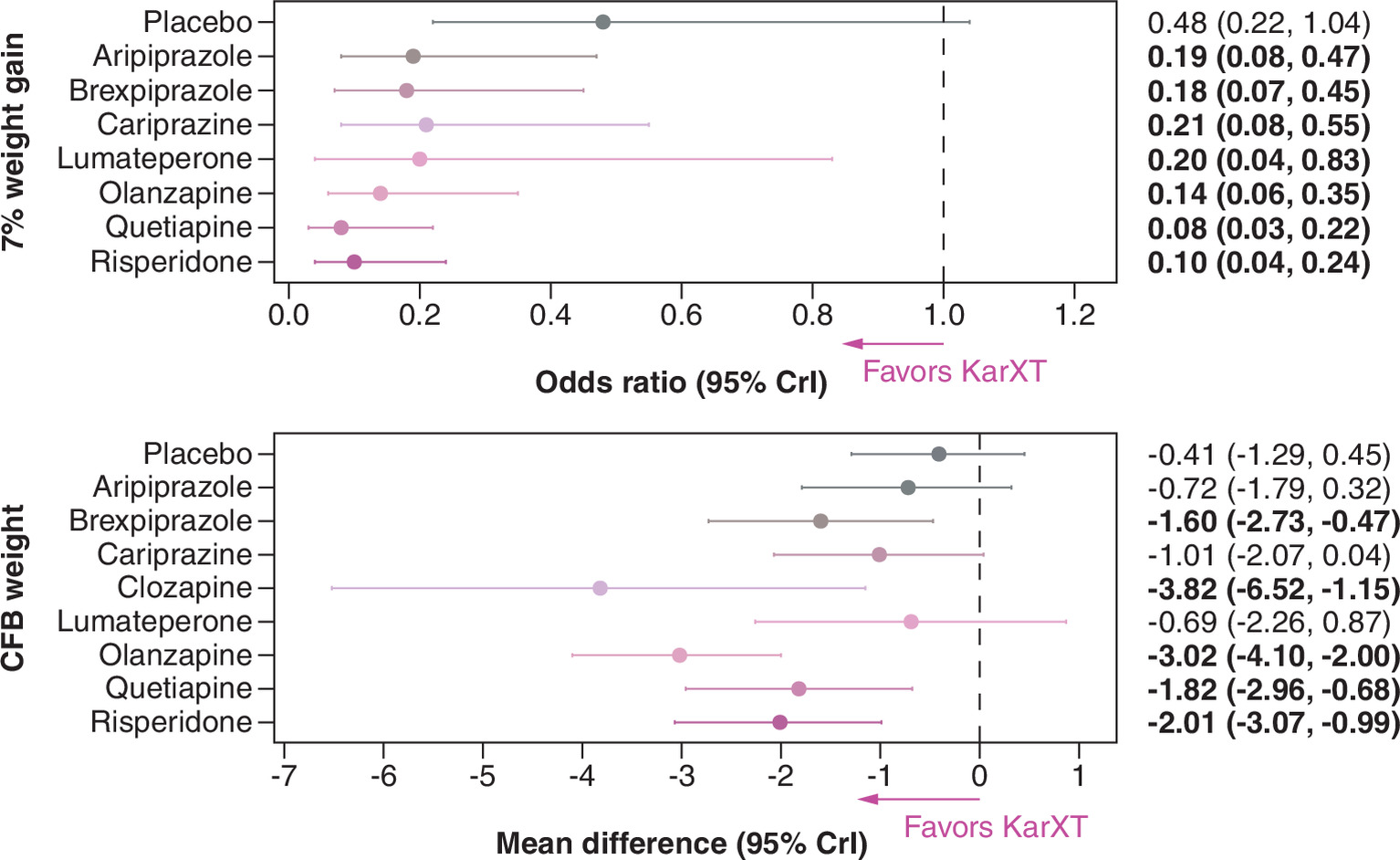
Figure 7. Network meta-analysis results – KarXT versus comparators, weight endpoints.
Results shown for CFB weight endpoint are from the sensitivity analysis excluding studies with outlier placebo effect size, preferred to the base-case analysis due to the presence of inconsistency in the base-case network. Of note however, the base-case analysis produced similar results with only minimal differences in mean difference point estimates produced.
Bold values indicate relative effect estimates where 95% CrIs exclude 0 for continuous outcomes, or 1 for binary endpoints.
CFB: Change from baseline; CrI: Credible interval; KarXT: Xanomeline/trospium chloride; NMA: Network meta-analysis.
For the NMAs of somnolence and discontinuation due to AEs, strong evidence of inconsistency was found within the base-case network and all sensitivity analyses. They were considered unreliable due to violation of the consistency assumption; however, for completeness, results for these endpoints are provided in Appendix 13, Supplementary Figures 13-1 & 13-2.
Sensitivity analyses
Appendix 11 summarizes the NMAs performed and details the studies excluded for each sensitivity analysis. Complete sets of results (including league tables, I2 and IF statistics) produced by each analysis are provided in Appendix 13. Fixed-effects NMAs of the base-case network for each endpoint generally produced similar point estimates to the corresponding random-effects NMAs, though with narrower CrIs. Although this occasionally resulted in additional comparative estimates for which 95% CrIs did not include zero or one (for continuous and binary endpoints, respectively), the random-effects assumption is considered more appropriate, based on evidence that varying degrees of between-study heterogeneity remained present in all endpoint networks.
Sensitivity analyses omitting studies with predominantly Asian populations, undefined weight gain threshold, or outlier placebo effect size produced largely similar comparative results to the base-case random-effects NMA for each endpoint, with small variations in point estimates and 95% CrIs.
Discussion
Summary of findings
This work reports the results from a series of NMAs, based on an updated SLR, comparing KarXT with eight key oral SGAs for the acute treatment of schizophrenia. The SLR yielded 111 unique studies, of which 49 RCTs were found suitable for NMAs and reported data for at least one of the efficacy, safety and tolerability endpoints of interest. As no head-to-head trials of KarXT versus the comparators of interest were identified, indirect comparison methods were required; while not a replacement for high-quality RCTs, NMA can address gaps in an evidence base and is widely used in health technology assessment for this purpose.
The NMAs demonstrate improvements with KarXT versus SGAs. Patients receiving KarXT were more likely to experience clinical response (defined as ≥30% improvement in PANSS total score) at 4–6 weeks than patients receiving aripiprazole, brexpiprazole or cariprazine. KarXT was also associated with reduced odds of patients experiencing clinically significant weight gain compared with aripiprazole, brexpiprazole, cariprazine, lumateperone, olanzapine, quetiapine and risperidone. Further favorable results include improved CFB CGI-S versus aripiprazole, brexpiprazole, cariprazine and olanzapine; greater CFB PANSS positive symptoms score versus brexpiprazole; and improved CFB weight versus brexpiprazole, clozapine, olanzapine, quetiapine and risperidone.
The analyses suggest that patients receiving KarXT had higher odds of all-cause discontinuation versus aripiprazole, brexpiprazole, clozapine, lumateperone, olanzapine, quetiapine and risperidone. However, the absolute all-cause discontinuation rates observed for KarXT during EMERGENT-1-2/-3 were similar to or lower than other active treatment arms included in the network [20–22]. This apparent incongruity results from lower discontinuation rates in the placebo arms of EMERGENT-2 and -3, where most other trials in the network had lower discontinuation rates in their active treatment arms (Appendix 8, Supplementary Figure 8-9). No sensitivity analyses were performed omitting the EMERGENT-1/-2/-3 trials based on comparatively low placebo effect size, as doing so would have precluded comparisons with KarXT. Study design differences may be a primary reason for the substantial cross-study variation in the absolute placebo arm discontinuation rates, particularly over the short assessment timeframe considered in the NMAs. Notably, in both the placebo and KarXT groups of EMERGENT-1/-2/-3, the primary reason for discontinuation was withdrawal of consent, with comparably few patients discontinuing due to AEs, investigator decision or other reasons.
Weight gain is a key concern for individuals using antipsychotic medications and a common reason for non-adherence and treatment discontinuation [40,41]. Given the demonstrated role of weight gain contributing to antipsychotic non-adherence [42,43], the reduced odds of clinically significant weight gain with KarXT versus comparator SGAs and favorable CFB weight results offer a potential advantage with respect to longer-term tolerability and adherence. Ultimately, comparison of longer-term discontinuation data and adherence are needed to assess holistically the tolerability of KarXT versus SGAs.
These results for KarXT demonstrate muscarinic receptor agonism as a clinically viable alternative treatment to commonly used SGAs that work through dopamine antagonism. For all comparators, KarXT demonstrated at minimum a comparable effect in terms of efficacy and safety. Furthermore, the considerable improvements in PANSS and CGI-S against some SGAs show that positive and negative symptoms can be reduced without directly blocking dopamine receptors. These findings are consistent with a previous NMA that compared KarXT versus aripiprazole, olanzapine and risperidone [27].
Increased treatment choice covering multiple mechanisms of action is helpful as it widens the options available to both prescribing clinician and patient. If a patient experiences AEs or lack of efficacy on one class of therapy, being able to offer a distinctly different therapy is particularly valuable. As noted in the NMA published by Wright et al. [27], longer-term data are needed to understand how muscarinic receptor agonism affects other important side effects, such as metabolic AEs and tardive dyskinesia. While RCTs remain the gold standard of evidence (and, indeed, are the sole type of evidence informing this study), complementary forms of evidence using real-world data such as electronic health records can be useful to gain insight on such outcomes. Continued development of approaches targeting muscarinic signaling pathways could further expand the schizophrenia treatment landscape, including efficacy for the broad range of symptoms and an improved safety/tolerability profile – a much-needed development for patients.
Strengths & limitations
The strengths of this work include the use of Bayesian NMAs conducted in adherence to established methodological guidelines with random effects models preferred, given the presence of heterogeneity, but fixed effects models also fit [34]. Data for trial design, treatment dose/regimen, patient population characteristics, endpoint definition and assessment timepoint(s) were extracted for studies identified by the SLR and assessed in a feasibility assessment to ensure studies included in NMA were sufficiently transitive for inclusion in NMA. Connected networks were possible for all but one of 12 endpoints of interest; hence, this study addresses evidence gaps of the comparative effect of KarXT versus eight SGAs commonly used in the US, across a broad range of efficacy, safety, and tolerability endpoints.
The analysis has several limitations. The present review was not a de novo SLR; it focused and updated the SLR previously conducted by Huhn et al. [25]. It therefore retains the methodological framework of the original SLR, including any strengths and limitations inherent to that approach. The adapted SLR focused on an acutely treated population, in line with the EMERGENT trials; targeted eight comparators of interest; and exclusively included blinded RCTs. This approach was intended to facilitate direct, meaningful comparisons across similar studies, though it inherently limited the breadth of evidence by excluding studies outside these criteria. This limits the generalizability of the findings. Outpatient populations and long-acting injectable antipsychotic formulations are not considered, nor is real-world evidence. The present SLR and NMAs did not investigate extrapyramidal symptoms or subtype AE endpoints (i.e., akathisia, tardive dyskinesia, etc.) despite their clinical relevance. Learnings from previous work had demonstrated that there were insufficient events observed over the 5-week EMERGENT-1/-2/-3 studies, to support meaningful indirect treatment comparison [26]. Longer-term data are needed to inform cross-trial comparisons of extrapyramidal symptom frequency.
The 49 RCTs included after feasibility assessment covered seven of the eight comparators reasonably well. For clozapine, the exception, data were only available for all-cause discontinuation, discontinuation due to AEs, and CFB weight. Thus, no comparison of efficacy against clozapine could be made, only select safety/tolerability endpoints.
While the feasibility assessment was thorough, considerable heterogeneity was identified from the Higgins I2 statistics from meta analyses of available pairwise comparisons within six of 11 endpoint networks: CFB PANSS score (total, positive symptoms, negative symptoms); CFB CGI-S score; CFB weight; and >30% improvement in PANSS total score. In each case, sensitivity analyses – excluding studies with predominantly Asian populations or (where applicable) studies with outlier placebo effect size – did not substantially reduce heterogeneity; I2 values exceeding 50% remained for at least one of the head-to-head comparisons. While heterogeneity affected few of the direct comparisons (primarily impacting olanzapine, quetiapine and/or risperidone vs placebo) within the large networks, the heterogeneity observed should be considered when interpreting these results. For the five remaining endpoints, low-to-moderate heterogeneity was present, suggesting that the random-effects model results are sufficiently robust and should be preferred over the fixed-effects model results.
The feasibility assessment, based on identified treatment effect modifiers, ensured that incomparable studies (with respect to patient population, treatment setting and/or treatment regimens) were excluded, thus avoiding related violations of the transitivity assumption and removing sources of NMA bias. Race, however, remained a potential source of heterogeneity in all networks. While not identified as a key effect modifier for acute treatment of schizophrenia, race is linked to factors known to impact mental health outcomes, such as socioeconomic status [44]. Sensitivity analyses omitting studies with predominantly Asian patient populations returned results largely consistent with the base-case analyses. However, limited inferences can be made concerning the impact of other racial disparities between studies; in particular, all three EMERGENT trials had relatively high proportions of Black/African American participants compared with other included studies. Post-hoc analysis of variance F-tests and Kruskal–Wallis tests comparing baseline treatment effect modifier distributions across treatment nodes within each endpoint-specific network demonstrated no evidence of transitivity in the CFB PANSS positive symptoms score, CFB CGI-S, CFB weight, discontinuation due to all causes, weight gain and sedation networks. Several test p-values < 0.05 suggested potential for some residual transitivity within the base-case CFB PANSS total score, CFB PANSS negative symptoms score and ≥30% improvement in PANSS total score networks. However, these significant results were for a single measure of baseline severity where several were tested (PANSS total score, PANSS positive symptoms score, PANSS negative symptoms score and CGI-S score) and/or related to a clinically insubstantial higher mean age in the KarXT node (44 years compared with ~38–42 years for other treatment nodes). Importantly, after accounting for multiple testing via Bonferroni correction, none of these findings were significant.
IF estimates from node-splitting analyses provided strong evidence of inconsistency in base-case networks (CrIs excluded the value for direct and indirect evidence equivalence) for CFB PANSS total score, CFB weight, discontinuation due to AEs, and somnolence. This suggested that the base-case analyses of these endpoints were unreliable. In the case of the CFB PANSS total score and CFB weight endpoints, sensitivity analyses performed did not show such clear evidence of inconsistency, were considered preferable to the base-case analyses, and were presented as primary results in this manuscript. Conversely, all sensitivity analyses performed for the discontinuation due to AEs and somnolence endpoints showed evidence of inconsistency and are considered unreliable – hence, results are only presented in Appendix 13 for completeness. Notably, of the random-effects NMAs conducted for these two endpoints, only the somnolence base-case analysis yielded a KarXT-versus-comparator OR with 95% CrI excluding 1, and this favored KarXT.
Few comparator studies reported endpoint data at Week 5, the timepoint at which endpoints were assessed in EMERGENT-1/-2/-3. Therefore, comparator data reported following 4–6 weeks of treatment were included. This assumption was generally consistent with approaches used for prior NMAs in schizophrenia and facilitated a large connected network to be formed [25,27]. However, this remains a likely source of heterogeneity. The NMAs contained several RCTs with greater than two arms, for which endpoint data were pooled; this introduced a network-simplifying assumption of a common effect size for label-compliant doses of the comparator drug. RCTs with greater numbers of treatment arms are associated with larger placebo effect size, which may have contributed heterogeneity to the networks [45]. However, sensitivity analyses removing studies with outlier placebo effect size yielded results consistent with the base-case analyses. Similarly, a sensitivity analysis omitting trials not reporting the weight gain threshold yielded results consistent with the clinically meaningful weight gain base-case, mitigating concerns of potentially influential endpoint definition discrepancies. Although studies that permitted outpatient care throughout acute treatment were excluded during the feasibility assessment, others were included if they allowed patients to be discharged after a protocol-defined period had elapsed and stabilization criteria were met. This is understood to affect only a small proportion of enrolled patients toward the end of each study period; nonetheless, these studies may have contributed heterogeneity to the networks.
Conclusion
The results of these NMAs in acute exacerbation of schizophrenia and eight oral SGAs show that, following 4–6 weeks of therapy, KarXT is associated with a greater clinical response than aripiprazole, brexpiprazole and cariprazine; greater CFB PANSS positive symptoms than brexpiprazole; greater CFB CGI-S score than aripiprazole, brexpiprazole, cariprazine and olanzapine; and a lower likelihood of unwanted weight gain compared with all comparators except clozapine (no data available). Although findings are limited to short-term, acute inpatient treatment and may not directly translate to maintenance therapy or outpatient care, this work suggests that KarXT provides comparable – and, in some cases, potentially improved – efficacy and safety compared with oral pharmaceuticals used in current standard-of-care approaches to acutely treating schizophrenia, and offers a viable, mechanistically distinct treatment option for patients and clinicians.
The comparative tolerability picture remains unclear as although the NMA suggests that KarXT has higher odds of all cause discontinuation than aripiprazole, brexpiprazole, clozapine, lumateperone, olanzapine, quetiapine and risperidone, the absolute observed discontinuation rates were similar to or lower than other active treatments and NMA results – driven primarily by unusually low placebo discontinuation in the EMERGENT-1/-2/-3 trials. Further research should comprehensively explore efficacy for the range of symptoms of schizophrenia, including negative, cognitive, function, quality of life and long-term tolerability/safety.
Summary points
•
Current treatments for schizophrenia primarily consist of dopamine-receptor-targeting second-generation antipsychotics, which often cause side effects that limit tolerability and adherence. There is therefore a need for treatments with novel mechanisms and improved safety profiles.
•
In the absence of head-to-head trials, this study aimed to conduct indirect comparisons of a newly approved combination therapy for acute schizophrenia, xanomeline/trospium chloride (KarXT), with eight oral second-generation antipsychotics commonly used in acute episodes of schizophrenia in the US.
•
A prior systematic literature review was first updated to identify double-blind randomized controlled trials of relevant therapies in acutely hospitalized adults with schizophrenia. Following a comprehensive feasibility assessment, 49 randomized controlled trials were included in Bayesian network meta-analyses across 11 efficacy, safety and tolerability endpoints measured at 4–6 weeks.
•
In terms of efficacy, KarXT produced considerably higher odds of achieving a ≥30% Positive and Negative Syndrome Scale (PANSS) total score improvement than aripiprazole, brexpiprazole and cariprazine. It also improved PANSS positive symptoms versus brexpiprazole and Clinical Global Impressions – Severity (CGI-S) scores versus aripiprazole, brexpiprazole, cariprazine and olanzapine.
•
KarXT also reduced the odds of clinically meaningful weight gain compared with all drugs except clozapine (no data available); and had better change from baseline weight than brexpiprazole, clozapine, olanzapine, quetiapine and risperidone.
•
Rates of sedation with KarXT were generally comparable to other treatments.
•
While the odds of all-cause discontinuation with KarXT were higher than most comparators, the absolute rates were similar to or lower than other active treatments, with differences driven by unusually low placebo discontinuation in the EMERGENT-1/-2/-3 trials.
•
These analyses suggest that KarXT can provide improved clinical outcomes and a reduced chance of unwanted weight gain compared with common second-generation antipsychotics, as an effective treatment option for patients experiencing acute schizophrenia.
Author contributions
C Hickey: conceptualization, methodology, formal analysis, writing – original draft, writing – review and editing, supervision. MF Sidovar: conceptualization, writing – review and editing, supervision, funding acquisition. A Garcia: conceptualization, methodology, formal analysis, writing – original draft, writing – review and editing. K Kramer: conceptualization, writing – review and editing, supervision. J-Y Amy Chang: formal analysis, writing – original draft, writing – review and editing. K Kupas: writing – review and editing, supervision. V Telukuntla: writing – original draft, writing – review and editing. J Horgan: writing – original draft, writing – review and editing. H Jameel: formal analysis, writing – original draft. T Westley: methodology, writing – review and editing, supervision. K Gillard: conceptualization, writing – review and editing, supervision, funding acquisition. AJ Cutler: writing – review and editing, supervision.
Financial disclosure
This study was funded by Bristol Myers Squibb (NJ, USA).
Competing interests disclosure
K Kramer and KK Gillard are employees of Bristol Myers Squibb. K Kupas is a former employee of Bristol Myers Squibb, current employee of Merck Group. MF Sidovar is a former employee of Bristol Myers Squibb, current employee of Compass Pathways. C Hickey, A Garcia, V Telukuntla, J Horgan and H Jameel are employees of Lumanity, which was a paid consultant to Bristol Myers Squibb. J-Y Amy Chang and T Westley were employees of Lumanity at the time the research was conducted. They did not receive direct payment as a result of this work outside of their normal salary payments. AJ Cutler has received advising, consulting, and/or speaking fees from AbbVie, Acadia, Actinogen, Alfasigma, Alkermes, Anavex Life Sciences, Arrivo BioVentures, Autobahn Therapeutics, Axsome, Biogen, Biohaven, Boehringer Ingelheim, Bristol Myers Squibb, Cognitive Research Corporation, Collegium Pharmaceutical, Corium, Delpor, Evolution Research Group, 4M Therapeutics, Intra-Cellular Therapies, J&J Innovative Medicine, Jazz Pharma, Knight Therapeutics, LivoNova, Lundbeck, Luye Pharma, MapLight Therapeutics, MedAvante-ProPhase, Mentavi, Neumora, Neurocrine, NeuroSigma, Noven, Otsuka, PaxMedica, Relmada, Sage Therapeutics, Sirtsei Pharmaceuticals, Supernus, Teva, Thynk, Tris Pharma, Vanda Pharmaceuticals and VistaGen. AJ Cutler holds stock options/equity in 4M Therapeutics. The authors have no other competing interests or relevant affiliations with any organization or entity with the subject matter or materials discussed in the manuscript apart from those disclosed.
Writing disclosure
No funded writing assistance was utilized in the production of this manuscript.
Open access
This work is licensed under the Attribution-NonCommercial-NoDerivatives 4.0 Unported License. To view a copy of this license, visit https://creativecommons.org/licenses/by-nc-nd/4.0/
Supplementary Material
File (supplementary materials.docx)
References
Papers of special note have been highlighted as: • of interest
1.
Rahman T, Lauriello J. Schizophrenia: an overview. Focus (Am. Psychiatr. Publ.) 14(3), 300–307 (2016).
2.
Pompili M, Giordano G, Luciano M et al. Unmet needs in schizophrenia. CNS Neurol. Disord. Drug Targets 16(8), 870–884 (2017).
3.
McCutcheon RA, Keefe RSE, McGuire PK. Cognitive impairment in schizophrenia: aetiology, pathophysiology, and treatment. Mol. Psychiatry 28(5), 1902–1918 (2023).
4.
Solmi M, Seitidis G, Mavridis D et al. Incidence, prevalence, and global burden of schizophrenia - data, with critical appraisal, from the Global Burden of Disease (GBD) 2019. Mol. Psychiatry 28(12), 5319–5327 (2023).
• Demonstrates the scale of the burden of schizophrenia.
5.
GBD 2016 Disease and Injury Incidence and Prevalence Collaborators. Global, regional, and national incidence, prevalence, and years lived with disability for 328 diseases and injuries for 195 countries, 1990–2016: a systematic analysis for the Global Burden of Disease Study 2016. Lancet 390(10100), 1211–1259 (2017).
6.
GBD 2019 Mental Disorders Collaborators. Global, regional, and national burden of 12 mental disorders in 204 countries and territories, 1990–2019: a systematic analysis for the Global Burden of Disease Study 2019. Lancet Psychiatry 9(2), 137–150 (2022).
7.
Ringeisen H, Edlund MJ, Guyer H et al. Mental and Substance use disorders prevalence study (MDPS): findings report. RTI International (2023). (19 December 2024). Available at: https://www.rti.org/publication/mental-substance-use-disorders-prevalence-study-findings-report
8.
Olfson M, Gerhard T, Huang C et al. Premature mortality among adults with schizophrenia in the United States. JAMA Psychiatry 72(12), 1172–1181 (2015).
• An important finding that adults in the US with schizophrenia conditions are 3.5-times more likely to die, making clear the need for effective treatment.
9.
Keepers GA, Fochtmann LJ, Anzia JM et al. The American Psychiatric Association Practice Guideline for the Treatment of Patients With Schizophrenia. Am. J. Psychiatry 177(9), 868–872 (2020).
10.
Li P, Snyder GL, Vanover KE. Dopamine targeting drugs for the treatment of schizophrenia: past, present and future. Curr. Top Med. Chem. 16(29), 3385–3403 (2016).
11.
Kinon BJ, Lieberman JA. Mechanisms of action of atypical antipsychotic drugs: a critical analysis. Psychopharmacology (Berl.) 124(1–2), 2–34 (1996).
12.
DiBonaventura M, Gabriel S, Dupclay L et al. A patient perspective of the impact of medication side effects on adherence: results of a cross-sectional nationwide survey of patients with schizophrenia. BMC Psychiatry 12(1), 20 (2012).
13.
Rivelli A, Fitzpatrick V, Nelson M et al. Real-world predictors of relapse in patients with schizophrenia and schizoaffective disorder in a large health system. Schizophrenia 10(1), 28 (2024).
14.
Luca M, Luca A, Serretti A. A clinically oriented review of new antipsychotics for schizophrenia. Neuropsychiatr. Dis. Treat. 20, 2637–2649 (2024).
15.
AbbVie. AbbVie provides update on phase 2 results for emraclidine in schizophrenia. [08 January 2025] (2024). https://news.abbvie.com/2024-11-11-AbbVie-Provides-Update-on-Phase-2-Results-for-Emraclidine-in-Schizophrenia
16.
Butler CR, Popiolek M, McAllister LA et al. Design and synthesis of clinical candidate PF-06852231 (CVL-231): a brain penetrant, selective, positive allosteric modulator of the M4 muscarinic acetylcholine receptor. J. Med. Chem. 67(13), 10831–10847 (2024).
17.
Dedic N, Jones PG, Hopkins SC et al. SEP-363856, a novel psychotropic agent with a unique, non-D2 receptor mechanism of action. J. Pharmacol. Exp. Ther. 371(1), 1–14 (2019).
18.
Sumitomo Pharma. Sumitomo Pharma and Otsuka announce topline results from phase 3 DIAMOND 1 and DIAMOND 2 clinical studies evaluating ulotaront in schizophrenia (2023). https://www.sumitomo-pharma.com/news/20230731-1.html
19.
US Food and Drug Administration. FDA Approves drug with new mechanism of action for treatment of schizophrenia (2024) [08 January 2025]. [08 January 2025] (2024). https://www.fda.gov/news-events/press-announcements/fda-approves-drug-new-mechanism-action-treatment-schizophrenia
20.
Brannan SK, Sawchak S, Miller AC et al. Muscarinic cholinergic receptor agonist and peripheral antagonist for schizophrenia. N. Engl. J. Med. 384(8), 717–726 (2021).
• One of the three EMERGENT trials that were used in this study to provide data for KarXT. Full details of the results in these patients can be found across these publications.
21.
Kaul I, Sawchak S, Correll CU et al. Efficacy and safety of the muscarinic receptor agonist KarXT (xanomeline-trospium) in schizophrenia (EMERGENT-2) in the USA: results from a randomised, double-blind, placebo-controlled, flexible-dose phase 3 trial. Lancet 403(10422), 160–170 (2024).
• One of the three EMERGENT trials that were used in this study to provide data for KarXT. Full details of the results in these patients can be found across these publications.
22.
Kaul I, Sawchak S, Walling DP et al. Efficacy and safety of xanomeline-trospium chloride in schizophrenia: a randomized clinical trial. JAMA Psychiatry 81(8), 749–756 (2024).
• One of the three EMERGENT trials that were used in this study to provide data for KarXT. Full details of the results in these patients can be found across these publications.
23.
Azargoonjahromi A. Current findings and potential mechanisms of KarXT (xanomeline-trospium) in schizophrenia treatment. Clin. Drug Investig. 44(7), 471–493 (2024).
24.
Foster DJ, Bryant ZK, Conn PJ. Targeting muscarinic receptors to treat schizophrenia. Behav. Brain Res. 405113201 (2021).
25.
Huhn M, Nikolakopoulou A, Schneider-Thoma J et al. Comparative efficacy and tolerability of 32 oral antipsychotics for the acute treatment of adults with multi-episode schizophrenia: a systematic review and network meta-analysis. Lancet 14(394), 939–951 (2019).
26.
Hickey C, Cajigal A, Haycroft B et al. CO135 comparative efficacy, safety, and tolerability of KarXT versus aripiprazole and cariprazine for the acute treatment of adults with schizophrenia: a network meta-analysis. Value Health 27(6), S42 (2024).
• Previous study in which an network meta-analysis (NMA) was performed to compare KarXT with aripiprazole and cariprazine or eight particular endpoints, in schizophrenia. Relevant to the present work in showing previous results.
27.
Wright AC, McKenna A, Tice JA et al. A network meta-analysis of KarXT and commonly used pharmacological interventions for schizophrenia. Schizophr. Res. 274, 212–219 (2024).
• An NMA-based study performed by the Institute for Clinical and Economic Review as part of technology appraisal of KarXT.
28.
Abusalameh AA, Ladadweh CR, Hodrob M et al. Efficacy and safety of cariprazine, asenapine, xanomeline-trospium, and lumateperone for acute exacerbations of schizophrenia in adults: a network meta-analysis. Schizophr. Bull. Open 6(1), sgaf024 (2025).
29.
Sterne JAC, Savović J, Page MJ et al. RoB 2: a revised tool for assessing risk of bias in randomised trials. BMJ 366, 4898 (2019). https://www.bmj.com/content/366/bmj.l4898.long
30.
Chaimani A, Higgins JP, Mavridis D et al. Graphical tools for network meta-analysis in STATA. PLoS ONE 8(10), e76654 (2013).
31.
Cope S, Zhang J, Saletan S et al. A process for assessing the feasibility of a network meta-analysis: a case study of everolimus in combination with hormonal therapy versus chemotherapy for advanced breast cancer. BMC Med. 12, 93 (2014).
32.
Vega D, Acosta FJ, Saavedra P. Nonadherence after hospital discharge in patients with schizophrenia or schizoaffective disorder: a six-month naturalistic follow-up study. Compr. Psychiatry 108, 152240 (2021).
33.
Ma J, Liu W, Hunter A et al. Performing meta-analysis with incomplete statistical information in clinical trials. BMC Med. Res. Methodol. 8(1), 1 (2008).
34.
Dias S, Welton NJ, Sutton AJ et al. NICE DSU Technical Support Document 2: a generalised linear modelling framework for pairwise and network meta-analysis of randomised controlled trials. [17 December 2024] (2011). https://www.sheffield.ac.uk/nice-dsu/tsds
35.
van Valkenhoef G, Kuiper J. gemtc: network meta-analysis using Bayesian methods. Version 1.0-2. (2023). https://cran.r-project.org/package=gemtc
36.
Higgins JP, Thompson SG. Quantifying heterogeneity in a meta-analysis. Stat. Med. 21(11), 1539–1558 (2002).
37.
van Valkenhoef G, Dias S, Ades AE et al. Automated generation of node-splitting models for assessment of inconsistency in network meta-analysis. Res. Synth. Methods 7(1), 80–93 (2016).
38.
Belavý DL, Kaczorowski S, Saueressig T et al. How to conduct and report checking transitivity and inconsistency in network-meta-analysis: a narrative review including practical worked examples, code and source data for sports and exercise medicine researchers. BMJ Open Sport Exerc. Med. 10(4), e002262 (2024).
39.
Hutton B, Salanti G, Caldwell DM et al. The PRISMA extension statement for reporting of systematic reviews incorporating network meta-analyses of health care interventions: checklist and explanations. Ann. Intern. Med. 162(11), 777–784 (2015).
40.
De R, Smith ECC, Navagnanavel J et al. The impact of weight gain on antipsychotic nonadherence or discontinuation: a systematic review and meta-analysis. Acta Psychiatrica Scandinavica 151(2), 109–126 (2025).
41.
Pillinger T, McCutcheon RA, Vano L et al. Comparative effects of 18 antipsychotics on metabolic function in patients with schizophrenia, predictors of metabolic dysregulation, and association with psychopathology: a systematic review and network meta-analysis. Lancet Psychiatry 7(1), 64–77 (2020).
42.
Velligan DI, Sajatovic M, Hatch A et al. Why do psychiatric patients stop antipsychotic medication? A systematic review of reasons for nonadherence to medication in patients with serious mental illness. Patient Prefer. Adherence 11, 449–468 (2017).
43.
Perkins AJ, Khandker R, Overley A et al. Association of antipsychotic-related weight gain with treatment adherence and switching using electronic medical records data. Prim. Care Companion CNS Disord. 25(2), (2023).
44.
Williams D, Priest N, Anderson N. Understanding associations among race, socioeconomic status, and health: patterns and prospects. Health Psychol. 35(4), 407 (2016).
45.
Hird EJ, Diederen K, Leucht S et al. The placebo effect in psychosis: why it matters and how to measure it. Biol. Psychiatry Glob. Open Sci. 3(4), 605–613 (2023).
Information & Authors
Information
Published In
Copyright
© 2026 Bristol Myers Squibb. This work is licensed under the Attribution-NonCommercial-NoDerivatives 4.0 Unported License
History
Received: 27 February 2026
Accepted: 17 July 2026
Published online: 30 July 2026
Keywords:
Topics
Authors
Metrics & Citations
Metrics
Article Usage
Article usage data only available from February 2023. Historical article usage data, showing the number of article downloads, is available upon request.
Citations
How to Cite
Systematic review and network meta-analysis of the efficacy, safety and tolerability of xanomeline plus trospium chloride compared with eight oral antipsychotics for the acute treatment of schizophrenia. (2026) Journal of Comparative Effectiveness Research. DOI: 10.57264/cer-2026-0045
Export citation
Select the citation format you wish to export for this article or chapter.