

Are eSports more than just sitting? A study comparing energy expenditure
Publication: Journal of Comparative Effectiveness Research
Abstract
Aim: To investigate the energy expenditure of amateur eSport athletes between sitting and an eSport gaming session. Materials & methods: Eleven amateur male eSport athletes (age: 21.73 ± 3.50 years, weight: 76.00 ± 12.51 kg, height: 1.81 ± 0.06 m) were included. After recording the resting values, eSports playing values were recorded using an open circulation oxygen consumption analyzer (QuarkCPET, COSMED, Albano Laziale, Italy). Also, action per min (APM) scores were recorded. Results: When comparing the respiratory frequency, metabolic equivalent of task values and energy expenditure values of the participants, a significant increase was observed in all three values (p < 0.05 for each). Conclusion: eSports players, who are considered to be physically inactive by sitting, spend approximately 40% more energy than sitting, even at the amateur level. According to APM, more energy can be spent in tournaments and at the elite level.
The concept of ‘eSports’ relates to playing competitive video games in an electronic environment, which has become popular in recent years and increasingly widespread as time goes by [1]. Although the number of players playing eSports is measured in the hundreds of millions, it is estimated that it will soon reach billions [2]. Audience numbers are also at a level that can compete with other sports, and even exceeds many types of sports, so the momentum of eSport development is high [3].
The gameplay style requires sitting in front of any computer or game console, visual tracking, faster thinking skills and faster response times against competitors [4]. Nagorsky and Wiemeyer created six-factor model for eSport performance [5]. Among the factors they describe in detail are coordination/skills, condition, cognitive-tactical skills, psychic abilities, social abilities, and disposition/constitution/age/gender/genes, each of which is important. By combining these skills and attributes and taking action quickly and accurately in the computer environment, athletes try to outdo their opponents [5]. Novice players make an average of 50–100 actions per min (APMs), and the top athletes make 10 actions per second or 500–600 APMs [2]. The number of moves and activity levels can also vary depending on the type of eSport. There are many types of eSports, such as first-person shooter (FPS), fighting, sports games, multiplayer online battle arena (MOBA), massively multiplayer online role-playing games (MMORPG) and Battle Royale games, with different games in each branch [6].
Because this type of play involves sitting, the acceptance of eSports as a form of athletics is highly controversial both in the literature and more generally. The average eSport player participates in competitions between 5.5 and 10 h a day. Fifteen percent of the athletes reported sitting and playing for 3 h or more without getting up to take a break [2]. There is growing concern about increased screen time and its potentially negative effects on health [7,8]. Since 2014, the WHO has organized a series of annual expert meetings that address the public health impact of overuse of gaming platforms. These activities were carried out in response to concerns raised by professional groups, WHO collaborating centers, academics and clinicians, particularly regarding adverse health outcomes associated with excessive play [6]. In addition, in all these studies related to eSports, playing eSports is defined as just sitting.
The literature on the physiological effect of eSports is poor, and conflicting results have been reported [1,9]. There is no study in the literature on the energy expenditure metabolism of eSports on athletes, and research on this subject has been recommended [9]. The aim of this study was to investigate the energy expenditure of amateur eSport athletes between sitting and sitting while participating in an eSport gaming session.
Materials & methods
Participants
Eleven amateur male eSport athletes aged 18–35 (age: 21.73 ± 3.50 years, weight: 76.00 ± 12.51 kg, height: 1.81 ± 0.06 m), who played amateur MOBA-style games for at least 2 years and 1000 h, were included in the study. MOBA-style games are often played in university eSport clubs and around the world. Twenty-six participants who were playing in university eSport clubs were invited to participate in this study. However, due to the COVID-19, 14 students refused to participate. One participant was excluded from the study because he could not adapt to the mask. Although athletes of all genders were invited to the study through the university eSports club, only male participants volunteered. Participants were fully informed about the study, and written and verbal consent was obtained from each participant. Ethics committee approval of the study was approved by Izmir Katip Celebi University ethics committee (2020-GOKAE-0050). The study was conducted in adherence with the standards of the Declaration of Helsinki. Participants were asked not to exercise or consume alcohol for 24 h before the test and not to eat within 2 h before the test.
Study design
The repeated measurement method was used to compare the effects of eSports on metabolic energy expenditure and oxygen consumption. After recording the resting values, eSports playing values were recorded. The measurements of the study were made between February 2020 and September 2020 in Izmir Katip Celebi University Physiotherapy and Rehabilitation Research Laboratory. All participants were individually taken to the laboratory for measurement. Before the measurement, all sterilization process were applied to the masks and devices because of Covid-19. Also they were asked for any symptoms of Covid-19 before coming to laboratory.
Procedures
This study was done with the MOBA-style games and athletes for its ability to keep players constantly challenged/stimulated during a session. The demographic information of the participants and the questions such as which MOBA game they played and how many hours a day they played on average, were also questioned and recorded.
Metabolic energy expenditure and oxygen consumption measurements were measured using an open circulation oxygen consumption analyzer (Quark CPET, COSMED, Albano Laziale, Italy). The equipment has a built-in paramagnetic gas analyzer to evaluate the volume of oxygen consumed (VO2) and the volume of carbon dioxide eliminated (VCO2). Before use, the instrument was calibrated for temperature, humidity, barometric pressure, flow rate and gas analysis. Two measurements were made for each participant. First, the participants were positioned in a game-playing position, with the arms supported, by wearing the conventional QUARK CPET mask. After 5 min of getting used to the mask, a 15-min breathe-by-breathe measurement was recorded for each participant. Later, the games played by the participants in the same position were opened, and the computers were placed in front of them. Participants were asked to play a ‘ranked’ match and play the ‘hero’ they played the most. Gas analysis started as soon as they entered the game, and the recording ended when the match was over. Among these measurements, values such as energy expenditure/kilogram (EE/kg), metabolic equivalent of task (MET) and respiratory frequency (RF) as the minute average were used in the analysis.
The average APM values of the players during the game were recorded with the command counting program (Desktop APM 1.17, South Australia, Australia) installed on the computer where the games were played. The APM value was determined by the count of each keystroke made by the mouse or keyboard during the game.
Statistical analyses
Descriptive statistics were analyzed using the Statistical Package for Social Sciences, version 25.0 (SPSS, Inc., IL, USA). The values were presented in median, percent and frequencies. In comparison of the resting and playing values, we used the Wilcoxon test for the data. The Spearman correlation test was used for relations between APMs, average daily playing time and difference of METs values. Results were considered statistically significant when p-value was <0.05. G*Power 3.1.9.2 (software, concept and design of the free Windows software made by Franz at Kiel University, Germany) was used to calculate power of the study. A post hoc power analysis was conducted by calculating effect size (Z/√N = 0.88) of the study and using 5% type 1 error. The analysis revealed that the present study had a power of 84% to demonstrate differences between parameters.
Results
The demographic data and informations about the 11 participants’ playing are presented in Table 1.
| Participants, n = 11 (mean ± SD) | |
|---|---|
| Age (years) | 21.73 ± 3.50 |
| Height (m) | 1.81 ± 0.06 |
| Weight (kg) | 76.00 ± 12.51 |
| BMI (kg/m2) | 23.11 ± 3.67 |
| Average daily playing time (h) | 4.09 ± 1.04 |
| Game playing time (min) Defence of the Ancient 2 (n = 4) League of Legends (n = 7) | 41.36 ± 13.65 53.00 ± 18.17 34.71 ± 1.89 |
SD: Standard deviation.
The information comparing the respiratory frequency, VO2, VCO2, MET values and energy expenditure values of the participants recorded before (mean values 14.3, 362.35, 301.90, 1.34 and 33.12, respectively) and during the game (mean values respectively, 18.9, 495.02, 441.21, 1.90, 46.18) are given in Table 2. According to the results, a significant increase was observed in all five values (p = 0.008, 0.003, 0.003, 0.003 and 0.003, respectively).
| n = 11 | Before playing, median (IQR 25–75) | While playing, median (IQR 25–75) | p-value |
|---|---|---|---|
| Rf (n/min) | 14.3 (10.8–17.1) | 18.9 (14.9–23.3) | 0.008† |
| VO2 (ml/min) | 362.35 (318.19–432.08) | 495.02 (427.52–533.20) | 0.003† |
| VCO2 (ml/min) | 301.90 (282.48–391.27) | 441.21 (338.41–477.07) | 0.003† |
| MET (MET) | 1.34 (1.25–1.58) | 1.90 (1.51–2.17) | 0.003†,‡ |
| EE/kg (kcal/kg/day) | 33.12 (30.14–38.77) | 46.18 (37.21–53.67) | 0.003† |
†
Significance (Wilcoxon test).
‡
Z = -2.934.
EE: Energy expenditure; IQR: Interquartile range; MET: Metabolic equivalent of task; Rf: Respiratory frequency; VCO2: Volume of carbon dioxide eliminated; VO2: Volume of oxygen consumed.
Table 3 shows the correlation of difference of METs values with action per minute, average daily playing time and game playing time. In this study, significant positive correlation between APMs and average daily playing time with difference of METs values and a significant negative correlation of game playing time with difference of METs values was found.
Median (IQR 25–75) | Action per minute 121 (108–135) | Average daily playing time (h) 4 (3–5) | Game playing time (min) 35 (34–50) |
| Difference of METs values: 0.34 (0.27–0.67) | rho = 0.818 p = 0.002† | rho = 0.748 p = 0.008† | rho = -0.862 p = 0.001† |
†
Significance (Spearman correlation test).
IQR: Interquartile range; MET: Metabolic equivalent of task.
Figure 1 shows the scatter plot of difference of METs values and APMs. An example of MET value changes while playing eSports is shown in the Figure 2.

Figure 1. The scatter plot of difference of metabolic equivalent of task values and actions per min.
APM: Actions per min; MET: Metabolic equivalent of task.
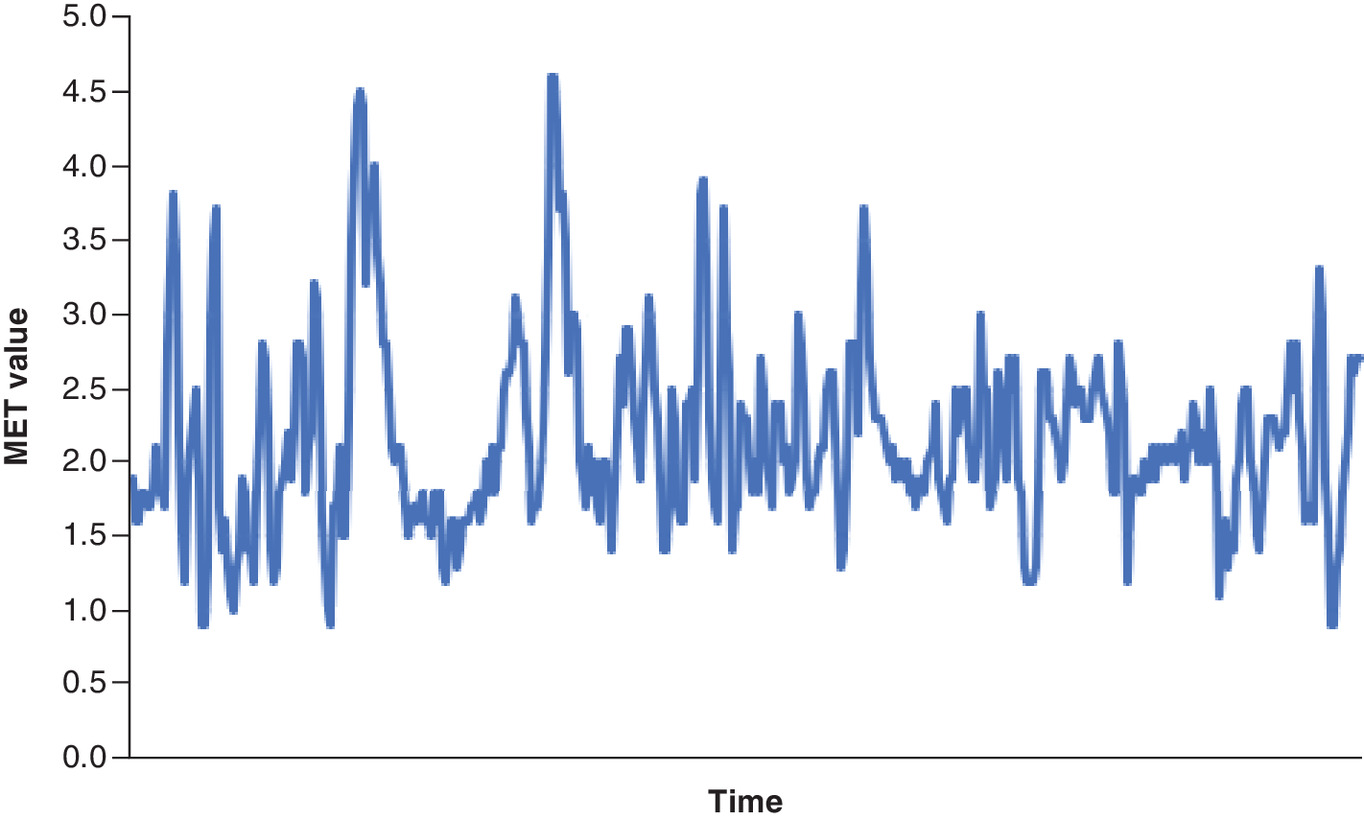
Figure 2. An example of metabolic equivalent of task value changes while playing eSports.
MET: Metabolic equivalent of task.
Discussion
The main result of this study was that compared with sitting and not participating in eSports, eSports players spent significantly more energy while playing games. eSports players, who are considered to be physically inactive because they are typically sitting, spend approximately 40% more energy than sitting without gaming, even at the amateur level. In addition, respiratory frequencies increase significantly while playing eSports (nearly 32%).
This study is one of the pioneering studies investigating the energy expenditure of eSports players during the game. Yin et al. recommended that the energy expenditure of eSports players should be investigated [9]. There are studies in which energy expenditure increases during eSports games played with physical activity during exergaming [10,11]. Also, one study showed that although energy expenditure increased when playing active games, no changes occurred when playing inactive games [12]. In our study, energy expenditure increased in eSports games played while sitting. The fact that the increase in energy expenditure is correlated with APMs suggests that the increase in energy may be caused by deciding on more actions in the game and applying more actions physically. In contrast, Haupt et al. stated that the change in energy expenditure may be due to mental stress [13]. Considering the six-factor model created for eSport performance in the study by Nagorsky and Wiemeyer, all physical and mental factors can jointly explain the change in energy expenditure [5].
In the study of Ainsworth et al., physical activity below 3 METs is considered light [14]. In this study, because the average MET value of amateur eSport players was found to be 1.9, it can be considered light physical activity. However, it was observed that it causes approximately 2 times more energy expenditure than activities such as sitting, listening to music or watching movies while sitting, which was also noted by Ainsworth et al. In addition, it shows similar energy expenditure as walking slower than 2 mph or doing garden work with light effort [14]. According to the MET value calculation with the data obtained in this study, an athlete who plays eSports for 4 h/day every day of the week will have performed 3192 MET/w physical activity by playing eSports only from his or her seat (1.9 METs × 240 min × 7 days = 3192 MET min/week).
The high correlation between the energy expenditure of the athletes and the average daily playing time and APM values can be interpreted as that the athletes will spend more energy in prize money tournaments or if they are elite-level athletes. Considering that every movement involved in APMs is a thought action in the brain allowing for the transmission and activations that enable the body to act, we suggest that many mental and physical activities performed within a minute are the reason for the increase in energy expenditure. In this study, there is an average of 120 APM athlete activations during a game. Some sources report that professional eSports players reach up to 600 APM [1,15]. The high degree of correlation between APMs and the increase in energy expenditure shown in our study suggest that professional players playing with high APMs levels may have much higher energy expenditure.
The negative correlation of the difference of MET value with the average game playing time shows that the athletes decrease their energy expenditure as the playing time without standing up increases. Considering the studies on the negative health effects of excessive time spent in front of the screen, athletes taking short breaks between games and getting up and doing physical activities including large muscle groups can also increase energy expenditure during play [2,15]. It should not be forgotten that even if there is an increase in energy expenditure while playing eSports, regular exercise programs involving large muscle groups of eSports athletes can both protect their health and improve their game performance.
This study has some limitations. The fact that the physical activity levels were not questioned while evaluating the participants caused the interpretation of the energy expenditure results to be limited. In addition, the fact that only athletes playing MOBA-style eSports or only male athletes participated in the study can be shown among the limitations of the study.
Future studies can be based on energy expenditure studies in elite or professional tournament players with more participants or comparing the energy expenditure of eSports players competing in Olympic sports with low MET activity.
Conclusion
In conclusion, this study is one of the pioneering studies investigating the energy expenditure of eSports players during the game. eSports players, who are considered to be physically inactive because they are sitting, spend approximately 40% more energy than sitting without participating in gaming, even at the amateur level. In addition, respiratory frequencies increase significantly while playing eSports. The correlations between the energy expenditure of the athletes and the average daily playing time and APM values can be interpreted as that the athletes spending more energy in tournaments or if they are elite-level athletes. It should be noted that this study was conducted only on amateur male athletes playing MOBA-style games. More comprehensive studies are needed in different types of eSports.
Future perspective
Considering the momentum of eSport participation, is it possible for it to receive titles such as the most watched sport in the world, the largest sports industry or the most played sport in the coming years? eSports and eSport players need and deserve a more professional approach and scientific research in terms of their physiology and health. It seems that scientific resources about eSports will grow rapidly, just as eSports have.
•
Studies on eSports are limited in the literature and are needed.
•
This is a pioneering study showing the physiological effects of eSports.
•
eSports players, who are considered to be physically inactive because they are sitting while participating, spend approximately 40% more energy, even at the amateur level, than sitting without eSport participation.
•
The high correlation between the energy expenditure of the athletes and the average daily playing time and action per minute values can be interpreted as indicating that eSport athletes will spend more energy in prize money tournaments or if they are elite-level athletes.
•
Future studies can be based on energy expenditure studies in elite or professional tournament players with more participants or comparing the energy expenditure of eSports players competing in Olympic sports with low MET activity.
Author contributions
All parts of this study (design of the study, data collection, data reduction/analysis, interpretation of results, manuscript writing) were conducted by UZ Kocak.
Acknowledgments
This study was carried out with devices purchased with the Guided Infrastructure Project of İzmir Katip Çelebi University (2017-2ÖNP-SABF-0008), with the aim of ‘Establishing Physiotherapy and Rehabilitation Vocational Skills, Education, Research and Innovation Laboratory Infrastructure.’
Financial & competing interests disclosure
The author has no relevant affiliations or financial involvement with any organization or entity with a financial interest in or financial conflict with the subject matter or materials discussed in the manuscript. This includes employment, consultancies, honoraria, stock ownership or options, expert testimony, grants or patents received or pending, or royalties.
No writing assistance was utilized in the production of this manuscript.
Ethical conduct of research
Ethics approval was obtained from Izmir Katip Celebi University Ethics committee (No: 2020-GOKAE-0050). Participants were fully informed about the study, and written and verbal consent was obtained from each participant. The study was conducted in adherence with the standards of the Declaration of Helsinki.
References
Papers of special note have been highlighted as: •• of considerable interest
1.
Pereira AM, Brito J, Figueiredo P, Verhagen E. Virtual sports deserve real sports medical attention. BMJ Open Sport Exercise Med. 5, e000606 (2019).
•• Important study that indicates the development of eSports, their comparison with traditional sports and the importance of health.
2.
Difrancisco-Donoghue J, Balentine J, Schmidt G, Zwibel H. Managing the health of the eSport athlete: an integrated health management model. BMJ Open Sport Exercise Med. 5, e000467 (2019).
•• A pioneering study that comprehensively explains the health problems experienced by eSports athletes and how health teams working with them should approach care.
3.
Kane D, Spradley BD. Recognizing eSports as a sport. Sport J. 20 (2017).
4.
Lewis J, Trinh P, Kirsh D. A corpus analysis of strategy video game play in starcraft: Brood war. Presented at: Proc. Ann. Meeting Cogn. Scie. Soc. (2011).
5.
Nagorsky E, Wiemeyer J. The structure of performance and training in esports. PloS One 15(8), e0237584 (2020).
•• This is an important study stating that six-factor model for eSport performance.
6.
Chung T, Sum S, Chan M et al. Will eSports result in a higher prevalence of problematic gaming? A review of the global situation. J. Behav. Addictions 8(3), 384–394 (2019).
7.
Stiglic N, Viner RM. Effects of screentime on the health and well-being of children and adolescents: a systematic review of reviews. BMJ Open 9(1), e023191 (2019).
8.
Difrancisco-Donoghue J, Werner WG, Douris P, Zwibel H. Esports players, got muscle? Competitive video game players’ physical activity, body fat, bone mineral content, and muscle mass in comparison to matched controls. J. Sport Health Sci. S2095-2546(20)30093-4 (2020).
9.
Yin K, Zi Y, Zhuang W et al. Linking Esports to health risks and benefits: current knowledge and future research needs. J. Sport Health Sci. 9(6), 485–488 (2020).
•• This is an important study stating that there is a need for studies on the physiological effects of eSports and the health of eSports athletes.
10.
Smallwood SR, Morris MM, Fallows SJ, Buckley JP. Physiologic responses and energy expenditure of Kinect active video game play in schoolchildren. Arch. Pediatr. Adol. Med. 166(11), 1005–1009 (2012).
11.
Canabrava KL, Faria FR, Lima JRD et al. Energy expenditure and intensity of active video games in children and adolescents. Res. Q. Exerc. Sport 89(1), 47–56 (2018).
12.
Leatherdale ST, Woodruff SJ, Manske SR. Energy expenditure while playing active and inactive video games. Am. J. Health Behav. 34(1), 31–35 (2010).
13.
Haupt S, Wolf A, Heidenreich H. Energy expenditure during eSports. Dtsch Z SPortmed. 72, 36–40 (2021).
14.
Ainsworth BE, Haskell WL, Whitt MC et al. Compendium of physical activities: an update of activity codes and MET intensities. Med. Sci. Sports Exerc. 32(9 Suppl. 1), S498–S504 (2000).
15.
Pereira AM, Figueiredo P, Seabra A, Brito J. Evaluation of physical activity levels in FPF eSports e-athletes. Motricidade 15, 188–188 (2019).
Information & Authors
Information
Published In
Pages: 39 - 45
PubMed: 34792392
Copyright
© 2021 Future Medicine Ltd.
History
Received: 23 September 2021
Accepted: 14 October 2021
Published online: 18 November 2021
Keywords:
Topics
Authors
Metrics & Citations
Metrics
Article Usage
Article usage data only available from February 2023. Historical article usage data, showing the number of article downloads, is available upon request.
Citations
How to Cite
Are eSports more than just sitting? A study comparing energy expenditure. (2021) Journal of Comparative Effectiveness Research. DOI: 10.2217/cer-2021-0223
Export citation
Select the citation format you wish to export for this article or chapter.
Citing Literature
- Jiří Kotas, Edita Krejzová, Marta Gimunová, Michal Kumstát, Craig McNulty, Petr Babula, Energy Expenditure of Esports Athletes During Gameplay: A Systematic Review, Sports Medicine - Open, 10.1186/s40798-026-01055-4, 12, 1, (2026).
- Egemen Mancı, Arnd Gebel, Paula Theobald, Notger G. Müller, Fabian Herold, Assessing Retinal Microvascular Characteristics in Casual Video Game Players vs. Physically Active Controls: Preliminary Assessment, Simulation & Gaming, 10.1177/10468781261446649, (2026).
- Diwash Poudel, Nitin Agarwal, ViMET-R: Auditing Activity-Level Bias in YouTube Shorts Recommendations, Complex Networks & Their Applications XIV, 10.1007/978-3-032-16649-4_6, (53-65), (2026).
- Loizos Georgiou, Irene P. Tzanetakou, Konstantinos Giannakou, André Baumann, Elena Hadjimbei, Personalized Nutrition, Lifestyle, and Supplementation Strategies to Support Cognitive Performance and Well-Being in Esports Athletes: A Narrative Review, Nutrients, 10.3390/nu18060981, 18, 6, (981), (2026).
- Ziyang Li, Mengli Wei, Yaping Zhong, Yiyuan Chong, Minghui Li, Characteristics of energy metabolism and stress load in elite MOBA E-sports athletes, Frontiers in Physiology, 10.3389/fphys.2026.1716237, 17, (2026).
- Lachlan McMeeken, Stuart Cormack, Paul Tofari, The Effects of Mental Fatigue in Competitive First-Person Shooter Esports Players: A Pilot Study, Journal of Electronic Gaming and Esports, 10.1123/jege.2025-0025, 4, 1, (2026).
- Salim ZENASNI, Erick DOUSSET, Mitsuko ARAMAKI, Richard KRONLAND-MARTINET, Sølvi YSTAD, Jocelyn MONNOYER, Tanguy MARQUESTE, Influence of vibratory stimuli on postural muscle tone adjustments and sensation of discomfort in seated posture, Results in Engineering, 10.1016/j.rineng.2025.106622, 27, (106622), (2025).
- Azad Ilhan, Sedat Arslan, Meal Timing and Nutrition for Tournaments in Esports, Esports Nutrition, 10.1007/978-3-031-99625-2_7, (123-136), (2025).
- Alejandro Araya-Flores, Esteban Núñez-Carrillo, Diego Tolvett-Tolvett, Celso Sánchez-Ramírez, Cristian Cofré-Bolados, Roberto Vera-Salazar, José Luis Márquez, Comparative physiological impact of television viewing and video gaming in young adults: Cardiopulmonary and metabolic responses, Computers in Human Behavior, 10.1016/j.chb.2024.108528, 165, (108528), (2025).
- Ying Gao, Qingyang Li, Luyao Yang, Hanhua Zhao, Di Wang, Arto J. Pesola, Causal Association Between Sedentary Behaviors and Health Outcomes: A Systematic Review and Meta-Analysis of Mendelian Randomization Studies, Sports Medicine, 10.1007/s40279-024-02090-5, 54, 12, (3051-3067), (2024).
- See more