

Cost-effectiveness analysis of nanosecond pulsed field ablation against hemithyroidectomy and total thyroidectomy for benign thyroid nodules
Abstract
Aim: Benign thyroid nodules (BTNs) are common, and although surgery remains an established treatment option for symptomatic cases, direct ablative therapies are increasingly considered as potential alternatives. This study aimed to evaluate the cost-effectiveness of nanosecond pulsed field ablation (nsPFA) as a first-line treatment for BTNs compared with hemithyroidectomy (HT) and total thyroidectomy (TT) in the US. Materials & methods: A cost-effectiveness model combining a decision tree followed by a Markov state-transition model was developed. The decision tree captured short-term outcomes following initial treatment with either nsPFA, HT or TT, while the Markov component projected long-term outcomes, including repeat treatment after nodule recurrence, hypothyroidism, hypoparathyroidism, surgical complications and death. Costs and health outcomes were estimated from a US commercial payer perspective over a 10-year time horizon. Deterministic and probabilistic sensitivity analyses were performed to explore parameter uncertainty. Results: Over 10 years, nsPFA was dominant over both HT and TT, resulting in cost savings of $23,851 and $69,865 in total direct medical costs, and quality-adjusted life-years gains of 0.32 and 0.88, respectively. Overall, thyroid nodule management costs were lower with nsPFA than with surgery alone, with nsPFA domination across deterministic and probabilistic analyses. Deterministic sensitivity analyses showed that results were most sensitive to assumptions regarding long-term health state costs. Conclusion: The results of this analysis suggest that nsPFA for symptomatic BTNs as a first-line strategy is a cost-effective alternative to HT and TT, associated with improved quality-adjusted life-years and reduced long-term treatment burden. These findings were robust in sensitivity analyses; however, further evidence on long-term outcomes is warranted to reduce uncertainty in the results.
Plain language summary
What is this article about?
This article examines nsPFA, a new treatment for benign thyroid nodules (BTNs). While many BTNs do not require treatment, some cause symptoms or cosmetic concerns. Surgery is standard, but it may lead to long-term impacts such as reduced thyroid function and lifelong medication. This study explored whether nsPFA could serve as an alternative first-line treatment to hemithyroidectomy and total thyroidectomy for adults in the US.
What were the results?
The study found that nsPFA would be an alternative to surgery for BTNs. Over time, patients treated with nsPFA were expected to have slightly better health outcomes and lower medical costs. This was mainly because nsPFA was less likely to cause an underactive thyroid (hypothyroidism), which can require lifelong treatment and ongoing care.
What do the results mean?
These findings suggest that nsPFA helps preserve thyroid function and reduce long-term burden when compared with surgery. However, more long-term clinical data are needed to confirm its performance in routine practice.
Benign thyroid nodules (BTNs) are common in the general population and are usually asymptomatic, with most managed by clinical surveillance unless they become locally symptomatic or cosmetically concerning [1]. The BTNs most commonly requiring treatment are hyperfunctioning nodules and enlarging nodules associated with compressive symptoms, such as neck discomfort, difficulty in swallowing or breathing, and cosmetic concerns, all of which may negatively affect quality of life. There is no clear consensus in the published literature regarding the prevalence of different nodule characteristics; however, multiple nodules confined to a single thyroid lobe appear to be the most common pattern of localization [2–6].
Thyroid surgery remains the dominant treatment strategy for BTNs, with total thyroidectomy (TT) and hemithyroidectomy (HT) representing the two types of surgical approaches [7,8]. Although both procedures are highly effective in removing BTNs, there is no clear consensus on the optimal surgical approach, especially for the asymmetric nodular goiter [9–13]. The factors determining the appropriate extent of resection include: symptoms, primary etiology, presence of contralateral nodular disease, thyroid functional status, comorbidities, family history, surgical risk and surgeon and patient preferences [8,14].
Removal of the entire thyroid gland eliminates the risk of future nodule recurrence and inevitably results in lifelong need for thyroid hormone replacement therapy [15]. Although effective, many patients, particularly with BTNs, delay or avoid surgery because of risks associated with the operation or lifelong hormone dependence. Other significant complications, such as hypoparathyroidism, life-threatening neck hematoma and recurrent laryngeal nerve (RLN) injury, may further impair patients' quality of life. In contrast, HT, also known as lobectomy, involves the removal of only one thyroid lobe, and minimizes the risk of lifelong hypothyroidism to approximately 30% [16], as in most cases the remaining thyroid gland can compensate and maintain normal thyroid function in the absence of one thyroid lobe. However, patients undergoing HT remain at risk of nodule regrowth and need for a complete thyroidectomy [17]. Thus, nonsurgical alternatives have been increasingly adopted in recent years as they not only circumvent general anesthesia, neck scarring and prolonged recovery time, but offer the critical advantage of typically preserving normal thyroid function [14,18].
Multiple direct ablative therapies for the thyroid have gained an increasingly promising role in the management of symptomatic BTNs, with several clinical guidelines already recognizing them as alternatives to surgical excision [8,19–23]. However, despite the growing evidence supporting the safety and efficacy of these procedures, there remains substantial variation in the use of different techniques across countries [23,24]. Direct ablative therapies that use thermal ablation comprise four different techniques: radiofrequency ablation (RFA), laser ablation, microwave ablation and high-intensity focused ultrasound, with RFA having the largest scientific evidence base [25–28]. These techniques vary the mechanism of action, the form of energy applied, the devices used to apply them, and the characteristics of the nodules they are intended to treat [23].
Nanosecond pulsed field ablation (nsPFA) is a technology that has a unique ability to permeabilize intracellular organelle membranes due to the short duration and high amplitude of the applied electrical energy fields, avoiding heating damage. nsPFA spares surrounding acellular tissues, does no damage to the nerve, and is effective with vascularized nodules. The absence of fibrosis or scarring in the treated areas after nsPFA procedure could improve post-procedure diagnostic clarity and overall volume reduction. The first-in-human feasibility study (NCT06117085) of BTN ablation in 30 patients using the nsPFA showed rapid shrinkage of the treated nodules and no adverse effects of the treatment [29].
In 2016, an estimated 169,000 thyroid surgeries were performed in the US, the majority for benign indications [14]. This number is likely to have increased since then, owing to the wider use of ultrasound in routine clinical practice and the resulting rise in thyroid nodule detection. Furthermore, hypothyroidism, including postsurgical hypothyroidism, has been estimated to generate an annual economic burden ranging from $384 million to $2.1 billion [30]. Collectively, these findings highlight the need for novel technologies in thyroid nodule management that can reduce costs while maintaining or improving clinical outcomes. Against this background, it is important to assess the economic value of emerging treatment alternatives. Therefore, the objective of this study is to evaluate the cost-effectiveness of nsPFA, compared with HT and TT as the main established treatment options, in adults with BTNs eligible for nsPFA in the US.
Materials & methods
Study design
We conducted a cost-effectiveness analysis using a decision tree followed by a Markov state-transition model with a 1-year cycle length, comparing nsPFA to thyroid surgery. To represent treatment options for BTNs in clinical practice, three treatment strategies were incorporated into the model: nsPFA, HT and TT. Patients entered a common decision tree and were assigned to one of these three first-line treatment strategies. The selected treatment strategy and treatment outcomes within the decision tree determined the health state in which patients entered the subsequent Markov model. The model structure is depicted in Figure 1 below.
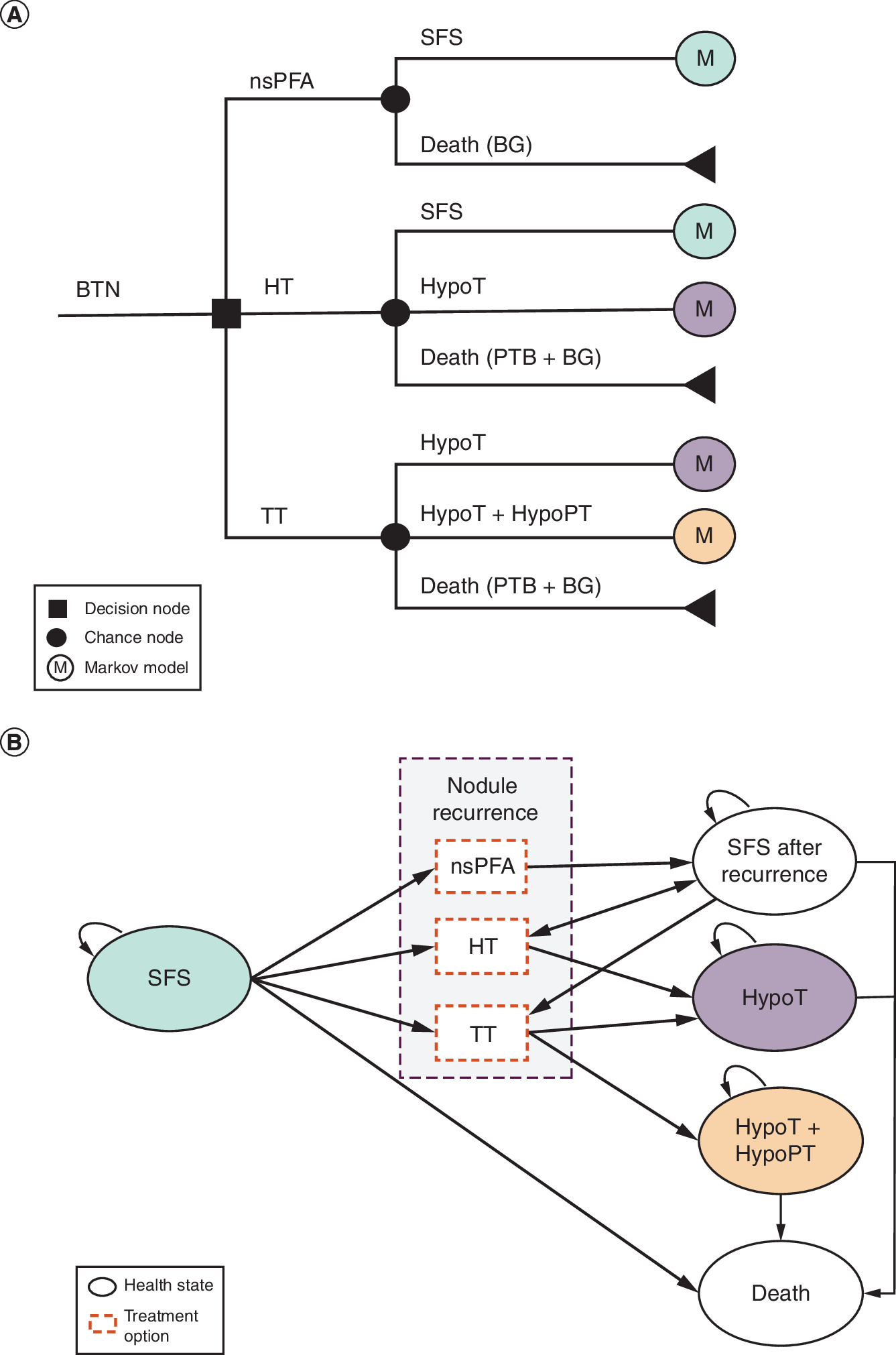
Figure 1. Economic model structure.
(A) Decision tree followed by (B) Markov model, depicting branching paths of decision making.
BTN: Benign thyroid nodule; BG: Background; hypoT: Hypothyroidism; hypoPT: Hypoparathyroidism; HT: Hemithyroidectomy; nsPFA: Nanosecond pulsed field ablation; PTB: Post-thyroidectomy bleeding; SFS: Symptom-free state; TT: Total thyroidectomy.
The decision tree was used to estimate the one-year outcomes associated with choosing either nsPFA, HT or TT as the first-line intervention for a BTN, while the Markov model was used to project long-term outcomes. After the decision tree, all patients receiving nsPFA entered the Markov model in a symptom-free health state (SFS) or death state due to age- and sex-specific background mortality, with no procedure-related mortality assumed. Ten percent of patients were assumed to require a repeat procedure within the first year due to incomplete treatment of the target nodule. Patients who underwent HT entered the Markov model in one of the following health states: SFS, hypothyroidism or death due to post-thyroidectomy bleeding (PTB) or background mortality. Patients who underwent TT entered the Markov model in one of the following health states: hypothyroidism, hypothyroidism with hypoparathyroidism or death due to PTB or background mortality.
In the nsPFA arm, patients could remain symptom-free, or develop symptomatic nodule recurrence requiring further treatment, which was assumed to consist of either surgery or a second nsPFA round. The type of surgery following recurrence was determined by the comparator. Therefore, two pathways were considered: in Pathway 1, corresponding to the nsPFA versus HT comparison, patients requiring surgery following nsPFA recurrence were assumed to undergo HT; in Pathway 2, corresponding to the nsPFA versus TT comparison, patients requiring surgery were assumed to undergo TT. Patients who experienced recurrence after two nsPFA rounds were assumed to undergo the corresponding surgical treatment, with no further nsPFA modeled. This assumption reflects a clinically plausible treatment pathway and avoids assuming repeated use of nsPFA beyond the point currently supported by evidence.
After HT or TT, patients could either remain in their postsurgical health state or transition to death. Permanent hypothyroidism and permanent hypoparathyroidism were assumed to be irreversible and were modeled as chronic health states over the model horizon. Transient postoperative hypoparathyroidism was not modeled as a chronic health state and was therefore not assumed to persist over the 10-year model horizon. Patients who did not develop hypothyroidism within the first postoperative year after HT were assumed to face no further risk of hypothyroidism thereafter; this simplifying assumption was adopted to reduce model complexity. Following TT, all patients were assumed to develop hypothyroidism, hence entry into the SFS was not modeled after TT. Importantly, the model distinguished between recurrence of the treated nodule and development of new nodules elsewhere in the thyroid gland. Recurrence of the treated nodule requiring further treatment was included in the model, whereas the development of new nodules elsewhere in the thyroid gland were considered new clinical events that would initiate a separate treatment pathway and were therefore not modeled.
No nsPFA-related complications requiring additional medical attention or quality-of-life decrements were modeled because no such events were reported in the available clinical evidence, and insufficient data were available to estimate their probability. This assumption was applied to simplify the model in the absence of clinically significant nsPFA-related adverse events. Two surgical complications were included in the model: PTB and RLN injury. Management of PTB was associated with additional costs, and an increased risk of death. Patients developing RLN injury within the first year after surgery were assumed to receive a course of speech therapy for the management of vocal cord paralysis. Permanent RLN injury, defined as paralysis that persisted beyond 12 months and required definitive vocal cord medialization, occurred in 0.36% of patients following HT and 1.28% following TT [31]. No further RLN-related costs were assumed beyond this point in the model.
All patients were assumed to receive annual monitoring. For patients treated with nsPFA or HT, monitoring included neck ultrasonography, an endocrinology visit, and a thyroid blood panel, whereas patients treated with TT were assumed to undergo only an endocrinology visit and a thyroid blood panel. Although adherence to annual follow-up is likely to vary in routine practice, this simplification was adopted because of limited data on monitoring patterns over time.
Model inputs
Baseline characteristics of patients
Clinical inputs & transition probabilities
Due to the absence of direct nsPFA long-term evidence, the nodule recurrence transition probabilities were informed by a meta-analysis by Zhao et al. for RFA [27]. This was considered a conservative and pragmatic proxy to parameterize the long-term recurrence component of the model, although this assumption introduces uncertainty because RFA and nsPFA have different mechanisms of action and clinical evidence bases.
Other clinical event inputs were sourced from published meta-analyses, clinical studies and prior economic studies. The model input parameters are presented in Table 1.
| Parameter | Base estimate | Ranges for sensitivity analysis | Probability distribution | Ref. |
|---|---|---|---|---|
| Probabilities | ||||
| Probability of the first nodule recurrence requiring a second nsPFA | 0.57% | 0.28–0.95% | Beta | [27] |
| Probability of the first nodule recurrence requiring a surgery | 0.49% | 0.25–0.82% | Beta | [27] |
| Probability of the second nodule recurrence after two repeated nsPFA requiring a surgery | 0.05% | 0.03–0.09% | Beta | [27] |
| Proportion of patients requiring a completion nsPFA procedure in the first year | 10.00% | 4.95–16.56% | Beta | Assumption |
| Proportion of patients receiving HRT after HT (permanent hypothyroidism) | 29.90% | 24.60–35.20% | Beta | [16] |
| Proportion of patients receiving HRT after TT (permanent hypothyroidism) | 100% | NA | Fixed | [15] |
| Proportion of patients with RLN injury in the first year (both transient and permanent) after HT | 1.85% | 0.93–3.08% | Beta | [31] |
| Proportion of patients with RLN injury in the first year (both transient and permanent) after TT | 3.70% | 1.85%–6.16% | Beta | [31] |
| Proportion of patients with permanent RLN injury after HT (which was not resolved by speech therapy within 12 months and requires surgical intervention) | 0.36% | 0.18–0.60% | Beta | [31] |
| Proportion of patients with permanent RLN injury after TT (which was not resolved by speech therapy within 12 months and requires surgical intervention) | 1.28% | 0.64–2.13% | Beta | [31] |
| Proportion of patients with permanent hypoparathyroidism after TT | 1.90% | 0.95–3.17% | Beta | [33] |
| Proportion of patients with hematoma after HT | 0.60% | 0.30–1.00% | Beta | [34] |
| Proportion of patients with hematoma after TT | 1.25% | 0.63–2.08% | Beta | [35] |
| Mortality | ||||
| Probability of dying from postsurgical hematoma | 0.20% | 0.10–0.33% | Beta | [36] |
| RR of all-cause death in hypothyroidism patients | 1.51 | 1.26–1.81 | Lognormal | [37] |
| HR of all-cause death in hypoparathyroidism patients | 2.89 | 1.85–4.51 | Lognormal | [38] |
| Utility weights | ||||
| General population health state utility for 55–64 years old | 0.815 | NA | Fixed | [39] |
| Disutility after surgery without complications | -0.010 | -0.005 to -0.017 | Beta | [40] |
| Disutility from hematoma | -0.120 | -0.06 to -0.20 | Beta | [41] |
| Disutility from hypothyroidism | -0.090 | -0.04 to -0.15 | Beta | [40] |
| Disutility from permanent RLN injury | -0.373 | -0.18 to -0.60 | Beta | [40] |
| Costs | ||||
| nsPFA procedure | $10,860 | $5443–$18,116 | Gamma | Assumption |
| Neck ultrasound | $172 | $86–$288 | Gamma | [41] |
| Endocrinologist visit | $250 | $125–$417 | Gamma | Assumption |
| Blood thyroid panel | $100 | $50–$167 | Gamma | Assumption |
| TT | $16,530 | $8285–$27,574 | Gamma | [42] |
| HT | $16,084 | $8062–$26,830 | Gamma | Based on Medicare and [42] |
| Hematoma evacuation, including LOS and monitoring | $9920 | $4972–$16,548 | Gamma | [43] |
| Speech therapy session | $250 | $125–$417 | Gamma | Assumption |
| Definitive vocal cord medialization for permanent RLN injury | $5593 | $2803–$9330 | Gamma | Medicare |
| SFS health state annual costs | $12,494 | $6262–$20,841 | Gamma | [30] |
| HypoT/HypoT + HypoPT health state annual costs | $21,637 | $10,845–$36,093 | Gamma | [30] |
HT: Hemithyroidectomy; hypoT: Hypothyroidism; hypoPT: Hypoparathyroidism; HR: Hazard ratio; HRT: Hormone replacement therapy; LOS: Length of stay; nsPFA: Nanosecond pulsed field ablation; RLN: Recurrent laryngeal nerve; RR: Relative risk; SFS: Symptom-free state; TT: Total thyroidectomy.
Age- and sex-specific mortality probabilities were derived from the US Social Security Actuarial Life Table [44]. Excess mortality associated with hypothyroidism [45] and hypoparathyroidism [46] was applied to patients entering the corresponding health states, based on the relative mortality risks reported in the literature. For patients experiencing postsurgical bleeding following HT or TT, the probability of death from postsurgical hematoma was applied conditionally to the probability of experiencing postsurgical bleeding [47].
Utilities
The baseline utilities were informed by age-specific utility values for the general US population [39]. Utility decrements from surgery and related complications were sourced from published studies [40,41]. The disutility associated with surgery was assumed to mainly capture the impact of neck scarring and possible vocal changes. In patients who developed surgical complications, additional disutilities for PTB and RLN injury were applied. Although permanent bilateral RLN injury is recognized to have a substantial impact on quality of life, the model considered only unilateral RLN injury [40].
Costs
The model considered health-state costs, intervention costs, surgical-complication costs and follow-up costs. The costing approach was based on differences in healthcare resource utilization between patients with and without hypothyroidism. Health state costs were estimated using evidence on the healthcare resource utilization in patients with and without hypothyroidism in the US by Hepp et al. [30]. Costs assigned to hypothyroidism states were derived from all-cause medical costs, including the annual cost of hypothyroidism-related comorbidities. Costs assigned to the SFS health state were based on estimates for the non-hypothyroid control group. To avoid double-counting, it was assumed that costs related to hypoparathyroidism were captured within the all-cause costs of hypothyroidism, particularly in the post-thyroid surgery context, where both conditions commonly coexist.
The cost of TT was obtained from Zheng et al. using commercial claims data for patients undergoing thyroidectomy [42]. The perioperative total cost estimate, including inpatient and outpatient services and medications, was applied. It was therefore assumed that this estimate captured initial diagnostics and medications, such as calcium and vitamin D supplements used for transient hypoparathyroidism. As no study reporting the commercial costs of hemithyroidectomy was identified, its cost was estimated by adjusting the commercial cost of TT using the cost ratio of HT to TT reported by Medicare [48]. In the absence of published US commercial-payer cost data for nsPFA, the procedure cost was estimated based on an assumption of $10,860 per procedure, with uncertainty explored in sensitivity analyses. The assumed procedure cost was also considered to cover the diagnostic costs associated with the procedure.
PTB management costs were based on adjusted excess costs attributable to postoperative bleeding following thyroid surgery [43]. For RLN injury, patients were assumed to receive 12 sessions of speech therapy, with those experiencing persistent paresis additionally undergoing vocal cord medialization; the cost of this procedure was based on Medicare data [48]. Monitoring costs included endocrinologist visits, neck ultrasonography and blood tests, with estimates derived from published sources or based on assumptions when no relevant data were available. All costs are presented in 2025 US dollars, adjusted for inflation when required, using annual average US inflation rates based on the Consumer Price Index published by the US Bureau of Labor Statistics [49].
Analysis
A US commercial payer perspective was adopted for this analysis, with only direct medical costs included. Costs and benefits incurred after the first year were discounted at 3.0% per year, and a half-cycle correction was applied to account for transitions between health states. Outcomes are presented as incremental costs, life years (LYs), QALYs, incremental cost-effectiveness ratios (ICERs) and net monetary benefit (NMB), calculated using a cost-effectiveness threshold of $50,000 per QALY. To assess the model's robustness, both deterministic and probabilistic sensitivity analyses were conducted. All model parameters were varied within the 95% CI or the upper and lower values. For parameters whose upper and lower limits could not be obtained from the literature, uncertainty was characterized by assuming a standard error equal to 30% of the baseline value, from which the parameter ranges were derived. The probabilistic sensitivity analysis (PSA) was conducted through 5000-times Monte Carlo simulations to evaluate the impact on the base-case results when multiple model parameters varied simultaneously. Results from the deterministic sensitivity analyses were presented using tornado diagrams to illustrate the impact of individual parameters on NMB, while PSA results were visualized using scatter plots of incremental costs versus incremental QALYs across simulations. Microsoft Excel was used to construct the model and to perform the base-case, scenario and sensitivity analyses. Additionally, the model underwent internal technical verification as part of the quality-control process, to assess the accuracy of model implementation. Model calculations, transition pathways, health-state assignments and cost and utility calculations were independently checked against the model specification and input parameters. The model structure, assumptions and inputs were also reviewed for face validity against the relevant literature and clinical expert input.
Results
Base-case results
Over a 10-year time horizon, nsPFA was associated with lower overall costs and improved health outcomes than HT and TT, establishing nsPFA as the dominant strategy. Specifically, compared with HT, the strategy with nsPFA as the first-line treatment resulted in $23,851 lower overall per-person costs, while yielding 0.03 additional LYs and 0.32 additional QALYs per patient. This represented an NMB of $39,708 at a WTP of $50,000 per QALY gained. Compared with TT, the strategy with nsPFA as the first-line treatment resulted in $69,865 lower overall per-person costs, while yielding gains of 0.12 additional LYs and 0.88 additional QALYs per patient, yielding an NMB of $114,006 at a WTP of $50,000 per QALY (Table 2).
| Strategy | Total costs | Incremental costs | LYs | Incremental LYs | QALYs | Incremental QALYs | ICER |
|---|---|---|---|---|---|---|---|
| Pathway 1: HT | |||||||
| HT | $137,387 | 7.731 | 6.01 | ||||
| nsPFA | $113,536 | -$23,851 | 7.766 | 0.03 | 6.32 | 0.32 | Dominant |
| Pathway 2: TT | |||||||
| TT | $184,357 | 7.645 | 5.43 | ||||
| nsPFA | $114,492 | -$69,865 | 7.764 | 0.12 | 6.31 | 0.88 | Dominant |
Pathway 1 represents the nsPFA vs HT comparison, with HT assumed as the surgical treatment following nsPFA recurrence. Pathway 2 represents the nsPFA vs TT comparison, with TT assumed as the surgical treatment following nsPFA recurrence. Initial treatment strategies remain mutually exclusive.
HT: Hemithyroidectomy; ICER: Incremental cost-effectiveness ratio; LY: Life year; nsPFA: Nanosecond pulsed field ablation; QALY: Quality-adjusted life year; TT: Total thyroidectomy.
Cost savings with nsPFA arose from both lower upfront treatment and hospitalization costs compared with HT and TT and lower downstream costs associated with postoperative complications and hypothyroidism. The latter represented an important contributor to the overall cost difference over the 10-year horizon across both comparisons (Supplementary Table 1).
Sensitivity analyses
The results of the one-way sensitivity analyses are summarized in the tornado diagrams shown in Figure 2, which highlight the top 10 most sensitive parameters. In both pathways, the one-way sensitivity analysis showed that the most influential model parameters were the health-state costs for patients with and without hypothyroidism. The prominence of direct medical costs for patients with and without hypothyroidism suggests that the model results were particularly sensitive to assumptions regarding long-term health-state costs, and that cost-effectiveness was largely driven by avoidance of hypothyroidism-related resource use. Notably, none of the parameters resulted in negative NMB values.
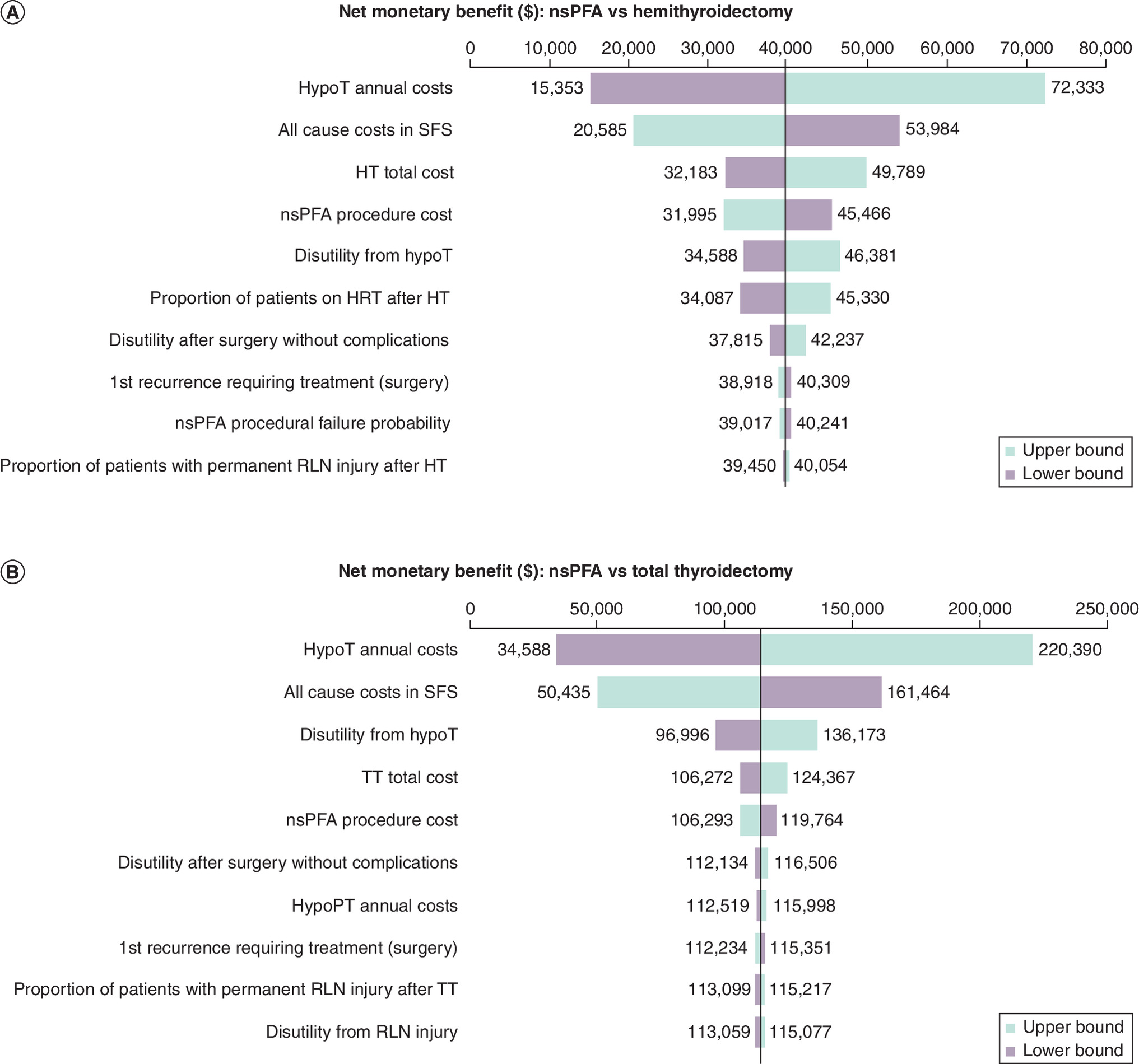
Figure 2. Sensitivity analyses results.
(A) Hemithyroidectomy pathway and (B) the total thyroidectomy pathway.
HRT: Hormone replacement therapy; HT: Hemithyroidectomy; hypoPT: Hypoparathyroidism; hypoT: Hypothyroidism; nsPFA: Nanosecond pulsed field ablation; RLN: Recurrent laryngeal nerve; SFS: Symptom-free state; TT: Total thyroidectomy.
In line with the base-case results, the PSA results showed that nsPFA was cost-effective in over 98% of simulations across both comparisons (Table 3). Most iterations resided in the south-east quadrant below the WTP of $50,000 per QALY, indicating that nsPFA is more effective and less costly (Figure 3).
| Strategy | Total costs | Incremental costs | QALYs | Incremental QALYs | NMB | Probability of being cost-effective |
|---|---|---|---|---|---|---|
| Pathway 1: HT | ||||||
| HT | $136,919 | 6.01 | ||||
| nsPFA | $113,153 | -$23,766 | 6.32 | 0.32 | $87,019 | 98.9% |
| Pathway 2: TT | ||||||
| TT | $183,945 | 5.43 | ||||
| nsPFA | $114,893 | -$69,052 | 6.31 | 0.89 | $245,232 | 98.4% |
Pathway 1 represents the nsPFA vs HT comparison, with HT assumed as the surgical treatment following nsPFA recurrence. Pathway 2 represents the nsPFA vs TT comparison, with TT assumed as the surgical treatment following nsPFA recurrence. Initial treatment strategies remain mutually exclusive.
HT: Hemithyroidectomy; NMB: Net monetary benefit; nsPFA: Nanosecond pulsed field ablation; QALY: Quality-adjusted life year; TT: Total thyroidectomy.
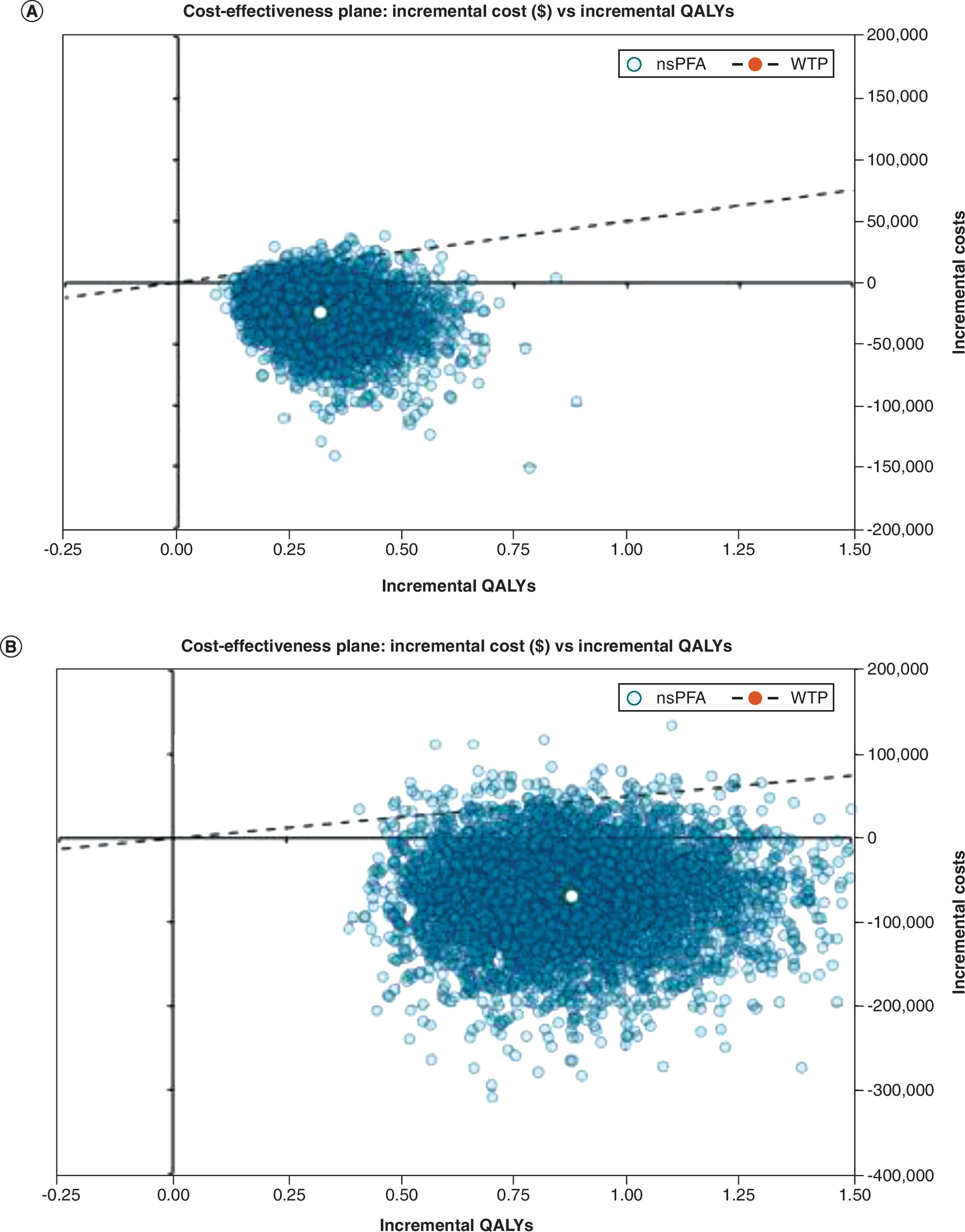
Figure 3. Cost-effectiveness scatter plots.
(A) Hemithyroidectomy pathway and (B) the total thyroidectomy pathway.
nsPFA: Nanosecond pulsed field ablation; QALY: Quality-adjusted life year; WTP: Willingness to pay.
Discussion
This study evaluated the cost-effectiveness of nsPFA as a first-line treatment strategy for BTNs compared with HT and TT in the US. The results suggest that nsPFA would be a cost-effective alternative to thyroidectomy, regardless of whether the comparator is HT or TT. These findings were primarily driven by lower long-term costs associated with avoidance of postsurgical hypothyroidism and its downstream consequences, while maintaining promising clinical outcomes.
The observed economic advantage of nsPFA is closely linked to its potential to preserve thyroid function. Hypothyroidism represents a major contributor to long-term healthcare costs and reduced quality of life in patients undergoing thyroid surgery. By reducing the likelihood of hypothyroidism, nsPFA may lead to sustained improvements in quality-adjusted life-years and lower long-term resource utilization. These findings are consistent with the broader clinical rationale for minimally invasive treatments, which aim to achieve symptom control while minimizing treatment-related burden.
The present findings should be interpreted in the context of the existing evidence base on minimally invasive treatments for BTNs. Previous health economic evaluations on other minimally invasive treatments (mostly RFA) have suggested that they may be cost-effective compared with thyroidectomy, although results are highly sensitive to assumptions regarding procedural costs and the need for repeat treatment [50–54]. In this context, the current analysis extends the evidence base by evaluating nsPFA, a nonthermal ablation modality with a distinct mechanism of action and a different safety profile.
RFA was not selected as the primary comparator in this study because thyroidectomy remains the standard and most widely available intervention in current US practice, whereas adoption of RFA has been gradual and still remains limited [55]. As such, thyroidectomy was considered the most relevant comparator for evaluating the cost-effectiveness of nsPFA in a US payer context. Nevertheless, the absence of a direct comparison with RFA may represent a limitation, as both RFA and nsPFA are minimally invasive alternatives to surgery. Although such a comparison would be of interest, its relevance is currently limited by the available RFA evidence base, much of which comes from Italy [56–60], Korea [61–65] and China [66–71]. Differences in clinical practice, patient selection, and procedural expertise may reduce the generalizability of these data to the US and introduce additional uncertainty and feasibility issues for performing an indirect treatment comparison in a US-focused economic evaluation.
While this study is the first cost-effectiveness model of nsPFA, several health economic evaluations have compared minimally invasive treatment strategies with thyroidectomy. In a US cost-effectiveness analysis of RFA versus thyroidectomy for BTNs, Kuo et al. [50] found RFA to be dominant compared with thyroid lobectomy, with lower total costs ($16,563 vs $19,262) and higher QALYs (21.31 vs 21.13). RFA remained cost-effective until its procedural cost exceeded $12,330 at a willingness-to-pay threshold of $50,000 per QALY. In contrast, a Chinese analysis found RFA to be more effective but more costly than open thyroidectomy over a 6-month period, with a 15.5% probability of being cost-effective at a threshold of $50,000 per QALY [72]. These findings highlight the sensitivity of the economic evidence for RFA to procedural costs, healthcare setting, time horizon and other modeling assumptions. To address similar uncertainties in the present analysis, the model incorporated the probability of repeat nsPFA procedures and uncertainty in procedural costs through sensitivity analyses. Notably, variation in nsPFA procedure costs, the probability of a second nsPFA, and the probability of initial procedure failure did not render nsPFA as the first-line strategy not cost-effective. Although recurrence after nsPFA was modeled using long-term RFA data, an important distinction from the previous studies is that RFA may be associated with rare but serious complications such as nodule rupture requiring surgical intervention and RLN injury, both of which can substantially increase costs and reduce quality of life, even though these complications are infrequently reported, whereas no procedure-related adverse events were included for nsPFA in the present analysis.
This study has several strengths. The model incorporated two alternative surgical pathways, reflecting variability in clinical practice and improving the generalizability of the findings. In addition, the analysis captured long-term consequences of treatment, including hypothyroidism, hypoparathyroidism and nodule recurrence, which are drivers of both costs and health outcomes. The inclusion of repeat treatment pathways further enhances the clinical relevance of the model structure.
However, the results should be interpreted in light of several limitations. The most important limitation is the absence of long-term outcome data for nsPFA. A meta-analysis from long-term follow-up data for RFA informed transition probabilities of nodule recurrence requiring retreatment, which was the only available source of long-term evidence for the minimally invasive treatment of BTNs. The use of long-term RFA data was justified, as reported rates of repeat treatment after RFA were very low and broadly consistent with recent nsPFA clinical trial findings showing no recurrences over 22 months of follow-up after the initial procedure. However, the available study was not considered sufficiently robust to inform the present analysis directly, particularly given its small sample size. It was assumed that, with a larger sample and longer follow-up through future real-world evidence, some recurrences would likely be observed, albeit at similarly low rates. In addition, early real-world adoption of nsPFA may be associated with a learning curve, meaning that outcomes achieved in routine practice may initially differ from those observed under trial conditions. Secondly, additional limitations relate to simplifying structural assumptions within the model. For example, recurrence after HT and subsequent completion thyroidectomy were not explicitly modeled, and new nodules arising in untreated portions of the thyroid were assumed to represent separate clinical events initiating a new treatment pathway. While these assumptions were necessary to maintain model tractability, they may not fully capture the complexity of long-term disease progression in clinical practice. Thirdly, the representation of long-term health outcomes also introduces uncertainty. Utility decrements associated with hypothyroidism were applied as fixed annual decrements, and the impact of coexisting conditions, such as hypothyroidism and hypoparathyroidism after TT, was assumed to be captured within hypothyroidism-related disutility, given limited evidence on the utility impact of coexisting conditions. Both thyroid and parathyroid hormone deficiencies are associated with multiple comorbidities, including cardiovascular disease [45,73], Type 2 diabetes [74,75], chronic kidney disease [73,76] and impaired bone health [77], which may further reduce quality of life. As these outcomes were not explicitly modeled, the overall disease burden may be underestimated. Finally, the model applied all-cause direct healthcare costs to represent differences between patients with and without hypothyroidism. Although this approach captures broader resource use, it may overestimate or underestimate the true incremental burden attributable to hypothyroidism due to residual confounding in the underlying data.
Overall, while subject to uncertainties related to data limitations and modeling assumptions, the findings suggest that nsPFA may reduce the long-term healthcare burden associated with surgical treatment of BTNs. These results support further evaluation of nsPFA in appropriately selected patients and highlight the importance of generating robust, long-term evidence to better inform clinical and economic decision-making. Prospective registries for nsPFA for example, could provide real-world evidence on long-term treatment outcomes, recurrence, retreatment and procedure-related sequelae, thereby reducing uncertainty and supporting future decision-making.
Conclusion
This study suggests that using nsPFA as a first-line treatment for BTNs may reduce long-term healthcare costs while increasing QALYs, compared with HT and TT. These benefits are primarily driven by a lower risk of postsurgical hypothyroidism and its associated resource use. While the findings are robust across sensitivity analyses, additional long-term evidence is needed to confirm these results in real-world and routine clinical practice.
Summary points
•
Benign thyroid nodules (BTNs) are common, and some require intervention because of symptoms, cosmetic concerns or hyperfunction.
•
Nanosecond pulsed field ablation (nsPFA) is a novel minimally invasive treatment designed to achieve local nodule control while preserving normal thyroid function.
•
To our knowledge, this is the first cost-effectiveness analysis of nsPFA as a first-line treatment strategy for BTNs.
•
A decision tree integrated with a Markov state-transition model was developed to compare nsPFA with HT and TT in the US.
•
In both comparisons, nsPFA was highly likely to be cost-effective compared with surgery.
•
The main driver of economic benefit was the avoidance of long-term hypothyroidism and its associated costs, with overall BTNs management costs lower in the nsPFA strategy.
•
These findings are important because they suggest that nsPFA may offer a less invasive and more resource-efficient first-line treatment option for BTNs, with potential benefits for both patients and healthcare systems.
Author contributions
V Zaitceva was responsible for development of the economic model, data collection, and manuscript drafting. M Gomez Montero was responsible for quality control and validation of the economic model and performing the economic analysis. A Ansaripour provided technical and scientific support during the model development process. M Javanbakht and M Branagan-Harris reviewed the manuscript. RP Tufano provided clinical expertise during study design, advised on the clinical pathway and key model assumptions and critically reviewed the manuscript. All authors approved the final draft of the manuscript.
Financial disclosure
This report is research funded by Pulse Biosciences, Inc. (CA, USA). The views expressed in this publication are those of the author(s) and not necessarily those of the company.
Competing interests disclosure
M Gomez Montero, V Zaitceva, M Javanbakht and A Ansaripour are employees of Optimax Access Ltd., which has received research grants from Pulse Biosciences, Inc. through HealthTech Strategies Ltd. M Branagan-Harris is an employee of HealthTech Strategies Ltd. RP Tufano is Chair of the Scientific Advisory Board for Pulse Biosciences and serves as a consultant to Medtronic. The authors have no other competing interests or relevant affiliations with any organization or entity with the subject matter or materials discussed in the manuscript apart from those disclosed.
Writing disclosure
No funded writing assistance was utilized in the production of this manuscript.
Data sharing statement
The model used in this study may be provided to the journal's peer reviewers for their reference when reviewing the manuscript. The information reported in this manuscript is sufficient to replicate the results of the study.
Open access
This work is licensed under the Attribution-NonCommercial-NoDerivatives 4.0 Unported License. To view a copy of this license, visit https://creativecommons.org/licenses/by-nc-nd/4.0/
Supplementary Material
File (supplementary data.docx)
References
Papers of special note have been highlighted as: • of interest
1.
Grani G, Sponziello M, Pecce V, Ramundo V, Durante C. Contemporary thyroid nodule evaluation and management. J. Clin. Endocrinol. Metab. 105(9), 2869–2883 (2020).
2.
Solymosi T, Lukacs Toth G, Budai L, Gal I. The clinical and pathological presentation of thyroid nodules in children and the comparison with adult population: experience of a single institution. Int. J. Endocrinol. 2016, 1256189 (2016).
3.
Yao Z, Zhou W, Shen Z, Li Q. Epidemiological and pathogenic characteristics of benign and malignant thyroid nodules undergoing ultrasonography for health checkup population. Int. J. Gen. Med. 18, 2769–2779 (2025).
4.
Kwong N, Medici M, Angell TE et al. The influence of patient age on thyroid nodule formation, multinodularity, and thyroid cancer risk. J. Clin. Endocrinol. Metab. 100(12), 4434–4440 (2015).
5.
Liao L-J, Hung S-F, Cheng P-C, Hsu W-L. Ultrasonography of incidental thyroid nodules: a systematic review and meta-analysis of prevalence. J. Med. Ultrasound 33(4), 365–370 (2025).
6.
Rehman SU, Hutchison FN, Basile JN. Goiter in older adults. Aging Health 2(5), 823–831 (2006).
7.
Haugen BR, Alexander EK, Bible KC et al. 2015 American Thyroid Association Management Guidelines for adult patients with thyroid nodules and differentiated thyroid cancer: The American Thyroid Association Guidelines Task Force on thyroid nodules and differentiated thyroid cancer. Thyroid 26(1), 1–133 (2016).
8.
Ringel MD, Sosa JA, Baloch Z et al. 2025 American Thyroid Association Management Guidelines for adult patients with differentiated thyroid cancer. Thyroid 35(8), 841–985 (2025).
9.
Ozbas S, Kocak S, Aydintug S, Cakmak A, Demirkiran A, Wishart GC. Comparison of the complications of subtotal, near total and total thyroidectomy in the surgical management of multinodular goitre. Endocr. J. 52(2), 199–205 (2005).
10.
Makay Ö. Less than total thyroidectomy for goiter: when and how? Gland Surg. 6(Suppl. 1), S49–S58 (2017).
11.
Prasad GR. Is it time to shift to total thyroidectomy for benign thyroid disease: an analysis of 77 redo thyroidectomies. Int. J. Phonosurg. Laryngol. 5(1), 4–6 (2015).
12.
Wilson C. Benign thyroid disease—total or subtotal thyroidectomy? Nat. Rev. Endocrinol. 8(1), 4 (2012).
13.
Kebebew E, Duh Q, Clark OH. Total thyroidectomy or thyroid lobectomy in patients with low-risk differentiated thyroid cancer: surgical decision analysis of a controversy using a mathematical model. World J. Surg. 24(11), 1295–1302 (2000).
14.
Noel JE, Sinclair CF. Radiofrequency ablation for benign thyroid nodules. J. Clin. Endocrinol. Metab. 109(1), e12–e17 (2023).
15.
Ahmad A, Mughal Z, Jangan A, Diakos E, Minhas S, Mughal F. Managing thyroid hormone replacement after total thyroidectomy: guidance for family medicine. J. Family Med. Prim. Care 14(1), 4–7 (2025).
16.
Li Z, Qiu Y, Fei Y, Xing Z, Zhu J, Su A. Prevalence of and risk factors for hypothyroidism after hemithyroidectomy: a systematic review and meta-analysis. Endocrine 70(2), 243–255 (2020).
17.
Barczyński M, Stopa-Barczyńska M. Hemithyroidectomy for benign euthyroid asymmetric nodular goitre. Best Pract. Res. Clin. Endocrinol. Metab. 33(4), 101288 (2019).
18.
Cooper D, Kaur R, Ayeni FE, Eslick GD, Edirimanne S. Hypothyroidism after hemithyroidectomy: a systematic review and meta-analysis. Thyroid Res. 17(1), 18 (2024).
• This systematic review and meta-analysis informed the model input for the proportion of patients requiring hormone replacement therapy after hemithyroidectomy due to chronic hypothyroidism.
19.
Papini E, Pacella CM, Solbiati LA et al. Minimally-invasive treatments for benign thyroid nodules: a Delphi-based consensus statement from the Italian minimally-invasive treatments of the thyroid (MITT) group. Int. J. Hyperthermia 36(1), 375–381 (2019).
20.
Lee JY, Baek JH, Ha EJ et al. 2020 Imaging guidelines for thyroid nodules and differentiated thyroid cancer: Korean Society of Thyroid Radiology. Korean J. Radiol. 22(5), 840 (2021).
21.
Papini E, Monpeyssen H, Frasoldati A, Hegedüs L. 2020 European Thyroid Association Clinical Practice Guideline for the use of image-guided ablation in benign thyroid nodules. Eur. Thyroid J. 9(4), 172–185 (2020).
22.
Dietrich CF, Müller T, Bojunga J et al. Statement and recommendations on interventional ultrasound as a thyroid diagnostic and treatment procedure. Ultrasound Med. Biol. 44(1), 14–36 (2018).
23.
Mauri G, Bernardi S, Palermo A, Cesareo R, Italian Minimally-Invasive Treatments of the Thyroid group. Minimally-invasive treatments for benign thyroid nodules: recommendations for information to patients and referring physicians by the Italian Minimally-Invasive Treatments of the Thyroid Group. Endocrine 76(1), 1–8 (2022).
• This clinical recommendation paper offered a plain-language overview of minimally invasive thyroid treatments and emphasized their increasing role in clinical practice.
24.
Hegedüs L, Frasoldati A, Negro R, Papini E. European Thyroid Association Survey on use of minimally invasive techniques for thyroid nodules. Eur. Thyroid J. 9(4), 194–204 (2020).
25.
Muhammad H, Santhanam P, Russell JO. Radiofrequency ablation and thyroid nodules: updated systematic review. Endocrine 72(3), 619–632 (2021).
26.
Chung SR, Suh CH, Baek JH, Park HS, Choi YJ, Lee JH. Safety of radiofrequency ablation of benign thyroid nodules and recurrent thyroid cancers: a systematic review and meta-analysis. Int. J. Hyperthermia 33(8), 920–930 (2017).
27.
Zhao X, Xue J, Yu W et al. The long-term effects of thermal ablation for benign thyroid nodules: a systematic review and meta-analysis. Eur. Radiol. 35(10), 6089–6100 (2025).
• This systematic review and meta-analysis on long-term follow-up after radiofrequency ablation (RFA) informed the transition probabilities used in the Markov model. It was selected because the granular reporting of repeat treatment after initial RFA was well suited to the model structure.
28.
Xu X, Peng Y, Han G. Five-year follow-up results of thermal ablation for benign thyroid nodules: systematic review and meta-analysis. Am. J. Otolaryngol. 45(1), 104025 (2024).
29.
Spiezia S, Offi C, Misso C et al. First-in-human clinical feasibility study of ablation of benign thyroid nodules using nanosecond pulsed field ablation. Thyroid 35(9), 1024–1029 (2025).
• This study is the first clinical study to evaluate the feasibility of nsPFA for benign thyroid nodules. Although it was not used directly to inform the model, it provides the most comprehensive published evidence on nsPFA currently available.
30.
Hepp Z, Lage MJ, Espaillat R, Gossain VV. The direct and indirect economic burden of hypothyroidism in the United States: a retrospective claims database study. J. Med. Econ. 24(1), 440–446 (2021).
• This economic study informed the health state cost inputs used in the model and highlighted the economic burden associated with hypothyroidism in the US.
31.
Al-Hakami H, Al Garni M. Incidence and risk factors for recurrent laryngeal nerve injury after thyroid surgery. Egyptian J. Otolaryngol. 40(1), 92 (2024).
32.
Vanderpump MP, Tunbridge WM, French JM et al. The incidence of thyroid disorders in the community: a twenty-year follow-up of the Whickham Survey. Clin. Endocrinol. (Oxf.) 43(1), 55–68 (1995).
33.
Ritter K, Elfenbein D, Schneider DF, Chen H, Sippel RS. Hypoparathyroidism after total thyroidectomy: incidence and resolution. J. Surgical Res. 197(2), 348–353 (2015).
34.
Jeppesen K, Moos C, Holm T, Pedersen AK, Skjøt-Arkil H. Risk of hematoma after hemithyroidectomy in an outpatient setting: a systematic review and meta-analysis. Eur. Arch. Otorhinolaryngol. 279(8), 3755–3767 (2022).
35.
Weiss A, Lee KC, Brumund KT, Chang DC, Bouvet M. Risk factors for hematoma after thyroidectomy: results from the nationwide inpatient sample. Surgery 156(2), 399–404 (2014).
36.
Rocke DJ, Goldstein DP, De Almeida JR. A cost-utility analysis of recurrent laryngeal nerve monitoring in the setting of total thyroidectomy. JAMA Otolaryngol. Head Neck Surg. 142(12), 1199–1205 (2016).
37.
Ning Y, Cheng YJ, Liu LJ et al. What is the association of hypothyroidism with risks of cardiovascular events and mortality? A meta-analysis of 55 cohort studies involving 1,898,314 participants. BMC Med. 15(1), 21 (2017).
38.
Reddy NL et al. Estimating complications and mortality in patients with post-surgical chronic hypoparathyroidism in England: a retrospective matched cohort study. Endocrine Metab. Sci. 19, 100258 (2025).
39.
Jiang R, Janssen MFB, Pickard AS. US population norms for the EQ-5D-5L and comparison of norms from face-to-face and online samples. Qual. Life Res. 30(3), 803–816 (2021).
40.
Pang EH, Carter AW, Prisman E, Kreisman SH. Cost-effectiveness of the ACR TIRADS compared to the ATA 2015 risk stratification systems in the evaluation of incidental thyroid nodules. Acad. Radiol. 31(10), 3993–4010 (2024).
41.
Kuo EJ, Wu JX, Zanocco KA. Cost effectiveness of immediate biopsy versus surveillance of intermediate-suspicion thyroid nodules. Surgery 164(6), 1330–1335 (2018).
42.
Zheng F, Huang Y, Wright J, Kuo JH. Out-of-pocket costs for patients undergoing thyroid surgery. Ann. Surg. 276(6), E937–E943 (2022).
43.
Greenleaf EK, Goyal N, Hollenbeak CS, Boltz MM. Resource utilization associated with cervical hematoma after thyroid and parathyroid surgery. J. Surgical Res. 218, 67–77 (2017).
44.
US Social Security. Period Life Table. https://www.ssa.gov/oact/STATS/table4c6.html
45.
Ning Y, Cheng YJ, Liu LJ et al. What is the association of hypothyroidism with risks of cardiovascular events and mortality? A meta-analysis of 55 cohort studies involving 1,898,314 participants. BMC Med. 15(1), 21 (2017).
46.
Reddy NL, Rice CT, Carvalho SJ et al. Estimating complications and mortality in patients with post-surgical chronic hypoparathyroidism in England: a retrospective matched cohort study. Endocrine Metab. Sci. 19, 100258 (2025).
47.
Rocke DJ, Goldstein DP, De Almeida JR. A cost-utility analysis of recurrent laryngeal nerve monitoring in the setting of total thyroidectomy. JAMA Otolaryngol. Head Neck Surg. 142(12), 1199–1205 (2016).
48.
Medicare.gov. (Accessed 8 April 2026). https://www.medicare.gov/procedure-price-lookup/
49.
US Inflation Calculator. (Accessed 8 April 2026). https://www.usinflationcalculator.com/inflation/annual-averages-for-rate-of-inflation/
50.
Kuo EJ, Oh A, Hu Y, McManus CM, Lee JA, Kuo JH. If the price is right: cost-effectiveness of radiofrequency ablation versus thyroidectomy in the treatment of benign thyroid nodules. Surgery 173(1), 201–206 (2023).
51.
Pan J, Tian J, Xu F et al. Long-term cost-effectiveness of resection versus thermal ablation for papillary thyroid microcarcinoma: a Markov Modeling Study. https://ssrn.com/abstract=4438019
52.
Miller JR, Tanavde V, Razavi C, Saraswathula A, Russell JO, Tufano RP. Cost comparison between open thyroid lobectomy and radiofrequency ablation for management of thyroid nodules. Head Neck 45(1), 59–63 (2023).
53.
Yue W-W et al. Correction: Corrigendum: Quality of life and cost-effectiveness of radiofrequency ablation versus open surgery for benign thyroid nodules: a retrospective cohort study. Sci. Rep. 7(1), 41342 (2017).
54.
Carlisle KM et al. cost effectiveness of definitive treatment strategies for autonomously functioning thyroid nodules. Clin. Endocrinol. (Oxf.) 102(1), 91–100 (2025).
55.
Kuo JH, McManus C, Lee JA. Analyzing the adoption of radiofrequency ablation of thyroid nodules using the diffusion of innovations theory: understanding where we are in the United States? Ultrasonography 41(1), 25–33 (2022).
56.
Deandrea M, Garino F, Alberto M et al. Radiofrequency ablation for benign thyroid nodules according to different ultrasound features: an Italian multicentre prospective study. Eur. J. Endocrinol. 180(1), 79–87 (2019).
57.
Trimboli P, Castellana M, Sconfienza LM et al. Efficacy of thermal ablation in benign non-functioning solid thyroid nodule: a systematic review and meta-analysis. Endocrine 67(1), 35–43 (2020).
58.
Mauri G, Cova L, Monaco CG et al. Benign thyroid nodules treatment using percutaneous laser ablation (PLA) and radiofrequency ablation (RFA). Int. J. Hyperthermia 33(3), 295–299 (2017).
59.
Turtulici G, Orlandi D, Corazza A et al. Percutaneous radiofrequency ablation of benign thyroid nodules assisted by a virtual needle tracking system. Ultrasound Med. Biol. 40(7), 1447–1452 (2014).
60.
Cesareo R, Pasqualini V, Simeoni C et al. Prospective study of effectiveness of ultrasound-guided radiofrequency ablation versus control group in patients affected by benign thyroid nodules. J. Clin. Endocrinol. Metab. 100(2), 460–466 (2015).
61.
Baek JH, Kim YS, Lee D, Huh JY, Lee JH. Benign predominantly solid thyroid nodules: prospective study of efficacy of sonographically guided radiofrequency ablation versus control condition. Am. J. Roentgenol. 194(4), 1137–1142 (2010).
62.
Ji Hong M, Baek JH, Choi YJ et al. Radiofrequency ablation is a thyroid function–preserving treatment for patients with bilateral benign thyroid nodules. J. Vasc. Interv. Radiol. 26(1), 55–61 (2015).
63.
Lim HK, Lee JH, Ha EJ, Sung JY, Kim JK, Baek JH. Radiofrequency ablation of benign non-functioning thyroid nodules: 4-year follow-up results for 111 patients. Eur. Radiol. 23(4), 1044–1049 (2013).
64.
Jung SL, Baek JH, Lee JH et al. Efficacy and safety of radiofrequency ablation for benign thyroid nodules: a prospective multicenter study. Korean J. Radiol. 19(1), 167 (2018).
65.
Ha EJ, Baek JH, Lee JH. The efficacy and complications of radiofrequency ablation of thyroid nodules. Curr. Opin. Endocrinol. Diabetes Obes. 18(5), 310–314 (2011).
66.
Li X, Xu HX, Lu F et al. Treatment efficacy and safety of ultrasound-guided percutaneous bipolar radiofrequency ablation for benign thyroid nodules. Br. J. Radiol. 89(1059), 20150858 (2016).
67.
Che Y, Jin S, Shi C et al. Treatment of benign thyroid nodules: comparison of surgery with radiofrequency ablation. AJNR Am. J. Neuroradiol. 36(7), 1321–1325 (2015).
68.
Li L, Qiu X. Safety and efficacy of ultrasound-guided radiofrequency ablation for benign nonfunctional thyroid nodules in children: a retrospective study of 62 patients with over four years of follow-Up. Thyroid 32(5), 525–535 (2022).
69.
Yan L, Zhang M, Xie F, Ma J, Xiao J, Luo Y. Efficacy and safety of radiofrequency ablation for benign thyroid nodules in patients with previous thyroid lobectomy. BMC Med. Imaging 21(1), 47 (2021).
70.
Wang S, Liu M, Wu H et al. A comparative study on the effectiveness of RFA combined with lauromacrogol versus RFA alone for predominantly cystic thyroid nodules. Asian J. Surg. 49(3), 1325–1328 (2026).
71.
Chuanke S, Ming L, Zhideng Y, Huan L. A 6-year single-center prospective follow-up study of the efficacy of radiofrequency ablation for thyroid nodules. Front. Endocrinol. (Lausanne) 15, 1402380 (2024).
72.
Yue WW, Wang SR, Li XL et al. Quality of life and cost-effectiveness of radiofrequency ablation versus open surgery for benign thyroid nodules: a retrospective cohort study. Sci. Rep. 6, 37838 (2016).
73.
Hadedeya D, Kay J, Attia A et al. Effect of postsurgical chronic hypoparathyroidism on morbidity and mortality: a systematic review and meta-analysis. Gland Surg. 10(10), 3007–3019 (2021).
74.
Roa Dueñas OH, Van der Burgh AC, Ittermann T et al. Thyroid function and the risk of prediabetes and Type 2 diabetes. J. Clin. Endocrinol. Metab. 107(6), 1789–1798 (2022).
75.
Chen K, Gosmanova EO, Curhan G et al. Risk of Type 2 diabetes (T2D) in patients with chronic hypoparathyroidism (HypoPT): a retrospective cohort study. Endocrine Abstracts 63, P1038 (2019).
76.
Huang CW, Li BH, Reynolds K, Jacobsen SJ, Rhee CM, Sim JJ. Association between hypothyroidism and chronic kidney disease observed among an adult population 55 years and older. Medicine (United States) 99(17), E19569 (2020).
77.
Soydal Ç, Özkan E, Nak D, Elhan AH, Küçük NÖ, Kır MK. Risk factors for predicting osteoporosis in patients who receive thyrotropin suppressive levothyroxine treatment for differentiated thyroid carcinoma. Mol. Imaging Radionucl. Ther. 28(2), 69–75 (2019).
Information & Authors
Information
Published In
Copyright
© 2026 The authors. This work is licensed under the Attribution-NonCommercial-NoDerivatives 4.0 Unported License
History
Received: 13 July 2026
Accepted: 6 October 2026
Published online: 26 October 2026
Keywords:
Topics
Authors
Metrics & Citations
Metrics
Article Usage
Article usage data only available from February 2023. Historical article usage data, showing the number of article downloads, is available upon request.
Citations
How to Cite
Cost-effectiveness analysis of nanosecond pulsed field ablation against hemithyroidectomy and total thyroidectomy for benign thyroid nodules. (2026) Journal of Comparative Effectiveness Research. DOI: 10.57264/cer-2026-0150
Export citation
Select the citation format you wish to export for this article or chapter.