

Real-world cost-effectiveness of sequential therapy of in-class transition to ixazomib versus daratumumab for transplant-ineligible newly diagnosed multiple myeloma in China
Abstract
Aim: Expanding treatment options for transplant-ineligible newly diagnosed multiple myeloma (ndMM) in China has increased the need to identify treatment strategies that improve patient outcomes while using healthcare resources efficiently. This study evaluated the cost-effectiveness of in-class transition (iCT) to ixazomib, lenalidomide and dexamethasone (IRd) versus daratumumab, lenalidomide and dexamethasone (DRd) for transplant-ineligible ndMM from the perspective of the Chinese healthcare system. Materials & methods: A cost-effectiveness analysis was conducted using a Markov cohort model that simulated lifetime health benefits and medical costs for the two treatment modalities. Model inputs were estimated from best available real-world evidence in the literature and from public data sources. Deterministic, probabilistic and scenario sensitivity analyses were performed to assess uncertainty in model results. Results: In the base-case analysis, iCT IRd was projected to generate 0.580 additional quality-adjusted life years versus DRd (4.724 vs 4.144) and save lifetime medical costs by $7751. One-way sensitivity analysis indicated that cost-effectiveness was driven by uncertainty in model inputs related to treatment discontinuation and subsequent disease progression. Probabilistic sensitivity analysis estimated that iCT IRd had 79.2%, 88.0% and 91.3% probabilities of being cost-effective at willingness-to-pay thresholds of one, two and three-times China’s 2025 gross domestic product per capita per quality-adjusted life year, respectively. Conclusion: Based on best available real-world evidence, the iCT IRd modality could be cost-effective compared with the DRd modality for transplant-ineligible patients with ndMM in China. Future real-world studies are needed to confirm the projected outcomes.
Plain language summary: Comparing the value of an ixazomib-based sequential strategy with antibody-based treatment for newly diagnosed myeloma in China
What is this article about?
Multiple myeloma is an incurable blood cancer. For newly diagnosed patients in China who are not eligible for stem cell transplant, selecting an initial treatment strategy is clinically important and can also affect long-term health outcomes and medical costs. This study used a computer model to simulate lifetime health outcomes and medical costs under the two treatment strategies (started with bortezomib-based induction therapy and followed by maintenance treatment containing oral ixazomib [iCT IRD] versus using daratumumab [DRd] as induction and maintenance treatment) that could be used in real-world clinical practices.
What were the results?
The model projected that iCT IRd could provide more quality-adjusted survival while reducing total medical expenditures over a patient’s lifetime compared with DRd. These projected differences were driven mainly by treatment discontinuation, the risk of disease progression after discontinuation and the later-line treatments.
Why is this important?
This study suggests that for newly diagnosed multiple myeloma patients in China who cannot undergo a stem cell transplant, the iCT IRd strategy could offer a practical alternative to DRd by extending quality-adjusted life expectancy while reducing overall medical costs. These findings provide initial economic evidence that may help health system planners and policymakers evaluate treatment access, though because these conclusions rely on computer modeling and assumptions, future real-world clinical studies will be essential to confirm whether these projected health and cost benefits hold true in actual practice.
Multiple myeloma (MM) is an incurable hematological malignancy whose incidence in China increased by nearly 30% over a 10-year period [1]. The main therapeutic goal in MM is to optimize overall survival (OS) and health-related quality of life (HRQoL) through appropriate treatment sequencing. The advent of novel treatment options has significantly improved survival outcomes and encouraged evaluation of strategies that combine and sequence these therapies to further optimize patient outcomes [2–4]. According to the 2024 Chinese clinical guideline, recommended first-line options for transplant-ineligible newly diagnosed MM (ndMM) include bortezomib-based induction regimens followed by maintenance, daratumumab-lenalidomide-dexamethasone (DRd) and oral proteasome inhibitor-based regimens [5]. Daratumumab, a monoclonal antibody targeting CD38, has demonstrated favorable efficacy in transplant-ineligible ndMM in randomized clinical trials. In a clinical trial setting, 85% of patients receiving DRd achieved progression-free survival (PFS) at 12 months [6]. Such trial settings may provide more intensive compliance management for intravenous treatments than routine real-world settings [7]. However, the drug acquisition cost, intravenous administration requirements and healthcare resource demands associated with daratumumab may challenge the efficient use and real-world effectiveness of DRd in routine practice [8–10].
In a real-world study conducted in the USA, 80.5% of transplant-ineligible patients with ndMM discontinued DRd within 15 months [7]. By contrast, all-oral treatments, such as ixazomib and lenalidomide, may offer advantages in administration convenience, reduced hospital visits and improved adherence [11,12], which are particularly relevant in the Chinese healthcare system. In the Phase III TOURMALINE-MM2 randomized controlled trial [13], upfront ixazomib-lenalidomide-dexamethasone (IRd) did not achieve statistical significance for its primary PFS end point compared with lenalidomide plus dexamethasone (Rd) in transplant-ineligible ndMM. However, the treatment strategy evaluated in the present study differs from upfront IRd as tested in TOURMALINE-MM2. In routine Chinese clinical practice, clinicians may adopt a pragmatic in-class transition (iCT) strategy, transitioning from bortezomib-based injectable induction to oral ixazomib-based continuous therapy, particularly for elderly or transplant-ineligible patients. For these patients, an all-oral continuous regimen may reduce the burden of repeated injections and hospital visits, which may be particularly relevant for those with frailty, limited mobility or dependence on caregivers [11,12]. Therefore, the present analysis was designed to evaluate a real-world treatment-sequencing strategy rather than to infer the relative front-line efficacy of IRd versus DRd from randomized trial data. A Chinese real-world study including nontransplant patients with ndMM and patients with first relapse after lenalidomide maintenance reported a 2-year PFS rate of 84.3% among patients receiving ixazomib-containing oral regimens following bortezomib-based induction [12]. Although these results were reported from a single-arm observational study without a direct comparator, they suggest favorable PFS outcomes with ixazomib-containing oral regimens in nontransplant MM and may complement evidence from studies of DRd in similar populations [6,7,12]. In light of these findings, this study conducted a cost-effectiveness analysis (CEA) comparing iCT IRd with DRd, defined as DRd used for both induction and continuous therapy, from the perspective of the Chinese healthcare system. In this comparison, DRd was modeled as a complete frontline regimen initiated at treatment start and continued until disease progression or unacceptable toxicity, consistent with the MAIA regimen and Chinese guideline recommendations [5,6], rather than as maintenance following bortezomib induction. Rather than comparing two isolated regimens, this analysis evaluated two clinically relevant treatment strategies: a sequential oral proteasome inhibitor-based strategy that preserves additional anti-CD38 antibody-based regimen options, including DRd, for later lines, and an upfront antibody-based strategy. The study aimed to identify the most efficient treatment modality for transplant-ineligible ndMM in real-world settings, defined as achieving better or similar outcomes while making more efficient use of healthcare resources. Because both intravenous and subcutaneous formulations of daratumumab have been approved in China, the analysis assessed the cost-effectiveness of iCT IRd versus DRd using both daratumumab formulations at the same level of comparison.
Materials & methods
This study used a CEA framework to evaluate the comparative economic and health outcomes of the iCT IRd modality versus the DRd modality for transplant-ineligible ndMM from the perspective of the Chinese healthcare system. The economic evaluation was reported in accordance with the Consolidated Health Economic Evaluation Reporting Standards (CHEERS) 2022 statement [14]. According to the latest Chinese clinical guideline [5], several first-line modalities are available for transplant-ineligible ndMM. This study selected bortezomib-based induction followed by continuous treatment with ixazomib plus lenalidomide and dexamethasone as the iCT IRd modality, and daratumumab-based treatment for both induction and continuous treatment as the DRd modality. The analysis considered direct medical costs and health benefits measured as quality-adjusted life years (QALYs) over a lifetime horizon. These modalities were selected because DRd represents a guideline-recommended antibody-based option, whereas iCT IRd represents an oral proteasome inhibitor-based sequencing strategy supported by real-world evidence in Chinese patients. Treatment dosages and administration schedules for the included regimens were obtained from the corresponding prescribing information and published clinical studies; regimen-specific details are provided in Supplementary Table 3. The CEA model was constructed using Microsoft Excel 365 Version 16.111.1 (Microsoft Corporation, WA, USA).
Model structure
A Markov model was constructed to simulate the two treatment modalities (iCT IRd vs DRd) for transplant-ineligible ndMM and subsequent sequential therapies for relapsed and refractory multiple myeloma (rrMM) until death. The model first simulated response to front-line induction therapy and then used a Markov structure to simulate continuous maintenance therapy among patients achieving an overall response, defined as partial response (PR), very good partial response (VGPR) or complete response (CR). Continuous therapy was defined as maintenance treatment administered after induction until disease progression, treatment discontinuation unrelated to progression, or death. Patients who discontinued continuous therapy were classified as having discontinued because of disease progression (relapse) or for reasons unrelated to progression. Patients experiencing disease relapse were further simulated to receive subsequent therapies until all available treatment options were exhausted. For patients who discontinued treatment for other reasons, such as clinical intolerance, the model simulated the risk of disease progression under the residual treatment effects of continuous therapy.
Basket-based treatment allocation frameworks have previously been adopted in economic evaluations of hematologic malignancies to address heterogeneity in treatment distribution in the absence of direct comparative evidence [15]. To reflect contemporary clinical practice in China, where available rrMM treatment options may be used sequentially, the CEA model used a consolidated basket approach [16] to simulate subsequent lines of therapy. Although MM therapies are sequential rather than cyclic, the cited treatment-sequence framework was used as a mathematical approach for structuring treatment availability and exclusion rules, rather than as a disease-specific clinical proxy. In the present model, this framework was adapted to handle exclusionary treatment rules so that agents used in the front-line setting were excluded from the subsequent rrMM treatment pool while downstream multi-drug treatment distributions were mapped simultaneously. Accordingly, the treatment baskets differed between modalities, because DRd and IRd were excluded from subsequent rrMM therapies if they had already been used for transplant-ineligible ndMM. Exclusion was applied to the same complete regimen rather than to the entire therapeutic class; therefore, other daratumumab-containing or proteasome inhibitor-containing regimens could remain available if they were not identical to the previously used regimen. The basket distributions were structural cohort-allocation inputs and should not be interpreted as directly observed patient-level sequencing probabilities. The subsequent-line treatment sequencing map illustrating the exclusion rules and basket composition for the two modalities is presented in Supplementary Appendix Section 2.2.
To enhance methodological rigor, the simulation tracked cohorts across mutually exclusive health states using constant monthly transition probabilities derived from aggregated literature evidence. This structure is a standard discrete state-transition Markov framework and does not involve patient-level survival curve fitting or parametric survival extrapolation curves commonly associated with partitioned survival models. Instead, monthly transition probabilities for disease progression and mortality were derived from reported median PFS and OS under a constant hazard assumption, using λ = ln(2)/median time and converting this rate into monthly probabilities as p = 1 - exp(-λ) [17]. Long-term outcomes were therefore simulated through repeated Markov state transitions based on summary survival inputs rather than through direct extrapolation of fitted Kaplan–Meier survival curves. The Markov cycle length was 1 month, and half-cycle correction was applied. The model used a lifetime horizon for the full cost-effectiveness assessment. Health benefits and medical costs were discounted at an annual rate of 4.5%, consistent with the China Guidelines for Pharmacoeconomic Evaluations [18]. The CEA model structure is illustrated in Figure 1.
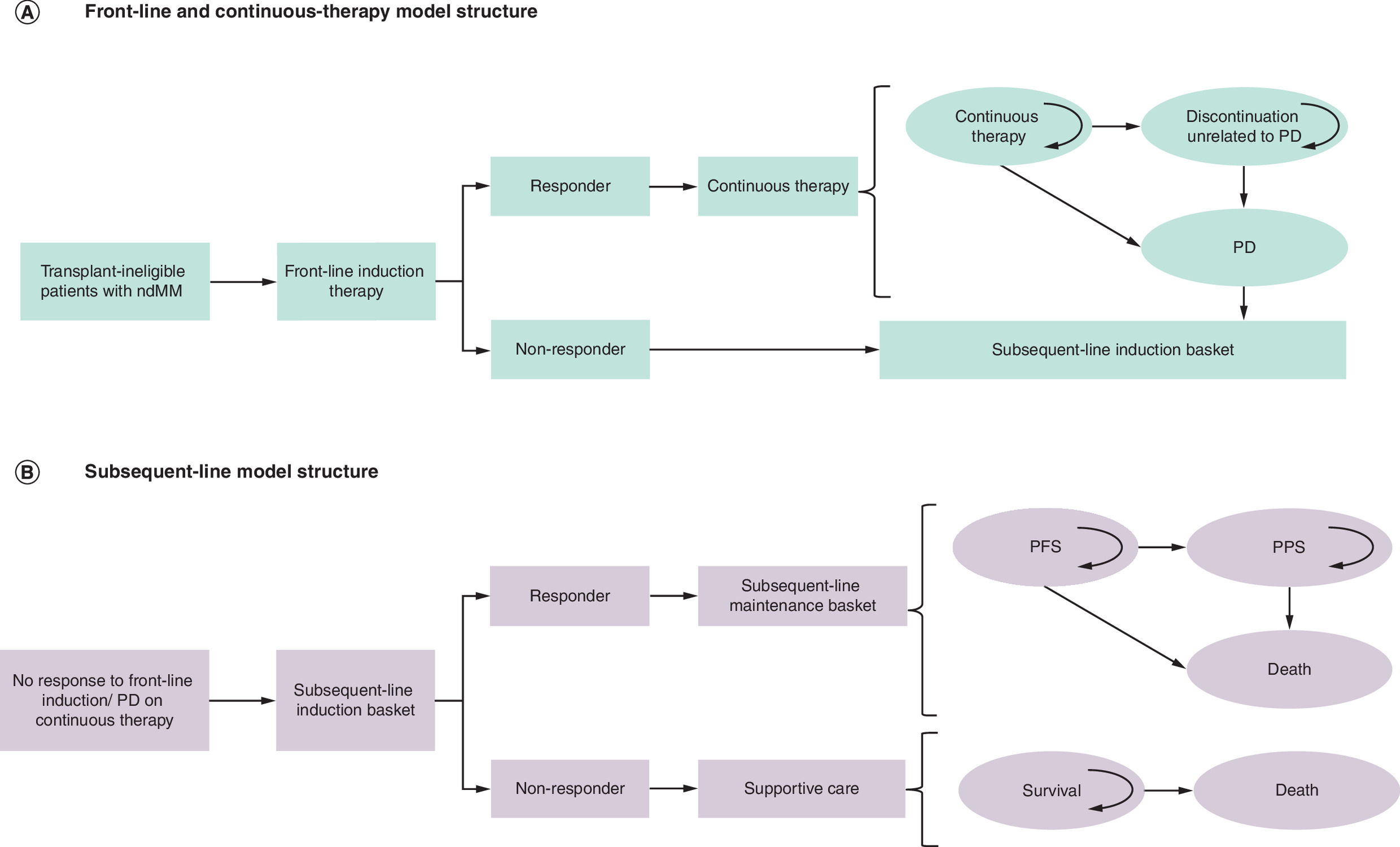
Figure 1. Structure of the cost-effectiveness analysis model comparing in-class transition to ixazomib, lenalidomide and dexamethasone with daratumumab, lenalidomide and dexamethasone for transplant-ineligible newly diagnosed multiple myeloma.
(A) Front-line therapy: patients undergo induction; responders may continue therapy until progression or discontinuation, whereas nonresponders switch to subsequent-line induction. (B) Subsequent-line therapy: patients with no front-line response or progression enter subsequent-line induction. Responders proceed to maintenance, and nonresponders receive supportive care. PFS and PPS are modeled as nonabsorbing states with feedback arrows, and death is the only absorbing state.
DRd: Daratumumab, lenalidomide and dexamethasone; iCT IRd: In-class transition to ixazomib, lenalidomide and dexamethasone; ndMM: Newly diagnosed multiple myeloma; PD: Progressive disease; PFS: Progression-free survival; PPS: Post-progression survival.
Model inputs
To maximize model generalizability, this study conducted a systematic literature search of major Chinese databases (CNKI, Wanfang and VIP) and international databases (MEDLINE, Embase and Web of Science) from 1 January 2018 to 22 March 2024, focusing on observational studies from China, Japan, and Korea to ensure relevance to the Chinese healthcare context. A supplementary search without restrictions on study region or publication date was also conducted to address scarce evidence in China and selected Asian countries. The searches combined controlled vocabulary and free-text terms for MM, observational or real-world study designs, treatment regimens and individual drug names, clinical and safety outcomes, HRQoL and utility measures, healthcare resource utilization and costs and economic outcomes. Search syntax, controlled vocabulary, field tags and limits were adapted to the requirements of each database. The principal search concepts and representative terms used across the international and Chinese databases are summarized in Supplementary Appendix Section 1.1. Identified observational studies were assessed for quality using the Newcastle-Ottawa Scale, and only studies of moderate or high quality were included in the evidence synthesis. Single-arm meta-analysis with a random-effects model was the main approach for aggregating evidence from multiple studies where available. Statistical heterogeneity was assessed where estimable, with detailed methods and results reported in Supplementary Appendix Sections 1.4 & 1.5. Overall, 280 studies were included to estimate model inputs. The detailed systematic literature review (SLR) methodology, screening process, evidence synthesis approach and primary parameter meta-analysis results are provided in Supplementary Appendix Section 1. The estimated model inputs are summarized in Table 1.
| Model inputs | iCT IRd baseline (95% CI) | DRd baseline (95% CI) | iCT IRd data source | DRd data source | Ref. |
|---|---|---|---|---|---|
| Demographics | |||||
| Age (years) | 60.5 (59.2–61.8) | 60.5 (59.2–61.8) | SLR pooled | Same as iCT IRd | |
| Male (%) | 57.2% (56.1%–58.2%) | 57.2% (56.1%–58.2%) | SLR pooled | Same as iCT IRd | |
| Weight (kg) | 64.0 (61.5–66.5) | 64.0 (61.5–66.5) | SLR pooled | Same as iCT IRd | |
| Treatment duration of induction | |||||
| Front-line induction duration (weeks) | 16 | 24 | Product label and prescribing information | Product label and prescribing information | |
| Treatment persistence during continuous therapy | |||||
| Monthly treatment discontinuation risk | 0.043 (0.026–0.071) | 0.055 (0.037–0.081) | SLR pooled (Supplementary Appendix Section 1.5.1) | SLR pooled (Supplementary Appendix Section 1.5.1) | |
| Proportion of discontinuations due to PD | 26.0% (18.8%–34.8%) | 50.1% (-) | SLR pooled (Supplementary Appendix Section 1.5.2) | SLR pooled (Supplementary Appendix Section 1.5.2) | |
| Treatment efficacy | |||||
| ORR during front-line induction therapy | 82.6% (-) | 87.3% (80.3%–92.1%) | Weighted pooled (Supplementary Appendix Section 1.5.3) | SLR pooled (Supplementary Appendix Section 1.5.3) | |
| ORR during subsequent-line induction therapy | 67.4% (-) | 61.2% (-) | Basket-weighted pooled estimate (Supplementary Appendix Section 1.5.3) | Basket-weighted pooled estimate (Supplementary Appendix Section 1.5.3) | |
| Monthly progression risk | |||||
| Front-line discontinuation for non-PD reasons (residual effects) | 0.035 (-) | 0.018 (0.004–0.057) | Weighted pooled (Supplementary Appendix Section 1.5.4) | SLR pooled (Supplementary Appendix Section 1.5.4) | |
| Subsequent continuous therapy for rrMM | 0.037 (-) | 0.064 (-) | Basket approach matrix (Supplementary Appendix Sections 2.1–2.3) | Basket approach matrix (Supplementary Appendix Sections 2.1–2.3) | |
| Monthly post-progression mortality risk | |||||
| PPS state after rrMM progression | 0.012 (-) | 0.022 (-) | Basket approach matrix (Supplementary Appendix Sections 2.1–2.3) | Basket approach matrix (Supplementary Appendix Sections 2.1–2.3) | |
| Supportive care | 0.064 (-) | 0.064 (-) | Weighted average (Supplementary Appendix Section 2.4) | Same as iCT IRd | |
| Health-related quality of life (utility ratio)† | |||||
| PFS under continuous therapy for ndMM | 0.914 (-) | 0.914 (-) | Same as iCT IRd | [19–21] | |
| PFS under subsequent continuous therapy for rrMM | 0.879 (-) | 0.879 (-) | Same as iCT IRd | [22,23] | |
| PPS | 0.738 (-) | 0.738 (-) | Same as iCT IRd | [19,20,22–25] | |
| Disutility associated with SAE | 0.049 (-) | 0.049 (-) | Same as iCT IRd | [24,26] | |
| Medical costs per model cycle (US$) | Based on national public bidding prices and clinical resource utilization | ||||
| Induction therapy for ndMM | |||||
| Drug acquisition costs | $169 | $4425 | |||
| Hospital administration costs | $259 | $259 | |||
| SAE management costs | $50 | $71 | |||
| Disease monitoring costs | $111 | $111 | |||
| Disease management costs | $84 | $84 | |||
| Continuous therapy for ndMM | |||||
| Drug acquisition costs | $2257 | $1714 | |||
| Hospital administration costs | $0 | $259 | |||
| SAE management costs | $28 | $71 | |||
| Disease monitoring costs | $63 | $63 | |||
| Disease management costs | $84 | $84 | |||
| Subsequent induction therapy for rrMM | |||||
| Drug acquisition costs | $2912 | $2867 | |||
| Hospital administration costs | $223 | $223 | |||
| SAE management costs | $105 | $139 | |||
| Disease monitoring costs | $111 | $111 | |||
| Disease management costs | $84 | $84 | |||
| Subsequent continuous therapy for rrMM | |||||
| Drug acquisition costs | $1440 | $1480 | |||
| Hospital administration costs | $214 | $214 | |||
| SAE management costs | $114 | $151 | |||
| Disease monitoring costs | $63 | $63 | |||
| Disease management costs | $84 | $84 | |||
| PD management costs | $656 | $656 | |||
| Supportive care costs | $713 | $713 | |||
†
Utility ratios were applied to age- and sex-matched Chinese general population utilities in each model cycle to estimate cycle-specific absolute health-state utilities. A dash indicates that a CI was not available or not applicable. Costs are reported in 2026 US dollars.
DRd: Daratumumab, lenalidomide and dexamethasone; iCT IRd: In-class transition to ixazomib, lenalidomide and dexamethasone; ndMM: Newly diagnosed multiple myeloma; ORR: Overall response rate; PD: Progressive disease; PFS: Progression-free survival; PPS: Post-progression survival; rrMM: Relapsed or refractory multiple myeloma; SAE: Serious adverse event; SLR: Systematic literature review.
Model cohort
Based on a meta-analysis of 190 observational studies reporting characteristics of Chinese patients with transplant-ineligible ndMM, the baseline cohort characteristics were derived as model inputs. The simulated cohort had a mean starting age of 60.5 years (95% CI: 59.2–61.8), with 57.2% (95% CI: 56.1–58.2%) of patients being male, and a mean body weight of 64.0 kg (95% CI: 61.5–66.5).
Clinical data inputs
This study selected five commonly used induction therapies for the iCT IRd modality: bortezomib, lenalidomide and dexamethasone (VRd); bortezomib, cyclophosphamide and dexamethasone (VCd); bortezomib, doxorubicin and dexamethasone (VAd); bortezomib and dexamethasone (Vd); and bortezomib, thalidomide and dexamethasone (VTd). These regimens were selected based on endorsement in the latest Chinese clinical guideline and the availability of sufficient real-world evidence [5]. Other less frequently used regimens were not included because they are rarely adopted in current practice or lack adequate data to inform model inputs. The estimated distributions of these five induction therapies in Chinese patients with transplant-ineligible ndMM, together with pooled overall response rates (ORRs) from the literature, were used to calculate the weighted mean ORR for iCT IRd induction therapy. The collected discontinuation rates and follow-up durations for continuous therapies in the two modalities were used to calculate monthly treatment discontinuation risks using an exponential survival function [7,12,27–29]. Reported reasons for treatment discontinuation from identified studies were pooled to estimate the proportion of patients who discontinued continuous therapy because of disease relapse [6,12,27,30,31]. For patients discontinuing continuous therapy for nonprogression reasons (e.g., clinical intolerance), the immediate transition risk of progressive disease was anchored to the constant monthly progression hazard of their completed front-line induction chemotherapy. This hazard rate was derived mathematically from literature-reported median PFS using an exponential survival function under a constant hazard assumption, a structural proxy widely validated in international state-transition modeling guidelines [17,32]. The explicit formulation, mathematical derivation and individual regimen trial-derived inputs are detailed in Supplementary Appendix Section 1.5.4. Reported incidences of grade ≥3 adverse events were pooled and used as regimen-specific serious adverse event (SAE) inputs to estimate monthly safety-event risks during continuous treatment for the two modalities. The ORR of induction therapy and the monthly risk of disease progression for treatment baskets in the two modalities were estimated from pooled outcomes from included real-world rrMM studies, including ORR, median PFS and OS.
Utility inputs
Utility values for progression-free and progressed disease health states were obtained from seven published studies conducted in East Asia, including six from China and one from Japan [19–25]. To account for differences in background population health utility across countries and by age, utility inputs were modeled as health-state utility ratios. Specifically, the reported MM health-state utility from each study was divided by the corresponding age- and sex-matched general population utility of the source country or region. These utility ratios were then multiplied by age- and sex-matched Chinese general population utility values in each cycle to generate cycle-specific absolute utilities for Chinese patients with MM [33]. To reflect the quality-of-life impact of SAEs, reported SAE-associated disutility was applied to health states for patients receiving continuous therapies [24,26].
Cost inputs
Model inputs for direct medical costs included drug acquisition costs, administration costs for intravenous treatments, disease management costs for PFS and progressive disease and SAE management costs. A bottom-up approach was used to estimate cost inputs based on publicly available unit prices for healthcare resources and estimated healthcare resource utilization from clinical practice. Both subcutaneous and intravenous daratumumab acquisition costs were included, consistent with the analysis framework described in the Introduction. Historical cost inputs were first inflated to 2026 Chinese Yuan (CNY) using the Chinese Consumer Price Index to ensure consistent price levels across cost categories. Costs were then converted into US dollars (USD) using exchange rate on 22 June 2026 (¥6.82 per $1.00).
Model analysis
We conducted base-case analysis (BCA), one-way sensitivity analysis (OWSA), probabilistic sensitivity analysis (PSA) and scenario analysis to assess the cost-effectiveness of iCT IRd relative to DRd. The BCA used baseline model inputs to calculate cumulative medical costs and QALYs over a lifetime horizon for the two modalities. The baseline incremental cost–utility ratio (ICUR) for iCT IRd compared with DRd was calculated using estimated cumulative QALYs and lifetime direct medical costs for both modalities. In accordance with China’s pharmacoeconomic evaluation guidelines, three-times the 2025 gross domestic product per capita (GDPPC) per additional QALY gained was used as the cost-effectiveness threshold for interpreting results.
To assess parameter robustness, OWSA was conducted by varying inputs across empirical 95% CIs, or across a prespecified default range of ±25% from baseline values for the minority of operational cost variables lacking documented variance. In the PSA, 5000 Monte Carlo iterations sampled clinical, utility and probability parameters primarily from literature-reported 95% CIs mapped to prespecified probability distributions, as tabulated in Supplementary Table 7. In accordance with the China Guidelines for Pharmacoeconomic Evaluations 2025 [18], PSA and BCA results were treated with equal importance and interpreted together rather than drawing conclusions solely from point estimates. Cost-effectiveness acceptability curves for iCT IRd and DRd were generated based on the probabilities of being cost-effective for the two modalities under thresholds ranging from one to three-times GDPPC.
To address recent reimbursement coverage of subcutaneous daratumumab, a scenario analysis replaced intravenous daratumumab with subcutaneous daratumumab in the CEA model. Only drug acquisition costs were changed, because clinical studies have reported comparable efficacy, safety and treatment compliance between subcutaneous and intravenous daratumumab for rrMM [34].
Results
Base-case analysis
The BCA suggested that iCT IRd was projected to have more favorable outcomes under the base-case assumptions for transplant-ineligible patients with ndMM in China. Although the ORR for first-line induction treatment with DRd was marginally higher than that for bortezomib-based induction treatment (87.3% vs 82.6%), the model used a lower monthly treatment-discontinuation risk for IRd than for DRd during the continuous phase (0.043 vs 0.055), as well as a lower proportion of discontinuations attributed to disease progression (26.0% vs 50.1%). In addition, the model included more eligible subsequent-line treatment options following iCT IRd, some of which had lower modeled disease progression risks. Consequently, in the lifetime simulation, iCT IRd was projected to yield an OS gain of 0.738 years (5.914 vs 5.177 years) and 0.580 additional QALYs (4.724 vs 4.144 QALYs) compared with DRd. For medical costs, iCT IRd had lower total first-line drug acquisition costs than DRd ($37,751 vs $52,086; difference, -$14,335). This cost saving was projected to fully offset higher subsequent-line drug acquisition costs ($22,123 vs $16,701; difference, $5422). Overall, iCT IRd reduced lifetime direct medical costs by $7751 versus DRd ($89,274 vs $97,025). The model incorporated regimen-specific SAE risks throughout both front-line and subsequent-line treatment. Front-line SAE-management costs were projected to be $681 for iCT IRd and $1438 for DRd, while subsequent-line SAE-management costs were $1290 and $1151, respectively. Consequently, total lifetime SAE-management costs were $1971 for iCT IRd and $2589 for DRd. Detailed SAE inputs for IRd and DRd during continuous treatment are provided in Supplementary Appendix Table 4. In addition, the mean results from 5000 PSA simulations showed that iCT IRd generated an incremental life-year gain of 0.508 and an incremental QALY gain of 0.379, with cost savings of $5012. These PSA mean results were directionally consistent with the BCA, suggesting favorable expected health benefits and lower expected costs for iCT IRd under the model assumptions. Thus, iCT IRd was dominant over DRd in the base-case model. BCA results are summarized in Table 2.
| Outcome | iCT IRd | DRd | Difference |
|---|---|---|---|
| Life years | 5.914 | 5.177 | 0.738 |
| Front-line treatment (years) | 3.111 | 3.321 | -0.210 |
| Induction therapy | 0.372 | 0.535 | -0.163 |
| Continuous therapy | 2.740 | 2.787 | -0.047 |
| Subsequent-line treatment (years) | 2.803 | 1.856 | 0.947 |
| Induction therapy | 0.307 | 0.301 | 0.006 |
| PFS | 0.660 | 0.358 | 0.302 |
| PPS | 1.836 | 1.197 | 0.639 |
| QALYs | 4.724 | 4.144 | 0.580 |
| Front-line treatment | 2.679 | 2.775 | -0.096 |
| Induction therapy | 0.327 | 0.396 | -0.069 |
| Continuous therapy | 2.352 | 2.379 | -0.027 |
| Subsequent-line treatment | 2.045 | 1.369 | 0.676 |
| Induction therapy | 0.255 | 0.249 | 0.006 |
| PFS | 0.541 | 0.294 | 0.247 |
| PPS | 1.249 | 0.827 | 0.422 |
| Lifetime medical costs (US$) | $89,274 | $97,025 | -$7,751 |
| Front-line treatment | $46,963 | $66,546 | -$19,583 |
| Drug acquisition costs | $37,751 | $52,086 | -$14,335 |
| Treatment administration costs | $1154 | $5234 | -$4080 |
| SAE management costs | $681 | $1438 | -$757 |
| Disease monitoring costs | $2379 | $2635 | -$256 |
| Disease management costs | $5000 | $5154 | -$154 |
| Subsequent-line treatment | $42,310 | $30,479 | $11,832 |
| Drug acquisition costs | $22,123 | $16,701 | $5422 |
| Treatment administration costs | $2513 | $1721 | $791 |
| SAE management costs | $1290 | $1151 | $139 |
| Disease monitoring costs | $909 | $672 | $237 |
| Disease management costs | $15,475 | $10,233 | $5242 |
| ICUR for iCT IRd vs DRd | Dominant | ||
Note: Costs are reported in 2026 US dollars.
DRd: Daratumumab, lenalidomide and dexamethasone; ICUR: Incremental cost–utility ratio; iCT IRd: In-class transition to ixazomib, lenalidomide and dexamethasone; ndMM: Newly diagnosed multiple myeloma; PFS: Progression-free survival; PPS: Post-progression survival; QALY: Quality-adjusted life year; SAE: Serious adverse event.
One-way sensitivity analysis
For lifetime cumulative QALY differences between modalities, the incremental QALY was substantially affected by uncertainty in the monthly disease progression risk among patients who discontinued DRd for reasons other than disease progression (range, -0.544 to 1.200 QALYs; span, 1.744 QALYs). Uncertainty in the monthly treatment discontinuation risk during continuous therapy also had a substantial impact on QALYs for both modalities (range for IRd, 0.234 to 1.067 QALYs, span, 0.833 QALYs; range for DRd, 0.235 to 0.842 QALYs, span, 0.607 QALYs). The proportion of patients discontinuing DRd because of disease relapse also had a substantial impact (range, 0.329 to 0.830 QALYs; span, 0.501 QALYs). Across all OWSAs, lifetime cumulative QALY differences between the two modalities ranged from -0.544 to 1.200.
For lifetime cumulative medical cost differences, uncertainty in monthly treatment discontinuation risks during continuous therapy had a substantial impact on differences between modalities (range for IRd, -$21,102 to $12,399, span, $33,501; range for DRd, -$19,749 to $737, span, $20,487). The monthly pneumonia risk associated with DRd also had a substantial impact on cost differences (range, -$19,451 to -$7676; span, $11,775), as did the distribution of daratumumab plus dexamethasone in the subsequent-therapy treatment basket under the iCT IRd modality (range, -$10,386 to -$4651; span, $5735). Across tested model inputs, lifetime cost differences between the two modalities ranged from -$21,102 to $12,399.
The primary driver of the ICUR for IRd relative to DRd was uncertainty in monthly treatment discontinuation risks during continuous therapy for the two modalities (range for IRd, -$90,110/QALY to $11,616/QALY, span, $101,726/QALY; range for DRd, -$84,079/QALY to $875/QALY; span, $84,954/QALY). However, considering uncertainty across all tested model inputs, the ICUR for IRd relative to DRd remained below one-time GDPPC ($14,614). OWSA results for ICUR are illustrated in Figure 2.
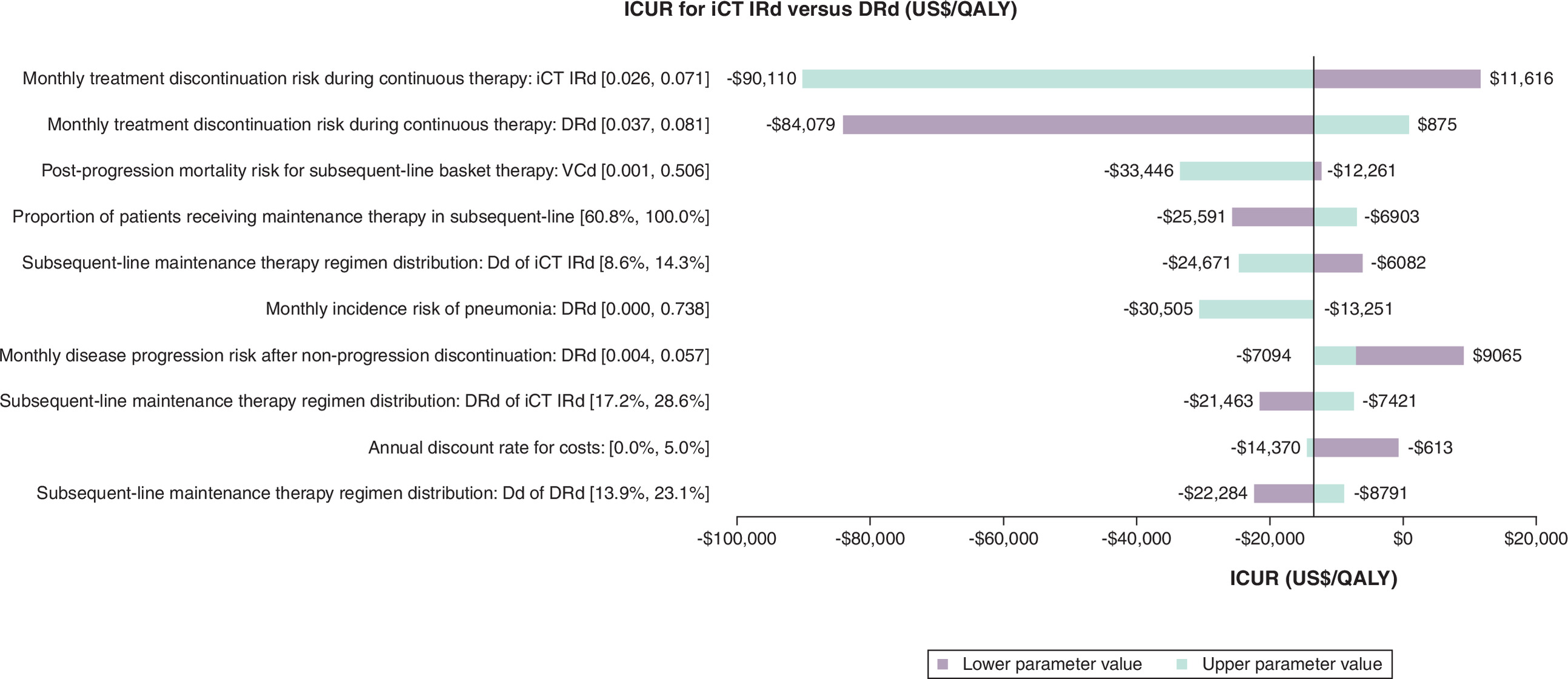
Figure 2. One-way sensitivity analysis assessing the impact of model input uncertainty on the cost-effectiveness of in-class transition to ixazomib, lenalidomide and dexamethasone relative to daratumumab, lenalidomide and dexamethasone for transplant-ineligible ndMM.
Dd: Daratumumab and dexamethasone; DRd: Daratumumab, lenalidomide and dexamethasone; iCT IRd: In-class transition to ixazomib, lenalidomide and dexamethasone; ICUR: Incremental cost–utility ratio; OWSA: One-way sensitivity analysis; VCd: Bortezomib, cyclophosphamide and dexamethasone.
Probabilistic sensitivity analysis
Based on ICURs generated from 5,000 Monte Carlo iterations, the PSA produced a median incremental cost of -$5729 (95% credible interval, -$25,500 to $20,021) and a median incremental health benefit of 0.479 QALYs (95% credible interval, -1.183 to 1.538) for iCT IRd compared with DRd. Because the PSA distribution of incremental QALYs crossed zero, ICUR-based summaries were interpreted cautiously, and PSA interpretation focused primarily on the joint distribution of incremental costs and QALYs, cost-effectiveness dominance and cost-effectiveness acceptability probabilities. The probability of cost-effectiveness dominance for iCT IRd over DRd was 55.0%. The cost-effectiveness proportions for iCT IRd under cost-effectiveness thresholds of one, two and three-times GDPPC were 79.2%, 88.0% and 91.3%, respectively. Scatter plots of generated ICURs from the PSA and cost-effectiveness acceptability curves for the two modalities are shown in Figures 3 & 4, respectively.
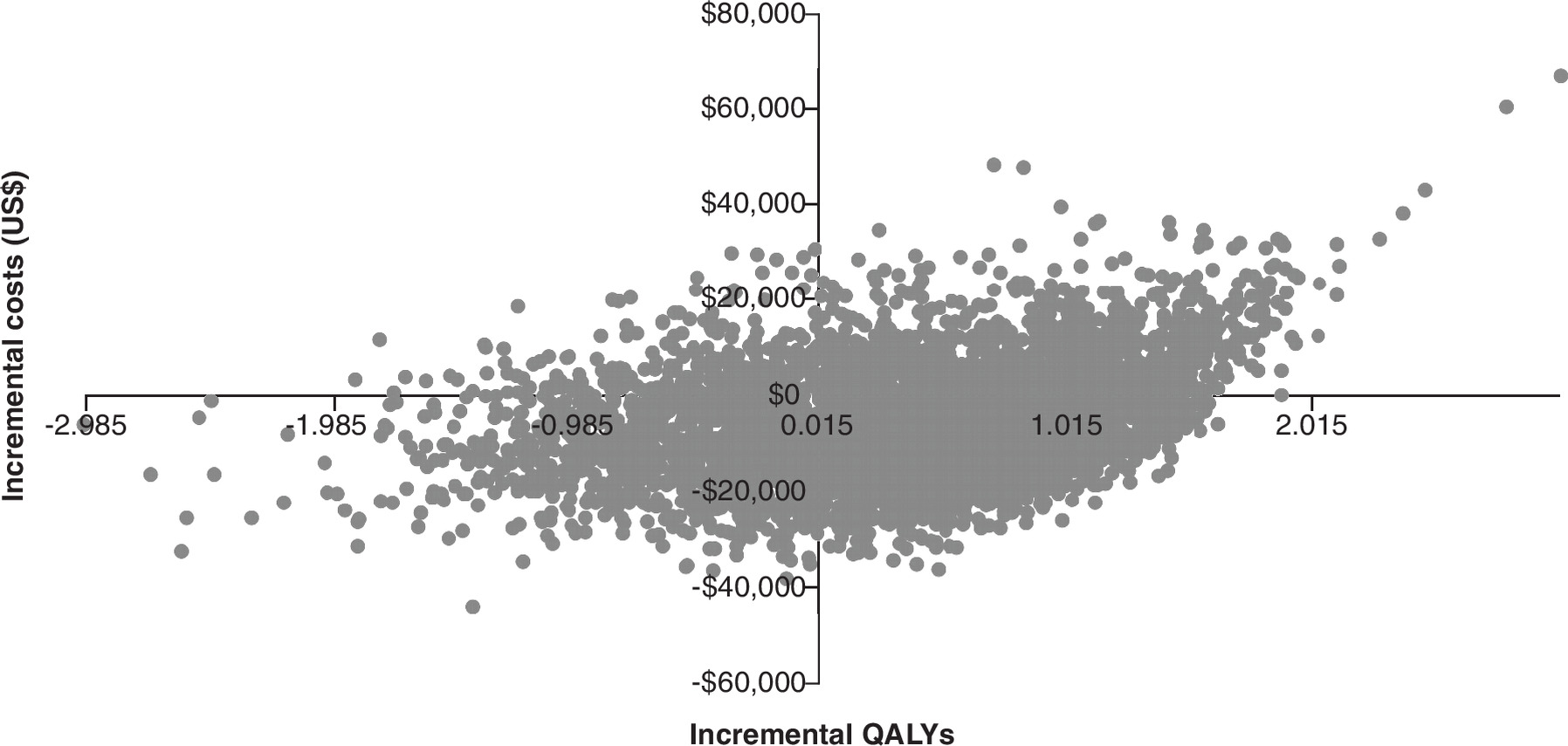
Figure 3. Scatter plot of generated incremental cost–utility ratios for in-class transition to ixazomib, lenalidomide and dexamethasone relative to daratumumab, lenalidomide and dexamethasone from the probabilistic sensitivity analysis.
DRd: Daratumumab, lenalidomide and dexamethasone; iCT IRd: In-class transition to ixazomib, lenalidomide and dexamethasone; PSA: Probabilistic sensitivity analysis; QALY: Quality-adjusted life year.
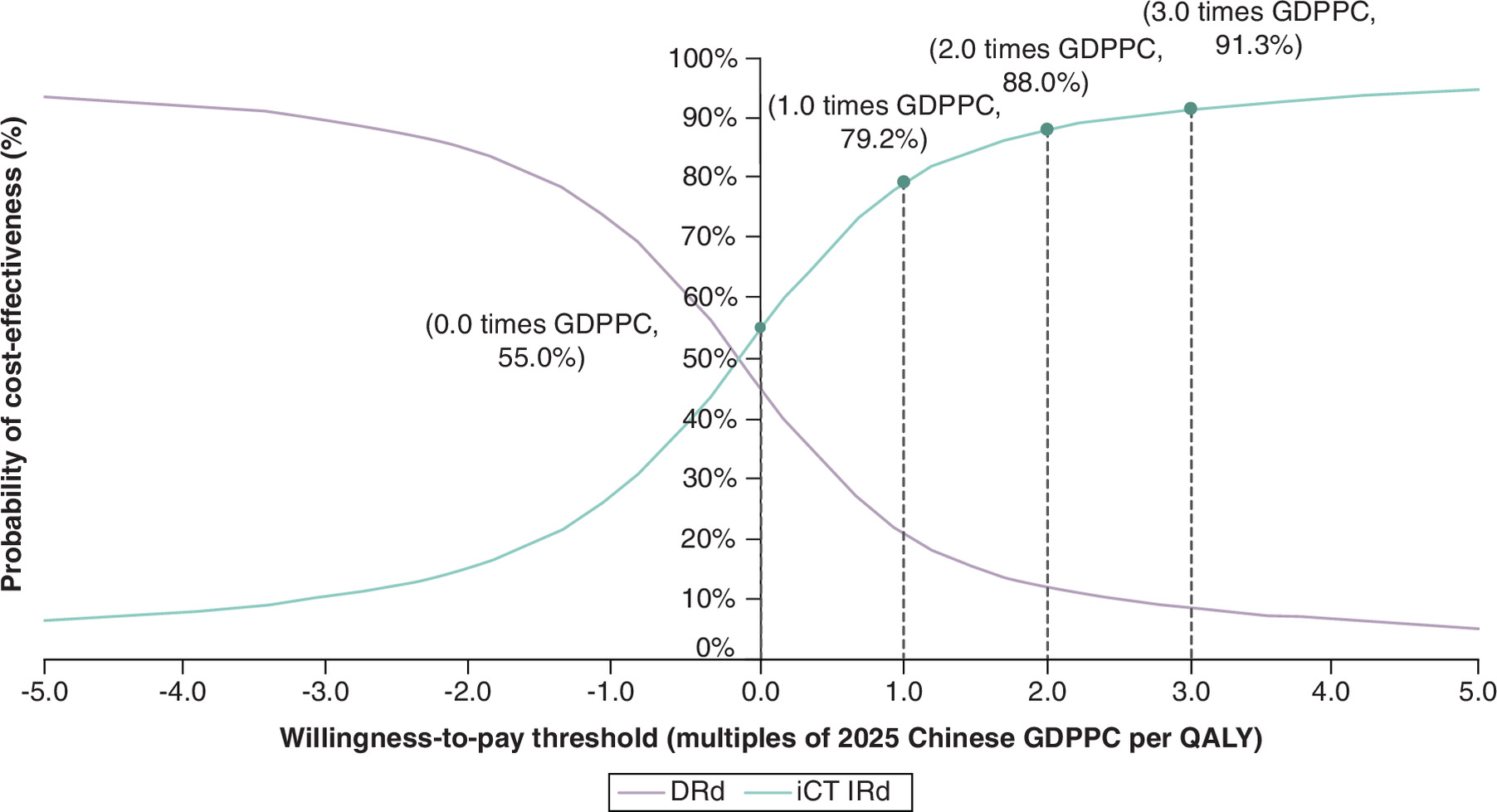
Figure 4. Cost-effectiveness acceptability curves for in-class transition to ixazomib, lenalidomide and dexamethasone versus daratumumab, lenalidomide and dexamethasone for transplant-ineligible newly diagnosed multiple myeloma under varying willingness-to-pay thresholds.
DRd: Daratumumab, lenalidomide and dexamethasone; GDPPC: Gross domestic product per capita; iCT IRd: In-class transition to ixazomib, lenalidomide and dexamethasone; ndMM: Newly diagnosed multiple myeloma.
Scenario analysis
After intravenous daratumumab was replaced with subcutaneous daratumumab in the CEA model, iCT IRd still yielded more health benefits than DRd (life years, 5.914 vs 5.177; QALYs, 4.724 vs 4.144), because administration route was assumed not to affect the effectiveness, safety or treatment compliance of induction and continuous therapy for the DRd modality. The lower drug acquisition cost of subcutaneous daratumumab reduced lifetime cumulative direct medical costs for DRd from $97,025 to $93,352. Because DRd was also included as an available subsequent-line option in the iCT IRd treatment basket, replacing intravenous with subcutaneous daratumumab also affected subsequent-line costs in the iCT IRd modality. However, cumulative lifetime direct medical costs for DRd remained higher than those for iCT IRd ($88,298) in the scenario analysis. Thus, iCT IRd remained cost-effective compared with DRd irrespective of daratumumab administration route. Detailed scenario analysis results are provided in Supplementary Appendix Table 8.
Discussion
This CEA projected potentially favorable clinical and economic outcomes for the all-oral iCT IRd modality compared with DRd under the base-case assumptions. These modeled differences primarily reflected the treatment-persistence inputs and the broader range of subsequent-line options represented for patients starting with iCT IRd, including the potential later use of antibody-based regimens. This finding reflects differences in treatment sequencing patterns rather than restrictions on access to subsequent effective therapies in the DRd group. Sensitivity analyses supported the probabilistic value of sequential oral modality, which showed a 91.3% probability of being cost-effective under the recommended willingness-to-pay threshold of three-times GDPPC, while also demonstrating uncertainty in long-term health benefits. Scenario analysis further suggested that cost-effectiveness findings were not materially changed by daratumumab administration route.
Oral regimens can ease common adherence barriers, including frequent healthcare visits and administration challenges associated with injectable treatments [11]. In the context of China's Diagnosis-Related Group (DRG) system, oral therapies may reduce hospital-related resource utilization, including inpatient stays and associated healthcare expenditures, thereby improving hospital resource efficiency. These findings are qualitatively supported by broader oncology adherence literature. For example, European multicenter real-world evidence has reported that oral regimens may reduce logistical time burden for patients and caregivers compared with injectable pathways [35]. Although these external data do not directly validate the risk inputs encoded in the Markov model, they provide behavioral context for why an all-oral sequence may support persistence in older populations [36,37]. Clinically, these findings underscore the importance of considering patient convenience and adherence when selecting treatment strategies, because these factors can influence long-term survival and therapeutic outcomes. In addition, these findings should be interpreted as evidence of the long-term value of the treatment strategy, not as proof of superior front-line efficacy of IRd over DRd. TOURMALINE-MM2 did not show a statistically significant PFS benefit for upfront IRd over Rd in transplant-ineligible ndMM [13], whereas MAIA established the clinical benefit of upfront DRd over Rd [6]. In this model, the greater simulated benefit of iCT IRd was mainly driven by treatment sequencing: iCT IRd preserved DRd as a later-line option, while upfront DRd excluded reuse of the same regimen after progression, though other daratumumab-containing options remained available where clinically appropriate. Thus, the results reflect the potential downstream value of sequencing effective therapies rather than a direct efficacy advantage of IRd. In practice, sequencing decisions should balance clinical evidence, economic efficiency, long-term treatment options and patient preferences [5,38–42].
SAE incidence associated with continuous therapy had a comparatively minor influence on the CEA. The model accounted for both the medical costs and disutility of SAEs, recognizing their potential effects on quality of life and healthcare utilization. Although differences in SAE incidence between IRd and DRd could affect outcomes, this effect was relatively small compared with survival and health utility inputs. Clinical studies suggest distinct safety profiles for the two regimens: DRd is associated with higher rates of infusion-related reactions and infections, whereas IRd has slightly higher incidences of gastrointestinal disturbances and rash [8,9]. In separate trials of rrMM populations, SAE-related treatment discontinuation was reported less frequently with IRd in TOURMALINE-MM1 than with DRd in POLLUX [31,43]. However, because these findings were derived from different trials and patient populations, they cannot establish a comparative tolerability advantage between IRd and DRd. Although the aggregate statistical impact of SAEs on the baseline ICUR appeared limited, management of these clinical complications remains important for high-risk subgroups. Transplant-ineligible patients with severe baseline renal impairment or high-risk cytogenetic abnormalities may be particularly vulnerable to drug-induced nephrotoxicity or severe hematologic toxicities [5,44]. In clinical practice, tailored dosing and close toxicity monitoring are important to preserve tolerability, prevent premature discontinuation, and maintain adherence in these fragile patient subsets [5]. The currently available evidence was insufficient to support a robust high-risk subgroup scenario analysis in this model. As larger real-world datasets become available, future studies should evaluate the cost-effectiveness of iCT IRd versus DRd in clinically relevant high-risk subgroups, including patients with renal impairment, high-risk cytogenetic abnormalities or elevated infection risk.
Sensitivity analyses demonstrated substantial uncertainty in the magnitude and direction of the projected incremental health benefit. In the OWSA, the incremental QALY for iCT IRd became negative when the monthly progression risk after nonprogression discontinuation of DRd was varied to the lower boundary of its confidence interval. In addition, 26.7% of PSA simulations generated negative incremental QALYs, and the 95% credible interval for incremental QALYs crossed zero. These findings indicate that the model did not consistently project a clinical advantage of iCT IRd over DRd. Although iCT IRd had a 55.0% probability of cost-effectiveness dominance and a 91.3% probability of being cost-effective under the recommended willingness-to-pay threshold of three-times GDPPC [18], these probabilities incorporate both costs and health outcomes and should not be interpreted as probabilities of clinical superiority. The findings therefore suggest that iCT IRd may offer favorable economic value under the modeled assumptions, while its comparative long-term health benefit remains uncertain.
This study underscores the potential clinical and policy relevance of iCT IRd in managing transplant-ineligible ndMM. Across sensitivity analyses, iCT IRd remained a potentially cost-effective treatment-sequencing option under the modeled assumptions, although the magnitude and direction of the comparative long-term health benefit remained uncertain. The oral administration of iCT IRd may reduce logistical and time burdens associated with injection-based therapy; however, improved adherence and patient satisfaction were not directly evaluated in this study. Oral regimens may also reduce economic pressures by lowering costs related to hospital visits, infusion-related care, and caregiver support [45]. These advantages support consideration of iCT IRd as a patient-centered and potentially cost-effective treatment modality that addresses both clinical and systemic healthcare challenges in China.
Several limitations should be considered in this study. First, no real-world evidence directly compared compliance and effectiveness between iCT IRd and DRd, so the analysis relied on extrapolated data and assumptions that may not fully reflect routine practice. Second, results were sensitive to key inputs, including treatment discontinuation, disease progression and relapse-related discontinuation; PSA uncertainty may also be incomplete for parameters without empirical variance estimates. Third, the subsequent-line treatment baskets relied on structural assumptions regarding regimen availability, exclusion of an identical previously used regimen, and allocation across the remaining treatment options. Complete longitudinal evidence was unavailable to determine the actual probability, timing, or order of subsequent treatments after iCT IRd or upfront DRd. In clinical practice, treatment selection may depend on prior response, duration of response, intolerance, drug resistance, patient characteristics, reimbursement policies, regional availability and physician preference. The modeled downstream benefit associated with preserving DRd for later use is therefore assumption-dependent and may be smaller or absent under alternative real-world sequencing patterns. Fourth, long-term survival estimates should also be interpreted cautiously. Because IPD and complete Kaplan–Meier curves were unavailable, median PFS and OS were converted into constant monthly transition probabilities under an exponential assumption, preventing formal survival-curve fitting, alternative distribution testing, or external validation against Chinese registry data. Because hazards in oncology may vary over time, this constant-hazard assumption may not fully capture changes in progression or mortality risk over the disease course. Finally, the absence of IPD prevented MAIC or STC adjustment, so evidence synthesis relied on single-arm meta-analyses that may retain residual confounding. Despite the use of random-effects models, parameter-specific geographic restrictions, and study-quality assessment, residual heterogeneity and confounding across the pooled observational studies may remain and may limit the transferability of model inputs to Chinese clinical practice. These methods can reduce but cannot eliminate uncertainty arising from differences in study populations, settings and outcome definitions, and they cannot replace adjusted comparative evidence. Future head-to-head real-world studies are needed to refine inputs and validate model findings.
In conclusion, iCT IRd may represent a cost-effective and patient-centered sequencing option for transplant-ineligible ndMM in China, with potential lifetime survival and QALY benefits versus DRd under modeled real-world assumptions. These findings highlight the importance of treatment persistence and strategic sequencing, including preservation of effective regimens for later lines of therapy. However, results should be interpreted cautiously given limited comparative real-world evidence, input uncertainty and model assumptions. Further real-world studies are needed to validate these findings and inform clinical and reimbursement decisions.
Summary points
•
In-class transition to ixazomib, lenalidomide and dexamethasone was projected to generate greater lifetime health benefits and lower lifetime direct medical costs than daratumumab, lenalidomide and dexamethasone under the base-case assumptions, suggesting that it may be a dominant strategy.
•
Results were most sensitive to assumptions about treatment discontinuation and post-discontinuation disease progression.
•
Probabilistic sensitivity analysis suggested that in-class transition to ixazomib, lenalidomide and dexamethasone IRd may be cost-effective under commonly used Chinese willingness-to-pay thresholds, although 26.7% of simulations projected fewer quality-adjusted life years than daratumumab, lenalidomide and dexamethasone.
•
Scenario analysis suggested that the findings were not materially affected by the administration route of daratumumab.
•
The results highlight the potential importance of treatment sequencing and persistence, while the projected downstream benefit remains dependent on the model’s assumptions regarding subsequent treatment availability.
•
Findings should be interpreted cautiously given uncertainty in key inputs and the need for further comparative real-world evidence.
Author contributions
G Zuo, A Liu and Z Zhu were responsible for study conception and design, acquisition of data, data analysis and drafting and revision of the manuscript. L Bao and L Liu were responsible for acquisition of data, data analysis and drafting and revision of the manuscript. Y Gao and Wendong Chen were responsible for data analysis, and drafting and revision of the manuscript. R Fu and Wenming Chen were responsible for data analysis, revision of the manuscript and study supervision. All authors provided final approval of the version to be published and agree to be accountable for all aspects of the work.
Acknowledgments
The authors thank all individuals who contributed to the study.
Financial disclosure
Financial support for this research, including the Article Processing Charge, was provided by Takeda (China) International Trading Co., Ltd. The authors have received no other financial and/or material support for this research or the creation of this work apart from that disclosed.
Competing interests disclosure
Y Gao is an employee of Takeda (China) International Trading Co., Ltd. G Zuo has received speaker’s bureau fees from Takeda and research funding from Takeda. Wendong Chen and Wenming Chen have received research funding from Takeda. The authors have no other competing interests or relevant affiliations with any organization or entity with the subject matter or materials discussed in the manuscript apart from those disclosed.
Writing disclosure
Medical writing support for the development of this manuscript, under the direction of the authors, was provided by Qianyi Gong MSc, an employee of Changsha Normin Health Technology Ltd., in accordance with the Good Publication Practice (GPP 2022 update) guidelines (DeTora LM et al. Ann. Intern. Med. 2022;175:1298–1304). Writing assistance was funded by Takeda (China) International Trading Co., Ltd., and scientific review of the manuscript was provided by Takeda Pharmaceutical Company Limited.
Ethical conduct of research
Not applicable. This study is based on publicly available data and literature; no human participants or animal experimental investigations were directly involved by the authors.
Data sharing statement
The authors certify that this manuscript reports a health economic evaluation based on real-world data and publicly available literature. No individual patient data were used in this study. The data used and analyzed in this study are available from the respective publications and public data sources.
Open access
This work is licensed under the Attribution-NonCommercial-NoDerivatives 4.0 Unported License. To view a copy of this license, visit https://creativecommons.org/licenses/by-nc-nd/4.0/
Supplementary Material
File (supplementary material.docx)
References
Papers of special note have been highlighted as: • of interest
1.
Dou X, Duan G, Zhong Y et al. The burden of multiple myeloma in China: trends from 1990 to 2021 and forecasts for 2050. Cancer Lett. 611, 217440 (2025).
2.
Puertas B, Gonzalez-Calle V, Sobejano-Fuertes E et al. Novel agents as main drivers for continued improvement in survival in multiple myeloma. Cancers (Basel) 15(5), 1558 (2023).
3.
Rodriguez-Lobato LG, de Daniel A, Pereira A et al. Attrition rates and treatment outcomes in multiple myeloma: real-world data over a 40-year period. Blood Cancer J. 15(1), 103 (2025).
4.
Maples KT, Scott SA, Lonial S. Novel approaches to the treatment of multiple myeloma. Clin. Adv. Hematol. Oncol. 21(5), 247–256 (2023).
5.
Branch CMDAHP, Branch CMAH. Guidelines for the diagnosis and management of multiple myeloma in China (2024 revision). Zhonghua Nei Ke Za Zhi 63(12), 1186–1195 (2024).
• Provides the most recent Chinese clinical guideline context for multiple myeloma (MM) diagnosis and treatment, including recommended treatment options for transplant-ineligible newly diagnosed MM.
6.
Facon T, Kumar SK, Plesner T et al. Daratumumab, lenalidomide, and dexamethasone versus lenalidomide and dexamethasone alone in newly diagnosed multiple myeloma (MAIA): overall survival results from a randomised, open-label, Phase III trial. Lancet Oncol. 22(11), 1582–1596 (2021).
7.
Tai M-H, Cai Q, Fu AZ, Khare V, Kaila S. Real-world patient characteristics and treatment outcomes among newly diagnosed multiple myeloma patients initiating daratumumab, lenalidomide, and dexamethasone as first-line therapy. Blood 138(Suppl. 1), 1979 (2021).
8.
McCullough KB, Hobbs MA, Abeykoon JP, Kapoor P. Common adverse effects of novel therapies for multiple myeloma (MM) and their management strategies. Curr. Hematol. Malig. Rep. 13(2), 114–124 (2018).
9.
Mikulski D, Kedzior MK, Mirocha G et al. Predictors and profile of severe infectious complications in multiple myeloma patients treated with daratumumab-based regimens: a machine learning model for pneumonia risk. Cancers (Basel) 16(21), 3709 (2024).
10.
Higano CS, Hafron J. Adherence with oral anticancer therapies: clinical trial vs real-world experiences with a focus on prostate cancer. J. Urol. 209(3), 485–493 (2023).
11.
Bullock JM. Barriers to adherence to oral drug regimens in oncology and strategies for improvement. Clin. Adv. Hematol. Oncol. 20(2), 75–77 (2022).
12.
Liu A, Yu H, Hou R et al. Assessment of prolonged proteasome inhibition through ixazomib-based oral regimen on newly diagnosed and first-relapsed multiple myeloma: a real-world Chinese cohort study. Cancer Med. 13(9), e7177 (2024).
• Provides Chinese real-world evidence on ixazomib-based oral therapy following bortezomib-based induction, supporting the clinical relevance of the iCT IRd treatment strategy evaluated in this model.
13.
Facon T, Venner CP, Bahlis NJ et al. Oral ixazomib, lenalidomide, and dexamethasone for transplant-ineligible patients with newly diagnosed multiple myeloma. Blood 137(26), 3616–3628 (2021).
14.
Husereau D, Drummond M, Augustovski F et al. Consolidated Health Economic Evaluation Reporting Standards 2022 (CHEERS 2022) Statement: updated reporting guidance for health economic evaluations. Value Health 25(1), 3–9 (2022).
• Provides the reporting framework used to structure this economic evaluation and ensure transparent presentation of model assumptions, inputs, uncertainty analyses and study findings.
15.
Ball G, Lemieux C, Cameron D, Seftel MD. Cost-effectiveness of brexucabtagene autoleucel versus best supportive care for the treatment of relapsed/refractory mantle cell lymphoma following treatment with a Bruton's tyrosine kinase inhibitor in Canada. Curr. Oncol. 29(3), 2021–2045 (2022).
16.
van de Wetering G, Ignacio T, Dhanda D et al. Modification of treatment-sequence model with a customizable number of treatments to better reflect contemporary and future clinical practice in moderate to severe psoriasis. J. Med. Econ. 25(1), 421–427 (2022).
17.
Briggs A, Claxton K, Sculpher M. Decision Modelling for Health Economic Evaluation. Oxford University Press, UK (2006).
18.
Wu J, Liu GG. China Guidelines for Pharmacoeconomic Evaluations 2025 (Chinese-English Version). China Planning Press, China Market Press, Beijing (2025).
• Provides the China-specific methodological basis for pharmacoeconomic evaluation, including discounting, willingness-to-pay threshold interpretation, and the joint interpretation of base-case and probabilistic sensitivity analyses.
19.
Lu J, Chen W. Cost–effectiveness of lenalidomide plus low-dose dexamethasone for newly diagnosed multiple myeloma patients ineligible for stem cell transplantation in China. J. Comp. Eff. Res. 8(12), 979–992 (2019).
20.
Huang D, Zhu Y, Xiao Y et al. Cost-utility analysis of dexamethasone combined with bortezomib and lenalidomide in the treatment of newly diagnosed multiple myeloma. Chinese Pharmacy 33(16), 2001–2011 (2022).
21.
Xu Y, Xu W, Chen J et al. Quality of life and related factors in patients with multiple myeloma during maintenance treatment. Zhongguo Shi Yan Xue Ye Xue Za Zhi 27(1), 96–103 (2019).
22.
Wu W, Ding S, Mingming Z et al. Cost effectiveness analysis of CAR-T cell therapy for patients with relapsed/refractory multiple myeloma in China. J. Med. Econ. 26(1), 701–709 (2023).
23.
Hu S, Lu J, Feng Y et al. Cost-effectiveness analysis of lenalidomide combined with low-dose dexamethasone for the treatment of relapsed or refractory multiple myeloma. Chinese Medical Insurance (9), 51–57 (2017).
24.
Zeng X, Liu Q, Peng L et al. Cost-effectiveness analysis of adding daratumumab to a regimen of bortezomib, melphalan, and prednisone in newly diagnosed multiple myeloma. Adv. Ther. 38, 2379–2390 (2021).
25.
Suzuki N, Okuyama T, Akechi T et al. Symptoms and health-related quality of life in patients with newly diagnosed multiple myeloma: a multicenter prospective cohort study. Jpn J. Clin. Oncol. 52(2), 163–169 (2022).
26.
Cai H, Zhang L, Li N et al. Cost-effectiveness analysis on binary/triple therapy on the basis of ixazomib or bortezomib for refractory or relapsed multiple myeloma. Leuk. Lymphoma 60(12), 2951–2959 (2019).
27.
Rifkin RM, Girnius SK, Noga SJ et al. In-class transition (iCT) of proteasome inhibitor-based therapy: a community approach to multiple myeloma management. Blood Cancer J. 13(1), 147 (2023).
• Describes the in-class transition concept for proteasome inhibitor-based therapy and provides real-world support for transitioning from injectable to oral proteasome inhibitor-based treatment.
28.
Gordan LN, Tan CR, Vescio R et al. Progression-free survival of daratumumab versus bortezomib triplet combination with lenalidomide and dexamethasone in transplant ineligible patients with newly diagnosed multiple myeloma: TAURUS chart review study. Clin. Lymphoma Myeloma Leuk. 24(1), 55–63 (2024).
29.
Hansen DK, Gautam S, Lafeuille MH et al. Comparison of time to next treatment or death between front-line daratumumab, lenalidomide, and dexamethasone (DRd) and bortezomib, lenalidomide, and dexamethasone (VRd) in transplant ineligible patients with multiple myeloma. Blood 142, 543 (2023).
• Provides real-world evidence on treatment persistence and time to next treatment or death for front-line daratumumab, lenalidomide and dexamethasone (DRd), supporting the real-world parameterization of DRd continuous therapy in the model.
30.
Han X, Jiang X, He J et al. Clinical outcomes of pomalidomide-based and daratumumab-based therapies in patients with relapsed/refractory multiple myeloma: a real-world cohort study in China. Cancer Med. 13(9), e7232 (2024).
31.
Suzuki K, Dimopoulos MA, Takezako N et al. Daratumumab, lenalidomide, and dexamethasone in East Asian patients with relapsed or refractory multiple myeloma: subgroup analyses of the Phase III POLLUX study. Blood Cancer J. 8(4), 41 (2018).
32.
Siebert U, Alagoz O, Bayoumi AM et al. State-transition modeling: a report of the ISPOR-SMDM modeling good research practices task force-3. Value Health 15(6), 812–820 (2012).
33.
Szende A, Janssen B, Cabases J. Self-reported population health: an international perspective based on EQ-5D. In: Self-Reported Population Health: An International Perspective based on EQ-5D. Szende A, Janssen B, Cabases J (Eds). Springer, The Netherlands (2014).
34.
Mateos MV, Nahi H, Legiec W et al. Subcutaneous versus intravenous daratumumab in patients with relapsed or refractory multiple myeloma (COLUMBA): a multicentre, open-label, non-inferiority, randomised, Phase III trial. Lancet Haematol. 7(5), e370–e380 (2020).
• Supports the scenario analysis comparing intravenous and subcutaneous daratumumab by providing evidence of comparable clinical outcomes between administration routes.
35.
Chari A, Romanus D, DasMahapatra P et al. Patient-reported factors in treatment satisfaction in patients with relapsed/refractory multiple myeloma (RRMM). Oncologist 24(11), 1479–1487 (2019).
36.
Zhang L, Heng Y, Hu H. Advances in research on factors affecting adherence to oral chemotherapy drugs in cancer patients. J. Nurses Training 34(5), 422–425 (2019).
37.
Nunnelee J, Cottini F, Zhao Q et al. Early versus late discontinuation of maintenance therapy in multiple myeloma. J. Clin. Med. 11(19), 5794 (2022).
38.
Palumbo A, Chanan-Khan A, Weisel K et al. Daratumumab, bortezomib, and dexamethasone for multiple myeloma. N. Engl. J. Med. 375(8), 754–766 (2016).
39.
Mateos MV, Sonneveld P, Hungria V et al. Daratumumab, bortezomib, and dexamethasone versus bortezomib and dexamethasone in patients with previously treated multiple myeloma: three-year follow-up of CASTOR. Clin. Lymphoma Myeloma Leuk. 20(8), 509–518 (2020).
40.
Kumar SK, Callander NS, Alsina M et al. Multiple myeloma, Version 3.2017, NCCN Clinical Practice Guidelines in Oncology. J. Natl Compr. Canc. Netw. 15(2), 230–269 (2017).
41.
Dimopoulos MA, Moreau P, Terpos E et al. Multiple myeloma: EHA-ESMO Clinical Practice Guidelines for diagnosis, treatment and follow-up. Ann. Oncol. 32(3), 309–322 (2021).
42.
Thomas C, Ailawadhi S, Popat R et al. Treatment preferences of patients with relapsed or refractory multiple myeloma in the United States, United Kingdom, Italy, Germany, France, and Spain: results from a discrete choice experiment. Front. Med. (Lausanne) 10, 1271657 (2023).
43.
Hou J, Jin J, Xu Y et al. Randomized, double-blind, placebo-controlled Phase III study of ixazomib plus lenalidomide-dexamethasone in patients with relapsed/refractory multiple myeloma: China Continuation study. J. Hematol. Oncol. 10(1), 137 (2017).
44.
Sonneveld P, Avet-Loiseau H, Lonial S et al. Treatment of multiple myeloma with high-risk cytogenetics: a consensus of the International Myeloma Working Group. Blood 127(24), 2955–2962 (2016).
45.
Fazeli MS, Pushkarna D, Howarth A et al. Indirect costs of oral versus non-oral therapies in hematologic malignancies: a systematic literature review. Blood 136(Suppl. 1), 30–31 (2020).
Information & Authors
Information
Published In
Copyright
© 2026 The authors. This work is licensed under the Attribution-NonCommercial-NoDerivatives 4.0 Unported License
History
Received: 3 July 2026
Accepted: 28 August 2026
Published online: 13 October 2026
Keywords:
Topics
Authors
Metrics & Citations
Metrics
Article Usage
Article usage data only available from February 2023. Historical article usage data, showing the number of article downloads, is available upon request.
Citations
How to Cite
Real-world cost-effectiveness of sequential therapy of in-class transition to ixazomib versus daratumumab for transplant-ineligible newly diagnosed multiple myeloma in China. (2026) Journal of Comparative Effectiveness Research. DOI: 10.57264/cer-2026-0146
Export citation
Select the citation format you wish to export for this article or chapter.