

Social return on investment-informed analysis of immunoglobulin therapy for inborn errors of immunity in France
Abstract
Aim: Social return on investment (SROI) is a framework that quantifies both economic and societal value relative to investment. Inborn errors of immunity (IEI), also referred to as primary immunodeficiencies, are chronic conditions that impose substantial clinical and societal burdens, which are underrepresented in traditional economic evaluations. This study aimed to estimate the SROI of immunoglobulin (IG) therapy compared with non-IG therapy (alternative treatments or no treatment) for patients with IEI in France. Materials & methods: A closed-cohort model was developed to compare IG therapy with non-IG therapy over a 3-year horizon. The model included direct healthcare costs (drug acquisition, administration and healthcare resource use) and indirect societal costs (productivity loss, informal care, mental health support, transportation, sick leave and lost tax revenue). Four perspectives were evaluated, ranging from most to least inclusion of societal elements: Societal, Collective, Complete Payer and National Health Insurance. Inputs were derived from French real-world data, published literature and expert validation. Results: Over 3 years, IG therapy generated positive returns across all perspectives, with SROI ratios ranging from €1.10 to €1.30, indicating that each euro invested returned more than €1 in combined value. Total savings ranged from €488.0 million to €581.9 million, driven by reduced healthcare and societal costs in the IG therapy scenario. The societal perspective yielded the highest SROI and greatest savings, reflecting broad inclusion of societal aspects. Conclusion: IG therapy provides substantial value in IEI management, where both economic and societal savings outweigh the cost of IG therapy. These findings support the role of IG therapy as a high-value intervention and underscore the importance of incorporating SROI into decision-making to capture benefits beyond direct medical costs.
Plain language summary: A plain language summary of the social return on investment of immunoglobulin therapy for inborn errors of immunity in France
What is this summary about?
People with inborn errors of immunity (IEI) have immune systems that do not work properly and are at greater risk of infections than the general population. Treating IEIs can disrupt daily life, resulting in inconvenience and costs to patients, families and society. Immunoglobulin (IG) therapy is a first-line long-term treatment for many types of IEI. This analysis estimated the overall value of IG therapy for treating IEI in France relative to its costs, using a social return on investment framework. This analysis applied four perspectives, ranging from those that included predominantly medical costs to those that also considered wider impacts to society, such as missed workdays.
What were the results?
Overall, IG therapy provided more value than it cost. For every euro spent, IG therapy returned more than €1 in combined health and societal benefits. Over 3 years, savings ranged from €488.0 million to €581.9 million depending on the perspective. When analyzing IG therapy under the broadest perspective that considered productivity loss, informal care, mental health support, transportation, sick leave and lost tax revenue, IG therapy showed the highest return compared with those not treated with IG therapy.
What do the results mean?
Among patients in France with IEI, IG therapy not only helps people stay healthier and live longer but also reduces costs for society at-large. These findings show why healthcare decisions should not only consider the price and costs of the treatment, but also the wider societal and economic benefits.
Economic evaluations play a critical role in informing healthcare decision-making, particularly in the context of resource allocation and reimbursement. Traditionally, economic evaluations have been conducted from a healthcare payer perspective, focusing on direct medical costs and health outcomes. Societal elements, such as productivity loss, are not widely accepted by Health Technology Assessment (HTA) bodies in Europe or North America, and often excluded in base case analyses [1]. However, there is growing recognition of the importance of adopting a societal perspective that captures the broader economic and societal consequences of health interventions [1–3]. The societal perspective is especially relevant for chronic and complex conditions where the impact of a health intervention extends beyond the healthcare system to include productivity, caregiver burden, and social services utilization, considering the intervention as investment.
Social return on investment (SROI) is a framework that broadens traditional economic analyses by quantifying the broader societal value generated by an intervention [4]. Unlike conventional cost-effectiveness or budget impact models, which primarily focus on the incremental cost per unit of health benefits and affordability, respectively, SROI assigns monetary values to both the economic and societal benefits of an intervention, thereby assessing its value relative to the investment required [4]. SROI is expressed as a ratio of benefits to investments and is typically represented as the value created per unit cost spent, where an SROI greater than one is considered “positive” and signals that the intervention generates more societal and economic value than the cost of the intervention [5,6]. Conversely, an SROI value that is less than one suggests that the monetized societal and economic benefits may not completely offset the investment; however, this does not imply lack of value, as important health benefits such as improved quality of life, reduced disease burden and greater patient autonomy may still be realized [5–7]. There is currently no universal standard for an acceptable SROI cutoff due to a lack of consistency and variation of included parameters across studies [7,8]. Thus, while a higher SROI signals a stronger return on investment, it should be interpreted in light of the specific scope and assumptions of each analysis.
nInborn errors of immunity (IEIs), also referred to as primary immunodeficiencies, are a group of over 550 rare, genetic disorders characterized by defects in the immune system, often affecting B-cell function and antibody production [9–12]. A subset of IEIs include immunoglobulin (IG)-dependent disorders, which are caused by deficiencies or dysregulation of IGs, leading to immune deficiency, autoimmunity and an increased susceptibility to infection [13]. Although symptoms often present early in life, diagnosis is frequently delayed due to nonspecific clinical manifestations, limited awareness among nonspecialist clinicians and inconsistent access to immunological expertise [14]. The worldwide prevalence of IEIs is approximately 1 in 10,000, with up to 80% of cases remaining missed and undiagnosed [15]. This diagnostic gap contributes to prolonged disease progression, increased healthcare resource utilization (HCRU), and substantial societal costs [16].
Treatment for IEIs that involve antibody deficiencies typically includes IG replacement therapy, which helps to restore immune function and reduce infection frequency [17,18]. IG therapy can be administered intravenously (IVIG) or subcutaneously (SCIG), with SCIG often preferred due to its favorable safety profile and convenience for home administration [19–21]. Alternative management strategies for IEIs include antibiotics for infections, though this approach does not address the underlying IG deficit [22]. The chronic nature and broad societal consequences of IEI, ranging from substantial HCRU to lost productivity and caregiver strain, underscore the importance of evaluating IG therapy holistically. An economic analysis that captures outcomes beyond direct costs to the healthcare system, such as workforce participation, caregiver burden and social services utilization, is required to support cross-sectoral decision-making and determine if IG therapy is a strategic investment in public health.
The objective of this analysis was to develop an SROI-informed model to quantify the socioeconomic value of patients treated with IG therapy compared with those not treated with IG therapy (i.e., patients who are undiagnosed and untreated, or treated with alternate therapies) for IEI, with France used as a case study. This analysis aims to inform policymakers, health authorities and community stakeholders about the broader societal value of investing in IG therapy, especially in contexts where medicines for chronic treatment are usually only considered as ‘expenses’ rather than ‘investments’.
Materials & methods
Model framework
This analysis was informed by a literature review of existing SROI studies in healthcare [7,23–28]. While SROI has been increasingly applied to public health and social care programs, few studies have evaluated treatment-specific interventions using this framework. Most published SROI analyses adopt short time horizons (1–5 years) and vary widely in their inclusion of indirect costs and monetization methods. Commonly captured societal parameters include productivity losses, caregiver burden and transportation costs; however, detailed methodologies for quantifying these inputs remain limited [24,25,27]. Traditional SROI analyses in healthcare will often follow a six-step framework centered on the lived experiences of patients and caregivers through qualitative methods such as interviews or surveys [4,29]. SROI methodology does not impose a limit on the number or type of societal elements that may be included; the scope of included elements is determined by relevance to the therapeutic area and data availability. This analysis leveraged published literature to estimate indirect costs associated with IG-dependent conditions, without the use of primary qualitative data, such as interviews or surveys [4,29].
Model structure
The SROI-informed model employed a closed-cohort design to quantify the return on investment for patients with IEI treated with IG therapy compared with those not treated with IG therapy (i.e., patients who are undiagnosed and untreated, or treated with alternate therapies) in France (Figure 1). The model is composed of several input categories that are used to calculate the SROI, including: (i) population; (ii) market shares; (iii) acquisition costs; (iv) administration costs; (v) HCRU costs and (vi) societal costs. Given the broad scope of economic and societal domains, this analysis applied a structured and selective approach with societal parameters chosen based on their direct relevance to the patient journey, the availability of robust and indication-specific data, and precedent in other published SROI analyses. These included productivity losses due to missed workdays among patients and caregivers [30], potential mental health impacts requiring counseling, informal care needs, sick leave or unemployment allowances and lost tax revenue. These societal factors are often overlooked in traditional payer-centric models.
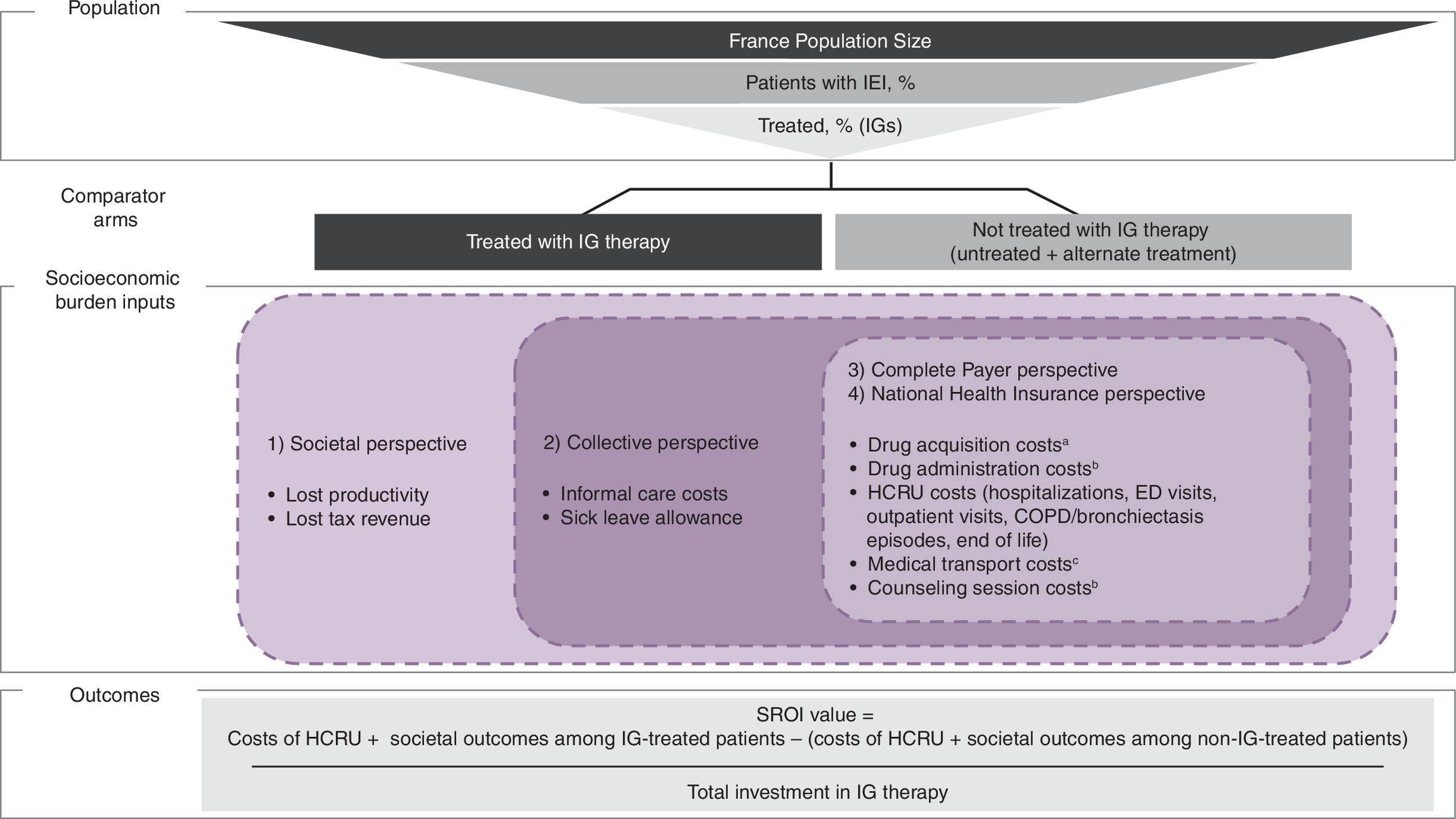
Figure 1. Model structure footnotes.
aDispensing fees applicable to the Complete Payer, Collective, and Societal perspectives only.
bNational Health Insurance perspective uses tariff-based valuation. The Complete Payer, Collective, and Societal perspectives uses production cost-based valuation.
cFor the French analysis, transportation costs are already included within individual costing parameters including drug administration, HCRU, and mental health counseling.
COPD: Chronic obstructive pulmonary disease; ED: Emergency department; HCRU: Healthcare resource utilization; IEI: Inborn errors of immunity; IG: Immunoglobulin; SROI: Social return on investment.
While the societal domain could encompass a wide array of potential impacts, the model intentionally excluded parameters that would require proxy or less tangible costs. These included parameters such as educational impacts (i.e., missed schooling for pediatric patients), missed family vacation due to disease burden or mental consequences, and environmental impacts related to treatment delivery. These exclusions were made due to limitations in data availability and lack of standardized valuation methods. By focusing on the most direct and quantifiable societal impacts, the model maintains methodological rigor and ensures that the estimated societal value remains grounded in evidence. This conservative scope supports the credibility of the analysis and its relevance to public decision-making, providing a range of economic impacts that should be taken into account as a first step of the objective to wider the vision of healthcare management as investment.
Cost savings were calculated as the difference in economic and societal costs between IG therapy-treated patients and those not treated with IG therapy (Figure 1). The total savings were compared with the total investment in IG therapy (i.e., IG therapy drug acquisition and administration costs). The results are expressed as an SROI ratio, quantifying the estimated societal value generated for every euro invested in therapy according to the following formula:
The model was developed in Microsoft Excel (Version: 2502; Build: 18526.20634) with visual basic for applications (VBA) programming.
Perspective
To reflect the diverse stakeholder interests and valuation frameworks relevant to health economic decision-making in France, the SROI model was developed according to four perspectives: Societal, Collective, Complete Payer and National Health Insurance. Each perspective incorporates a different set of cost elements and valuation methods, as summarized in Table 1, and allows for flexible scenario analysis and alignment with national HTA and policy evaluation standards.
| Costs | Societal perspective | Collective perspective | Complete Payer perspective | National Health Insurance perspective |
|---|---|---|---|---|
| Drug acquisition costs† | ✓ | ✓ | ✓ | ✓ |
| Drug administration costs | ✓‡ | ✓‡ | ✓‡ | ✓§ |
| HCRU costs | ||||
| • Hospitalizations | ✓ | ✓ | ✓ | ✓ |
| • ED visits | ✓ | ✓ | ✓ | ✓ |
| • Outpatient visits | ✓ | ✓ | ✓ | ✓ |
| • COPD/bronchiectasis | ✓ | ✓ | ✓ | ✓ |
| • End of life | ✓ | ✓ | ✓ | ✓ |
| Societal costs | ||||
| • Hourly wage | ✓ | X | X | X |
| • Cost for medical transport¶ | ✓ | ✓ | ✓ | ✓ |
| • Cost of 1 h counseling session | ✓‡ | ✓‡ | ✓‡ | ✓§ |
| • Informal care | ✓ | ✓ | X | X |
| • Daily sick leave/unemployment allowance | ✓ | ✓ | X | X |
| • Lost tax revenue | ✓ | X | X | X |
†
Dispensing fees were applicable to the Complete Payer, Collective and Societal perspectives only.
‡
Production cost-based valuation.
§
Tariff-based valuation.
¶
For the French analysis, transportation costs are included within individual costing parameters including drug administration, HCRU and mental health counseling.
COPD: Chronic obstructive pulmonary disease; ED: Emergency department; HCRU: Healthcare resource utilization.
The Societal perspective is the most comprehensive, capturing all direct and indirect costs, including drug acquisition, drug administration, HCRU, productivity loss, medical transportation, mental health counseling, informal care, sick leave or unemployment allowances and lost tax revenue. Notably, transportation costs are incorporated within individual costing parameters including drug administration, HCRU and mental health counseling. The Collective perspective, as defined by Haute Autorité de Santé (HAS; French HTA body), reflects the total resources consumed in the production of overall patient care across the domestic, healthcare and medico-social spheres [31]. This includes costs borne by public institutions and households, such as informal care and unemployment allowances, but excludes productivity losses; therefore, hourly wage and lost tax revenue were excluded in this perspective [31]. The Complete Payer perspective reflects the financial burden borne by payers related to drug acquisition and administration, and excludes productivity loss, informal care, sick leave or unemployment allowances and lost tax revenue [32]. Finally, the National Health Insurance perspective, aligned with HAS guidance for the healthcare system perspective, applies the same inclusion and exclusion of elements as the Complete Payer perspective; however, this perspective is distinguished by its valuation method of costs in France [31].
Under the Societal, Collective, and Complete Payer perspectives, production costs are used to value drug administration costs and mental health counseling sessions [33,34]. In contrast, under the National Health Insurance perspective, tariffs are used to value drug administration costs and mental health counseling sessions, assuming patients are covered under the ‘long-term/major illness’ status (Affection de Longue Durée, ALD), which provides 100% reimbursement of disease management by national health insurance [34,35]. The complete list of included and excluded cost elements by perspective are presented in Table 1.
Time horizon
A 3-year time horizon was selected to capture the SROI of IG therapy for IEI. Although IEI is a lifelong condition and IG therapy is often administered indefinitely, many published healthcare SROI studies use relatively short time horizons, typically ranging from 1 to 5 years [7,8,23–25]. A shorter duration was also chosen for this analysis to capture meaningful outcomes such as improvements in health status, reductions in HCRU and productivity gains, while avoiding the uncertainty associated with longer time frames, which aligns with SROI guidance [4]. This approach is conservative as it does not capture long-term benefits for outcomes that accumulate gradually. Additionally, a 3-year time horizon was considered appropriate for this analysis due to the availability and reliability of input data and is consistent with HAS methodological guidance, aligning with finance decision-making and budgeting cycles [31,36]. Results of this analysis are presented cumulatively over the 3-year period.
Population
This analysis focused on patients with both diagnosed or undiagnosed IEI. The population size was estimated using prevalence and diagnosis rates sourced from published literature and registry data [15,37–40]. The number of patients treated with IG therapy was calculated by applying the prevalence of IEI, the proportion of patients diagnosed and the proportion of diagnosed patients expected to receive IG therapy to the total population of France. To ensure comparability between treatment arms, the non-IG therapy arm was modeled with an equal population size and divided into two subgroups: diagnosed patients receiving alternative therapies and undiagnosed patients assumed to receive no treatment. The comparator was intentionally designed to reflect the heterogeneous real-world population of patients with IEI who do not receive IG therapy. Diagnosed patients receiving alternative therapies and undiagnosed patients receiving no treatment were modeled using subgroup-specific HCRU, mortality and societal inputs. Additional details on the population assumptions and model inputs are provided in Supplementary Table 1. This approach ensured that incremental costs and benefits were estimated consistently across both arms and allowed the model to capture the range of outcomes observed among patients not receiving IG therapy. The starting point for population estimation was the total population of France, adjusted for the proportion of individuals under 18 years of age. While the model was a closed-cohort design and did not include incident patients, annual mortality was incorporated to account for premature mortality risk associated with IEI. General population mortality rates were obtained from INSEE [38] and weighted according to the age distribution of the modeled population. Separate treatment-specific mortality multipliers were then applied to the general population mortality data to reflect the expected increase in mortality among treated and untreated patients. Undiagnosed and untreated patients in the non-IG therapy arm had a higher mortality risk than those treated with alternative therapies in the same arm and those treated with IG. Mortality inputs and assumptions are provided in Supplementary Table 1. Patient weight was considered to inform weight-based dosing costs. French population inputs and sources are summarized in Supplementary Table 1.
Cost inputs for the France analysis
To inform the denominator of the SROI equation, drug acquisition and administration costs for IG therapy were considered to calculate the investment in therapy. For the IG-treated arm, market shares were distributed across IVIG and SCIG baskets according to market research. For the non-IG-treated arm, diagnosed patients were assumed to receive antibiotics, while undiagnosed patients remained untreated. The numerator of the SROI equation included HCRU and societal elements for both IG and non-IG treatment arms to calculate the incremental savings.
Drug acquisition costs were based on recommended dosing regimens and published manufacturer prices (Prix Public Toutes Taxes Comprises, PPTTC), and included a value-added tax of 2.10% [41]. IG therapy dosing was weight-based, using average adult and pediatric weights informed by the EMA [42] and Agence nationale de sécurité du médicament et des produits de santé (ANSM) [43] guidance. Dispensing fees were applied for SCIG under the Complete Payer, Collective and Societal perspectives, based on a €2200 hospital retrocession margin fee [44]. Dosing and annual costs for IVIG and SCIG baskets are presented in Supplementary Table 1.
In France, there are typically four modes of care delivery including inpatient hospital care, outpatient hospital care, hospital at home and home healthcare provider [45]. Administration costs for IG therapy were estimated by site of care, where IVIG was modeled as administered through outpatient hospital care (as a conservative approach), and SCIG was modeled as administered at home by a nurse. For hospital outpatient administration, tariffs were based on GHM 28Z17Z (‘Chemotherapy for nontumoral conditions, outpatient sessions’), valued using France's L’Étude Nationale de Coûts à Méthodologie Commune (ENCC) data. Under the National Health Insurance perspective, reimbursement tariffs were applied; under the Societal, Collective, and Complete Payer perspectives, production costs were used. Transportation costs were added for hospital-based administration. A home healthcare provider is required for subcutaneous injections administered at home (mainly to deliver drug and ancillaries at home). For nurse-administered SCIG at home, the model applied a tariff per visit based on PERFADOM packages and incorporated additional nursing-related fees, including follow-up, consumables and the technical act for subcutaneous injection, in accordance with the Nomenclature Générale des Actes Professionnels (NGAP) tariff schedule published by the French National Health Insurance [46–49]. Administration costs are presented in Supplementary Table 1.
HCRU elements included high-impact events associated with IEI management, including hospitalizations, emergency department (ED) visits, outpatient visits, and complications such as chronic obstructive pulmonary disease (COPD) and bronchiectasis. Daily hospitalization costs (€90,471) were derived from ScanSanté’s national cost study in France, L’Étude Nationale des Coûts – Médecine, Chirurgie, Obstétrique (ENC-MCO), for Catégorie Majeure de Diagnostic (CMD 16M08 (Immunodeficiencies), weighted across severity levels and hospital types. ED visits were valued at €424 per visit, while outpatient visits were estimated at €254 per visit, with both costs including medical transportation. COPD and bronchiectasis episodes were valued at €340,083 € per episode, based on inflated historical cost data [50–52]. End-of-life costs were applied as a one-time expense of €3,701,936 in the year of death [53]. Annual frequency and costs of HCRU for IG and non-IG treatment (i.e., IVIG, SCIG, antibiotics and untreated) are presented in Supplementary Table 1.
The main societal elements in this analysis included patient and caregiver missed workday costs: due to treatment, HCRU and mental health counseling; patient missed workday costs due to premature mortality; cost for medical transportation, which was accounted for in hospital-based IVIG administration, HCRU events and mental health counseling sessions; sick leave or unemployment allowances; mental health counseling costs; informal care costs and lost tax revenue. Each societal element was informed by values sourced from French real-world data or proxy countries where local data were unavailable. A full list of societal elements, inputs, and assumptions are presented in Supplementary Table 1 and typically differed for patients treated with IVIG, SCIG, antibiotics and patients who are undiagnosed and untreated due to differences in the number of missed workdays (based on time spent receiving treatment in hospital, hospitalizations, ED visit time, outpatient visits, COPD/bronchiectasis episodes and mental health counseling sessions), premature mortality and frequency of mental health counseling sessions.
Model validation
Validation of the SROI model was undertaken to ensure methodological rigor and alignment with French healthcare practice. Expert validation was conducted by health economic experts in France, who reviewed the model structure, input data and perspective-specific cost allocations, ensuring that assumptions were consistent with French tariff schedules, clinical practice patterns and HAS methodological guidance.
Results
For patients with IEI in France, beyond individual clinical benefits, IG therapy generated positive economic and societal value across all perspectives, with SROI ratios exceeding 1.0 (Figure 2). Over a 3-year horizon, the SROI was 1.30 for the Societal perspective, 1.12 for the Collective perspective, 1.10 for the Complete Payer perspective and 1.15 for the National Health Insurance perspective. These findings indicate that for every €1 invested in IG therapy, more than €1 in combined economic and societal value was returned, demonstrating a favorable return on investment.
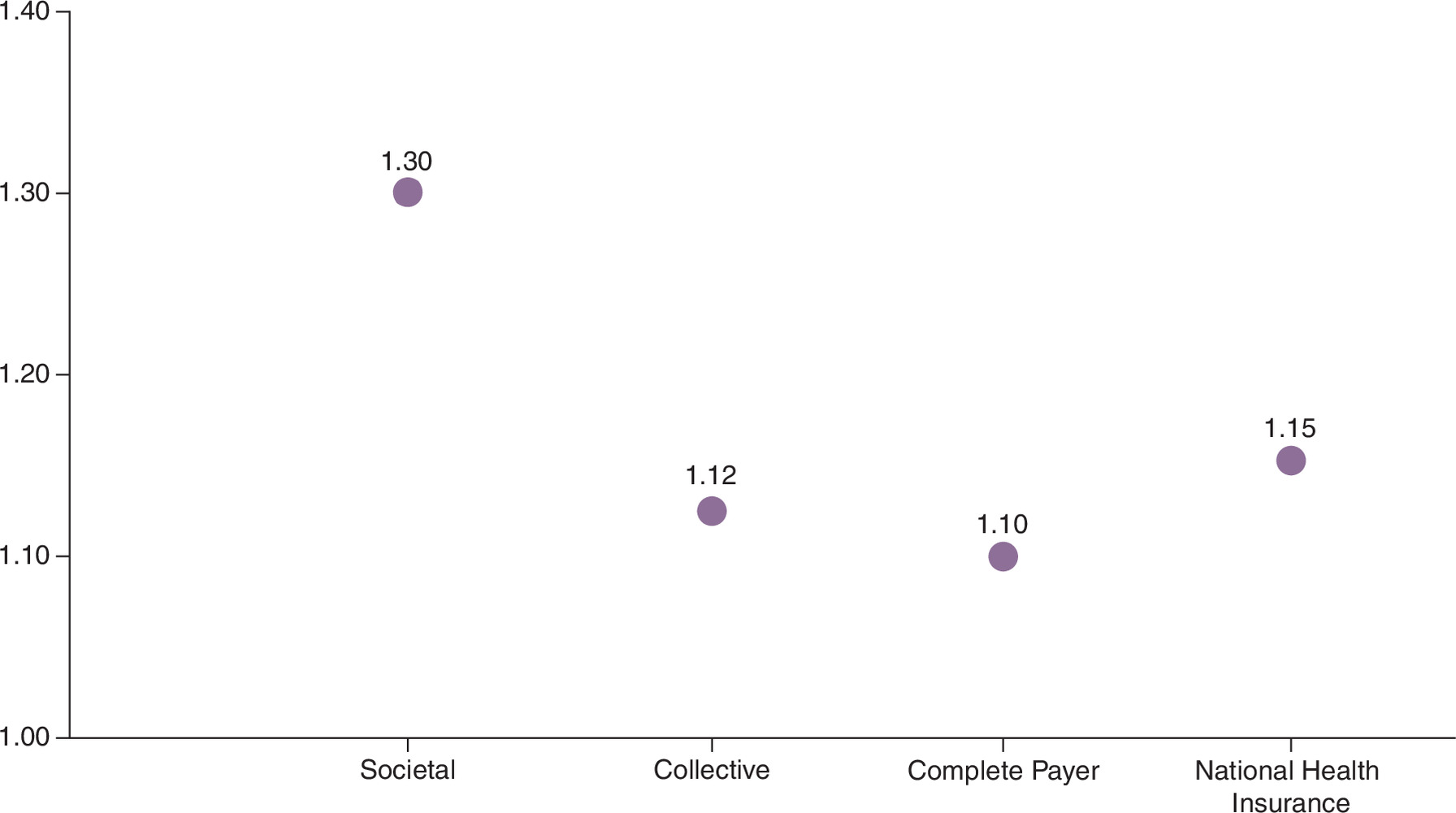
Figure 2. Three-year SROI by perspective.
The SROI ratio is calculated with economic and societal savings as the numerator and the total investment in IG therapy as the denominator. For the Societal perspective, savings are €581,885,227, while the investment is €447,493,096. For the Collective perspective, savings are €503,427,572, while the investment is €447,493,096. For the Complete Payer perspective, savings are €493,623,005, while the investment is €447,493,096. For the National Health Insurance perspective, savings are €487,992,011, while the investment is €423,159,213.
IG: Immunoglobulin; SROI: Social return on investment.
The magnitude of savings varied by perspective, with differences driven by societal savings as direct economic savings were consistent across perspectives (Figure 3). The Societal perspective accrued the highest economic and societal savings, reflecting the broadest inclusion of societal cost components (Table 1). Under the Societal perspective, total economic and societal savings reached €581.9 million over a 3-year time horizon, driven by cost savings in productivity losses among patients and caregivers, sick leave or unemployment allowances, and lost tax revenue. In contrast, the Collective perspective yielded €503.4 million in economic and societal cost savings, which was €78.5 million less compared with the Societal perspective, since costs associated with productivity loss among patients and caregivers, as well as lost tax revenue are not considered. The Complete Payer and National Health Insurance perspectives include the same cost elements, which are the fewest compared with the other perspectives; however, they differ in valuation methods for mental health counseling sessions: the Complete Payer perspective applies production costs, whereas the National Health Insurance perspective uses tariff-based valuations. Consequently, savings under these perspectives totaled €493.6 million and €488.0 million, respectively, representing €88.3 million and €93.9 million less than the Societal perspective. Three-year cost savings by cost class and perspective are presented in Figure 2 and further disaggregated by treatment arm and cost class in Figure 3. Although the savings under the National Health Insurance perspective are smaller than those observed with the Complete Payer perspective, the SROI ratio is higher. This is attributable to the lower investment in IG therapy under the National Health Insurance perspective, reflecting differences in the valuation of administration costs and the absence of dispensing fees for drug acquisition (Figure 2).
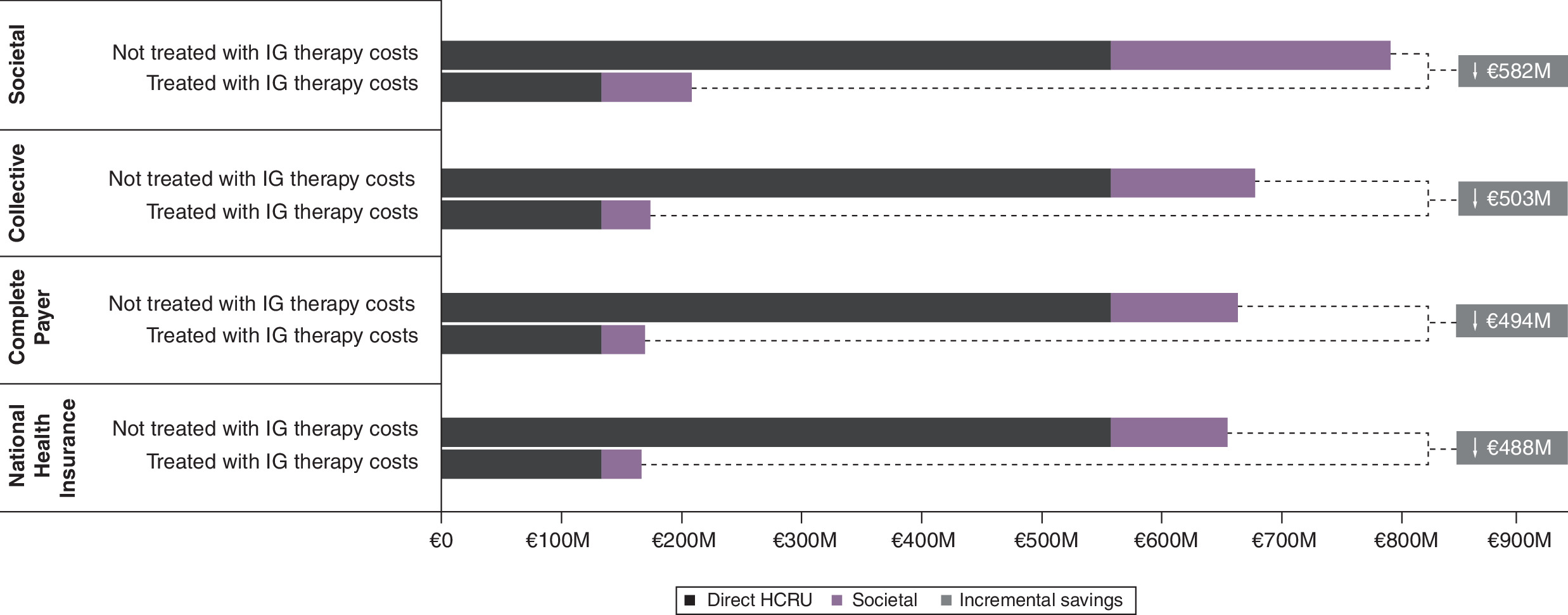
Figure 3. Three-year cost savings by cost class and perspective.
HCRU: Healthcare resource utilization; IG: Immunoglobulin; M: Million; SROI: Social return on investment.
Figure 4 illustrates the breakdown of economic and societal savings by cost category across the four perspectives over the 3-year horizon. Under the Societal perspective, societal savings account for the largest share of total savings (27%). In comparison, societal savings represent 16% of total savings under the Collective perspective, 14% under the Complete Payer perspective, and 13% under the National Health Insurance perspective. Among societal costs, mental health counseling represented the highest cost category across perspectives, ranging from €63.9 million to €69.5 million in incremental savings, depending on production costing or tariff-based valuations, while informal carer costs represented the lowest, of approximately €0.3 million. This distribution highlights how broader perspectives demonstrate the value of IG therapy.
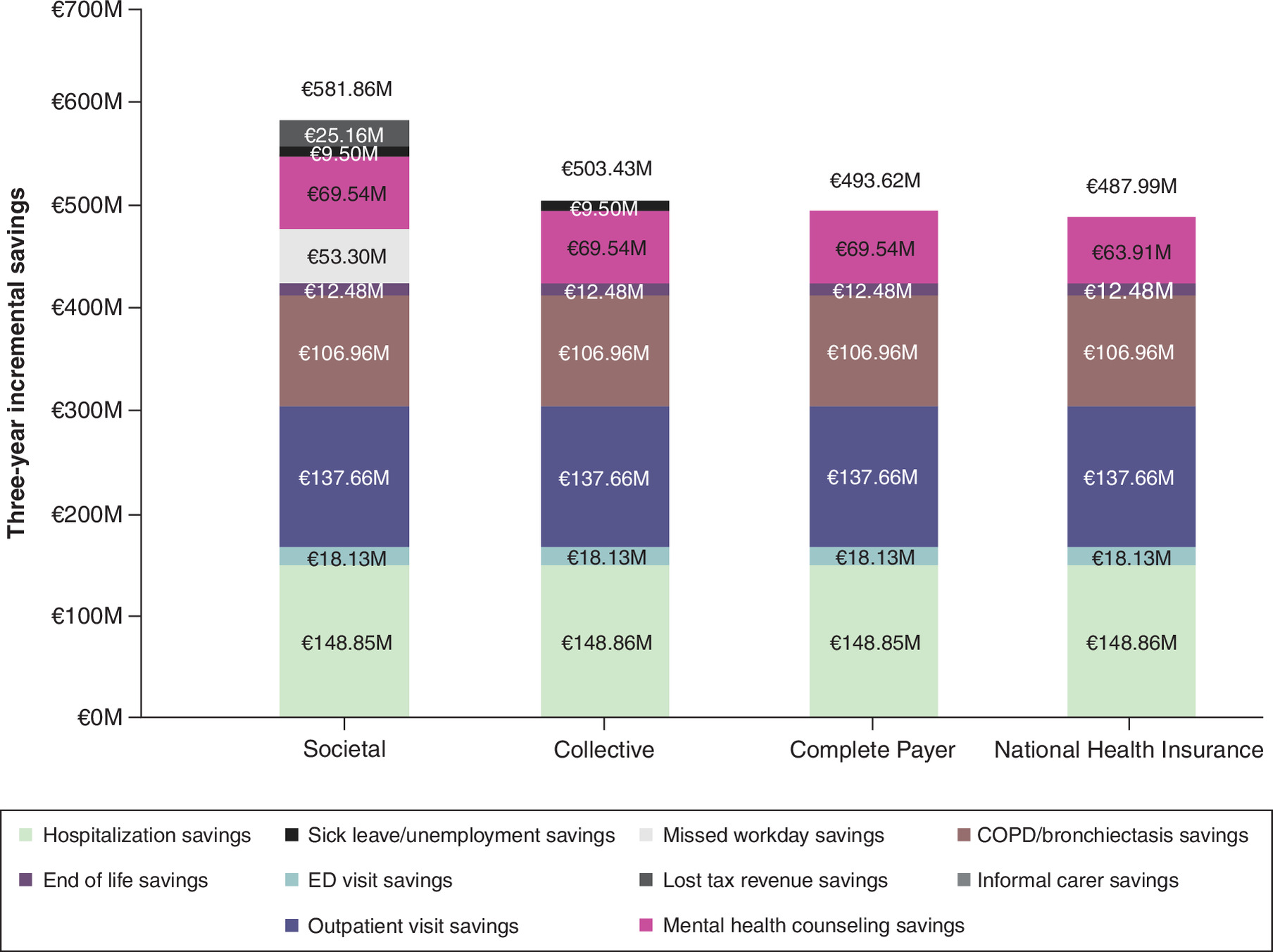
Figure 4. Three-year disaggregated economic and societal savings by perspective.
COPD: Chronic obstructive pulmonary disease; ED: Emergency department; M = Million.
Over 3 years, 80 deaths were expected in the IG therapy arm versus 417 in the non-IG therapy arm, representing a 420% reduction in mortality.
Discussion
To our knowledge, the SROI framework has not previously been applied to evaluate the societal value of IG therapy for patients with IEI. Therefore, to address this gap, this study sought to develop an SROI-informed model to estimate, beyond the clinical benefits, the economic and societal value of IG therapy for patients with IEI, compared with scenarios where patients remain undiagnosed and thus untreated, or receive alternative therapies. Using French-specific inputs, IG therapy demonstrated a positive return across all perspectives, with cumulative SROI ratios exceeding 1.0 over a 3-year time horizon, with the highest return on investment observed under the Societal perspective. These findings highlight the importance of incorporating broader societal factors, such as productivity losses, informal care, unemployment allowance and lost tax revenue into economic evaluations, as their inclusion provides a more holistic assessment and demonstrates a more favorable return for investments in healthcare, such as IG therapy.
In this analysis, drivers of the SROI results include the relatively large proportion of undiagnosed and untreated individuals with IEI, which is associated with higher healthcare and societal costs in the non-IG therapy arm. Additional drivers include the distribution of IVIG and SCIG therapies since these impact the drug acquisition and administration costs considered in the denominator of the equation, HCRU-related costs (i.e., hospitalizations, ED visits, outpatient visits, COPD/bronchiectasis episodes and end of life), the average duration of IVIG and SCIG administration that impacts missed work time, and mortality rates.
Recognition is increasing around the value of a societal perspective in HTA appraisals, which reflects the wider economic and societal consequences of health interventions. A recent review of European HTA bodies examined the inclusion of societal impact in rare disease appraisals between 2022 and 2025 and found that 66% reported societal impact; among these, 51% incorporated societal costs in economic evaluations [54]. The authors concluded that, particularly for rare diseases (such as IEI), it is essential to consider the impact on both patients and wider society rather than focusing solely on the healthcare payer perspective; otherwise, the full value of treatment may not be realized [54]. Additionally, SROI is an increasingly adopted framework in Europe, particularly in Spain, where it has been applied to evaluate the societal impact of disease management programs across multiple therapeutic areas [55]. Traditional SROI analyses typically follow a rigorous step-wise methodology including: Stage 1: establishing scope and identifying stakeholders; Stage 2: mapping outcomes; Stage 3: evidencing outcomes and giving them a value; Stage 4: establishing impact; Stage 5: calculating the SROI and Stage 6: reporting, using and embedding [4]. While this SROI analysis did not follow this full stepwise methodology, it was designed to align with the core principles of SROI by capturing both direct and indirect value across multiple perspectives. Unlike conventional stakeholder-led SROI evaluations, the present study did not incorporate primary stakeholder engagement or direct stakeholder-derived outcome valuation. Accordingly, this analysis should be viewed as an application of an SROI framework to quantify broader economic and societal value, rather than a conventional stakeholder-led SROI evaluation. The decision to use a closed-cohort approach in this analysis was supported by findings from the literature, including a recent SROI study of vaccination programs that used a similar design to capture the complete trajectory of costs and benefits over time [27].
There were several limitations of this analysis. Importantly, while the analysis was designed to compare IG therapy to non-IG therapy, the non-IG comparator comprised both diagnosed patients receiving alternative treatments (i.e., antibiotics) and undiagnosed patients receiving no treatment, reflecting the heterogeneity of patients who do not receive IG therapy in clinical practice. These populations were modeled using separate clinical and economic inputs, where possible; however, results were reported for the combined non-IG comparator and may not fully reflect differences between individual patient subgroups. The model was also designed with equal starting cohort sizes across both the IG therapy and non-IG therapy arms. While this approach ensured comparability, it may not fully reflect real-world diagnostic and treatment patterns. Additionally, while annual mortality was incorporated, the model did not consider incident patients due to the closed-cohort design. As a result, the population size in the non-IG therapy arm, where mortality rates were higher, progressively decreased in size over time. While the 3-year time horizon was selected in accordance with SROI guidance and to align with existing SROI analyses and the shorter-term planning and budgeting cycles commonly used by healthcare decision-makers, if the time horizon were extended, the smaller surviving population in the non-IG arm would result in lower accumulated HCRU and societal costs over time. Consequently, the estimated SROI would be expected to decline, although this would primarily reflect differences in surviving population size between treatment arms rather than a reduction in the value generated by IG therapy. Mortality is therefore an important driver in the model, and the results should be interpreted within the context of the mortality assumptions applied. Importantly, while higher mortality in the non-IG arm reduces costs over time because fewer individuals remain in the cohort, the survival benefit associated with IG therapy represents a meaningful clinical outcome that should also be considered when interpreting the findings. Also, while most inputs were informed by robust real-world data, data gaps required the use of proxy values or simplifying assumptions. For example, assumptions were made regarding the number of mental health counseling sessions due to limited indication-specific data. Although efforts were made to use the best available evidence and validate model inputs, sensitivity or scenario analyses were not formally assessed due to limited alternate data available. Additionally, there is poor comparability of SROI ratios across studies, which is not specifically a limitation of this analysis but to SROI studies in general [8,56]. Furthermore, although the model framework can be adapted to other regions, generalizability of the current results beyond France is limited due to country-specific valuation methods. Several clinical inputs, including diagnosis and mortality, may be generalizable to other countries, but drug, HCRU, and societal costing inputs, as well as perspectives, are specific to France and should be adapted using local input data. Lastly, while this analysis demonstrates a positive SROI for IEI within the defined perspective, time horizon, and monetization assumptions, it should be noted that the results are conservative as the model because primary stakeholder engagement was not undertaken and does not encompass the value of certain clinical and societal benefits, including improvements in quality of life, increased hope, increased connection to family and friends and reduced worry or anxiety. Capturing the financial value of these outcomes would require stakeholder interviews, importance weighting, assessment of the proportion of stakeholders impacted, duration of benefit and additional SROI elements such as attribution, deadweight, displacement and drop-off [4].
This analysis also has several strengths that enhance the robustness and relevance of its findings. The model included a wide range of societal elements that were both relevant to IG-dependent disease and could be directly monetized without relying on proxies. The inclusion of both direct and indirect costs further strengthens the analysis by capturing the full economic impact of treatment including societal parameters often excluded from traditional evaluations. This comprehensive approach supports a more accurate estimation of the total value of an intervention to society, beyond individual clinical benefits. Another key strength is the use of a multi-perspective framework. This structure allows the model to address the priorities of a wide range of stakeholders, from public payers to other health economic perspectives, and provides a holistic view of the value generated by IG therapy. Lastly, the validation process of the model by health economic experts in France strengthened the face validity of the model and reduced structural and analytic uncertainty, supporting the credibility of the SROI estimates presented in this analysis.
Overall, this work highlights several areas in the management of IEI in France that influence the total economic and societal value of IG therapy. These include savings in HCRU and broader societal gains. Although the SROI framework does not align with typical health economic modeling methods recommended by HAS, which prioritizes cost-utility and cost-effectiveness analyses, it offers a complementary lens which includes broader elements than what is usually considered in traditional health economic analyses [31]. In line with HAS guidance, which emphasizes the importance of supporting informed public choices, this approach addresses gaps in conventional analysis, particularly where both economic and societal effects are significant [31]. By capturing outcomes beyond the direct healthcare system costs, the model supports broader decision-making frameworks and highlights the potential of IG therapy to generate value not only for patients, but also for the wider society. Moreover, the consideration of societal benefits aligns with the value-based procurement approach, which encourages an evaluation of the overall benefits of a healthcare product for all stakeholders within the context of hospital tenders, from improvements in patient care to its environmental impact [57]. Additionally, while traditional cost-effectiveness analyses are commonly designed to assess longer-term clinical and economic outcomes, the present analysis complements these evaluations by estimating the near-term economic and societal value of IG therapy within a timeframe that is more relevant to healthcare decision-makers operating under shorter planning and budgeting cycles [36]. Furthermore, this analysis underscores the need for continued development in how the societal impacts of healthcare interventions are measured. There is an opportunity to establish a standardized approach for capturing broader social outcomes, especially those that extend beyond traditional health economic metrics. Future comprehensive stakeholder engagement is needed to more fully quantify the impacts of expanded access to IG therapy on patients, caregivers and society.
Conclusion
Overall, this SROI analysis demonstrates that, over a cumulative 3-year time horizon, a positive return on investment is observed for patients with IEI, where both economic and societal savings outweigh the total cost of IG therapy. These findings support the role of IG therapy as a high-value intervention, as well as highlight the importance of adopting a comprehensive, multi-perspective approach when evaluating the value of IG therapy. By quantifying both direct and societal benefits, these results may inform reimbursement decisions, HTA appraisals or health service planning by providing decision-makers with a broader evidence base that extends beyond traditional cost-effectiveness analyses.
Summary points
•
Social return on investment (SROI) provides a framework to monetize both economic and societal value of healthcare interventions, offering a broader assessment of value than traditional economic evaluations that often overlook societal impacts. SROI is particularly relevant in conditions with wide-ranging patient and caregiver burden.
•
Inborn errors of immunity (IEI), if not appropriately or timely treated, impose significant economic and societal burdens, including frequent preventable infections, hospitalizations and productivity losses that substantially reduce quality of life.
•
Immunoglobulin (IG) therapy is a first-line treatment indicated for many IEIs. Alternative treatments may include antibiotics.
•
A closed-cohort SROI model compared IG therapy with non-IG therapy for patients with IEI in France over a 3-year time horizon.
•
The model included direct healthcare costs (drug acquisition, administration, healthcare resource use [i.e., hospitalizations, emergency department visits, outpatient visits, bronchiectasis management, end of life]) and societal costs such as productivity loss, informal care, mental health support, medical transportation, sick leave and lost tax revenue.
•
Four perspectives were analyzed (Societal, Collective, Complete Payer and National Health Insurance), reflecting different levels of societal inclusion and valuation methods.
•
IG therapy investments generated positive returns across all perspectives, with SROI ratios ranging from 1.10 to 1.30, meaning each euro invested returned more than €1 in combined value.
•
The Societal perspective showed the highest cost savings (€581.9M) and greatest share of societal benefits (27%) reflected by the broadest inclusion of societal parameters.
•
This analysis supports the role of IG therapy as a high-value intervention and investment, and highlights the importance of adopting a comprehensive, multiperspective approach when evaluating IG therapy. The findings may also support policy and reimbursement discussions by illustrating the broader societal value generated.
Author contributions
All authors made substantive intellectual contributions to this study to qualify as authors. S Priest, D Patel, R McTavish, L Undreiner, M Taskin and B Kuatov participated in model conception and design. S Priest, D Patel and R McTavish worked on data collection. S Priest, D Patel, R McTavish, L Undreiner, M Taskin and B Kuatov contributed to the analyses and interpretation. S Priest, D Patel and R McTavish wrote the manuscript draft. L Undreiner, M Taskin and B Kuatov assisted with manuscript revisions. All authors reviewed and approved the final version of the manuscript.
Acknowledgments
The thank Jonathan Galduf, valued colleague, contributor and friend, who sadly passed away during the development of this manuscript, for his contributions to this manuscript and the wider health economics field. The authors thank Bertrand Tehard and Juliette Placer who assisted in the preparation of the first draft of this manuscript, and Georgia Greaves of Bioscript Group who provided editorial assistance.
Financial disclosure
This study was sponsored by CSL, King of Prussia (PA, USA).
Competing interests disclosure
S Priest, D Patel and R McTavish are employed by EVERSANA, Canada, which was contracted by CSL to work on this study. L Undreiner, M Taskin and B Kuatov are employed at CSL and hold stocks at CSL. The authors have no other competing interests or relevant affiliations with any organization or entity with the subject matter or materials discussed in the manuscript apart from those disclosed.
Writing disclosure
No funded writing assistance was utilized in the production of this manuscript.
Open access
This work is licensed under the Creative Commons Attribution 4.0 License. To view a copy of this license, visit https://creativecommons.org/licenses/by/4.0/
Supplementary Material
File (supplementary data.docx)
References
Papers of special note have been highlighted as: • of interest; •• of considerable interest
1.
Contente M, Singh P, van Dijk B et al. Inclusion of productivity losses in HTA assessments in function of who bears productivity losses in the real world – a qualitative assessment. Value Health 22, S804–S805 (2019).
• Highlights the debate and inconsistency on incorporating productivity losses and indirect costs in economic evaluations, emphasizing the real-world implications for societal perspective adoption.
2.
Breslau RM, Cohen JT, Diaz J, Malcolm B, Neumann PJ. A review of HTA guidelines on societal and novel value elements. Int. J. Tech. Assess. Health Care 39(1), e31 (2023).
3.
Jiang S, Wang Y, Si L et al. Incorporating productivity loss in health economic evaluations: a review of guidelines and practices worldwide for research agenda in China. BMJ Glob. Health 7(8), e009777 (2022).
4.
Nicholls J, Lawlor E, Neitzert E, Goodspeed T. A Guide to Social Return on Investment. Office of the Third Sector, UK (2012).
• Outlines the principles and methodology for conducting social return on investment (SROI) analyses, widely referenced in health and social care evaluations.
5.
Arvidson M, Lyon F, McKay S, Moro D. Valuing the social? The nature and controversies of measuring social return on investment (SROI). Voluntary Sector Rev. 4(1), 3–18 (2013).
6.
Reupert AE, Freeman NC, Nandakumar N et al. The social return on investment in programs designed for young people living with a family member who experiences mental health challenges: study protocol. Front. Public Health 12, 1411580 (2024).
7.
Crane E, Noyes J, Bianchim MS et al. A social return on investment analysis of patient-reported outcome measures in value-based healthcare. J. Patient Rep. Outcomes 9(1), 22 (2025).
8.
Banke-Thomas AO, Madaj B, Charles A, van den Broek N. Social return on investment (SROI) methodology to account for value for money of public health interventions: a systematic review. BMC Public Health 15, 582 (2015).
•• A systematic review summarizing SROI applications in public health, identifying methodological gaps and opportunities for standardization.
9.
Kim VH, Upton JE, Derfalvi B, Hildebrand KJ, McCusker C. Inborn errors of immunity (primary immunodeficiencies). Allergy Asthma Clin. Immunol. 20(Suppl. 3), 76 (2024).
10.
McCusker C, Upton J, Warrington R. Primary immunodeficiency. Allergy Asthma Clin. Immunol. 14(Suppl. 2), 61 (2018).
11.
Poli MC, Aksentijevich I, Bousfiha AA et al. Human inborn errors of immunity: 2024 update on the classification from the International Union of Immunological Societies Expert Committee. J. Human Immun. 1(1), e20250003 (2025).
12.
Immune Deficiency Foundation. What is PI? (2026). https://primaryimmune.org/understanding-primary-immunodeficiency/what-is-pi
13.
Huq ME, Bhatnagar NK, Hostoffer RW. Hypogammaglobulinemia. In: StatPearls [Internet]. StatPearls Publishing, FL, USA (2023).
14.
Kumar B, Zetumer S, Swee M et al. Reducing delays in diagnosing primary immunodeficiency through the development and implementation of a clinical decision support tool: protocol for a quality improvement project. JMIR Res. Protoc. 11(1), e32635 (2022).
15.
Meyts I, Bousfiha A, Duff C et al. Primary immunodeficiencies: a decade of progress and a promising future. Front. Immunol. 11, 625753 (2021).
16.
Anderson JT, Cowan J, Condino-Neto A, Levy D, Prusty S. Health-related quality of life in primary immunodeficiencies: impact of delayed diagnosis and treatment burden. Clin. Immunol. 236, 108931 (2022).
• Provides evidence on the burden of delayed diagnosis and treatment in inborn errors of immunity, supporting the rationale for evaluating immunoglobulin therapy’s broader impact.
17.
Borte M, Hanitsch LG, Mahlaoui N et al. Facilitated subcutaneous immunoglobulin treatment in patients with immunodeficiencies: the FIGARO Study. J. Clin. Immunol. 43(6), 1259–1271 (2023).
18.
Allen JA, Gelinas DF, Freimer M, Runken MC, Wolfe GI. Immunoglobulin administration for the treatment of CIDP: IVIG or SCIG? J. Neurologic. Sci. 408, 116497 (2020).
19.
Menon D, Sarpong E, Bril V. Practical aspects of transitioning from intravenous to subcutaneous immunoglobulin therapy in neuromuscular disorders. Can. J. Neurol. Sci. 49(2), 161–167 (2022).
20.
Jolles S, Orange J, Gardulf A et al. Current treatment options with immunoglobulin G for the individualization of care in patients with primary immunodeficiency disease. Clin. Exp. Immunol. 179(2), 146–160 (2015).
21.
Ramzi A, Maya S, Balousha N et al. Subcutaneous immunoglobulins (SCIG) for chronic inflammatory demyelinating polyneuropathy (CIDP): a comprehensive systematic review of clinical studies and meta-analysis. Neurol. Sci. 45(11), 5213–5230 (2024).
22.
Segundo GRS, Condino-Neto A. Treatment of patients with immunodeficiency: medication, gene therapy, and transplantation. J. Pediatr. (Rio J.) 97(Suppl. 1), S17–S23 (2021).
23.
Denham I, Maurin R, Deltetto I et al. Levodopa-based device-aided therapies for the treatment of advanced Parkinson's disease: a social return on investment analysis. Front. Public Health 12, 1351808 (2024).
24.
Hyatt A, Chung H, Aston R, Gough K, Krishnasamy M. Social return on investment economic evaluation of supportive care for lung cancer patients in acute care settings in Australia. BMC Health Serv. Res. 22(1), 1399 (2022).
25.
Merino M, Martín Lorenzo T, Maravilla-Herrera P et al. A social return on investment analysis of improving the management of chronic obstructive pulmonary disease within the Spanish National Healthcare System. Int. J. Chron. Obstruct. Pulmon. Dis. 17, 1431–1442 (2022).
26.
Pazderka H, Reeson M, Polzin W et al. Five year cost savings of a multimodal treatment program for child sexual abuse (CSA): a social return on investment study. BMC Health Serv. Res. 22(1), 892 (2022).
27.
Brassel S, Steuten L. The broader value of vaccines: the return on investment from a governmental perspective. (2020). https://EconPapers.repec.org/RePEc:ohe:conres:002283
•• Illustrates how SROI can be applied to preventive interventions like vaccination, reinforcing its relevance beyond treatment-focused models. Similarly, this study also used a closed-cohort design.
28.
Ward AS, Tysinger B, Nguyen P et al. Lifetime social returns from expanding access to anti-obesity medications. (2025). https://schaeffer.usc.edu/research/lifetime-social-returns-from-expanding-access-to-anti-obesity-medications/
29.
NorQuest College. Social return on investment (SROI) analysis of autism CanTech! at NorQuest College: Final Report. (2023). https://fsc-ccf.ca/wp-content/uploads/2023/12/SROI_Report_NorQuest-College-FSC_QoW_Supporting-Materials.pdf
30.
Sadeghi B, Abolhassani H, Naseri A, Rezaei N, Aghamohammadi A. Economic burden of common variable immunodeficiency: annual cost of disease. Expert Rev. Clin. Immunol. 11(5), 681–688 (2015).
31.
Haute Autorité de Santé (HAS). Choices in methods for economic evaluation. (2020). https://www.has-sante.fr/jcms/r_1499251/en/choices-in-methods-for-economic-evaluation
•• Reflects HAS guidance on economic evaluations in France, relevant for aligning SROI methodology with national standards.
32.
Sittimart M, Rattanavipapong W, Mirelman AJ et al. An overview of the perspectives used in health economic evaluations. Cost Eff. Resour. Alloc. 22(1), 41 (2024).
33.
ATIH (Agence technique de l'information sur l'hospitalisation). ENC MCO – Référentiel national de coûts des prises en charge. (2024). https://www.scansante.fr/applications/enc-mco
34.
l'Assurance Maladie. Remboursement de séances chez le psychologue: dispositif Mon soutien psy. (2025). https://www.ameli.fr/assure/remboursements/rembourse/remboursement-seance-psychologue-mon-soutien-psy
35.
Institut national de la statistique et des études économiques (INSEE). Long-term illnesses/ALD. (2019). https://www.insee.fr/en/metadonnees/definition/c1337
36.
Pokhrel S. Return on investment (ROI) modelling in public health: strengths and limitations. Eur. J. Public Health 25(6), 908–909 (2015).
37.
Institut national de la statistique et des études économiques (INSEE). Demography – demographic balance sheet 2024 – metropolitan France. (2024). https://www.insee.fr/en/statistiques/8333211?sommaire=8333329
38.
Institut national de la statistique et des études économiques (INSEE). Deaths, mortality, life expectancy - demographic balance sheet 2024 – retrospective tables. (2024). https://www.insee.fr/en/statistiques/8333324
39.
European Society for Immunodeficiencies (ESID). ESID registry network reporting tool. (2024). https://cci-reporting.uniklinik-freiburg.de/#/
40.
Fischer A, Mahlaoui N, Héréditaires CLCdRDI. CEREDIH_Journee_20201211_Diapos_AF_NM. (2021). https://www.ceredih.fr/uploads/CEREDIH_Journee_20201211_AF_NM.pdf
41.
République Française. VAT – liquidation – reduced rates – other goods and transactions subject to reduced rates. (14 May 2025). https://bofip.impots.gouv.fr/bofip/130-PGP.html/identifiant=BOI-TVA-LIQ-30-10-60-20241127
42.
European Medicines Agency (EMA). Medical-related Information. (2025). https://www.ema.europa.eu/fr
43.
Agence nationale de sécurité du médicament et des produits de santé (ANSM). Directory of pharmaceutical specialties. (2025). http://agence-prd.ansm.sante.fr/php/ecodex/index.php
44.
République Française. Arrêté du 27 avril 2009 fixant la marge applicable aux médicaments inscrits sur la liste prévue à l'article L. 5126-4 du code de la santé publique lorsqu'ils sont vendus au public par les pharmacies à usage intérieur. (2009). https://www.legifrance.gouv.fr/loda/id/JORFTEXT000020560773
45.
CLEISS. The French health care system. (2021). https://www.cleiss.fr/particuliers/venir/soins/ue/systeme-de-sante-en-france_en.html
46.
l'Assurance Maladie. Nomenclature generale des actes professionnels (NGAP). (2025). https://www.ameli.fr/sites/default/files/Documents/NGAP%2001.07.2025.pdf
47.
l'Assurance Maladie. La liste des produits et prestations – LPP. (2025). https://www.ameli.fr/medecin/exercice-liberal/facturation-remuneration/consultations-actes/nomenclatures-codage/liste-produits-prestations-lpp
48.
l'Assurance Maladie. Tarifs Des Forfaits Perfadom Au 28/10/2024. (2024). https://www.omedit-idf.fr/wp-content/uploads/memo_perfadom_tarifs_2024-10-28.pdf
49.
Haute Autorité de Santé. DUPIXENT (dupilumab) – Avis économique CEESP. (2025). https://www.has-sante.fr/upload/docs/application/pdf/2025-03/dupixent_14012025_avis_economique_ceesp_796.pdf
50.
Goussault H, Salvator H, Catherinot E et al. Primary immunodeficiency-related bronchiectasis in adults: comparison with bronchiectasis of other etiologies in a French reference center. Respir. Res. 20(1), 275 (2019).
51.
Goeminne PC, Hernandez F, Diel R et al. The economic burden of bronchiectasis - known and unknown: a systematic review. BMC Pulm. Med. 19(1), 54 (2019).
52.
de la Rosa D, Martínez-Garcia MA, Olveira C et al. Annual direct medical costs of bronchiectasis treatment: impact of severity, exacerbations, chronic bronchial colonization and chronic obstructive pulmonary disease coexistence. Chron. Respir. Dis. 13(4), 361–371 (2016).
53.
Tanguy-Melac A, Verboux D, Pestel L et al. Evolution of health care utilization and expenditure during the year before death in 2015 among people with cancer: French snds-based cohort study. Eur. J. Health Econ. 22(7), 1039–1052 (2021).
54.
Anjo J, Briah R, Wilke A et al. Impact of the societal perspective on HTA decision-making in rare diseases. (2025). https://www.ispor.org/docs/default-source/cti-meeting-21305-documents/f249b681-9e7d-4daa-b210-b0675c2537d5.pdf?sfvrsn=13ede3e3_0
55.
Weber. Social Return on Investment (SROI) in Spain. (2024). https://www.weber.org.es/portfolio_category/sroi/
•• Demonstrates the growing application of SROI in European healthcare, providing practical examples of its use in policy and program evaluation.
56.
Seddik AH, Paulissen J, Marapin R et al. A comprehensive view of the methods used to measure the societal impact of healthcare interventions: a systematic review. Value Health 28(8), 1288–1299 (2025).
57.
Resah (Réseau des Acheteurs Hospitaliers). Understanding value based procurement: a new approach to purchasing. (2020). https://www.europeanallianceforvalueinhealth.eu/wp-content/uploads/2020/12/VBP-CoP-Understanding-Value-Based-Procurement-A-new-approach-to-purchasing-2020.pdf
Information & Authors
Information
Published In
Copyright
© 2026 The authors. This work is licensed under the Creative Commons Attribution 4.0 License
History
Received: 29 May 2026
Accepted: 2 October 2026
Published online: 19 November 2026
Keywords:
Topics
Authors
Metrics & Citations
Metrics
Article Usage
Article usage data only available from February 2023. Historical article usage data, showing the number of article downloads, is available upon request.
Citations
How to Cite
Social return on investment-informed analysis of immunoglobulin therapy for inborn errors of immunity in France. (2026) Journal of Comparative Effectiveness Research. DOI: 10.57264/cer-2026-0084
Export citation
Select the citation format you wish to export for this article or chapter.