

Real-world treatment patterns and outcomes in platinum-sensitive recurrent high-grade serous ovarian cancer patients
Publication: Journal of Comparative Effectiveness Research
Abstract
Aim: To describe the overall cancer-related healthcare utilization patterns, treatment patterns and outcomes in women diagnosed with platinum-sensitive recurrent high-grade serous ovarian cancer. Patients & methods: Subanalysis of the Spanish sample of a retrospective, noninterventional, multinational, observational study. Results: BRCA-mutated patients had better outcomes in terms of progression-free survival and overall survival than patients who were BRCA wild-type. It was observed that patients’ treatment outcomes after the first recurrence progressively worsened as the patient underwent subsequent chemotherapy lines. Healthcare resource utilization when accounting for the follow-up time did not substantially differ between BRCA1/2-mutated and BRCA wild-type patients. Conclusion: BRCA1/2 mutation carriers have better treatment outcomes, including longer survival, without a negative impact on the use of healthcare resources.
Ovarian cancer is the eighth most common cause of cancer in females in the world, accounting for 3.4% of all new cases of cancer in 2018 [1]. The age-standardized incidence rate of ovarian cancer in Spain in 2018 was estimated to be 3.3–3.9 cases per 100,000 inhabitants [2], and the 5-year prevalence was estimated to be 2.7% of all tumors [3]. Ovarian cancer is the leading cause of death among gynecological cancers in developed countries [4], accounting for 1949 (4.4%) of the 44,476 cancer-related deaths in 2018 in Spain [3]. Type II epithelial tumors account for 71.3% of ovarian cancers in Spain, and most of them are high-grade serous ovarian cancer (HGSOC) and present in an advanced stage. This advanced stage diagnosis contributes to their high mortality; thus, the 5-year age-standardized net survival for type II epithelial tumors between 2005 and 2009 according to the results of 10 Spanish registers was 35.7% [5].
The initial treatment of advanced ovarian cancer (stage II-IV) is well established. When complete tumor resection is considered feasible, the standard of care is primary debulking surgery followed by adjuvant therapy with carboplatin/paclitaxel; in fact, complete tumor resection is the main prognostic factor for these patients [4]. Neoadjuvant chemotherapy prior to debulking surgery and adjuvant chemotherapy could be another option for selected patients (e.g., when upfront surgery is contraindicated for medical reasons or when complete cytoreduction cannot be achieved), although currently there is no consensus about who are the best candidates to receive neoadjuvant chemotherapy [6]. Guidelines also established that bevacizumab could be considered in combination with carboplatin/paclitaxel followed by maintenance of bevacizumab in monotherapy, since some studies have shown an improvement in terms of progression-free survival (PFS) in these patients with this strategy [4,7,8]. Despite the improvement in the last decades in the management of ovarian cancer, most patients will experience disease recurrence after the first therapy approach, and ultimately, this leads to the abovementioned high mortality rate as a consequence of the occurrence of chemotherapy resistance, especially platinum resistance [9]. Hence, it is important to develop new drugs or treatment approaches, such as new maintenance treatment strategies, that could improve treatment outcomes. In addition, for the treatment of recurrent disease, after platinum-based therapy, there are limited data that allow us to establish a preferred treatment choice. Current management of recurrent ovarian cancer depends on several factors, but it is mainly driven by the interval of time from the last platinum regimen until recurrence of disease is diagnosed, the so-called platinum-free interval (PFI) [9,10]. Thus, the response rates to doublet chemotherapy for relapsed patients are 60–70% for those with a PFI of more than 24 months and 30% for patients with a PFI of 5–12 months [10]. In addition to PFI, other factors to be taken into account for the treatment of the first relapse are tumor biology, histology, prior therapies, prior response to chemotherapy, presence of persistent toxicity, patient preferences and current symptoms [4]. Depending on all these factors, the ESMO clinical practice and NCCN guidelines recommend the use of platinum rechallenge or nonplatinum chemotherapy [4,11].
However, the treatment paradigm of epithelial ovarian cancer has evolved rapidly in recent years with the recognition of homologous recombination deficiency as an important and potential predictive biomarker for epithelial ovarian cancer and particularly for HGSOC, with the results of the latest research on poly(adenosine diphosphate-ribose) polymerase (PARP) inhibitors [12,13]. Homologous recombination is a process for repairing double-strand DNA damage and depends on the presence of proteins encoded by BRCA1 and BRCA2 (BRCA1/2) genes and other genes involved in this repair pathway [12]. BRCA1/2 mutations are believed to account for the majority of hereditary ovarian cancers [14,15]. It has been suggested that BRCA1/2-mutated ovarian cancer is part of characteristic ‘BRCA syndrome’ characterized by younger age at onset, high-grade serous histologic type, advanced stage at presentation, high probability of durable remission with platinum therapy and better prognosis [16]. Regarding the latter, BRCA mutation status is also considered a predictor of platinum sensitivity, probably independent of the PFI [10]. In this context, PARP inhibitors have revolutionized the treatment of high-grade epithelial ovarian cancer in advanced stage as maintenance treatment [12], demonstrating improvement in PFS in the recurrence setting regardless of the BRCA mutation status, but especially in those patients harboring a BRCA1/2 mutation [12,17]. PARP inhibitors have also been combined with chemotherapy, antiangiogenic agents and immune checkpoint inhibitors (PD-1/PD-L1 and CTLA-4 inhibitors); however, with this strategy the occurrence of myelotoxicity should be prevented (for instance, with escalating or intermittent dosing of PARP inhibitors) and carefully monitored [18]. More recently, PARP inhibitors have been shown to be effective in terms of PFS in patients with advanced-stage ovarian cancer in the first-line maintenance setting [17]. These findings have yielded numerous changes in the recommendations for BRCA testing in the ovarian cancer clinical guidelines, given its demonstrated prognostic and therapeutic implications. Initially, the guidelines established eligibility criteria to offer germline BRCA1/2 testing to ovarian cancer patients with hereditary cancer after first-line treatment recurrence [19]. Once PARP inhibitors were established as the standard of care for second-line treatment, this recommendation was extended to all patients with HGEOC and no family cancer history [20]. With the increasing generation of statistically and clinically significant evidence in the context of PARPi maintenance in the first-line setting [21], these BRCA testing recommendations are being set earlier in time, concretely at the moment of diagnosis of HGSOC, establishing the tumor tissue BRCA test as the preferred diagnostic method [22–25].
Epithelial ovarian cancer places a significant economic burden on the national healthcare system and society in Spain. It has been described that investment in better, early and optimal diagnosis techniques to select those patients to receive PARP inhibitors might increase survival and patient quality of life, consequently leading to a more efficient use of economic resources and a substantial reduction in the economic burden associated with high-grade epithelial ovarian cancer [26–28].
The aim of the global study was to describe treatment patterns for women with platinum-sensitive recurrent (PSR) ovarian cancer in a multinational, real-world population (i.e., a patient population managed under routine clinical practice conditions). However, the primary objective of this Spanish subanalysis was to describe the overall cancer-related healthcare utilization patterns in only women diagnosed with PSR HGSOC from the first date of PSR until death or the end of available follow-up, whichever came first. The secondary objectives included estimating the proportion of women with PSR HGSOC tested for BRCA mutations and describing the testing method used, the distribution of BRCA mutation status and mutation type, treatment patterns and outcomes.
Patients & methods
Study design & patients
This was a retrospective, noninterventional, multinational, observational study conducted in 13 countries across Europe, the Middle East, North America and Australia. Overall study recruitment was physician-based (not site-based). Physicians had to meet all of the following inclusion criteria: case load in the previous year before agreeing to participate in the study of at least 4 patients with platinum-sensitive ovarian cancer; medical specialty of medical oncology, hematology-oncology, or gynecologic oncology; at least 5 years of experience in medical practice managing the treatment of hematology/oncology patients; should be responsible for making treatment decisions for platinum-sensitive ovarian cancer patients under their care; and should spend at least 60% of their time conducting patient care.
Patients enrolled in the study had to have the first diagnosis of PSR serous ovarian cancer between 1 January 2009, and 31 December 2013 with no evidence of disease progression according to Response Evaluation Criteria in Solid Tumors or Gynecologic Cancer Intergroup criteria for at least 6 months after completion of a first-line platinum-based chemotherapy regimen. The date of this first diagnosis of PSR was considered the index date for time to event data. Patients should have at least 18 years of age, could be either alive or deceased at the time of data abstraction, and should have a fully documented medical history for ovarian cancer. Patients who have ever taken an investigational product as part of an interventional clinical trial for ovarian cancer were excluded from the study. For this subgroup analysis, we only included patients with HGSOC of the Spanish sample.
A quasi-random method was applied for the recruitment of women. For each patient selected, physicians had to identify another patient matching the noted inclusion criteria and whose last name began with a letter that was randomly generated by the web-based case report form. If there was more than one eligible patient with the last name starting with the referred letter, physicians selected the patient who came first in alphabetical order. In case no patient met the inclusion criteria, physicians should select a patient whose last name began with the next letter in alphabetical order. Three patients were requested from each physician.
The study was conducted in accordance with the guidelines for Good Clinical Practice, the Declaration of Helsinki and the applicable regulations in each participating country. The protocol stated that the Informed consent collection would require that the study include only patients who are still alive at the time of the retrospective data collection, which could severely bias the final study sample toward patients with longer survival, better outcomes, and markedly less representative treatment patterns than would otherwise be observed in a more general patient sample. As a result, all ethics review packages submitted for this study requested a waiver of informed consent requirements. In Spain the protocol was approved by the Comité de Ética de la Investigación de las Islas Baleares (Research Ethics Committee from Islas Baleares; Palma de Mallorca, Spain). All data were collected retrospectively from the medical records of participants.
Disease characteristics & BRCA testing
Demographic data included age and ethnicity, and the following characteristics of the disease were registered: date of initial diagnosis of serous ovarian cancer, stage and grade at initial ovarian cancer diagnosis, Eastern Cooperative Oncology Group (ECOG) performance status and histological grade of the disease; primary tumor site; time from the initial diagnosis to first PSR; the number of comorbidity conditions; and history of specific medical conditions of interest during the 12-month period prior to first PSR.
In relation to BRCA mutation determination, we recorded whether it was performed by common practice and the type of testing methodology utilized. Patients were categorized according to the BRCA mutation status documented in the medical records as follows: BRCA1/2 mutated, when a deleterious BRCA1 or BRCA2 germline mutation was identified; BRCA wild-type, for no deleterious mutation; BRCA inconclusive, for cases in which BRCA testing was conducted, but variant was uncertain or inconclusive; and finally, BRCA untested, for the patients who had no testing performed or their BRCA status was not registered in the medical records.
Treatment patterns & response
Information regarding previous anticancer treatments included the combination of agents given as the first-line platinum-based chemotherapy regimen, all the surgical procedures during the initial chemotherapy course and thereafter, including postsurgical residual disease.
Additional data on the second and subsequent chemotherapy regimens were registered, which included the best response registered in the medical charts after therapy completion. Responses could be defined as a complete response, partial response and stable disease, whereas objective progressive disease or loss to follow-up was also recorded. Patients who achieved a complete or partial response were considered to show an objective response.
Survival
PFS was estimated from both second- and third-line regimen chemotherapy initiation following the first platinum-based recurrence until the earliest diagnosed progression, death or end of the follow-up. The overall survival (OS) was estimated from various time points: from the initial diagnosis of ovarian cancer until death or end of the follow-up, from initiation of first-line platinum-based chemotherapy until death or end of the follow-up, and after initiation of second-line treatment until death or end of the follow-up.
Statistical analysis
Due to the retrospective descriptive nature of this study, the study size was not based on formal statistical considerations, and a target sample size for the international study of 2000 patients diagnosed with PSR serous ovarian cancer was considered. For this subanalysis, we only considered Spanish women with PSR HGSOC included in the study.
Descriptive statistical analyses included the mean and standard deviation (SD) for continuous variables and number/percentage with the corresponding 95% CI for categorical variables. Student’s t-test and χ2 test or Wilcoxon rank-sum test were used as needed. Kaplan–Meier survival curves were used to describe time-to-event outcomes. All tests were considered significant if p < 0.05. The statistical analysis was performed using SAS version 9.3.
Results
Patient disposition & clinical characteristics
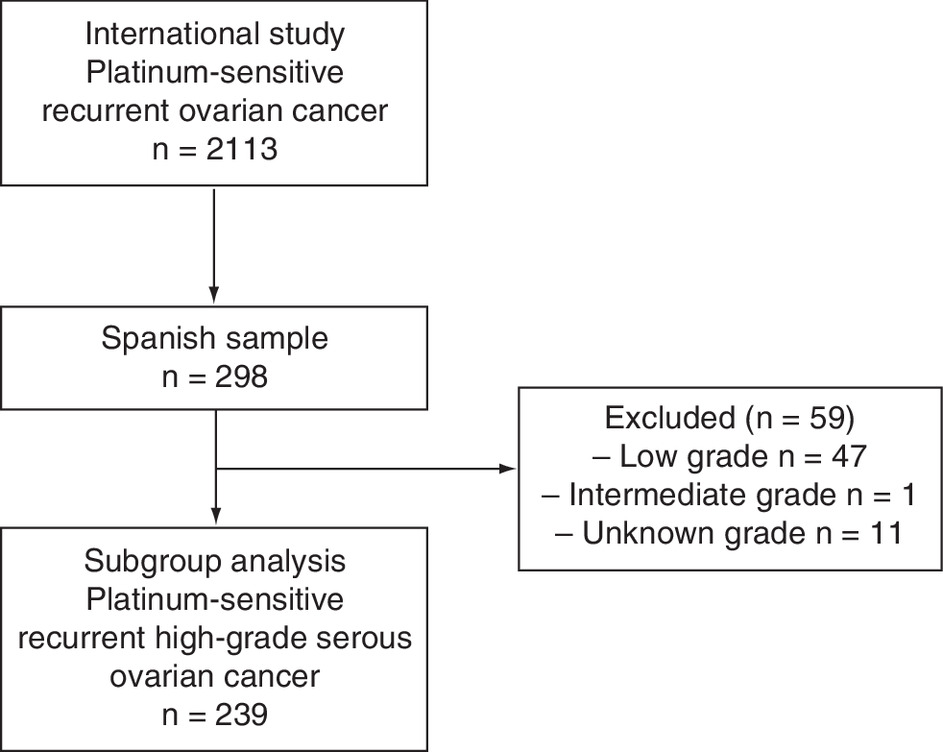
Of the 2,113 patients enrolled in the international study, 298 patients were included in Spain. Of them, we excluded 59 (24.7%) because they did not meet the inclusion criteria for this subgroup analysis, either because they had a low grade (n = 47) or intermediate grade (n = 1) tumor, or the histology grade was unknown (n = 11); therefore, 239 patients were included in this analysis (Figure 1).
Patients had a mean age of 58 years, were Caucasian, and over 80% presented FIGO stage III-IV and had a primary tumor location in the ovary (Table 1).
| Characteristic | gBRCA mutated (n = 22) | gBRCA1 mutated (n = 16) | gBRCA2 mutated (n = 6) | gBRCA wild-type (n = 41) | gBRCA inconclusive (n = 3) | gBRCA not performed or not available (n = 173) | Total (n = 239) |
|---|---|---|---|---|---|---|---|
| Age (years), mean (SD) | 54 (8.3) | 55 (8.4) | 50 (7.2) | 56 (11.0) | 63 (8.5) | 59 (9.8) | 58 (10.0) |
| Ethnicity (Caucasian), n (%) | 22 (100.0) | 16 (100.0) | 6 (100.0) | 41 (100.0) | 3 (100.0) | 166 (96.0) | 232 (97.1) |
| Geographic region, n (%) | |||||||
| Northeast | 10 (45.5) | 7 (43.8) | 3 (50.0) | 21 (51.2) | 2 (66.7) | 65 (37.6) | 98 (41.0) |
| Center east | 10 (45.5) | 7 (43.8) | 3 (50.0) | 17 (41.5) | 1 (33.3) | 66 (38.2) | 94 (39.3) |
| Center northeast | 0 (0.0) | 0 (0.0) | 0 (0.0) | 0 (0.0) | 0 (0.0) | 12 (6.9) | 12 (7.9) |
| South | 2 (9.0) | 2 (12.5) | 0 (0.0) | 3 (7.3) | 0 (0.0) | 30 (17.3) | 2 (12.5) |
| FIGO staging, n (%) | |||||||
| IB | 0 (0.0) | 0 (0.0) | 0 (0.0) | 0 (0.0) | 0 (0.0) | 1 (0.6) | 1 (0.4) |
| IC | 0 (0.0) | 0 (0.0) | 0 (0.0) | 1 (2.4) | 0 (0.0) | 6 (3.5) | 7 (2.9) |
| IIA | 0 (0.0) | 0 (0.0) | 0 (0.0) | 2 (4.9) | 1 (33.3) | 6 (3.5) | 9 (3.8) |
| IIB | 1 (4.5) | 1 (6.3) | 0 (0.0) | 1 (2.4) | 1 (33.3) | 8 (4.6) | 11 (4.6) |
| IIC | 1 (4.5) | 1 (6.3) | 0 (0.0) | 3 (7.3) | 0 (0.0) | 11 (6.3) | 15 (6.3) |
| IIIA | 4 (18.2) | 0 (0.0) | 4 (66.7) | 9 (22.0) | 0 (0.0) | 20 (11.6) | 33 (13.8) |
| IIIB | 6 (27.3) | 6 (37.5) | 0 (0.0) | 8 (19.5) | 0 (0.0) | 15 (8.7) | 29 (12.1) |
| IIIC | 7 (31.8) | 7 (43.8) | 0 (0.0) | 12 (29.3) | 0 (0.0) | 63 (36.4) | 82 (34.3) |
| IV | 3 (13.6) | 1 (6.3) | 2 (33.3) | 5 (12.2) | 1 (33.3) | 43 (24.9) | 52 (21.8) |
| Primary tumor site at initial diagnosis, n (%) | |||||||
| Ovary | 21 (95.5) | 15 (93.8) | 6 (100.0) | 38 (92.7) | 2 (66.7) | 150 (86.7) | 211 (88.3) |
| Fallopian tube | 0 (0.0) | 0 (0.0) | 0 (0.0) | 2 (10.0) | 1 (5.0) | 17 (9.8) | 20 (8.4) |
| Primary peritoneum | 1 (4.5) | 1 (6.3) | 0 (0.0) | 1 (2.4) | 0 (0.0) | 6 (3.5) | 8 (3.3) |
| Type of sample for the BRCA test, n (%) | |||||||
| Blood | 16 (72.7) | 12 (75.0) | 4 (66.7) | 32 (78.0) | 2 (66.7) | 2 (100.0) | 52 (76.5) |
| Tumor tissue | 6 (27.3) | 4 (25.0) | 2 (33.3) | 9 (22.0) | 1 (33.3) | 0 (0.0) | 16 (23.5) |
| Personal history of gBRCA mutation (Yes), n (%) | 9 (40.9) | 7 (43.8) | 2 (33.3) | 5 (12.2) | 0 (0.0) | 3 (1.7) | 17 (7.1) |
| Family history of gBRCA mutation (Yes), n (%) | 17 (72.3) | 14 (87.5) | 3 (50.0) | 16 (39.0) | 2 (66.7) | 6 (3.5) | 41 (17.2) |
| Type of cancer in the relative, n (%)†,‡ | |||||||
| Breast | 13 (76.4) | 10 (71.4) | 3 (100.0) | 14 (87.5) | 2 (100.0) | 5 (83.3) | 34 (82.9) |
| Ovary | 13 (76.4) | 11 (78.6) | 2 (66.7) | 6 (37.5) | 0 (0.0) | 1 (16.7) | 20 (48.8) |
| Relative degree with gBRCA, n (%)†,‡ | |||||||
| 1st degree | 16 (94.1) | 13 (92.9) | 3 (100.0) | 10 (62.5) | 1 (50.0) | 4 (66.7) | 31 (75.6) |
| 2nd degree | 10 (58.8) | 7 (50.0) | 3 (100.0) | 6 (37.5) | 1 (50.0) | 1 (16.7) | 18 (43.9) |
| 3rd degree | 4 (23.5) | 2 (14.3) | 2 (66.7) | 2 (12.5) | 0 (0.0) | 0 (0.0) | 6 (14.6) |
| Unknown | 0 (0.0) | 0 (0.0) | 0 (0.0) | 0 (0.0) | 0 (0.0) | 1 (16.7) | 1 (2.4) |
†
Calculated over the number of patients with a family history of gBRCA mutation.
‡
Patients could exhibit more than one category of the variable.
SD: Standard deviation.
BRCA testing & mutation status
BRCA testing was performed in 68 (28.5%) patients, and in over three-quarters of them, a blood sample was used for the analysis (Table 1). Of the 66 patients who were BRCA tested and had the results available, 22 (33.3%) had a BRCA1/2 mutation, 41 (62.1%) had BRCA wild-type, and in 3 (4.5%) patients, the results of the BRCA test were inconclusive. Only 17 (7.1%) had a personal history of gBRCA mutation, and 41 (17.2%) had a family history of gBRCA mutation, mostly in a first-degree relative (Table 1). Ovary cancer was present in 48.8% of the relatives with a gBRCA mutation, and breast cancer was present in 82.9% of the relatives. There were no relevant differences between gBRCA1/2-mutated patients and gBRCA wild-type patients regarding demographic and clinical characteristics.
Characteristics of the patients at first recurrence
Over 90% of the patients with PSR had an ECOG performance status of 0-1 (Table 2). Comorbidities were present in 124 (51.9) of the patients with PSR, the most common being hypertension (n = 65, 27.2%), diabetes without end-organ damage (n = 32, 13.4%) and depression (n = 25, 10.5%). The median time from diagnosis to the first recurrence was 20.4 months, and the median time from first-line platinum-based therapy to the first recurrence was 13.6 months (Table 2). The time from BRCA testing to first recurrence and to first-line platinum-based therapy are presented in Table 2. There were no relevant differences in these characteristics between the BRCA1/2 mutated and BRCA wild-type groups.
| Characteristic | gBRCA mutated (n = 22) | gBRCA1 mutated (n = 16) | gBRCA2 mutated (n = 6) | gBRCA wild-type (n = 41) | gBRCA inconclusive (n = 3) | gBRCA not performed or not available (n = 173) | Total (n = 239) |
|---|---|---|---|---|---|---|---|
| ECOG at 1st recurrence, n (%) | |||||||
| 0 | 10 (45.5) | 6 (37.5) | 4 (66.7) | 18 (43.9) | 2 (66.7) | 66 (38.2) | 96 (40.2) |
| 1 | 10 (45.5) | 10 (62.5) | 0 (0.0) | 17 (41.5) | 1 (33.3) | 97 (56.1) | 125 (52.3) |
| 2 | 2 (9.0) | 0 (0.0) | 2 (33.3) | 6 (14.6) | 0 (0.0) | 10 (5.7) | 18 (7.5) |
| Comorbidities at 1st recurrence (yes), n (%) | 9 (40.9) | 6 (37.5) | 3 (50.0) | 20 (48.8) | 3 (100.0) | 92 (53.2) | 124 (51.9) |
| Time from diagnosis to 1st recurrence (months), median (IQR) | 21.6 (14.1–30.1) | 21.3 (13.9–33.7) | 22 (5.9–22.0) | 21.3 (16.5–32.3) | 15.7 (14.9–17.8) | 20.0 (15.5–28.4) | 20.4 (15.6–10.2) |
| Time from 1st platinum-based line to 1st recurrence (months), median (IQR) | 14.0 (8.7–24.0) | 14.3 (8.1–25.2) | 13.1 (10.7–14.6) | 15.5 (10.9–25.5) | 11.2 (10.2–12.0) | 13.3 (9.5–22.2) | 13.6 (9.8–22.8) |
| Time from BRCA testing to 1st recurrence, (months), median (IQR)† | 14.0 (7.3–27.1) | 14.0 (7.3–27.1) | 19.2 (13.5–20.7) | 14.9 (11.2–19.0) | 13.8 (12.9–14.6) | NA | 14.6 (10.4–20.7) |
| Time from BRCA testing to 1st platinum-based line (months), median (IQR)‡ | 0.8 (0.4–1.1) | 0.8 (0.4–1.0) | 26.4 (0.4–52.4) | 1.2 (0.2–1.3) | 0.0 (0.0–0.0) | NA | 0.8 (0.2–1.2) |
| 1st line surgery, n (%) | |||||||
| Primary cytoreductive with no residual disease | 8 (36.4) | 7 (43.8) | 1 (16.7) | 19 (46.3) | 2 (66.7) | 48 (27.7) | 77 (32.2) |
| Primary cytoreductive with residual disease ≤1 cm | 6 (27.3) | 6 (37.5) | 0 (0.0) | 12 (29.3) | 0 (0.0) | 45 (26.0) | 63 (26.4) |
| Primary cytoreductive with residual disease >1 cm | 7 (31.8) | 3 (18.8) | 4 (66.7) | 4 (9.8) | 0 (0.0) | 28 (16.2) | 39 (16.3) |
| Bilateral salpingo-oophorectomy | 9 (40.9) | 8 (50.0) | 1 (16.7) | 7 (17.1) | 0 (0.0) | 54 (31.2) | 70 (29.3) |
| Hysterectomy | 8 (36.4) | 8 (50.0) | 0 (0.0) | 6 (14.6) | 0 (0.0) | 52 (30.1) | 66 (27.6) |
| Biopsy only | 0 (0.0) | 0 (0.0) | 0 (0.0) | 3 (7.3) | 1 (33.3) | 28 (16.2) | 32 (13.4) |
| Exploratory laparotomy | 0 (0.0) | 0 (0.0) | 0 (0.0) | 1 (2.4) | 0 (0.0) | 7 (4.1) | 8 (3.3) |
| Exploratory laparoscopy | 0 (0.0) | 0 (0.0) | 0 (0.0) | 1 (2.4) | 1 (33.3) | 2 (1.2) | 4 (1.7) |
| Secondary cytoreductive surgery | 3 (13.6) | 1 (6.3) | 2 (33.3) | 0 (0.0) | 1 (33.3) | 0 (0.0) | 4 (1.7) |
| Unknown | 0 (0.0) | 0 (0.0) | 0 (0.0) | 0 (0.0) | 0 (0.0) | 1 (0.6) | 1 (0.4) |
| 1st line platinum-based treatment, n (%) | |||||||
| Carboplatin | 1 (4.5) | 0 (0.0) | 1 (16.7) | 1 (2.4) | 0 (0.0) | 5 (2.9) | 7 (2.9) |
| Cisplatin | 1 (4.5) | 0 (0.0) | 1 (16.7) | 1 (2.4) | 0 (0.0) | 0 (0.0) | 2 (0.8) |
| Carboplatin + paclitaxel | 18 (81.8) | 14 (87.5) | 4 (66.7) | 36 (87.8) | 3 (100.0) | 144 (83.6) | 201 (84.1) |
| Cisplatino + paclitaxel | 0 (0.0) | 0 (0.0) | 0 (0.0) | 0 (0.0) | 0 (0.0) | 11 (5.8) | 11 (4.6) |
| Carboplatin + paclitaxel + bevacizumab | 2 (9.1) | 2 (12.5) | 0 (0.0) | 3 (7.3) | 0 (0.0) | 12 (7.0) | 17 (7.1) |
| Cisplatino + paclitaxel + bevacizumab | 0 (0.0) | 0 (0.0) | 0 (0.0) | 0 (0.0) | 0 (0.0) | 1 (0.6) | 1 (0.4) |
| Number of chemotherapy lines after 1st recurrence, n (%) | |||||||
| 1 | 19 (86.4) | 14 (87.5) | 5 (83.3) | 33 (80.5) | 2 (66.7) | 132 (76.3) | 186 (77.8) |
| 2 | 6 (27.3) | 5 (31.3) | 1 (16.7) | 15 (36.6) | 0 (0) | 50 (28.9) | 71 (29.7) |
| 3 | 1 (4.5) | 1 (6.3) | 0 (0) | 4 (9.8) | 0 (0) | 14 (8.1) | 19 (7.9) |
| ≥4 | 0 (0) | 0 (0) | 0 (0) | 2 (4.9) | 0 (0) | 5 (2.9) | 7 (2.9) |
†
Evaluable patients: 10 (gBRCA1), 5 (gBRCA2), 20 (gBRCAwt), 2 (BRCA inconclusive), 37 (all patients).
‡
Evaluable patients: 4 (gBRCA1), 2 (gBRCA2), 5 (gBRCAwt), 1 (BRCA inconclusive), 12 (all patients).
ECOG: Eastern Cooperative Oncology Group; IQR: Interquartile range.
Primary cytoreductive surgery was performed in three-quarters of the patients and was slightly more common among BRCA-tested patients (Table 2). Among BRCA-tested patients, primary cytoreductive surgery with no residual disease was less common among the BRCA1/2-mutated group than in the BRCA wild-type group (36.4 vs 46.3%), while primary cytoreductive surgery with residual disease >1 cm was more common among the BRCA1/2-mutated group than in the BRCA wild-type group (31.8 vs 9.8%); bilateral salpingo-oophorectomy, hysterectomy and secondary cytoreductive surgery were most common among BRCA1/2-mutated patients (Table 2).
The most common first-line platinum-based chemotherapy was the combination of carboplatin and paclitaxel, which was used in 84.1% of patients, with no relevant differences between BRCA1/2 mutated and BRCA wild-type patients. The combination with bevacizumab was used in 18 (7.5%) of the patients, and none of these patients had a BRCA1/2 mutation. The number of chemotherapy lines received after the first recurrence was 1 (77.8%), 2 (29.7%), 3 (7.9%) and 4 or more lines (2.9%) (Table 2). The mean number of lines after the first recurrence was lower among BRCA1- (1.4 ± 0.6) and BRCA2-mutated patients (1.2 ± 0.4) than in BRCA wild-type patients (1.7 ± 1.1).
Health-resource utilization throughout of the follow-up
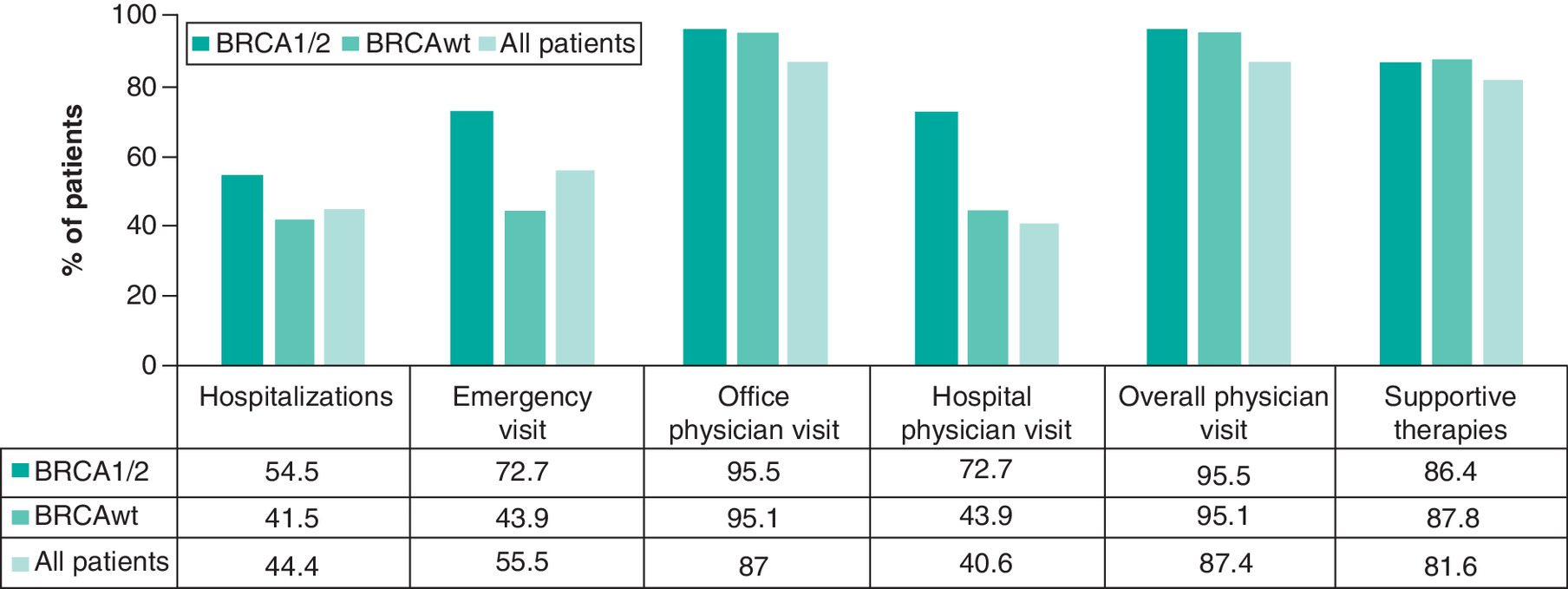
Approximately 90% of the patients had a follow-up visit with a mean (SD) of 17.0 (12.2) visits per patient, mainly as visits to the physician’s office (87.0%) and less commonly as hospital visits (40.2%) (Figure 2). Approximately half of the patients required hospitalization and visited the emergency department during the follow-up. The frequency of health resource utilization was greater among patients with BRCA1/2 mutations than in patients with wild-type BRCA (Figure 2). When evaluated as the incidence rate (patient-month) of health resource utilization, the rates for the BRCA1/2 mutated group and the BRCA wild-type group were as follows: hospitalizations (0.09 vs 0.05), emergency visits (0.14 vs 0.07), office physician visits (0.91 vs 0.96), hospital physician visits (0.36 vs 0.16), and overall physician visits (1.27 vs 1.12).
Treatment outcomes
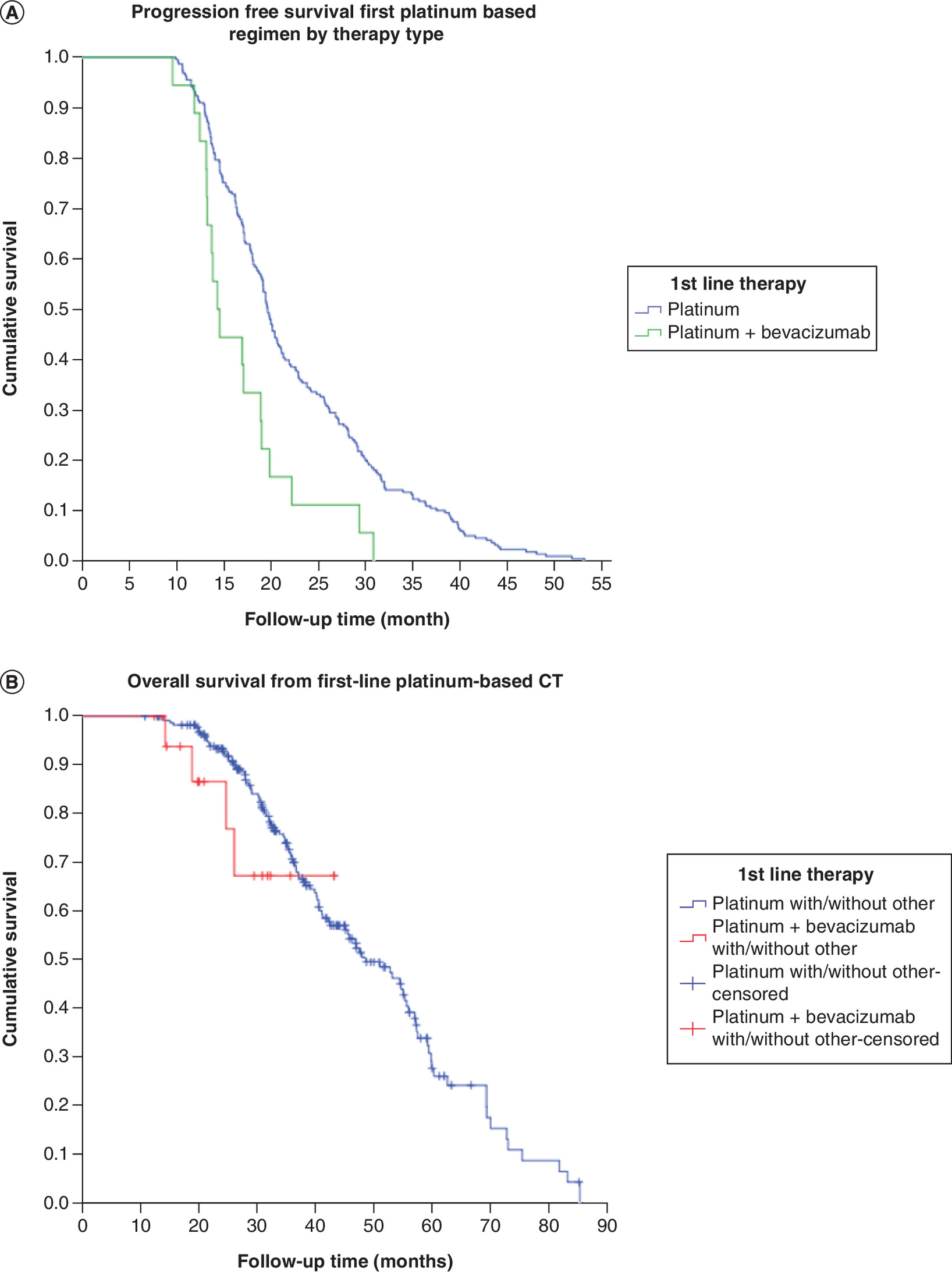
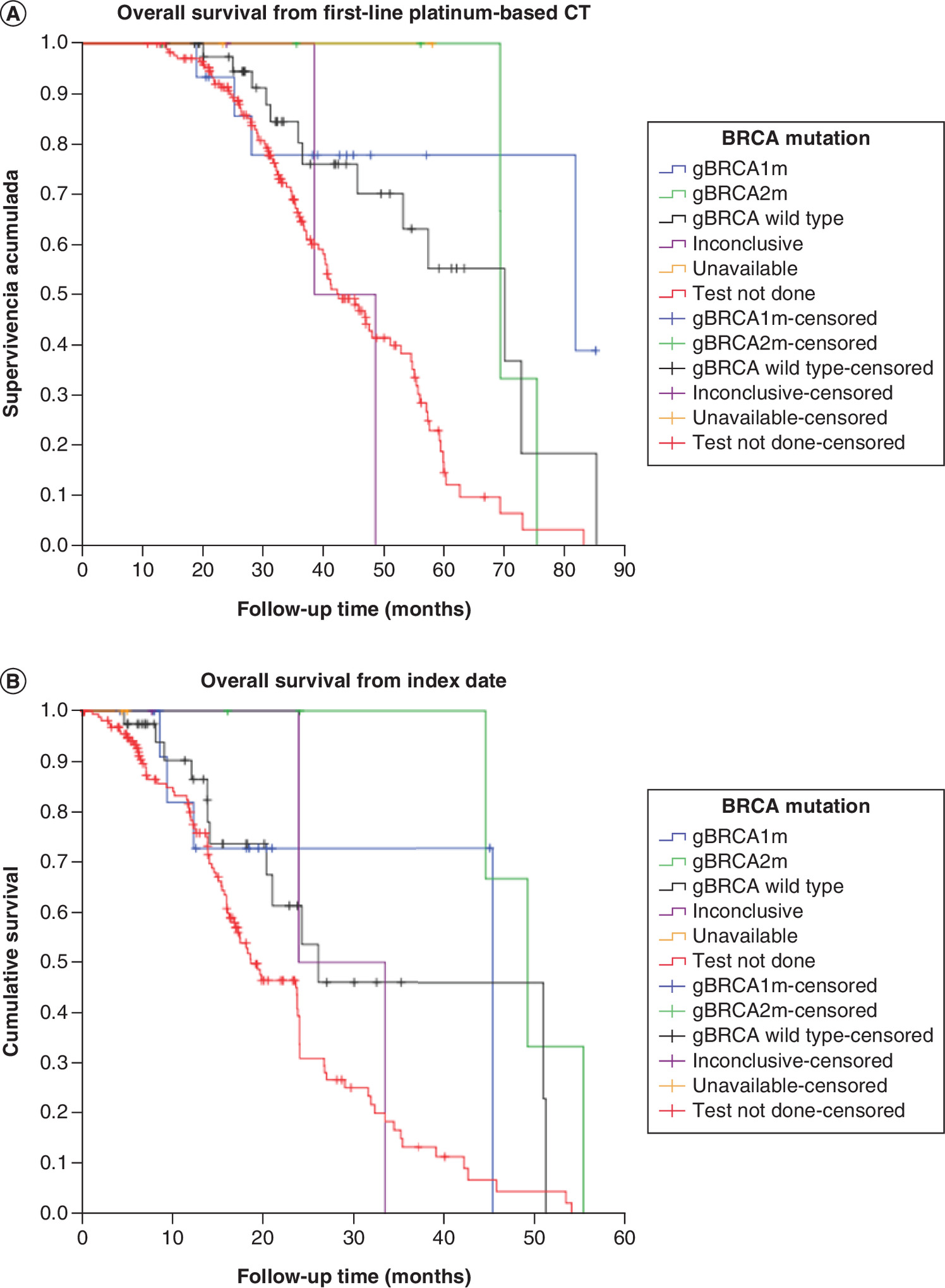
Overall, the median PFS to first-line platinum-based treatment was 19.4 months, with no differences between BRCA1/2-mutated and BRCA wild-type patients. The time to progression was longer among those who did not receive bevacizumab (Figure 3A); however, OS did not differ between bevacizumab-containing regimens and those without bevacizumab (Figure 3B). OS after the first-line platinum-based treatment was 48.6 months, and there were statistically significant differences across several strata of BRCA testing (log-rank test p = 0.001); BRCA1 mutated (81.7 months) and BRCA2 mutated (69.3 months) patients exhibited a longer OS than BRCA wild-type patients (70.0 months) (Figure 4A). Moreover, OS was also longer among BRCA1 and BRCA2 mutated patients than in BRCA wild-type patients after first recurrence (45.4, 49.2 and 26.1 months, respectively) (Figure 4B).
PFS became shorter with subsequent chemotherapy lines after recurrence, being about 16 months with the second- and third-line of chemotherapy and 5 months with the fourth-line of chemotherapy (Figure 5). The objective response rate decreased as the lines of chemotherapy increased, with 73.6% of patients responding to second-line treatment, 43.7% to third-line treatment and 21.1% to fourth-line treatment (Figure 5). Among patients who received a second line of chemotherapy, PFS was longer among patients with BRCA2 mutation than among those with BRCA wild-type status (51.3 vs 20.8 months), while patients with BRCA1 mutation did not reach the median; PFS by BRCA status beyond second-line therapy is based on a very limited number of patients (Figure 5). ECOG performance status worsened with subsequent chemotherapy lines after the first recurrence.
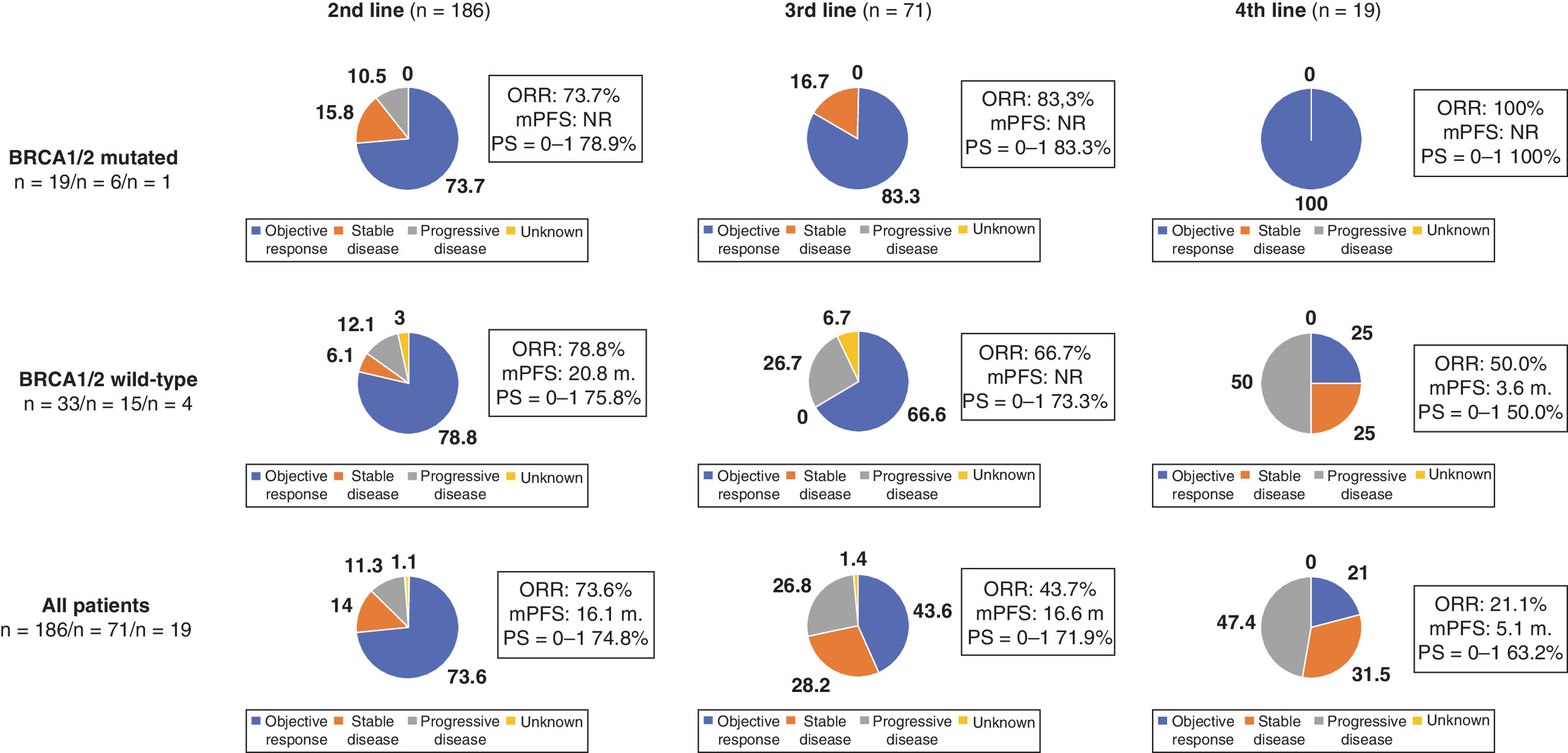
Figure 5. Treatment outcomes for subsequent chemotherapy lines after recurrence.
Information in the text box corresponds to the ORR, mPFS and the proportion of patients presenting an ECOG PS after treatment with 0-1.
ECOG: Eastern Cooperative Oncology Group; mPFS: Median progression-free survival; N: Number of subjects exposed; n: Number of cases with the outcome; NR: Not reached; ORR: Objective response rate; PS: Performance status.
Toxicity
The most frequent adverse events were neutropenia and new neuropathy, although they were more frequent during second-line chemotherapy than with first-line platinum-based chemotherapy (Table 3).
| Chemotherapy line | Adverse event | gBRCAm | gBRCA1m (n = 16) | gBRCA2m (n = 6) | gBRCA wild-type (n = 41) | Inconclusive (n = 3) | Test not done (n = 173) | Total (n = 239) | |||||||
|---|---|---|---|---|---|---|---|---|---|---|---|---|---|---|---|
| n | % | n | % | n | % | n | % | n | % | n | % | n | % | ||
| First-line platinum-based chemotherapy (n = 239) | Febrile neutropenia | 0 | 0.0 | 0 | 0.0 | 0 | 0.0 | 0 | 0.0 | 1 | 33.3 | 3 | 1.8 | 4 | 1.7 |
| Neutropenia req. hospitalization | 0 | 0.0 | 0 | 0.0 | 0 | 0.0 | 0 | 0.0 | 1 | 33.3 | 6 | 3.5 | 7 | 2.9 | |
| New neuropathy | 2 | 9.1 | 1 | 6.3 | 1 | 16.7 | 1 | 2.4 | 1 | 33.3 | 7 | 4.1 | 11 | 4.6 | |
| Platinum hypersensitivity | 1 | 4.5 | 1 | 6.3 | 0 | 0.0 | 0 | 0.0 | 0 | 0.0 | 2 | 1.2 | 3 | 1.3 | |
| Maintenance (n = 15) | New neuropathy | 0 | 0.0 | 0 | 0.0 | 0 | 0.0 | 0 | 0.0 | 0 | 0.0 | 1 | 0.6 | 1 | 0.4 |
| Platinum hypersensitivity | 0 | 0.0 | 0 | 0.0 | 0 | 0.0 | 0 | 0.0 | 0 | 0.0 | 1 | 0.6 | 1 | 0.4 | |
| Second-line chemotherapy (n = 186) | Acute myeloid leukemia | 0 | 0.0 | 0 | 0.0 | 0 | 0.0 | 0 | 0.0 | 1 | 33.3 | 2 | 1.2 | 3 | 1.3 |
| Febrile neutropenia | 3 | 13.6 | 2 | 12.5 | 1 | 16.7 | 6 | 14.6 | 0 | 0.0 | 13 | 7.5 | 22 | 9.2 | |
| Neutropenia req. hospitalization | 2 | 9.1 | 1 | 6.3 | 1 | 16.7 | 5 | 12.2 | 0 | 0.0 | 12 | 6.9 | 19 | 7.9 | |
| New neuropathy | 2 | 9.1 | 2 | 12.5 | 0 | 0.0 | 4 | 9.8 | 1 | 33.3 | 16 | 9.3 | 23 | 9.6 | |
| New or worsening nephrotoxicity | 1 | 4.5 | 1 | 6.3 | 0 | 0.0 | 4 | 9.8 | 1 | 33.3 | 2 | 1.2 | 8 | 3.3 | |
| Other new primary malignancy | 0 | 0.0 | 0 | 0.0 | 0 | 0.0 | 0 | 0.0 | 0 | 0.0 | 1 | 0.6 | 1 | 0.4 | |
| Platinum hypersensitivity | 1 | 4.5 | 0 | 0.0 | 1 | 16.7 | 3 | 7.3 | 0 | 0.0 | 3 | 1.8 | 7 | 2.9 | |
Discussion
This subgroup analysis indicates that in PSR HGSOC patients, BRCA testing was performed in few patients, although the results indicated that at recurrence, BRCA-mutated patients had better outcomes in terms of PFS and OS than patients who were BRCA wild-type. It was observed that patients’ treatment outcomes after the first recurrence progressively worsened as the patient underwent subsequent chemotherapy lines. Healthcare resource utilization when accounting for the follow-up time did not substantially differ between BRCA1/2-mutated and BRCA wild-type patients.
In this subgroup analysis of Spanish PSR HGSOC patients, BRCA testing was performed in slightly more than one-quarter of patients. This testing rate is very low due to the predictive, prognostic and therapeutic implications that have been demonstrated with BRCA testing in the management of patients with HGSOC. This low rate of genetic testing should be considered a limitation of the present study. However, it should be noted that this retrospective study included patients with PSR serous ovarian cancer between 1 January 2009, and 31 December 2013, when BRCA testing was not a standard practice. However, Unni et al., in a study conducted in a single center from the US in patients diagnosed with ovarian cancer between 1995 and 2012, reported that 24% of 168 PSR patients underwent BRCA testing [29]. The proportion of patients who exhibited a BRCA1/2 mutation (33%) was also consistent with the 40% reported in a multicenter Italian study in patients with HGSOC who were partial or fully platinum sensitive [30]. Currently, European guidelines published in 2019 recommend BRCA testing for all patients with nonmucinous ovarian cancer [4], and in Spain, BRCA testing has been recommended for all patients with high-grade nonmucinous ovarian cancer since 2018 [31]. In addition to mutations in the BRCA1/2 genes, genomic alterations involving other genes in homologous recombination (HR) pathways have been recognized, including Fanconi anemia genes (BRIP1italic>, PALB2italic>), the core RAD genes (RAD51CRAD51C, RAD51Ditalic>), and genes involved in HR pathways either directly (CHEK2italic>, BARD1italic>, NBNitalic>, ATMitalic>) or indirectly (CDK12italic>). However, their real effect over assessment of epithelial ovarian cancer risk is still uncertain.
Consistent with clinical practice guidelines, 84% of patients received first-line chemotherapy with carboplatin plus paclitaxel. Only 7.5% of the patients received a combination of platinum, paclitaxel and bevacizumab. Despite the significant results of bevacizumab in the first-line treatment [8], it seems that by the time these patients received first-line chemotherapy, bevacizumab was not broadly used as a standard of care for the first-line setting. Similar results were reported using real-world data in a fairly overlapping time period (2010–2015) in the US, with 5–7% of patients with ovarian cancer receiving a regimen containing bevacizumab [32]. In our study, PFS and, despite not significantly, OS were longer in those who did not receive bevacizumab; however, these data should be interpreted very cautiously since they are likely to be biased by confounding by indication. There were no differences regarding PFS between BRCA-mutated and BRCA-wild-type patients after first-line treatment. However, in recurrent patients, OS was longer among BRCA mutated patients than in BRCA wild-type patients, with clinically relevant differences (a median of 45–40 months vs 26 months, respectively); the results for PFS showed similar results.
The association between the presence of BRCA1/2 mutation and a better outcome is well documented in the literature, including patients with advanced-stage HGSOC and patients with recurrent disease [33–35]. In patients with advanced-stage HGSOC, BRCA1/2 mutation carriers showed a longer PFS than those who were BRCA1/2 wild-type [33]. Alsop et al. also reported a better tumor response after the first progression among carriers of BRCA1/2 mutations than in those who were BRCA1/2 wild-type, both using a platinum rechallenge or a nonplatinum regimen, and in both platinum-resistant and platinum-sensitive patients, although the differences were somewhat less marked [34]. In a retrospective study of 256 patients with recurrent EOC, the presence of a BRCA1/2 mutation was associated with a significantly longer PFS, independent of the line of therapy and the presence of platinum sensitivity [35]. Several other studies support the beneficial role of carrying a BRCA1/2 mutation on treatment outcomes [36–39].
Therapeutic outcomes progressively became more limited as subsequent chemotherapy lines took place. Thus, PFS was 19 months for first-line chemotherapy, 16 months for both second- and third-line chemotherapy, and 5 months for fourth-line chemotherapy. The objective response showed a similar trend, and the performance status also worsened with subsequent chemotherapy lines. The results in this regard, stratified by BRCA mutation status, could not be interpreted since the sample size was very small for those who were BRCA1/2 mutated (19 and 6 patients in second- and third-line chemotherapy, respectively). These results are consistent with those reported by Hanker et al. in over 1500 evaluable patients with advanced EOC with at least one relapse after first-line chemotherapy. These authors reported PFS of 10.2, 6.4, 5.6, 4.4 and 4.1 months after the first, second, third, fourth and fifth relapses, respectively, and similar trends with OS [40]. Their sample included only 40% of patients categorized as platinum-sensitive, which explains the numerical differences with our results [40]. In our study, toxicities were more frequent in patients receiving second-line chemotherapy.
These results support the model of using the best treatment option as soon as possible to delay progression and chemotherapy toxicities that are inherent to subsequent treatment lines in patients with advanced-stage ovarian cancer. In this regard, the recent results of PARP inhibitors in the first-line setting [21,41,42] support the recommendation made by some authors of offering maintenance therapy with these drugs to women with BRCA-mutated ovarian cancer [12,17].
Health resource utilization was high, with over 40% of patients requiring hospitalizations and over 50% visiting the emergency department during the follow-up. Health resource utilization was more common among BRCA-mutated patients, probably due to their longer survival; another factor that could have contributed to the health resource utilization among these patients is the BRCA diagnostic workflow itself. When we accounted for time, the rate of health resource utilization did not differ to a relevant extent between BRCA1/2 mutated patients and BRCA wild-type patients. An economic model in Spain in patients with BRCA-mutated HGSOC carriers has shown that the introduction of maintenance therapy with a PARP inhibitor after a second and subsequent line of chemotherapy results in delaying progression with a moderate economic impact in the National Health System, partially offset by the lower cost of chemotherapy, related adverse events and palliative care costs [28]. We cannot put into perspective the results of the Spanish sample with data from other countries [43], since we limited our sample to patients with high-grade serous ovarian cancer.
Conclusion
In conclusion, consistent with the literature, our data supports the importance of assessing BRCA status in patients with HGSOC since BRCA1/2 mutation carriers have better treatment outcomes. Importantly, the BRCA mutated patients showed longer survival, without a negative impact on the use of healthcare resources, as presented in the subanalysis, which are similar between BRCA1/2 mutated and BRCA wild-type patients. In addition, in line with previous studies, the data collected in our study indicate the importance of establishing new novel strategies in earlier stages of the disease to improve the OS and quality of life of patients with HGSOC. Finally, according to the subanalysis results, introducing maintenance treatment with PARP inhibitors in the first-line setting of BRCA1/2-mutated HGSOC patients may potentially have a similar economic impact but should be further investigated.
•
Subanalysis of 298 patients who were included in Spain of an international study to describe the overall cancer-related healthcare utilization patterns, treatment patterns and outcomes in women diagnosed with platinum-sensitive recurrent high grade serous ovarian cancer.
•
BRCA testing was performed in 68 (28.5%) patients.
•
Of the 66 patients who were BRCA tested and had the results available, 22 (33.3%) had a BRCA1/2 mutation, 41 (62.1%) had BRCA wild-type and in 3 (4.5%) patients, the results of the BRCA test were inconclusive.
•
The most common first-line platinum-based chemotherapy was the combination of carboplatin and paclitaxel, which was used in 84.1% of patients, with no relevant differences between BRCA1/2 mutated and BRCA wild-type patients.
•
The combination with bevacizumab was used in 18 (7.5%) of the patients, and none of these patients had a BRCA1/2 mutation.
•
BRCA-mutated patients had better outcomes in terms of progression-free survival and overall survival than patients who were BRCA wild-type.
•
Patients’ treatment outcomes after the first recurrence progressively worsened as the patient underwent subsequent chemotherapy lines.
•
Healthcare resource utilization when accounting for the follow-up time did not substantially differ between BRCA1/2-mutated and BRCA wild-type patients.
•
Overall, in this setting, BRCA1/2 mutation carriers have better treatment outcomes, including longer survival, without a negative impact on the use of healthcare resources.
•
Introducing maintenance treatment with poly[adenosine diphosphate-ribose] polymerase inhibitors in the first-line setting of BRCA1/2-mutated high-grade serous ovarian cancer patients may potentially have a similar economic impact but should be further investigated.
Author contributions
C Moya-Alarcón and A Gascó were responsible for study conception and design; authors A Gascó and A Callejo were responsible for acquisition of data; authors C Moya-Alarcón, A Callejo, G Piera and A Gascó A. were responsible for data analysis, and drafting and revision of the manuscript.
Acknowledgments
The authors thank JL Sanz and S Vara (Apices, Madrid; Spain) for their support with the statistical analysis.
Financial & competing interests disclosure
The authors are AstraZeneca employees. The authors have no other relevant affiliations or financial involvement with any organization or entity with a financial interest in or financial conflict with the subject matter or materials discussed in the manuscript apart from those disclosed.
Writing assistance was provided by F Rico-Villademoros (Apices, Madrid; Spain) and funded by AstraZeneca Spain.
Ethical conduct of research
The authors state that they have obtained appropriate institutional review board approval and have followed the principles outlined in the Declaration of Helsinki for human investigations.
Data sharing statement
Data in available from the corresponding author upon request.
Open access
This work is licensed under the Attribution-NonCommercial-NoDerivatives 4.0 Unported License. To view a copy of this license, visit http://creativecommons.org/licenses/by-nc-nd/4.0/
References
Papers of special note have been highlighted as: • of interest; •• of considerable interest
1.
Bray F, Ferlay J, Soerjomataram I, Siegel RL, Torre LA, Jemal A. Global cancer statistics 2018: GLOBOCAN estimates of incidence and mortality worldwide for 36 cancers in 185 countries. Cancer J. Clin. 68(6), 394–424 (2018).
2.
International for Research on Cancer (World Health Organization). The Global Cancer Observatory. Ovary (2019). https://gco.iarc.fr/today/data/factsheets/cancers/25-Ovary-fact-sheet.pdf
3.
Sociedad Española De Oncología Médica. Las Cifras del Cáncer en España 2020. Sociedad Española de Oncología Médica (SEOM), Madrid, Spain (2020).
4.
Colombo N, Sessa C, Du Bois A et al. ESMO-ESGO consensus conference recommendations on ovarian cancer: pathology and molecular biology, early and advanced stages, borderline tumours and recurrent diseasedagger. Ann. Oncol. 30(5), 672–705 (2019).
5.
Matz M, Coleman MP, Carreira H et al. Worldwide comparison of ovarian cancer survival: histological group and stage at diagnosis (CONCORD-2). Gynecol. Oncol. 144(2), 396–404 (2017).
6.
Moschetta M, Boussios S, Rassy E, Samartzis EP, Funingana G, Uccello M. Neoadjuvant treatment for newly diagnosed advanced ovarian cancer: where do we stand and where are we going? Ann. Transl. Med. 8(24), 1710 (2020).
7.
Oza AM, Cook AD, Pfisterer J et al. Standard chemotherapy with or without bevacizumab for women with newly diagnosed ovarian cancer (ICON7): overall survival results of a phase 3 randomised trial. Lancet Oncol. 16(8), 928–936 (2015).
8.
Burger RA, Brady MF, Bookman MA et al. Incorporation of bevacizumab in the primary treatment of ovarian cancer. N. Engl. J. Med. 365(26), 2473–2483 (2011).
9.
Pujade-Lauraine E, Banerjee S, Pignata S. Management of platinum-resistant, relapsed epithelial ovarian cancer and new drug perspectives. J. Clin. Oncol. 37(27), 2437–2448 (2019).
• An interesting review on the management of patients with platinum-resistant, relapsed epithelial ovarian cancer.
10.
Bouberhan S, Pujade-Lauraine E, Cannistra SA. Advances in the management of platinum-sensitive relapsed ovarian cancer. J. Clin. Oncol. 37(27), 2424–2436 (2019).
11.
National Comprehensive Cancer Network. Ovarian Cancer. Including fallopian tube cancer and primary peritoneal cancer. Version 1.2020. March 11, 2020 (2020). https://www.nccn.org/professionals/physician_gls/default.aspx
12.
Konstantinopoulos PA, Lheureux S, Moore KN. PARP inhibitors for ovarian cancer: current indications, future combinations, and novel assets in development to target DNA damage repair. Am. Soc. Clin. Oncol. Educ. Book 40, e116–e131 (2020).
• An up-to-date review on the use of poly[adenosine diphosphate-ribose] polymerase inhibitors for the management of ovarian cancer.
13.
Cook SA, Tinker AV. PARP inhibitors and the evolving landscape of ovarian cancer management: a review. BioDrugs 33(3), 255–273 (2019).
14.
Pennington KP, Swisher EM. Hereditary ovarian cancer: beyond the usual suspects. Gynecol. Oncol. 124(2), 347–353 (2012).
15.
González-Santiago S, Ramón YCT, Aguirre E et al. SEOM clinical guidelines in hereditary breast and ovarian cancer (2019). Clin. Transl. Oncol. 22(2), 193–200 (2020).
16.
Liu G, Yang D, Sun Y et al. Differing clinical impact of BRCA1 and BRCA2 mutations in serous ovarian cancer. Pharmacogenomics 13(13), 1523–1535 (2012).
17.
Banerjee SN, Lord CJ. First-line PARP inhibition in ovarian cancer – standard of care for all? Nat. Rev. Clin. Oncol. 17(3), 136–137 (2020).
18.
Boussios S, Karihtala P, Moschetta M et al. Veliparib in ovarian cancer: a new synthetically lethal therapeutic approach. Invest. New Drugs 38(1), 181–193 (2020).
19.
Graña B, Lastra E, Llort G, Brunet J, Isla D. SEOM clinical guidelines for hereditary cancer. Clin. Transl. Oncol. 13(8), 580–586 (2011).
20.
Llort G, Chirivella I, Morales R et al. SEOM clinical guidelines in Hereditary Breast and ovarian cancer. Clin. Transl. Oncol. 17(12), 956–961 (2015).
•• In our setting and by the time this study was conducted, a key Spanish guidelines for the management of ovarian cancer.
21.
Moore K, Colombo N, Scambia G et al. Maintenance olaparib in patients with newly diagnosed advanced ovarian cancer. N. Engl. J. Med. 379(26), 2495–2505 (2018).
• A pivotal randomized clinical trial on the efficacy of olaparib as maintenance therapy in patients with newly diagnosed advanced high-grade serous or endometrioid ovarian cancer with a mutation in BRCA1, BRCA2 or both (BRCA1/2) who had a complete or partial clinical response after platinum-based chemotherapy.
22.
Capoluongo E, Ellison G, López-Guerrero JA et al. Guidance statement on BRCA1/2 tumor testing in ovarian cancer patients. Semin. Oncol. 44(3), 187–197 (2017).
23.
Capoluongo E, Scambia G, Nabholtz JM. Main implications related to the switch to BRCA1/2 tumor testing in ovarian cancer patients: a proposal of a consensus. Oncotarget 9(28), 19463–19468 (2018).
• Provides some considerations for incorporating genetic analysis of ovarian tumor samples into the patient pathway.
24.
Vos JR, Fakkert IE, De Hullu JA et al. Universal tumor DNA BRCA1/2 testing of ovarian cancer: prescreening PARPi treatment and genetic predisposition. J. Natl Cancer Inst. 112(2), 161–169 (2020).
25.
Gruppo Di Lavoro Aiom – Sigu – Sibioc – Siapec-Iap. Raccomandazioni per L'implementazione del Test BRCA Nelle Pazienti con Carcinoma Ovarico e Nei Familiari a Rischio Elevato di Neoplasia. V.2 – Gennaio 2019. Associazione Italiana di Oncologia Medica, Milan, Italy (2019). https://www.aiom.it/raccomandazioni-per-limplementazione-del-test-brca-nelle-pazienti-con-carcinoma-ovarico-e-nei-familiari-a-rischio-elevato-di-neoplasia/
26.
Delgado-Ortega L, Gonzalez-Dominguez A, Borras JM et al. The economic burden of disease of epithelial ovarian cancer in Spain: the OvarCost study. Eur. J. Health Econ. 20(1), 135–147 (2019).
27.
Moya-Alarcón C, González-Domínguez A, Simon S et al. Cost-utility analysis of germline BRCA1/2 testing in women with high-grade epithelial ovarian cancer in Spain. Clin. Transl. Oncol. 21(8), 1076–1084 (2019).
• A Spanish study to estimate the efficiency of providing germline BRCA1/2 testing to high-grade epithelial ovarian cancer patients without family history of ovarian cancer.
28.
Delgado-Ortega L, Gines Rubio J, Garcias De Espana MDC, Carcedo D, Cordero Puentes L, Moya De Alarcon C. Economic impact of olaparib on maintenance treatment of patients with BRCA-mutation positive, platinum-sensitive relapsing high-grade serous epithelial ovarian cancer in Spain. Farm. Hosp. 42(3), 95–102 (2018).
• An important Spanish study to estimate the economic impact of the introduction of olaparib in the Spanish National Health System as maintenance monotherapy in patients with BRCA-mutation positive high-grade serous ovarian cancer.
29.
Unni SK, Schauerhamer MB, Deka R et al. BRCA testing, treatment patterns and survival in platinum-sensitive recurrent ovarian cancer – an observational cohort study. J. Ovarian Res. 9(1), 18 (2016).
30.
Marchetti C, De Leo R, Musella A et al. BRCA mutation status to personalize management of recurrent ovarian cancer: a multicenter study. Ann. Surg. Oncol. 25(12), 3701–3708 (2018).
31.
Oaknin A, Guarch R, Barretina P et al. Recommendations for biomarker testing in epithelial ovarian cancer. A national consensus statement by the Spanish Society of Pathology and the Spanish Society of Medical Oncology. Rev. Esp. Patol. 51(2), 84–96 (2018).
•• A key Spanish guideline on the use of biomarker testing in patients with epithelial ovarian cancer.
32.
Yu N, Xiao Y, Yi J, Oliveri D, Houghton R, Luhn P. Real world treatment patterns of patients with ovarian cancer receiving first line chemotherapy in the United States. Value Health 20(9), A473 (2017).
33.
Kim SI, Lee M, Kim HS et al. Effect of BRCA mutational status on survival outcome in advanced-stage high-grade serous ovarian cancer. J. Ovarian Res. 12(1), 40 (2019).
34.
Alsop K, Fereday S, Meldrum C et al. BRCA mutation frequency and patterns of treatment response in BRCA mutation-positive women with ovarian cancer: a report from the Australian Ovarian Cancer Study Group. J. Clin. Oncol. 30(21), 2654–2663 (2012).
35.
Safra T, Rogowski O, Muggia FM. The effect of germ-line BRCA mutations on response to chemotherapy and outcome of recurrent ovarian cancer. Int. J. Gynecol. Cancer 24(3), 488–495 (2014).
36.
Bookman MA, Tyczynski JE, Espirito JL, Wilson TW, Fernandes AW. Impact of primary platinum-free interval and BRCA1/2 mutation status on treatment and survival in patients with recurrent ovarian cancer. Gynecol. Oncol. 146(1), 58–63 (2017).
37.
Safra T, Borgato L, Nicoletto MO et al. BRCA mutation status and determinant of outcome in women with recurrent epithelial ovarian cancer treated with pegylated liposomal doxorubicin. Mol. Cancer Ther. 10(10), 2000–2007 (2011).
38.
Kwa M, Edwards S, Downey A et al. Ovarian cancer in BRCA mutation carriers: improved outcome after intraperitoneal (IP) cisplatin. Ann. Surg. Oncol. 21(5), 1468–1473 (2014).
39.
Gallagher DJ, Konner JA, Bell-Mcguinn KM et al. Survival in epithelial ovarian cancer: a multivariate analysis incorporating BRCA mutation status and platinum sensitivity. Ann. Oncol. 22(5), 1127–1132 (2011).
40.
Hanker LC, Loibl S, Burchardi N et al. The impact of second to sixth line therapy on survival of relapsed ovarian cancer after primary taxane/platinum-based therapy. Ann. Oncol. 23(10), 2605–2612 (2012).
41.
Ray-Coquard I, Pautier P, Pignata S et al. Olaparib plus bevacizumab as first-line maintenance in ovarian cancer. N. Engl. J. Med. 381(25), 2416–2428 (2019).
42.
Gonzalez-Martin A, Pothuri B, Vergote I et al. Niraparib in patients with newly diagnosed advanced ovarian cancer. N. Engl. J. Med. 381(25), 2391–2402 (2019).
43.
Tyczynski J, Williams S, Gregory N et al. Real-world treatment patterns for platinum-sensitive recurrent serous ovarian cancer: findings from a multinational medical record review. J. Clin. Oncol. 33(Suppl. 15), e16548 (2015).
Information & Authors
Information
Published In
Pages: 13 - 27
PubMed: 34697945
Copyright
© 2021 The authors. This work is licensed under the Attribution-NonCommercial-NoDerivatives 4.0 Unported License
History
Received: 7 June 2021
Accepted: 6 October 2021
Published online: 26 October 2021
Keywords:
Topics
Authors
Funding Information
AstraZeneca Farmacéutica Spain, S.A.
Metrics & Citations
Metrics
Article Usage
Article usage data only available from February 2023. Historical article usage data, showing the number of article downloads, is available upon request.
Citations
How to Cite
Real-world treatment patterns and outcomes in platinum-sensitive recurrent high-grade serous ovarian cancer patients. (2021) Journal of Comparative Effectiveness Research. DOI: 10.2217/cer-2021-0135
Export citation
Select the citation format you wish to export for this article or chapter.
Citing Literature
- Weronika Pawul, Paulina Opoka, Agata Dusza, Bernard Blajerski, Julia Orzelska, Natalia Gierulska, Krzysztof Kułak, Rafał Tarkowski, Prognostic and therapeutic implications of BRCA1 and BRCA2 mutations in ovarian cancer, Frontiers in Oncology, 10.3389/fonc.2026.1899836, 16, (2026).
- Lucy Haggstrom, Yeh Chen Lee, Clare Scott, Philipp Harter, Linn Woelber, Jonathan Ledermann, Charlie Gourley, Iain A McNeish, Frédéric Amant, Isabelle Ray-Coquard, Alexandra Leary, Amit M Oza, Anna Tinker, Antonio González Martin, Sabrina Chiara Cecere, Sandro Pignata, Nicoletta Colombo, Hiroyuki Yoshida, Christian Marth, Ora Rosengarten, Kathleen Nadine Moore, Eva María Gómez-García, David Tan, Michael L Friedlander, How long is long enough? An international survey exploring practice variations on the recommended duration of maintenance therapy with PARP inhibitors in patients with platinum sensitive recurrent ovarian cancer and long-term outcomes, International Journal of Gynecological Cancer, 10.1136/ijgc-2024-005976, 34, 12, (1932-1939), (2024).
- Mari Lahelma, Heini Rauhamaa, Riikka-Leena Leskelä, Outi Isomeri, Juhana Idänpään-Heikkilä, Sari Käkelä, Nichola Roebuck, Barbara Mascialino, Sakari Hietanen, Mikko Loukovaara, Annika Auranen, Prognostic factors and overall survival among patients with ovarian cancer in the pre-PARP inhibitor era: the OCRWE-Finland study, Acta Oncologica, 10.2340/1651-226X.2024.40324, 63, (763-771), (2024).