

Identifying patient decisions and related information needs during decision making related to total knee arthroplasty
Publication: Journal of Comparative Effectiveness Research
Abstract
Aim: Research regarding decisions patients make about total knee arthroplasty, apart from having the procedure or not, are limited. Understanding patient decision making and related information needs is essential for shared decision making. Methods: Focus groups with an online community-based sample identified decisions about total knee arthroplasty beyond the decision to have the surgery itself. An online survey was used to determine relative importance of five major decisions and evaluate related information available. Results: Patients did not feel they have enough information to make important decisions of surgeon, device type, surgical approach, facility, or timing, for their total knee arthroplasty. Conclusion: Although further research is needed to generalize these findings, physicians should consider these questions during shared decision making with patients considering total knee arthroplasty.
It is estimated that in 2012, there were 15.1 million Americans living with symptomatic osteoarthritis of the knee, a painful and degenerative musculoskeletal condition [1]. Recommended treatment is symptomatic, consisting first of exercise, pain management and weight loss when appropriate. Eventually, however, because the disease is degenerative, many patients opt for surgical knee replacement, termed total knee arthroplasty (TKA). According to the National Inpatient Registry, 680,000 TKA procedures were performed in the United States in 2014 [2]. Extrapolations suggest that by 2030, there will be 935,000 to 1.9 million TKA procedures done annually [2–4]. In 2010 there were 4.7 million Americans with TKA [5]. Serious adverse events of TKA are rare, consisting primarily of infection (1–1.8%) and deep vein thrombosis and pulmonary embolism (<0.5%) [6,7]. Data suggest the vast majority of TKA implants last from 6.25 years (97–98%) to 25 years (82%) [8–11]. Replacement, or revision, TKA procedures account for 6% to 10% of TKA procedures (50,000 to 80,000 surgeries annually in the US).
Despite the positive outcomes and low complication rates of TKA overall, it is estimated that 20% or more of those who had TKA are dissatisfied with the outcome of their procedure [12–15]. Dissatisfaction is driven by poor quality-of-life ratings related to function, pain and unfulfilled expectations of the procedure [14–16]. Efforts to understand and improve sources of dissatisfaction emphasize identifying patients' expectations and providing personalized education within a shared decision making framework. Shared decision making requires appropriately informing and educating patients about potential risks and benefits of medical and surgical decisions including the likelihood of specific outcomes associated with each decision. Although data on shared decision making come primarily from nonelective surgery or within the context of preference-sensitive conditions like knee osteoarthritis, shared decision making has been shown to increase patient knowledge, improve preoperative quality of life, lessen preoperative anxiety, reduce decisional conflict between provider and patient, and improve patient satisfaction with surgical outcomes [16–20].
Decision aid tools available to help patients take part in the decision making process include paper or digital audio visual materials, personal counseling tools and multimedia programs, each of which may provide information on treatment options, testimonials from patient peers, or assessments to help patients identify their treatment preferences [21–25]. Research regarding the modality and content of educational materials needed by people considering TKA is limited. Meta-analysis of 26 published studies found oral education to be the most frequently used modality before elective surgery, although at a rate of 59.3% [26]. In the meta-analysis, the next most frequent education modalities were printed material (55.6%), e-learning (51.9%) and multimedia (14.8%). An online interactive survey tested methods for delivery of information for shared decision making to people with arthritis found that materials that included both graphics and text improved patients' knowledge more than materials that contained only one or the other [27].
The content for decision aid tools can vary, but logic dictates that content should address the specific procedure-related choices that patients are most concerned about. To date, research regarding patients' decision making and concerns about TKA have focused primarily on the decision to have TKA or continue with nonsurgical treatment. However, evidence suggests that patients' concerns about TKA are myriad, extending beyond the sole decision of whether to have surgery. In a qualitative study of people actively considering TKA, concerns were classified as pre, intra-, or postoperative concerns. Pre-operatively, patients worry mainly about the technology and lifespan of the implant device, timing of the surgery and potential addiction to medications [28]. For the procedure itself, they are concerned about surgical technique and anesthesia. Recovery and its duration, and quality of life, especially pain relief, are important considerations for patients looking ahead to the postoperative period. Another qualitative study of people with osteoarthritis of the knee who were not necessarily considering TKA showed overlapping concerns of timing of surgery, longevity of prosthesis, physician trust and financial concerns [29].
A qualitative study from the United Kingdom reported results of 4 focus groups with a total of 31 participants who were all appropriate for either partial knee arthroplasty or TKA. Information needs identified included guidance on referral process, who should have surgery, necessity of treatment, possible adverse events and financial costs [30]; but no study to date has identified the TKA-related decisions that are important to patients, other than simply choosing whether to have the procedure, and associated information needs for those decisions.
To enable shared decision making and to guide development of content for decision aid tools, it is important to understand what decisions patients believe are important as they deliberate, plan for, undergo and recover from TKA and which of their most important choices lack adequate and accessible information from a patient perspective. In this study, concepts that emerged from webinar-enabled focus groups were used to develop a survey about patients' choices and information needs related to TKA. The objective was to learn what matters to patients in their decisions related to joint replacement surgery.
Methods
CreakyJoints.com is an online community that is freely available to the public and provides education, support and advocacy related to all forms of arthritis. ArthritisPower is an affiliated patient-powered research network (PPRN), open to all members of CreakyJoints. ArthritisPower allows participants to track their own clinical data over time and enroll in research studies [31,32]. Members of ArthritisPower were recruited to participate in focus groups related to joint replacement. Data from the focus groups was used to develop an online survey about decision making and information needs related to TKA, and members of CreakyJoints and ArthritisPower were recruited to take the survey. The focus group portion of this study was reviewed, approved and deemed exempt from the need for informed consent by the RAND Institutional Review Board (IRB). The survey portion of the study was reviewed, approved and deemed exempt from the need for informed consent by the Yale University IRB, Human Investigation Committee.
Focus groups
Members of ArthritisPower, who were age 19 years or more with self-reported physician-made diagnosis of osteoarthritis, and who were considering, planned to or had undergone knee or hip joint replacement, were eligible for participation in the focus groups. Individuals were not excluded because of comorbid conditions, including other forms of arthritis or other musculoskeletal or joint diseases (e.g., rheumatoid or psoriatic arthritis). People under age 50 were invited to ensure that we heard from a range of individuals about the arthroplasty decisions they found important, including individuals young enough to potentially outlive their joint replacement and thus be likely to require a revision surgery [33]. No compensation for participation was offered. Both individuals who had and had not undergone joint replacement were included to explore information needs and decision making at all stages of joint replacement.
Per screening based on inclusion criteria, eligible ArthritisPower members were invited to the focus groups via emailed invitations that included a link to register for the focus group. The registration link led to an online form that validated eligibility and captured demographic and procedure-related information for each participant. Additional participants were recruited via digital flyers and ads on Facebook and Twitter that included the study coordinator's (SV) contact information to enable focus group registration directly with her. Focus group registration included a brief survey. Individuals who were considering surgery were asked about decisions and information that was important to them. Those who had already had joint replacement surgery were asked about the information they had received prior to surgery.
Webinar-enabled focus groups were scheduled at variable weekday hours to offer options that could accommodate different time zones and work schedules. Each focus group was meant to be conducted with three to seven participants, and two to three moderators (WBN, SV, TWC) who used a discussion guide (Appendix) to lead the focus group. The discussion guide was created by the authors of the study and drew from published literature regarding patient decision making for TKA and issues identified through the registration survey.
Focus group discussions were transcribed, and Dedoose version 7.6.21 was used to organize and code transcripts to identify recurring concepts. The codebook (Appendix) was initially drafted from study aims, existing literature and the discussion guide. Coding was completed independently by four members of the study team (WBN, SV, EH and TWC), and the codebook was adapted continually until no new themes emerged from newly coded transcripts. Each transcript was coded by two team members, and WBN adjudicated discrepancies. A deductive-inductive process was used to identify and aggregate these concepts into major decisions that patients make related to joint replacement and the factors they use to inform those decisions [34]. Following initial analysis of transcripts, member (participant) checking was conducted to confirm the credibility and validity of focus group findings. A preliminary list of the major decisions and factors was shared with patients during a dissemination webinar and in one-on-one interviews with a small sample of focus group participants [35,36].
Survey
An online survey [27] was developed regarding five of seven major decisions, beyond whether to have surgery, that were identified by the focus groups. Because it is more complicated with longer anticipated recovery time and more variable outcomes, TKA was chosen as a focus for the survey. Only the five procedure-related TKA-related decisions were selected because of their relevance during the period between when the decision has been made to have surgery and the surgical procedure itself, namely choice of: surgeon, implantable device, surgical approach, facility and timing. The goals of the survey were to determine – which of the major decisions mattered most to individuals who might consider TKA, and the extent to which information was perceived as available to them to make those decisions. The survey included demographic questions, a request to rank the importance of the major decisions, and a request to rate availability of information to make those decisions on a 5-point Likert scale indicating level of agreement from strongly disagree to strongly agree. Survey items for this study took about 3 min to complete and were embedded in a 25-min questionnaire that included items to assess the impact of information presentation format on patients' TKA preferences as part of another study.
Members of ArthritisPower and CreakyJoints were eligible to take the survey if they were age 50 or more, had reported a physician-made diagnosis of rheumatoid arthritis, psoriatic arthritis and/or osteoarthritis involving one or both knees, and had not had previous total hip arthroplasty or TKA. Eligible members of the ArthritisPower and CreakyJoints community were sent invitations to participate via email with hyperlinked survey. Follow-up e-mail invitations were sent to nonresponders. The survey was also advertised on the CreakyJoints Facebook page, yielding additional email addresses to whom a request to take the survey was sent. If an individual was a Facebook follower but not a CreakyJoints member, which requires providing an email address, they received an invitation from the Facebook page and were asked to provide their email so they could be contacted about the survey. To prevent people signing up to take the survey more than once, unique survey links were generated, each of which could be used only by the individual who received the initial invitation. Compensation was not offered.
The online survey was programmed using Qualtrics software and SAS software was used to analyze survey data and produce descriptive and inferential statistics. Rank for each major decision was weighted by multiplying the rank number by its inverse to achieve a single weighted score for each of the five decisions. For instance, an item scored 1/1 if ranked as the most important (1), 1/2 if rated second most important (2), 1/3 if third (3), 1/4 if fourth (4) and 1/5 if rated fifth most important (5). Values were then summed across all respondents for each decision to produce a summary score. Rather than use a simpler reverse coding (1 = 5, 2 = 4, etc.), we calculated the summary score for each decision based upon the inverse of the weighted importance values for each item that a participant ranked 1–5 in order to reflect the importance of decisions ranked as first or second.
We tested the null hypotheses that study participants would not rank all five decisions equally, nor would they rate the adequate availability of information evenly across each of those 5 decisions. Chi-square tests were performed to determine whether a relationship existed between decision and rank. To evaluate whether participants considered sufficiency of information to be equal across the five decisions, we first converted strongly agree to 1, agree to 2, neither agree nor disagree to 3, disagree to 4 and strongly disagree to 5. We then used ANOVA to test the null hypothesis that there was no difference in mean scores across the 5 categories.
Results
Focus groups
Invitations to the focus groups were sent via email to 831 eligible members of ArthritisPower. The email inviting participation in focus groups was opened by 24% of recipients (200/831), and 6% (47/831) of people who opened the email registered for a focus group. A reminder email was sent to the 631 individuals who had not opened the first email. Of the 11% (70/631) who opened the reminder email <1% (3/631) registered for a focus group. Comparable rates for similar focus group enrollment efforts in ArthritisPower were not available because of the project's unique format; however, email open rates were lower than our usual 15–20% open rate for survey study invitations. Of the 101 people who registered, 49 attended one of 14-h-long focus group meetings of three to five participants each. Focus group participants were recruited from December 2015 to March 2016; recruitment was closed once saturation of responses was reached. Participants in the focus groups were primarily white women with at least some college-level education (Table 1).
| Characteristics | Focus group (n = 49) | Survey (n = 574) | |
|---|---|---|---|
| Age, Mean (SD) | 58.34 (10.46) | 61.40 (6.77) | |
| Sex | Female | 34 (69%) | 532 (93%) |
| Male | 15 (31%) | 42 (7%) | |
| Race | White | 39 (80%) | 532 (93%) |
| Nonwhite | 10 (20%) | 42 (7%) | |
| Education level | Some college or more | 34 (69%) | 492 (86%) |
| High school or less | 15 (31%) | 82 (14%) | |
| Marital status | Married | 19 (39%) | 320 (56%) |
| Unmarried | 30 (61%) | 254 (44%) | |
| Job status | Employed | 19 (39%) | 203 (35%) |
| Unemployed | 30 (61%) | 371 (65%) | |
| Comorbidities | None | 26 (53%) | 318 (55%) |
| At least 1 | 23 (47%) | 256 (45%) | |
During the focus groups, apart from the decision of whether or not to have surgery, seven decisions related to joint replacement surgery and seven factors used to make those decisions emerged as important (Table 2). Decisions included choice of surgeon, facility, device, approach, timing, other health care professionals who would be involved and other services. Decisions were driven by peoples' current personal and clinical situation, anticipated surgical outcome, other options, communication or relationship with a clinician, perceived value, availability of online or printed information, and level of familiarity (Table 2; Table 3). Based on the amount of direct control patients indicated having over the decision, the decisions were classified into 2 groups: primary or secondary. If the patient directly controls the decision, it was considered primary. If the decision was contingent on a primary decision or mostly made by others, then it was a secondary decision. For example, if a patient makes the primary decision of who will be their surgeon, the subsequent secondary decision of where to have surgery done is then limited to the places where that surgeon operates.
| Decision | Description | Factors influencing decision† | Decision level |
|---|---|---|---|
| Surgeon | Which surgeon will perform surgery | Communication or relationship with clinician, perceived value of surgeon, online/printed information available | Primary |
| Device | Which implant device will be installed during surgery | Anticipated surgical outcomes, online/printed information available, perceived value of device, communication or relationship with clinician | Secondary |
| Approach | Specific approach to surgery (e.g., anterior vs posterior, bilateral joint replacement) | Anticipated surgical outcomes, communication or relationship with clinician, level of familiarity | Secondary |
| Facility | Where surgery will be performed (e.g., location, specific hospital or medical center) | Online/printed information available, level of familiarity, perceived value of facility | Primary or Secondary |
| Timing | When to have surgery | Current personal and clinical situation, anticipated surgical outcomes, other options | Primary |
| Other healthcare professionals | Who/which other health care professionals besides the surgeon will be involved in care during and after surgery | Level of familiarity, perceived value of clinicians | Secondary |
| Other services | What other services will be necessary before, during or after surgery | Anticipated surgical outcomes, communication or relationship with clinician, current personal and clinical situation | Primary or Secondary |
†
See codebook for factor definitions.
Surgeon
Selecting a surgeon to perform the procedure was considered a primary decision. Participants cited a range of factors they used to help them decide which surgeon to select, including the surgeon's perceived trustworthiness and level of communication, gender, track record with the joint in question, experience with other patients with the same disease(s) and postsurgical infection rates. Participants gathered information to help choose a surgeon from firsthand encounters with the surgeon, personal referrals, and online research.
Device
Which implant device or device type would be implanted was an important secondary decision. Participants noted their reliance on the surgeon to guide a device decision and the dependence of this decision on what a chosen physician did or did not use in their practice. Some expressed interest in the device safety record and features, from size and material used in its composition to its anticipated durability and longevity. Others were interested in the device selection process and wanted to know whether it is the surgeon, hospital, insurance company, or device manufacturer that chiefly controls the decision of which device to use.
Approach
The specific approach to surgery (e.g., anterior vs posterior, unilateral vs bilateral or incision types) also emerged as a secondary decision. Although participants understood surgical approach to be a surgeon-made decision, they were interested in the decision and consulted health care professionals, online resources and social contacts to learn about the benefits and risks of different approaches. The effect that a surgical approach might have on the viability of a revision TKA, if necessary, was also raised as a consideration.
Facility
Where to go for surgery, (i.e., a hospital, medical center, orthopedic clinic, or facility) was raised by participants as an important decision. Some participants commented on the facility as a primary decision but recognized that the selection was constrained by a priori factors such as geographic location and insurance. Some participants also acknowledged that their preference for a particular surgeon or other health professional may guide where they go for hip or knee replacement. The prestige, expertise or specialization of a facility, recommendations from others and infection rates were also noted as factors in participants' decision about facility.
Timing
Choosing when to have arthroplasty was a primary decision distinct from whether to have surgery. The decision concerns long-term planning, such as how long a joint replacement would last, particularly if a person was young or suffering from a condition that they considered severe. Short-term considerations were also important and included the most appropriate season of the year or made a timing decision based on the availability of instrumental support from friends or family during recovery and rehabilitation. Current personal situation, clinical status, anticipated surgical outcome and other anticipated benefits, and risks of putting off surgery were key factors in deciding on an approximate date for surgery.
Other healthcare professionals
Choice of healthcare professionals (HCPs) other than the surgeon who would be involved in care during and after surgery was also identified as an important decision. For example, some participants were interested in which anesthesiologist would be present during surgery or which physical therapist(s) would be working with them for rehabilitation. Participants wanted to minimize the discomfort and stress of the procedure and have the most efficient recovery possible. They mentioned perceived value, or trust, and communication with HCPs as key factors in this decision, but acknowledged that other primary decisions, such as choice of surgeon or facility, typically determined which HCPs would be involved.
Other services
Other services needed before, during or after surgery (e.g., mental health) also emerged as an important decision. Factors influencing this decision included current personal and clinical situation, specifically the challenges associated with mental illness or other concomitant conditions, as well as anticipated surgical outcomes, and communication or relationship with specific clinicians.
Survey
Invitations to participate were emailed to 3465 eligible members of ArthritisPower and CreakyJoints, and up to 3 email reminders were sent to nonresponders. Emails were opened by 32% (1109/3465) and the survey link was clicked by 8% (277/3465). The CreakyJoints Facebook page yielded an additional 2227 email addresses to whom a request to take the survey was sent. Of these emails, 55% (1225/2227) were opened and 34% (757/2227) of recipients clicked the survey link. The response rate in each case was higher than for similar ArthritisPower osteoarthritis surveys which typically have an invitation email open rate of 18% and click rate of 5%. A total of 1034 people started the survey and 56% (574/1034) passed the eligibility screener and completed the survey between April and June 2017, for a final sample size of 574. A majority of those who completed the survey were white women with at least some college education and a mean (SD) age of 61.40 (6.77; Table 1). Quotes from focus group participants exemplify their thinking about each of the seven decisions (Table 3).
| Surgeon |
|---|
| One of my decisions was basically, and please men, don't take this badly, but I chose a woman, primarily because they can handle many things at once, and they can handle many questions at once, and they're just built that way. That was one of my–I needed somebody who had a decent bedside manner. She was so quiet, a bit too efficient in her answers. Just being a surgeon, I think that's just part of–they're very scientific. (Woman, age 55–64, post-knee replacement) |
| Well, I think that if you think that your doctor is–everybody thinks their doctor's a good doctor. Otherwise, they wouldn't be going to him. There's a certain amount of trust, and I think that if you really believe your doctor's a good doctor, and you have trust, then chances are that's good enough in most cases. I think people would report that they would have a higher desire to have this information than they really do if they were speaking to a trusted doctor. Perhaps somebody they've seen more than once. (Man, age 55–64 post-hip replacement) |
| …I guess the main thing is to find out how often and how many surgeries the surgeon does. What's their experience? There are many people. They specialize. They either do knees or hips or shoulders or what have you. The one I'm going to actually does both hips and knees. For my decision making, I wanted someone who had familiarity with both. …I have a connective tissue disorder that makes me not necessarily a great candidate for surgery. I would want to know what–has the surgeon has performed it on people with this condition? What is the success rate? What differences in rehab would be necessary in considering this? (Woman, age 55–64, post-knee and hip replacement) |
| …Really, it's a lot of personal referrals. I asked around a lot and talked to people. Then worked with him for about 5 years, and just really got all really good feelings from him. (Woman, age 45–54, post-knee replacement) |
| … I got on the internet and did my research, and plus I worked in a hospital, so I had… …I asked around. I asked as far as patients. I asked other healthcare professionals. I wanted to know their infection rates. I wanted to know which doctors had the least amount of infection rates. That, to me, was important because I've seen some of those joints get infected, and those people–poor patients, I know it's a nightmare, and so I think that's been, for me, I really was concerned about that. (Woman, age 55–64, post-hip replacement) |
| Device |
| I have one more question on the subject, and that would be, do our insurance companies mandate the kind of equipment that is used in a knee replacement surgery? (Woman, age 55–64, considering knee replacement) |
| I understand that they stock the doctor's surgical suite with a variety of different sizes from the same manufacturer and the same style. I saw a model of it, but I didn't know if there was an opportunity to get different manufacturers. You don't really go into that ‘cause that's that whole medical device industry, which is kind of–I don't know if they want the patients to know too much about it. I didn't even ask, and I don't care at this point, because the outcomes were pretty good for me. (Man, age 55–64, post-knee replacement) |
| …the second thing [I'd want to know] is five- and ten-year experience with particular joints and or manufacturers. I would not want a manufacturer that had been in the business for three years supplying my hip joint because–and the reason is, you look on TV. You can see the lawyers suing the heck out of the metal joint manufacturers. You think, “Oh my God! First of all, am I gonna have to deal with attorneys at some point in my life?” You see those people on TV. They're scary, and you sort of realize that the metal on metal was not popular for very long… I don't know that I would want a brand-new material utilized in my hip without knowing it, number one. Number two, probably without some type of consideration, I'd want follow-up consideration if it were a brand-new joint. (Man, age 55–64, post-hip replacement) |
| …my surgeon actually told me that my device could last 20 years, maybe my lifetime, and that I could return to any activity I wanted to, that he had professional badminton players playing badminton. He had marathon runners running. That's not typical advice, but that's what he was telling his patients. If that's what you hear, that's what you expect. (Woman, age 55–64, post-hip replacement) |
| I wish I was informed about the device further than just the model that I saw. I didn't ask about technology or the materials or the material science behind it or the longevity compared to Company A versus Company B. It's a good discussion point that people should be aware before they go into it. (Man, age 55–64, post-knee replacement) |
| I think the thing that I think is disappointing is not learning about other alternatives, other devices. Why is this one being used? I imagine surgeons have their favorites for what they like to use, and then maybe they have a contractual relationship with people who make the devices? I guess it's just something that may influence what decision I would make. What's the reliability? What's the history of the device? What are the long-term effects? (Woman, age 45–54, post-knee and hip replacement) |
| The one thing that I did discuss with my doctor was as far as in the decision of which device to put in was size. Which one would best fit my body size? Because I know that years before, my father-in-law had his knees replaced and it was a very large device. Even now, his knees are very big. They're very knobby knees now. Those were some concerns. I mean I obviously didn't want that. That was something that weighted my decision as well. As well as the doctor's opinion, and we talked about the different sizes and that there are many different sizes. (Woman, age 45–54, post-knee replacement) |
| Approach |
| A year later, I learn of this new approach again that's supposed to be even better, and it would have–had I known that that was something that was being figured out or I don't know. I don't even know how those things happen. Who comes up with this approach, and had I known about that, would I have postponed and waited and looked into that approach for my surgery? I wouldn't even know how to find out about something like that. (Man, age 35–44, post-hip replacement) |
| My most important thing to me was the surgeon and the anterior approach [to hip replacement surgery]. (Woman, post-hip replacement, 55–64) |
| I know that, with hip replacements, that there's a couple different kinds of surgery, and I was reading a little bit about the minimally invasive. I know that obviously, the smaller the incision and the less of that, that would certainly, I would think, decrease the risk of infections. I want to know if I am a candidate for minimally invasive type of surgery. (Woman, age 35–44, considering hip replacement) |
| Yeah, [I had a second surgery] on the same hip. I've since learned that depending on the method of original surgery, the viability of a second surgery is limited. I would want to know what the surgical plan was and how that might affect a secondary joint replacement if it became necessary. (Man, age 55–64, post-hip replacement) |
| Facility |
| My doctor works out of a specific hospital where I've had several surgeries in the past, so I'm happy with that. Like [other participant] said, I actually have no idea where to even start with rehab facilities. I'm hoping the doctor can suggest something. (Woman, age 35–44, considering hip replacement) |
| I know an anesthesiologist that has been successful in my arm surgery, so I actually looked at what hospitals she served in and narrowed the hospitals down by where she saw patients. (Woman, age 25–34, considering hip replacement) |
| I called this doctor I went to–he ran a factory. He would cut three days a week and he would see patients the other two days. He could do up to 13 procedures a day is what I was told. Now, he had assistants who worked with him all the time. I'm no longer with him. I have a new one. He came up with a problem when I had to get my knee replaced about four years ago. He had put it in originally in [10 years earlier], and the patella tendon was badly damaged, just from trying to walk on it, and so he sent me to another orthopedic at [academic medical site in the Midwest], and that's where I've gone ever since. (Man, age 75–84, post-knee and hip replacement) |
| I happen to work for a hospital, not in a clinical position, but I knew enough that infection rates for facilities was a big issue that we all worked on. Ideally, as far as infection rates in our city, the surgeon centers, where my surgeon operated out of–surgeon centers tend to have better infection control. I don't know if that's the same in everybody else's community, as opposed to the hospital. (Woman, age 45–54, post-knee and hip replacement) |
| Another thing I think is really important, too is, I researched different hospitals too, a hospital to go to. Both my surgeries, and the upcoming one, are all at the same hospital. It's an orthopedic hospital, so they specialize in it as well, so I think that is also important. (Woman, age 45–54, post-hip replacement) |
| Timing |
| Can I actually make a comment about that, about who's gonna take care of you? I didn't think about that, when [other participant] said that, but that actually is a huge consideration for me because I'm going through a divorce right now. Needless to say, my husband, who wasn't that helpful with the last issue I had anyways, is definitely not going to be there for this one. I'm looking at probably having to go into a rehab facility and have my son stay with my parents. That's partly why we're trying to put if off as long as we can, to hopefully have it be when my son's in school, but it's not looking like that's gonna be possible at this point. It has gotten to the point where I'm barely able to walk. (Woman, age 35–44, considering hip replacement) |
| Well, just when, right time of the year. That's not a question. That's just a personal decision that I have to make with my own life. Do I do it in the winter where I'm not as mobile? Or do I do it in the summer where more people would be available to help and is not fighting snow? When I am mobile, will it be safer? Fighting snow with a new joint, but it's hard to take summers out. (Woman, age 25–34, considering hip replacement) |
| Other Health Care Professionals |
| I know an anesthesiologist that has been successful in my arm surgery, so I actually looked at what hospitals she served in and narrowed the hospitals down by where she saw patients. (Woman, age 25–34, considering hip replacement) |
| I needed to have it done regardless, but I know that I asked a lot of questions about things after the surgery, like physical therapy, how long it would take to recover, what the expectations would be and the long term, because I was young when I had that done. (Woman, age 35–44, considering knee and hip replacement) |
| I want a full complement of services, as [another participant] mentioned. I want good psychical therapy. I want it really to be customized for [me], knowing that I'm very busy and I am fully compliant. I wanna make sure that I get–you know me, and knowing that I wanna get up and back to full functionality quickly, so I have very few gaps in what I'm doing. I want really a good team and taking care of me, knowing that I'm gonna be fully compliant, and knowing who [I am] as an individual. (Woman, age 55–64, considering knee replacement) |
| …I had a good relationship with some physical therapists. I actually worked at the [academic medical center], so I had an opportunity to learn what to expect and what was coming along. Physical therapists, and …orthopedic PAs as well, have much more time to talk with you about that than an orthopedic surgeon there. They see you for a brief period of time, and they don't have much time for follow up. The follow-up from other clinical providers is absolutely essential, especially the knowledge of what to expect, what you can keep doing, what you might wanna dial back on a little bit, so that you don't aggravate something else. (Man, age 65–74, post-knee replacement) |
| The number one decision is about quality of life. Picking a surgeon and physical therapist, primary care physician, and my entire care team is about quality of life for me. (Woman, age 45–54, post-hip replacement) |
| Other Services |
| I wanna know what kind of care I'm gonna get pre-op and post-op. Discharge planning… [I] want all that customized. I'd really wanna know that for somebody like me to get back to full functionality, do I need to lose weight so I won't have this much pressure on these joints and stuff? Knowing that I have [comorbid condition], how does that figure into all of this? What does surgery and rehab look like for someone with [comorbid condition]? Will I also have to have rehab for these knees and this osteoarthritis I have in my back as well. You know? Will I need orthotics knowing all this and stuff? (Woman, age 55–64, considering knee replacement) |
| I see a psychiatrist and a therapist weekly, and because I'm a mental health counselor, I knew when I needed help. I also was able to diagnose myself and say I needed help. This is a severe medical related depression. It took the wind out of my sails. I had an extremely actively life, and I just dealt with stuff until I couldn't. (Woman, age 45–55, post-knee replacement) |
Weighted scores of the five decisions respondents were asked to rank show that choice of surgeon was most important (summary score 424 compared with ≤232 for the other four decisions; Table 4). Choice of device and approach were ranked second and third most important with summary scores of 232 and 227, respectively. Facility and timing of surgery were ranked fourth and fifth with respective summary scores of 213 and 214. The differences in weighted summary scores for device, approach, facility, and timing, however, were not large, suggesting these choices could be equally important to patients. Raw rank scores for device and approach were normally distributed around 3, supporting the idea that device and approach are second most important decisions (Figure 1A). Rank scores for choice of facility were also centered around 3, however there was a bimodal distribution at 2 and 4, that was slightly higher at 4. Moreover, the rank 4 slot was less common for device and approach but more common for facility. Combined with the weighted rank score, this suggests that facility (i.e., where to have surgery) is a less important decision than device or approach. Although the weighted score for timing is similar to facility, more than half of the respondents ranked timing of surgery fifth, and the distribution of raw scores (Figure 1) supports that it was the least important of the decisions evaluated. We tested the null hypothesis that no relationship exists between decision and rank, separately for each possible rank (1–5). For each one, chi-square tests of independence indicate a significant relationship (p < 0.0001) between decision and rank (Table 4); we therefore rejected the null hypothesis.
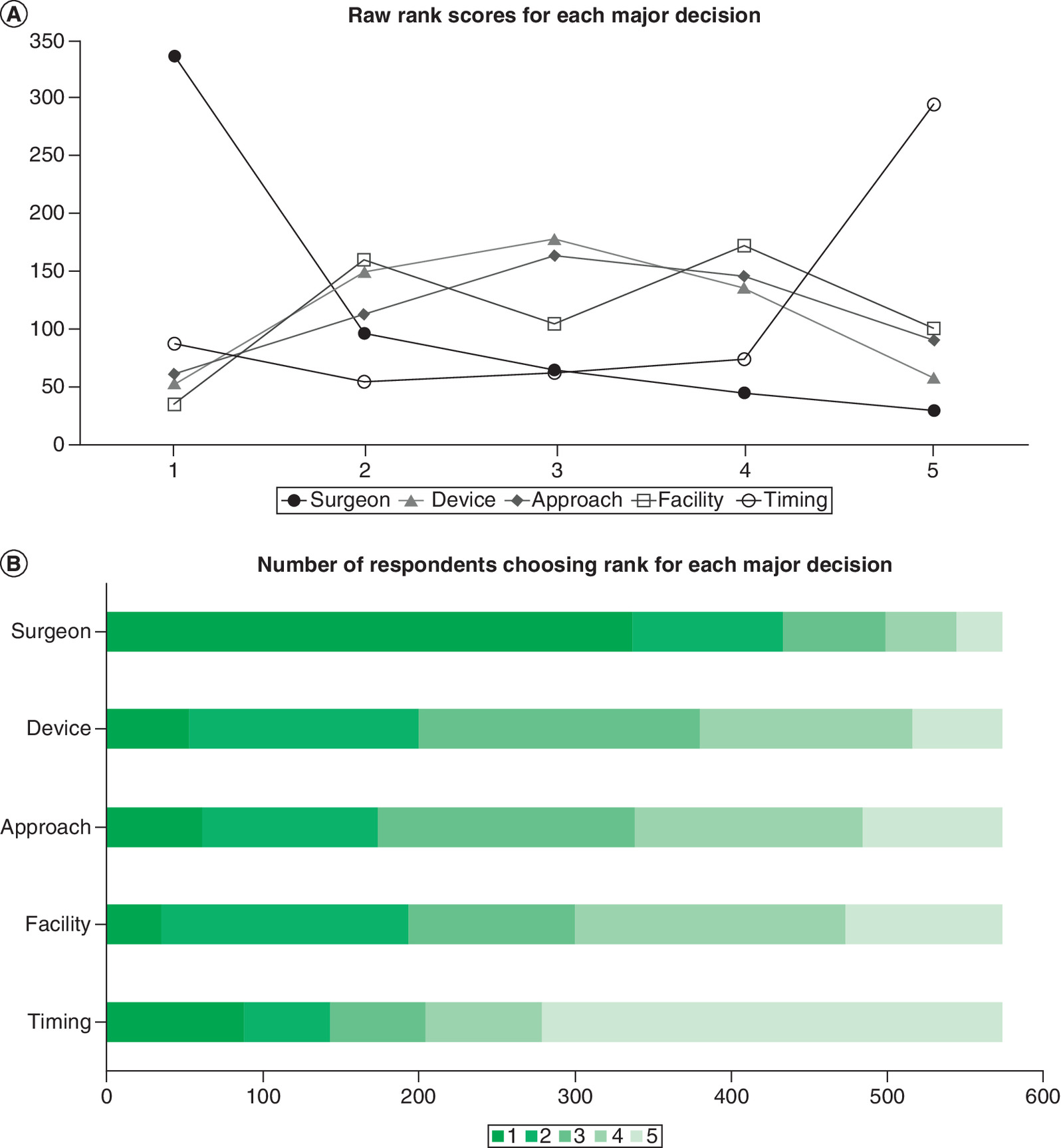
Figure 1. Raw scores for all 5 ranks were plotted and clearly show that choice of surgeon was most important (peak at 1) and choice of when surgery would occur was least important (peak at 5).
The choice of device, approach and facility are all distributed around 3 although there is a bimodal distribution for facility with a larger peak at 4. When plotted as a stacked bar chart (B) the overlap between device and approach for ranks 2 and 3 becomes more apparent.
| Rank | Surgeon | Implantable device | Surgical approach | Facility (clinic/hospital) | Timing of surgery | Test statistic | p-value‡ |
|---|---|---|---|---|---|---|---|
| 1 | 337 (59%) | 53 (9%) | 61 (11%) | 35 (6%) | 88 (15%) | 687.8571 | <0.0001 |
| 2 | 97 (17%) | 149 (26%) | 113 (20%) | 160 (28%) | 55 (10%) | 77.4042 | <0.0001 |
| 3 | 65 (11%) | 178 (31%) | 164 (29%) | 105 (18%) | 62 (11%) | 128.2535 | <0.0001 |
| 4 | 45 (8%) | 136 (24%) | 146 (25%) | 173 (30%) | 74 (13%) | 123.5497 | <0.0001 |
| 5 | 30 (5%) | 58 (10%) | 90 (16%) | 101 (18%) | 295 (51%) | 475.7709 | <0.0001 |
| Summary Score | 424 | 232 | 227 | 213 | 214 | – | – |
†
Rank for each major decision was weighted by multiplying the rank number by its inverse to achieve a single weighted score for each of the five decisions; for instance, an item scored 1/1 if ranked as the most important (1), 1/2 if rated second most important (2), 1/3 if third (3), 1/4 if fourth (4) and 1/5 if rated fifth most important (5); values were then summed across all respondents for each decision to produce a summary score.
‡
Statistical significance between each category within each rank, Bonferroni corrected p < 0.01; chi-square tests were performed; p values are nominal in nature and should be interpreted in an exploratory manner.
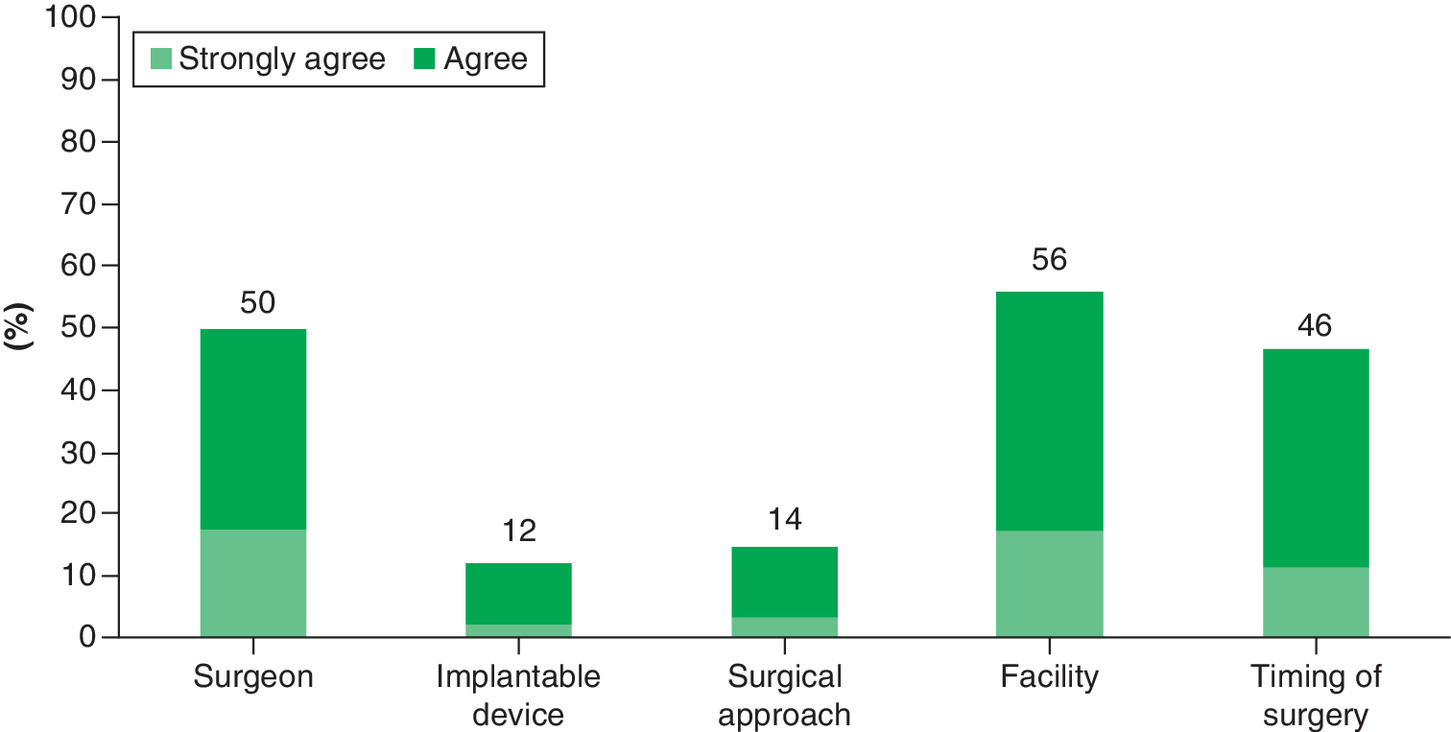
Respondents' perceptions regarding whether or not they had enough information about these 5 major decisions is shown in Figure 2. Approximately half of respondents agreed or strongly agreed that they had enough information to help them make a decision about where (facility) to have surgery (56%), which surgeon to choose (50%), and when (47%). Device and surgical approach stood out as decisions for which very few respondents agreed they had enough information, at 12 and 14%, respectively. The ANOVA test showed a significant association between decision and its score for level of agreement regarding the amount of information available for that decision (F [4, N = 574] = 156.12; p < 0.0001). Thus we reject the null hypothesis that mean agreement scores were equal across the five decisions.
Discussion
This is the first study we are aware of to identify the decisions patients in the US make about TKA, apart from whether or not to have the procedure. It is also the first study to assess patient information needs for those additional decisions. We identified and assessed the relative importance of 5 major surgically-related decisions made by patients in the US who consider TKA. Most patients felt they did not have the information needed to make these decisions. Studies from outside the US have also suggested that patients do not receive enough unbiased and reliable information to participate in shared decision making, although these have focused primarily on the decision of whether or not to have TKA [26,27,30,37,38]. Similar to our findings, a qualitative study of 44 individuals in British Columbia, Canada suggested that patients needed more information, specifically suggesting use of patient stories in educational materials [37]. These findings can help guide the content used in decision aid tools to assist in shared decision making about TKA-related choices that are important to patients.
Participants understood that choosing a surgeon may dictate secondary, albeit important, decisions about surgical approach, implant device and the hospital or surgical clinic. Of these 4 important decisions, participants acknowledged their lack of clinical expertise to choose surgical approach and device but expressed concern about these decisions regardless, ranking them second and third after choice of surgeon. However, surgical approach and device are the factors about which patients have the least information prior to initiating surgery, including how surgeons and hospital systems make these decisions.
Limitations of this study include potential self-selection bias and participant demographics, which were not representative of candidates for TKA within the US population. Although women are twice as likely as men to have knee osteoarthritis at the mean age of participants in this study [39], the ratio of women to men who answered the survey was higher. African-Americans may have a higher rate of osteoarthritis than white Americans [40]; however, the percentage of nonwhite participants in both the focus group (20%) and the survey (12%) was lower than in the general US population (27%). These demographic factors may make it difficult to generalize results, especially because information needs related to the decision to have joint replacement have been shown to differ by ethnicity [41]. Respondents were considered eligible to participate based on self-report of arthritis; diagnoses were not confirmed by medical or claims records. Findings are based on self-reported experience which is susceptible to recall bias. Recruiting from online communities limits participation to those who have internet access, which may introduce socioeconomic bias.
We used a PPRN database to recruit participants for this study because patients or their designated advocates are in a unique position to describe how they make decisions about TKA. In turn, health systems, payors and HCPs are in an ideal position to share information about the decisions identified. Doing so may help build trusting relationships that were also identified as a key factor in patients' decision making. In health systems that fully engage patients in decision about their own care, a positive feedback loop may be developed in which patients receive information they need for decision making and agree to share information back to support quality care. For example, if patients receive relevant information about their implant device from their care team and feel adequately guided by that information, then they may see how their participation in ongoing device monitoring ‘pays it forward’ in their own care outcomes and generates key information to help future patients. Thus, they may be more likely to share perceptions, contribute longitudinal patient-reported outcome data, and report adverse events following surgery. On a small scale, this dynamic was observed in some of our focus groups that included both individuals considering TKA and those who had already undergone TKA; participants willingly shared information or advice with each other.
This study also suggests there are steps that can be taken by a range of stakeholders to support increased patient engagement and shared decision making for TKA. Patients, clinicians and health care systems can work together to curate information and develop decision aid tools about the major decisions identified and assessed in ways that are accessible to patients. For example, the CreakyJoints community has created a series of free guides available to the public. These Raising the Voice of the Patient guides adapt clinical guidelines into ‘patient guidelines’ that describe treatment options and give information and evidence-based recommendations. These guides go well beyond clinical guidelines to provide useful overviews of insurance and self-advocacy. Prior research points to the effectiveness of preoperative patient education to reduce anxiety, establish realistic expectations and improve joint replacement outcomes, including decreased length of stay [42,43].
Stakeholders can also organize educational activities around these major decisions. For example, surgeons may consider prioritizing these decisions and factors in presurgical consult discussion and development of patient-facing materials or decision aid tools. Addressing individuals' concerns, both spoken and unspoken, makes patients feel heard and is likely to make them more amenable to hearing the clinicians' concerns [44]. Mutual active listening is a key component of shared decision making [45]. Health systems can educate clinicians about patients' concerns, produce printed information about device types and surgical approaches offered, and even provide a library of devices in use at their facility so that patients can truly understand the medical device chosen. Shared decision making can be bolstered by providers and nonproviders alike, and there is evidence suggesting the helpfulness of health coaches in supporting patients through care decisions over time [46–50]. Funders of research into total joint replacement can invest in registry data that are able to address most, if not all, of these decisions, ultimately generating more knowledge to share with clinicians and patients for improved shared decision making and outcomes. Work is already underway to collect unique device identifiers and surgical approach in a number of registries [10,51 52]. The FDA's Center for Device and Radiological Health is investing in the use of real-world data to advance product development and evaluation that can inform device-related decisions [51–53]. Device manufacturers are actively collecting and using real-world data to get products to market [54] and therefore could use post-market research to inform patient questions about devices and device types.
Further research is needed to determine what information and formats will be most useful to patients to support them in shared decision making about TKA. With the growing availability of online forums and virtual patient research networks for study collaboration, there will likely be ample opportunities to investigate the value of, and tailor information for, TKA-related decision aid modalities longitudinally. Moreover, decision aids that are ultimately developed from such research can then be distributed via the same networks that were engaged for focus groups and surveys. Sharing such information builds trust and makes patients aware of decisions that may have an impact on long-term outcomes. In addition, engaging patients in ongoing device and outcomes monitoring following joint replacement may be a powerful method for generating information to guide patients and other health care stakeholders to make decisions in the future.
•
In addition to the decision regarding whether or not to have the procedure, individuals considering total knee arthroplasty (TKA) make decisions about who will perform their procedure, with what device and approach, at what facility and when.
•
Most people who participated in our focus groups and survey said they do not have enough information to make these decisions.
•
Clinicians discussing potential TKA with patients should consider including these issues in shared decision making and guiding their patients to needed information, particularly regarding device and surgical approach options.
•
Further research is needed to determine what information and formats will be most useful to patients to support them in shared decision making about TKA.
Acknowledgments
The authors wish to thank K Gavigan, AM Sydor, L Stradford and J Thompson for their assistance in conducting data analysis, writing and/or formatting the manuscript. All four were compensated for their time as part of their employment with the Global Healthy Living Foundation.
Financial & competing interests disclosure
This work was partially supported through a Patient-Centered Outcomes Research Institute (PCORI) Eugene Washington PCORI Engagement Award (2228-GHLF). All statements in this manuscript, including its findings and conclusions, are solely those of the authors and do not necessarily represent the views of PCORI, its Board of Governors or Methodology Committee. The authors have no other relevant affiliations or financial involvement with any organization or entity with a financial interest in or financial conflict with the subject matter or materials discussed in the manuscript apart from those disclosed.
No writing assistance was utilized in the production of this manuscript.
Ethical conduct of research
The authors state that they have obtained appropriate institutional review board approval or have followed the principles outlined in the Declaration of Helsinki for all human or animal experimental investigations. In addition, for investigations involving human subjects, informed consent has been obtained from the participants involved.
Open access
This work is licensed under the Attribution-NonCommercial-NoDerivatives 4.0 Unported License. To view a copy of this license, visit http://creativecommons.org/licenses/by-nc-nd/4.0/
References
1.
Deshpande BR, Katz JN, Solomon DH et al. Number of persons with symptomatic knee osteoarthritis in the US: impact of race and ethnicity, age, sex, and obesity. Arth. Care Res. 68(12), 1743–1750 (2016).
2.
Sloan M, Premkumar A, Sheth NP. Projected volume of primary total joint arthroplasty in the U.S., 2014 to 2030. J. Bone Joint Surg. Am. 100(17), 1455–1460 (2018).
3.
Singh JA, Yu S, Chen L, Cleveland JD. Rates of total joint replacement in the United States: future projections to 2020–2040 using the National Inpatient Sample. J. Rheumatol. 46(9), 1134–1140 (2019).
4.
Kuperman EF, Schweizer M, Joy P, Gu X, Fang MM. The effects of advanced age on primary total knee arthroplasty: a meta-analysis and systematic review. BMC Geriatr. 16, 41 (2016).
5.
Maradit-Kremers H, Crowson CS, Larson D, Jiranek WA, Berry DJ. Prevalence of total hip (THA) and total knee (TKA) arthroplasty in the United States. American Academy of Orthopaedic Surgeons Annual Meeting LA, USA (2014).
6.
Januel JM, Chen G, Ruffieux C et al. Symptomatic in-hospital deep vein thrombosis and pulmonary embolism following hip and knee arthroplasty among patients receiving recommended prophylaxis: a systematic review. JAMA 307(3), 294–303 (2012).
7.
Inacio MCS, Paxton EW, Graves SE, Namba RS, Nemes S. Projected increase in total knee arthroplasty in the United States – an alternative projection model. Osteoarth. Cart. 25(11), 1797–803 (2017).
8.
Labek G, Thaler M, Janda W, Agreiter M, Stöckl B. Revision rates after total joint replacement. J. Bone Joint Surg. 93(7), 5 (2011).
9.
Sun X, Wang J, Su Z. A meta-analysis of total knee arthroplasty following high tibial osteotomy versus primary total knee arthroplasty. Arch. Orthop. Trauma Surg. 140(4), 527–535 (2020).
10.
American Joint Replacement Registry. 2019 annual report. (2019).
11.
Evans JT, Walker RW, Evans JP, Blom AW, Sayers A, Whitehouse MR. How long does a knee replacement last? A systematic review and meta-analysis of case series and national registry reports with more than 15 years of follow-up. Lancet 393(10172), 655–663 (2019).
12.
Khan M, Osman K, Green G, Haddad FS. The epidemiology of failure in total knee arthroplasty: avoiding your next revision. Bone Joint J. 98-b(1 Suppl. A), 105–112 (2016).
13.
Shan L, Shan B, Suzuki A, Nouh F, Saxena A. Intermediate and long-term quality of life after total knee replacement: a systematic review and meta-analysis. J. Bone Joint Surg. Am. 97(2), 156–168 (2015).
14.
Canovas F, Dagneaux L. Quality of life after total knee arthroplasty. Orthop. Traumatol. Surg. Res. 104(1s), S41–A46 (2018).
15.
Gunaratne R, Pratt DN, Banda J, Fick DP, Khan RJK, Robertson BW. Patient dissatisfaction following total knee arthroplasty: a systematic review of the literature. J. Arthroplasty 32(12), 3854–3860 (2017).
16.
Mahdi A, Svantesson M, Wretenberg P, Hälleberg-Nyman M. Patients' experiences of discontentment one year after total knee arthroplasty – a qualitative study. BMC Musculoskel. Dis. 21(1), 29 (2020).
17.
Kapp-Simon KA, Edwards T, Ruta C et al. Shared surgical decision making and youth resilience correlates of satisfaction with clinical outcomes. J. Craniofacial Surg. 26(5), 1574–1580 (2015).
18.
Treasure T, King A, Hidalgo Lemp L, Golesworthy T, Pepper J, Takkenberg JJ. Developing a shared decision support framework for aortic root surgery in Marfan syndrome. Heart 104(6), 480–486 (2018).
19.
Korteland NM, Ahmed Y, Koolbergen DR et al. Does the use of a decision aid improve decision making in prosthetic heart valve selection? A multicenter randomized trial. Circ. Cardiovasc. Qual. Outcomes 10(2), e00317 (2017).
20.
Jaensson M, Dahlberg K, Nilsson U. Factors influencing day surgery patients' quality of postoperative recovery and satisfaction with recovery: a narrative review. Perioper. Med. (Lond.) 8, 3 (2019).
21.
Bozic KJ, Belkora J, Chan V et al. Shared decision making in patients with osteoarthritis of the hip and knee: results of a randomized controlled trial. JBJS 95(18), 1633–1639 (2013).
22.
Slover J, Shue J, Koenig K. Shared decision-making in orthopaedic surgery. Clin. Orthop. Relat. Res. 470(4), 1046–1053 (2012).
23.
Barry MJ. Health decision aids to facilitate shared decision making in office practice. Ann. Intern. Med. 136(2), 127–135 (2002).
24.
Deber RB. Physicians in health care management: 7. The patient–physician partnership: changing roles and the desire for information. CMAJ 151(2), 171–176 (1994).
25.
Evans R, Elwyn G, Edwards A. Making interactive decision support for patients a reality. Inform. Prim. Care 12(2), 109–113 (2004).
26.
Molenaar S, Sprangers MA, Postma-Schuit FC et al. Feasibility and effects of decision aids. Med. Decis. Making 20(1), 112–127 (2000).
27.
Atlas A, Milanese S, Grimmer K, Barras S, Stephens JH. Sources of information used by patients prior to elective surgery: a scoping review. BMJ Open 9(8), e023080 (2019).
28.
Fraenkel L, Nowell BW, Stake CE et al. Impact of information presentation format on preference for total knee replacement surgery. Arthritis Care Res. 71(3), 379–384 (2019).
29.
Chang HJ, Mehta PS, Rosenberg A, Scrimshaw SC. Concerns of patients actively contemplating total knee replacement: differences by race and gender. Arthritis Rheum. 51(1), 117–123 (2004).
30.
Suarez-Almazor ME, Richardson M, Kroll TL, Sharf BF. A qualitative analysis of decision-making for total knee replacement in patients with osteoarthritis. J. Clin. Rheumatol. 16, 6 (2010).
31.
Smith S, Alvand A, Locock L et al. Partial or total knee replacement? Identifying patients' information needs on knee replacement surgery: a qualitative study to inform a decision aid. Qual. Life Res. 29(4), 999–1011 (2020).
32.
Nowell WB, Curtis D, Thai M et al. Digital interventions to build a patient registry for rheumatology research. Rheum. Dis. Clin. North Am. 45(2), 173–186 (2019).
33.
Nowell WB, Curtis JR, Crow-Hercher R. Patient governance in a patient-powered research network for adult rheumatologic conditions. Med. Care 56(10 Suppl. 1), S16–S21 (2018).
34.
Bayliss LE, Culliford D, Monk AP et al. The effect of patient age at intervention on risk of implant revision after total replacement of the hip or knee: a population-based cohort study. Lancet 389(10077), 1424–1430 (2017).
35.
Bradley EH, Curry LA, Devers KJ. Qualitative data analysis for health services research: developing taxonomy, themes, and theory. Health Serv. Res. 42(4), 15 (2007).
36.
Tong A, Sainsbury P, Craig J. Consolidated criteria for reporting qualitative research (COREQ): a 32-item checklist for interviews and focus groups. Int. J. Qual. Health Care 19(6), 349–357 (2007).
37.
Creswell WJ. Research Design Qualitative and Quantitative Approaches. Sage, CA, USA (1994).
38.
Goldsmith LJ, Suryaprakash N, Randall E et al. The importance of informational, clinical and personal support in patient experience with total knee replacement: a qualitative investigation. BMC Musculoskelet. Disord. 18(1), 127 (2017).
39.
Mahdi A, Nyman MH, Wretenberg P. How do orthopaedic surgeons inform their patients before knee arthroplasty surgery? A cross-sectional study. BMC Musculoskel. Dis. 19(1), 414 (2018).
40.
Srikanth VK, Fryer JL, Zhai G, Winzenberg TM, Hosmer D, Jones G. A meta-analysis of sex differences prevalence, incidence and severity of osteoarthritis. Osteoarth. Cart. 13(9), 769–781 (2005).
41.
Neogi T, Zhang Y. Epidemiology of osteoarthritis. Rheum. Dis. Clin. North Am. 39(1), 1–19 (2013).
42.
Kwoh CK, Vina ER, Cloonan YK, Hannon MJ, Boudreau RM, Ibrahim SA. Determinants of patient preferences for total knee replacement: African-Americans and whites. Arthritis Res. Ther. 17(1), 348 (2015).
43.
Mancuso CA, Graziano S, Briskie LM et al. Randomized trials to modify patients' preoperative expectations of hip and knee arthroplasties. Clin. Orthop. Relat. Res. 466, 8 (2008).
44.
Edwards PK, Mears SC, Barnes CL. Preoperative education for hip and knee replacement: never stop learning. Curr. Rev. Musculoskelet. Med. 10, 9 (2017).
45.
Frosch DL, May SG, Rendle KAS, Tietbohl C, Elwyn G. Authoritarian physicians and patients' fear of being labeled ‘difficult’ among key obstacles to shared decision making. Health Affairs 31(5), 1030–1038 (2012).
46.
Légaré F, Moumjid-Ferdjaoui N, Drolet R et al. Core competencies for shared decision making training programs: insights from an international, interdisciplinary working group. J. Continuing Edu. Health Prof. 33(4), 267–273 (2013).
47.
Stacey D, Murray MA, Légaré F, Sandy D, Menard P, O'Connor A. Decision coaching to support shared decision making: a framework, evidence, and implications for nursing practice, education, and policy. Worldviews Evidence Based Nurs. 5(1), 25–35 (2008).
48.
Veroff D, Marr A, Wennberg DE. Enhanced support for shared decision making reduced costs of care for patients with preference-sensitive conditions. Health Affairs 32(2), 285–293 (2013).
49.
Thom DH, Wolf J, Gardner H et al. a qualitative study of how health coaches support patients in making health-related decisions and behavioral changes. Ann. Family Med. 14(6), 509 (2016).
50.
Lin Grace A, Fagerlin A. Shared decision making. Circ. Cardiovasc. Qual. Outcomes 7(2), 328–334 (2014).
51.
Registries for Medical Devices. In: Registries for Evaluating Patient Outcomes: A User's Guide. 3rd Edition. Gliklich R, Dreyer N, Leavy M (Eds). Agency for Healthcare Research and Quality, MD, USA (2014).
52.
Americal Academy of Orthopedic Surgeons. How to Enroll in the AAOS Registry Program 2020 (2020). www.aaos.org/registries/program-details/how-to-enroll/
53.
Statement from FDA Commissioner Scott Gottlieb, M.D. and Jeff Shuren, M.D., Director of the Center for Devices and Radiological Health, on FDA's updates to Medical Device Safety Action Plan to enhance post-market safety (2018). www.fda.gov/news-events/press-announcements/statement-fda-commissioner-scott-gottlieb-md-and-jeff-shuren-md-director-center-devices-and-2.
54.
US Food and Drug Administration. 2018–2020 strategic priorities, center for devices and radiological health (2018). www.fda.gov/media/110478/download
Information & Authors
Information
Published In
Pages: 1153 - 1166
PubMed: 33124898
Copyright
© 2020 William Benjamin Nowell. This work is licensed under the Attribution-NonCommercial-NoDerivatives 4.0 Unported License
History
Received: 13 June 2020
Accepted: 18 September 2020
Published online: 30 October 2020
Keywords:
Topics
Authors
Metrics & Citations
Metrics
Article Usage
Article usage data only available from February 2023. Historical article usage data, showing the number of article downloads, is available upon request.
Citations
How to Cite
Identifying patient decisions and related information needs during decision making related to total knee arthroplasty. (2020) Journal of Comparative Effectiveness Research. DOI: 10.2217/cer-2020-0109
Export citation
Select the citation format you wish to export for this article or chapter.
Citing Literature
- Chia Voon Lim, Deepashini Harithasan, Mohd Azzuan Bin Ahmad, Normala Mesbah, Saravana Kumar, Devinder Kaur Ajit Singh, Biopsychosocial Determinants for Total Knee Replacement Decisions Among Older Adults With Chronic Knee Osteoarthritis: A Scoping Review, Geriatric Orthopaedic Surgery & Rehabilitation, 10.1177/21514593251335882, 16, (2025).
- Tongling Xie, Jingyi Meng, Zhe Feng, Yue Gao, Tian Chen, Yalan Chen, Jinsong Geng, Assessing patient information needs for new antidiabetic medications to inform shared decision‐making: A best–worst scaling experiment in China, Health Expectations, 10.1111/hex.14059, 27, 3, (2024).
- Natalie B. Baxter, Ching‐Heng Lin, Beth I. Wallace, Jung‐Sheng Chen, Chang‐Fu Kuo, Kevin C. Chung, Development of a Machine Learning Model to Predict the Use of Surgery in Patients With Rheumatoid Arthritis, Arthritis Care & Research, 10.1002/acr.25287, 76, 5, (636-643), (2024).
- Lionel Tortolano, Quentin Misandeau, Tinhinane Inouri, Muriel Paul, Mathilde Dompnier, Charles-Henri Flouzat-Lachaniette, Valérie Archer, Parcours d’information du patient en chirurgie orthopédique : rôles de la RAAC et du pharmacien, Revue de Chirurgie Orthopédique et Traumatologique, 10.1016/j.rcot.2023.02.003, 109, 8, (1157-1162), (2023).
- Lionel Tortolano, Quentin Misandeau, Tinhinane Inouri, Muriel Paul, Mathilde Dompnier, Charles-Henri Flouzat-Lachaniette, Valérie Archer, Patient information pathway in orthopedic surgery: Roles of ERAS and pharmacists, Orthopaedics & Traumatology: Surgery & Research, 10.1016/j.otsr.2023.103576, 109, 8, (103576), (2023).
- Lissa Pacheco‐Brousseau, Stéphane Poitras, Marylène Charette, Sarah Ben Amor, François Desmeules, Dawn Stacey, Exploring appropriateness criteria for informing the total knee arthroplasty decision‐making process: An interpretive descriptive study, Journal of Evaluation in Clinical Practice, 10.1111/jep.13893, 29, 6, (942-954), (2023).
- Fatemeh Najafi, Hooman Shahsavari, Seyed Mohammad Javad Mortazavi, Sajjad Khodayari, Molouk Jaafarpour, Zahra Zare, Factors affecting decision-making for knee arthroplasty in patients with osteoarthritis, International Journal of Orthopaedic and Trauma Nursing, 10.1016/j.ijotn.2023.101016, 49, (101016), (2023).
- Brocha Z. Stern, Sarah Pila, Layla I. Joseph, Nan E. Rothrock, Patricia D. Franklin, Patients’ perspectives on the benefits of feedback on patient-reported outcome measures in a web-based personalized decision report for hip and knee osteoarthritis, BMC Musculoskeletal Disorders, 10.1186/s12891-022-05764-1, 23, 1, (2022).
- Niti Goel, Enhancing patient research partner engagement: Research in psoriatic arthritis, Best Practice & Research Clinical Rheumatology, 10.1016/j.berh.2021.101685, 35, 2, (101685), (2021).