

Variation in prostate surgery costs and outcomes in the USA: robot-assisted versus open radical prostatectomy
Abstract
Aim: To compare perioperative complications, inpatient cost and length of stay between robot-assisted radical prostatectomy (RARP) and open radical prostatectomy (ORP) using National Inpatient Sample data from 2010 to 2015. Patients & methods: A total of 69,009 records with RARP or ORP were analyzed using multivariate logistic regression and generalized linear models. Results: The RARP had superior perioperative outcomes at a higher cost (adjusted mean difference = 2956; 95% CI: $2822–$3090) and shorter length of stay (mean difference = 0.85; 95% CI: 0.81–0.89) compared with ORP. Mean cost of RARP was lowest in urban teaching, private invest-own, high volume and northeast region hospitals and highest for black men. Conclusion: Compared with ORP, RARP had significantly better perioperative outcomes at a higher cost.
Prostate cancer (PCa) has the highest estimated incidence among all cancers in men and is the second leading cause of cancer-related death among men in the USA [1]. Interestingly, the relative survival rate for local and regional stage PCa is almost 100% [2]. Current treatment guidelines for clinically localized PCa strongly recommend radical prostatectomy (RP) as a standard surgical treatment option for both high-risk and intermediate-risk localized PCa patients and conditionally recommends RP for selective low-risk localized PCa patients with high chance of progression on active surveillance [3]. One of the modifications of RP is laparoscopic RP (LRP), which was introduced in the USA in 1990s [4]. In early 2000, robot-assisted laparoscopic RP (RARP) was adopted over traditional open RP (ORP) approach [5]. Using an all-payer US hospital database, studies reported an increase in the adoption rate of RARP in practice from 1.8 to 85.6% between 2003 and 2013 and by 2010, 42% of RP performing surgeons reported adopting RARP [6,7].
Comparison of surgical options
Given the rapid adoption of RARP coupled with the absence of any large randomized controlled trial comparing RARP and ORP, there was a trend to compare the rate of perioperative complications, blood transfusion, requirement of additional cancer therapy, positive surgical margin (PSM), length of stay (LOS) and cost of treatment between the RARP and ORP. A single center Phase III randomized controlled trial study, conducted between 2010 and 2014, found no significant difference in functional (urinary function, sexual function), oncological outcomes (PSM status, biochemical and imaging evidence of progression at 24 months) and postoperative complications between RARP and ORP [8]. No consistent evidence was reported by multiple observational studies as well. Observational studies with smaller number of patients comparing ORP and minimum-invasive RP (MIRP) reported no significant difference in perioperative complications [9,10]. A systematic review of ORP, LRP and RARP reported similar perioperative complication rate between ORP and RARP and significantly lower blood loss and transfusion rate for patients undergoing RARP [11]. Large scale observational studies using 2003–2005 SEER-Medicare data reported no significant difference in postoperative general medical or surgical complication rate within 90 days, genitourinary and bowel complication within 365 days, and receipt of subsequent cancer therapy between ORP and MIRP [12]. Analysis of 2003–2007 SEER Medicare data found less respiratory and miscellaneous surgical complications but higher postoperative genitourinary complications with MIRP compared with ORP [13]. Contrary to SEER-Medicare data results, a study using the 2005–2010 National Surgery Quality Improvement Program data reported significantly less rate of cardiovascular, deep vein thrombosis, pulmonary embolism complication, surgical site infection and units of blood transfusion for MIRP compared with ORP [14].
In 2008, the US FDA approved a robot-assisted modifier code (International Classification of Disease, Ninth Revision [ICD-9] clinical modification procedure code 17.42) to identify accurately robot-assisted procedures. A study analyzing the 2008–2009 Nationwide Inpatient Sample (NIS) data and utilizing the robot-assisted modifier code concluded that RARP was superior to ORP in terms of intraoperative, postoperative complications and blood transfusions. Patients with RARP compared with ORP had significantly lower probability of cardiac (Odds Ratio [OR]: 0.73; 0.53–0.99), respiratory (OR: 0.54; 0.42–0.69) and vascular (OR: 0.59; 0.37–0.95) complications [15]. Another study utilizing the 2008–2009 SEER-Medicare data found similar risk of overall postoperative complications during first 30 day and 90 day after surgery and readmission rates across ORP and RARP. The RARP was associated with an elevated risk of genitourinary and miscellaneous medical complications during first 30 day and 90 day postsurgery but with a lower risk of receiving a blood transfusion [16]. Analysis of 2003–2012 SEER-Medicare data reported that the risk of receiving additional radiation and androgen deprivation therapy was significantly lower for RARP (22%) compared with ORP with no significant difference in PCa-specific and all-cause mortality between the two procedures over a median follow-up of 6.5 years [17]. Another study utilizing the 2003–2013 Premier Hospital database reported that patients undergoing RARP had 32% less complications during the first 90 day postsurgery, and received less blood products compared with those undergoing ORP. However, no difference (OR: 1.00; 0.73–1.38) in the occurrence of major complications (Clavien grade 3–5) was reported between the two procedures [6].
When PSM was compared across ORP, RARP and LRP, no conclusive evidence of superiority in favor of any one procedure was observed [18–22]. However, MIRP was associated with shorter hospital LOS compared with ORP [6,12,13,15,16,23]. Studies further stated that patients undergoing RARP could benefit from earlier return to work compared with patients undergoing ORP [6]. The cost of treatment with RARP was found to be higher than that of ORP [6,16,24]. A single institution US study of 643 patients reported that RARP had higher cost even after excluding the purchase cost and annual maintenance cost of the robot compared with ORP. The median direct cost (2007 estimate) was $6752, $5687 and $4437 for RARP, LRP and ORP, respectively [24]. Another study conducted in 2008–2009 reported that median cost of first-year postsurgery was approximately $1400 more for RARP compared with ORP among Medicare patients who were treated with RP [16]. Using the Premier Hospital database, a study reported that during 2011–2013, the adjusted 90 day direct hospitalization costs were significantly higher ($2313; 95% CI: $106–$4521) for RARP compared with ORP. However, this cost estimation did not include the fixed cost of purchasing the robot and the maintenance cost, which possibly underestimated the cost differences between two procedures [6]. Some researchers, however, argue that RARP may be more costly upfront, but patients treated with RARP may need less additional cancer therapy later on, which could possibly offset the high initial cost [17].
In essence, though RARP is a costly procedure compared with ORP, it is superiority over ORP in different aspects of perioperative outcomes seems largely inconclusive. The 2017 American Urological Association (AUA)/American Society for Radiation Oncology (ASTRO)/Society of Urologic Oncology (SUO) guidelines recommended that clinicians should inform patients with localized PCa that cancer control, continence and sexual recovery outcomes are similar between ORP and RARP [25]. A few observational large-scale studies utilizing SEER-Medicare data have evaluated the clinical and economic outcomes of RP; however, the results were generalizable only to elderly population. Similarly, studies analyzing the Premier Hospital database had limitations because the participating hospitals were predominantly small-to-medium sized, nonteaching type and serving mostly urban population, whereas a significant portion of patients with PCa in the USA are treated in academic hospitals and cancer treatment centers [26,27]. Although the American Hospital Association database has 37.82% of hospitals listed as teaching hospitals, the Premier Hospital database has only 26.60% as teaching hospital (2016) [28].
Thus, there is a need to utilize a large, nationally representative hospitalization data to compare different outcomes between RARP and ORP. This study utilizes data from the NIS of Healthcare Cost and Utilization Project (HCUP) from January 2010 to September 2015 (latest available year of data) to compare the perioperative complications, inpatient cost, and LOS between RARP and ORP.
Objectives
The primary objective of the study was to compare perioperative complications, inpatient cost and LOS among adult patients with PCa who had undergone RP using either RARP or ORP. A secondary objective was to compare the inpatient cost between RARP and ORP across different sociodemographic, clinical and hospital characteristics.
Patients & methods
Study design & data source
This is a retrospective, cross-sectional study of hospital discharge records from NIS data of the HCUP database and included observations from January 2010 to September 2015. The HCUP database is a comprehensive source of hospital care data in the USA and comprises of seven different databases including NIS dataset. The NIS is the largest publicly available all-payer inpatient healthcare database in the USA and it contains more than seven million unweighted and 35 million weighted hospital discharge records every year. The NIS dataset included observations from all states participating in HCUP and represented almost 97% of the US population [29,30]. Since October 2015, the HCUP no longer uses the ICD-9 codes and instead has switched to ICD-10 diagnosis and procedure codes. Therefore, the study analyses were restricted till September 2015 to include observations based on ICD-9 codes. Unique HCUP-identifier and unique hospital identifier were used to merge four different files (NIS core, disease severity, diagnosis and procedure group, and hospital characteristics file) for each year. Hospital discharge record was the unit of analysis and data for all 6 years were combined for final analyses.
Sample identification
Discharge records with a primary diagnosis of PCa and those who underwent RP by using the ICD-9 diagnosis code 185 (for PCa) and procedure code 60.5 (for RP) were identified. Among observations with RP, those discharges with a robot-assisted modifier code (ICD-9-CM procedure code of 17.4x) were classified as undergoing RARP and rest were classified as ORP. Discharge records for patients under 18 years of age, with any metastatic cancer as a comorbidity, or with a nonrobotic LRP (identified by ICD-9-CM procedure code 54.21 without any robot-assisted modifier code, 17.4x) were excluded from analyses.
Study variables
Study variables included patient's age, race (white, black, Hispanic, others), primary payer type (Medicare, Medicaid, private insurance, self-pay, others), comorbidities (number of comorbidities: 0, 1, 2 and ≥3), median household income based on patient's zip code level (first, second, third and fourth quartile). Other variables included hospital characteristics such as region (northeast, midwest, south and west), location and teaching status (rural, urban nonteaching, urban teaching), ownership-control (government nonfederal, private nonprofit and private invest-own) and bed size (small, medium and large). As there is no clear guideline to help classify hospitals in high or low volume category based on the number of RP performed in each hospital, published studies were utilized to create a ‘volume’ category where high volume was defined as those hospitals with the total number of RP equal to 107, which was the 75th percentile and anything less was categorized as ‘low volume’ [6].
Outcome variables
The outcome variables included perioperative outcomes, inpatient costs of treatment and LOS. Consistent with the methodologies utilized in published studies, the present study also looked at seven different types of perioperative complications including cardiac, respiratory, genitourinary, vascular, wound, miscellaneous medical and surgical complications [13,15,16,31]. The ICD-9 diagnosis and procedure codes were utilized to identify different complications. Total inpatient cost for each discharge record was estimated by multiplying the total charge with cost-to-charge ratio published by HCUP. Consumer price index for all urban consumers for hospitals and related services were utilized to adjust costs to 2015 dollar value [32].
Statistical analysis
Bivariate association between types of procedure (ORP and RRAP) and sociodemographic, clinical and hospital characteristics were explored using Pearson's χ2 test. Independent t-test was used to compare the mean age between the two groups. Multivariate logistic regression was employed to compare the odds of perioperative complications between RARP and ORP after adjusting for sociodemographic, clinical and hospital characteristics.
Given that the cost data is generally skewed to the right, generalized linear model with log-link and γ-distribution was applied to compute least square means for RARP and ORP after adjusting for covariates. Differences in least square means across different categories of all sociodemographic, clinical and hospital characteristics were also calculated. A generalized linear model with log link and negative binomial distribution was utilized to compare mean LOS between RARP and ORP after adjusting for covariates. All statistical analysis were conducted using SAS version 9.4 (NC, USA) and an a priori significance level was set at p ≤ 0.05 with all p-values being two-tailed.
Results
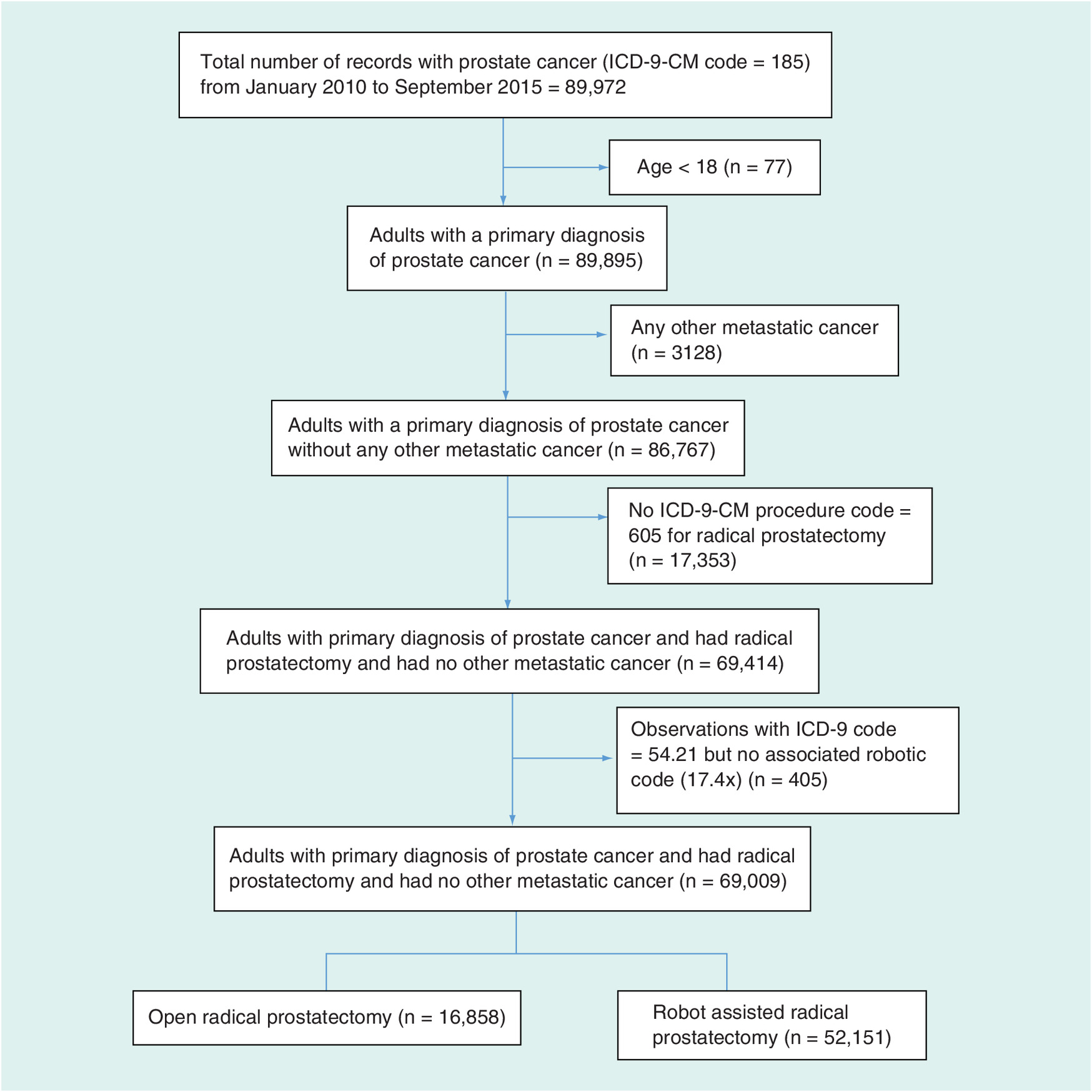
A total of 89,972 discharge records with a primary diagnosis of PCa were identified from 2010 to 2015. Records with age less than 18 years (n = 77) and with any other metastatic cancer (n = 3128) were excluded from the final analyses. Among the remaining 86,767 discharge records, 69,414 records had RP as a procedure listed during their stay. Further, 405 records were excluded as those included nonrobotic LRP. Finally, 69,009 records were included in analysis among which 52,151 (75.57%) had RARP and 16,858 (24.43%) had ORP (Figure 1). A statistically significant (p < 0.0001) upward trend was observed in RARP from 2010 (66.69%) to 2015 (83.27%).
Sociodemographic & clinical characteristics
Almost two-thirds of records (n = 45,386; 65.77%) had at least one comorbidity. A total of 5312 (31.51%) and 15,251 (29.24%) records had at least two comorbidities among those who went through ORP and RARP, respectively. Majority of patients (n = 47,364; 68.63%) were white, had private insurance including health maintenance organization as their major payer (n = 41,144; 59.62%) followed by Medicare (n = 23,072; 33.44%). Although among those who belonged to the lower quartile of household income, 9798 (72.51%) received RARP; the proportion of people receiving RARP in the wealthiest income group was 15,981 (79.2%). Among those with RARP, 29,624 (56.80%) and among those with ORP, only 8557 (50.76%) had more than median household income in their zip code. Among white, black, Hispanic and others, the percentage of RARP was 76.14, 73.10, 75.44 and 80.93%, respectively.
Most of the ORP procedure (n = 10,137; 60.13%), and RARP procedure (n = 38,116; 73.09%) were performed in urban teaching hospitals. The greatest proportion (36.32%) of RP was performed in the south region. More than a third of RARP, 18,664 (35.79%) was also performed in the south region and only 9901 (18.99%) were reported in the northeast region. The proportion of ORP (n = 3092; 18.34%) was the lowest in the west region. Majority of ORP (n = 11,221; 66.56%) and RARP (n = 32,826; 62.94%) was performed in large hospitals with the highest proportion of RARP (n = 42,138; 80.80%) seen in private nonprofit hospitals (Table 1).
| Variables | Radical prostatectomy | Total, n(%)† | p-value | |
|---|---|---|---|---|
| ORP | RARP | |||
| Comorbidities | ||||
| 0 | 5631 (8.16) | 17,992 (26.07) | 23,623 (34.23) | <0.0001 |
| 1 | 5915 (8.57) | 18,908 (27.40) | 24,823 (35.97) | |
| 2 | 3396 (4.92) | 10,182 (14.76) | 13,578 (19.68) | |
| ≥3 | 1916 (2.78) | 5069 (7.35) | 6985 (10.12) | |
| Primary payer‡ | ||||
| Medicare | 5497 (7.97) | 17,575 (25.47) | 23,072 (33.44) | <0.0001 |
| Medicaid | 600 (00.87) | 1192 (1.73) | 1792 (2.60) | |
| Private, including HMO | 9800 (14.20) | 31,344 (45.42) | 41,144 (59.62) | |
| Self-pay | 307 (00.44) | 531 (00.77) | 838 (1.21) | |
| Others | 617 (00.89) | 1414 (2.05) | 2031 (2.94) | |
| Race§ | ||||
| White | 11,299 (16.37) | 36,065 (52.26) | 47,364 (68.63) | <0.0001 |
| Black | 2197 (3.18) | 5969 (8.65) | 8166 (11.83) | |
| Hispanic | 1005 (1.46) | 3087 (4.47) | 4092 (5.93) | |
| Others¶ | 666 (00.97) | 2826 (4.09) | 3492 (5.06) | |
| Income quartile# | ||||
| 1st quartile | 3715 (5.38) | 9798 (14.20) | 13,513 (19.58) | <0.0001 |
| 2nd quartile | 4163 (6.03) | 11,573 (16.77) | 15,736 (22.80) | |
| 3rd quartile | 4361 (6.32) | 13,643 (19.77) | 18,004 (26.09) | |
| 4th quartile | 4196 (6.08) | 15,981 (23.16) | 20,177 (29.24) | |
| Hospital characteristics | ||||
| Location/teaching status†† | ||||
| Rural | 1504 (2.18) | 1166 (1.69) | 2670 (3.87) | <0.0001 |
| Urban-non-teaching | 5066 (7.34) | 12,599 (19.95) | 17,665 (25.60) | |
| Urban-teaching | 10,137 (14.69) | 38,116 (55.23) | 48,253 (69.92) | |
| Region | ||||
| Northeast | 3241 (4.70) | 9901 (14.35) | 13,142 (19.04) | <0.0001 |
| Midwest | 4124 (5.98) | 12,807 (18.56) | 16,931 (24.54) | |
| South | 6401 (9.28) | 18,664 (27.04) | 25,065 (36.32) | |
| West | 3092 (4.48) | 10,779 (15.62) | 13,871 (20.10) | |
| Hospital volume | ||||
| Low volume | 13,201 (19.13) | 38,823 (56.26) | 52,024 (75.39) | <0.0001 |
| High volume | 3657 (5.30) | 13,328 (19.31) | 16,985 (24.61) | |
| Bed size of hospital†† | ||||
| Small | 1843 (2.67) | 6737 (9.76) | 8580 (12.43) | <0.0001 |
| Medium | 3643 (5.28) | 12,318 (17.85) | 15,961 (23.13) | |
| Large | 11,221 (16.26) | 32,826 (47.57) | 44,047 (63.83) | |
| Ownership/control†† | ||||
| Government, nonfederal | 1827 (2.65) | 5097 (7.39) | 6924 (10.03) | <0.0001 |
| Private nonprofit | 13,209 (19.14) | 42,138 (61.06) | 55,347 (80.20) | |
| Private invest-own | 1671 (2.42) | 4646 (6.73) | 6317 (9.15) | |
| Year | ||||
| 2010 | 4370 (6.33) | 8749 (12.68) | 13,119 (19.01) | |
| 2011 | 4812 (6.97) | 11,387 (16.50) | 16,199 (23.47) | |
| 2012 | 2450 (3.55) | 8777 (12.72) | 11,227 (16.27) | |
| 2013 | 2085 (3.02) | 8499 (12.32) | 10,584 (15.34) | |
| 2014 | 1814 (2.63) | 8132 (11.78) | 9946 (14.41) | |
| 2015 | 1327 (1.92) | 6607 (9.57) | 7934 (11.50) | |
†All numbers in parenthesis represent percentage. All percentages were calculated based on the total number of records which was equal to 69,009. Percentages will not add up to 100% in presence of missing information.
‡There are 132 records with missing information about primary payer.
§There are 5895 records with missing information about race.
¶Others include Asian or pacific islander, Native Americans and others.
#The income is represented as median household income national quartiles for patient's zip code. There are 1579 records with missing information about income quartiles.
††There are 421 records with missing information about hospital location, teaching status, hospital bed size and hospital ownership/control.
HMO: Health maintenance organization; ORP: Open radical prostatectomy; RARP: Robot-assisted radical prostatectomy.
Perioperative outcomes: adjusted comparison
A higher proportion experienced at least one complication in ORP compared with RARP group (11.47 vs 7.71%). After adjusting for covariates, the odds of any complication was significantly reduced by 27% (OR: 0.73, 95% CI: 0.68–0.78) in RARP compared with ORP. The odds of any cardiac, respiratory, genitourinary, wound, miscellaneous medical and miscellaneous surgical complication was significantly less in RARP compared with ORP by 27, 39, 19, 32, 18 and 35%, respectively. No significant difference in vascular complications (OR: 1.16, 95% CI: 0.82–1.66; p = 0.4009) was found between RARP and ORP. The odds of blood transfusion for RARP (OR: 0.20, 95% CI: 0.18–0.23) was almost one-fifth compared with ORP.
A total of 26 cases died during hospitalization among which 10 were in ORP and 16 belonged to RARP. No significant difference (p = 0.2762) in mortality was observed between the two procedures (Table 2).
| Outcomes (complications) | ORP (n = 16858; %) | RARP (n = 52151; %) | Adjusted odds ratio (RARP compared with ORP; 95% CI) | p-value |
|---|---|---|---|---|
| Any complication | 1933 (11.47) | 4021 (7.71) | 0.73 (0.68–0.78) | <0.0001 |
| Cardiac | 231 (1.37) | 488 (0.94) | 0.73 (0.61–0.87) | 0.0003 |
| Respiratory | 325 (1.93) | 495 (0.95) | 0.61 (0.52–0.71) | <0.0001 |
| Genitourinary | 179 (1.06) | 435 (0.83) | 0.81 (0.67–0.99) | 0.0351 |
| Vascular | 49 (0.29) | 146 (0.28) | 1.16 (0.82–1.66) | 0.4009 |
| Wound | 82 (0.49) | 153 (0.29) | 0.68 (0.50–0.92) | 0.0132 |
| Miscellaneous medical | 1106 (6.56) | 2461 (4.72) | 0.82 (0.75–0.89) | <0.0001 |
| Miscellaneous surgical | 426 (2.53) | 771 (1.48) | 0.65 (0.57–0.74) | <0.0001 |
| Blood transfusion | 1291 (7.66) | 720 (1.38) | 0.20 (0.18–0.23) | <0.0001 |
| In-hospital mortality | 10 (0.06) | 16 (0.03) | 0.61 (0.25–1.49) | 0.2762 |
ORP: Open radical prostatectomy; RARP: Robot-assisted radical prostatectomy.
Cost comparisons
The adjusted mean inpatient cost was greater by $2956 (95% CI: $2822–$3090) in RARP (mean = $17,358; 95% CI: $17,121–$17,599) compared with ORP (mean = $14,402; 95% CI: $14,197–$14,609). As the number of comorbidities increased, the mean cost also increased for both procedures. For patients with at least three comorbidities, the mean cost in RARP ($19,554; 95% CI: $19,206–$19,909) was significantly greater by $2190 (95% CI: $1750–$2630) compared with mean cost of ORP ($17,364; 95% CI: $16,948–$17,790). There were some racial differences seen related to cost. The mean cost of RARP was highest among black men ($18,412; 95% CI: $18,103–$18,726) and the mean cost was significantly higher by $3266 (95% CI: $2915–$3617) compared with ORP. Mean cost of RARP was also significantly greater compared with ORP among all races including white (mean difference = $2985; 95% CI: $2841–$3129), Hispanic (mean difference = $2032; 95% CI: $1539–$2525) and others (mean difference = $1255; 95% CI: $661–$1849).
Based on the insurance status, the mean difference in cost between RARP and ORP was highest among Medicare population (mean difference = $3040; 95% CI: $2829–$3250) and lowest among Medicaid population (mean difference = $1300; 95% CI: $556–$2045). The mean cost was highest among Medicaid population (mean = $15,754; 95% CI: $15,148–$16,383) for ORP and among self-pay category (mean = $17,159; 95% CI: $16,449–$17,900) for those with RARP.
The cost for both procedures was found to increase with income. Among all income groups, the mean cost of RARP was significantly higher than ORP and the mean difference between the two procedures was highest ($3519; 95% CI: $3269–$3769) in the second quartile of income. The mean cost of RARP was highest in urban-nonteaching hospitals ($17,237; 95% CI: $16,997–$17,480) and lowest in urban teaching hospitals ($16,086; 95% CI: $15,896–$16,278). Although the cost of RARP was significantly higher (p < 0.0001) compared with ORP in urban hospitals, there was no significant difference (p = 0.6179) in mean cost between the two procedures in rural hospitals. Among different sizes of hospitals, the mean cost of RARP was highest in small size ($17,820; 95% CI: $17,514–$18,131). The difference in mean cost between RARP and ORP was highest in large hospitals ($3,056; 95% CI: $2899–$3213). Similarly, for hospitals with high volume of prostatectomy, the adjusted mean cost of RARP and ORP was significantly less than low volume hospitals. The adjusted mean cost of RARP in hospitals with low volume of prostatectomy ($17,900; 95% CI: $17,665–$18,135) was higher compared with hospitals with high volume of prostatectomy ($17,043; 95% CI: $16,736–$17,350). The adjusted mean cost of RARP was highest in the west region ($22,608; 95% CI: $22,251–$22,970) and lowest in the northeast region ($14,949; 95% CI: $14,712–$15,190). In northeast region, the mean cost of RARP was significantly less than ORP by $1091 (95% CI: $791–$1391), whereas the cost of RARP was significantly higher than ORP for all other regions.
The cost of both the procedures was found to decrease from 2010 to 2015. The mean cost of RARP was $20,011 (95% CI: $19,696–$20,330) in 2010 compared with $15,962 (95% CI: $15,683–$16,246) in 2015, resulting in a decline of 20.23%. The difference in mean cost between RARP and ORP also decreased over the analytical time frame. Although the cost of RARP was significantly higher than ORP by an amount of $4,078 (95% CI: $3769–$4386) in 2010, the mean difference was only $2518 (95% CI: $2152–$2884) in 2015, resulting in a 38.25% decline in mean difference between the two procedures (Table 3).
| Covariates | RARP mean cost ($; 95% CI)† | ORP mean cost ($; 95% CI)† | Mean difference ($ [RARP compared with ORP]; 95% CI) | p-value |
|---|---|---|---|---|
| 17,358 (17,121–17,599) | 14,402 (14,197–14,609) | 2956 (2822–3090) | <0.0001 | |
| Comorbidities | ||||
| 0 | 16,200 (15,963–16,440) | 13034 (12,808–13,263) | 3166 (2969–3364) | <0.0001 |
| 1 | 16,421 (16,183–16,662) | 13633 (13,403–13,868) | 2788 (2588–2986) | <0.0001 |
| 2 | 17,159 (16,891–17,431) | 14432 (14,149–14,720) | 2727 (2451–3003) | <0.0001 |
| ≥3 | 19,554 (19,206–19,909) | 17364 (16,948–17,790) | 2190 (1750–2630) | <0.0001 |
| Race | ||||
| White | 16,709 (16,486–16,935) | 13,724 (13,525–13,926) | 2985 (2841–3129) | <0.0001 |
| Black | 18,412 (18,103–18,726) | 15,146 (14,818–15,482) | 3266 (2915–3617) | <0.0001 |
| Hispanic | 16,897 (16,558–17,244) | 14,865 (14,432–15,312) | 2032 (1539–2525) | <0.0001 |
| Others | 16,765 (16,423–17,114) | 15,510 (14,971–16,068) | 1255 (661–1849) | <0.0001 |
| Insurance | ||||
| Medicare | 17,126 (16,904–17,350) | 14086 (13,861–14,315) | 3040 (2829–3250) | <0.0001 |
| Medicaid | 17,054 (16,587–17,535) | 15754 (15,148–16,383) | 1300 (556–2045) | 0.0006 |
| Private Insurance | 17,101 (16,895–17,309) | 14110 (13,914–14,309) | 2991 (2828–3154) | <0.0001 |
| Self pay | 17,159 (16,449–17,900) | 15550 (14,759–16,384) | 1609 (546–2672) | 0.003 |
| Others | 16,971 (16,545–17,409) | 14629 (14,092–15,186) | 2342 (1685–3000) | <0.0001 |
| Income group | ||||
| 0–25th percentile | 17,117 (16,852–17,386) | 14,237 (13,974–14,504) | 2880 (2616–3144) | <0.0001 |
| 26th–50th percentile | 17,240 (16,975–17,510) | 13,721 (13,468–13,979) | 3519 (3269–3769) | <0.0001 |
| 51st–75th percentile | 17,494 (17,226–17,766) | 14,345 (14,078–14,618) | 3149 (2905–3392) | <0.0001 |
| 76th–100th percentile | 17,839 (17,568–18115) | 15,433 (15,137–15,735) | 2406 (2161–2651) | <0.0001 |
| Volume | ||||
| Low volume | 17,900 (17,665– 18,135) | 15,172 (14,926–15,418) | 2728 (2555–2890) | <0.0001 |
| High volume | 17,043 (16,736–17,350) | 14,285 (13,880–14,690) | 2758 (2431–3084) | <0.0001 |
| Hospital location and teaching status | ||||
| Rural | 17,146 (16,630–17,678) | 16,989 (16,540–17,450) | 157 (-460–773) | 0.6179 |
| Urban nonteaching | 17,237 (16,997–17,480) | 13,154 (12,929–13,382) | 4083 (3867– 4298) | <0.0001 |
| Urban teaching | 16,086 (15,896–16,278) | 13,695(13,505–13,887) | 2391 (2242–2539) | <0.0001 |
| Bed size of hospital | ||||
| Small | 17,820 (17,514–18,131) | 15,497 (15,120–15,883) | 2323 (1937–2709) | <0.0001 |
| Medium | 17,025 (16,767–17,288) | 14,208 (13,935–14,486) | 2817 (2561–3074) | <0.0001 |
| Large | 17,108 (16,879–17,341) | 14,052 (13,849–14,257) | 3056 (2899–3213) | <0.0001 |
| Hospital control | ||||
| Government, nonfederal | 17,854 (17,535–18,179) | 15,119 (14,775–15,472) | 2735 (2353–3116) | <0.0001 |
| Private, non-profit | 17,450 (17,215–17,688) | 14,470 (14,258–14,684) | 2980 (2832–3128) | <0.0001 |
| Private, invest-own | 16,723 (16,428–17,024) | 13,637 (13,311–13,970) | 3086 (2731–3441) | <0.0001 |
| Region | ||||
| Northeast | 14,949 (14,712–15,190) | 16,040 (15,703–16,384) | -1091 (-1391–[-791]) | <0.0001 |
| Midwest | 17,543 (17,263–17,826) | 13,516 (13,252–13,785) | 4027 (3764–4289) | <0.0001 |
| South | 15,376 (15,164–15,591) | 12,041 (11,852–12,234) | 3335 (3170–3500) | <0.0001 |
| West | 22,608 (22,251–22,970) | 17,663 (17,302–18,032) | 4945 (4575–5314) | <0.0001 |
| Year | ||||
| 2010 | 20,011 (19,696–20,330) | 15,933 (15,647–16,225) | 4078 (3769–4386) | <0.0001 |
| 2011 | 19,638 (19,343–19,938) | 15,789 (15,507–16,076) | 3849 (3567–4131) | <0.0001 |
| 2012 | 16,585 (16,314–16,861) | 13,775 (13,480–14,077) | 2810 (2518–3102) | <0.0001 |
| 2013 | 16,259 (15,988–16,535) | 14,246 (13,925–14,575) | 2013 (1697–2328) | <0.0001 |
| 2014 | 15,908 (15,641–16,180) | 13,915 (13,582–14,256) | 1993 (1667–2319) | <0.0001 |
| 2015 | 15,962 (15,683–16,246) | 13,444 (13,079–13,819) | 2518 (2152–2884) | <0.0001 |
†Mean cost for each categories of covariates, difference in means between RARP and ORP for each categories were obtained as least square means from generalized linear model with log link and γ-distribution.
ORP: Open radical prostatectomy; RARP: Robot-assisted radical prostatectomy.
Length of stay comparisons
The unadjusted mean and median LOS for all discharge records was equal to 1.85 days (SD = 1.79, 95% CI: 1.84–1.86) and 1 day respectively (Inter-quartile range [IQR] = 1 day). The median LOS in RARP was 1 day (IQR = 1 day) and in ORP was 2 days (IQR = 2 days). After adjusting for covariates, the mean LOS for RARP (mean = 1.90, 95% CI: 1.86–1.95) was significantly (p < 0.0001) less by 0.85 (95% CI: 0.81–0.89) days compared with ORP (2.75, 95% CI: 2.69–2.84) days.
Discussion
This study found that although the total number of RP has decreased since 2011, the proportion of RARP has increased steadily from 2010 to 2015. This was consistent with a study of NIS data from 1998 to 2011 which reported a 7% decline in the total number of RP conducted in the USA [33]. The increase in the proportion of RARP was also consistent with those reported by other studies [6].
The odds of any complication was significantly lower for RARP compared with ORP. Adjusted multivariate analysis found RARP as a favorable technique over ORP for each of the specific complications except vascular complication. The lower odds of complications with RARP was also observed in other studies [34]. Although previous studies have reported RARP to have less odds of producing only cardiac, respiratory and vascular complications compared with ORP, or miscellaneous surgical complications, and increased risk of genitourinary complications; more recent studies have reported an overall lower morbidity with RARP compared with ORP [6,13,15]. The present study found results consistent with recently published studies and further provides evidence of the benefit of RARP over ORP regarding perioperative outcomes. The favorable outcomes with RARP could possibly be attributed to rapid adoption of the surgical technique over the years, the increased experience of surgeons as they performed more RARP procedure, advancement in technology and possibly better ergonomics for surgeons [34–37]. A previous study also observed an improvement in prostatectomy-related outcomes such as continence, potency recovery and presence of surgical margins, which was attributed to the increased experience of surgeon and advancement of the surgical technique [38]. A recently published study of 412 patients who underwent RARP between 2014 and 2016 in Australia also reported high level of patient satisfaction with RARP. Majority of the patients mentioned that they would recommend RARP as a procedure to others [39].
The increased benefits of RARP over ORP, however, come at an increased cost. Adjusted mean inpatient cost for RARP was significantly higher compared with ORP by almost $3000. However, the difference in the mean cost between the two procedures diminished by almost 38% over 6 years from 2010 to 2015, which was close to a previously reported estimate of 45% decrease from 2008 to 2010 until 2013 [6].
The proportion of people receiving RARP increased with higher household income. The mean cost of RARP and the difference in mean cost between RARP and ORP was highest for black men, which was consistent with a previous study [40]. A study using 2004–2011 SEER data reported that African–American men were less likely to receive definite therapy for PCa compared with white men [41]. The present study found mean cost of RARP for blacks was $1703 more compared with whites, which might act as an economic barrier for black men to access RARP and thus, contributes to the disparity in the receipt of PCa treatment. This study found that among all races, black men had the lowest proportion of receipt of RARP. The cost of RARP increased with the number of comorbidities, but the difference in mean cost between RARP and ORP decreased with the increase in number of comorbidities. Significant sociodemographic variation in the receipt of RARP and cost of RARP could act as a deterrent to receive appropriate care among PCa patients in specific groups of population.
The cost of both RARP and ORP was lower in urban teaching hospitals than nonteaching hospitals, rural hospitals and in hospitals with high compared with low volume of RP. This finding was similar to other studies using 2009–2011 NIS data or Premier Hospital database [40,42]. The present study further found that compared with private invest-own hospitals, the cost of RARP and ORP was higher in government nonfederal and private nonprofit hospitals, which was similar to the findings by Faiena et al. [42]. Although their study compared the total cost of RP using only 2009–2011 NIS data, we separately compared the cost of both RARP and ORP using latest available data up to 2015. However, private invest-own hospitals accounted for only 9.15% of the total number of RP and 8.96% of total RARP. The very low proportion of RARP in private invest-own hospitals may be due to high initial investment cost to acquire robotic system and high annual maintenance cost.
This study also observed a regional variation in the cost of RARP. The cost of RARP was lowest in the northeast, and highest in the west region. The difference in cost between RARP and ORP was highest in west followed by the midwest region. The cost of RARP was significantly higher than ORP in all regions except northeast, which was in congruence with a previous study [42]. The NIS dataset does not provide any opportunity to explore reasons behind low cost of RARP compared with ORP in the northeast region. The present study found that adjusted LOS was smaller for RARP compared with ORP by 0.85 days, which was similar to the study by Leow et al. [6]. The shorter LOS might contribute to consumption of less hospital resources like room and board for patients, who went through RARP.
The strength of this study is in using a nationally representative discharge records, which includes all payers and uninsured population. Contrary to SEER Medicare data, usage of NIS dataset will not restrict the finding of this study only in elderly population. Adequate representation of urban teaching and large hospitals reflect the nature of hospitals in which many patients with PCa are treated in USA, which was not captured in Premier Hospital database.
Limitations
One of the key limitations is the NIS database does not record any information about severity of cancer. If cancer severity information and pathological details were available, it would more accurately characterize the estimation of difference in cost between RARP and ORP and develop potential opportunities for future cost containment strategies. Second, the NIS data used a cost-to-charge ratio based on aggregate hospital data and not specific departments and units within a hospital. Hence, it did not provide any opportunity to explore the sources of higher costs of RARP over ORP. Third, this discharge data do not allow a comparison between RARP and ORP for long-term outcomes like urinary incontinence, erectile dysfunction, requirement of additional cancer therapy, PSM or health related quality of life of patients with PCa after RP. All of these are important outcomes for patients with PCa, given that the relative survival rate for local and regional PCa is very high. Fourth, the HCUP-NIS data are available at a discharge level and not at an individual patient level, which restricts tracking of a patient over time of the study. As a result, information about any readmission of a patient could not be captured in the dataset. Fifth, coding error might lead to inaccurate diagnosis and misclassification problems in this administrative database. However, a comparison of 2012 NIS dataset with inpatient data from Medicare Provider Analysis and Review (MedPAR) found national estimates similar to Medicare discharge counts [43].
Conclusion
Analyzing nationally representative discharge records, the present study found that men undergoing RARP experienced fewer peri-operative outcomes but the cost was higher compared with ORP. Additionally, racial and regional differences were observed in the utilization of these procedures, which could possibly act as a barrier to their utilization resulting in healthcare disparity. In future, it would be also interesting to measure the indirect costs due to productivity losses for these procedures among patients, which can be utilized to value these procedures from a societal perspective.
This study compared perioperative complications, impatient costs and length of stay among adult patients with prostate cancer who had undergone either a robot assisted radical prostatectomy (RARP) or open radical prostatectomy (ORP) during the time from January 2010 to September 2015.
This retrospective cohort study used discharge records from the National Inpatient Sample, and excluded patients with any other metastatic cancer, or those who underwent nonrobotic laparoscopic radical prostatectomy.
The RARP was associated with better perioperative outcomes at a significant higher cost compared with ORP.
The RARP procedure had significantly lower odds of wounds, cardiac, respiratory, genitourinary, miscellaneous medical and miscellaneous surgical complications, blood transfusion compared with ORP procedure.
The adjusted mean cost for RARP was significantly higher by $2956 compared with ORP. Among all races, the cost of RARP was highest among black men. When compared across different types of hospital, cost of RARP was higher among hospitals with small bed size, low volume of radical prostatectomy, urban nonteaching type, controlled by nonfederal government and located in the west region of the USA.
The length of stay was significantly less for RARP compared with ORP.
Though cost of RARP was significantly higher than ORP, the difference in cost between two procedures decreased by 38% from 2010 to 2015.
Significant variation in cost of RARP and difference in cost between RARP and ORP was observed across sociodemographic characteristics of patients and hospital characteristics in the USA.
Author's contributions
K Mukherjee performed conception, design of the work, acquisition, analysis, interpretation of data for the work, drafting the work or revising it critically for important intellectual content. KM Kamal performed design of the work, interpretation of data for the work, drafting the work or revising it critically for important intellectual content.
Financial & competing interests disclosure
The authors have no relevant affiliations or financial involvement with any organization or entity with a financial interest in or financial conflict with the subject matter or materials discussed in the manuscript. This includes employment, consultancies, honoraria, stock ownership or options, expert testimony, grants or patents received or pending, or royalties.
No writing assistance was utilized in the production of this manuscript.
Ethical conduct
The authors state that the HCUP-NIS public use unidentified dataset does not require any IRB approval. However, the authors completed the HCUP Data Use Agreement Training for acquiring and using the data.
References
Papers of special note have been highlighted as: • of interest; •• of considerable interest
1.
American Cancer Society. Key statistics for prostate cancer (2018). www.cancer.org/cancer/prostate-cancer/about/key-statistics.html.
2.
American Cancer Society. Survival rates for prostate cancer (2017). www.cancer.org/cancer/prostate-cancer/detection-diagnosis-staging/survival-rates.html.
3.
Sanda MG, Cadeddu JA, Kirkby E et al. Clinically localized prostate cancer: AUA/ASTRO/SUO Guideline. Part I: risk stratification, shared decision making, and care options. J. Urol. 199(3), 683–690 (2018).
4.
Kelley WE Jr. The evolution of laparoscopy and the revolution in surgery in the decade of the 1990s. JSLS 12(4), 351–357 (2008).
5.
Finkelstein J, Eckersberger E, Sadri H, Taneja SS, Lepor H, Djavan B. Open versus laparoscopic versus robot-assisted laparoscopic prostatectomy: the European and US experience. Rev. Urol. 12(1), 35–43 (2010).
6.
Leow JJ, Chang SL, Meyer CP et al. Robot-assisted versus open radical prostatectomy: a contemporary analysis of an all-payer discharge database. Eur. Urol. 70(5), 837–845 (2016).
•• Perioperative outcomes, costs comparison between robot-assisted radical prostatectomy (RARP) and open radical prostatectomy (ORP) using Premier hospital database.
7.
Chang SL, Kibel AS, Brooks JD, Chung B. The impact of robotic surgery on the surgical management of prostate cancer in the USA. BJU Int. 115(6), 929–936 (2015).
8.
Yaxley JW, Coughlin GD, Chambers SK et al. Robot-assisted laparoscopic prostatectomy versus open radical retropubic prostatectomy: early outcomes from a randomized controlled Phase III study. Lancet 388(10049), 1057–1066 (2016).
9.
Krambeck AE, Dimarco DS, Rangel LJ et al. Radical prostatectomy for prostatic adenocarcinoma: a matched comparison of open retropubic and robot-assisted techniques. BJU Int. 103(4), 448–453 (2008).
10.
Ficarra V, Novara G, Fracalanza S et al. A prospective, non-randomized trial comparing robot-assisted laparoscopic and retropubic radical prostatectomy in one European institution. BJU Int. 104(4), 534–539 (2009).
11.
Ficarra V, Novara G, Atribani W et al. Retropubic, laparoscopic, and robot-assisted radical prostatectomy: a systematic review and cumulative analysis of comparative studies. Eur. Urol. 55(5), 1037–1063 (2009).
12.
Lowrance WT, Elkin EB, Jacks LM et al. Comparative effectiveness of surgical treatments for prostate cancer: a population-based analysis of postoperative outcomes. J. Urol. 183(4), 1366–1372 (2010).
13.
Hu JC, GU X, Lipstiz SR, Barry MJ et al. Comparative effectiveness of minimally invasive vs. open radical prostatectomy. JAMA 302(14), 1557–1564 (2009).
• Provides ICD-9 diagnosis codes for various perioperative complication.
14.
Liu J-J, Maxwell BG, Panousis P, Chung BI. Perioperative outcomes for laparoscopic and robotic compared with open prostatectomy using the national surgical quality improvement program (NSQIP) database. Urology 82(3), 579–583 (2013).
15.
Trinh QD, Sammon J, Sun M et al. Perioperative outcomes of robot-assisted radical prostatectomy compared with open radical prostatectomy: results from the nationwide inpatient sample. Eur. Urol. 61(4), 679–685 (2012).
•• Perioperative outcomes, cost comparison between RARP and ORP.
16.
Gandaglia G, Sammon JD, Chang SL et al. Comparative effectiveness of robot-assisted and open radical prostatectomy in the postdissemination era. J. Clin. Oncol. 32(14), 1419–1426 (2014).
•• Perioperative outcomes, cost comparison between RARP and ORP.
17.
Hu JH, O'Malley P, Chughtai B et al. Comparative effectiveness of cancer control and survival after robot assisted versus open radical prostatectomy. J. Urol. 197(1), 115–121 (2017).
•• Perioperative outcomes, cost comparison between RARP and ORP.
18.
William SB, D'Amico AV, Weinberg AC, Gu X, Lipsitz SR, Hu JC. Population-based determinants of radical prostatectomy surgical margin positivity. BJU Int. 107(11), 1734–1740 (2011).
19.
Williams SB, Chen MH, D'Amico AV et al. Radical retropubic prostatectomy and robot-assisted laparoscopic prostatectomy: likelihood of positive surgical margin(s). Urology 76(5), 1097–1101 (2010).
20.
Novara G, Ficarra V, Mocellin S et al. Systematic review and meta-analysis of studies reporting oncologic outcomes after robot-assisted radical prostatectomy. Eur. Urol. 62(3), 382–404 (2012).
21.
Tewari A, Sooriakumaran P, Bloch DA, Seshadri-Kreaden U, Herbert AE, Wiklund P. Positive surgical margin and perioperative complication rates of primary surgical treatments for prostate cancer: a systematic review and meta-analysis comparing retropubic, laparoscopic, and robotic prostatectomy. Eur. Urol. 62(1), 1–15 (2012).
22.
Sooriakumaran P, Sirvastavae A, Shariat SF et al. A multinational, multi-institutional study comparing positive surgical margin rates among 22393 open, laparoscopic, and robot-assisted radical prostatectomy patients. Eur. Urol. 66(3), 450–456 (2014).
23.
Lowrance WT, Tarin TV, Shariat SF. Evidence-based comparison of robotic and open radical prostatectomy. ScientificWorldJournal. 10, 2228–2237 (2010).
24.
Bolenz C, Gupta A, Hotze T et al. Cost comparison of robotic, laparoscopic and open radical prostatectomy for prostate cancer. Eur. Urol. 57(3), 453–458 (2010).
25.
Sanda MG, Cadeddu JA, Kirkby E et al. Clinically localized prostate cancer: AUA/ASTRO/SUO Guideline. Part II: recommended approaches and details of specific care options. J. Urol. 199(4), 990–997 (2018).
26.
Seal B, Sullivan SD, Ramsey SD et al. Comparing hospital-based resource utilization and costs for prostate cancer patients with and without bone metastases. Appl. Health Econ. Health Pol. 12(5), 547–557 (2014).
27.
Parsons JK, Chang D. In reply to faulty analysis in study of robotic-assisted minimally invasive radical prostatectomy. JAMA Surg. 150(4), 372 (2015).
28.
Premier Applied Sciences, Premier Inc. Premier Healthcare Database White Paper: data that informs and performs, February 18, 2018 (2018). www.premierinc.com/transforming-healthcare/healthcare-performance-improvement/premier-applied-sciences/.
29.
Agency for Healthcare Research and Quality. HCUP Nationwide inpatient sample (NIS) Healthcare cost and utilization project (HCUP). 2010, 2011. MD, USA. www.hcup-us.ahrq/gov/nisoverview.jsp.
30.
Agency for Healthcare Research and Quality. HCUP Nationwide inpatient sample (NIS) Healthcare cost and utilization project (HCUP). 2012, 2013. MD, USA. www.hcup-us.ahrq/gov/nisoverview.jsp.
31.
Froehner M, Novotny V, Koch R, Leike S, Twelker L, Wirth MP. Perioperative complications after radical prostatectomy: open versus robot-assisted laparoscopic approach. Urol. Int. 90(3), 312–315 (2013).
32.
U.S. Bureau of Labor Statistics. Consumer price index for all urban consumers: hospital and related services [CUUR0000SEMD]. USA: FRED, Federal Reserve Bank of St Louis. https://fred.stlouisfed.org/series/CUUR0000SEMD (2018).
33.
Tyson MD 2nd, Andrews PE, Ferrigni RF, Humphreys MR, Parker AS, Castle EP. Radical prostatectomy trends in the United States: 1998 to 2011. Mayo Clin. Proc. 91(1), 10–16 (2016).
34.
Davis JW, Kreaden US, Gabbert J, Thomas R. Learning curve assessment of robot-assisted radical prostatectomy compared with open-surgery control from the premier perspective database. J. Endourol. 28(5), 560–566 (2014).
35.
Jacobs EFP, Boris R, Masterson TA. Advances in robotic-assisted radical prostatectomy over time. Prostate Cancer 2013, (2013) (Epub ahead of print).
36.
Magheli A, Gonzalgo ML, Su LM et al. Impact of surgical technique (open vs laparoscopic vs robotic-assisted) on pathological and biochemical outcomes following radical prostatectomy: an analysis using propensity score matching. BJU Int. 107(12), 1956–1962 (2011).
37.
van der Schatte Olivier RH, Van't Hullenaar CD, Ruurda JP, Broeders IA. Ergonomics, user comfort, and performance in standard and robot-assisted laparoscopic surgery. Surg. Endosc. 23(6), 1365–1371 (2008).
38.
Samadi DB, Muntner P, Nabizada-Pace F, Brajtbord JS, Carlucci J, Lavery HJ. Improvements in robot-assisted prostatectomy: the effect of surgeon experience and technical changes on oncologic and functional outcomes. J. Endourol. 24(7), 1105–1110 (2010).
39.
Reynolds BR, Bulsara C, Zeps N et al. Exploring pathways towards improving patient experience of robot-assisted radical prostatectomy (RARP): assessing patient satisfaction and attitudes. BJU Int. 121(Suppl. 3), 33–39 (2018).
40.
Cole AP, Leow JL, Chang SL et al. Surgeon and hospital level variation in the costs of robot-assisted radical prostatectomy. J. Urol. 196(4), 1090–1096 (2016).
41.
Moses KA, Orom H, Brasel A, Gaddy J, Underwood W 3rd. Racial/ethnic disparity in treatment for prostate cancer: does cancer severity matter? Urology 99, 76–83 (2017).
42.
Faiena I, Dombrovskiy VY, Modi PK et al. Regional cost variations of robot-assisted radical prostatectomy compared with open radical prostatectomy. Clin. Genitourin. Cancer 13(5), 447–452 (2015).
•• Analysis of cost of radical prostatectomy based on hospital characteristics and region.
43.
Houchens R, Elixhauser A. 2012 National inpatient sample (NIS) comparison report (2015). HCUP methods series report # 2015–04 ONLINE. April 19, 2016. U.S. Agency for Healthcare Research and Quality. www.hcup-us.ahrq.gov/reports/methods/methods.jsp.
Information & Authors
Information
Published In
Copyright
© 2019 Future Medicine Ltd.
History
Received: 10 October 2018
Accepted: 23 November 2018
Published online: 8 January 2019
Keywords:
Topics
Authors
Metrics & Citations
Metrics
Article Usage
Article usage data only available from February 2023. Historical article usage data, showing the number of article downloads, is available upon request.
Citations
How to Cite
Variation in prostate surgery costs and outcomes in the USA: robot-assisted versus open radical prostatectomy. (2019) Journal of Comparative Effectiveness Research. DOI: 10.2217/cer-2018-0109
Export citation
Select the citation format you wish to export for this article or chapter.
Citing Literature
- Michael Richards, Sahya Kabutogi, Sydney Lance, Thi Nguyen, Mark Bachir, Nathan McMahon, Connor W. Barth, David Yee, The Evolution of Nerve-Sparing Radical Prostatectomy: Mechanisms of Injury, Economic Impact, and the Potential Value of Intraoperative Nerve Visualization, Journal of Clinical Medicine, 10.3390/jcm15134981, 15, 13, (4981), (2026).
- Jinhyung Jeon, Jee Soo Ha, Hye Sun Lee, Soyoung Jeon, Jae Heon Kim, Kang Su Cho, Trends in Medical Traveling for Radical Prostatectomy in the Era of Robotic Surgery: A Nationwide Cohort Study in Korea, The World Journal of Men's Health, 10.5534/wjmh.250028, 44, 1, (171), (2026).
- Elizabeth K. Day, Norman J. Galbraith, Hester J. T. Ward, Campbell S. Roxburgh, Volume-outcome relationship in intra-abdominal robotic-assisted surgery: a systematic review, Journal of Robotic Surgery, 10.1007/s11701-022-01461-2, 17, 3, (811-826), (2022).
- Francesco ESPERTO, Francesco PRATA, Alessandro ANTONELLI, Rossana ALLONI, Laura CAMPANOZZI, Rita CATALDO, Angelo CIVITELLA, Cristian FIORI, Giampaolo GHILARDI, Eugenio GUGLIELMELLI, Andrea MINERVINI, Giovanni MUTO, Bernardo ROCCO, Chiara SIGHINOLFI, Karl H. PANG, Giuseppe SIMONE, Vittoroadolfo TAMBONE, Piergiorgio TUZZOLO, Roberto M. SCARPA, Rocco PAPALIA, Bioethical implications of robotic surgery in urology: a systematic review, Minerva Urology and Nephrology, 10.23736/S2724-6051.21.04240-3, 73, 6, (2022).
- Satoshi Katayama, Keiichiro Mori, Benjamin Pradere, Takafumi Yanagisawa, Hadi Mostafaei, Fahad Quhal, Reza Sari Motlagh, Ekaterina Laukhtina, Nico C. Grossmann, Pawel Rajwa, Abdulmajeed Aydh, Frederik König, Pierre I. Karakiewicz, Motoo Araki, Yasutomo Nasu, Shahrokh F. Shariat, Influence of steep Trendelenburg position on postoperative complications: a systematic review and meta-analysis, Journal of Robotic Surgery, 10.1007/s11701-021-01361-x, 16, 6, (1233-1247), (2021).
- Graham R Hale, Mohammed Shahait, David I Lee, Daniel J Lee, Ryan W Dobbs, Measuring Quality of Life Following Robot-Assisted Radical Prostatectomy, Patient Preference and Adherence, 10.2147/PPA.S271447, Volume 15, (1373-1382), (2021).
- Ben Xu, Yi-ji Peng, Guo-zhong Ma, Qian Zhang, A novel “three-port” trocar placement technique for laparoscopic radical prostatectomy, World Journal of Surgical Oncology, 10.1186/s12957-020-02051-y, 18, 1, (2020).
- W. F. Wieland, M. Burger, S. Denzinger, W. Otto, V. N. Pavlov, Radical Prostatectomy: from Open Surgery towards Robotic Laparoscopy, Creative surgery and oncology, 10.24060/2076-3093-2020-10-2-87-93, 10, 2, (87-93), (2020).
- Miao Wang, Yi-feng Yang, Bo-da Guo, Hui-min Hou, Ling-feng Meng, Xuan Wang, Millicent Amankwah, Bao-qiong Liu, Cheng-yue Jin, Ming Liu, Jian-ye Wang, The impact of atrial fibrillation on outcomes in patients undergoing radical prostatectomy, World Journal of Urology, 10.1007/s00345-020-03337-2, 39, 5, (1509-1519), (2020).
- Zaeem Lone, Ahmed A. Hussein, Zhe Jing, Ahmed S. Elsayed, Naif A. Aldhaam, Karen Sniadecki, Khurshid A. Guru, Optimizing the Financial Burden of the Approach to Robot-Assisted Radical Prostatectomy, Journal of Endourology, 10.1089/end.2019.0869, 34, 4, (456-460), (2020).