

Rigorous, transparent and inconclusive: what Europe’s first joint clinical assessment reveals about a framework trying to serve everyone
Publication: Journal of Comparative Effectiveness Research
Abstract
On 30 April 2026, the Member State Coordination Group on Health Technology Assessment endorsed Europe’s first joint clinical assessment (JCA) under Regulation (EU) 2021/2282, evaluating tovorafenib (Ojemda) for pediatric low-grade glioma harboring BRAF alterations. This perspective analyses the inaugural JCA report as a diagnostic of the European Health Technology Assessment framework under conditions of structural evidentiary constraint. The assessment revealed two structural points. First, between evidentiary rigor and feasibility: seven of eight predefined PICO (Population, Intervention, Comparator, Outcome) questions could not be answered comparatively, reflecting both the unavoidable limits of single-arm trial design in ultra-rare pediatric oncology and addressable failures in submission quality. Second, a temporal: the JCA is a one-time assessment, yet the report repeatedly identifies uncertainties that future evidence could reduce, with no regulatory mechanism to update the record. Our perspective further examines how comparator selection risks encoding access inequality as a scientific requirement, how the framework’s legislative scope renders caregiver and family burden invisible to assessment, and how the absence of explicit certainty grading limits the actionability of JCA outputs for national payers. We suggest some improvements organized across three tiers: better use of existing mechanisms, guidance development within the current framework and legislative revision where structural change is required.
On 30 April 2026, the Member State Coordination Group on Health Technology Assessment endorsed the first joint clinical assessment (JCA) produced under Regulation (EU) 2021/2282 (the Regulation) [1,2]. The product under evaluation was tovorafenib (Ojemda®, Ipsen Pharmaceuticals Ltd), developed for pediatric patients aged 6 months to 17 years with relapsed or refractory BRAF-altered low-grade glioma (LGG) following at least one prior line of systemic therapy [2]. The publication of this 154-page report on 9 June 2026, represents a genuine landmark in European pharmaceutical policy: the first time a single clinical assessment of a new medicine was conducted jointly across EU Member States [3,4].
The JCA’s founding ambitions deserve a clear defense. Harmonizing clinical evidence assessment across 27 Member States, eliminating duplicative national processes, and creating a shared foundation for reimbursement decisions are objectives of real and substantial value. For patients where fragmented national decisions have historically produced large and inequitable differences in access to the same treatment, this promise is not abstract but profoundly consequential. The concerns raised in this perspective are not directed toward that ambition. They are directed at a specific structural risk: that in attempting to accommodate all Member States simultaneously, the system may produce outputs that are technically comprehensive but practically insufficient for the decisions that determine whether patients can actually access a treatment. In seeking to serve every national health system simultaneously, the framework risks producing outputs insufficiently actionable for any of them.
The inaugural JCA under the Regulation exposed two deep structural friction points that the European HTA must now confront. The first is the conflict between evidentiary rigor and feasibility. A framework seeking to reflect the clinical realities of every Member State simultaneously risks generating evidence requirements that no development program in certain therapeutic contexts can fully meet [3]. The framework also faces a temporal problem: the JCA operates as a one-time assessment; however, the report it produces repeatedly identifies uncertainties that future evidence could reduce. Crucially, the Regulation contains no mechanism to update the record as evidence accumulates. Together, these tensions define not only the first JCA but also the trajectory of every medicine that this system will assess in the decade ahead.
Methodological realities: FIREFLY-1 & the consolidation of PICOs
Following EMA's validation of the marketing authorisation application submitted on 26 February 2025 [5], tovorafenib became the first medicinal product to undergo JCA. The submission was anchored on the results of FIREFLY-1, a single-arm Phase II study reporting an overall tumor response rate of 52.6% in children with BRAF-altered LGG [6]. This condition is a rare CNS tumor characterized by frequent relapse and a years-long chronic disease trajectory, accompanied by substantial co-morbidities such as neurological dysfunction, vision deficits and endocrinological sequelae. In the relapsed or refractory setting, management historically relied on conventional chemotherapy and radiotherapy regimes, carrying significant toxicity and yielding varied practice across Member States. While dabrafenib combined with trametinib represented an approved targeted option for the minority of patients harboring a BRAF V600E mutation, the majority of BRAF-altered subtypes lacked any approved targeted therapy at the time of submission.
However, the JCA structures its assessment around comparative evidence, how a new treatment performs relative to existing options, even when that evidence is unavailable. These comparisons are organized around predefined questions known as PICOs (Populations, Interventions, Comparators, and Outcomes), each defining a specific patient population, the intervention under review, the treatment it is compared against, and the outcomes measured [7].
Each Member State had the opportunity to propose comparators reflecting its own local clinical practice, which were then consolidated by the lead and co-assessors into an agreed-upon set, leading to eight PICOs (Figure 1) [8]. While this represented a genuine numerical reduction from the full volume of national submissions, did not resolve the underlying operational mismatch between the expansive, heterogeneous questions proposed by individual Member States and the highly constrained clinical datasets actually generated by a single-arm trial design (as detailed in Table 1) [9].
| PICO focus | Available evidence | Assessor action/finding | Final status in JCA |
|---|---|---|---|
| PICOs 1–4 (Population 1: full claimed indication) | None – FIREFLY-1 single-arm design; no comparator data available for individualized treatment, carboplatin + vincristine or vinblastine comparators | Documented absence of comparative data; HTD reason: no comparator data available | Unanswered gaps |
| PICO 5 – Population 2: BRAF V600E, age >1 year; comparator: dabrafenib + trametinib | Unanchored MAIC (Bouffet 2023); ESS collapsed to 5.81–6.64 post-weighting | Accepted as only feasible approach; assessors calculated independent PFS landmark analyses; ORR by RANO-LGG additionally excluded due to asymmetric outcome definition (minor response counted in tovorafenib arm only); all reported CIs cross null – no causal conclusions possible | Included – inconclusive/highly uncertain |
| PICO 6 – Population 2: BRAF V600E; comparator: individualized treatment | None – no comparator data submitted or available | Documented absence of comparative data | Excluded – unanswered |
| PICO 7 – Population 3: BRAF fusion/V600 non-E; comparator: trametinib | Submitted – unanchored MAIC vs trametinib (TRAM-01 study); conference abstract only, no full CSR | Excluded – abstract-only evidence did not meet information sufficiency standard; study quality and population alignment could not be assessed | Excluded – insufficient documentation |
| PICO 8 – Population 3: BRAF fusion/V600 non-E; comparator: individualized treatment | None – no comparator data submitted or available | Documented absence of comparative data | Excluded – unanswered |
CSR: Clinical Study Report; ESS: Effective sample size; HTD: Health technology developer; PFS: Progression Free Survival; RANO-LGG: Response assessment in neuro-oncology for low-grade glioma; MAIC: Matching-adjusted indirect comparison; ORR: Objective response rate; PICO: Population, Intervention, Comparator, Outcome.
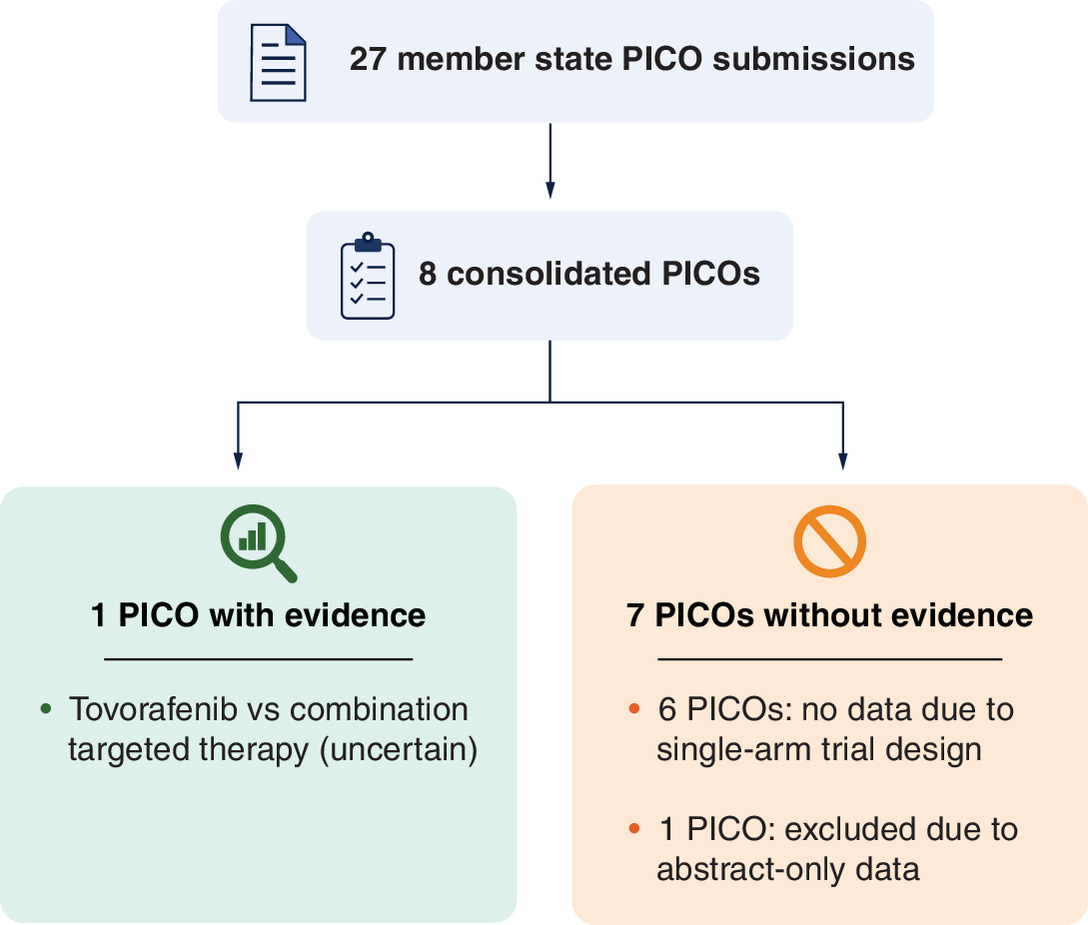
Figure 1. PICO Scoping process.
Adapted from Member State coordination group on health technology assessment. Joint clinical assessment report of a medicinal product: tovorafenib, version 1.0 (2026).
PICO: Population, Intervention, Comparator, Outcome.
The reasons for the other seven PICOs going unanswered differ, and the distinction matters deeply for future policy. For six of the eight PICOs, no comparative data existed because FIREFLY-1 was designed as a single-arm study [6]. This design is standard and appropriate in ultra-rare pediatric oncology, where randomizing children to existing treatments is frequently neither clinically justified nor ethically approvable in the heavily pretreated relapsed/refractory setting evaluated in FIREFLY-1, even though randomization remains well established in earlier lines of pediatric oncology, as the ongoing front-line FIREFLY-2 trial demonstrates [7]. These gaps reflect the genuine, unavoidable limits of what clinical development in this setting can produce. It is worth noting that even a two-arm randomized trial would not have resolved the majority of unanswered PICOs: a single control arm addresses one comparator, while the eight consolidated PICOs here span multiple patient subgroups and comparators drawn from the clinical realities of 27 Member States. No single development program could simultaneously generate direct comparative evidence across all of them. Ultimately, HTA bodies must explicitly agree under which clinical conditions indirect comparisons are acceptable, recognizing that for ultra-rare diseases, single-arm data will remain the primary evidence regardless of how early a joint scientific consultation (JSC) is held [9,10]
Conversely, for the one PICO where a comparison against another targeted therapy was submitted, the developer relied on conference abstract data rather than a full study report. The assessors excluded it on that basis of a documentation failure, not a disease constraint, reflecting a pre-established requirement of the JCA methodology guidance rather than a discretionary judgement by these specific assessors [2].
The remaining PICO produced an analysis that entered the report but with results too uncertain to support firm conclusions. The final result is a document that, for the vast majority of its scope, records what cannot be known rather than what has been established [2]. The most consequential precedent is not a conclusion about tovorafenib but a statement about what happens when the evidence a framework requires is evidence the clinical setting cannot provide, and when the framework has not yet agreed how to handle that gap.
The statistical limits of indirect comparisons
When direct comparisons do not exist because two treatments have never been tested against each other in the same trial, statistical methods can be used to construct an indirect comparison from separate studies. The most widely used approach re-weights the individual patients in the developer’s trial to resemble those in a published trial of the comparator, producing an estimated rather than a directly measured result. These comparisons are vastly more reliable when both trials share a common reference point; for example, when both treatments were previously compared with the same standard chemotherapy anchor. This shared anchor substantially reduces uncertainty. When no such anchor exists, as is typical in a sparse treatment landscape, uncertainty increases substantially and grows further as the number of patients available for adjustment decreases.
In the tovorafenib assessment, the effective sample size after statistical adjustment fell to between 5.81 and 6.64 individuals from an already small starting population [2,11]. While the assessors accepted this as the only feasible approach and calculated additional analyses that the developer had not provided, they presented all results with an explicit acknowledgement that they could not be taken as a reliable measure of comparative benefit. This acknowledgement is not a mere caveat; it is the central conclusion of the text.
The developer submitted additional analyses to address this uncertainty, but the assessors identified several concerns, as detailed in the technical addendum. One issue requires a precise account: the assessors found that the developer had classified a specific category of tumor response, called a Minor Response under the RANO-LGG measurement criteria [12], as a positive outcome in the tovorafenib trial arm, while the same type of response was recorded as stable disease in the comparator trial arm [2]. In plain terms, the same patient outcome was counted differently depending on the treatment the patient received, making tovorafenib appear more effective than a consistent measurement would have shown. The FIREFLY-1 publication reports 37% partial responses by radiological criteria in Arm 1 [6]; the exclusion of the RANO-LGG objective response rate analysis from the JCA was not a consequence of insufficient response signal, but of asymmetric application of response categories across arms.
The assessors asked the developer to rerun the analysis using the same classification for both arms, but the developer did not provide a corrected analysis, and the original report was excluded from the JCA report on that basis [2]. This was not a disagreement between scientists navigating genuinely uncertain criteria; the methodological guidance on this point was explicit, and the developer had full control over the output. This illustrates the type of submission quality issue that earlier, structured engagement with HTA bodies could help prevent.
Rigour, transparency & the illusion of stakeholder influence
The JCA for tovorafenib demonstrates that the EU HTA system is working largely as intended, and that deserves to be stated plainly [3,13]. Every limitation is documented and every exclusion is explained. The report describes with precision the evidence that exists and the level of confidence it supports. The assessors’ willingness to apply rigorous standards consistently, even when the result is the exclusion of submitted analyses, sets an important precedent: scientific rigor will not be traded for evidentiary inclusion. If applied consistently, this will raise the quality of future submissions across the pharmaceutical industry.
However, the system must go further in terms of the quality and transparency of stakeholder involvement. Some will argue that deep patient and clinician engagement is not strictly required at the JCA stage, since this is a clinical evidence assessment rather than a value appraisal, which is handled through national HTA processes. This argument, however, underestimates what is at stake. The JCA determines which outcomes are assessed, which comparators matter, and which evidence gaps are permanently codified. Those foundational choices directly restrict the evaluative boundaries that national decision-makers subsequently inherit.
Yet, procedural compliance and substantive influence are not the same standard, and the tovorafenib JCA draws sharp attention to the distance between them [14–16]. While the report faithfully records stakeholder input (one caregiver and one clinician) and annexes it to the published document, it fails to demonstrate what that input actually changed. For every practical purpose of audit and accountability, an influence that cannot be demonstrated is indistinguishable from an influence that never occurred. The framework does not ignore patients or caregivers in principle; however, relying on a solitary individual to represent an entire disease landscape raises a structural question about the adequacy of participation timelines and the representativeness of a single carer in capturing the breadth of a patient community’s experience. The JCA assessment scope development process operates within approximately 87 days, a timeline that constrains meaningful patient and clinician recruitment, preparation, and structured input before the comparative framework is fixed. Furthermore, the system lacks a transparent mechanism to demonstrate how this input contributed unique, irreplaceable insights that other stakeholder groups could not provide; a participation architecture that fails to validate this distinct experiential knowledge will, over time, struggle to maintain the trust of the communities it invites in [16,17].
To bridge this gap, future JCAs must engage patients, caregivers and clinicians much earlier, before the PICO scope is fixed, through a structured framework backed by adequate time and technical support. The final report should explicitly state which patient-identified priorities shaped the final scope, which did not, and why. The JCA will continue to produce assessments that are rigorous in method but incomplete in understanding unless it finds accountable ways to incorporate the experiential knowledge that only patients, carers and clinicians hold.
The peril of the lowest common denominator: encoding inequality
Perhaps the most consequential structural concern this JCA surfaces is the risk that the comparator selection process may inadvertently perpetuate the clinical inequities it was designed to correct. Under the JCA, each Member State proposes comparators reflecting its own clinical practice, which are then consolidated into an agreed set of benchmarks. The process is well-intentioned, but the standard of care varies across the EU in ways that do not always reflect differences in the clinical evidence or preference. In some Member States, patients continue to receive older treatments that more advanced health systems have largely moved beyond, not because those treatments are clinically superior, but because access to newer options has been constrained by funding decisions, reimbursement delays, or healthcare infrastructure issues [17,18]. Crucially, even when superior therapeutic alternatives are regulatory-cleared and widely recognized in European guidelines, a profound access gap remains; if an innovative treatment is not locally covered or reimbursed, clinicians are forced to continue managing patients with outdated standards of care. When these legacy options are codified as mandatory JCA comparators, the framework ends up benchmarking innovation against localized funding constraints rather than true clinical evolution.
HTA bodies would respond that assessing value against what patients actually receive, rather than what they ideally should receive, is a deliberate policy choice made explicitly during the Regulation’s negotiation. It reflects a legitimate principle: that HTA should inform decisions real health systems make with real budgets and constraints, not decisions they might make in an idealized world, a comparator that exists in practice; however outdated, represents a genuine alternative that patients in that system face; requiring evidence against it is not a distortion of the framework; but the system operating precisely as designed.
This argument is valid and should not be dismissed lightly. However, the problem arises when comparators reflect the absolute absence of access to better practice, when a treatment appears as a benchmark not because clinicians prefer it or evidence supports it, but because the system has been unable to afford or procure what has replaced it elsewhere. At that point, the HTA framework no longer describes clinical reality; it encodes funding failure as a scientific requirement. The solution proposed here is not to exclude comparators from less well-resourced systems, but to flag them explicitly as markers of access inequality requiring a parallel policy response, rather than imposing an additional evidence obligation on the developer that is unlikely to be satisfiable in any trial dataset.
This creates three connected problems:
•
Clinical: requiring a developer to build the evidentiary case for a new treatment against a comparator that current evidence does not support as a meaningful standard of care does not answer a question that matters in systems where practice has advanced, risking misrepresentation of the genuine contribution of a new treatment.
•
Ethical: expecting a clinical trial to include a direct comparison against a treatment that is no longer considered appropriate in leading health systems places an ethically untenable burden on developers and may make trial design irreconcilable with contemporary standards of care. In contexts where randomizing patients to an outdated comparator raises safety or consent concerns, the requirement effectively renders the evidentiary standard unachievable.
•
Structural: when JCA comparator requirements are anchored to the practice of less well-resourced health systems, the assessment does not level the playing field; it encodes existing inequalities. A patient in a country where older therapies remain the standard due to funding constraints finds the new treatment evaluated against a benchmark that reflects those limitations.
Harmonization built on comparators that reflect local access constraints rather than clinical evidence is not a step toward equity; it risks ratifying existing disadvantages at a European scale rather than creating a framework designed to overcome them. This is a structural risk, not an intentional outcome, which means that the process is operating precisely as designed. The problem lies in the absence of a mechanism to ensure that the agreed comparators reflect current evidence-based clinical practice rather than the current state of access inequality. The solution is to introduce a clear quality standard into the scoping process: agreed comparators must reflect treatments supported by current evidence, and where a proposed comparator cannot meet that standard, it should be recognized as a marker of access inequality requiring a policy response, not as an evidence burden placed on the developer.
Exclusions & blind spots: what the JCA cannot see
The limitations of this approach become glaringly obvious when looking at what the framework's legislative scope is forced to ignore. By design, the JCA covers only the relative clinical effectiveness of a treatment compared with existing options. What it cannot assess includes the secondary burden a disease places on caregivers, the real-world severity of unmet need, and the broader familial value of having an oral, at-home treatment option, for instance. In pediatric neuro-oncology, these exclusions are not peripheral footnotes; they represent the core reality of the disease.
A pediatric neuro-oncologist treating a child with relapsed or refractory LGG recognizes this systemic silence immediately. What the JCA measured, whether an unanchored indirect statistical comparison of progression-free survival crossed a threshold of mathematical significance, is rarely the primary metric a clinician weighs in the consultation room. The clinician is looking at whether a targeted agent can shrink or stabilize a deeply problematic tumor, whether its toxicity profile allows a growing child to avoid prolonged hospital stays, and how it impacts long-term cognitive development and physical growth over a years-long treatment journey [18].
Similarly, a family navigating this diagnosis prioritizes practical dimensions that fell entirely outside the comparative assessment frame or were classified as assessable within the consolidated PICO scope. A parent who can manage their child’s treatment with an oral medication at home, keeping them in school and maintaining family employment without stark travel burdens, exhausting infusion visits, or the risk of treatment-related complications including febrile neutropenia and central line infections that characterize intravenous chemotherapy regimens, lives a fundamentally different life from one managing those realities.
Because the political negotiation that produced the Regulation of HTA restricted the assessment strictly to comparative clinical metrics, these critical quality-of-life dynamics remain entirely invisible to the framework. The tovorafenib JCA generated absolutely no information regarding caregiver experience or long-term functional outcomes. Whether the developer collected such evidence is an issue the broader clinical field should scrutinize; but whether the framework should mandate its inclusion is a question European policymakers can no longer afford to defer. Although FIREFLY-1 collected patient-reported outcomes via PedsQL and PROMIS instruments [6], these data were omitted from the primary publication and excluded from the JCA, demonstrating how reporting choices, alongside legislative scope, limit evaluable patient-experience evidence.
The decade ahead: expansion & the calibration debate
As the Regulation prepares for its scheduled expansions, incorporating orphan medicinal products in 2028 before scaling to the entire medicinal products by 2030, the systemic strains witnessed in this inaugural assessment will intensify. The primary operational bottleneck moving forward is not merely legal adherence, but administrative capacity. Many products in these categories will share the evidentiary characteristics visible here, while others, studied in large randomized trials, will still face the PICO heterogeneity and comparator diversity challenges described in this article. The system carries a fundamental tension into this expansion: the methodological integrity this first JCA demonstrates versus the practical purpose the JCA must serve. A JCA that cannot draw conclusions for most of an indication’s patients does not remove the need for national payers to make judgements; it ensures that they are made without harmonized input, which is precisely what the Regulation was designed to prevent.
The first JCA highlights a broader methodological question that extends beyond this individual assessment: how should decision-makers balance protection against false-positive conclusions with the risk of failing to recognize meaningful benefit when evidence generation is inherently constrained? This challenge is particularly visible in rare diseases and highly segmented oncology indications, where uncertainty may never be fully resolved through traditional, large-scale randomized comparative studies. The calibration of evidentiary standards in such sparse data settings remains an important area for future methodological discussion within the European HTA network.
When a framework seeking to reflect the clinical realities of 27 Member States simultaneously generates a matrix of PICO demands that cannot be met by standard orphan drug development pathways, the system risks defaulting to a structural impasse. The question is not whether rigorous standards should be maintained, they must be, but whether a single tool can effectively serve both as an absolute scientific standard and as a pragmatic guide for real-world health system decisions
Characterizing uncertainty versus communicating certainty
The tovorafenib report is meticulous in documenting what cannot be concluded. What it lacks, and what the JCA framework does not currently require, is a consolidated summary of what can be established: a portable, standardized signal of evidence strength that national HTA bodies can carry directly into reimbursement deliberations. Implementing a structured certainty output, whether adapted from GRADE or built as a JCA-equivalent, is methodologically feasible if the Member State Coordination Group on HTA (HTACG) provides explicit guidance on mapping certainty domains to heterogeneous multi-PICO scopes. However, such frameworks cannot resolve the broader structural challenge: for most of the indication, there is simply no comparative evidence to grade. Because the JCA filters the evidence base strictly against comparative thresholds, the single-arm trial signal driving regulatory approval is excluded from the comparative assessment entirely rather than graded as low certainty. The primary challenge for national payers is not merely how uncertainty is communicated, but that for the majority of patients, the JCA provides no common clinical foundation at all, a structural gap that demands structural reforms [8,11].
Improving alignment between evidence expectations & evidence feasibility
To resolve these systemic frictions as the JCA framework expands, policymakers must deploy specific structural remedies designed to better align evidentiary expectations with the realities of innovative drug development. These interventions can be organized into a single, coherent framework (Figure 2).
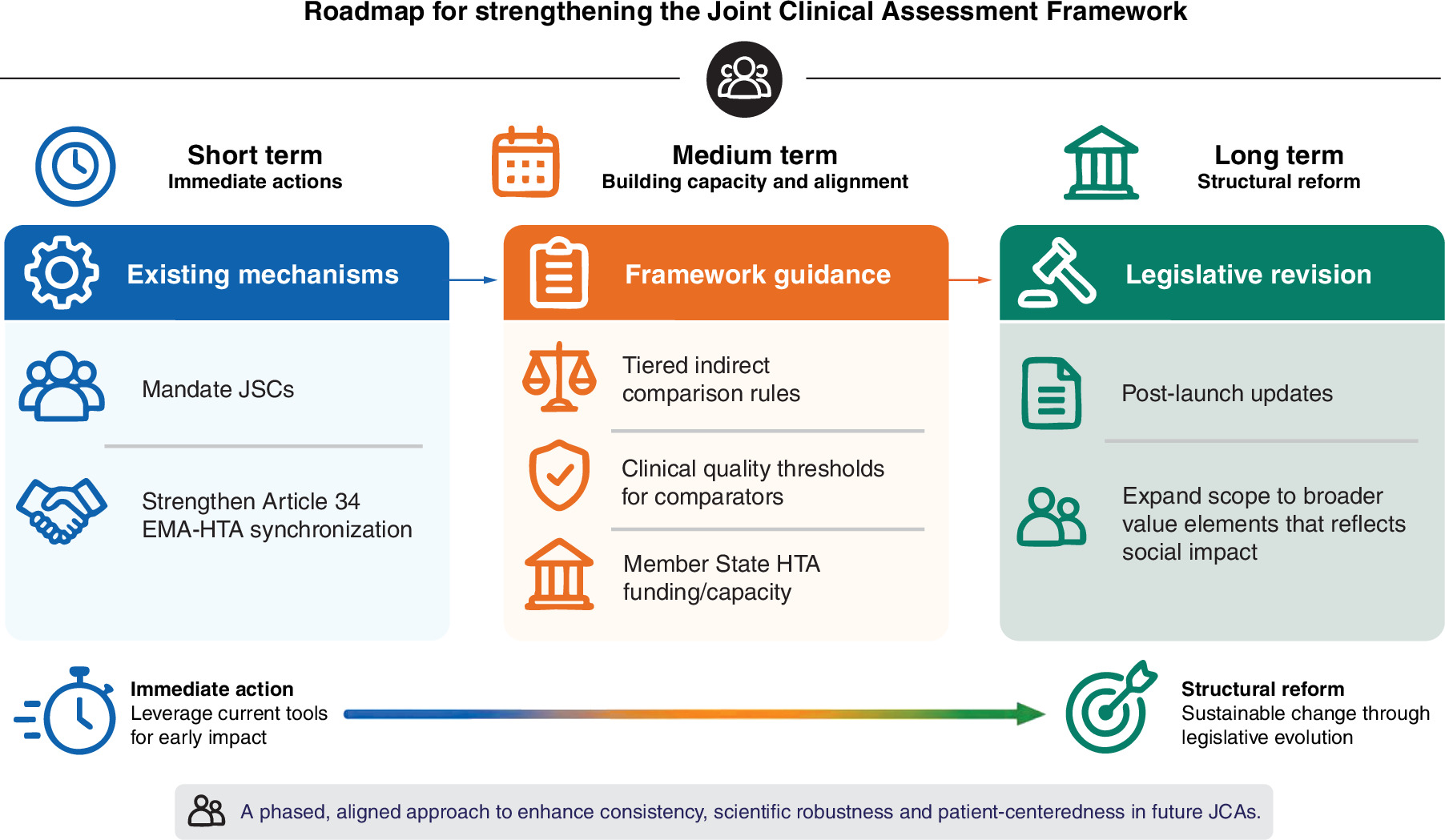
Figure 2. A proposed roadmap for strengthening upcoming joint clinical assessments.
EMA: European Medicines Agency; HTA: Health technology assessment; JCA: Joint clinical assessment; JSC: Joint scientific consultation.
Earlier & broader use of JSCs
Article 13 of the Regulation establishes JSCs conducted by representatives designated by the HTACG and the EMA, as the primary tool to align clinical trial designs with HTA comparative requirements before pivotal evidence generation [1]. Yet, no such consultation occurred for tovorafenib. For therapies where randomized comparative evidence is structurally unfeasible at launch, JSC engagement must become standard practice rather than an optional pathway. However, severe administrative capacity constraints limit the number of available consultations, creating systematic risks for pipeline delays.
For the JSC instrument to be truly fit-for-purpose, its execution must be decoupled from late-stage regulatory milestones and synchronized instead with early clinical development. When a JSC occurs only after global pivotal protocol designs are locked or active recruitment has commenced, the consultation ceases to be an active mechanism for optimizing evidence generation; it becomes a retroactive tracking exercise [19].
Stronger EMA-HTACG alignment
Article 34 of the Regulation mandates coordination between the HTACG and the EMA, yet a profound temporal mismatch remains. Accelerated regulatory pathways at the EMA frequently clear innovative products based on single-arm trials or surrogate end points, the exact evidentiary profiles the current JCA framework is structurally uncalibrated to evaluate [1,13,20,21]. Substantive parallel advice mechanisms are urgently required to ensure that when the EMA grants conditional marketing authorization based on public health urgency, the HTA framework is prepared with specific methodologies to interpret that truncated data package, rather than treating regulatory speed as an automatic HTA deficiency.
Context-sensitive methodological guidance
The HTACG should develop explicit, tiered guidelines distinguishing between data-rich therapeutic environments and sparse data settings. Applying the same rigid indirect comparison demands to an ultra-rare pediatric condition as one would to a prevalent adult indication produces systematically inconclusive outputs. Methodological guidance must allow for alternative evidence syntheses, including natural history registries, synthetic control arms, and real-world data, providing a structured pathway for these alternative data sources to be formal parts of the primary assessment [22].
Improved comparator guidance
Within the existing scoping process, the HTACG must introduce a clear clinical quality threshold for proposed comparators. When individual Member States propose comparators that reflect localized funding failures or outdated infrastructure rather than current, evidence-based standards of care, the framework should flag these as markers of regional access inequality rather than transforming them into formal evidence generation obligations placed on the developer.
Ongoing Phase III randomized trials such as FIREFLY-2, a direct comparative study in treatment-naive patients, illustrate how ongoing clinical development will generate the comparative evidence missing at the time of initial assessment [7], precisely what a lifecycle-oriented JCA framework would be designed to capture. The most significant structural gap exposed by this inaugural assessment is its static nature. Because the Regulation provides no formal administrative pathway for updating a JCA record once it is finalized, the result is a precise, immutable snapshot of uncertainty frozen at the moment of market launch.
Consequently, European HTA policy must evolve beyond static point-in-time assessments toward lifecycle approaches that continuously link evidence generation, reassessment, and decision-making over time.
Without a formal update loop, the initial gaps identified in the tovorafenib report remain frozen at the point of market launch. If a developer generates comprehensive real-world evidence, disease registry data, or long-term safety profiles 3 years post-launch, there is no centralized mechanism to absorb this data and revise the JCA record. Leaving post-launch evidence management to the fragmented discretion of individual Member States, defeats the primary harmonizing purpose of the Regulation [21]. Introducing formal reassessment triggers or conditional JCA statuses linked to European-level data collection protocols is a necessary structural evolution to prevent the JCA from becoming an obsolete administrative artifact.
One final point requires absolute clarity as this system matures: the JCA is a clinical evidence foundation, not access determination. Article 35 of the Regulation is unambiguous: Member States retain full sovereignty over reimbursement and pricing decisions of medicines [1]. A JCA that documents high uncertainty or cannot draw comparative effectiveness conclusions for part of an indication does not constitute a valid basis for denying patient access. Instead, it constitutes a baseline for designing national appraisal processes and managed entry frameworks calibrated to specific uncertainties. Conditional reimbursement linked to registry data collection, coverage with evidence development, and price-volume agreements with evidence reassessment triggers are the correct logical extensions of an inconclusive JCA report. The appropriate response to a JCA that says ‘we do not yet know how this treatment compares’ is not a national payer decision that says ‘therefore we will not cover it.’ It is a structured agreement that says ‘we will cover it under conditions designed to actively reduce those documented clinical ambiguities through longitudinal, real-world data collection.’ That vital distinction, between treating uncertainty as an absolute barrier to access or as a pragmatic roadmap for ongoing evidence generation, is the most critical operational lesson this inaugural JCA offers to the Member States now tasked with its implementation [23].
Conclusion
The first JCA demonstrates that the European HTA framework can produce assessments that are transparent, methodologically rigorous and procedurally robust. At the same time, it exposes unresolved questions regarding evidentiary feasibility, uncertainty management and the absence of mechanisms to update assessments as evidence matures. Whether the framework can evolve to address these challenges while maintaining scientific rigor will be a defining question for the next phase of implementation.
Executive summary
•
The first EU JCA under Regulation 2021/2282 evaluated tovorafenib for pediatric low-grade glioma but yielded comparative data for only one of eight PICOs. This outcome highlights a core mismatch between HTA comparative requirements and the data rare-disease single-arm trials can produce at launch.
•
While the report accurately documents data gaps, it offers no standardized certainty grading. Furthermore, using outdated local practice as mandatory comparators risks turning regional funding inequalities into rigid evidence hurdles.
•
Addressing these gaps requires a phased approach: mandating early Joint Scientific Consultations under current rules, developing tiered methodological guidance for sparse-data settings, and ultimately revising legislation to allow post-launch updates to the JCA report.
Acknowledgments
The authors acknowledge to Jose Diaz for their comments in the earlier versions of this manuscript
Financial disclosure
The authors received no financial and/or material support for the creation of this work.
Competing interests disclosure
R Gilardino is employed by Insights & Impact. Antonella Cardone is employed by Cancer Patient Europe. CM Cossio is researcher at University of Barcelona and Employed by Cytel, Inc. Switzerland. The views expressed in this article are those of the authors in their academic and professional capacities and do not represent the positions of any employer, institution or agency. Authors declares no financial relationship with any of the companies or in regards to the production of this manuscript. The authors have no other competing interests or relevant affiliations with any organization or entity with the subject matter or materials discussed in the manuscript apart from those disclosed.
Writing disclosure
No funded writing assistance was utilized in the production of this manuscript.
Open access
This work is licensed under the Attribution-NonCommercial-NoDerivatives 4.0 Unported License. To view a copy of this license, visit https://creativecommons.org/licenses/by-nc-nd/4.0/
References
1.
European Parliament, Council of the European Union. Regulation (EU) 2021/2282 of the European Parliament and of the Council of 15 December 2021 on health technology assessment and amending Directive 2011/24/EU. Off. J. Eur. Union. L458, 1–32 (2021).
2.
Member State Coordination Group on Health Technology Assessment. Joint Clinical Assessment Report of a Medicinal Product: Tovorafenib, Version 1.0 (2026). Directorate-General for Health and Food Safety, European Commission, Brussels. Version 1.0. (2026). https://health.ec.europa.eu/publications/joint-clinical-assessment-report-tovorafenib-ojemda_en
3.
European Commission. Implementation of the regulation on health technology assessment [rolling plan webpage]. Directorate-General for Health and Food Safety. https://health.ec.europa.eu/health-technology-assessment/implementation-regulation-health-technology-assessment_en
4.
European Commission, Directorate-General for Health and Food Safety. Guidance on filling in the Joint Clinical Assessment (JCA) dossier template – Medicinal products. (2024). https://health.ec.europa.eu/document/download/3943ae6a-1bca-4afd-b05c-fd9a54a252d7_en?filename=hta_jca_mp_dossier-template_guidance_en.pdf
5.
European Medicines Agency. Ojemda (tovorafenib): summary of positive opinion. Reference number EMA/CHMP/43372/2026. Amsterdam: EMA; (2026). https://www.ema.europa.eu/en/medicines/human/EPAR/ojemda
6.
Kilburn LB, Khuong-Quang DA, Hansford JR et al. The type II RAF inhibitor tovorafenib in relapsed/refractory pediatric low-grade glioma: the Phase II FIREFLY-1 trial. Nat. Med. 30(1), 207–217 (2024).
7.
van Tilburg CM, Kilburn LB, Perreault S et al. LOGGIC/FIREFLY-2: a Phase III, randomized trial of tovorafenib vs. chemotherapy in pediatric and young adult patients with newly diagnosed low-grade glioma harboring an activating RAF alteration. BMC Cancer 24(1), 147 (2024).
8.
European Commission. Commission Implementing Regulation (EU) 2024/1381 of 23 May 2024 laying down, pursuant to Regulation (EU) 2021/2282 on health technology assessment, procedural rules for the interaction during, exchange of information on, and participation in, the preparation and update of Joint Clinical Assessments of medicinal products for human use at Union level, as well as templates for those Joint Clinical Assessments. Off. J. Eur. Union. L1381 (2024). https://eur-lex.europa.eu/legal-content/EN/TXT/?uri=OJ:L_202401381
9.
Drummond M, Tarricone R, Torbica A. European Union Regulation of Health Technology Assessment: what is required for it to succeed? Eur. J. Health Econ. 23(6), 913–915 (2022).
10.
Eberle K, Hagemann L-M, Schweitzer MK et al. The PICO puzzle: can public data predict EU HTA expectations for all EU countries? J. Mark. Access Health Policy 13, 32 (2025).
11.
Member State Coordination Group on Health Technology Assessment (HTACG). Methodological guideline for quantitative evidence synthesis: direct and indirect comparisons. (2024). Directorate-General for Health and Food Safety. https://health.ec.europa.eu/document/download/4ec8288e-6d15-49c5-a490-d8ad7748578f_en?filename=hta_methodological-guideline_direct-indirect-comparisons_en.pdf
12.
van den Bent MJ, Wefel JS, Schiff D et al. Response assessment in neuro-oncology (a report of the RANO group): assessment of outcome in trials of diffuse low-grade gliomas. Lancet Oncol. 12(6), 583–593 (2011).
13.
European Commission. Commission Implementing Regulation (EU) 2024/2699 laying down procedural rules on cooperation and exchange of information between the coordination group and the EMA, with the facilitation of the HTA secretariat, in relation to JCAs and JSCs. https://eur-lex.europa.eu/legal-content/EN/TXT/?uri=OJ:L_202402699
14.
European Commission, Directorate-General for Health and Food Safety. Patients, carers and clinical experts involvement – FAQ. https://health.ec.europa.eu/health-technology-assessment/implementation-regulation-health-technology-assessment/opportunities-patients-carers-and-clinicians/patients-carers-clinical-experts-involvement-faq_en
15.
European Commission. Commission Implementing Regulation (EU) 2024/2745 laying down rules on the management of conflicts of interest in the joint work of the coordination group and its subgroups. https://eur-lex.europa.eu/legal-content/EN/TXT/?uri=OJ:L_202402745
16.
Pickaert A-P, Acute Leukemia Advocates Network. Patient involvement in health technology assessments: lessons for EU Joint Clinical Assessments. J. Mark. Access Health Policy 13(3), 38 (2025).
17.
Gilardino RE, Jullien Pannelay A, Ramagopalan SV. Access in all areas? A roundup of developments in market access and health technology assessment: part 6. J. Comp. Eff. Res. 14(3), e240239 (2025).
18.
Castanon A, Sloan R, Arocha LS, Ramagopalan SV. EU HTA Joint Clinical Assessment: are patients with rare disease going to lose out? J. Comp. Eff. Res. 13(6), e240052 (2024).
19.
European Commission. Commission Implementing Regulation (EU) 2024/3169 of 18 December 2024 laying down rules for the application of Regulation (EU) 2021/2282 of the European Parliament and of the Council with regard to the procedures for joint scientific consultations on medicinal products for human use at Union level. (2024). Official Journal of the European Union. L/2024/3169 Available at: https://eur-lex.europa.eu/eli/reg_impl/2024/3169/oj/eng
20.
Dang A, Tak S. Joint Clinical Assessments in Europe: implications for market access, reimbursement, and national HTA alignment. Pharm. Med. 40(1), 19–31 (2025).
21.
Xander NSH, Rutten-van Mölken MPMH, Bertin L et al. Legal implications of Joint Clinical Assessments under the EU HTA regulation. Health Econ. Policy Law, doi: (2026) (Epub ahead of print).
22.
Graham C, Barker E, Moss J et al. Opportunities for and challenges of conducting indirect treatment comparisons and meta-analyses for vaccines in the post-EU HTA Regulation era. J. Mark. Access Health Policy 13(2), 31 (2025).
23.
Johns A, Andrade A, Johal S, Ryan J. EU Joint Clinical Assessment: a framework for optimising use with cost-effectiveness decision-making. J. Mark. Access Health Policy 13(4), 52 (2025).
Information & Authors
Information
Published In
Copyright
© 2026 The authors. This work is licensed under the Attribution-NonCommercial-NoDerivatives 4.0 Unported License
History
Received: 1 July 2026
Accepted: 13 August 2026
Published online: 17 September 2026
Keywords:
Topics
Authors
Metrics & Citations
Metrics
Article Usage
Article usage data only available from February 2023. Historical article usage data, showing the number of article downloads, is available upon request.
Citations
How to Cite
Rigorous, transparent and inconclusive: what Europe’s first joint clinical assessment reveals about a framework trying to serve everyone. (2026) Journal of Comparative Effectiveness Research. DOI: 10.57264/cer-2026-0141
Export citation
Select the citation format you wish to export for this article or chapter.