

Progressive familial intrahepatic cholestasis disease burden and clinical approaches: a systematic review
Abstract
Aim: Progressive familial intrahepatic cholestasis (PFIC) comprises a group of rare, heterogeneous genetic liver disorders characterized by impaired bile formation and cholestasis. Historically, treatment focused on supportive management and symptomatic relief, but disease-specific therapies, including ileal bile acid transporter inhibitors, have recently become available. This systematic review updates previous evidence on the epidemiology, natural history, psychosocial and economic burden of PFIC, and summarizes evidence on the efficacy, safety and cost-effectiveness of therapies used primarily in patients with PFIC type 2 (bile salt export pump [BSEP] deficiency). Materials & m ethods: Twenty-seven databases and supplementary literature sources were searched in February 2021 and updated in January 2025. Studies were selected to address five review questions. Due to substantial heterogeneity in study populations, PFIC subtypes, outcome definitions and study designs, findings were synthesized narratively. Results: A total of 114 publications were included. Findings relating to epidemiology, natural history, psychosocial burden and economic burden were broadly consistent with previous reviews and highlighted the substantial impact of PFIC on children and their caregivers. Many patients treated with maralixibat and odevixibat demonstrated improvements in pruritus, serum bile acid concentrations, quality of life and markers of liver health, particularly those with PFIC2/BSEP deficiency. However, treatment responses varied across studies and genotypes, and long-term data remain limited. Only a small amount of economic evidence was identified. Conclusion: PFIC is associated with significant clinical and psychosocial burden. Ileal bile acid transporter inhibitors provide a novel, targeted, nonsurgical treatment option for many patients: current evidence supports improvements in pruritus and serum bile acid control, particularly in PFIC2/BSEP deficiency; however, treatment responses are heterogeneous and additional long-term clinical and economic evidence is needed.
Background
Progressive familial intrahepatic cholestasis (PFIC) refers to a group of rare, heterogeneous genetic liver disorders caused by variants in bile constitution/formation [1]. The disease is characterized by an early onset of intrahepatic cholestasis (i.e., reduced or blocked bile flow) due to impaired hepatocytic bile salt excretion, bile micelle formation or bile duct dysfunction with clinical features of pruritus, malabsorption and rapid progression to liver failure [2]. PFIC is the cause of 10–15% of cholestatic liver diseases in children, and up to 15% of pediatric liver transplantation (LT) indications [3]. Although its exact prevalence is unknown, the disease is estimated to affect 1 in every 50,000 to 100,000 births [2,3].
PFIC types are determined by which gene/protein is affected, with diagnosis typically based on clinical presentation, laboratory findings and liver histology, and confirmed with genetic testing [4]. The most common PFIC types are PFIC 1 (FIC1 deficiency), PFIC 2 (bile salt export pump [BSEP] deficiency) and PFIC 3 (MDR3 deficiency). Manifestations of PFIC range from mild to severe. Milder disease typically manifests with mild pruritus (which is also present in severe disease), alongside jaundice, failure to thrive (defined as poor growth and weight gain due to impaired fat absorption), fat-soluble vitamin deficiency and delayed puberty. Some patients also present with extrahepatic manifestations, which can include hearing loss, pancreatitis, kidney stones and diarrhea [5,6]. The quality of life (QoL) of children and their families is significantly impaired due to PFIC, with abrasions, cutaneous mutilation, scarring and sleep disturbance some of the most debilitating symptoms [7].
Several earlier literature reviews have explored various aspects of PFIC, including its epidemiology, etiology, clinical features, diagnosis and treatment methods, burden and prognosis [3–5,7]. These previous reviews discussed historical standard of care, consisting only of supportive management and symptomatic relief, but the emergence of specific treatment options necessitates a new review to summarize their efficacy and safety [8,9]. Herein, we present a systematic review of published literature which serves not only as an update to the research questions investigated by Baker et al. focused on the natural history and burden of PFIC [7], but also summarizes new evidence on the efficacy and cost-effectiveness of therapeutic options used to treat individuals with the most prevalent form of the disease, PFIC 2.
Materials & methods
This systematic review was conducted in accordance with methodological recommendations from the Cochrane Handbook for Systematic Reviews of Interventions [10], and the Centre for Reviews and Dissemination (CRD) guidance for undertaking reviews in healthcare [11]. The review was reported according to the Preferred Reporting Items for Systematic Reviews and Meta-Analyses (PRISMA) guidelines [12]. A review protocol was not prospectively registered.
Separate search criteria were defined in the population, interventions, comparisons, outcomes and study design (PICOS) structure for five distinct review questions, which guided the identification and selection of studies. These criteria are presented in Supplementary Tables 1–5. The review questions were:
•
What is the epidemiology encompassing the prevalence, incidence, etiology, risk factors and natural history of PFIC?
•
What is the psychosocial burden associated with PFIC for both patients and caregivers?
•
What is the economic burden associated with PFIC?
•
What is the efficacy and safety of standard of care (SoC) and novel treatments for BSEP deficiency?
•
What comparative economic evidence is available to support the cost-effectiveness of PFIC therapies?
To improve transparency, findings for each review question are presented in separate sections of the Results and Discussion. The number of included publications contributing to each review question is reported to facilitate interpretation of the relative strength of evidence across domains. Given the rarity of PFIC and the differing objectives of the included studies, evidence was synthesized narratively rather than quantitatively.
Twenty-seven databases and supplementary literature sources were searched from inception to February 2021 to retrieve relevant publications. Searches across databases and websites were updated in January 2025 to retrieve additional published literature. English language only restrictions were placed during study selection, and publication date limits were placed on the January 2025 search update (for further details on database search strategies, see Supplementary Materials). The bibliographies of included articles and review publications were hand-searched for further relevant studies.
Two reviewers independently screened articles for inclusion according to prespecified inclusion criteria at title/abstract and full text stage (see Supplementary Materials). Data extraction and quality assessment of included studies were performed by one reviewer, with all data items validated by a second reviewer. Any discrepancies between reviewers at screening, extraction, or quality assessment stages were resolved through consensus or consultation with a third reviewer. Data from the included studies were extracted, stored and analyzed using Microsoft Excel. The extracted items were study characteristics, patient baseline characteristics (where applicable), study arms compared, outcomes assessed (e.g., outcome definitions, methods of assessment), follow-up time and results (e.g., numbers, percentages and effect sizes with CI, where applicable). The methodological quality of observational studies was assessed using the Critical Appraisal Skills Programme checklist [13], and the Cochrane Risk of Bias (ROB)-2 tool was used to appraise randomized controlled trials (RCTs) [14]. Economic assessments were appraised using the NICE checklist for economic evaluations [15]. Studies which reported QoL estimates were appraised using a checklist adapted from the NICE Technical Support Document (TSD) 9 [16]. See Supplementary Materials for full details of these risk of bias assessments.
Overall, the methodological quality of the included studies was variable. Observational studies were frequently limited by small sample sizes, retrospective study designs and the absence of comparator groups. RCTs generally demonstrated lower risk of bias, although some concerns remained regarding sample size and generalizability because of the rarity of PFIC and the exclusion of certain patient subgroups. These limitations should be considered when interpreting treatment efficacy and long-term outcome findings.
A narrative synthesis of all included studies was performed across all systematic literature reviews (SLRs). Meta-analysis was not undertaken because of substantial heterogeneity across studies. Sources of heterogeneity included differences in PFIC type, genotype distribution, intervention type, outcome definitions, response thresholds, follow-up duration and study design. In particular, clinical studies employed different definitions of serum bile acid response and pruritus improvement and enrolled patient populations with differing disease severity and genetic backgrounds. Consequently, quantitative pooling of results was considered inappropriate and findings were synthesized narratively. The data were summarized using text and where relevant, accompanying tables. A thorough analysis by the aforementioned reviewers controlled for the possibility of inclusion of the same participants from various studies, with the exception of inclusion of open-label extension trials.
Results
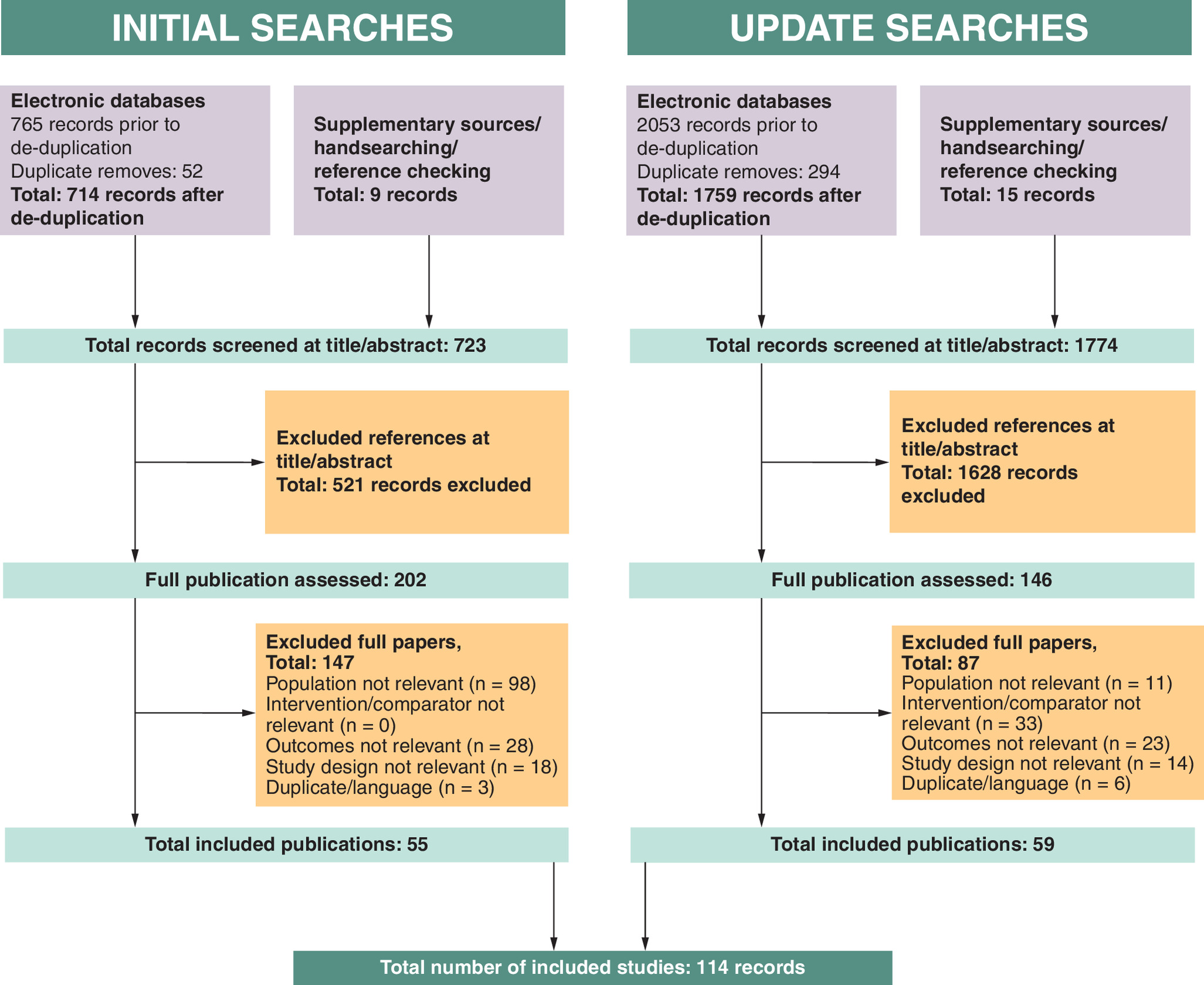
A total of 2818 titles and abstracts were retrieved from the literature searches and 24 from other sources, including 346 duplicates. From these, full papers were obtained for 348 citations. After further review, 234 papers were excluded.
One hundred and fourteen publications were selected for inclusion across the five review questions (epidemiology question: 59; HRQoL question: 13; clinical question: 57; cost and resource use question: 4; economic evaluation question: 3). Several publications met the inclusion criteria for more than one of the epidemiology, HRQoL, and/or clinical evidence review questions. As such, the sum of the publications extracted for each review question (135 records) exceeds the total number of individual publications. The study selection process is detailed in Figure 1.
Review question 1: What is the epidemiology encompassing the prevalence, incidence, etiology, risk factors & natural history of PFIC?
A total of 59 studies were selected for inclusion in response to the epidemiology and natural history review question. The target outcomes were prevalence, incidence, etiology, risk factors, clinical manifestations and mortality. Davit-Spraul et al. estimated the global prevalence of PFIC at birth to vary between 1 per 50,000 and 1 per 100,000 [3]. None of the identified studies provided responses to the research question regarding the incidence of PFIC at a national level, although the reported prevalence of PFIC in Taiwan is 0.059 per 100,000 persons [17].
Etiology & risk factors
In the current literature, PFIC types are defined by the deficiency of the respective genetic variants in genes coding for the proteins mainly involved in hepatocellular transport and maintenance [18]. Their etiology characterizations are as follows [19]:
•
PFIC 1: homozygous/compound heterozygous variants of the ATP8B1 gene, leading to familial intrahepatic cholestasis-associated protein type 1 (FIC1) deficiency.
•
PFIC 2: variant ABCB11 gene, which encodes the BSEP, a protein responsible for transporting bile salts against their concentration gradient.
•
PFIC 3: variant ABCB4 gene, which encodes a multidrug-resistant class III glycoprotein (MDR3).
•
PFIC 4: tight junction protein 2 (TJP2) deficiency caused by a loss-of-function variant in the TJP2ZO-2 gene.
•
PFIC 5: FXR deficiency due to variants in the NR1H4 gene.
•
PFIC 6: OSTα-OSTβ complex deficiency due to a homozygous mutation in the SLC51A gene.
•
PFIC 7: variants in the USP53 gene prompting deficiencies in inactive ubiquitin carboxyl-terminal-hydrolase-53.
•
PFIC 8: deficiencies in microtubule motor protein due to variants in the KIF12 gene.
•
PFIC 9: Zinc Finger FYVE-Type Containing 19 deficiency caused by a variant in the ZFYVE19 gene.
•
PFIC 10: Myosin-Vb deficiency caused by variants in the MYO5B gene.
•
PFIC 11: driven by mutations in SEMA7A gene that encodes for Semaphorin-7A.
•
PFIC 12: prompted by a variant in VPS33B gene, encoding the vacuolar sorting-associated protein 33B.
•
PFIC 13: caused by mutations in the PSKH1 gene, which results in a hepatorenal ciliopathy.
A family history of PFIC or related liver diseases is heavily associated with PFIC; consanguinity and a history of intrahepatic cholestasis of pregnancy (ICP) are also risk factors. Fifteen publications reported on these risk factors, which are described in Table 2.
| PedsQL domain (mean ± SD) | LT, child-self | LT, parent-proxy | PEBD, child-self | PEBD, parent-proxy | p-value |
|---|---|---|---|---|---|
| Total score | 77 ± 16 | 84 ± 13 | 80 ± 14 | 81 ± 17 | ns |
| Physical health | 81 ± 18† | 88 ± 11 | 91 ± 11† | 88 ± 13 | 0.07 |
| Psychosocial health | 77 ± 17 | 82 ± 16 | 76 ± 15 | 79 ± 19 | ns |
| Emotional functioning | 77 ± 24 | 82 ± 22 | 65 ± 23 | 76 ± 16 | ns |
| Social functioning | 81 ± 23 | 87 ± 20 | 82 ± 11 | 83 ± 23 | ns |
| School functioning | 72 ± 17 | 79 ± 14 | 82 ± 16 | 83 ± 15 | ns |
LT: Liver transplant; ns: Not stated; PEBD: Partial external biliary diversion; PedsQL: Pediatric quality of life inventory; SD: Standard deviation.
†
Physical health, p = 0.007 for LT child-self vs PEBD child-self.
Source: Wassman et al. (2018) [20].
| Risk factor | Study, year | Country | Study design | Notes | Ref. |
|---|---|---|---|---|---|
| Consanguinity | Abaalkhail et al., 2023 | Saudi Arabia | Retrospective study of hospital records | Investigated 83 patients with PFIC, and reported consanguinity in 89.47% of patients with PFIC 2 and 85.71% of patients with PFIC 3. | [21] |
| Al-Lawati et al., 2009 | Oman | Retrospective study of hospital records | [22] | ||
| Al-Mehaidib et al., 2013 | Saudi Arabia | Retrospective study of hospital records | [23] | ||
| Alsohaibani et al., 2023 | Saudi Arabia | Retrospective study of hospital records | Of 54 patients with PFIC for whom data on consanguineous marriage was available, 87% had parents married to second-degree relatives. | [24] | |
| Aydogdu et al., 2007 | Turkey | Retrospective study of hospital records | [25] | ||
| Colombo et al., 2011 | Italy | Case series | Among 28 patients with PFIC 3, 11% had parental consanguinity. | [26] | |
| Davit-Spraul et al., 2010 | France | Retrospective study of hospital records | Of 57 families with children with PFIC, 20 were reported as being consanguineous. | [27] | |
| Mehta et al., 2022 | India | Retrospective study of hospital records | Of 13 PFIC cases, third-degree consanguinity was present in seven, and second-degree consanguinity was present in one. | [28] | |
| Naveh et al., 1997 | Israel | Longitudinal cohort study | [29] | ||
| Pfister et al., 2021 | Germany | Retrospective study of hospital records | Among 48 patients with bile salt export pump deficiency, 21% were from consanguineous families. | [30] | |
| Ruth et al., 2018 | United States | Longitudinal cohort study | [31] | ||
| Shagrani et al., 2017 | Saudi Arabia | Retrospective study of hospital records | [32] | ||
| Zahmatkeshan et al., 2010 | Iran | Retrospective study of hospital records | [33] | ||
| Family history of PFIC or associated liver diseases | Abaalkhail et al., 2023 | Saudi Arabia | Retrospective study of hospital records | A positive family history of PFIC was observed in 61.8% of identified cases. | [21] |
| Agarwal et al., 2016 | India | Retrospective study of hospital records | A family history of cholestasis was present in first-order relatives in four cases, and second-order relatives in three cases of PFIC 2. | [34] | |
| Al-Lawati et al., 2009 | Oman | Retrospective study of hospital records | [22] | ||
| Al-Mehaidib et al., 2013 | Saudi Arabia | Retrospective study of hospital records | [23] | ||
| Aydogdu et al., 2007 | Turkey | Retrospective study of hospital records | [25] | ||
| Bull et al., 2018 | Various | Retrospective cohort study | [35] | ||
| Davit-Spraul et al., 2010 | France | Retrospective study of hospital records | Of 62 children with PFIC, four siblings in four different families were reported to have died of similar liver diseases. | [27] | |
| Mehta et al., 2022 | India | Retrospective study of hospital records | [28] | ||
| Naveh et al., 1997 [29] | Israel | Longitudinal cohort study | [29] | ||
| Pfister et al., 2021 | Germany | Retrospective study of hospital records | Among 48 patients with bile salt export pump deficiency, 27% had affected siblings, and 10% had a family history of early death from cholestatic cirrhosis. | [30] | |
| Shagrani et al., 2017 | Saudi Arabia | Retrospective study of hospital records | [32] | ||
| Zahmatkeshan et al., 2010 | Iran | Retrospective study of hospital records | [33] | ||
| History of ICP | Agarwal et al., 2016 | India | Retrospective study of hospital records | Described significant antenatal history of cholestasis in 32% of PFIC 2 cases and 100% of PFIC 3 cases. In the case of male siblings with PFIC 3, a history of ICP was reported in both mother and aunts. | [34] |
| Davit-Spraul et al., 2010 | France | Retrospective study of hospital records | Documented two cases of ICP in individuals from families with heterozygous carriers of PFIC 2-associated variants. | [27] |
ICP: Intrahepatic cholestasis of pregnancy; PFIC: Progressive familial intrahepatic cholestasis.
Clinical course
The clinical course of PFIC was described across 52 studies. PFIC can vary from early onset of severe liver disease to episodic late-onset occurrence; clinical manifestations vary by PFIC type [36]. However, several signs and symptoms are associated across most types due to bile acid build-up in the liver and bloodstream, including cholestasis, but also pruritus and jaundice. Common features of PFIC also include hepatomegaly and splenomegaly as a result of liver inflammation and fibrosis due to bile acid retention; greasy stools; diarrhea and fat-soluble vitamin deficiencies due to impaired fat absorption; and failure to thrive and fatigue due to chronic ill-health [37]. Depending on the PFIC type, affected individuals can be at risk of developing hepatocellular carcinoma (HCC), liver failure and death.
Concerning the timing of clinical presentation, studies of patients with PFIC of different types found that PFIC types 1, 2 and 5 presented clinical features in infancy, while PFIC 3 presented in later childhood, and individuals with PFIC 4 had varied ages of presentation from infancy to adolescence [23,28,38]. In one study, patients with FIC1, BSEP or TJP2 variants, who also had low gamma–glutamyl transferase (GGT) levels, presented with early onset of clinical symptoms within the first 6 months of life [39].
Cholestasis is the hallmark presentation of PFIC, but its severity and age of onset varies by type [36,40,41]. In Davit-Spraul et al. the onset of cholestasis (usually before 3 months of age) appeared earlier in individuals with PFIC 2 than PFIC 1, as did early signs of fat soluble vitamin deficiencies. Many children with PFIC 2 within this study were found to progress quickly to liver failure (LF) and/or HCC [27].
In a retrospective study which investigated the clinical presentation of children with PFIC in Saudi Arabia, 22 out of 27 patients with PFIC 2 presented with jaundice, 3 with pruritus, and 6 with rickets within the first 2 years of life [23]. All 5 patients with PFIC 1 presented with jaundice and hepatomegaly, and most experienced extrahepatic symptoms during disease progression (e.g. diarrhea, splenomegaly, poor growth) [23]. Additionally, out of 16 patients with PFIC 3, 5 presented with jaundice, 4 with pruritus, and 1 with rickets [23]. In a different retrospective study of 10 patients with PFIC 3, all presented with hepatosplenomegaly, and 6 presented with pruritus. At follow-up, 2 patients were reported as ‘stable with good liver function’, but 5 had progressive liver disease [38].
Intractable pruritus that severely impacts patient QoL and is refractory to medical or surgical intervention is considered the leading indication for LT in individuals with PFIC [42]. The accumulation of serum bile acids (sBA) can lead to severe pruritus and present significant morbidity for patients and their caregivers. Relief of pruritus is often the primary objective for early medical intervention [42]. Depending on type, PFIC can also be associated with other fatal liver complications such as cirrhosis, portal hypertension and HCC. Extrahepatic manifestations can also occur, such as failure to thrive, splenomegaly, growth retardation, rickets and cholangitis [21,24,28,36,38,39,43–45]. In Davit-Spraul et al., LT was performed on patients with PFIC 1 due to severe cholestasis without signs of LF or HCC [27].
Since its start in 2017, the NAtural course and Prognosis of PFIC and Effect of biliary Diversion (NAPPED) consortium has provided insight into the natural history, genotype–phenotype associations and associations between treatments and long-term outcome in individuals with PFIC 1 or PFIC 2 [41]. The consortium currently comprises 68 referral centers from all over the globe [46]. As of 1 May 2020, the NAPPED cohort consisted of 130 patients with PFIC 1 and 264 patients with PFIC 2. Less than half of these patients reached adulthood with their native liver. In the study, sBA concentrations of ≤102 μmol/l or ≥75% reduction following surgical biliary diversion (SBD) in patients with BSEP deficiency were identified as key predictors of native liver survival (NLS)/transplant-free survival [47]. Survival analyses reported overall NLS for individuals with PFIC 1 or PFIC 2 to be between 44% and 32% at 18 years, respectively [46,47]. In PFIC 1 patients, high levels of sBAs at presentation and after SBD were negatively associated with poor NLS (10 years, sBAs <194 μmol/l: 49%; sBAs ≥194 μmol/l: 15%; p = 0.03) [46]. Alternatively, a post-SBD sBA level of <65 μmol/l tended to be associated with prolonged NLS (p = 0.05) [46]. Results from individuals with BSEP deficiency in the NAPPED study demonstrated that achieving sBA ≤102 μmol/l or a ≥75% reduction following SBD was a predictive of NLS for ≥15 years (both p < 0.001) [47]. Notably, NLS is a poor indicator of disease progression, since most patients with PFIC are transplanted not because of end-stage liver disease, but for QoL/extrahepatic issues (pruritus, malabsorption, poor growth): these are indications that depend on individual physician/family decision and local transplant feasibility.
Review question 2: What is the psychosocial burden associated with PFIC for both patients & caregivers?
The QoL of patients with PFIC and their caregivers was evaluated across 13 publications using the Pediatric Quality of Life Inventory (PedsQL), Care-related Quality of Life (CarerQoL)-7 dimension (D) or CarerQoL – visual analogue scale (VAS). None of these studies reported health state utility values (HSUVs) associated with PFIC management or treatment.
The PedsQL questionnaire outputs a total score (summarizing patient functioning in physical, emotional, social and school domains) and a family impact (FI) total score (comprising physical, emotional, social, and cognitive functioning, as well as communication, worry, daily activities and family relationship domains) [48]. This questionnaire uses a 0–100 scale, with a higher score indicating better QoL [49]. The minimal clinically important difference is 4–5 points [49].
The HRQoL of individuals with PFIC following surgical intervention (LT or partial external biliary diversion [PEBD]) compared with healthy children was quantified by Wassman et al. using PedsQL 4.0 child-self and parent-proxy reports (with no statistical analysis) [20]. Results showed no significant difference in PedsQL between individuals with PFIC after LT and those after PEBD except for a marginal difference in physical functioning/health (p = 0.07) (Table 1). Other than a lower patient school functioning score after LT (p = 0.01), there were no differences in PedsQL between healthy children and those with LT or native liver after PEBD [20].
The HRQoL of 49 patients with PFIC in the Childhood Liver Disease Research & Education Network (ChiLDREN) prospective study was reported in Kamath et al. demonstrating that the HRQoL of children with Alagille syndrome (ALGS) only significantly differs from those with PFIC in the physical score domain (73 vs 79, p = 0.038), and also that parents of ALGS patients perceive their child to have at least marginally lower HRQoL in all domains except school function [50].
The PICTURE study investigated the impact of PFIC 1 or PFIC 2 on the HRQoL of caregivers in Germany, the UK and the US from September 2020 to March 2021, using the validated CarerQoL-7D and CarerQoL-VAS [51]. Most caregivers reported caregiving-related mental (73%) and physical (64%) health problems, as well as relational problems with their child (95%). CarerQoL-7D and CarerQoL-VAS scores were both lower for caregivers of patients with PFIC 2 compared with PFIC 1, suggesting a greater burden of illness for this type [51].
A cross-sectional survey of informal caregivers of patients with ALGS or PFIC (n = 12) completed prior to maralixibat initiation demonstrated that caregiving impacts sleep quality (83.3% of caregivers), finances (75%), productivity (50%) and mental health (25% and 58% of caregivers experienced borderline to abnormal depression or anxiety, respectively) [52].
Review question 3: What is the economic burden associated with PFIC?
Four publications provided evidence on the cost and/or resource use associated with living with PFIC, in Germany, Japan, Turkey and India [25,53,54]. Pfister reported that in Germany, PFIC patients spent an average total of 68.72 days in hospital across a 40-year period, with a plurality of hospital visits lasting between 3 and 6 days.
In Hori et al., the mean (SD) number of days spent in the hospital during the study period after LT for PFIC 1 and PFIC 2 patients in Japan was 70.7 (42.8) days, with results ranging between 29 and 189 days, while the mean (SD) operating time required for LT in patients with PFIC was 525.4 (57.4) min. Operations ranged in length from 402 to 636 min. The mean (SD) number of liver needle biopsies required per patient after receiving a LT was 8.3 (5.1) times/recipient, with this outcome ranging from 3 to 23 liver needle biopsies per recipient [53].
Review question 4: What is the efficacy & safety of SoC & novel treatments for BSEP deficiency?
Standard of care management of PFIC (prior to approval of IBAT inhibitors)
Prior to the approval of ileal bile acid transporter (IBAT) inhibitors (discussed in the next section of this manuscript), therapeutic choices in PFIC were restricted to nondefinitive, nonspecific therapies used to address the signs and symptoms of the underlying disease. The objectives of these therapies are often to provide relief from pruritus, improve the individual’s nutritional status, correct any vitamin deficiencies and treat complications of advanced liver disease such as ascites and variceal bleeding if present [40]. Simple measures such as keeping the skin moisturized and trimming the fingernails are helpful to provide symptomatic relief [40]. Supportive measures are geared toward improving nutritional deficiencies and managing complications of advanced liver disease.
Nutritional management is the first step in the physician's treatment plan to ensure the patient's growth and manage malabsorption [42]. Patients with PFIC are often treated with caloric, fat and vitamin supplementation (vitamins A, D, E and K), with most of the fat being medium chain triglycerides [5,40,42].
Pharmacologic treatment (supportive medication), which aims to relieve pruritus, slow disease progression, ensure continuity of patient growth and treat the complications of advanced liver disease, is typically a physician’s next priority [42]. Due to the intensity of pruritus, supportive medication is often started alongside or soon after nutritional therapy [42]. This includes off-label treatment for PFIC with oral ursodeoxycholic acid (UDCA), a hydrophilic bile acid which alters the ratio of circulating hydrophilic to hydrophobic bile acids. Symptom management for cholestatic pruritus include using rifampicin, a nuclear pregnane X receptor agonist often used in combination with UDCA in early stages to manage symptoms and improve liver function; antihistamines such as chlorpheniramine as initial therapy to improve sleep with limited ability to improve sleep in patients with cholestatic pruritus; cholestyramine bile acid sequestrants, which are licensed to treat cholestatic pruritus in certain countries and used to prevent bile acid reabsorption; sertraline, a serotonin reuptake inhibitor which reduces the severity and duration of pruritus; sodium 4-phenylbutyrate, an oral histone deacetylase inhibitor used to improve liver function in PFIC 2; and naltrexone, an opioid antagonist used to decrease opioid-mediated neurotransmission associated with cholestatic pruritus [5,18,42,55]. UDCA is minimally effective in patients with certain PFIC types and is associated with limited adverse events [18]. The link between PFIC type and response to UDCA is vague. Wanty et al. highlighted that response varies from patient to patient and is not associated with a particular PFIC type, although other evidence has shown that there is a tendency for a better response to UDCA in patients with PFIC 1 or PFIC 2 with missense variations, along with a high rate of response in patients with PFIC 3 [27,56]. Rifampicin is likewise associated with minimal success in terms of sustained symptomatic response [18].
If medical treatment (including IBAT inhibitors, which are discussed in the next section) fails because of intractable pruritus, growth failure or nutritional deficiencies, non-transplant surgical interventions may be considered. The goal of surgery in PFIC is to bypass enterohepatic circulation and/or decrease reabsorption of bile salts [5,42]. Biliary diversion procedures, including PEBD, partial internal biliary diversion (PIBD) or ileal exclusion (IE) can be used to delay or avert the need for LT [5,42]. Although these are generally considered to be successful treatments for patients with PFIC, they do not offer universal benefit as some patients exhibit refractory pruritus or progress to ESLD despite invasive treatment [7,18,25,42]. Potential QoL-related disadvantages associated with biliary diversion procedures include living with stoma-related issues such as dehydration and leakage [55]. For patients who develop ESLD with severe complications or severe therapy-resistant pruritus in the absence of complications or ESLD, the next therapy would be LT [55].
In Agarwal et al. medical management involved a step-up algorithm in which patients began treatment on UDCA and added-on treatments step-wise if no improvements were seen, in the following order: cholestyramine, rifampicin, naltrexone and ondansetron [34]. Four out of 19 patients (between January 2011 and July 2015) on medical management received SBD, while 4 patients received LT, 1 of whom underwent LT post-SBD. Similarly, Davit-Spraul et al. reported that 9 out of 32 patients treated with UDCA underwent SBD, 15 patients either underwent LT or were awaiting LT, and that of the 12 patients who received UDCA alone (without subsequent surgical intervention), 1 died during the follow-up time [27].
Twelve studies included in this review reported outcomes for SBD. Of these, 3 were based on the NAPPED database. Felzen et al. analyzed data from the global NAPPED database to determine outcomes based on variants present in patients with PFIC 2, reporting that the percentage of patients who obtained a post-SBD serum bile acid (sBA) <102 μmol/l was highest in BSEP1/BSEP1 (92% vs 17% in BSEP1/BSEP3 and 60% in BSEP1/BSEP2, p = 0.001) [57]. In Van Wessel et al., 61 patients with PFIC underwent SBD from the global NAPPED database (47 underwent PEBD, 13 underwent IE and one underwent gallbladder-colic diversion). SBD was associated with a 90% decrease in median sBA and a 56% decrease in median bilirubin [47]. In 51 patients with PFIC reported on by Van Wessel et al. (2019), SBD was associated with a 91% decrease in sBA [58]. NAPPED demonstrated that an sBA decrease below <102 μmol/l, or a reduction of at least 75% in sBA levels following SBD, are markers for better long-term NLS [47]. The therapeutic objective of SBD is conceptually similar to that of IBAT inhibition, namely reduction of enterohepatic bile acid circulation and hepatic bile acid exposure. In the NAPPED cohort, successful SBD was associated with approximately 90% reductions in serum bile acid concentrations, and post-SBD achievement of serum bile acid concentrations ≤102 μmol/L or ≥75% reduction from baseline was strongly associated with improved NLS. These observations provide an important benchmark for evaluating pharmacologic approaches that target similar biological pathways [47,58].
LT is indicated for patients who develop ESLD or significant symptoms such as pruritus which are refractory to other treatment methods [18,55]. Nonetheless there are no standard criteria to refer PFIC patients to LT, making it an inconsistent index of liver disease progression. Considerations for a LT include the risk of residual disease characterized by severe diarrhea and progressive steatosis (FIC1 deficiency) and concerns with antibody-induced BSEP deficiency (BSEP deficiency) [18]. Twelve identified publications provided evidence on LT outcomes in patients with PFIC. Pfister et al. reported that transplanted patients showed a decrease in sBA, although 9 of the 22 patients who underwent LT had undergone SBD previously [59]. Bull et al. (2018) reported that 4 of the 33 (12%) patients with PFIC 2 who underwent LT required re-transplantation during a median post-LT follow-up of 3.6 years [35]. In Siebold et al., of the 6 patients with PFIC 2 who underwent LT, 1 patient had persistent growth failure following transplantation [60].
Pharmacological interventions for PFIC 2
Investigations of interventions for the management of cholestatic liver diseases in children have evolved to include modalities that target the FXR-FGF19 signalling axis (e.g., FXR agonists, FGF19 mimetics, obeticholic acid), cholehepatic drugs (e.g., nor-UDCA) or enterohepatic blockers (e.g., IBAT inhibitors) [61]. In recent years, IBAT inhibitors have gained recognition as non-surgical therapeutic alternatives to standard of care management for the treatment of PFIC.
Mechanism of IBAT inhibitors
Procedures for SBD have been developed to interrupt the enterohepatic circulation and reduce the intrahepatic accumulations of bile acids, but SBD complications (e.g., stoma-related complications, malabsorption, diarrhea, recurrent pruritus and progressive disease) may lead to additional long-term progressive issues [18,61]. IBAT is an integral regulator of the bile acid pool size in animals and humans, meaning that IBAT inhibition prevents the intestinal reabsorption of bile acids: it targets the ileal re-uptake of bile acids to reduce the total bile acid pool size and hepatic exposure to bile acids [61]. In PFIC, disrupted secretion of bile acids leads to their accumulation in the liver, which is thought to underlie pruritus and liver-damaging inflammation [61]. Therefore, IBAT inhibitors present a non-surgical approach for the treatment of PFIC.
Approval of IBAT inhibitors in PFIC
In July 2021, the EMA approved the IBAT inhibitor odevixibat (Bylvay) for the treatment of PFIC in patients aged ≥6 months. In the same year, odevixibat received approval by the US FDA for the treatment of cholestatic pruritus in patients with PFIC aged ≥3 months with PFIC at recommended oral liquid doses of 40 μg/kg once daily up to 120 μg/kg/day, administered orally in the morning with (EU and US) or without (EU) food [62–64].
In 2024, the FDA approved the IBAT inhibitor maralixibat (Livmarli™) to treat cholestatic pruritus in patients with PFIC aged ≥12 months and afterward received approval by the EMA for the treatment of PFIC in patients ≥3 months of age in liquid oral doses up to 570 μg/kg twice daily, as tolerated [65–67]. In 2025, a new tablet formulation of maralixibat in 10, 15, 20 and 30 mg dosage strengths was approved by the FDA, allowing prescription flexibility and convenience for physicians and older patients [68].
Clinical trials of IBAT inhibitors in PFIC
The systematic review of published literature identified five key multinational clinical trials of maralixibat and odevixibat (see Table 3).
| Study name – NCT number (sample size) Risk of bias assessment References | Intervention | Study design | End point(s) | Refs. |
|---|---|---|---|---|
| INDIGO – NCT02057718 (n = 33) Unclear risk of bias Key source: Loomes et al. (2022) Some secondary sources: Thompson et al. (2017), Thompson et al. (2019), Thompson et al. (2020), Zhao et al. (2020), and Zhao et al. (2022) | Participants received oral doses of maralixibat (LUM001) up to twice a day (BID). Maralixibat doses were escalated from 14 to 280 g/kg/day over 13 weeks (depending on tolerability) and maintained for 59 weeks. In the extension period, dosing was increased to 280 μg/kg twice daily. | Five-part open-label, Phase II study: a 4-week dose escalation period, a 4-week stable dosing period, a 5-week stable dosing period, a 59-week long-term exposure period, and an optional follow-up treatment period for eligible participants who continue treatment | Primary end point(s): change from baseline in Fasting serum bile acid (sBA) Level Secondary end point(s): • Change from baseline in pruritus as measured by ItchRO(Obs) • Change from baseline in pruritus as measured by ItchRO(Pt) • Change from baseline in alanine aminotransferase (ALT) • Change from baseline in total bilirubin • Change from baseline in direct bilirubin | [69–74] |
| MARCH – NCT03905330, EudraCT, 2019-001211-22 (n = 93) Low risk of bias Key source: Miethke et al. (2024) Some secondary sources: Miethke et al. (2023), Ekong et al. (2023), Miethke et al. (2023), Gonzalez-Peralta et al. (2023), Thompson et al. (2023), D'Antiga et al. (2023), the MARCH-PFIC trial and D'Antiga et al. (2024) | Participants received oral doses of maralixibat (recommended dose of 570 microgram per kilogram [mcg/kg]) orally twice daily 30 minutes before a meal for 26 weeks with starting dose 285 μg/kg orally once daily in the morning, then increased to 285 μg/kg twice daily, then 428 μg/kg twice daily and then escalated to 570 μg/kg twice daily, as tolerated; or placebo matched maralixibat oral solution twice daily for 26 weeks. | Multicenter, randomized, double-blind, placebo-controlled Phase III study of individuals with PFIC. The all-PFIC cohort combined the BSEP cohort with participants with biallelic FIC1, MDR3, TJP2 or MYO5B deficiencies without previous surgery but regardless of bile acids. The full cohort had no exclusions. | Primary end point(s): Change from baseline in pruritus as measured by ItchRO(Obs) • Change in total sBA level in the primary cohort (PFIC 2) • Change in the average morning ItchRO(Obs) severity score in PFIC 1, Nt-PFIC 2, PFIC 3, PFIC 4 and PFIC 6 • Change in total sBA level in participants with PFIC (PFIC 1, PFIC 2, PFIC 3, PFIC 4 and PFIC 6) • Proportion of ItchRO(Obs) responders in the primary cohort • Proportion of sBA responders in the primary cohort • Proportion of ItchRO(Obs) responders PFIC (PFIC 1, PFIC 2, PFIC 3, PFIC 4 and PFIC 6) • Proportion of sBA responders PFIC (PFIC 1, PFIC 2, PFIC 3, PFIC 4 and PFIC 6) | [9,75–82] |
| MARCH-ON – NCT04185363 (n = 90) Unclear risk of bias Key sources: Miethke et al. (2024), Miethke et al. (2024), Miethke et al. (2024), Aqul et al. (2024), Ovchinsky et al. (2023) and Miethke et al. (2023) | Participants who received oral doses of maralixibat or placebo in the MARCH-PFIC trial continued or switched to receive maralixibat (up to the recommended dose of 570 mcg/kg) twice daily in the extension study. | Open-label, long-term extension study for 104 weeks | Primary end point(s): • Change from baseline in pruritus as measured by ItchRO(Obs) • Change from baseline over time in serum bile acid (sBA) levels • Change from baseline over time in bilirubin levels • Change from baseline over time in height and weight z-scores • Incidence of treatment-emergent adverse events (TEAEs) | [83–88] |
| PEDFIC 1 – NCT03566238 (n = 62) Low risk of bias Key source: Thompson et al. (2022) Some secondary sources: Grammatikopoulos et al. (2024), Nomden et al. (2023) and the PEDFIC 1 trial | Participants were randomized to receive odevixibat 40 μg/kg per day, odevixibat 120 μg/kg per day or placebo. Treatment was administered by patients or their caregivers once per day for up to 24 weeks. | 24-week, randomized, double-blind, completed, Phase III study of individuals diagnosed with PFIC 1 or PFIC 2 | Primary end point(s): • Proportion of positive pruritus assessments at the participant level over the 24-week treatment period based on the Albireo observer-reported outcome (ObsRO) Instrument • Percentage of participants experiencing at least a 70% reduction in fasting s-BA concentration or reaching a level ≤70 μmol/l • Bile acid reduction • Change in pruritus • Change in fasting serum bile acids (s-BA) • Change in serum ALT concentration • Change in growth • Proportion of patients achieving meaningful reduction in caregiver-reported observed scratching • Change in sleep disturbances • Change in patient-reported itch severity • Number of patients undergoing biliary diversion surgery or being listed for LT | [8,89–91] |
| PEDFIC 2 – NCT03659916 (n = 116) High risk of bias Key source: Thompson et al. (2023) Secondary source: PEDFIC 2 trial | Two cohorts of patients received odevixibat 120 μg/kg per day. | Open-label extension study of PEDFIC 1. Initially patients could withdraw from PEDFIC 1 due to intolerable symptoms after 12 or more weeks of treatment and enrol early into PEDFIC 2; however, this provision was removed with the last PEDFIC 1 protocol amendment on June 24, 2019. The trial included two cohorts of patients – Cohort 1 comprised children from PEDFIC 1, and Cohort 2 comprised new patients (any age). | Primary end point(s): Change in pruritus Secondary end point(s): • Proportion of positive pruritus assessments at the patient level over the 72-week treatment period using the Albireo ObsRO instrument • Change from baseline in serum bile acids • Proportion of individual AM/PM assessments meeting the definition of a positive pruritus assessment at the patient level using the Albireo ObsRO instrument • All-cause mortality • Number of patients undergoing biliary diversion surgery • Number of patients undergoing LT • Change in growth • Change in AST to platelet ratio idex (APRI) score • Change in Fib-4 score • Change in pediatric end-stage liver disease (PELD)/model for end-stage liver disease (MELD) score • Change in use of antipruritic medication | [92,93] |
ALT: Alanine aminotransferase; APRI: AST to platelet ratio index; AST: Aspartate aminotransferase; BID: twice a day; BSEP: Bile salt export pump; FIC1: Familial intrahepatic cholestasis 1; ItchRO(Obs): Itch-Reported Outcome (Observer); ItchRO(Pt): Itch-Reported Outcome (Patient); LT: Liver transplantation; MELD: Model for end-stage liver disease; MDR3: Multidrug resistance protein 3; Nt-PFIC: Non-traditional progressive familial intrahepatic cholestasis; ObsRO: Observer-reported Outcome; PELD: Pediatric end-stage liver disease; PFIC: Progressive familial intrahepatic cholestasis; s-BA: Serum bile acids; TJP2: Tight junction protein 2; TEAE: Treatment-emergent adverse event.
In the long-term INDIGO study, 280 μg/kg maralixibat was administered orally, once daily to 33 patients with PFIC 1/2 (PFIC 2, n = 25) for 72 weeks, with twice daily dosing permitted from Week 72 on in the extension period [69,70]. Fourteen of the 33 enrolled participants were male (42%) and 26 (79%) were White. The median age was 3.0 years (range: 1–13) [71]. Of the enrolled patients with nontruncated BSEP variant (n = 19; median age 4.1 years, range 1–13; 32% male), 7 achieved sBA control (reduction in sBAs of >75% from baseline or concentrations <102 μmol/l), remained on-study as of Week 237 and were liver transplant-free for more than 5 years [70].
MARCH-PFIC was a double-blind, placebo-controlled, Phase III, 26-week study of maralixibat up to 570 μg/kg orally twice daily (BID) in 93 patients. The study had the largest variation of PFIC types studied to date (including FIC1, BSEP, MDR3, TJP2 or MYO5B deficiencies) [75]. The BSEP cohort included 31 patients, with 50% of maralixibat-treated and 35.3% of placebo-treated patients being male. The primary efficacy end point was the mean change in average morning Itch-Reported Outcome (Observer) (ItchRO[Obs]) severity score between baseline and Weeks 15–26 in the BSEP cohort. ItchRO(Obs) is a 0–4 scale, where 0 = no itch, 1 = mild, 2 = moderate, 3 = severe and 4 = very severe [94]. In the Phase III open-label extension study for patients who completed the MARCH-PFIC trial, long-term maintenance of response was assessed in patients originally randomized to receive maralixibat 570 μg/kg BID in MARCH-PFIC and continued with treatment in MARCH-ON, and also in patients who received placebo in the MARCH-PFIC study and switched to open-label maralixibat 570 μg/kg BID in MARCH-ON for up to 2 years [83].
Sixty-two patients with PFIC 1 or PFIC 2 enrolled in the double-blind, Phase III PEDFIC 1 trial were randomized to receive odevixibat 40 μg/kg (n = 23), odevixibat 120 μg/kg (n = 19) or placebo (n = 20) once daily. Two primary end points were evaluated: proportion of positive pruritus assessments using the Albireo observer-reported outcome (ObsRO) PRUCISION instrument (≤1 reduction from baseline) and proportion of patients with sBA response (reduction in sBAs ≥70% from baseline or concentrations ≤70 μmol/l) [8]. 79% of patients completed the 24-week treatment period [8,89]. In the intervention arm (odevixibat all-doses; n = 42), the median (interquartile range [IQR]) age was 3.2 (1.3–6.1), 45% were male and 71% had a PFIC 2 type. In the placebo arm (n = 20) the median (IQR) age was 2.8 (0.8–4.5), 60% were male and 75% had a PFIC 2 type. As such, most participants had BSEP deficiency [8].
The PEDFIC 2 trial comprised two cohorts including 69 patients at interim analysis. Cohort 1 was PFIC 1 or PFIC 2 patients formerly in the PEDFIC 1 trial (1A: formerly received odevixibat; 1B formerly received placebo) and Cohort 2 consisted of newly enrolled patients with PFIC of any type [92,93]. At the 24-week interim data cut-off (15th July 2020), the mean (SD) age, % male, and n (%) PFIC type 2 at baseline were: 4.6 (3.6) years, 47%, and 24 (71%) for Cohort 1A (n = 34); 4.3 (4.0) years, 63%, and 14 (74%) for Cohort 1B (n = 19); and 7.9 (4.9) years, 44%, and 7 (44%) for Cohort 2 (n = 16) [92].
Impact of IBAT inhibitors on pruritus
The mean change in observer-rated pruritus (ItchRO) was a primary efficacy end point across the MARCH-PFIC, MARCH-ON, PEDFIC 1 and PEDFIC 2 trials, but a key secondary efficacy end point in the INDIGO study.
In the Phase 2 INDIGO study, ItchRO data were recorded at Weeks 48 and 242. By Week 48, the mean change in ItchRO from baseline in the all BSEP deficiency group (t-BSEP and nt-BSEP) (n = 22) was -1.1 (95% CI: -1.44, -0.67), p < 0.001 [69]. By Week 242, for ItchRO (n = 8), this was -1.7 (95% CI: -2.60, -0.86), p = 0.002 [69]. sBA responders (n = 7) experienced a greater mean change from baseline in ItchRO score by Week 240: -2.0 (SE: 0.3; p = 0.016) compared with nonresponders [70].
In MARCH-PFIC, for patients with nt-BSEP deficiency, the LSM change from baseline in morning ItchRO was -1.7 (95% CI: -2.3, -1.2) for maralixibat-treated patients compared with -0.6 (95% CI: -1.1, -0.1) for placebo-treated patients. Likewise, a statistically significant between-group difference in morning ItchRO from baseline was identified (LSM: -1.1 [95% CI: -1.8, -0.3]; p = 0.0063) [75,76].
Improvements in pruritus severity while on maralixibat treatment were reported to have continued up to Week 52 in the MARCH-ON extension study for 20 of 30 patients who continued with maralixibat treatment (-2.13; p < 0.0001) and up to Week 26 for 15 of 24 patients who transitioned from placebo to maralixibat (-1.05; p = 0.0017) [83].
In the PEDFIC-1 trial, statistically significant improvements in pruritus were observed for odevixibat-treated patients compared with placebo over the 24-week treatment period based on the Albireo ObsRO instrument: LSM proportion of positive pruritus assessments (PPAs) at patient level: 55% versus 30%; mean difference (MD) between arms: 25% (95% CI: 8.5, 41.5); p = 0.0038 [8].
Interim results published for patients with BSEP deficiency in the PEDFIC 2 trial showed the PPA (SE) based on the Albireo ObsRO from Weeks 0–24 for odevixibat-treated patients as 36 (8) for Cohort 1A (n = 19), 72 (10) for Cohort 1B (n = 8) and 41 (28) (n = 3) for Cohort 2 [92].
Impact of IBAT inhibitors on cholestasis
Following 240 weeks of treatment in the INDIGO study, sBA response (reduction in sBAs of >75% from baseline or concentrations <102 μmol/l) was achieved in 7 patients with nt-BSEP, 6 during once daily dosing, and 1 after switching to twice daily dosing [69]. These patients were regarded as sBA responders [69]. Notably, durable treatment responses were observed predominantly among patients with nontruncating BSEP variants. By Week 240, no patients with truncating BSEP variants remained in the study population, whereas seven patients with nontruncating variants achieved sustained serum bile acid control and remained transplant-free beyond 5 years. These findings suggest that residual BSEP function may be an important determinant of long-term treatment response [69,70].
Patients with nt-BSEP deficiency on maralixibat (n = 14) in the MARCH-PFIC trial by Week 26 experienced a least-squares mean change (LSM) from baseline in total sBA of -176 μmol/l (95% CI: -257, -94; p = 0.001) compared with 11 μmol/l (95% CI: -58 to 80; p = 0.74) for patients on the placebo arm (n = 17) [75,76]. Likewise, 5/11 maralixibat-treated patients, compared with 1/17 placebo-treated patients were sBA responders from Week 18 to Week 26 [75].
The long-term maintenance of sBA response for patients originally randomized in the MARCH-PFIC trial to receive maralixibat or placebo, and continued on treatment or switched to open-label maralixibat in the MARCH-ON study, respectively, was assessed at Week 104 [84]. Thirteen evaluated patients on the maralixibat-maralixibat arm experienced a greater reduction in in sBA compared with the 18 patients on the placebo-maralixibat arm: -166 μmol/l versus -71 μmol/l [84].
Following 24 weeks of treatment in PEDFIC 1, the percentage of patients in the odevixibat all-doses combined arm with sBA response was significantly higher than the placebo arm: 14 of 42 (33%) patients versus 0 of 20 patients (absolute proportional difference: 33.3% [95% CI: 8.6, 49.6]) [8].
Interim results published for patients with BSEP deficiency in the PEDFIC 2 trial showed an sBA change from baseline (CFB) (SE) to Weeks 22–24 for odevixibat-treated patients in Cohort 1A (n = 16) as -15 (15) μmol/l, -167 (65) μmol/l for Cohort 1B (n = 8) and -96 (49) μmol/l for Cohort C (n = 4) [92].
Impact of IBAT inhibitors on HRQoL
In the INDIGO study, the mean change in PedsQL score from baseline in the all BSEP cohort (n = 18) at Week 72 was 7 (95% CI: -2.4, 16.8), p = 0.131. At Week 240, this was 22 (95% CI: 7.4, 36.7), p = 0.009 for nt-BSEP patients (n = 8) [69]. sBA responders who remained on maralixibat >5 years experienced improvement in QoL as assessed using the PedsQL questionnaire [70]. At Week 240, the mean PedsQL score for 7 sBA responders was 85.3, which was a mean (SE) change of 23.6 (6.9), p = 0.047 from baseline [70].
The mean change from baseline in PedsQL total score for maralixibat-treated pruritus responders (n = 21) in MARCH-PFIC was 22.4, compared with -2.2 for nonresponders (n = 12) (between arm difference: 24.6, p = 0.0014). For placebo-treated pruritus responders (n = 8), the mean change from baseline was 9.8, compared with 11.1 for nonresponders (n = 23) (between arm difference: -1.4, p = not significant) [95]. Clinically meaningful improvements from baseline scales were experienced by maralixibat-treated pruritus responders (n = 21) across all HRQoL scales [95].
In Thompson et al., the caregivers of patients with PFIC 1 and PFIC 2 in the PEDFIC 1 trial (NCT03566238) treated with placebo, odevixibat 40 mg/kg/day, or odevixibat 120 mg/kg/day completed a PedsQL questionnaire. Results demonstrated greater improvements in mean PedsQL total scores for patients treated with odevixibat compared with placebo (7.8 vs 0.5) [48]. In a pooled analysis of odevixibat-treated patients across PEDFIC 1 and PEDFIC 2, 30 patients were judged to be sBA responders (N = 81) while 51 were nonresponders [96]. Caregiver-reported scores indicated substantial reductions in the proportion of days patients with PFIC experienced scratching with bleeding, required soothing, or needed assistance falling asleep among sBA responders compared with non-responders (-47%, -76%, -75% vs 3%, -24%, -35%) [96].
Impact of IBAT inhibitors on liver health
Due to the lack of agreed criteria to refer a patient with PFIC to LT, looking at modifications of liver parameters is the most reliable way to evaluate the effect of IBAT on liver health.
Among sBA responders in the INDIGO study who continued maralixibat treatment for over 5 years (n = 7), a trend toward improvement in liver health parameters was observed by Week 240 [69]. In addition, 100% of maralixibat-treated sBA responders remained transplant-free following >5 years of treatment, compared with none of the sBA nonresponders (p < 0.001) [69].
•
Mean alanine transaminase (ALT) U/l: 23.7; mean (SE) change from baseline: -34.1 (15.7); p = 0.08
•
Mean aspartate aminotransferase (AST) U/l: 28.9; mean (SE) change from baseline: -33.3 (11.6); p = 0.016
•
Mean bilirubin mg/dl: 0.7; mean (SE) change from baseline: -0.1 (0.3); p = 0.78
•
Mean direct bilirubin mg/dl: 0.1; mean (SE) change from baseline: -0.4 (0.2); p = 0.06
In the MARCH-PFIC study, maralixibat-treated patients within the BSEP cohort experienced greater reductions in total and direct bilirubin, ALT and AST levels compared with those in the placebo arm. While these changes suggest a trend toward improved liver health outcomes with maralixibat, a statistically significant difference was not observed by Week 26 [75]. A sub-analysis of data from MARCH-PFIC and MARCH-ON demonstrated significant correlations between reductions in sBA and ALT, AST, total bilirubin and direct bilirubin (all p < 0.001) for maralixibat-treated patients [85]. In contrast, no such correlations were observed in placebo-treated patients [85].
•
Total bilirubin (mg/dl) LSM (95% CI) difference between maralixibat and placebo arms: -2.0 (-6.0, 2.0).
•
Direct bilirubin (mg/dl) LSM (95% CI) difference between maralixibat and placebo arms: -1·8 (-5.0, 1.4).
•
ALT (U/l) LSM (95% CI) difference between maralixibat and placebo arms: 12 (-44, 68).
•
AST (U/l) LSM (95% CI) difference between maralixibat and placebo arms: 28 (-42, 98).
In the PEDFIC 1 trial, at Week 24 reductions from baseline in serum ALT for patients with PFIC on the odevixibat all-doses arm was greater compared with the placebo arm: mean (SE) -26.7 (79.1) U/l versus 3.7 (16.4) U/l [92]. In a pooled analysis of odevixibat-treated patients, sBA responders and sBA and/or pruritus responders experienced notable improvements in liver health parameters compared with nonresponders [96].
•
ALT (U/l) mean (SE) CFB to week 72
◦
sBA responder (n = 12): -141 (63)
◦
sBA nonresponder (n = 9): 37 (29)
◦
sBA and/or pruritus responder (n = 16): -99 (51)
◦
sBA and/or pruritus nonresponder (n = 5): 44 (49)
•
AST (U/l) mean (SE) CFB to week 72
◦
sBA responder (n = 12): -59 (14)
◦
sBA nonresponder (n = 9): 35 (30)
◦
sBA and/or pruritus responder (n = 16): -35 (18)
◦
sBA and/or pruritus nonresponder (n = 5): 33 (46)
•
Total bilirubin (μmol/l) mean (SE) CFB to week 72
◦
sBA responder (n = 12): -13(5)
◦
sBA nonresponder (n = 9): 5(10)
◦
sBA and/or pruritus responder (n = 16): -13(5)
◦
sBA and/or pruritus nonresponder (n = 5): 20(10)
Differential response across PFIC subtypes
Although evidence is strongest for PFIC2/BSEP deficiency, emerging data suggest that IBAT inhibition may provide clinical benefit across additional PFIC subtypes. MARCH-PFIC included patients with FIC1, BSEP, MDR3, TJP2 and MYO5B deficiencies and demonstrated improvements in pruritus and serum bile acid concentrations in multiple genetic subgroups. However, response rates varied considerably and patient numbers within individual PFIC subtypes were small. Consequently, while IBAT inhibitors have demonstrated broad therapeutic potential, additional subtype-specific studies are needed to better characterize treatment effectiveness across the spectrum of PFIC disorders [77,86].
Review question 5: What comparative economic evidence is available to support the cost-effectiveness of PFIC therapies?
A total of three health technology assessments (HTA) with cost–utility analyses in odevixibat for treating PFIC in patients aged 6 months or older were identified [42,97,98]. In these evaluations, odevixibat was compared with the current SoC [42,97] or PEBD [98] using data from the NAPPED natural history study and PEDFIC 1 and PEDFIC 2 trials to inform efficacy and/or HRQoL data. All three submissions employed the use of a cohort-level state transition, semi-Markov model comprising seven different health states: pruritus response, with or without serum bile acid response; loss of pruritus response, with or without loss of serum bile acid response; post-PEBD, pruritus response with or without serum bile acid response; post-PEBD, loss of pruritus response, with or without loss of serum bile acid response; LT; post-LT and death.
A submission to the Canadian Agency for Drugs and Technologies in Health (CADTH), now operating as Canada’s Drug Agency used a Canadian publicly funded healthcare payer to extrapolate a lifetime horizon and report on cost-effectiveness outcomes, although the approach to costs/outcomes discounting in 2024 Canadian dollars was unclear [97]. A submission to NICE employed a National Health Service and Prescribed Specialized Services perspective in England and Wales to estimate cost-effectiveness outcomes, using a 3.5% discount rate for costs and outcomes over a lifetime horizon (maximum age of 100 years) [42]. Similarly, a Scottish Medicines Consortium (SMC) submission used a societal perspective in its cost–utility analyses for a 96-year (maximum patient age of 100 years) time horizon to report on cost-effectiveness outcomes; however, discounting for costs/outcomes in 2022 pound sterling was again unclear [98].
The cost-effectiveness outcomes for the NICE (HST 17) and SMC (SMC2411) submissions were not available due to commercial in confidence agreements between the manufacturer and agency. Odevixibat was recommended to be prescribed within the SMC's ultra-orphan pathway while further evidence on its effectiveness would be generated and an updated submission made after 3 years [98]. A confidential commercial discount for odevixibat was agreed with NICE and the drug was recommended for the treatment of patients with PFIC [42]. The Canada’s Drug Agency recommended that odevixibat be reimbursed with conditions [97].
Evidence regarding the cost-effectiveness of IBAT inhibitors remains limited. Available data are restricted to a small number of model-based health technology assessments that rely heavily on clinical trial data and assumptions regarding long-term disease progression. Although reimbursement recommendations have been issued in several jurisdictions, many cost-effectiveness results remain confidential and substantial uncertainty remains regarding long-term clinical benefits, health utility gains and lifetime economic value [42,97,98]. Additional real-world effectiveness and health-related QoL data are needed to strengthen future economic evaluations.
Discussion
Summary of findings
This review identified 114 publications reporting on the epidemiology, disease burden, and treatment approaches of PFIC. Previous systematic reviews in PFIC have presented qualitative synthesis on the epidemiology or natural history of PFIC and its humanistic or economic burden [4,5,7]. However, those reviews were published prior to the approval of pharmacological treatment options for patients with PFIC of all types. The data presented here show that PFIC can be a debilitating condition. Its main clinical presentations include cholestasis, pruritus and jaundice, fat-soluble vitamin deficiency, failure to thrive and delayed puberty. These symptoms may feature in infancy or later childhood, depending on the PFIC type. These clinical features are often the treatment targets in off-label medical management.
Concerning the epidemiology and natural history review question, although the global prevalence of PFIC has been estimated to be between 1:50,000 to 100,000, there is generally a dearth of information on national incidence and prevalence rates of PFIC [3]. The etiology of PFIC and risk factors associated with the disease have been reported on by published observational and clinical evidence. While PFIC was initially characterized in White populations, observational studies of individuals with different PFIC types in Turkey [25], Oman [22], Iran [33], Israel [29], India [28] and Saudi Arabia [21,23,24,32] have been described, documenting its occurrence across diverse ethnic groups. These findings may further investigations on genetic variants that modulate disease risk, onset, progression and treatment response, thereby enhancing a broader understanding of PFIC pathophysiology.
Reviewing studies which provided responses to the burden of illness questions revealed a lack of published HSUVs associated with PFIC treatment and/or management. The limited published evidence demonstrates that children with PFIC experience a lower QoL compared with healthy controls, is often associated with worsened QoL, often requires prolonged hospital stays, and is often associated with burdensome surgical interventions which may leave the individual with further QoL decrements, such as stoma-related problems.
Prior to the approval of IBAT inhibitors, therapeutic choices in PFIC were restricted to nondefinitive, nonspecific therapies used to address the signs and symptoms of the underlying disease. These include supportive nutritional management to improve nutritional deficiencies and manage advancing liver complications; nonspecific supportive medication to relieve the intensity of pruritus, e.g., off-label UDCA, rifampicin, antihistamines, bile acid sequestrants and surgical intervention following the failure of medical management. Although surgical interventions such as SBD and LT are considered effective in reducing intrahepatic bile accumulation, they often fail to address recurrent pruritus, growth failure or nutritional deficiencies and result in further detrimental QoL impacts (e.g. complications associated with presence of a stoma. Although some patients not responding to SBD may not respond to IBAT inhibitors either, there is the need for effective, nonsurgical treatment alternatives such as IBAT inhibitors.
Five clinical investigations of IBAT inhibitors were identified in the literature: INDIGO [69], MARCH-PFIC [75,76], MARCH-ON [83,87], PEDFIC 1 [8,89] and PEDFIC 2 [92,93]. INDIGO, PEDFIC 1 and PEDFIC 2 were limited to patients with PFIC 1 and PFIC 2, but MARCH-PFIC and MARCH-ON included patients with PFIC of all types. Collectively, these trials demonstrated that IBAT inhibition is effective for sBA control, pruritus reduction, liver health markers, QoL and growth improvement in many patients, while being generally well-tolerated medications with manageable safety profiles. However, the strongest evidence currently exists for PFIC2/BSEP deficiency, and treatment responses vary according to genotype and PFIC subtype. Evidence supporting effectiveness across all PFIC forms remains comparatively limited.
While the review of clinical evidence focused primarily on BSEP deficiency, findings from MARCH-PFIC demonstrated that maralixibat produced sustained improvements in pruritus, sBA response, NLS, QoL and growth parameters across PFIC types, underscoring the broader therapeutic potential of IBAT inhibition in diverse PFIC populations. Long-term maralixibat treatment, spanning from MARCH-PFIC to its extension study MARCH-ON, consistently demonstrated durable improvements in pruritus severity, sBA reduction and a trend toward improvements liver health parameters [69].
Using the NAPPED threshold for transplant-free survival, maralixibat-treated patients achieved an sBA response across all PFIC types in MARCH-PFIC, and long-term maralixibat treatment optimized NLS to beyond 5 years in sBA responders [9,69]. In patients who respond well to maralixibat, long-term treatment may be the better option, with SBD or LT reserved for poor responders [59,70].
Data from the PEDFIC 1 and PEDFIC 2 trials demonstrated the sustained effectiveness of odevixibat-treatment in significantly reducing sBA levels and pruritus scores, with noted improvements in growth, sleep, patient QoL and liver health parameters. Across IBAT inhibitor trials, the most frequently reported TEAEs were gastrointestinal in nature, typically mild/moderate in severity. These events were consistent with the mechanism of IBAT inhibition and largely transient, as confirmed by long-term extension studies.
While IBAT inhibitors have demonstrated clinically meaningful improvements in pruritus and serum bile acid concentrations, response rates remain modest and not all patients derive benefit. Importantly, many studies excluded or underrepresented patients with truncating BSEP variants, who represent approximately 20% of PFIC2 cases and generally have more severe disease. Furthermore, many efficacy conclusions rely on surrogate end points such as serum bile acid concentrations and pruritus scores rather than long-term clinical outcomes including cirrhosis progression, hepatic decompensation, transplantation or survival. Consequently, longer-term follow-up studies remain necessary [8,69,70,75].
Evidence regarding the cost-effectiveness of IBAT inhibitors remains limited. Available data are primarily derived from a small number of health technology assessments using model-based economic evaluations informed by clinical trial and natural history data. Although reimbursement recommendations have been issued in several jurisdictions, many economic results remain confidential and considerable uncertainty remains regarding long-term clinical outcomes, durability of treatment effect and lifetime economic value [42,97–100]. Additional real-world effectiveness and health utility data are needed to reduce these uncertainties.
Strengths & limitations
The content of any SLR is dependent on both the methods employed and the quality of the included research. The strengths of the present review lie in that it followed rigorous recommendations and methodologies [10,11]. To identify as many relevant studies as possible and reduce the risk of publication bias, highly sensitive search strategies were used and a broad range of information sources were searched: electronic databases, HTA websites, clinical trial registries, conference proceedings, systematic reviews and other grey literature sources. To minimize bias and errors and increase transparency, the main Ovid strategies were peer assessed by a senior reviewer and the screening stages of the review process were performed independently by two reviewers. Data were extracted to permit quantitative synthesis, and although it was not possible to complete this due to significant heterogeneity, the data collection strategy enabled clear identification of the weaknesses of the studies’ methodological quality.
Interpretation of the findings presented in this review should be considered in light of the quality of the underlying evidence. Many epidemiological and burden of illness studies were retrospective and observational in nature and frequently involved small patient populations. Similarly, although RCT evidence exists for IBAT inhibitors, the available studies were conducted in rare disease populations, resulting in limited sample sizes and restricted opportunities for subgroup analyses. Also, many long-term outcome conclusions are derived from extension studies and observational follow-up data which may limit the generalizability.
This review has several limitations. PFIC is a rare genetic disease which poses several challenges to clinical research, such as patient recruitment and treatment comparison to relevant SoC arms. Most of the identified IBAT inhibitor clinical trials had relatively small sample sizes and studies investigating the use of SoC-produced retrospective, single arm data without a control arm. Additionally, some conference abstracts with pooled analyses or population/outcome-based exploratory analyses that did not meet the clinical evidence review criteria were excluded.
Interpretation of the available evidence is complicated by substantial heterogeneity across studies. Important sources of variability include PFIC subtype, genotype, age at presentation, baseline disease severity, prior surgical interventions and differences in outcome definitions. In particular, evidence from the NAPPED consortium and recent IBAT inhibitor trials suggests that treatment response in PFIC2 varies according to residual BSEP function. Patients with nontruncating ABCB11 variants appear more likely to achieve meaningful reductions in serum bile acids and maintain NLS than patients with truncating variants. Similar genotype-dependent differences have been observed following SBD in analyses from the NAPPED consortium [46,47,57]. These findings highlight the importance of genotype-specific assessment when evaluating treatment outcomes and prognosis in PFIC2. An additional limitation is that many IBAT inhibitor studies excluded or underrepresented patients with truncating BSEP variants, who generally have more severe disease and poorer treatment responsiveness. Consequently, the effectiveness estimates reported in current clinical trials may not fully reflect outcomes observed across the broader PFIC2 population.
Furthermore, outcome definitions varied considerably between studies, including differences in thresholds used to define serum bile acid response and pruritus improvement. These factors limit direct comparison across studies and precluded quantitative synthesis.
Some review questions yielded only a few results for inclusion in this review: for instance, only four studies reported on the economic burden of living with PFIC. Though this is to be expected given the rarity of PFIC, it does limit the certainty with which conclusions can be drawn for these review questions.
Finally, the possibility of publication bias remains a potential problem for all systematic reviews. Although a statistical assessment of publication bias in this review was not undertaken, we employed several routes in our search strategy to encourage the identification and selection of relevant published and unpublished studies and thus minimize this risk.
Research recommendations
This SLR identified a broad range of studies; consequently, this review has focused on key areas of interest that best illustrate the impact of PFIC and the landscape of PFIC treatments. Although many studies were identified, some gaps in the evidence base were apparent. The review revealed a dearth of evidence on incidence and prevalence rates of PFIC across the globe. Also, despite the well-known burden of PFIC on healthcare resources, there is paucity of published cost and resource use literature. Likewise, the available HRQoL evidence does not focus on highlighting and/or quantifying caregiving burden, which could be impaired due to the high morbidity and mortality associated with PFIC. Further research in this area is therefore required. Likewise, clinical trials designed to collect HSUVs associated with PFIC treatment are needed to resolve uncertainties in economic modeling and cost–utility analyses. To aid any future network meta-analyses, an agreed set of standardized efficacy outcomes measures and thresholds for response and pruritus should be available: currently, high heterogeneity between studies and outcomes measures limits the ability to make these comparisons. Although the review of clinical evidence focused on BSEP deficiency as it is the most prevalent form of the disease, IBAT inhibitors have been approved for use across all PFIC types.
Conclusion
This review provides an updated synthesis of evidence regarding the epidemiology, burden of illness and treatment landscape of PFIC. The available evidence demonstrates that PFIC imposes substantial clinical, psychosocial and healthcare burdens on affected children and their caregivers. IBAT inhibitors represent an important therapeutic advance by providing a targeted, nonsurgical treatment option capable of reducing serum bile acid concentrations and improving pruritus in many patients. However, treatment responses are heterogeneous, evidence remains strongest for PFIC2/BSEP deficiency and long-term clinical outcome data remain limited. Continued research is required to better characterize treatment effectiveness across PFIC subtypes, understand genotype-specific responses and evaluate long-term clinical and economic outcomes.
Summary points
•
Progressive familial intrahepatic cholestasis (PFIC) is associated with a high impact on quality of life, both for patients and their caregivers.
•
Before the introduction of ileal bile acid transporter (IBAT) inhibitors, standard of care treatment for PFIC consisted nondefinitive, nonspecific therapies.
•
IBAT inhibitors offer the first targeted pharmacologic treatment for PFIC, reducing the need for invasive surgical interventions or early liver transplantation.
•
Robust trial data demonstrate that IBAT inhibitors provide clinically and statistically significant reductions in serum bile acids and pruritus, two key markers of disease severity and progression.
•
Long-term treatment with IBAT inhibitors is associated with improved liver enzyme profiles and extended native liver survival, delaying or avoiding the need for transplant.
•
Patients experience clinically meaningful improvements in activities of daily living, sleep and fatigue, while caregivers report reduced mental, emotional and financial strain after IBAT administration.
•
IBAT inhibitors are generally safe for long-term use, with mostly mild, transient gastrointestinal side effects.
•
Health technology assessments in multiple countries support the cost-effectiveness of IBAT inhibitors, with positive reimbursement decisions across Europe and North America, although the volume of this evidence remains limited.
•
Clinical trials and observational studies demonstrate that IBAT inhibitors can improve pruritus and serum bile acid levels in many patients with PFIC; however, treatment responses vary by genotype and PFIC subtype, and additional long-term evidence remains necessary.
Author contributions
All authors were involved in the analysis, writing, review and decision to submit the manuscript.
Acknowledgments
Charlotte Ahmadu and Harry Lewis, Consultants at Initiate Consultancy (London, UK), were involved in performing the review described in this manuscript, and providing editorial support for the development of the manuscript.
Financial disclosure
This research was funded in its entirety by Mirum Pharmaceuticals, Inc., Foster City, CA 94404, USA.
Competing interests disclosure
SP Horslen has served as a hepatic safety adjudication committee member at Ipsen-Albireo and received a research grant from Mirum Pharmaceuticals. G Vogel has consulted for and received scientific grants from Ipsen and Mirum Pharmaceuticals. JT Rosenthal and N Zadok are employees of, and shareholders in, Mirum Pharmaceuticals. L D'Antiga has participated in consultancy and/or advisory boards for Mirum Pharmaceuticals, Ipsen, Alexion Pharmaceuticals, Vivet Therapeutics, Genespire, Tome Bioscience and Advanz Pharma. The authors have no other competing interests or relevant affiliations with any organization or entity with the subject matter or materials discussed in the manuscript apart from those disclosed.
Writing disclosure
The systematic review described in this manuscript was carried out by Initiate Consultancy, funded by Mirum Pharmaceuticals. Medical writing and editorial support were provided by Initiate Consultancy, funded by Mirum Pharmaceuticals.
Data transparency statement
This manuscript reports the results of a systematic literature review. All relevant data relating to the review are included in the manuscript and/or Supplementary Materials. Queries regarding these data should be addressed to the Corresponding Author.
Open access
This work is licensed under the Attribution-NonCommercial-NoDerivatives 4.0 Unported License. To view a copy of this license, visit https://creativecommons.org/licenses/by-nc-nd/4.0/
Supplementary Material
File (supplementary data.docx)
References
Papers of special note have been highlighted as: • of interest; •• of considerable interest
1.
Jacquemin E. Progressive familial intrahepatic cholestasis: genetic basis and treatment. Clin. Liver Dis. 4(4), 753–763 (2000).
2.
Gunaydin M, Bozkurter Cil AT. Progressive familial intrahepatic cholestasis: diagnosis, management, and treatment. Hepat. Med. 10, 95–104 (2018).
3.
Davit-Spraul A, Gonzales E, Baussan C, Jacquemin E. Progressive familial intrahepatic cholestasis. Orphanet J. Rare Dis. 4(1), (2009).
4.
Jones-Hughes T, Campbell J, Crathorne L. Epidemiology and burden of progressive familial intrahepatic cholestasis: a systematic review. Orphanet J. Rare Dis. 16(1), 255 (2021).
5.
Henkel SAF, Squires JH, Ayers M, Ganoza A, McKiernan P, Squires JE. Expanding etiology of progressive familial intrahepatic cholestasis. World J. Hepatol. 11(5), 450–463 (2019).
6.
Alam S, Lal BB. Recent updates on progressive familial intrahepatic cholestasis types 1, 2 and 3: outcome and therapeutic strategies. World J. Hepatol. 14(1), 98–118 (2022).
7.
Baker A, Kerkar N, Todorova L, Kamath BM, Houwen RHJ. Systematic review of progressive familial intrahepatic cholestasis. Clin. Res. Hepatol. Gastroneterol. 43(1), 20–36 (2019).
• Seminal systematic review of progressive familial intrahepatic cholestasis (PFIC) burden and natural history prior to availability of disease-specific therapies.
8.
Thompson RJ, Arnell H, Artan R et al. Odevixibat treatment in progressive familial intrahepatic cholestasis: a randomised, placebo-controlled, Phase III trial. Lancet Gastroenterol. Hepatol. 7(9), 830–842 (2022).
•• Major Phase III randomized controlled trial establishing the efficacy and safety of odevixibat in PFIC.
9.
Miethke A, Moukarzel A, Porta G et al. Efficacy and safety of maralixibat in patients with progressive familial intrahepatic cholestasis (MARCH): a randomized placebo-controlled Phase III study. J. Pediatr. Gastreoenterol. Nutr. 77(1), S385 (2023).
10.
Higgins JPT, Chandler J, Cumpston Met al et al. (Eds). Cochrane Handbook for Systematic Reviews of Interventions version 6.5 (updated August 2024). Cochrane, (2024).
11.
Centre for Reviews and Dissemination. Systematic Reviews: CRD’s Guidance for Undertaking Reviews in Health Care. Centre for Reviews and Dissemination. York Publishing Service Ltd., NY, USA (2009).
12.
Page MJ, McKenzie JE, Bossuyt PM et al. The PRISMA 2020 statement: an updated guideline for reporting systematic reviews. BMJ 372, n71 (2021).
13.
National Institute for Health and Care Excellence. Single technology appraisal: user guide for company evidence submission template [PMG24] [Internet] [Accessed February 2021]. (2017).
14.
Sterne JAC, Savovic J, Page MJ et al. RoB 2: a revised tool for assessing risk of bias in randomised trials. BMJ 366, l4898 (2019).
15.
National Institute for Health and Care Excellence. Methods for the guidance of NICE public health guidance (third edition) (PMG4) [Internet] [Accessed February 2021]. National Institute for Health and Care Excellence. (2012). https://www.nice.org.uk/process/pmg4/
16.
Papaioannou D, Brazier J, Paisley S. NICE DSU Technical Support Document 9: The Identification, Review and Synthesis of Health State Utility Values from the Literature. NICE DSU Technical Support Document 9: The Identification, Review and Synthesis of Health State Utility Values from the Literature. NICE Decision Support Unit Technical Support Documents, Royston, UK (2010).
17.
Lu Y, Gao Q, Ren X et al. Incidence and prevalence of 121 rare diseases in China: current status and challenges: 2022 revision. Intractable Rare. Dis. Res. 11(3), 96–104 (2022).
18.
McKiernan P, Bernabeu JQ, Girard M, Indolfi G, Lurz E, Trivedi P. Opinion paper on the diagnosis and treatment of progressive familial intrahepatic cholestasis. JHEP Rep. 6(1), 100949 (2024).
• Recent expert consensus guidance on diagnosis and treatment of PFIC.
19.
Vitale G, Sciveres M, Mandato C, d'Adamo AP, Di Giorgio A. Genotypes and different clinical variants between children and adults in progressive familial intrahepatic cholestasis: a state-of-the-art review. Orphanet J. Rare Dis. 20(1), 80 (2025).
20.
Wassman S, Pfister ED, Kuebler JF et al. Quality of life in patients with progressive familial intrahepatic cholestasis: no difference between post-liver transplantation and post-partial external biliary diversion. J. Pediatr. Gastreoenterol. Nutr. 67(5), 643–648 (2018).
21.
Abaalkhail F, Alsohaibani F, Peedikayil M, Najmi M. Progressive familial intrahepatic cholestasis: KFSH and RC. J. Hepatol. 78, 1006–1007 (2023).
22.
Al-Lawati TT, George M, Al-Lawati FAR. Pattern of liver diseases in Oman. Ann. Trop. Paediatr. 29(3), 183–189 (2009).
23.
Al-Mehaidib A, Shahrani A. 1381 Progressive familial intrahepatic cholestasis in Arabs. J. Hepatol. 58, S555–S556 (2013).
24.
Alsohaibani FI, Peedikayil MC, Alfadley AF, Aboueissa MK, Abaalkhail FA, Alqahtani SA. Progressive familial intrahepatic cholestasis: a descriptive study in a tertiary care center. Int. J. Hepatol. 2023, 1960152 (2023).
25.
Aydogdu S, Cakir M, Arikan C et al. Liver transplantation for progressive familial intrahepatic cholestasis: clinical and histopathological findings, outcome and impact on growth. Pediatr. Transplant. 11(6), 634–640 (2007).
26.
Colombo C, Vajro P, Degiorgio D et al. Clinical features and genotype-phenotype correlations in children with progressive familial intrahepatic cholestasis type 3 related to ABCB4 mutations. J. Pediatr. Gastroenterol. Nutr. 52(1), 73–83 (2011).
27.
Davit-Spraul A, Fabre M, Branchereau S et al. ATP8B1 and ABCB11 analysis in 62 children with normal gamma-glutamyl transferase progressive familial intrahepatic cholestasis (PFIC): phenotypic differences between PFIC1 and PFIC2 and natural history. Hepatol. 51(5), 1645–1655 (2010).
28.
Mehta S, Kumar K, Bhardwaj R, Malhotra S, Goyal N, Sibal A. Progressive familial intrahepatic cholestasis: a study in children from a liver transplant center in India. J. Clin. Exp. Hepatol. 12(2), 454–460 (2022).
29.
Naveh Y, Bassan L, Rosenthal E et al. Progressive familial intrahepatic cholestasis among the Arab population in Israel. J. Pediatr. Gastreoenterol. Nutr. 24(5), 548–554 (1997).
30.
Pfister ED, Jaeger V, Karch A et al. Native liver survival in bile salt export pump deficiency: results of a retrospective cohort study. Hepatol. Commun. 7(4), e0092 (2023).
31.
Ruth N, Sharif K, McGovern-Weijers A et al. Long term outcome of children with PFIC-A single centre experience. J. Pediatr. Gastroenterol. Nutr. 66(Suppl. 1), 793–794 (2018).
32.
Shagrani MA, Barr M, Broering DC. ABCB11 mutations diagnosed by next generation sequencing (NGS): phenotypic correlation and the role of NGS in personalized medicine. J. Pediatr. Gastreoenterol. Nutr. 64(S1), 717–718 (2017).
33.
Zahmatkeshan M, Haghighat M, Imanieh M, Geramizadeh B, Dehghani S. PFIC the first report from South Iran. J. Pediatr. Gastreoenterol. Nutr. 50(S2), E166 (2010).
34.
Agarwal S, Lal BB, Rawat D, Rastogi A, Bharathy KGS, Alam S. Progressive familial intrahepatic cholestasis (PFIC) in Indian children: clinical spectrum and outcome. J. Clin. Exp. Hepatol. 6(3), 203–238 (2016).
35.
Bull LN, Pawlikowska L, Strautnieks S et al. Outcomes of surgical management of familial intrahepatic cholestasis 1 and bile salt export protein deficiencies. Hepatol. Commun. 2(5), 515–528 (2018).
36.
Hang C, Jin Y, Luo Y et al. Long-term results of pediatric liver transplantation for progressive familial intrahepatic cholestasis. J. Clin. Med. 11(16), 4684 (2022).
37.
Siddiqi IA, Tadi P. Progressive familial intrahepatic cholestasis. StatPearls [Internet]. StatPearls Publishing, FL, USA (2023).
38.
Baycheva M, Shentova-Eneva R, Kofinova D et al. Nutritional assessment in patients with progressive familial intrahepatic cholestasis type 3. Clin. Nutr. ESPEN. 46, S767 (2021).
39.
Ashritha A, Lal BB, Sood V, Khanna R, Alam S. Genetic sequencing and genotype-phenotype co-relation in Indian children presenting with hereditary intrahepatic cholestasis. J. Clin. Exp. Hepatol. 13, S117 (2023).
40.
Srivastava A. Progressive familial intrahepatic cholestasis. J. Clin. Exp. Hepatol. 4(1), 25–36 (2014).
41.
van Wessel DBE, Gonzales E, Hansen BE, Verkade HJ. Defining the natural history of rare genetic liver diseases: lessons learned from the NAPPED initiative. Eur. J. Med. Genet. 64(7), 104245 (2021).
42.
National Institute for Health and Care Excellence. Odevixibat for treating progressive familial intrahepatic cholestasis: committee papers [HST 17] [Internet] [Accessed April 2024]. National Institute for Health and Care Excellence. (2022). https://www.nice.org.uk/guidance/hst17
43.
Anbardar MH, Dehghani SM, Poostkar M, Malek-Hosseini SA. Liver transplantation in progressive familial intrahepatic cholestasis with normal gamma-glutamyl transferase: evaluation of post-transplant steatosis and steatohepatitis. Iran. J. Pediatr. 31(5), e117380 (2021).
44.
Vasudevan AK, Shanmugam N, Rammohan A et al. Outcomes of pediatric liver transplantation for progressive familial intrahepatic cholestasis. Pediatr. Transplant. 27(8), e14600 (2023).
45.
Cimeno A, Lo D, Soler-Rodriguez D et al. Liver transplant in pediatric patients with progressive familial intrahepatic cholestasis: a large single center experience with recommendations for malignancy screening. Pediatr. Transplant. 27, 69–75 (2023).
46.
van Wessel DBE, Thompson RJ, Gonzales E et al. Impact of genotype, serum bile acids, and surgical biliary diversion on native liver survival in FIC1 deficiency. Hepatol. 74(2), 892–906 (2021).
47.
van Wessel DBE, Thompson RJ, Gonzales E et al. Genotype correlates with the natural history of severe bile salt export pump deficiency. J. Hepatol. 73(1), 84–93 (2020).
•• Landmark NAPPED consortium study demonstrating genotype-dependent outcomes and predictors of native liver survival.
48.
Thompson RJ, Kjems L, Hardikar W, Lainka E, Calvo PL, Horn P. PMU62 improved quality of life in children with progressive familial intrahepatic cholestasis following 24 weeks of treatment with odevixibat, an ileal bile acid transporter inhibitor: results from the Phase III PEDFIC 1 study. Value Health 24, S155 (2021).
49.
Varni JW, Burwinkle TM, Seid M, Skarr D. The PedsQL™* 4.0 as a pediatric population health measure: feasibility, reliability, and validity. Ambul. Pediatr. 3(6), 329–341 (2003).
50.
Kamath BM, Chen Z, Romero R, Murray KF, Fredericks EM, Magee JC. Quality of life in Alagille syndrome is associated with growth failure and cardiac defects. Hepatol. 56(S1), 732A–733A (2012).
51.
Mighiu C, O'Hara S, Ferri Grazzi E et al. Impact of progressive familial intrahepatic cholestasis on caregivers: caregiver-reported outcomes from the multinational PICTURE study. Orphanet J. Rare Dis. 17(1), 32 (2022).
52.
Dilwali N, Howard R, Hallum-Montes R, Kim Y, Mogul D, Karnsakul W. Impact of maralixibat on caregiver burden for patients with Alagille syndrome and progressive familial intrahepatic cholestasis. Hepatology. 80(Suppl. 1), S1869–S1870 (2024).
53.
Hori T, Egawa H, Miyagawa-Hayashino A et al. Living-donor liver transplantation for progressive familial intrahepatic cholestasis. World J. Surg. 35(2), 393–402 (2011).
54.
Valamparampil J, Shanmugam N, Reddy MS, Rela M. Liver transplantation in progressive familial intrahepatic cholestasis: outcome analysis from a single centre. Transpl. 102(5), 141–142 (2018).
55.
Hof WFJ, de Boer JF, Verkade HJ. Emerging drugs for the treatment of progressive familial intrahepatic cholestasis: a focus on Phase II and III trials. Expert Opin. Emerg. Drugs. 29(3), 305–320 (2024).
56.
Wanty C, Joomye R, Van Hoorebeek N et al. Fifteen years single center experience in the management of progressive familial intrahepatic cholestasis of infancy. Acta Gastroenterol. Belg. 67(4), 313–319 (2004).
57.
Felzen A, Wessel DV, Thompson R et al. The phenotype of compound heterozygous BSEP deficiency patients is determined by the combined residual function of the two ABCB11 mutations: results from the NAPPED consortium. J. Hepatol. 73, S536–S537 (2020).
58.
van Wessel D, Thompson R, Grammatikopoulos T et al. Predicting long-term outcome after surgical biliary diversion in Bsep-deficiency patients: results from the NAPPED consortium. J. Hepatol. 70(1), e121 (2019).
59.
Pfister E-D, Jaeger VK, Karch A et al. Native liver survival in bile salt export pump deficiency: results of a retrospective cohort study. Hepatol. Commun. 7(4), e0092 (2023).
60.
Siebold L, Dick A, Thompson R et al. Recurrent low gamma-glutamyl transpeptidase cholestasis following liver transplantation for bile salt export pump (BSEP) disease (posttransplant recurrent BSEP disease). Liver Transpl. 16, 856–863 (2010).
61.
Kamath BM, Stein P, Houwen RHJ, Verkade HJ. Potential of ileal bile acid transporter inhibition as a therapeutic target in Alagille syndrome and progressive familial intrahepatic cholestasis. Liver Int. 40(8), 1812–1822 (2020).
62.
Ipsen Biopharmaceuticals, Inc. Bylvay (odevixibat) [prescribing information]. MA, USA (2025).
63.
Ipsen Pharma. Bylvay (odevixibat) [summary of product characteristics].Paris, France (2025).
64.
Deeks ED. Odevixibat: first approval. Drugs 81(15), 1781–1786 (2021).
65.
Shirley M. Maralixibat: first approval. Drugs 1–6 (2022).
66.
Mirum Pharmaceuticals, Inc. LIVMARLI® (maralixibat) [prescribing information]. CA, USA (2025).
67.
Mirum Pharmaceuticals International B.V. LIVMARLI® (maralixibat) [summary of product characteristics]. Amsterdam, The Netherlands (2025).
68.
Mirum's LIVMARLI Now FDA Approved in Tablet Formulation. [Accessed 20th January 2025] [press release]. Business Wire, Published 14 April 2025, 08:30 EDT. (2025). https://www.businesswire.com/news/home/20250414769095/en/Mirums-LIVMARLI-Now-FDA-Approved-in-Tablet-Formulation:
69.
Loomes KM, Squires RH, Kelly D et al. Maralixibat for the treatment of PFIC: long-term, IBAT inhibition in an open-label, Phase II study. Hepatol. Commun. 6(9), 2379–2390 (2022).
70.
Thompson R, Kelly D, Miethke A et al. Serum bile acid control in long-term maralixibat-treated patients is associated with native liver survival in children with progressive familial intrahepatic cholestasis due to bile salt export pump deficiency. J. Hepatol. 73(S1), S120 (2020).
71.
Thompson RJ, Kelly DA, McClean P et al. Phase IIopen-label efficacy and safety study of the apical sodium-dependent bile acid transporter inhibitor maralixibat in children with progressive familial intrahepatic cholestasis: 48-week interim efficacy analysis. Hepatol. 66(S1), 57A (2017).
72.
Thompson R, Kelly DA, Rajwal S et al. LBO-08-Growth analysis in children with progressive familial intrahepatic cholestasis treated with the apical sodium-dependent bile acid transporter inhibitor maralixibat. J. Hepatol. 70, e131–e132 (2019).
73.
Zhao X, Vig P, Wardle A, Setchell K. Differential expression of bile acid subspecies with maralixibat treatment in pruritus responders with bile salt export pump deficiency. J. Hepatol. 73(S1), S547 (2020).
74.
Zhao X, Zhang W, Vig P, Kostrub C, Setchell KDR. Serum bile acid profiling and mixed model analysis reveal biomarkers associated with pruritus reduction in maralixibat-treated patients with BSEP deficiency. Metabolites 12(10), 952 (2022).
75.
Miethke AG, Moukarzel A, Porta G et al. Maralixibat in progressive familial intrahepatic cholestasis (MARCH-PFIC): a multicentre, randomised, double-blind, placebo-controlled, Phase III trial. Lancet Gastroenterol. Hepatol. 9(7), 620–631 (2024).
•• Pivotal Phase III trial of maralixibat in PFIC and largest controlled study of mixed PFIC populations.
76.
Clinicaltrials.gov. A study to evaluate the efficacy and safety of maralixibat in subjects with progressive familial intrahepatic cholestasis (MARCH-PFIC). (2023). https://classic.clinicaltrials.gov/show/NCT03905330
77.
Miethke A, D'Antiga L, Mogul D et al. Maralixibat leads to significant reductions in bilirubin for patients with progressive familial intrahepatic cholestasis: data from The MARCH Trial. J. Pediatr. Gastroenterol. Nutr. 77(1), S48 (2023).
78.
Ekong U, Miethke A, Mogul D et al. Maralixibat leads to significant reductions in pruritus and improvements in sleep for children with progressive familial intrahepatic cholestasis: data from The MARCH Trial. J. Pediatr. Gastroenterol. Nutr. 77(1), S440 (2023).
79.
Gonzalez-Peralta R, Miethke A, Moukarzel A et al. Analysis of safety in maralixibat-treated participants with progressive familial intrahepatic cholestasis: data from The MARCH Trial. J. Pediatr. Gastroenterol. Nutr. 77(1), S433 (2023).
80.
Thompson R, Mogul D, Nunes T, Garner W, Vig P, Miethke A. Maralixibat leads to significant reductions in pruritus and improvements in sleep for children with progressive familial intrahepatic cholestasis: data from MARCH-PFIC. J. Hepatol. 78, S370 (2023).
81.
D'Antiga L, Miethke A, Mogul D et al. Maralixibat leads to significant reductions in bilirubin for patients with progressive familial intrahepatic cholestasis: data from MARCH-PFIC. J. Hepatol. 78, S61 (2023).
82.
D'Antiga L. H-EPP023 Maralixibat Leads To Significant Reductions In Bilirubin For Patients With Progressive Familial Intrahepatic Cholestasis: Data From The March Trial. Annual Meeting of the European Society for Paediatric Gastroenterology, Hepatology and Nutrition (2024). Journal of Pediatric Gastroenterology and Nutrition.
83.
Miethke A, Moukarzel A, Porta G et al. Long-Term Maintenance of Response and Improved Liver Health With Maralixibat in Patients With Progressive Familial Intrahepatic Cholestasis (PFIC): 2-Year Data From the MARCH-ON Study. American Association for the Study of Liver Diseases (AASLD) The Liver Meeting [Internet] (2023).
84.
Miethke A. H-O028 Long-Term Maintenance Of Response And Improved Liver Health With Maralixibat In Patients With Progressive Familial Intrahepatic Cholestasis (Pfic): 2-Year Data From The March-On Study. Annual Meeting of the European Society for Paediatric Gastroenterology, Hepatology and Nutrition (2024). Journal of Pediatric Gastroenterology and Nutrition.
85.
Miethke A. 637. Improvements In Serum Bile Acids Are Associated With Improvements In Markers Of Liver Health After Maralixibat Treatment In Children With PFIC: Data From The MARCH/MARCH-ON Trials. Annual Meeting of the North American Society for Pediatric Gastroenterology, Hepatology and Nutrition (2024). Journal of Pediatric Gastroenterology and Nutrition.
86.
Miethke A, Aqul A, Lin CH et al. Improvements in pruritus are associated with improvements in growth in patients with progressive familial intrahepatic cholestasis: data From The MARCH-ON Trial. Hepatology 80, S536 (2024).
87.
Ovchinsky N, Miethke A, Moukarzel A et al. Analysis of long-term safety in maralixibat-treated participants with progressive familial intrahepatic cholestasis: data from MARCH-ON. J. Pediatr. Gastreoenterol. Nutr. 77(1), S257 (2023).
88.
Aqul A. 77. Maralixibat Improves Growth In Patients With Progressive Familial Intrahepatic Cholestasis: Data From The March/March-On Trials. NASPGHAN 2024. Annual Meeting of the North American Society for Pediatric Gastroenterology, Hepatology and Nutrition. Journal of Pediatric Gastroenterology and Nutrition (2024).
89.
Clinicaltrials.gov. This study will investigate the efficacy and safety of A4250 in children with PFIC types 1 or 2 (PEFIC 1). (2021). https://classic.clinicaltrials.gov/show/NCT03566238
90.
Grammatikopoulos T, Artan R, Calvo PL et al. Effects of odevixibat vs placebo on hepatic biochemical parameters and liver adverse events in patients with PFIC: data from The PEDFIC 1 Study. Hepatology 80, S1770 (2024).
91.
Nomden M, Kuipers F, Lindstrom E et al. Odevixibat treatment induces biliary bile acid secretion in responsive patients with bile salt export pump deficiency (PFIC2). J. Pediatr. Gastroenterol. Nutr. 76, 696–697 (2023).
92.
Thompson RJ, Artan R, Baumann U et al. Interim results from an ongoing, open-label, single-arm trial of odevixibat in progressive familial intrahepatic cholestasis. JHEP Rep. 5(8), 100782 (2023).
93.
Clinicaltrials.gov. Long term safety & efficacy study evaluating the effect of A4250 in children with PFIC. (2024). https://classic.clinicaltrials.gov/show/NCT03659916
94.
Kamath BM, Spino C, McLain R et al. Unraveling the relationship between itching, scratch scales, and biomarkers in children with a Lagille Syndrome. Hepatol. Commun. 4(7), 1012–1018 (2020).
95.
Aqul A. H-PW012 Improvements In Pruritus With Maralixibat Are Associated With Improved Quality Of Life For Patients With Progressive Familial Intrahepatic Cholestasis: Data From The March Trial. Annual Meeting of the European Society for Paediatric Gastroenterology, Hepatology and Nutrition (2024). Journal of Pediatric Gastroenterology and Nutrition.
96.
McKiernan P, Sturm E, Kamath BM et al. O12 Hepatic parameters, growth, and sleep with responders and nonresponders to odevixibat treatment: pooled data from the PEDFIC 1 and PEDFIC 2 studies in children with progressive familial intrahepatic cholestasis. British Medical Journal Publishing Group. (2022).
97.
Canadian Agency for Drugs and Technologies in Health. Odevixibat (Bylvay) - CADTH Reimbursement Recommendation [Internet] [Accessed 08.04.2024]. The treatment of pruritus in patients aged 6 months or older with progressive familial intrahepatic cholestasis: Canadian Journal of Health Technologies. (2024).
98.
Scottish Medicines Consortium. Submission: odevixibat 200, 400, 600 and 1,200 microgram hard capsules (Bylvay®). SMC2411 [Internet] [Accessed 08.04.2024]. For the treatment of progressive familial intrahepatic cholestasis (PFIC) in patients aged 6 months or older: Scottish Medicines Consortium. (2022).
99.
Haute Autorité de Santé. Haute Autorité de Santé. LIVMARLI (maralixibat) - Progressive intrahepatic cholestasis (PFIC). Opinions on Drugs. [Accessed July 2025]. (2024). https://www.has-sante.fr/jcms/p_3556731/en/livmarli-maralixibat-progressive-intrahepatic-cholestasis-pfic
100.
Zorginstiuut Nederland. Zorginstituut Nederland. Advice - reimburse maralixibat (Livmarli®) for the treatment of rare and serious liver disease. [Accessed July 2025]. (2025).
Information & Authors
Information
Published In
Copyright
© 2026 The authors. This work is licensed under the Attribution-NonCommercial-NoDerivatives 4.0 Unported License
History
Received: 4 March 2026
Accepted: 10 July 2026
Published online: 19 August 2026
Keywords:
Topics
Authors
Metrics & Citations
Metrics
Article Usage
Article usage data only available from February 2023. Historical article usage data, showing the number of article downloads, is available upon request.
Citations
How to Cite
Progressive familial intrahepatic cholestasis disease burden and clinical approaches: a systematic review. (2026) Journal of Comparative Effectiveness Research. DOI: 10.57264/cer-2026-0047
Export citation
Select the citation format you wish to export for this article or chapter.
Citing Literature
- Zelimkhan Berikkhanov, Zakhar Akulov, Mihail Emcev, Evgeniy Tarabrin, Alexey Shestakov, Aleksey Kotelnikov, Andrey Nikolaev, Vadim Razumovsky, Milena Ivanova, Mehrshad Ebrahimnezhad, Sara Nourmahal, Sergey Muraviev, Bile Biochemistry as a Therapeutic Target in Biliary Surgery: Disease-Specific Evidence and Clinical Limits, Metabolites, 10.3390/metabo16100721, 16, 10, (721), (2026).