

In the Research Article by Robert C Doebele, Laura Perez, Huong Trinh et al., “Comparative effectiveness analysis between entrectinib clinical trial and crizotinib real-world data in ROS1+ NSCLC”, which appeared in the December 2021 issue of the Journal of Comparative Effectiveness Research (10[17], 1271–1282 [2021]), some errors occurred, as detailed below.
Please note, these corrections do not in any way change the interpretation of the authors' results.
Figure 3B contained a small error in one of the 95% confidence intervals. The figure originally appeared as:
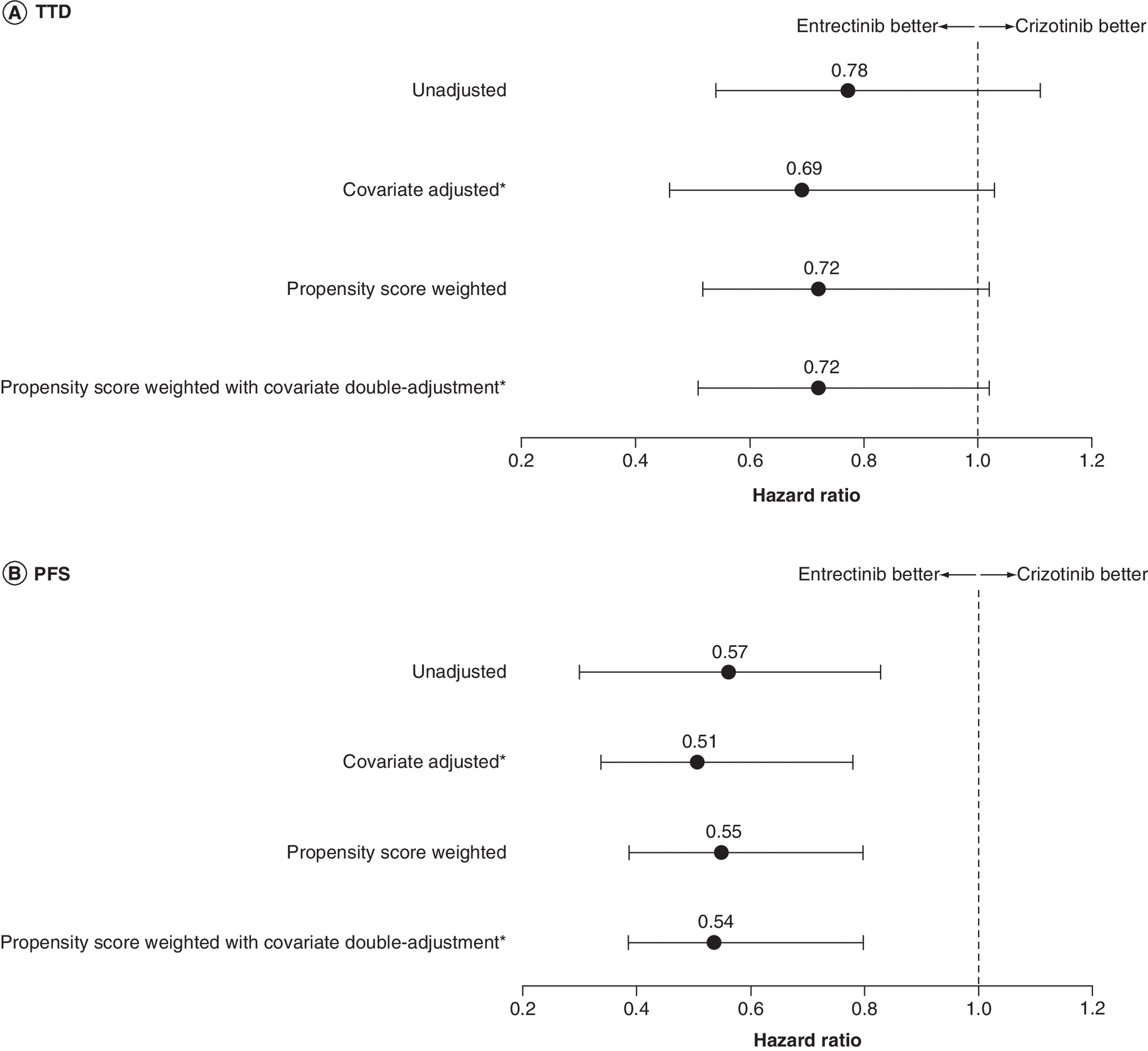
The correct figure is:
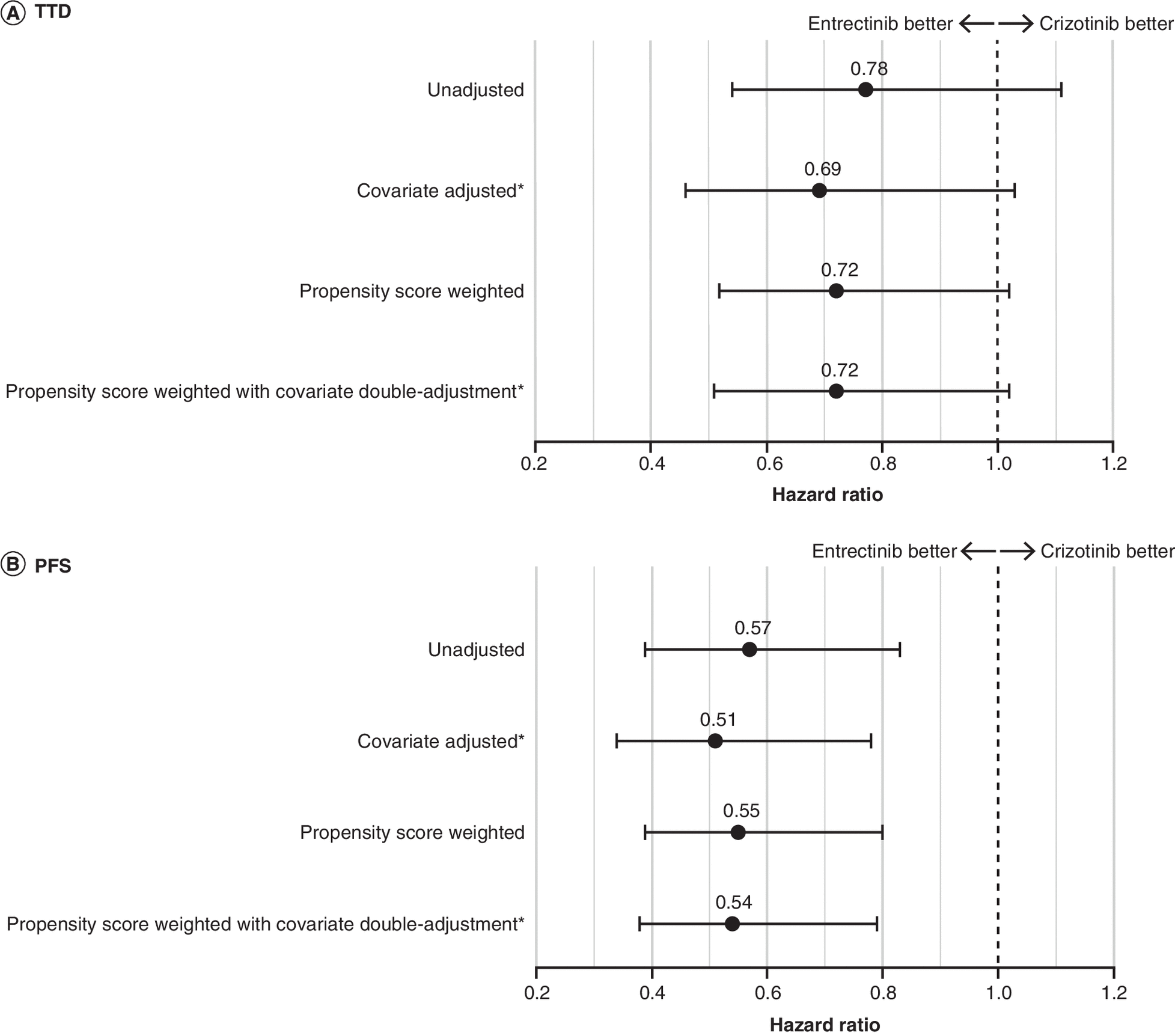
In addition, there were some inconsistencies between the tables and the text in the published manuscript, which have now been corrected as follows:
Page 1271:
Results: Median (95% CI) weighted TTD: 12.9 (9.9–17.4) months for entrectinib; 8.8 (6.29.9) months for crizotinib (weighted hazard ratio: 0.72 [0.51–1.02]). Median OS with entrectinib was not reached, weighted median OS with crizotinib was 18.5 (15.1–19.9) months.
Has been corrected to:
Results: Median (95% CI) weighted TTD: 12.9 (9.9–17.4) months for entrectinib; 8.2 (6.2–9.9) months for crizotinib (weighted hazard ratio: 0.72 [0.51–1.02]). Median OS with entrectinib was not reached, weighted median OS with crizotinib was 18.5 (15.1–47.2) months.
Page 1275:
Seventy-one (76%) in the entrectinib cohort and 66 (86%) in the crizotinib cohort (weighted) discontinued treatment. Median TTD was 12.9 months (95% CI: 9.9–17.4 in the entrectinib cohort and 8.8 months (6.2–9.9) in the crizotinib cohort (weighted; hazard ratio [HR]: 0.72; 95% CI: 0.51–1.02) (Figure 2A; Table 2 [data in the unweighted crizotinib cohort]; Figure 3).
Has been corrected to:
Seventy-one (76%) in the entrectinib cohort and 65 (84%) in the crizotinib cohort (weighted) discontinued treatment. Median TTD was 12.9 months (95% CI: 9.9–17.4 in the entrectinib cohort and 8.2 months (6.2–9.9) in the crizotinib cohort (weighted; hazard ratio [HR]: 0.72; 95% CI: 0.51–1.02) (Figure 2A; Table 2; Figure 3).
Page 1277:
Table 2 contained small errors in the ‘Crizotinib unweighted’ and ‘Crizotinib weighted’ columns. The table originally appeared as:
| Entrectinib | Crizotinib unweighted | Crizotinib weighted | |
|---|---|---|---|
| Median TTD†, months | 12.9 | 7.7 | 8.2 |
| – (95% CI) | (9.9–17.4) | (4.9–10.0) | (6.2–9.9) |
| – n/N | 71/94 | 54/65 | 66/77 |
| Median PFS†, months | 16.8 | 7.7 | 8.2 |
| – (95% CI) | (12.0–26.3) | (5.4–10.0) | (6.5–9.9) |
| – n/N | 54/94 | 54/65 | 66/77 |
| Median OS, months | NE | 19.9 | 18.5 |
| – (95% CI) | – | (14.1–NE) | (15.1–47.2) |
| – n/N | 25/94 | 35/65 | 48/77 |
†
Progression determined by BICR in the entrectinib cohort, and from clinician report in the crizotinib cohort.
BICR: Blinded independent central review; NE: Not estimable; OS: Overall survival; PFS: Progression-free survival; TTD: Time-to-treatment discontinuation.
The correct table is:
| Entrectinib | Crizotinib unweighted | Crizotinib weighted | |
|---|---|---|---|
| Median TTD†, months | 12.9 | 7.7 | 8.2 |
| – (95% CI) | (9.9–17.4) | (4.9–10.0) | (6.2–9.9) |
| – n/N | 71/94 | 54/65 | 65/77 |
| Median PFS†, months | 16.8 | 7.7 | 8.2 |
| – (95% CI) | (12.0–26.3) | (5.4–10.0) | (6.5–9.9) |
| – n/N | 54/94 | 54/65 | 65/77 |
| Median OS, months | NE | 19.9 | 18.5 |
| – (95% CI) | – | (14.4–NE) | (15.1–47.2) |
| – n/N | 25/94 | 35/65 | 48/77 |
†
Progression determined by BICR in the entrectinib cohort, and from clinician report in the crizotinib cohort.
BICR: Blinded independent central review; NE: Not estimable; OS: Overall survival; PFS: Progression-free survival; TTD: Time-to-treatment discontinuation.
Page 1278:
Fifty-four patients (57%) in the entrectinib cohort and 42 (78%) in the crizotinib cohort (weighted) had a progression or death event. Estimated median PFS determined from clinical trial data was 16.8 months (95% CI: 12.0–26.3) in the entrectinib cohort (Figure 2B; Table 2; Figure 3). Estimated median real-world PFS was 8.8 months (95% CI: 8.2–9.9) in the crizotinib cohort (weighted; HR: 0.54; 95% CI: 0.38–0.79).
Median OS could not be estimated in the entrectinib cohort because an insufficient number of events had occurred at time of data cut-off. In the crizotinib cohort, estimated median OS was 18.5 months (95% CI: 15.1–19.9) (Figure 2C; Table 2).
When using progression by investigator-assessed definition rather than BICR in the entrectinib trials, the weighted HR was 0.79 (95% CI: 0.55–1.09) and 0.70 (95% CI: 0.49–0.99) for TTD and PFS, respectively (Supplementary Table 3).
Has been corrected to:
Fifty-four patients (57%) in the entrectinib cohort and 65 (84%) in the crizotinib cohort (weighted) had a progression or death event. Estimated median PFS determined from clinical trial data was 16.8 months (95% CI: 12.0–26.3) in the entrectinib cohort (Figure 2B; Table 2; Figure 3). Estimated median real-world PFS was 8.2 months (95% CI: 6.5–9.9) in the crizotinib cohort (weighted; HR: 0.54; 95% CI: 0.38–0.79).
Median OS could not be estimated in the entrectinib cohort because an insufficient number of events had occurred at time of data cut-off. In the crizotinib cohort, estimated median OS was 18.5 months (95% CI: 15.1–47.2) (Figure 2C; Table 2).
When using progression by investigator-assessed definition rather than BICR in the entrectinib trials, the weighted HR was 0.78 (95% CI: 0.55–1.09) and 0.70 (95% CI: 0.49–0.99) for TTD and PFS, respectively (Supplementary Table 3).
Page 1278:
HR maintained robustness across all sensitivity analyses (Supplementary Table 5). When including only patients with non-missing ECOG-PS, HR for TTD was 0.68 (95% CI: 0.48–0.98). Results using caliper matching by the PrS presented a slightly less favorable HR (0.86; 95% CI: 0.46–1.61) than the main analysis, and given the reduced sample size (N = 80, both cohorts), the 95% CI was wider. In the main analysis and the sensitivity analysis, the standardized mean difference (SMD) on weighted cohorts was close to or below 0.2 for all variables used to derive a PrS (Supplementary Table 5 for main analyses).
Has been corrected to:
HR maintained robustness across all sensitivity analyses (Supplementary Table 5). When including only patients with non-missing ECOG-PS, HR for TTD was 0.68 (95% CI: 0.48–0.98 [weighted analysis]). Results using caliper matching by the PrS presented a slightly less favorable HR (0.86; 95% CI: 0.46–1.61) than the main analysis, and given the reduced sample size (N = 80, both cohorts), the 95% CI was wider. In the main analysis and the sensitivity analysis, the standardized mean difference (SMD) on weighted cohorts was close to or below 0.2 for all variables used to derive a PrS (based on the main analysis model).
Page 1278:
Entrectinib was associated with a longer median TTD compared with crizotinib (12.9 vs 8.8 months).
Has been corrected to:
Entrectinib was associated with a longer median TTD compared with crizotinib (12.9 vs 8.2 months).
Page 1279:
With these caveats, the comparison showed longer median PFS in the entrectinib cohort (16.8 vs 8.8 months). Additionally, median PFS for crizotinib in our RWD (8.8 months) was shorter than that reported in clinical trials of crizotinib in ROS1+NSCLC (15.9 months per BICR [23] and 19.3 months per investigator [24]).
Has been corrected to:
With these caveats, the comparison showed longer median PFS in the entrectinib cohort (16.8 vs 8.2 months). Additionally, median PFS for crizotinib in our RWD (8.2 months) was shorter than that reported in clinical trials of crizotinib in ROS1+NSCLC (15.9 months per BICR [23] and 19.3 months per investigator [24]).
Page 1279:
Nevertheless, the median OS observed in the crizotinib RWD cohort of 18.5 months (95% CI: 15.1–19.9) also suggests a possible benefit of entrectinib over crizotinib for this outcome, but confirmation of results is needed.
Has been corrected to:
Nevertheless, the median OS observed in the crizotinib RWD cohort of 18.5 months (95% CI: 15.1–47.2) also suggests a possible benefit of entrectinib over crizotinib for this outcome, but confirmation of results is needed.
The corresponding corrections have also been made to the supplementary materials.
The authors and the editors of the Journal of Comparative Effectiveness Research would like to sincerely apologize for any inconvenience or confusion this may have caused our readers.
Information & Authors
Information
Published In
Pages: 545 - 548
PubMed: 35393865
Copyright
© 2022 Future Medicine Ltd.
History
Published online: 8 April 2022
Authors
Metrics & Citations
Metrics
Article Usage
Article usage data only available from February 2023. Historical article usage data, showing the number of article downloads, is available upon request.
Citations
How to Cite
Corrigendum. (2022) Journal of Comparative Effectiveness Research. DOI: 10.2217/cer-2021-0131c1
Export citation
Select the citation format you wish to export for this article or chapter.