

A prospective, randomized, controlled, crossover study comparing three multilayered foam dressings for the management of chronic wounds
Publication: Journal of Comparative Effectiveness Research
Abstract
Aim: Compare foam dressings – Mepilex Border Flex (MxBF), Allevyn Life (AL) and Optifoam Gentle EX (OGEX) – in treatment of chronic wounds. Materials & methods: Prospective, randomized, controlled trial (crossover design). Subjects received one dressing for 2 weeks, then comparator dressing for following 2 weeks. Wound/periwound characteristics evaluated weekly at dressing change. Primary end point: dressing durability (incidence of exudate strikethrough). Results: Higher incidence of intact dressings (no strikethrough) at Day 7 (Week 1) with MxBF (6/17; 35.3%) compared with AL (1/18; 5.6%), and with MxBF (7/16; 43.8%) compared with OGEX (2/16; 12.5%; p < 0.05). No significant differences between groups regarding wound size reduction. Conclusion: MxBF had statistically greater durability than AL/OGEX during first critical week of treatment.
Chronic wounds, and their associated complications, can significantly affect a patient's recovery and quality of life (QoL) [1–3], with frequently reported issues including discomfort, pain, malodour, leakage and restriction of daily activities [2]. Although dressings are an essential part of wound management, dressing-associated complications can further hinder wound healing, as well as cause unnecessary distress to the patient. Dressing-related issues include suboptimal moisture balance, wound adherence, mechanical stress and movement, presence of foreign bodies, sub-optimal temperature, and chemical imbalance and stress [4,5]. Ultimately, dressing-related trauma to the wound can lead to an increase in wound size, exacerbate pain and delay healing [6].
The trauma and pain caused by frequent dressing changes have been an important focus of recent research [6]. The removal of adherent dressings not only causes wound re-injury, but can lead to pain necessitating analgesia at dressing change [7]. While, in certain circumstances, it may be necessary to ‘disturb’ the wound for inspection and management, it is imperative that this does not affect wound healing [8]. Compared with dressings with traditional adhesives, the use of wound dressings incorporating soft silicone can minimize traumatic injuries to the wound bed and peri-wound skin, reduce dressing-associated trauma and reduce discomfort [7,9,10].
Although exudate production is a normal part of wound healing, excessive exudate, managed ineffectively, can negatively impact healing [11]. Furthermore, one of the greatest challenges in wound care is the cost-effective containment of excessive exudate. Moreover, the extended treatment period associated with mismanagement of wound exudate can lead to increased dressing costs, greater healthcare personnel time and peri-wound damage [12,13].
In terms of managing excess exudate, an ideal wound dressing should be able to handle fluid (absorption and retention of exudate and its components, even under pressure), reduce the risk of leakage and spread of exudate onto the peri-wound area (reducing the risk of maceration) and to act as a barrier against bacterial infection [14]. Additional favorable characteristics include conformability, comfort during wear, ease of use, reduced need for dressing changes, and minimal wound disturbance [14]. A dressing's ability to absorb and retain excess wound exudate, as well as its propensity to adhere to the wound or surrounding skin, are key factors that affect a dressing's durability or ‘wear time’ [5]. Extended dressing wear time can decrease the need for office or home health visits and conserve resources [5]: decreasing the frequency of dressing changes reduces costs associated with nursing time, materials, and pain medication [13].
The study reported in this article was designed as a ‘real-world,’ patient-centric, clinical trial. As such, ‘artificial’ inclusion and exclusion criteria which would have restricted subjects to just those with wounds that would have been expected to heal were not applied. Instead, the reported study evaluated similarities and differences between advanced modern-day wound dressings in subjects that were representative of those typically seen in routine clinical practice. The main objective of this clinical investigation was to compare the durability (i.e., wear time) of three different foam dressings in the management of chronic wounds (venous leg ulcers [VLUs] and diabetic foot ulcers [DFUs]) in the outpatient setting. Although VLUs and DFUs are markedly different in terms of etiologies and underlying pathologies, they share a number of characteristics including the excessive production of exudate. This makes them both suitable wound types for evaluating foam dressings, particularly when the primary focus of the study is durability, a property that is intrinsically linked to fluid handling capability. Wound dressing durability was determined by incidence of strikethrough. Strikethrough was defined as the inability of the dressing to stay sealed over the wound, causing leakage of wound exudate. Strikethrough can be caused by saturation, loss of edge seal/adherence, dislodgement due to friction or movement and/or a defect in the dressing. Secondary aims were to compare investigator-judged wound and dressing features and subject-reported outcomes such as comfort and pain.
Methods
Study design
This was a prospective, randomized, controlled clinical trial (RCT) using a 2 × 2 crossover (repeated measures) design to evaluate the efficacy and safety of three multilayer foam dressings in the management of chronic, exuding wounds in the outpatient setting. Subjects presenting with a VLU or DFU were assessed according to study inclusion and exclusion criteria and eligible subjects were asked to provide written informed consent. The study was conducted at three outpatient clinical centers in the USA (Newark, NJ [1]; San Francisco, CA [2]; and Pittsburgh, PA (one of the centers of the Serena Group [6]) ) between May and October 2019. The clinical protocol was approved by an independent ethics committee and the investigation was performed in accordance with the ethical principles outlined in the Declaration of Helsinki and applicable regulatory requirements.
When designing the study, the principal investigator thought that the best way to study the wound dressings would be to use a repeated measures design for two main reasons: the similarity in the devices and; the ability to compare the dressings in treating the same wound. There are benefits and disadvantages to using a repeated measures (crossover) design. In repeated measures designs, the subjects are their own controls because the model assesses how a subject responds to all of the treatments. By including the subject block in the analysis, it is possible to control for factors that cause variability between subjects. The result is that only the variability within subjects is included in the error term, which usually results in a smaller error term and a more powerful analysis. Benefits include more statistical power, fewer subjects, quicker and less costly than the traditional parallel design, and the ability to assess an effect over time. The biggest drawbacks are known as order effects, and they are caused by exposing the subjects to multiple treatments. Order effects are related to the order that treatments are given but not due to the treatment itself. In wound care (for example), effects and scores can improve over time due to the progress of healing. Order effects can interfere with the ability of the analysis to correctly estimate the effect of the treatment itself. Randomization allows time between treatments and counterbalances the order of treatments among others. The other disadvantage (unlikely with wound dressings) is carry-over effect. These are caused by an effect caused by the first treatment that lingers after the crossover occurs.
Participants & recruitment
The study recruited adults (18–85 years of age) with VLUs and DFUs, and adequate circulation for healing. To rule out moderate-to-severe peripheral artery disease (PAD) in the study population, all subjects had ankle-brachial index (ABI) determined by Doppler. Although the Society for Vascular Surgery refers to an ABI of ≤0.9 as the threshold for the diagnosis of peripheral artery disease (PAD) [15], subjects with ABI ≥0.7 were considered suitable for inclusion in the trial, thus enabling ‘real world’ patients with mild PAD to be included in the study population. Although ABI measurement is a relatively simple and effective tool for PAD diagnosis, its sensitivity among diabetic patients is low. This low sensitivity is attributed to arterial wall calcification and atherosclerotic changes that give rise to high (1.4 and above) ABI values [16]. Thus, if the measured ABI was >1.0, then a toe pressure had to be obtained. Only those subjects with toe pressure >70 mmHg or toe-brachial index in the range 0.5–0.75 were considered for inclusion. Subjects with ABI <0.7 were excluded.
Basic care for the VLU subjects was standardized multilayer compression. All participants with DFUs received off-loading (non-removable offloading boot with insole, customized to the subject's weight and wound size by the investigator). All participants visited the clinic on a twice-weekly basis over a 4-week period.
Individuals were excluded from the study if they: had a pressure ulcer (as defined by international guidelines issued by the European Pressure Ulcer Advisory Panel, the National Pressure Injury Advisory Panel and the Pan Pacific Pressure Injury Alliance [17]) or local wound infection (based on clinical signs and symptoms) or evidence of PAD (ABI <0.7); had been diagnosed with a malignancy (other than cutaneous basal cell carcinoma) or were currently receiving or had received radiotherapy or chemotherapy within 3 months of randomization; had received growth factor therapy (e.g., autologous platelet-rich plasma gel) within 2 weeks prior to screening; were pregnant or lactating during the study period; had been enrolled or participated in another investigational device, drug or biological trial within 30 days prior to study baseline; had a history of alcohol or drug abuse, known allergy/hypersensitivity to any of the components of the dressings or for any reason at the investigator's discretion.
Wound dressings
The three wound dressings under evaluation were: Mepilex® Border Flex (Mölnlycke Health Care, Gothenburg, Sweden) [MxBF], Allevyn Life (Smith & Nephew Inc, MA, USA; AL), and Optifoam® Gentle EX (Medline Industries Inc, IL, USA; OGEX). All three dressings are considered ‘bordered dressings’ with a wound contact (pad) foam surrounded by an adhesive border. The selection of the dressing size was based on the wound surface area (WSA): equal to or less than 60% of the dimensions of the wound contact pad (Table 1).
| Name | Description† | Intended use (wound types)† | Dressing (wound contact pad) sizes used |
|---|---|---|---|
| Allevyn Life | – Silicone gel adhesive dressing. Comprises silicone adhesive (wound contact) layer, absorbent pad (foam layer and superabsorbent core), discretion layer (to mask exudate) and outer film | – Exuding wounds such as pressure ulcers, leg ulcers, diabetic foot ulcers, surgical wounds, burns (first and second degree), donor sites, skin tears and fungating ulcers; necrotic/sloughy wounds in combination with gels – May be left in place for up to 7 days (up to 5 days on sacral wounds) | For VLU: 10.3 × 10.3 cm (5.1 × 5.1 cm pad) 15 × 15 cm (10.2 × 10.2 cm pad) For DFU: 15 × 15 cm (10.2 × 10.2 cm pad) |
| Mepilex Border Flex | – Self-adherent soft silicone foam dressing. Comprises: silicone adhesive (wound contact) layer, absorbent pad (foam, non-woven spreading layer, superabsorbent fibers layer) and outer film | – Exuding wounds such as pressure ulcers, leg and foot ulcers, traumatic wounds (e.g. skin tears) and surgical wounds; dry/necrotic wounds in combination with gels – May be left in place for up to 7 days | For VLU: 10 × 10 cm (6.5 × 6.5 cm pad) 15 × 15 cm (11 × 11 cm pad) For DFU: 15 × 15 cm (11 × 11 cm pad) |
| Optifoam Gentle EX | – Bordered foam dressing – Comprises silicone faced foam and border, superabsorbent core and backing layer | – Exuding partial and full-thickness wounds (specific wound types not listed) – May be left in place for up to 7 days | For VLU: 10.2 × 10.2 cm (6.3 × 6.3 cm pad) 15.2 × 15.2 cm (11.4 × 11.4 cm pad) For DFU: 15.2 × 15.2 cm (11.4 × 11.4 cm pad) |
†
As stated in the package inserts supplied by the manufacturers.
DFU: Diabetic foot ulcer; VLU: Venous leg ulcer.
Study procedures & evaluations
Participants were allocated to four treatment groups by computer randomization (Pharma Consulting Group, Uppsala, Sweden) as shown in Table 2. Wound debridement was allowed at the investigator's discretion prior to enrolment; however, additional debridement during the study was not permitted. Wound dressings were applied on Day 1 (Week 1) and the subjects were seen twice-weekly throughout the treatment period. Assessments of wound and surrounding skin characteristics, as well as all other evaluations, took place once-weekly at dressing change. The scheduled dressing change was on Day 7 of each treatment week (e.g., Visit Days 7, 14, 21 and 28), unless a dressing change became necessary due to strikethrough, loss of adherence or subject discomfort or pain. In total, subjects attended the wound care center for up to eight visits during treatment. At each visit, evaluations were performed to assess the condition of the wound dressing, wound status, presence of infection, wound pain and subject comfort. Any medication which was considered necessary for the subject's safety and well-being could be used, however topical medications were prohibited.
| Period | Study week | Treatment group 1 | Treatment group 2 |
|---|---|---|---|
| 1 | Week 1 | Allevyn Life | Mepilex Border Flex |
| Week 2 | Allevyn Life | Mepilex Border Flex | |
| 2 | Week 3 | Mepilex Border Flex | Allevyn Life |
| Week 4 | Mepilex Border Flex | Allevyn Life |
| Period | Study week | Treatment group 3 | Treatment group 4 |
|---|---|---|---|
| 1 | Week 1 | Optifoam Gentle EX | Mepilex Border Flex |
| Week 2 | Optifoam Gentle EX | Mepilex Border Flex | |
| 2 | Week 3 | Mepilex Border Flex | Optifoam Gentle EX |
| Week 4 | Mepilex Border Flex | Optifoam Gentle EX |
Wound dressing wear time and durability were determined by investigator's judgement and photographic assessment of dressing strikethrough (i.e. inability of dressings to stay sealed over wounds, causing leakage of exudate). Exudate absorption and dispersion on the wound contact foam pad were determined clinically and by photo-digital planimetry. The outer and inner facings of the dressings were examined for exudate absorption and strikethrough. WSA was measured serially using photo-digital planimetric software (PictZar Pro (Version 7.6.1), Biovisual Technologies, NJ, USA) [18]. Dressing comfort and subject-reported outcomes were captured at the end of weeks 2 and 4. Health-Related Quality-of-Life (HRQoL) SF-12 [19] was captured at the initial visit and then bi-weekly.
Subjective clinical wound assessments, undertaken by the investigators in line with normal clinical practice, consisted of: type of wound drainage (serous, sanguineous, serosanguineous, purulent); exudate amount (none, scant/minimal, moderate, heavy); exudate absorption (very poor, poor, good, very good, not applicable); exudate dispersion (over 1–25% of pad, 26–50%, 51–75%, 76–100%); wound granulation (none, trace islands of granulation tissue, <25% of wound base covered with granulation tissue, 25–49%, 50–74%, 7%–99%, 100%); nonviable tissue (eschar, fibrin slough, both; none, <25%, 25–49%, 50–74%, 75–100%); wound size and wound healing (%). Condition of the surrounding skin was assessed by signs of inflammation (erythema, oedema, induration), skin irritation at the dressing site, skin rash, skin erosion, stasis dermatitis, vesicular erosion (blistering) and degree of skin maceration (none, slight, moderate or severe).
Signs and symptoms of infection were determined clinically by the investigator and included: increased pain and tenderness, increased warmth, sudden increase in ulcer size, presence or absence of localized erythema, foul smelling exudate and easy bleeding of the wound.
Local wound pain was evaluated using the Baker-Wong (Faces) Scale [20], before and after each dressing change defined as: local wound and skin pain prior to removal, pain at removal, local wound or skin pain immediately after dressing removal, preprocedural or intraprocedural pain medication given at dressing removal (concomitant medication).
Dressing comfort and conformability, as evaluated by subjects, were judged by comfort during wear, overall impression of dressing, dressing bulkiness (lack of), friction, discrete appearance, stay-on-ability, dressing stick to ‘hairy skin’ (lack of) and durability during showering (all ranked as very poor, poor, good, very good, not applicable). Investigator-reported dressing outcomes were assessed by ease of handling, ability to remain intact, ease of application, ability to be repositioned, conformability, ability to stay in place and ease of removal (all ranked as very poor, poor, good, very good). Additionally, it was recorded whether the dressing caused skin stripping, left material behind at dressing change, adhered to the wound bed, led to wound re-injury or skin trauma upon removal, absorbed exudate even under compression and whether it caused trauma to wound edges. A printed questionnaire was used to capture these subjective assessments.
Data management
Viedoc (Viedoc Technologies, Uppsala, Sweden), a web-based electronic case report form (eCRF) system, was used to capture data. The eCRF system complied with FDA Title 21 CFR part 11 (ER/ES) requirements and training in its use was given to personnel at the investigational sites before or at study initiation, together with training on other aspects of the study protocol (e.g., the application of the test dressings).
Study end points
The primary end point was wound dressing durability (dressing wear time), defined as the interval of time (in days) to dressing strikethrough (loss of edge seal/adherence, leaks, dislodgement) and need for dressing change. Dressings were evaluated as ‘Unchanged’ (looks the same as when applied), ‘Partly Saturated’ (<50% saturated with exudate but remaining intact), ‘Mostly Saturated’ (>50% saturated with exudate) and ‘Strikethrough.’ Strikethrough was defined as the inability of the dressing to stay sealed over the wound, causing leakage of wound exudate. Strikethrough could be the result of complete saturation, loss of edge seal/adherence, dislodgement and/or a defect in the dressing.
Secondary end points were: investigator-judged dressing performance, clinical wound characteristics (wound healing status, condition of surrounding skin, signs of infection and local pain levels), adverse events (AE), device related adverse events (ADE) associated with the dressings and subject-centered outcomes between the treatment groups.
Statistical plan
Sample size
The plan was to enroll approximately 40 subjects (1:1, DFU to VLU) in order to provide sufficient statistical power for the primary end point. The anticipated mean difference in number of days to strikethrough between Period 1–Period 2 between the two groups MxBF and active control was assumed to be twice the difference in the effect MxBF minus active control. It was estimated (assumed) that the standard deviation (SD) for the difference in time to strikethrough would be 0.65 days, between Period 2 and Period 1, both in the group starting with MxBF and in the group starting with active control. In order to find a difference of 0.5 days between the number of days to strikethrough between MxBF and active control, with a power of 80%, a total of 16 evaluable subjects per crossover study would be needed.
Statistical populations
The full analysis set (FAS) included all participants with at least one measurement of follow up; the per protocol (PP) population included all subjects who fulfilled all inclusion/exclusion criteria, who completed the 2 × 2 weeks study and who were not described as protocol violators; the safety population included all enrolled individuals who had applied at least one of the study dressings.
Statistical evaluation
The primary efficacy variable, mean number of days to strikethrough, and all of the other efficacy variables follow a non-normal distribution. Therefore, non-parametric tests were used. It was assumed that wound status would be improved during the second period of the crossover, implying that the statistical analysis should adjust for period effect in the crossover study.
For the primary efficacy variable, all other continuous outcome variables, all ordered categorical variables and all dichotomous variables, the adjustment for period effect would be performed in the following way: for all individuals, the difference in the efficacy variable between Period 2 and Period 1 in the crossover would be calculated. These differences would then be compared between subjects who began with Mepilex Border Flex in Period 1 and subjects who started with active control in Period 1, with an optimal two-sided two-sample test. Continuous variables were described with mean, SD, median, minimum, and maximum and categorical variables by number and percentages. For continuous variables, the differences would be analyzed with Fisher's nonparametric permutation tests between the two groups and for ordered categorical variables and dichotomous variables the differences, number and percentages improved, not changed and worsened, would be analyzed with Mantel-Haenszel Exact Chi-square test.
The main statistical analysis was performed on the FAS, with an additional statistical analysis performed on the PP population. The primary end point analysis consisted of a two-sided sign test on both the FAS and PP populations at a significance level of 0.05 on each of the treatment arms. All analyses were performed using SAS® v9.4 (NC, USA) or later.
Results
Subject disposition
Forty-one subjects were enrolled in the study, of whom 20 were randomized to MxBF versus AL and 21 to MxBF versus OGEX (Figure 1). Among these subjects, 31 completed the study. Across all treatment arms, ten subjects left the study prematurely – one was withdrawn immediately after randomization due to ineligibility, two were withdrawn because of adverse events, six were withdrawn because their wound had healed before their Day 28 visit and one subject was lost to follow-up (Figure 1). The FAS consisted of 38 subjects (VLU, n = 17; DFU, n = 21) and the PP population of 24 subjects. The baseline demographic features of the subjects were similar across studies; more men than women took part in the study (Table 3).

Figure 1. Subject disposition.
AE: Adverse event; DFU: Diabetic foot ulcer; VLU: Venous leg ulcer.
| Variable | Crossover study | |
|---|---|---|
| Mepilex Border Flex Allevyn Life (n = 19) | Mepilex Border Flex Optifoam Gentle EX (n = 19) | |
| Gender (n, %) – Male – Female | 12 (63.2) 7 (36.8) | 14 (73.7) 5 (26.3) |
| Mean age (±SD; years) (min, max, median) | 60.8 (11.8) 42.6–83.4 62.5 | 61.6 (12.1) 35.2–82.4 60.4 |
| Mean height (cm; ±SD) (min, max, median) | 175.3 (13.2) 152.4–200.7 175.3 | 173.5 (10.4) 157.5–195.6 172.7 |
| Mean weight (kg; ±SD) (min, max, median) | 100.2 (37.3) 63.5–210.5 88.5 | 98.3 (21.7) 60.3–151.5 95.3 |
| BMI (kg/m2; ±SD) (min, max, median) | 32.3 (9.2) 21–53.6 30.4 | 32.6 (6.3) 19.8–46.1 31.9 |
| Type of wound (n, %) – VLU – DFU | 9 (47.4) 10 (52.6) | 8 (42.1) 11 (57.9) |
BMI: Body mass index; DFU: Diabetic foot ulcer; SD: Standard deviation; VLU: Venous leg ulcer.
Wound characteristics
Wound characteristics at baseline are presented in Table 4. Thirty-six percent had a >6 week history of not healing and 37% had wounds that were older than 1 year. The majority of the wounds (68.4%) were unresponsive to previous treatments and had moderate exudate. The type of wound exudate was described as serosanguineous in 84% of the wounds. Nearly 95% of the wounds studied were fully covered with granulation tissue.
| Variable | Crossover study | |
|---|---|---|
| Mepilex Border Flex Allevyn Life (n = 19) | Mepilex Border Flex Optifoam Gentle EX (n = 19) | |
| Type of wound (n, %) – VLU – DFU | 9 (47.4) 10 (52.6) | 8 (42.1) 11 (57.9) |
| VLU wound location (n, %) – Right lower leg – Left lower leg | 6 (66.7) 3 (33.3) | 4 (50.0) 4 (50.0) |
| DFU Wound location (n, %) – Right foot – Left foot | 5 (50.0) 5 (50.0) | 5 (45.5) 6 (54.5) |
| Duration of target wound (n, %) – ≥1 week to <6 weeks – ≥6 weeks to <12 months – ≥12 months | 9 (47.4) 7 (36.8) 3 (15.8) | 1 (5.3) 7 (36.8) 11 (57.9) |
| Responded to previous treatment (n, %) – No – Yes | 14 (73.7) 5 (26.3) | 12 (63.2) 7 (36.8) |
| Condition of surrounding skin/wound bed (n, %) – Healthy – Inflammatory signs – Skin irritation at dressing site – Rash/eczema – Blistering – Skin maceration | 19 (100) 0 0 0 0 0 | 19 (100) 0 0 0 0 0 |
| Type of wound drainage (n, %) – Serous – Sanguineous – Serosanguinous | 2 (10.5) 2 (10.5) 15 (78.9) | 2 (10.5) 0 17 (89.5) |
| Exudate amount (n, %) – Scant/minimal – Moderate – Heavy | 5 (26.3) 12 (63.2) 2 (10.5) | 5 (26.3) 14 (73.7) 0 |
| Wound granulation (n, %) – 25–49 – 50–74 – 75–99 – 100 | 0 1 (5.3) 10 (52.6) 8 (42.1) | 1 (5.3) 0 12 (63.2) 6 (31.6) |
DFU: Diabetic foot ulcer; VLU: Venous leg ulcer.
Efficacy outcomes
As the PP population was relatively small and a statistical analysis revealed similar findings to that undertaken on the FAS population, only data from the FAS analysis are reported here.
Mepilex Border Flex versus Allevyn Life
Primary efficacy analysis (dressing durability/wear time) for Mepilex Border Flex versus Allevyn Life (MxBF vs AL) is presented in Table 5. In the MxBF group, significantly fewer (47.1%) subjects required a dressing change after 3 days compared with 72.2% in the group treated with AL (p < 0.05). There was a statistically higher proportion of intact dressings after one week in the group treated with MxBF (n = 6, 35.3% vs n = 1, 5.6%, for the AL group (p < 0.05). After the crossover (during Week 2), more wounds dressed with AL had strikethrough (n = 15, 88.2%) than wounds dressed with MxBF (n = 8, 50.0%, p = 0.032). In both treatment groups, the majority of wounds reduced in size. The mean reduction in WSA when wounds were treated with MxBF was -1.15 cm2 compared with -0.58 cm2 when the same wounds were treated with AL. However, this difference was not statistically significant. Subjective parameters judged by the investigators that were significantly in favor of MxBF were: exudate absorption (p = 0.017), dressing conformability (p = 0.007), ability to stay in place (p = 0.014) and ease of removal (p = 0.017). Figure 2 presents a series of photographs of wounds treated with each test dressing.
| Variable | Mepilex Border Flex (n = 17) | Allevyn Life (n = 18) | Difference between Mepilex Border Flex and Allevyn Life | Period adjusted p-value |
|---|---|---|---|---|
| Week 1: Days worn until strikethrough – 3 – 7 – No strikethrough | 8 (47.1%) 3 (17.6%) 6 (35.3%) | 13 (72.2%) 4 (22.2%) 1 (5.6%) | MxBF better 6 (35.3%) Equal 10 (58.8%) MxBF worse 1 (5.9%) | 0.046 |
| Week 2: Days worn until strikethrough – 3 – 7 – No strikethrough | 8 (50.0%) 4 (25.0%) 4 (25.0%) | 10 (58.8%) 6 (35.3%) 1 (5.9%) | MxBF better 5 (33.3%) Equal 6 (40.0%) MxBF worse 4 (26.7%) | 0.56 |
| During Week 1: Loss of edge seal and strikethrough – No – Yes | 9 (52.9%) 8 (47.1%) | 5 (27.8%) 13 (72.2%) | MxBF worse 1 (5.9%) Equal 11 (64.7%) MxBF better 5 (29.4%) | 0.12 |
| During Week 2: Loss of edge seal and strikethrough – No – Yes | 8 (50.0%) 8 (50.0%) | 2 (11.8%) 15 (88.2%) | MxBF worse 0 (0.0%) Equal 10 (66.7%) MxBF better 5 (33.3%) | 0.032 |
For categorical variables n (%) is presented.
Period adjusted p-value was calculated by analysing change from period 1 to period 2; between treatment during period 1 (standard cross over analysing method) using Mantel-Haenszel´s Chi Square test. For comparison over time, Sign test was used for categorical variables.
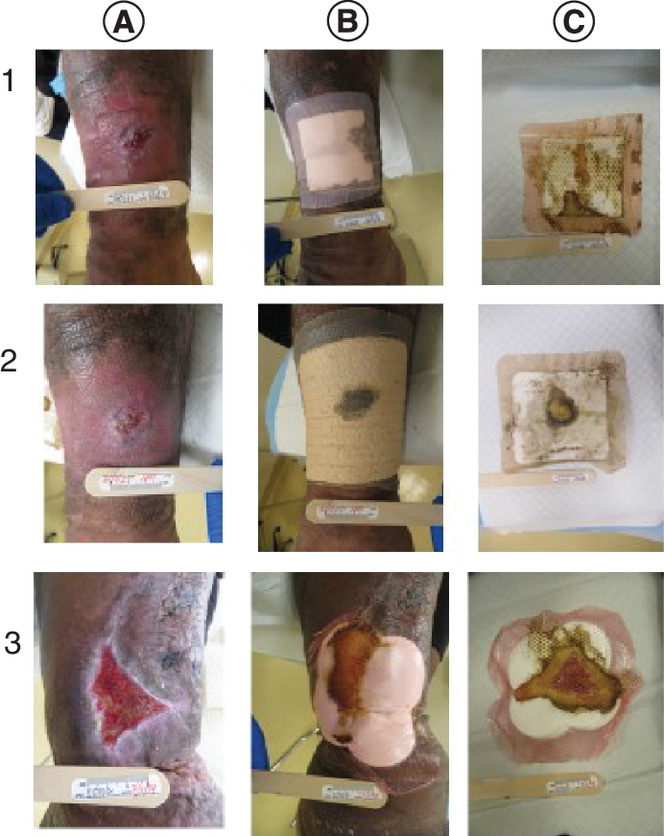
Figure 2. Representative photographs from 2 subjects at one study site illustrating venous leg ulcers treated with each of the test dressings.
Row 1: a VLU treated with Optifoam Gentle EX; Row 2: the same VLU treated with Mepilex Border Flex; and Row 3: a larger VLU treated with Allevyn Life. Column (A) prior to dressing application; column (B) wound dressing after 1 week; and column (C) the contact side of the dressing immediately after removal.
VLU: Venous leg ulcer.
There were no reports of dressing materials adhering to wound beds, nor were there re-injury or trauma to the wounds for either wound dressing. Subject-reported outcomes were generally equally positive, whether for MxBF or AL. There were no significant differences between treatments in HRQoL parameters or wound pain (before, during and immediately after dressing change).
Mepilex Border Flex versus Optifoam Gentle EX
The FAS comprised 16 subjects in each of the two treatment groups. With regard to the primary end point, the proportion of subjects requiring a dressing change after 3 days during Week 1, due to strikethrough, was significantly lower for MxBF (n = 6, 37.5%) than for OGEX (n = 13, 81.3%, p = 0.01; Table 6). There was also a statistically higher proportion of intact dressings at Day 7, Week 1, with MxBF (n = 7, 43.8%) versus OGEX (n = 2, 12.5%, p = 0.01). During Week 2 (Day 3) a similar number of wounds dressed with OGEX (n = 7, 53.8%) or MxBF (n = 7, 50.0%) had strikethrough. During both weeks 1 and 2 dressing strikethrough and loss of edge seal were consistently lower with MxBF (50% and 64.3%, respectively), than with OGEX (75.0%, 76.9%, respectively). This difference was not statistically significant. There was a moderate (not significant) reduction in wound size over 2 weeks in both groups; the median change for MxBF -0.32 cm2 (-3.93 to 1.10 cm2) versus -0.83 cm2 (-2.18 to 0.04 cm2) for OGEX.
| Variable | Mepilex Border Flex (n = 16) | Optifoam Gentle EX (n = 16) | Difference between Mepilex Border Flex and Optifoam Gentle EX | Period adjusted p-value |
|---|---|---|---|---|
| Week 1: Days worn until strikethrough – 3 – 7 – No strikethrough | 6 (37.5%) 3 (18.8%) 7 (43.8%) | 13 (81.3%) 1 (6.3%) 2 (12.5%) | MxBF better 8 (57.1%) Equal 6 (42.9%) MxBF worse 0 (0.0%) | 0.010 |
| Week 2: Days worn until strikethrough – 3 – 7 – No strikethrough | 7 (50.0%) 5 (35.7%) 2 (14.3%) | 7 (53.8%) 3 (23.1%) 3 (23.1%) | MxBF better 2 (15.4%) Equal 7 (53.8%) MxBF worse 4 (30.8%) | 0.25 |
| During Week 1: Loss of edge seal and strikethrough – No – Yes | 8 (50.0%) 8 (50.0%) | 4 (25.0%) 12 (75.0%) | MxBF worse 1 (7.1%) Equal 8 (57.1%) MxBF better 5 (35.7%) | 0.21 |
| During Week 2: Loss of edge seal and strikethrough – No – Yes | 5 (35.7%) 9 (64.3%) | 3 (23.1%) 10 (76.9%) | MxBF worse 2 (15.4%) Equal 7 (53.8%) MxBF better 4 (30.8%) | 0.83 |
For categorical variables n (%) is presented.
Period adjusted p-value was calculated by analysing change from period 1 to period 2; between treatment during period 1 (standard cross over analyzing method) using Mantel-Haenszel´s Chi Square test.
For comparison over time, Sign test was used for categorical variables.
There were no statistically significant differences between treatments in any of the secondary end points judged by the investigators, including exudate absorption, ease of handling, ability to maintain its integrity, ease of application, ability to be repositioned, conformability, ability to stay in place and ease of removal. Similarly, no differences in HRQoL or wound pain were reported by subjects while wearing either of the two dressings.
Adverse events
Among the safety population (n = 40), there were no serious AEs or ADEs. Two AEs were reported (both local wound infections) that were not associated to a treatment regimen. Both subjects were discontinued from the study and treated with appropriate antibiotic therapy until resolution. One device deficiency was reported in the AL group (dressing became wet while the subject was showering) but this did not affect safety.
Discussion
Technological advances have led to more sophisticated wound dressings. In this randomized, prospective, controlled, crossover study, MxBF, a bordered, five-layer, flexible foam dressing with soft silicone adhesive technology was compared with two other foam dressings, AL and OGEX. The study was designed as a superiority study to demonstrate greater efficacy for MxBF. The primary end point was dressing durability (wear time) in the management of VLUs and DFUs treated in the outpatient setting. The test dressings were paired into two comparison groups: MxBF versus AL and MxBF versus OGEX; each comparison followed the crossover design and efficacy analyses for the two comparisons were treated separately. When analysing the data for the primary end point of durability (days to strikethrough), Day 3 data were emphasized, as strikethrough as early as Day 3 can reveal marked differences in performance between dressings, particularly in relation to how a dressing handles and manages exudate.
At baseline, most of the wounds were described as ‘serosanguineous’ with moderate amounts of exudate, highlighting the importance of a dressing that would be able to handle fluid effectively, thus preventing leakage and spread of chronic wound exudate onto the peri-wound area. Although this was a relatively small study (n = 41), it generated statistical evidence that MxBF was more durable than its comparators. In addition, clinicians across the three sites had highly favorable opinions about the technical performance of MxBF in comparison to the other dressings; however, the conclusions are limited by the open label trial design. In addition, MxBF performed better than for AL or OGEX on the secondary outcomes: ease of handling, ability to maintain integrity, ease of application, ability to be repositioned, conformability, ability to stay in place and ease of removal.
A smaller pilot study recently reported similarly favorable outcomes for MxBF. This study enrolled subjects with VLUs (n = 10) and examined the trajectory and balance of proteases of wound exudate during healing [21]. Subjects were treated with MxBF and standard compression therapy. It is generally accepted that chronic wound exudate is harmful due to elevated levels of proteases such as matrix metalloproteases and human neutrophil elastase [22] that delay wound healing. Wound fluid was obtained throughout the 4-week study and fluid homogenates were analyzed using a custom multiplex kit for MMP-9. Data showed that mean MMP levels fell almost 50% in 2 weeks, indicating that MxBF effectively transported chronic VLU exudate away from the wound and into the distal spreading and retention layers of the dressing with minimal swelling. The spreading layer of MxBF drew the chronic exudate distally and away from the wound and wound margins [21]. A search of the bibliographic database, PubMed (National Library of Medicine, National Centre for Biotechnology Information, Bethesda, Maryland, United States of America) did not reveal any other original research data which compared the three test dressings when used in the treatment of wounds.
Modern advanced dressings do more than protect wounds: they actively influence and modulate the wound environment. Technological features in the dressings promote wound healing and provide an undisturbed healing environment. In this regard, a dressing's durability (wear time; low rate of dressing change) is of critical importance. It maximizes the time that a wound bed is undisturbed which improves healing. In addition, durable dressings minimize pain and reduce costs (fewer dressings and less clinical staff time) [4]. The absorption and retention of excess wound exudate reduces the risk of periwound skin breakdown adding further value to the dressing.
All three test dressings evaluated in this study can be grouped into the category of multilayer bordered foam dressings; although, they vary in structural design and performance. The soft silicone material that is present in all three dressings reduces the discomfort associated with dressing removal, minimizes residual dressing material left in the wound bed and permits repositioning of the dressing. MxBF is a five-layered silicone foam bordered dressing with Y-shaped cuts in its retention and spreading layers that facilitate adherence and conformability. The Y-shaped cuts also allow for an even distribution of stress forces on the wound bed and edge and surrounding skin. The pressure reduction also occurs under multi-compression [23]. MxBF absorbs and traps exudate containing bacteria, channeling it away from the wound bed [23]. The backing film of MxBF incorporates an equidistant dot pattern that helps clinicians to monitor, track and record the spread of exudate [23]. AL has a quadrilobed shape with a wide border designed to fit the contours of the human body; it also incorporates a core that draws in exudate, converts it into a gel and locks it away, preventing leakage. AL also incorporates a dressing change indicator [24].
In the laboratory, MxBF has been shown to have greater fluid handling capacity than six leading foam dressings (including AL), with a total fluid handling capacity of 21.2 g/10 cm2/24 h (moisture vapor loss 12.1 g/10 cm2/24 h, and mass of fluid absorbed 9.1 g/10 cm2/24 h) [20]. In tests undertaken to assess the conformability of dressings, the forces required to stretch MxBF in machine-direction, cross-direction and overall, were lower than those required to stretch AL [23]. On the basis that the primary outcome measure of this study is closely related to the fluid-handling ability and conformability of dressings, the observed differences between MxBF and the other two dressings in terms of durability (wear time) are aligned with the findings of this laboratory research.
The use of devices that provide compression of the lower limb and ‘off-loading’ form the cornerstone of the management of VLUs and DFUs, respectively. It is essential, therefore, that wound dressings are designed in such a way that their performances are not impeded by the mechanical forces imposed on them by devices such as compression bandaging and orthotic footwear.
Subjects reported no differences between the dressings in comfort, conformability and ability to carry out daily activities. All thee dressings were well-tolerated by subjects with no device-related events.
Important to all investigations is the acknowledgement of limitations. Investigators and subjects could not be blinded to the dressings (due to variances in their design and appearance), however, as the primary outcome (strikethrough) was measured objectively and all investigators received the same level of training on the use of all three dressings, the risk of performance and detection bias due to nonblinding was minimized. The study was only powered in relation to the primary outcome measure. In retrospect, it would have been worthy to have a longer window to study the dressing effects on the rate and incidence of healing. There were several wounds that healed quite quickly (within the first period of the study). This effect could have been averted by installing a 1-week run-in phase within the design. As in most studies conducted in the outpatient setting, not every data point was captured at each visit and not all subjects provided all study data points. Some visits were missed by subjects and some data-points were missed by site investigative staff. Although, a significant portion of the missing data was captured by source document review, not all of the data was recovered. Lastly, there were inconsistencies between clinicians in obtaining the digital photographs used in the planimetric measurements. These were associated with photographic technique (improper angle, lighting and focus).
Conclusion
MxBF was more effective than AL or OGEX, in relation to the primary end point, dressing durability (wear time). MxBF was also rated more positively by investigators than the other dressings in relation to dressing characteristics, such as comfort, conformability, ease of handling, ability to stay intact, ease of application, ability to be repositioned, ability to stay in place and ease of removal. Further research in a larger population for a longer period of time would improve our understanding of ‘undisturbed wound healing’ and effects of advanced wound dressings on healing.
•
The ability to absorb and retain excess exudate, as well as the propensity to adhere to the wound or surrounding skin (i.e., ‘stay in place’) are key factors that affect a wound dressing's durability or wear time.
•
Extended dressing wear time has the potential to reduce treatment costs.
•
A multicenter, prospective, randomized controlled trial (crossover design) was undertaken to compare the durability of three different bordered foam dressings in the management of chronic wounds in the outpatient setting.
•
Subjects with chronic wounds (venous leg ulcers or diabetic foot ulcers) received one dressing for 2 weeks, then a different dressing for the following two weeks. The wound and peri-wound skin were examined weekly at dressing change.
•
The primary outcome measure was dressing durability (i.e., incidence of exudate strikethrough).
•
There was a statistically significant higher incidence of intact dressings (i.e., no strikethrough) at day 7 associated with Mepilex Border Flex than the other two dressings (Allevyn Life and Optifoam Gentle EX).
•
There were no statistically significant differences between groups regarding wound size reduction.
•
Mepilex Border Flex demonstrated greater durability (i.e., better compliance with the 7-day wear time protocol) than the other two dressings during the first critical week of treatment, while maintaining a good wound healing trajectory.
Author contributions
OM Alvarez: Coordinating investigator; Study site principal investigator; Lead author. MS Granick: Study site co-investigator; Co-author. A Reyzelman: Study site principal investigator; Co-author. T Serena: Study site principal investigator; Co-author.
Financial & competing interests disclosure
Mölnlycke Health Care (Gothenburg, Sweden): Study sponsor and funder. The authors have no other relevant affiliations or financial involvement with any organization or entity with a financial interest in or financial conflict with the subject matter or materials discussed in the manuscript apart from those disclosed.
Carole Manners PhD, Freelance Medical Writer/Editor, Huntingdon, UK, provided medical writing assistance.
Ethical conduct of research
The authors state that they have obtained appropriate institutional review board approval, have followed the principles outlined in the Declaration of Helsinki for all human or animal experimental investigations, and have obtained informed consent from the participants involved.
Data sharing statement
Individual participant data will not be available. However, comprehensive details of the study are available in ClinicalTrials.gov.
Open access
This work is licensed under the Attribution-NonCommercial-NoDerivatives 4.0 Unported License. To view a copy of this license, visit http://creativecommons.org/licenses/by-nc-nd/4.0/
References
1.
Gould L, Abadir P, Brem H et al. Chronic wound repair and healing in older adults: current status and future research. J. Am. Geriatr. Soc. 63(3), 427–438 (2015).
2.
Young T, Clark M, Augustin M et al. International consensus. Optimising wellbeing in people living with a wound. An Expert Working Group Review. Beckford-Ball J (Ed.). Wounds International, London, UK (2012). www.woundsinternational.com
3.
Alvarez OM, Kalinski C, Nusbaum G et al. Incorporating wound healing strategies to improve palliation (symptom management) in patients with chronic wounds. J. Palliat. Med. 10(5), 1161–1189 (2007).
4.
Rippon M, Davies P, White R. Taking the trauma out of wound care: the importance of undisturbed healing. J. Wound. Care 21(8), 359–368 (2012).
5.
Rippon M, Waring M, Bielfeldt S. An evaluation of properties related to wear time of four dressings during a five-day period. Wounds UK 11(1), 45–54 (2015).
6.
Charlesworth B, Pilling C, Chadwick P, Butcher M. Dressing-related trauma: clinical sequelae and resource utilization in a UK setting. Clinicoecon. Outcomes Res. 28(6), 227–239 (2014).
7.
Meaume S, Van de Looverbosch D, Heyman H, Romanelli M, Ciangherotti A, Charpin S. A study to compare a new self-adherent soft silicone dressing with a self-adherent polymer dressing in stage II pressure ulcers. Ostomy. Wound Manage. 49(9), 44–52 (2003).
8.
Davies P, Stephenson J, Manners C. Understanding undisturbed wound healing in clinical practice – a global survey of healthcare professionals. Wounds Int. 10(2), 1–8 (2019).
9.
White R. A multinational survey of the assessment of pain when removing dressings. Wounds UK 4, 14–22 (2008).
10.
Woo KY, Coutts PM, Price P, Harding K, Sibbald RG. A randomized crossover investigation of pain at dressing change comparing 2 foam dressings. Adv. Skin. Wound. Care. 22(7), 304–310 (2009).
11.
Tickle J. Wound exudate: a survey of current understanding and clinical competency. Br. J. Nurs. 25(2), 102–109 (2016).
12.
Alvarez OM, Rozint J, Wiseman D. Moist environment for healing: matching the dressing to the wound. Wounds 1, 35–51 (1989).
13.
Benbow M. The expense of exudate management. Br. J. Nurs. 24(15), S8 (2015).
14.
Chadwick P, McCardle J. Exudate management using a gelling fibre dressing. Diabet. Foot. J. 18(1), 43–48 (2015).
15.
Conte S, Pomposelli FB, Clair DG et al. Society for Vascular Surgery practice guidelines for atherosclerotic occlusive disease of the lower extremities: management of asymptomatic disease and claudication. J. Vasc. Surg. 61(3S), 2S–41S (2015).
16.
Wang Z, Hasan R, Firwana B et al. A systematic review and meta-analysis of tests to predict wound healing in diabetic foot. J. Vasc. Surg. 63(Suppl. 2), 29S–36S (2016).
17.
European Pressure Ulcer Advisory Panel, National Pressure Injury Advisory Panel, Pan Pacific Pressure Injury Alliance. Prevention and treatment of pressure ulcers/injuries: clinical practice guideline. In: The International Guideline. Haesler E (Ed.). EPUAP/NPIAP/PPPIA (2019).
18.
Wendelken ME, Berg WT, Lichtenstein P et al. Wounds measured from digital photographs using photodigital planimetry software: validation and rater reliability. Wounds 23(9), 267–275 (2011).
19.
Maruish ME. User's Manual for the SF-12v2 Health Survey. 3rd Edition. Quality Metric Incorporated, RI, USA (2012).
20.
Garra G, Singer AJ, Taira B et al. Validation of the Wong-Baker FACES pain rating scale in pediatric emergency department patients. Acad. Emerg. Med. 17(1), 50–54 (2009).
21.
Alvarez O, Granick M. A new multilayer wound dressing that transports toxic matrix metalloproteases from chronic wound fluid away from the wound (Abstract CS-002). Presented atthe Symposium on Advanced Wound Care (SAWC) Fall meeting. NV, USA (12–14 November, 2019).
22.
Serena TE, Cullen BM, Bayliff SW et al. Defining a new diagnostic assessment parameter for wound care: elevated protease activity, an indicator of nonhealing, for targeted protease-modulating treatment. Wound. Repair. Regen. 24(3), 589–595 (2016).
23.
Serena S, Chadwick P, Davies P et al. Multifunctional and patient-focused. Mepilex Border Flex: an exploration of its holistic clinical benefits. J. Wound. Care. 26(Suppl. 6), S1–S31 (2019).
24.
Rossington A, Drysdale K, Winter R. Clinical performance and positive impact on patient wellbeing of ALLEVYN™ Life. Wounds UK 9(4), 92–95 (2013).
Information & Authors
Information
Published In
Pages: 481 - 493
PubMed: 33605157
Copyright
© 2021 Oscar M Alvarez. This work is licensed under the Attribution-NonCommercial-NoDerivatives 4.0 Unported License
History
Received: 3 December 2020
Accepted: 29 January 2021
Published online: 19 February 2021
Keywords:
Topics
Authors
Metrics & Citations
Metrics
Article Usage
Article usage data only available from February 2023. Historical article usage data, showing the number of article downloads, is available upon request.
Citations
How to Cite
A prospective, randomized, controlled, crossover study comparing three multilayered foam dressings for the management of chronic wounds. (2021) Journal of Comparative Effectiveness Research. DOI: 10.2217/cer-2020-0268
Export citation
Select the citation format you wish to export for this article or chapter.
Citing Literature
- Andrew Sharpe, Cuong Dang, Debera Drew, Moustapha Hamdi, Paulo Alves, Joao Castro, Paul Chadwick, Clinical outcomes with gelling fibre and silicone-coated foam dressings: a prospective, multicentre study, Journal of Wound Care, 10.12968/jowc.2024.0269, 35, 6, (496-504), (2026).
- Marisa Ranire-Maguire, Russell Caprioli, Cristin Taylor, Rebecca Rodger, Andrew Thomas, Alisha Oropallo, Exudate management with a next-generation multilayered foam dressing in traumatic and surgical wounds: a prospective, multicentre study, Journal of Wound Care, 10.12968/jowc.2026.0048, 35, 5, (392-398), (2026).
- Nick Santamaria, Kevin Woo, Dimitri Beeckman, Paulo Alves, Breda Cullen, Amit Gefen, José Luis Lázaro-Martínez, Hadar Lev-Tov, Bijan Najafi, Andrew Sharpe, Terry Swanson, Essential clinical characteristics and physiological effects of bordered foam dressings in the treatment of complex wounds, Applied Science and Engineering of Wound Dressings and their Clinical Effectiveness, 10.1016/B978-0-323-91775-9.00008-6, (149-156), (2026).
- Amit Gefen, Paulo Alves, Dimitri Beeckman, Breda Cullen, José Luis Lázaro-Martínez, Hadar Lev-Tov, Nick Santamaria, Terry Swanson, Kevin Woo, Fluid management by wound dressings, Applied Science and Engineering of Wound Dressings and their Clinical Effectiveness, 10.1016/B978-0-323-91775-9.00006-2, (57-99), (2026).
- Sebastian Probst, Damien Pastor, Active Wound Phase Adapted Dressings, Wound Healing, 10.1007/978-3-031-84579-6_10, (189-198), (2025).
- Hadar Lev‐Tov, Thomas Serena, Felix Sigal, Erik Nygren, Bench to Bedside Evaluation of an Innovative, Non‐Bordered Foam Dressing for Use in Exudating Chronic Wounds, International Wound Journal, 10.1111/iwj.70414, 22, S1, (2025).
- Marisa Ranire-Maguire, Russell Caprioli, Cristin Taylor, Rebecca Rodger, Andrew Thomas, Alisha Oropallo, Use of a next-generation multilayered foam dressing in hard-to-heal wounds: a prospective, multicentre study, Journal of Wound Care, 10.12968/jowc.2024.0416, 34, 2, (154-162), (2025).
- Kevin Woo, Nick Santamaria, Dimitri Beeckman, Paulo Alves, Breda Cullen, Amit Gefen, José Luis Lázaro-Martínez, Hadar Lev-Tov, Bijan Najafi, Andrew Sharpe, Terry Swanson, Using patient-reported experiences to inform the use of foam dressings for hard-to-heal wounds: perspectives from a wound care expert panel, Journal of Wound Care, 10.12968/jowc.2024.0027, 33, 11, (814-822), (2024).
- Amit Gefen, Paulo Alves, Dimitri Beeckman, Breda Cullen, José Luis Lázaro‐Martínez, Hadar Lev‐Tov, Nick Santamaria, Terry Swanson, Kevin Woo, Bengt Söderström, Anna Svensby, Matthew Malone, Erik Nygren, Fluid handling by foam wound dressings: From engineering theory to advanced laboratory performance evaluations, International Wound Journal, 10.1111/iwj.14674, 21, 2, (2024).
- Amit Gefen, Paulo Alves, Dimitri Beeckman, Breda Cullen, José Luis Lázaro-Martínez, Hadar Lev-Tov, Bijan Najafi, Nick Santamaria, Andrew Sharpe, Terry Swanson, Kevin Woo, How Should Clinical Wound Care and Management Translate to Effective Engineering Standard Testing Requirements from Foam Dressings? Mapping the Existing Gaps and Needs, Advances in Wound Care, 10.1089/wound.2021.0173, 13, 1, (34-52), (2024).
- See more