

Using real-world data to track shifts in cancer screening and patient behavior
Real-world data (RWD) serves a critical role across healthcare, supporting a range of activities from evaluating treatment pathways to understanding healthcare utilization. Among its many applications, monitoring screening trends is particularly valuable, especially as guidelines shift and new technologies become available. A new study, presented at ISPOR 2025, examines how RWD from medical claims can offer timely insights into the uptake of mammograms, colonoscopies, and non-invasive screening methods. In this interview, Camille Cook (Senior Director, Healthcare Strategy, Real-World Data, LexisNexis® Risk Solutions) shares insights into the study’s findings and discusses how up-to-date screening data can inform patient care, resource planning, and health policy. The full study is called “Shifting Landscapes: Rising Trends in Breast and Colon Cancer Screenings and Diagnoses”.
Camille, many thanks for talking to The Evidence Base about this study. Before we explore the findings in detail, could you start by setting the scene and explaining the background and motivation for this research?
The US Preventive Services Task Force (USPSTF) has recently changed the guidelines and recommendations for breast and colon cancer screening. The changes reflect opportunities to identify early-stage cancers and save lives. As screening guidance evolves, there is a need for healthcare leaders to continuously monitor the population using timely data to evaluate any behavior changes stemming from updated recommendations on cancer screenings. Data-informed population health monitoring can also provide insight into health disparities among groups with limited access to care. There is also significant potential to advance screening compliance through innovation, such as increasing the variety of screening modalities and patient engagement tools.
Why are screening trends, particularly for mammograms, colonoscopies, and non-invasive tests, such a valuable area to explore using RWD?
Up-to-date monitoring of screening trends, driven by RWD from de-identified medical claims, can provide insights into the impact of earlier detection and increased access to non-invasive screening methods on healthcare utilization and resource demand, and how the USPSTF’s updated guidance on screening in recent years impacted patient behavior.
Could you talk us through the methods you used, and why medical claims data were particularly useful in this context?
We analyzed de-identified medical claims from LexisNexis MarketView™ to uncover the latest trends in breast cancer and colon cancer screenings from 2021 to 2023. Quantitative analyses were conducted using approximately one billion de-identified patient-level medical claims between 2021 and 2023 to analyze utilization rates of mammograms, colonoscopies and non-invasive colon cancer screening tests.
Looking at the results, were there particular trends, whether by age, screening method, or diagnosis rates, that stood out?
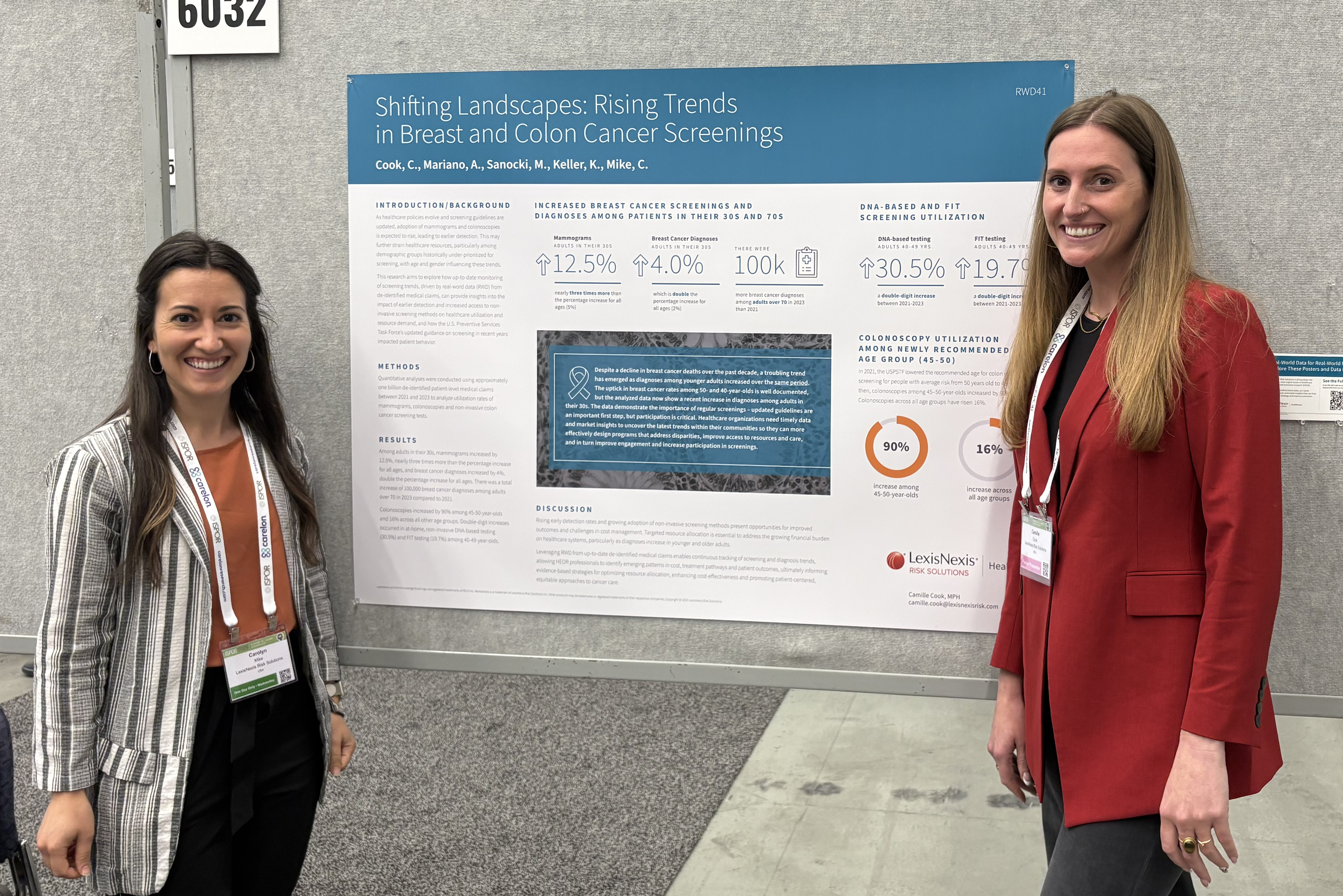
Among adults in their 30s, mammograms increased by 12.5%, nearly three times more than the percentage increase for all ages, and breast cancer diagnoses increased by 4%, double the percentage increase for all ages. There was a total increase of 100,000 breast cancer diagnoses among adults over 70 in 2023 compared to 2021.
Colonoscopies increased by 90% among 45- to 50-year-olds and 16% across all other age groups. Double-digit increases occurred in at-home, non-invasive DNA-based testing (30.5%) and FIT testing (19.7%) among 40- to 49-year-olds.
What do these trends mean for healthcare resource planning, especially given the increase in early detection?
Despite a decline in breast cancer deaths over the past decade, a troubling trend has emerged as diagnoses among younger adults increased over the same period. The uptick in breast cancer rates among 50- and 40-year-olds is well documented, but the analyzed data now show a recent increase in diagnoses among adults in their 30s. The data demonstrate the importance of regular screenings – updated guidelines are an important first step, but participation is critical.
“Healthcare organizations need timely data and market insights to uncover the latest trends within their communities so they can more effectively design programs that address disparities, improve access to resources and care, and in turn improve engagement and increase participation in screenings.”
Finally, how can stakeholders, from healthcare providers to policymakers, best use these insights from RWD to inform equitable and cost-effective cancer screening strategies going forward?
Rising early detection rates and growing adoption of non-invasive screening methods present opportunities for improved outcomes and challenges in cost management. Targeted resource allocation is essential to address the growing financial burden on healthcare systems, particularly as diagnoses increase in younger and older adults.
Leveraging RWD from up-to-date de-identified medical claims enables continuous tracking of screening and diagnosis trends, allowing HEOR professionals to identify emerging patterns in cost, treatment pathways and patient outcomes.
“Ultimately evidence-based strategies, underpinned by timely RWD insights, can contribute towards optimizing resource allocation, enhancing cost-effectiveness and promoting patient-centered, equitable approaches to cancer care.”
View the poster and related data brief
Interviewee
Camille Cook
Senior Director of Healthcare Strategy, Real-World Data, LexisNexis Risk Solutions

Camille has 15 years of experience in healthcare with a focus on leveraging big-data to improve clinical care outcomes. Throughout her career, Camille successfully implemented innovative practices for Healthcare IT, Healthcare organizations, and Life Sciences companies utilizing health informatics, big-data, epidemiology, and human behavior patterns to create actionable insights that guide healthcare policy and meaningful use practices. Camille has spent the last 7 years evaluating syndromic infectious disease trends, healthcare operations, health economic outcomes research, and social determinants of health. Currently, Camille is the Senior Director of Healthcare Strategy for Real-World Data at Lexis Nexis Risk Solutions.
Acknowledgments
Research authors: Cook C, Mariano A, Sanocki M, Keller K, Mike C.
Disclaimer
The opinions expressed in this feature are those of the interviewee/author and do not necessarily reflect the views of The Evidence Base® or Becaris Publishing Ltd.

Sponsorship for this Peek Behind the Poster was provided by LexisNexis® Risk Solutions
LexisNexis and the Knowledge Burst logo are registered trademarks of RELX Inc. MarketView is a trademark of LexisNexis Risk Solutions Inc. Other products may be trademarks or registered trademarks of their respective companies. Copyright © 2025 LexisNexis Risk Solutions.