

HEOR readiness: unlocking real-world evidence

In this Guest Column we reflect on the growing pressures facing health economics and outcomes research (HEOR) teams. From shifting regulations and fragmented data systems to rising expectations around transparency and equity, we explore the evolving landscape and share our perspective on what it takes to generate credible, actionable evidence that drives decisions and meets the demands of a changing healthcare environment.
Successful HEOR depends on the ability to realize meaningful RWE from data. Selecting the right data partner is key, but are you asking the right questions? Discover our eBook to learn more.
Navigating shifting terrain: what’s keeping HEOR teams up at night
In an era defined by data proliferation and policy upheaval, HEOR teams are navigating an increasingly complex landscape. Real-world evidence (RWE) plays a critical role in shaping decisions, but so do the rising expectations around how that evidence is generated, interpreted and applied.
Recent shifts in healthcare policy, regulatory frameworks and payer priorities are reshaping how HEOR insights are evaluated. From evolving standards for model transparency to heightened attention on health equity, the bar is being raised across the board. At the same time, teams must contend with fragmented data ecosystems, growing demands for methodological rigor, and a crowded vendor marketplace that makes it difficult to separate signals from noise.
Navigating these challenges requires more than just the right tools. It takes clarity of purpose, credible partnerships and a commitment to delivering insights that are both actionable and accountable.
Evolving regulations and policy shifts: a moving target for HEOR Teams
For HEOR professionals, the only constant is change. The regulatory and policy environment surrounding health outcomes research is in near-constant flux, making it challenging to predict how evidence will be evaluated, by whom and under what standards.
Over the past few years, we have seen agencies across the globe tighten their expectations regarding how HEOR insights are generated and utilized in decision-making. In the US, evolving Centers for Medicare & Medicaid Services (CMS) reimbursement models are beginning to account for patient-centered outcomes and long-term value. In Europe, the new EU health technology assessment (HTA) Regulation is promoting more harmonized evidence requirements across Member States. Each of these changes requires HEOR teams to be agile and forward-looking in their evidence strategies.
However, policy shifts are also increasingly driven by value. Health equity has become a central focus in healthcare reform and HEOR teams are being asked to demonstrate how interventions perform not just on average, but across diverse populations. This introduces new complexity in study design and analysis, from ensuring adequate representation to measuring outcomes that reflect real-world lived experiences.
The challenge requires teams to design HEOR strategies today that will remain effective tomorrow. This means anticipating evolving evidentiary standards, being flexible with modeling approaches and embedding equity as a core design principle, not an afterthought.
Fragmented data systems and limited interoperability: the roadblock to real insight
HEOR depends on data, but access alone is not enough. To generate meaningful and generalizable insights, researchers require comprehensive, connected and context-rich data. Unfortunately, that is not the reality most teams are working with today.
Most healthcare data is stored in siloed systems, with patient data scattered across electronic health records, claims systems, registries and wearable devices, often with inconsistent formatting or incomplete linkage. Even when teams have access to multiple datasets, integrating them to tell a cohesive story can be technically daunting and resource intensive. These challenges are only magnified by tightening privacy regulations, such as GDPR in Europe and evolving interpretations of HIPAA in the US, which limit how and where data can be shared or analyzed.
This fragmentation also undermines efforts to include underrepresented populations or social determinants of health (SDOH), which are crucial for understanding both clinical and economic outcomes in the real world. Without interoperable data systems, important insights, particularly those tied to health equity, remain out of reach.
The result? HEOR teams spend more time cleaning and stitching together data than analyzing it. And in many cases, the evidence needed to drive smarter policy, pricing and access decisions simply does not exist in a usable form.
To move forward, HEOR must advocate not just for more data but for better-connected ecosystems, greater standardization and collaborative approaches to data governance that balance privacy with progress.
Rising expectations for transparency and rigor: trust is no longer assumed
Whether it is a budget impact model, a cost-effectiveness analysis, or a long-term outcomes projection, stakeholders now demand clear, reproducible and defensible evidence. Regulatory agencies, payers and even internal medical and market access teams want to know:
- How was this built?
- What assumptions were made?
- Can someone else arrive at the same conclusions?
At the heart of this shift is a growing recognition that economic models and outcomes studies influence real-world decisions about patient access and pricing. As a result, HEOR teams must now provide audit trails for their work, including version-controlled methodologies, documented assumptions and transparent sensitivity analyses. This is especially important as AI and machine learning begin to play a larger role in model development.
In many ways, this shift is a positive one. It moves HEOR closer to the standards of clinical research, which is peer-reviewed, repeatable and grounded in well-defined parameters. But it also creates pressure. Teams must not only get the answer right but also present their work in a manner that withstands cross-functional, regulatory and public scrutiny.
A noisy marketplace: the challenge of choosing the right data partner
With HEOR now central to decisions regarding access, pricing and reimbursement, the vendor ecosystem has expanded significantly. Data aggregators, analytics platforms, RWE providers and consultants are all vying for the attention and budgets of HEOR teams.
At first glance, this appears to be a good problem to have. More options should mean more innovation, better tools and faster answers. However, in practice, it often leads to decision paralysis. Many vendors sound the same. Buzzwords like “AI-powered,” “patient-centric,” or “fit-for-purpose” are everywhere, yet few providers clearly demonstrate how their capabilities support the specific needs of HEOR teams.
What makes this even harder is that HEOR is not a one-size-fits-all discipline. A team evaluating the value of a new oncology therapy for Medicare reimbursement will need vastly different datasets, methodologies and expertise than one focused on Medicaid value assessments. That means the right partner is not just one with the best technology or the biggest dataset; it is the one that understands your use case, aligns with your values (including a commitment to health equity) and can collaborate with you.
Finding that kind of partner in a crowded market takes time and internal clarity. It requires HEOR leaders to ask:
- Do they support the level of methodological rigor we need?
- Can they handle the types of data we care about, especially underrepresented populations or long-term outcomes?
- Will they grow with us, as policy, technology and priorities evolve?
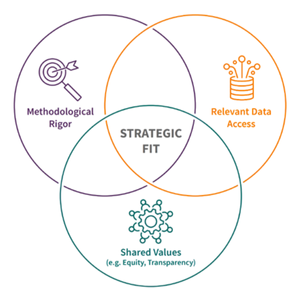
"The most successful HEOR teams establish strategic partnerships with organizations that can help them navigate the complex path from evidence generation to impact."
Conclusion: meeting the moment in HEOR
The landscape facing HEOR teams is undeniably complex, marked by shifting regulations, fragmented data, rising expectations and a flood of vendor noise. But within that complexity lies opportunity. Teams that can stay ahead of evolving standards, design inclusive and transparent methodologies and build strong, strategic partnerships will be best positioned to influence decisions that matter to payers, providers and patients alike.
Ready to unlock the full value of RWE and driving stronger, more actionable insights? Get started by downloading the eBook, six Best Practices for Unlocking the Full Value of RWE in HEOR, including a convenient Data Partner Conversation Guide!

Sponsorship for this Guest Column was provided by LexisNexis® Risk Solutions
LexisNexis® Risk Solutions harnesses the power of data, sophisticated analytics platforms and technology solutions, empowering healthcare researchers with critical insights to increase efficiencies, reduce inequities and create healthier communities.