
Nordic VALO project demonstrates cross-border health data analysis
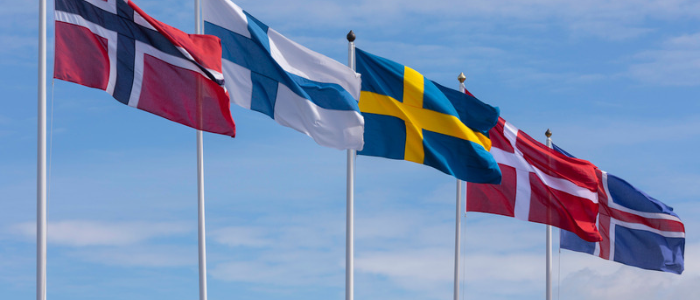
The Nordic VALO project has published its final findings on the use of health data across national borders to support research and innovation. Drawing on two pilot studies and cooperation between Nordic authorities, the reports demonstrate the feasibility of cross-border analysis using existing infrastructure and identify requirements for coordinated implementation of the European Health Data Space.
The Baseline
- The Nordic VALO project has published four reports examining cross-border health data use for research and innovation.
- Two pilot studies demonstrated the feasibility of analyzing health data across countries using existing infrastructure without transferring patient-level data.
- The findings identify governance, technical and operational requirements for implementing the European Health Data Space and scaling cross-border research.
Coordinated by Finland’s innovation fund, Sitra, and funded by the Nordic Council of Ministers, the Value from Nordic Health Data (VALO) project brought together more than 20 ministries, authorities and research organizations from Denmark, Finland, Iceland, Norway, and Sweden. Conducted across two overlapping phases between February 2024 and October 2026, it examined how health data could be used across borders to support research and innovation.
This work built on the Nordic countries’ extensive population-level health registers, where personal identifiers enable information to be linked across sources. Combining these resources could create larger datasets for studying diseases, treatments, and health outcomes, but differing national access procedures and governance arrangements present challenges for multinational research.
VALO’s four reports draw on research pilots and cooperation between national authorities to identify approaches to addressing these challenges. Their findings are of particular relevance as the Nordic countries prepare to implement the European Health Data Space (EHDS), which establishes common European rules for accessing and using electronic health data for secondary purposes.
To support EHDS implementation, VALO convened eight Nordic EHDS2 Competence Forums, bringing together ministries, authorities, and experts to discuss data access procedures, metadata requirements, and legal and ethical considerations. These discussions informed a preliminary Nordic implementation guide intended to support greater consistency between national approaches.
Michel Silvestri, Senior Adviser at the Swedish eHealth Agency and Chair of the Nordic EHDS2 Competence Forums, highlighted the value of cooperation between authorities:
“The forums gave ministries and authorities a trusted space to compare their choices openly. We are all facing the same questions, so no country should have to reinvent the wheel.”
Alongside this work, VALO conducted two pilot studies on advanced non-small cell lung cancer treatment to test approaches to cross-border health data analysis. Both used the Observational Medical Outcomes Partnership (OMOP) Common Data Model to standardize data across participating institutions.
The two pilots explored different approaches to cross-border research, using lung cancer care to test how Nordic hospital data could be analyzed without transferring patient-level information between countries. Both used the Observational Medical Outcomes Partnership (OMOP) common data model to organize data into a shared format.
The first pilot tested the technical feasibility of federated analysis across three university hospitals in Denmark, Finland and Norway. It examined real-world treatment patterns and outcomes for 755 patients with metastatic non-small cell lung cancer receiving first-line immunotherapy. Standardized analysis scripts were run locally by participating hospitals, with only anonymized, aggregated results shared for central compilation. This demonstrated that a common analytical approach could be implemented across the participating healthcare systems while keeping patient-level data at its source. However, missing clinical information and differences in data capture and patient selection limited interpretation of the findings, preventing firm conclusions about differences in treatment effectiveness or healthcare system performance.
Building on this infrastructure, the second pilot] explored how researchers could access and analyze data held in another country directly through secure processing environments. Researchers in Denmark remotely analyzed OMOP-formatted hospital data held in Finland and Norway, alongside Danish data analyzed within their established local environment. Patient-level data remained within the respective environments, and only aggregated results were released.
This demonstrated the operational feasibility of cross-border researcher access while identifying practical requirements for wider implementation under the European Health Data Space. These included clear approval processes, researcher permissions, suitable analytical tools, data documentation, local support and arrangements for reviewing and releasing results. The experience also showed that a common data model alone cannot ensure comparable analyses: researchers still need to establish whether the required variables are available, consistently defined and suitable for the research question at each site. Susanna Flaherty, Healthcare Director and Country Manager in Finland at IQVIA, which led both studies, emphasized the need to build on these findings:
“The next challenge is making that experience transparent, repeatable and scalable so that researchers can benefit from trusted cross-border data access as a routine part of research, not just within pilot projects.”
To support continued cooperation, VALO proposed a permanent Nordic framework comprising a health data coordination committee, a secretariat, a competence forum, and an annual summit. Building on existing regional arrangements, the proposed model is intended to support coordination of EHDS implementation and future cross-border research activities.
Estonia and Lithuania also participated as observers during the project's follow-up phase, providing a basis for potential Nordic–Baltic cooperation.
| Register for free today to become a member of The Evidence Base and receive the latest news straight to your inbox. |