

ISPOR Europe 2026 daily round-ups: Insights from Day 3
As ISPOR Europe 2026 enters its final day, discussions in Vienna turn to the future of HTA, value, access and the evidence the HEOR community will need to support increasingly complex decisions. The Evidence Base rounds up some of the key highlights from Day 3.
Closing Reflections and ISPOR’s Scientific Future

Rob Abbott (ISPOR CEO) opened the final plenary of ISPOR Europe 2026 with reflections on the need to consider healthcare systems as a whole and translate evidence into change. Rob highlighted discussions about AI, emphasizing that risks and consequences vary across applications, and welcomed delegates’ willingness to explore new approaches and engage with patients. As Rob stated:
“The conference represents a milestone on a journey – growing the relevance, use and impact of HEOR globally.”
Kelly Saldaña, Executive Director of the ISPOR Institute for Healthcare Transformation, then addressed what healthcare transformation should mean in practice: using evidence and resources differently must ultimately deliver better health and patient benefit. Kelly connected transformation with the ability to navigate decisions in real time and realize value, rather than simply introduce change.
Looking ahead to HEOR’s scientific development, Laura Pizzi (ISPOR Chief Science Officer) positioned greater evidence precision as an opportunity to make the field more relevant to decisions. Laura connected patient-centered evidence, RWE, Whole Health and AI with the need to address risks including misaligned decisions and evidence being sidelined in policy. Priorities included strengthening real-world data systems, making dynamic evidence generation routine, assessing value by subgroup, working more closely with other disciplines, such as computer scientists, and ensuring evidence meets its intended audience’s needs.
Following the plenary discussions, Rob returned to the stage to thank the panelists and close ISPOR Europe 2026, inviting delegates to continue the discussions at ISPOR’s 2027 meetings: May 23–26, 2027 in Denver, Colorado, and November 14–17, 2027 in Milan, Italy.
Plenary 3: Fit for Purpose: What HEOR Evidence Must Become
The final plenary of the conference asked whether current evidence generation meets the needs of increasingly complex healthcare decisions. Moderated by Malina Müller (WifOR Institute), the discussion brought perspectives from Marie Gerstrøm Kristiansen (Amgros), who emphasized reducing the uncertainties that matter to payers and continuing to learn after access decisions; Nirosha Lederer (AstraZeneca), who advocated continuous, co-created evidence generation capturing wider societal effects and the consequences of failing to act; and Nick Guldemond (Leiden University Medical Center), who stressed translating evidence into practical changes in care.
Spotlight: Bringing Environmental Impact into Healthcare Value Assessment: An ISPOR Health Science and Policy Council Spotlight Session
The role of environmental sustainability in healthcare value assessment was examined in an ISPOR Health Science and Policy Council spotlight session moderated by Zoltán Kaló (Center for HTA, Semmelweis University & Syreon Research Institute). Bringing together perspectives from environmental economics, the pharmaceutical industry and sustainable procurement, the session considered how environmental impacts could be measured and incorporated into healthcare decision-making, and whether HTA provides an appropriate framework for doing so.
Joukje de Vries (CE Delft) outlined the environmental footprint of healthcare, noting that the sector accounts for approximately 4.4% of global carbon emissions, with around 80% arising from supply chains. She explained that environmental impacts such as pollution, emissions and resource consumption impose costs on society that are not reflected in market prices. Life-cycle assessment (LCA) can quantify the physical environmental impacts of products and processes, while environmental pricing methods assign monetary values to the resulting societal damage.
To illustrate how this evidence can inform practical decisions, Joukje presented examples from healthcare procurement and technology assessment. An evaluation of surgical trays found that replacing disposable gowns and drapes with reusable alternatives approximately halved environmental impacts, although this increased financial costs. Removing infrequently used items from the trays reduced environmental impacts further, while keeping costs comparable to those of fully disposable trays. In another project, incorporating environmental criteria into a hospital tender for a bed-washing facility was estimated to avoid €45,000 in environmental damage. Reflecting on who ultimately bears these costs, she concluded:
“The polluter is responsible, and if the pollutant does not pay, then society will pay anyway.”
Céline Fernandez (Sanofi) examined healthcare’s sustainability challenges through the AIR (Access to healthcare, environmental Impact, and health system Resilience) framework. She identified opportunities to reduce emissions across the patient journey, from prevention and earlier diagnosis to more sustainable manufacturing and home-based treatment. She also distinguished between product-level LCA and broader assessments of patient care pathways, which account for additional environmental impacts associated with factors such as travel and treatment administration.
Turning to healthcare decision-making, Céline highlighted the growing role of environmental considerations in pharmaceutical procurement, citing Norway, where she reported that environmental criteria can carry a weighting of approximately 30% in procurement decisions. She explained that procurement often involves medicines with comparable efficacy and safety, allowing environmental performance to help distinguish between options. In contrast, HTA frequently assesses innovative technologies, making the integration of environmental criteria more complex. The systematic inclusion of environmental criteria in HTA also remains limited by differences in methodologies and data availability. Céline therefore called for more harmonized methods, stronger evidence and improved forecasting to support comparisons across healthcare systems, while recognizing environmental sustainability as one aspect of a medicine’s overall value:
“Environmental value plays a role in the bigger picture of the value of a product.”
Erik van Raaij (Erasmus University Rotterdam) examined the role of sustainable procurement in healthcare, arguing that environmental assessments should consider not only carbon emissions but also biodiversity loss, pollution and resource depletion. He stressed the importance of making sustainability a core consideration in purchasing decisions:
“Taking the planet into consideration is not optional. It's not voluntary. It's not additional. It should be central to everything we do.”
Drawing on Erasmus Medical Center’s environmental footprint and examples involving reusable medical devices, Erik illustrated how sustainability can be integrated throughout the procurement process, from defining requirements and selecting suppliers to contract design and management. He also distinguished between purchasing healthcare services and procuring the products needed to deliver care, identifying opportunities to improve environmental performance in both areas.
However, differences in environmental priorities across countries present challenges for consistent implementation. Erik explained that reducing carbon emissions and increasing the reuse of materials may involve trade-offs, while varying national requirements complicate procurement decisions across global supply chains. He also highlighted the challenge of assessing environmental benefits that may extend beyond the patients directly affected by a healthcare decision, reaching populations in other countries and future generations. He called on the HEOR community to help translate environmental data into robust frameworks that can inform practical decisions.
Audience discussion questioned whether HTA is the most appropriate mechanism for incorporating environmental impacts into healthcare decisions. One participant argued that its focus on incremental differences between technologies may overlook much of the environmental burden associated with supply chains, while assessments could quickly become outdated as procurement practices change. Céline acknowledged that conventional cost-effectiveness evaluation may not be the best approach, while Joukje and Erik advocated using whichever mechanisms could most effectively support environmental sustainability in healthcare. Participants also raised concerns about the potential infection risks associated with reusable medical equipment, with Erik pointing to examples of devices being safely reprocessed and reused.
Concluding the session, Zoltán called for proportionate and practical approaches to environmental assessment, arguing that methods need not be perfect but should be “simple and easy to understand” to support implementation.
Concurrent sessions
Issue Panel: Preparing CEE Countries for JCA: Aligning European HTA Standards with National Access Decisions
Moderated by Magda Chatzikou (Pharmecons Easy Access), this session examined how Central and Eastern European countries can make effective use of Joint Clinical Assessment (JCA) reports within national HTA, pricing and reimbursement processes, highlighting the very different starting points across the region, from established HTA systems to countries still developing the structures and capacity needed to implement the EU HTA Regulation (EU HTAR).
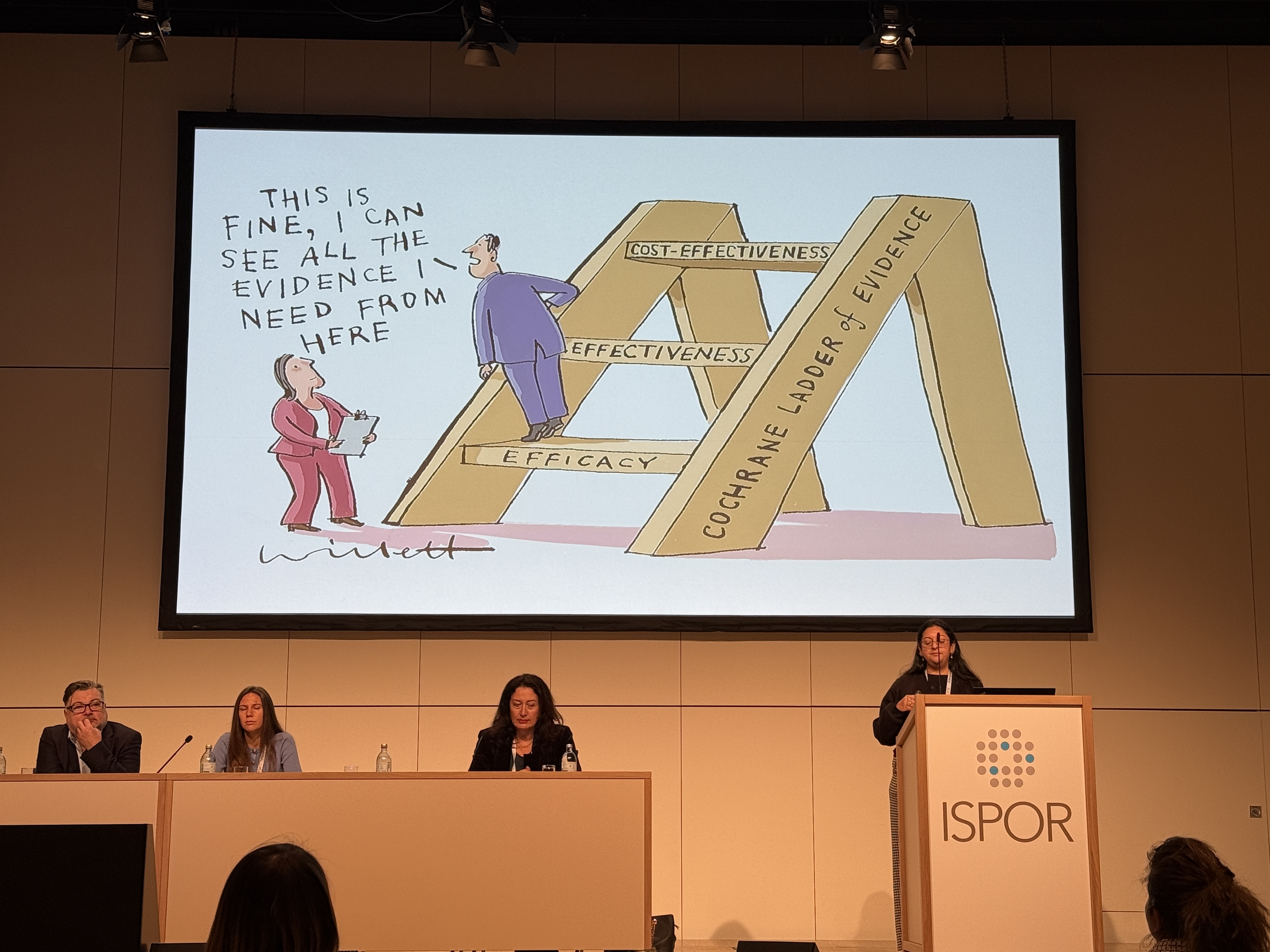
Tarang Sharma (WHO) described WHO’s work supporting countries to strengthen HTA systems as part of its wider universal health coverage mandate, placing JCA within a broader pathway spanning horizon scanning, joint scientific consultations and clinical assessment through to national cost-effectiveness appraisal, pricing, reimbursement and clinical guidance.
“We want to support countries and governments that allow us to provide the most access for the right quality and effective services and technology for patients without getting them to have to pay out of pocket.”
Tarang used WHO’s experience in Greece as a practical example of how countries can prepare for implementation. The three-stage program covered needs assessment, development of methods aligned with the EU HTA Regulation and capacity building followed by a pilot, drawing on experience from agencies including HAS while tailoring the approach to the Greek setting. The pilot included PICO scoping and patient and clinical expert involvement, giving the Greek team experience that has subsequently supported its ability to participate as a JCA co-assessor. She also pointed to work in countries including Moldova and Georgia, reflecting wider interest in JCA beyond EU Member States.
“There is really a lot of appetite, not just by EU countries, but countries in the central part... who are very interested in what is happening in the JCA and the EU Regulation because it impacts a much wider group of countries. And I think there's huge processes and methods that we can do together.”
Jacek Walczak (Certara) opened by observing that the fact this was an “issue panel” reflected his view that there were still significant issues to resolve. From a Polish perspective, he noted that the country already has a mature HTA system, meaning JCA currently operates largely in parallel rather than fundamentally changing national reimbursement decisions. He also highlighted a case where a new dose of a comparator was authorized and reimbursed after the JCA had been completed, making the comparator used in the European assessment less relevant to the subsequent Polish decision.
Jacek also shared results from Certara’s JCA/Most-Favored-Nation (MFN) pulse check, based on 26 responses from mostly senior industry HTA and reimbursement professionals. While respondents were highly familiar with JCA, their current perception was that it represented a burden before a benefit, with higher upfront launch costs and strong disagreement that JCA would necessarily enable simultaneous launches across Europe.
Boryana Ivanova (National Council on Prices and Reimbursement of Medicinal Products) described Bulgaria’s substantial involvement in JCA, including submitting national PICOs and incorporating published JCA reports into national HTA reports, while emphasizing that this work is being undertaken with the same number of experts as before implementation.
“What we observed during the preparatory phase and almost 2 years after the implementation of the regulation is that our administrative work is actually increased.”
An audience member from the Czech State Institute for Drug Control added a Czech perspective, noting that two medicines with published JCA reports are entering national assessment, while some products have already reached patients through individual access pathways or clinical trials. The experience is also exposing practical questions around aligning JCA timelines and confidentiality requirements with Czech administrative procedures and patient participation rights.
Magda reflected that JCA is creating a different dynamic across Europe, with countries that historically had less-developed HTA infrastructure now building capacity alongside more established systems. Tarang added that the gap between early patient access and formal post-JCA submission is not unique to Czechia and may narrow as countries gain experience with the process, suggesting that shadowing assessments could provide a practical route toward taking on formal assessor roles.
A final audience question brought the discussion back to launch timing and comparators, asking how JCA might interact with MFN pricing and whether delayed launches could leave assessments reflecting standards of care that are already changing. Jacek distinguished JCA as an operational process from MFN as a strategic launch decision, while acknowledging that delays could make JCA more complex and add to the effort required to bring a medicine to market.
Issue Panel: How Should Evidence be Assessed in Rare Diseases?
How can HTA make fuller use of rare disease evidence while remaining rigorous about uncertainty and bias? In this Issue Panel, Karen Facey (Universities of Utrecht and Edinburgh and RWE4Decisions) introduced developing work from HTAi’s Rare Diseases Interest Group, distinguishing critical evidence assessment from the subsequent appraisal of value.
Sean Tunis (Tufts Center for the Evaluation of Value and Risk in Health) discussed how conventional approaches can underuse evidence from registries, clinical observations and patient-generated sources. Classifying these sources as low or very low quality can obscure differences between well-conducted and poorly conducted studies. The proposed framework would first characterize disease-specific evidence-generation challenges, then apply design-appropriate quality assessment tools before integrating heterogeneous evidence through Bayesian methods. As Sean stated:
“Let's make maximum use of all the evidence that we have.”
Sean suggested that clearer recognition of study quality could also incentivize developers to improve studies that are feasible in rare populations.
J. Jaime Caro (Thermo Fisher Scientific) illustrated Bayesian integration through a simplified example involving a small randomized trial, a natural-history registry and a pharmacokinetic/pharmacodynamic study. The trial showed a biomarker effect, but left uncertainty about clinical outcomes and did not measure long-term burden. A causal network connected the available sources to estimate longer-term effects, making assumptions about those relationships explicit. As Jaime explained:
“It provides estimates of the treatment effects that leverage all the available data.”
Jaime then demonstrated how patient and caregiver input could inform two distinct questions: what magnitude of benefit matters, and how confident a decision-maker should be that the treatment delivers it. These thresholds would inform interpretation of the estimated effects, rather than change the underlying result. However, the approach depends on identifying relevant causal relationships and addressing differences between studies; unknown confounding remains a limitation.
Eva Malikova (Austrian Institute for HTA) welcomed the initiative but said that more detail would be needed on how it would fit within JCA and national appraisal, who would implement it, and how evidence-selection judgments and conflicts of interest would be managed. Eva identified joint scientific consultation as a possible entry point, while emphasizing the need for assessor training and transparent expert selection.
Discussion involved methodological issues, with Jaime clarifying that the presented example did not apply explicit quality weights because a suitable quantitative scoring approach was lacking. Nor could Bayesian analysis repair unusable evidence; as Jaime stated:
“No Bayesian method will polish that evidence for you.”
Karen emphasized that the framework must address each disease’s specific constraints, rather than assume all rare diseases face identical limitations. The practical next step was testing: “we obviously need to have real examples fully worked out,” Jaime said. Sean proposed product-specific pilots to build experience with the framework, while Eva called for transparent development with regulatory and HTA assessors. Eva welcomed the initiative as a promising response to the difficulties assessors face with limited rare disease evidence, suggesting implementation within five years could be realistic:
“We really struggle with the orphans and something needs to be done – and this is a really good start.”
Workshop: Children or Parents – Whose preferences matter? That depends on the decision making context
The role of children’s and parents’ preferences in healthcare decision-making was explored in this workshop moderated by Kerrie-Anne Ho (UCB). The session considered the methodological and practical challenges of eliciting preferences from children and adolescents, how these may differ from those of parents and caregivers, and whose perspectives should inform clinical care, regulatory decisions and HTA.
Introducing the discussion, Kerrie-Anne explained that differences in cognitive development, disease experience and understanding of treatment mean that children and adolescents cannot be treated as a homogeneous population when eliciting preferences. She also addressed the ethical considerations, consent requirements and cognitive demands associated with preference research, questioning the reliance on parental perspectives when:
“Children are ultimately the ones taking the treatments.”
Audience polling reinforced the complexity of this issue, revealing differing views on whose preferences should take priority depending on the decision-making context.
Deborah A Marshall (University of Calgary) distinguished between health state valuation, which generates utility estimates for economic evaluation, and stated preference research, which examines the relative importance of treatment attributes and outcomes, including benefits beyond health. Reviewing the literature, she noted the growing use of discrete choice experiments (DCEs) involving children and adolescents, but identified a lack of methodological guidance on their design, implementation and analysis. Although children as young as eight years old had independently completed DCEs in published studies, she cautioned that this does not necessarily establish their suitability for more complex valuation tasks.
Drawing on research involving parents of children with rare diseases, Deborah illustrated how receiving a diagnosis can provide substantial value beyond clinical outcomes, particularly by enabling access to educational and support services. However, she questioned whether these parental preferences adequately capture children's priorities, particularly regarding potential consequences such as stigma and discrimination.
These differences were further illustrated by research into treatment preferences in pediatric inflammatory bowel disease (IBD). While children prioritized symptom improvement and returning to normal activities, they also showed a stronger preference for oral treatment. Parents, meanwhile, placed greater importance on clinical and endoscopic remission and longer-term outcomes. Preferences also varied by age, raising questions about how the perspectives of children and parents, both individually and jointly, should be analyzed and incorporated into shared decision-making.
Deborah reinforced the importance of designing preference studies around their intended use, explaining that “it depends on what you want to do with the results”. For example, regulatory benefit-risk assessments require different evidence from individual clinical decisions, making it essential to select respondents, treatment attributes and outcomes that are appropriate for the decision being informed.
Nancy Devlin (University of Melbourne) examined how the choice of whose preferences to use depends on whether the evidence is intended to support clinical care or economic evaluation. She also highlighted the poor quality of pediatric utility evidence in some HTA submissions, including the use of unsuitable measurement instruments and utility values that do not adequately reflect different age groups.
Drawing on Australia’s P-PROM ROCK program, Nancy described how children, caregivers and clinicians helped design the use of patient-reported outcome measures (PROMs) in pediatric outpatient care. Rather than relying on a single score to represent health-related quality of life, the approach allows children to identify concerns they want to discuss during appointments, including issues unrelated to their presenting condition. Feedback from the co-design process also led to the removal of traffic-light indicators in favor of a simpler presentation, reflecting concerns about how these indicators could be interpreted by children with disabilities. As Nancy explained:
“You lose information when you summarize five dimensions and five levels into a single number.”
For economic evaluation, Nancy discussed recommendations from a recent ISPOR Task Force report on valuing child and adolescent health states. These include using general population preferences from respondents aged 16 years and older for valuation tasks involving mortality. She also considered the role of parents in valuation, the difficulties of maintaining consistent utility values across age groups and ongoing work to develop the EQ-5D-Y-5L valuation protocol.
During the audience discussion, participants questioned whether children could reliably complete preference tasks involving mortality. Deborah and Nancy both distinguished between simpler choice exercises and the more demanding requirements of health state valuation. Nancy also highlighted emerging research involving time trade-off tasks with children as young as 12, suggesting that existing assumptions about age thresholds warrant further investigation.
The workshop concluded that the choice of whose preferences to consider depends on the decision being informed. Children’s developmental stage and cognitive capacity, alongside the suitability of different methods and the intended use of the evidence, all shape how children’s and parents’ perspectives should be collected and interpreted.
Issues in Evaluating AI-Enabled Healthcare
Moderated by Seamus Kent (Erasmus University Rotterdam), this session examined a fundamental challenge in evaluating AI-enabled digital health technologies: which population should treatment effects be estimated for. Seamus framed the choice between the whole eligible population and those who actually engage with a technology as one that also shapes the appropriate comparator, particularly where access is constrained by waiting lists, workforce capacity or limited engagement with face-to-face care.
Blythe Adamson (Doctronic) brought an industry perspective from the US, using case studies in autonomous AI prescription refills, AI doctor chats, and virtual maternity care to illustrate unresolved questions around population definition and value assessment. With some patients gaining access to care they might otherwise not receive, she asked whether effects should be estimated across everyone with access, those most likely to benefit, or only those who actively use the technology. These choices matter increasingly as US payers and government agencies consider how AI-enabled healthcare should be reimbursed.
Lena Bertozzi (Pomelo Care) explored the same problem through an evaluation of a virtual maternity and infant care program, comparing women who engaged with the service with eligible women who did not. The analysis included around 45,000 deliveries, with approximately 7,000 women engaging for at least one month, and used inverse probability weighting to account for baseline differences between groups.
That design immediately raised the question of whether the women who chose to engage were systematically different from those who did not, which Lena identified as one of the central methodological challenges:
“This brings us to the obvious issue... which is selection bias and in digital health interventions in particular we expect or assume that healthier folks will engage. So we're really worried about selection bias and how that might impact our conclusions later on.”
In this case, however, women who engaged were actually higher risk on several measured characteristics. Longer engagement was associated with larger estimated differences in outcomes, but Lena stressed that the design answered a specific question about clinically meaningful exposure among engaged users rather than the wider population effect.
Anastasia Chalkidou (NICE) placed these questions within NICE’s growing portfolio of digital and AI evaluations, which now accounts for around a quarter to a third of recent health technology work. She emphasized that AI technologies vary substantially in risk and complexity and therefore need case-by-case assessment, with particular attention to local implementation, learning effects, comparator choice, service capacity, health inequalities and ongoing monitoring.
For digital and AI interventions, Anastasia described a narrowing pathway from everyone eligible for a service, through those offered it, those who engage and those who remain engaged long enough to benefit. Understanding who drops out at each stage, and why, is central to assessing both effectiveness and equity. That, she argued, makes patient and charity input particularly important in helping committees understand who is benefiting and who may be excluded:
“Patient and charity voice. I honestly think we always need to have that input... we would struggle to have a digital AI evaluation that is patient centered without understanding who gets help, who is excluded, and why.”
The discussion also highlighted the need to understand the true opportunity cost of digital care, particularly where the comparator may be a long waiting list rather than an immediately available clinician-led service, and to consider whether released workforce capacity is genuinely realized elsewhere in the system.
Continuing the conversation after ISPOR Europe 2026
We hope our daily round-ups have helped you follow some of the key discussions from ISPOR Europe 2026. Over the coming weeks, we’ll continue the conversation with deeper dives into selected sessions, Peek Behind the Poster interviews and post-meeting reflections on the issues that stood out in Vienna.
| Register for free today to become a member of The Evidence Base and receive the latest news straight to your inbox. |