

ISPOR Europe 2026 – Inside the second plenary: Launching the pathway, not the product
The second plenary of ISPOR Europe 2026 examined whether HEOR is being applied widely enough across healthcare systems – and what it could contribute beyond the assessment of individual technologies.
Where is value created, and lost, across the healthcare system? Following the opening-day discussion on what healthcare systems should value, the second plenary of ISPOR Europe 2026, organized by ISPOR—The Professional Society for Health Economics and Outcomes Research, turned the attention to that wider system.
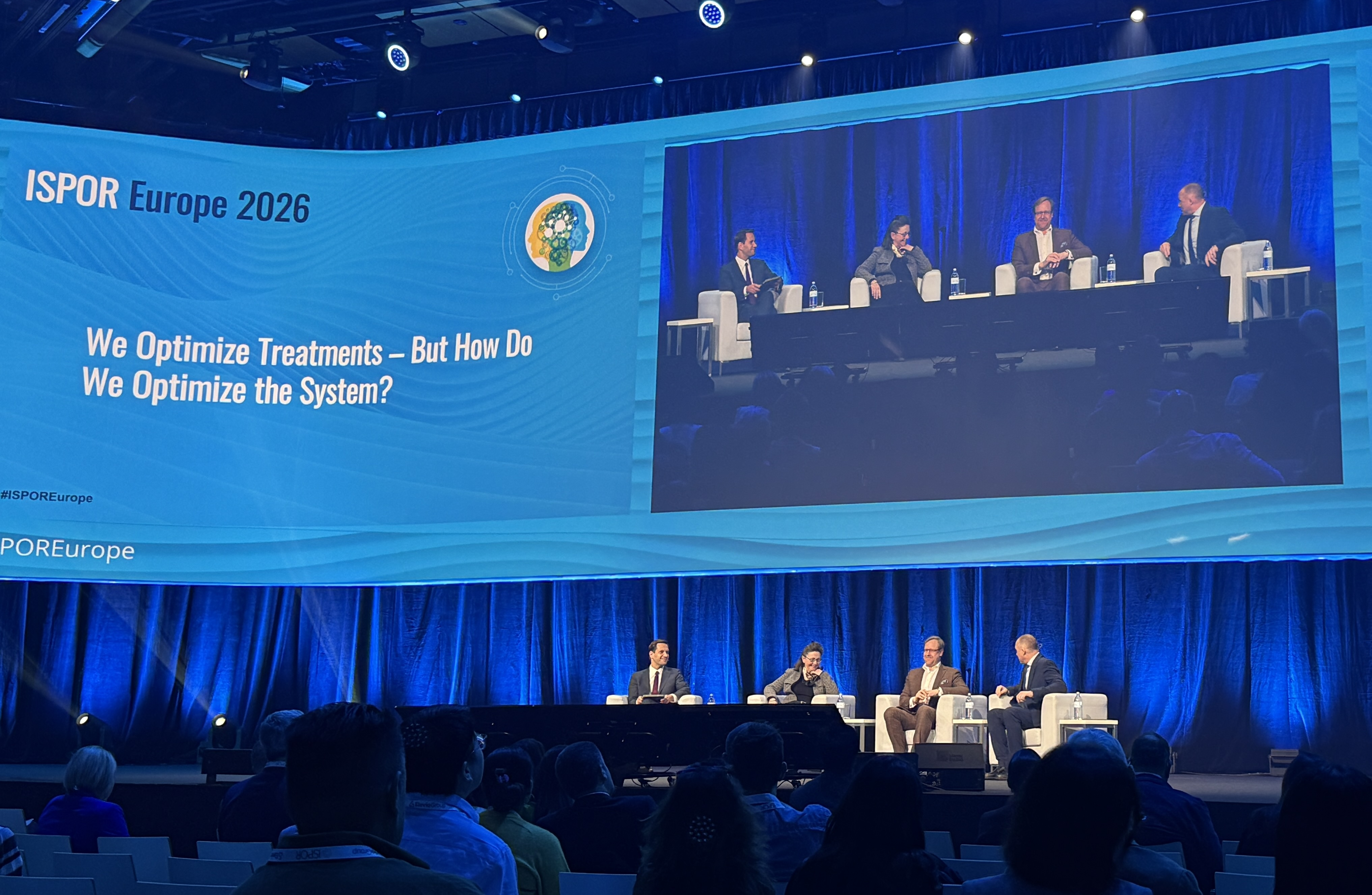
“We Optimize Treatments—But How Do We Optimize the System?” asked whether the sophisticated approaches used to evaluate medicines and other technologies are being applied just as rigorously to care pathways, service delivery and activities that may offer limited value.
Moderator Rasmus Gjesing (WHO Europe) explored that question with Ricardo Baptista Leite (HealthAI), Jakub Dvoracek (ECRIN) and Carole Longson (University of Manchester).
The discussion raises a broader question for the HEOR community: are we focusing our methods on all the areas where they could make a difference? In this second plenary write-up, I look at how the panel approached system optimization, resource allocation and the role HEOR could play in identifying where change is most needed.
Reimagining care with AI
Ricardo started the session with a keynote address, which began with examples of AI supporting research, clinical documentation and patient follow-up. Ambient AI, for instance, could reduce the administrative demands that draw clinicians’ attention away from patients, while virtual assistants could provide support between appointments.
But his central argument concerned the purpose of adoption. Retrofitting AI into existing processes would not, by itself, address the pressures facing healthcare.
“We have a once-in-a-lifetime opportunity with these technologies that we have in front of us. How can we reimagine health and care altogether?”
Ricardo urged systems to define their goals first, then design pathways and select technologies to achieve them. Prevention and the wider determinants of health belonged within that discussion, alongside treatment.
Trust and governance were essential to implementation. AI requires continuing assessment after deployment, including real-world evidence generation and monitoring for changes in performance. Simply placing a clinician at the end of an automated process would not establish meaningful oversight. Responsibilities must be clear across developers, vendors, providers and evaluators, rather than leaving individual professionals accountable for failures beyond their control.
Preparing the pathway before the product arrives
Jakub spoke next to provide a political perspective, and he brought the implementation challenge into focus via the example of preparations for new Alzheimer’s treatments in the Czech Republic.
Discussions initially concerned reimbursement but quickly revealed wider constraints. Neurologists lacked capacity for the anticipated patient population. Treatment delivery required nurses, while diagnostic services needed sufficient radiology staff to operate MRI equipment. Planning also extended into social care.
The distinction was important: a system might have sufficient funding to reimburse a medicine while lacking the people and infrastructure to deliver it. As Jakub nicely summed up:
“We need to launch the pathway, not the product.”
Preparation nevertheless involves uncertainty. Training staff takes years, while the timing and availability of new treatments can change. Jakub described the difficulty of mobilizing teams before authorization, when some saw little reason to act urgently. Earlier dialogue between companies, governments, payers, clinicians and patient groups could expose those dependencies before they become barriers to access.
Moving from disinvestment to optimization
The panel as a whole then considered what healthcare systems should change or stop doing. Carole cautioned against moving directly from evidence of high spending or activity to withdrawing an intervention altogether.
Reflecting on NICE’s experience, Carole explained that framing this work as “disinvestment” had made engagement with clinicians and patients difficult. Reframing it around “optimization” instead changed the conversation toward how interventions could be used and sequenced more effectively.
Carole use the example of X-rays to illustrate the distinction. Evidence of excessive use should prompt questions about where and why they are overused, and how to target them appropriately, rather than whether imaging should stop altogether.
Ricardo emphasized leadership and incentives, describing changes in Portuguese primary care that linked outcome measurement with financial incentives. Carole’s caution remained relevant: evaluation must establish which changes improve outcomes, rather than treating reduced activity as an end in itself. And as Rasmus put it:
“It's not just a saving exercise when we talk about optimization.”
Giving HEOR a wider role
Rasmus asked the panel to consider who should turn these observations into action? Carole discussed how HTA bodies could contribute earlier through horizon scanning, stakeholder discussions and preparation for implementation. Assessments commissioned late in development risk missing the time needed for substantial service changes.
Jakub called for clinical and reimbursement data to be connected, enabling a clearer understanding of spending alongside outcomes. Ministries, payers and other institutions also needed to bring their separate intelligence together and coordinate decisions about workforce and capacity.
However, data would not remove the political difficulty of reallocating resources. Closing beds or reducing services can provoke opposition even when analysis identifies inefficiency, and Jakub acknowledged that responsibility for directing those changes remained a difficult question.
For AI, Ricardo recommended starting with practical applications where funding, feasibility and meaningful impact intersect. Professional buy-in and clearly assigned accountability would be necessary alongside technical capability.
For me, the session’s strongest implication was that the context around an intervention must become part of the evaluation itself. Carole described how bringing technology assessment and clinical guidelines together could place individual treatments within pathways and support guidance on resource use. HEOR has relevant tools, but applying them to system questions requires evidence, evaluation capacity and institutions able to act on the findings.
Looking ahead to Plenary 3
The final plenary will extend this conversation again, this time by turning to the tools needed to support increasingly complex decisions across healthcare systems. After today’s focus on where value is created and lost, the next question is what HEOR evidence must become if it is to help decision-makers act on those challenges.
| Register for free today to become a member of The Evidence Base and receive the latest news straight to your inbox. |