

Access across borders: will cross-border collaboration initiatives harmonize or hinder progress?

As the EU HTA Regulation (EU HTAR) comes into force, attention is turning to how collaborative initiatives like the Joint Clinical Assessment (JCA), the Health Economics Methods Advisory (HEMA), and the Joint Nordic HTA Bodies (JNHB) might improve the efficiency and consistency of health technology assessments (HTA) across borders. These initiatives aim to streamline evidence generation, reduce duplicative efforts, and improve patient access to innovative therapies. But is global HTA collaboration really an achievable goal?
This was the topic of an educational symposium at ISPOR 2025 which brought together leading experts in HTA to examine the early implementation of these initiatives and assess their long-term implications. Titled, "Bringing us together or pushing us apart: Will JCA, HEMA, and other cross-border collaboration initiatives improve patient access?", the session was moderated by Erika Wissinger, PhD (Cencora) and featured Michael Drummond, MCom, DPhil (University of York), Jon Campbell, PhD (National Pharmaceutical Council), and Eldon Spackman, PhD (University of Calgary).
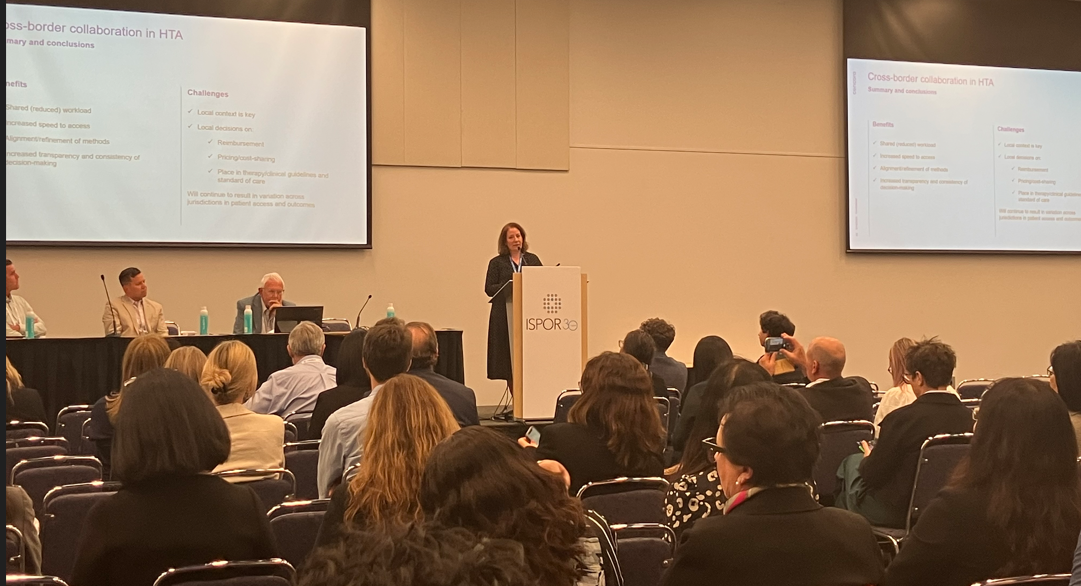
Framing the issue of fragmentation and access
Moderator Erika Wissinger opened the session by emphasizing the significant disparities in how quickly and widely patients across Europe can access new therapies. While national HTA agencies share a common objective of facilitating access, variations in how methods, thresholds, and decision-making criteria are applied have led to uneven outcomes.
"Even though all HTA agencies share the common goal of enabling patient access, the way that the methods, thresholds, and techniques are applied across various markets means that there's a wide variation in terms of number of new therapies that are approved [and] time to get those therapies to patients."
Wissinger referenced EFPIA’s Patients WAIT Indicator survey to illustrate the variation in patient access across EU Member States. According to the data, Germany typically provides access to new treatments within about one month of European Commission approval, while in other countries the delay can extend to nearly three years. She noted that “one of the aims of cross border collaboration is to promote better equity across those markets, such that we reduce the disparity between one month and three years to access at least across the EU.”
To address this need, Wissinger outlined three main pillars of cross-border collaboration:
- Sharing workload
- Aligning methods and best practices
- Exchanging intelligence
Wissinger explained that JCA and JNHB exemplify how shared workload models can reduce duplication in clinical assessments. These initiatives aim to streamline submissions by developing common evidence packages used across multiple jurisdictions; for example, the JNHB, comprising Denmark, Finland, Iceland, Norway, and Sweden, conducts joint evaluations that include both clinical and economic assessments, with the goal of accelerating access to new therapies.
“Four assessments have been conducted since June 2024,” Wissinger noted, “with a mean assessment time of 82 days, which is less than half of the time that the individual HTAs had previously taken.”
The second pillar, alignment of methods and best practices, is being advanced through HEMA: a working group formed by Canada’s Drug Agency (CDA-AMC), England’s NICE, and the US-based ICER. HEMA focuses on harmonizing approaches to value assessment by addressing topics such as what treatment benefits should be considered in HTA, how to manage uncertainty, and how to incorporate diverse perspectives.
Intelligence sharing is demonstrated by initiatives such as BeNeLuxAIr, a collaboration between Belgium, the Netherlands, Austria, Luxembourg, and Ireland that seeks to improve access to affordable, high-quality treatments through joint price negotiations, HTA coordination, horizon scanning, and policy exchange. Another example is the Confidentiality of Clinical Evidence Position Statement, a joint commitment by CDA-AMC, ICER, and NICE to improve transparency in HTA decision-making. Although these agencies operate in different health systems, they have aligned on key principles related to evidence use, particularly the goal of reducing the routine redaction of unpublished clinical data. This shift aims to make more clinical information publicly accessible when it informs access or reimbursement decisions, ultimately supporting public trust in the HTA process. Both initiatives highlight the role of coordinated information sharing, particularly through joint horizon scanning and coordination on upcoming market entries.
Perspectives on JCA and the benefits of shared workload
Michael Drummond focused on the JCA’s potential to reduce duplication and ‘level up’ capacity across member states with limited HTA infrastructure. He outlined several operational challenges.
One major concern is the variation in standard of care across jurisdictions, which complicates the definition of appropriate comparators for clinical assessments. Depending on the diversity of the jurisdictions, the current standard of care may vary. This leads to complex PICO (population, intervention, comparator, outcomes) requirements that need to be addressed in a common assessment:
“One of the big issues so far in the context of the JCA has been how to keep the number of PICOs to a manageable level, so that one agency can produce a report that's relevant to themselves and the other 26 within a relatively short time period,” he explained.
Drummond noted that HTA bodies also differ in their views on evidence quality. “There may be different views on the validity or relevance of elements of the analysis,” he said, citing differences in preferences for randomized controlled trials (RCTs) versus real-world data (RWD), direct versus indirect comparisons, or surrogate versus patient-reported outcomes. “Some of these issues can be handled by sensitivity analyses,” he added, pointing to guidance from the HTA Coordinating Group.
While the JCA framework reduces duplication by requiring only one core clinical submission, it does not replace national engagement. “Manufacturers are only required to submit their core clinical evidence once,” Drummond noted, “but they will still need to engage with the different HTA bodies’ local processes and procedures.” He added that Member States may request additional data to support local decision-making: “There may be other questions later... and it may vary from one JCA to another.” Additionally, he explained that Member States are allowed to request supplementary data to meet local decision-making needs, a concession made to secure agreement on the JCA framework. Economic evaluations, he added, remain outside the scope of the JCA and must still align with national requirements.
On the impact for patients, Drummond was pragmatic. “It is likely that JCAs will lead to the clinical component of HTAs being completed faster across the EU as a whole,” he said, offering, “the potential for earlier patient access.” However, he stressed that the economic component of HTA – modeling, price negotiations, managed entry schemes – remains outside the JCA’s remit.
“The existence of JCAs is unlikely to reduce patient access, but may not increase it very much,” he concluded, “because the main barrier to patient access remains the jurisdiction’s ability or willingness to pay.”
Methodological alignment and the role of HEMA
Jon Campbell focused on the HEMA initiative and the relationship between methods and access. He described HTA methods as, "helpful scientific tools, but not rules," that should be used with scientific integrity and context-sensitive judgment.
“All HTA methods require good science, but also require the context and environment as well as judgment,” Campbell said.
He underscored that even the best methods may fall short if not applied with appropriate understanding of jurisdictional context. “In theory, we might have good methods that get to good evidence,” he said, “but how they're used in practice and applied in that context is definitely a part of the challenge.”
Campbell encouraged transparent dialogue about judgment and potential biases:
“Honestly, just being transparent about those judgments throughout the processes is the way that we could solve for these kinds of challenges.”
He emphasized that HEMA’s structure, comprising a working group and a steering committee, is deliberately inclusive, bringing together representatives from patient groups, academia, industry, and government agencies across Canada, the UK, and the US. “We purposely tried to recruit a diverse set of individuals with a lot of expertise, but different perspectives… and different sets of funders,” he said.
Lessons from Canada's approach to HTA collaboration
Eldon Spackman described Canada’s hybrid model, where Health Canada leads regulatory evaluation, the CDA-AMC and Quebec’s INESSS conduct HTA, and the pan-Canadian Pharmaceutical Alliance (pCPA) negotiates prices. Final decisions rest with provinces.
“This process does allow for differences,” he said, “because each of the provinces, in the end, makes the decision for themselves.”
Benefits of this model include consistent national evaluation standards and stronger negotiating power. However, challenges remain. “Each province is different,” he reiterated. "With different populations, different needs, and different healthcare systems and costs.”
Spackman shared a case study in international model sharing. NICE in the UK had conducted an analysis of COPD treatments, which was reused by CDA. “We took the model from Excel and reprogrammed it in R to speed it up,” he said, “and we’re able to duplicate NICE’s results now.”
He emphasized that while reusing models saves resources, critical thinking is still essential:
“We hope that it doesn't reduce the complexity of thought,” he warned. “We still need to be critical and make sure that that model does answer the question that we wanted to answer.”
Spackman also noted issues with data access in federated systems: “Most of our analyses are based on Ontario data,” he said, adding, “My province [Alberta] already wants to separate from Canada, and so the idea that we're making decisions based on Ontario's data is very hard sometimes.”
Session highlights and audience reflections
Wissinger summarized the benefits of cross-border HTA collaboration as shared workload, faster assessments, greater transparency, and more consistent decision-making. However, she reiterated that local context still determines ultimate access:
“Assessment of the clinical data… [is only part of the picture]; the next step, about reimbursement and pricing… will all be in play.”
Drummond elaborated on this, noting:
"Maybe before you have agreements, you have to have arguments."
Spackman added: “The scientific questions, hopefully we hone in on a single answer… but there’s another piece that comes into decision-making: our values, and those won’t necessarily be shared.”
Looking ahead to the future of HTA collaboration
The panellists agreed that cross-border HTA initiatives are not a panacea, but a pragmatic tool to streamline assessments and increase consistency. Drummond concluded:
“It makes sense. There’s no point in 27 different jurisdictions doing the same systematic clinical review… particularly if the results are generalizable across settings.”
In a final poll, most audience members anticipated a small but positive impact on patient access. As Wissinger noted in closing:
“It is still early days for both JCA and HEMA. The first two JCA assessments are underway now, and the coordinating group estimates there will be 25 at least, initiated in this calendar year. So, there's a lot that remains to be seen in terms of impact.”
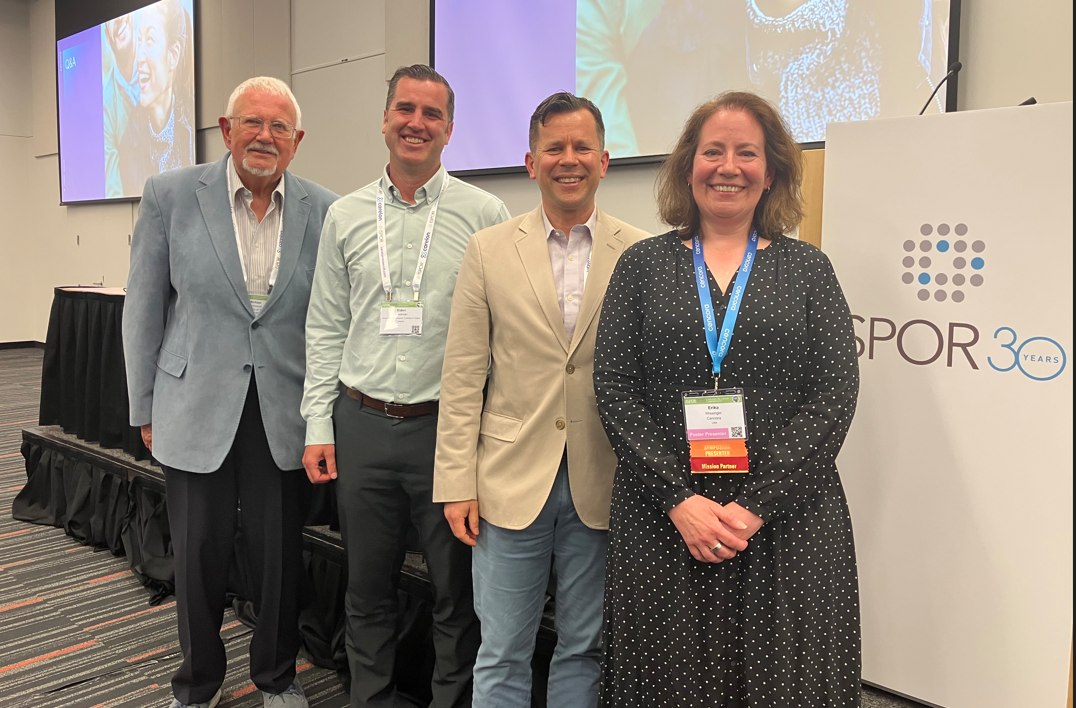
About the speakers
Erika Wissinger
Senior Director, Market Access & Healthcare Consulting, Cencora

Erika Wissinger, PhD, is a Senior Director within Market Access & Healthcare Consulting at Cencora. Dr Wissinger leads teams focused on evidence generation and value communications, including economic modeling, global market access strategy and pricing, comprehensive SLRs, and meta-analyses/indirect treatment comparisons. Her teams’ work is frequently used for regulatory and HTA/payer submissions or dissemination. She provides strategic oversight for integrated evidence generation and market access/commercialization projects and has over 16 years of experience as a global HEOR and market access consultant. She has extensive experience in several therapeutic areas, including respiratory and infectious disease, oncology, multiple sclerosis, orphan diseases, and autoimmune and cardiovascular disease.
Michael Drummond
Professor Emeritus, University of York Centre for Health Economics

Michael Drummond is Professor Emeritus of Health Economics and former Director of the Centre for Health Economics at the University of York. His particular field of interest is in the economic evaluation of healthcare treatments and program. He has undertaken evaluations in a wide range of medical fields including care of the elderly, neonatal intensive care, immunization program, services for people with AIDS, eye healthcare and pharmaceuticals. He is the author of two major textbooks and more than 750 scientific papers, and has acted as a consultant to the World Health Organization and the European Union. He has been President of the International Society of Technology Assessment in Health Care, and the International Society for Pharmacoeconomics and Outcomes Research. In October 2010, he was made a member of the National Academy of Medicine in the USA. He has advised several governments on the assessment of health technologies and chaired one of the Guideline Review Panels for the National Institute for Health and Care Excellence (NICE) in the UK. Until recently he was Co-Editor-in-Chief of Value in Health and has been awarded three honorary doctorates, from City University (London), Erasmus University (Rotterdam) and the University of Lisbon.
Jon Campbell
Chief Science Officer, National Pharmaceutical Council

Jonathan D (Jon) Campbell, MS, PhD, is the Chief Science Officer (CSO) of the National Pharmaceutical Council (NPC), which sponsors and conducts research on health policy issues related to the development and use of innovative biopharmaceuticals to improve the health of patients. As CSO, Dr Campbell leads NPC’s research agenda in concert with NPC’s board and research team. As a researcher and advocate for improving the US healthcare system through sustainable access and biopharmaceutical innovation, Dr Campbell is dedicated to conducting research that helps decision-makers understand the tradeoffs and consequences of health policies that impact patient access to treatments and the ecosystem of biopharmaceutical innovation.
Prior to joining NPC, Dr Campbell served as Senior Vice President for Health Economics at the Institute for Clinical and Economic Review (ICER), where he made contributions to ICER assessments and their value assessment methodology. Dr Campbell is an author of over 250 manuscripts and abstracts in the field of health policy research and value assessment and holds an adjunct faculty appointment within the Center for Evaluation of Value and Risk in Health at Tufts University School of Medicine.
Eldon Spackman
Associate Professor, University of Calgary O’Brien Institute for Public Health

Eldon Spackman is an Associate Professor in Community Health Sciences at the Cumming School of Medicine at the University of Calgary. Health economist with an interest in methods for sustainable healthcare, he is particularly interested in assessing the value and opportunity costs of healthcare technologies and interventions. Eldon holds a BA and MA in Economics from the University of Calgary and a PhD from the Pharmaceutical Outcomes Research and Policy Program at the University of Washington. He joined the University of Calgary from the Centre of Health Economics at the University of York in the UK. He is an expert in Health Technology Assessment and has undertaken evaluations for England, Scotland, British Columbia and Alberta. His current research, funded by the CIHR, uses provincial data to explore the life expectancy, quality-of-life and costs of patients with cancer in Alberta. This work will inform an opportunity cost threshold for cancer care in Alberta and provide methods to estimate a cost-effectiveness threshold for decision making across diseases.
Disclaimer
The opinions expressed by the speakers do not necessarily reflect the opinions of Cencora. The information provided herein does not constitute legal advice. Cencora strongly encourages readers to review available information related to the topics discussed herein and to rely on their own experience and expertise in making decisions related thereto. All other opinions expressed in this feature are those of the speakers and do not necessarily reflect the views of The Evidence Base® or Becaris Publishing Ltd.

Sponsorship for this Deep Dive was provided by Cencora