

Spotlight on ISPOR Europe 2024: an interview with Rob Abbott and Laura Pizzi, ISPOR
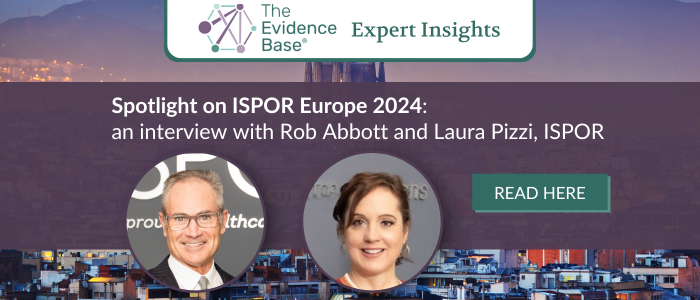
As preparations ramp up for ISPOR—The Professional Society for Health Economics and Outcomes Research (ISPOR) Europe 2024 — the premier European conference for health economics and outcomes research (HEOR), set to take place from November 17 to 20 in Barcelona, Spain — Rob Abbott (CEO) and Laura Pizzi (Chief Science Officer, ISPOR) share an exclusive preview. In this interview, they discuss the conference theme, key program highlights, and what attendees can expect from ISPOR Europe 2024.
Many thanks for speaking with The Evidence Base. How are the plans for ISPOR Europe 2024 going so far?
Rob Abbott: ISPOR Europe 2024 builds on the success of last year’s conference. As of this interview, we’re on track to have our biggest-ever event in Barcelona, with 6000+ attendees! We’re enormously grateful to our Program Chairs and Program Committee members who have been working closely with the ISPOR team to curate what promises to be an extraordinary experience for all HEOR stakeholders. The program features in-depth content on several timely and important topics including real-world evidence, economic evaluation, artificial intelligence in HEOR, patient-centered research, and so much more. The theme for the meeting focuses on “Generating Evidence Toward Health and Well-Being”.
Why was this theme chosen and how does it align with ISPOR’s new strategic plan?
Rob Abbott: One of the main themes of ISPOR’s new Strategic Plan 2030 is the concept of whole health. The reason why our Board of Directors and Senior Leadership agreed that whole health is relevant to HEOR is that the healthcare community is increasingly realizing that health is not determined solely by one’s interactions with the healthcare system. Rather, there are multiple factors that contribute to health, such as social, economic, and environmental determinants. In Europe, the term 'well-being' is perhaps more commonly used but regardless of which name is used the underlying concept is the same; namely, when we when we think about health or well-being we are thinking about one’s physical health as well as social, economic, mental and spiritual health.
Laura Pizzi: We tied 'Generating Evidence' to the concepts of health and well-being because the discipline of HEOR is the main source of healthcare evidence worldwide. At the same time, Europe is on the cusp of implementing joint clinical assessment of certain biopharmaceutical products (this will take effect in January 2025).
“ISPOR Europe 2024 is the last and best opportunity that HEOR professionals and stakeholders have to convene before this regulation goes into effect — so it’s a critical opportunity to learn about what kinds of evidence will ultimately be considered, and equally, what evidence will not be considered, and what the role of patients and other stakeholders will be in this process.”
How has the program committee designed the agenda to reflect the conference theme?
Laura Pizzi: The program committee and chairs work tirelessly with ISPOR’s Science and Health Policy Initiatives team on every ISPOR conference, including ISPOR Europe 2024. We start by working with the Program Chairs to identify the most timely and relevant scientific topics that the HEOR community and our interested stakeholders need to be informed and engaged in. The 2024 Program Chairs are:
- Yannis Natsis, MA – Director at the European Social Insurance Platform (ESIP) in Belgium
- Patrice Verpillat, MD, MPH, PhD – Head of Real-World Evidence, Data Analytics, and Methods at the European Medicines Agency (EMA) in The Netherlands
- Anne Willemsen, MSc – Advisor and Co-Chair of the JCA Subgroup under the HTA Coordination Group at the National Health Care Institute in The Netherlands
Together with these high-level experts, we have very deliberately and strategically designed the plenary sessions to focus on: 1) the European payment landscape and the critical role of HEOR in addressing evidence needs for healthcare innovation; 2) the EU health technology assessment (HTA) regulation, with a particular focus on Joint Clinical Assessment; and 3) the regulator’s role in furthering evidence-based decision-making, and how the needs from all the stakeholders could be better anticipated.
The ISPOR 2024–2025 Top 10 HEOR Trends ranked real-world evidence as the #1 trend. Can you tell us how RWE is being explored at the conference?
Rob Abbott: Real-world evidence (RWE) will be a prominent topic in not only the conference but also during a special pre-conference summit to be held on Sunday November 17, ISPOR RWE Summit 2024. What we have been following in Europe and worldwide is the uptake of RWE by regulators and payers, as well as advancements in its scientific methods. In some circles, there is justifiable scepticism about RWE because, though it helps to inform decisions beyond clinical trials, it may still be limited for rare diseases. There’s also a need for greater RWE scientific understanding and capacity, especially among HTA authorities and payers.
Laura Pizzi: What’s exciting about ISPOR’s upcoming RWE summit is that we will delve right into these issues—starting with acknowledging the challenges associated with RWE but then pivoting to how the methods are improving and what the stakeholders need to improve their trust and acceptability of RWE. The speakers at the summit—and the conference—are truly in the vanguard of RWE thought leadership and we are excited to be convening them on behalf of ISPOR members and other stakeholders.
With major changes on the horizon in European healthcare, such as the European Health Data Space and the new EU Health Technology Assessment Regulation, which sessions at ISPOR Europe 2024 will address these developments?
Rob Abbott: EU HTA will be the focus of many sessions. The topics span from science to stakeholder engagement. For example, on the science side, there is a session on using indirect treatment comparisons for evaluating clinical effectiveness across multiple PICO scenarios (PICO referring to populations, interventions, comparators, and outcomes).
Laura Pizzi: On the stakeholder side there is a session on empowering patients to be effective partners in the EU HTA process, led by EUPATI (the European Patients’ Academy on Therapeutic Innovation), which is a formal partner to ISPOR. Other sessions focus on Joint Clinical Assessment in particular, which is a component of the EU HTA regulation. So, we’ll have alot of specialized content on the topic. However, the feature event—and one I am really excited for is Plenary 2 which will include the experts who are directly involved with implementing the regulation . This panel will be led by Anne Willemsen of the Dutch National Healthcare Institute, Diemen, The Netherlands.
Developments in the European Health Data Space (EHDS) are the subject of much discussion but from an RWE perspective, the ISPOR audience is primarily interested in the secondary uses of EHDS data, especially through initiatives like DARWIN EU. DARWIN EU is already a source of data for regulatory and HTA needs, as exemplified by its successful pilot projects and increasing uptake for research, innovation, policy-making and regulatory activities. The European Medicines Agency (EMA) is really leading the way with the DARWIN EU project and ISPOR Europe will feature a session that addresses the current progress with DARWIN EU use that will include the perspectives of the EMA as well as HEOR researchers from health technology development companies.
How is the conference tackling the growing role of AI in HEOR, and are there specific sessions that explore its impact on the future of healthcare?
Rob Abbott: In just the past year, we’ve seen artificial intelligence (AI) in HEOR go from being a new technology with a few early adopters, to mainstream. It’s being used early in biopharmaceutical research and development to design trials, identify patients, and outreach to patients—to name a few uses. For HTA and payer needs, it is being used to design and/or populate economic models. It’s also being used to conduct systematic literature reviews and to extract data from unstructured sources such as medical charts or social media. There are several AI-related sessions in the program about these uses, but one that promises to be particularly novel is about applying AI to understand patient’s experiences through social listening. The basic idea of this is that AI makes it possible to quickly distil the main themes of patients’ experiences—their disease burden, quality of life, and treatment outcomes for example. The session will cover some of the scientific challenges associated with this AI use too, such as bias and reliability of its output.
Are there any sessions, in particular, that you’re most looking forward to attending?
Rob Abbott: I’m not only looking forward to attending sessions but also presenting in a few. There are two sessions in particular that are on the value of HEOR; one session relates to the return on investment in HEOR from an industry perspective. The other session, which both Laura and I are participating in, is about the value of HEOR as source of trusted healthcare evidence.
“These sessions are a call-to-action for HEOR professionals to think through what the impact of their work is early on during HEOR projects, to build those projects to capture that impact, and crucially, to communicate the impact widely. We need to raise the level of awareness and understanding with respect to the value and impact of HEOR in transforming health and healthcare decision-making.”
Laura Pizzi: I’m also very excited to participate in a session about expanding the definition of value to include whole health. We’ll be focusing on obesity which is very relevant to the concept of whole health, because a holistic view of it is necessary to address it: one’s diet, environment, and economic circumstances for example. We also know that obesity effects one’s social relationships. The way that we define the value of obesity treatments shouldn’t be just about how many pounds are lost or how many dollars are spent or saved through medical treatments, but also whether there are positive social impacts. This session is a fantastic opportunity to increase the HEOR community’s awareness about how they might weave whole health concepts into value assessments.
What can attendees look forward to at ISPOR 2025, the annual conference set for next May in Montreal, Canada?
Rob Abbott: We haven’t finalized the theme for Montreal quite yet, but you can anticipate that it will focus on achieving ISPOR’s bold new vision which is a, “world where healthcare is accessible, effective, efficient, and affordable for all.” That gives us a lot to work with! We’re also keenly following policy developments related to healthcare pricing, affordability, and evidence-based evaluation, which are sure to be featured.
Laura Pizzi: More generally, we think it’s safe to say that ISPOR 2025 will continue to build on the idea that we need to push forward onto the frontier of HEOR science and translate that scientific discovery in ways that are relatable and understandable to a wide audience, particularly among policy makers. It is also likely that ISPOR 2025 will feature more engagement with payers and investors—two stakeholders that are vitally important if we are to achieve our vision.
Interviewees
Laura Pizzi
Chief Science Officer, ISPOR

Dr Laura Pizzi is Chief Science Officer for ISPOR. For nearly 25 years, she has led interdisciplinary teams of methodologists, statisticians, and clinicians to design and conduct economic and outcomes analyses on healthcare interventions and is a frequent author, speaker, and mentor on the topic. At ISPOR, she leads the organization’s scientific strategy and initiatives in collaboration with ISPOR's global members and stakeholders.
Rob Abbott
CEO & Executive Director, ISPOR
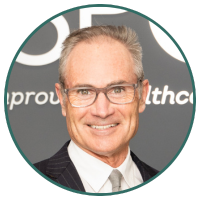
Mr Abbott is a highly accomplished, visionary leader with more than 20 years’ experience providing executive-level strategic and operational leadership in businesses, nongovernmental organizations (NGOs), government environments, as well as professional societies and associations. Most recently, he served as executive director and CEO of Health Technology Assessment International, a global nonprofit society focused on HTA. He is recognized for his knowledge in HTA, strategy, and stakeholder relations. He has successfully guided a number of organizations through their transformation and growth. He is also a pioneering social responsibility thinker and advisor who has authored 2 books and numerous articles on the nature of business and society. Mr Abbott holds an undergraduate honors degree from the University of Victoria and graduate degrees from the University of Toronto. Additionally, he holds professional designations as both a management consultant and an ICF-accredited coach.
Disclaimer:
The opinions expressed in this feature are those of the interviewees/authors and do not necessarily reflect the views of The Evidence Base® or Becaris Publishing Ltd.