

What makes evidence matter? Examining the real-world evidence decision paradox
Despite significant advances in real-world evidence (RWE) methodology, its impact on regulatory and health technology assessment (HTA) decision-making remains inconsistent. This Deep Dive, based on a session at ISPOR Europe 2025, analyzes the structural, methodological and institutional factors that continue to limit RWE’s credibility, and outlines what is needed to generate evidence that decision-makers can confidently adopt.
At ISPOR Europe 2025, a provocative question framed one of the meeting’s most discussed and attended sessions: “The Evidence Was There. So Why Didn’t It Matter?” It is a question that cuts to the core of evidence-based policy. Over the past two decades, RWE science has advanced at remarkable speed. Target trial emulation, quantitative bias analysis, and synthetic control arms have significantly strengthened the credibility of observational research. Yet, despite these methodological strides, many technically rigorous RWE submissions still fail to influence regulatory or HTA decisions.
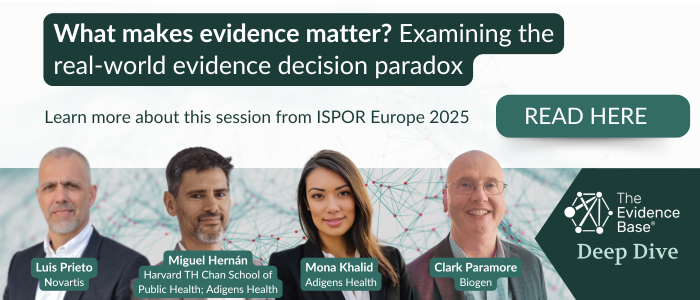
The session, moderated by Luis Prieto (Novartis, Switzerland) and featuring Mona Khalid (Adigens Health, UK), Clark Paramore (Biogen, USA) and Miguel Hernán (Harvard TH Chan School of Public Health; Adigens Health, USA), explored why this gap persists. The speakers noted that while methodological rigor is essential, decision-makers also require evidence that is transparent, reliable and clearly fit-for-purpose. Institutional familiarity, perceived credibility and established norms can shape decisions as strongly as the underlying science.
This Deep Dive examines these themes, focusing on what may be required to close the ongoing gap between technically strong evidence and evidence that informs decisions.
About the speakers
Luis Prieto, PhD, MPH, MBA
Director Real World Evidence – Global Medical Affairs, Immunology, Hepatology & Dermatology, Novartis
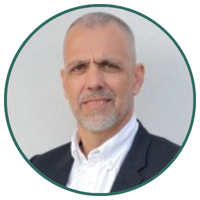
Luis Prieto Rodriguez is Global Director of Health Data Partnerships at Novartis, based in Basel, Switzerland. Since joining the company in 2020 as Global RWE Director, he has supported assets across multiple therapeutic areas and now leads strategic partnerships to advance the use of RWD across the Evidence Generation team in Global Medical Affairs. His work focuses on enabling data acquisition and external collaborations to support the execution of integrated evidence plans that address strategic needs across the product lifecycle—from development to clinical adoption and stakeholder engagement. He began his career in 1990 at the Institut Hospital del Mar d’Investigacions Mèdiques in Barcelona, conducting research on patient-reported outcomes. He has held roles at the World Health Organization, Eli Lilly & Co., and the European Medicines Agency, and served as Vice President of Outcomes Research and Development at the International Consortium for Health Outcomes Measurement (ICHOM). Luis has been affiliated with the Faculty of Public Health and Policy at the London School of Hygiene and Tropical Medicine since 2007 and serves on the editorial boards of several peer-reviewed journals. He holds a PhD in Epidemiology and a Master’s in Public Health from the Universitat Autònoma de Barcelona, an MBA from ESADE Business School, and a Postgraduate Diploma in Health Economics from the University of York.
Mona Khalid, MSc
Co-Founder, Director, Adigens Health

Mona, a healthcare leader with expertise in portfolio strategy, evidence generation, and outcomes research, held executive roles across life sciences (in biopharma, biotech, and non-for-profit sectors). Her work focuses on improving access and patient outcomes, through early planning and robust analytical approaches. She was involved in building value-based data collection frameworks and launching blockbuster drugs.
Clark Paramore
Head of Global Value Evidence Strategy, Biogen

Clark Paramore is the Head of Global Value Evidence Strategy at Biogen and a seasoned health economics and outcomes research expert with deep expertise in value demonstration for innovative therapies such as gene and rare disease treatments.
Miguel Hernán, MD, DrPh
Director of CAUSALab, Harvard TH Chan School of Public Health, USA

Miguel Hernán is the Director of CAUSALab, the Kolokotrones Professor of Biostatistics and Epidemiology at the Harvard T.H. Chan School of Public Health, and faculty at the Harvard-MIT Division of Health Sciences and Technology. He and his collaborators repurpose real world data into evidence for the prevention and treatment of infectious diseases, cancer, cardiovascular disease, and mental illness. This work has contributed to shape health research methodology worldwide. He is Co-Founder and Senior Scientific Advisor of Adigens Health.

Sponsorship for this Deep Dive was provided by Adigens Health