

ISPOR 2025 – inside the second plenary: The innovation driving the future of HTA
Following on from a packed program on Day 1 of ISPOR 2025, the annual conference for ISPOR—The Professional Society for Health Economics and Outcomes Research, Day 2 began with the second plenary, “Evolution of Evidence—Innovating for the Future of HTA”, exploring the ongoing evolution of health technology assessment (HTA). Here, I share an overview and key takeaways from the session.
As health systems worldwide become more complex and patient needs more diverse, the science of HTA is undergoing a transformation. The second plenary explored this evolution, and how the field is grappling with expanding evidence demands, rising patient expectations, and a rapidly changing healthcare landscape. Moderated by Nicole Mittmann (Canada's Drug Agency, Canada), the session featured a distinguished panel representing researcher, agency, and patient advocacy perspectives, including Sudha Kutty (Canada's Drug Agency), Pascale Lehoux (INESSS, Canada), Donald Husereau (University of Ottawa, Canada), and Connie Cote (Health Charities Coalition of Canada, Canada). The session explored how HTA must evolve to remain relevant, equitable, and responsive to real-world needs.
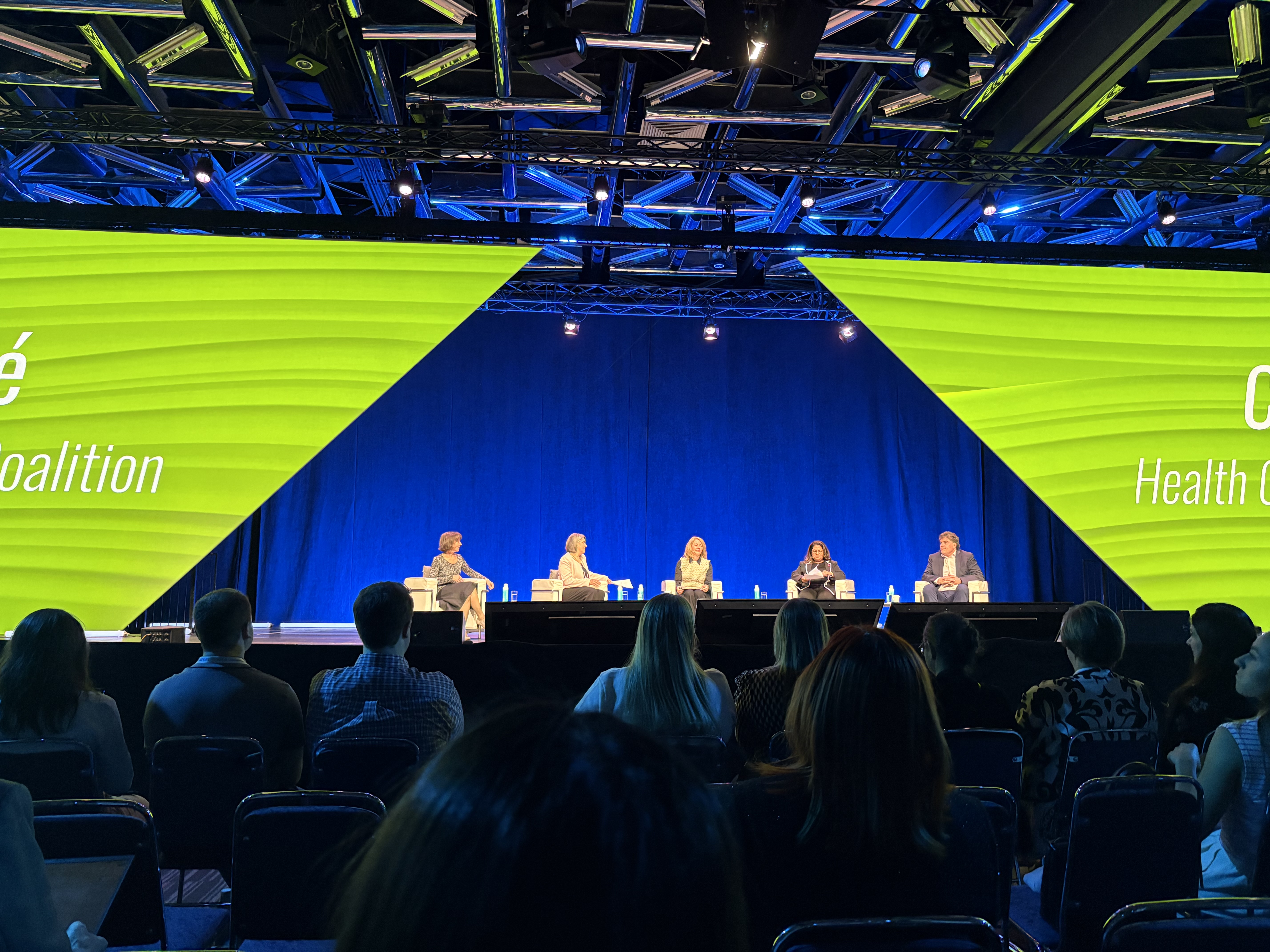
Following an acknowledgement and recognition to the conference location on indigenous lands, Mittmann provided a contextual overview of Canada’s healthcare system, underscoring that HTA is “built on science,” but like science itself, it must evolve alongside societal values and innovation.
What’s possible now?
The first part of the discussion focused on the current state of HTA and recent innovations, particularly within Canada. Speaking first, Cote opened with a powerful reminder that patients are asking two key questions: “Am I being heard?” and “Is what I say making an impact?” She emphasized that real-world indicators important to patients, such as accessibility, lost productivity and quality of life (QOL), are often missing from clinical trial data. Cote highlighted a promising initiative in Canada’s rare disease space that aims to leverage patient registry data to make these outcomes more visible and actionable in HTA processes.
Lehoux spoke next to highlight INESSS’s 2024–2028 strategic plan, which places emphasis on innovation, reducing low-value care, and integrating environmental and ethical considerations. She introduced the agency’s “scientific signature” – a multidimensional value appraisal framework that aims to make HTA more agile, inclusive and ethically grounded. Lehoux noted that INESSS is actively working to ensure its recommendations are both scientifically robust and implementable in real-world health systems.
Kutty shared details from Canada’s Drug Agency’s 2025–2030 strategic plan, built on the pillars of anticipation, innovation and transformation. Initiatives such as the Target Zero program aim to accelerate access by aligning HTA timelines with regulatory review. Kutty also described successful pilot pathways that cut drug listing times by several months and noted a growing emphasis on international collaboration and patient engagement, including inviting people with lived experience to HTA expert committees.
Husereau reflected on Canada’s HTA evolution from siloed drug review to a more cohesive national effort, while also recognizing that challenges remain. He praised growing transparency and inclusivity in HTA, but stressed the need for a collective definition of value. Collaboration across payers, regulators and service providers is essential if patients are to benefit fully from HTA-informed decisions.
What is your preferred future for HTA?
Moving on to the second discussion area, the panelists shared their aspirations for the future of HTA, revealing a shared commitment to progress despite differing lenses.
Kutty proposed a “power of three” framework for the future:
- Think differently – embrace change and continuous improvement.
- Act expediently – HTA must be timely and responsive.
- Care deeply – decisions must remain patient-centered without compromising on rigor.
She acknowledged the difficulty of evolving systems without pausing ongoing work, describing the challenge as “changing the wheels while flying the plane.”
Husereau emphasized the importance of coherence across the broader healthcare ecosystem, noting that HTA agencies are still often siloed from regulators and payers. He advocated for stronger harmonization and legislative frameworks, pointing to Germany’s model as an example where HTA decisions are binding and have real downstream effects. He noted that HTA cannot be treated as an academic exercise – it has real-world consequences.
Lehoux offered a critique of today’s “supply-driven innovation pathway,” where technological advancement often leads to service-intensive models that may not align with the realities of workforce shortages and access challenges for patients outside of urban centers. She called for a shift to a needs-driven innovation pathway, grounded in responsible innovation principles and sensitive to economic, social and environmental sustainability. HTA, she argued, must focus more explicitly on reducing systemic gaps and guiding policy toward population-level needs.
Cote outlined her vision of a “SPECTACULAR” future for HTA – using an acronym to express patient-centered aspirations. Describing just a few of the points of the acronym, Cote emphasized the need for:
- Streamlined processes to avoid duplicative submissions
- Participation of patients throughout the entire decision-making process
- Equity in outreach and inclusion
- Conflict of interest management to ensure open participation
- Transparency across all levels of review
She called for centralized portals, better funding for marginalized voices and clearer communication around how patient input is used.
Q&A and closing remarks
In response to audience questions, panelists reflected on what the world can learn from Canada’s HTA ecosystem. Lehoux emphasized that each agency brings its own “scientific signature” and that this diversity of methods, when coupled with information sharing, creates a robust environment. Kutty added that strong relationships, rather than geography, drive effective collaboration: “Boundaries are permeable if the relationships are strong.”
When asked about the influence of patient input, Cote shared examples of how patient voices had shaped decisions about drug formulation and administration – subtle changes that can dramatically impact quality of life, and that can only be driven by those with lived experience.
The panel concluded with a call to action for the HTA community:
- Husereau urged greater transparency and inclusivity
- Kutty invoked a hockey analogy, saying HTA must, “skate to where the puck is going, not where it is.”
- Lehoux encouraged attendees to start each week asking, “What can I do that will make our systems more sustainable?”
- Cote reiterated the need for open, inclusive processes: “If you’re not in the tent, you’re out of the tent—and no one wants to be sleeping outside.”
- Mittmann, in closing, reminded the community that they don’t need to reinvent the wheel, urging all stakeholders to learn from one another and continue to work together.
| Register for free today to become a member of The Evidence Base and receive the latest news straight to your inbox. |