

Video: AI model to validate real-world cancer response data across tumor types
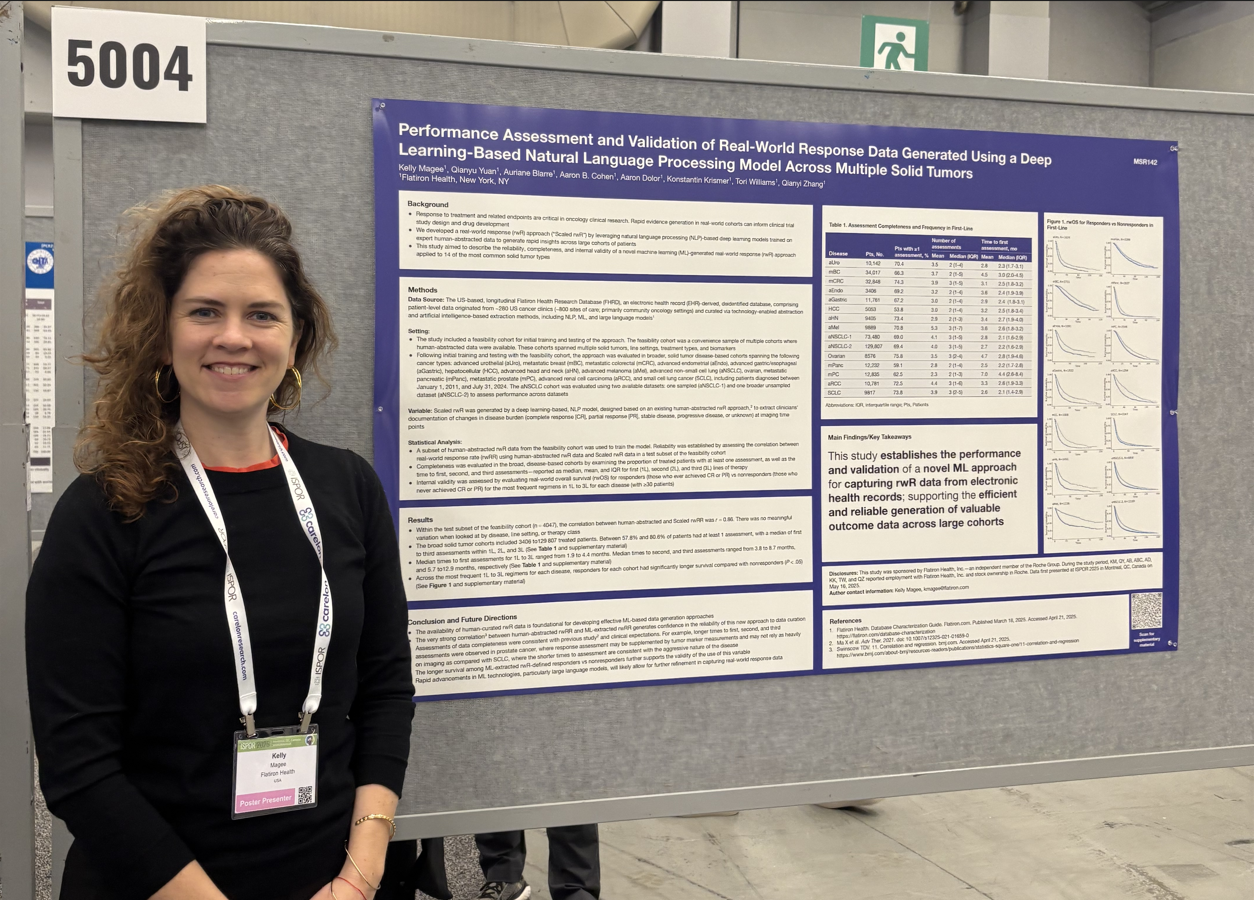
Laura Dormer, Editor of The Evidence Base, speaks with Kelly Magee, Senior Clinical Director, Flatiron Health about the poster, 'Performance Assessment and Validation of Real-World Response Data Generated Using a Deep Learning-Based Natural Language Processing Model Across Multiple Solid Tumors', presented at ISPOR 2025 (May 13–16, 2025; Montreal, Canada).
You can view the entire video or view a specific question by entering ‘Fullscreen with Transcript’ or navigate via the ‘Visual Table of Contents’.
Questions:
- 0:00: Introduction
- 0:11: Please could you introduce yourself and tell us a little bit about your background?
- 1:40: What do we mean by real-world response data, and why is it valuable to study in oncology research?
- 3:33: Can you explain why ML techniques are being used to extract rwR data from clinical notes and the key advantages of using a deep learning NLP model over traditional manual abstraction methods in this context?
- 5:30: What were the main objectives of your study presented at ISPOR?
- 6:09: How did you approach training and validating the model across such a diverse range of solid tumor cohorts, and what steps did you take to ensure the completeness and internal validity of its outputs?
- 10:48: What were the key findings of your study?
- 12:19: Can you discuss some key lessons learned in scaling this model, and what implications does that have for future ML applications in RWE?
- 15:02: How can this validated model be applied by other researchers working with EHR-derived oncology data?
Kelly Magee
Senior Clinical Director, Flatiron Health

Kelly Magee is a nurse practitioner and Senior Clinical Director at Flatiron Health. Kelly combines her 15+ years of clinical experience caring for people with cancer with her deep expertise in real-world data and evidence. In her role at Flatiron, Kelly develops novel approaches for using electronic health record data to understand the experiences and outcomes of people with cancer and collaborates with sponsors to design and conduct research studies that generate evidence to support use cases across the drug development lifecycle.
Disclosures:
The opinions expressed in this feature are those of the interviewee/author and do not necessarily reflect the views of The Evidence Base® or Becaris Publishing Ltd.

Sponsorship for this interview was provided by Flatiron Health.