

ISPOR Europe 2026 – Inside the first plenary: Are we measuring what really matters in healthcare
Reporting from the opening plenary of ISPOR Europe 2026, Laura Dormer examines a question that sits at the heart of value assessment: are we measuring what really matters in healthcare?
The opening plenary of ISPOR Europe 2026, organized by ISPOR—The Professional Society for Health Economics and Outcomes Research, turned to one of the most fundamental questions facing health economics and outcomes research (HEOR): what should count as value in healthcare?
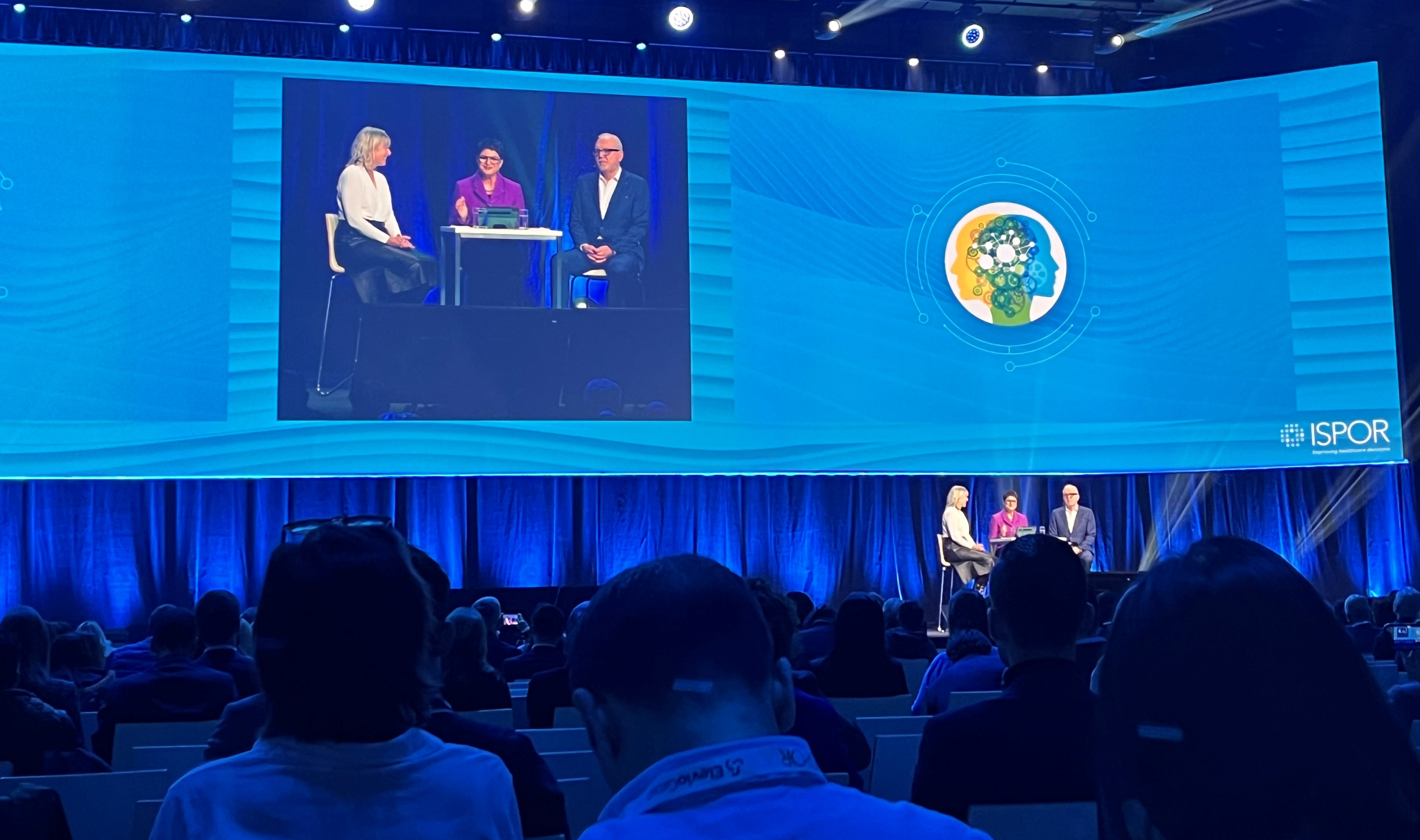
“The Science of What Matters: Rethinking Value in Healthcare” brought together Harald Schmidt (Maastricht University) and Sally Lewis (Kintsugi International), moderated by Sandra Nestler-Parr (BioCryst Pharmaceuticals), to examine whether established approaches to value assessment fully capture the outcomes that matter to patients and society.
It is a question I am also seeing increasingly reflected in my role as an editor of the Journal of Comparative Effectiveness Research, as researchers look beyond traditional clinical and economic outcomes to consider broader dimensions of value and how they can be incorporated into evidence generation and decision-making.
The challenge, then, is not simply to recognize that value may encompass more, but to determine what should be measured, how different outcomes should be weighted and whose perspective should count. In this first plenary write-up from the conference, I look at how the panel approached those questions and what they could mean for the future of value assessment.
Rethinking how we understand disease
An opening audience poll suggested that measurement was already a concern: the leading answer identified a tendency to measure what is easiest to quantify rather than what delivers the greatest value. Harald, however, challenged delegates to look further upstream, at how medicine defines disease.
Organ-based specialties, he argued, can separate conditions that share underlying biological mechanisms. Systems medicine offers a different approach, using bioinformatics and artificial intelligence to identify connections across conventional diagnostic categories.
“It’s not a gradual improvement. It’s a fundamentally new approach to health, medicine, disease and disease prevention,” Harald said.
He also challenged the model of one disease, one target and one drug. Network pharmacology instead seeks to address interacting biological mechanisms through combinations of treatments, potentially including repurposed medicines.
For HEOR, this raises questions about both evidence generation and incentives. Harald described trials using more individualized approaches, including crossover and N-of-1 designs. Yet developing combinations of existing medicines still requires investment, and he questioned who would fund that work if reimbursement remained tied to existing generic prices.
His argument extended beyond medicines, emphasizing that the goal is not to medicate an entire population. More precise prevention, supported by appropriate reimbursement and multidisciplinary expertise, was central to his vision. Its benefits, however, may emerge years after the initial investment, creating another challenge for systems focused on immediate demands.
From potential benefit to practical value
Sally approached the problem from healthcare delivery, where scientific progress meets workforce shortages, financial pressure and established ways of working.
“We need to work together to achieve radical health transformation across whole pathways of care for all patients,” she said.
Remote monitoring illustrated the distinction between demonstrating a technology’s value and realizing it after adoption. A device may offer clear benefits when assessed individually, but implementation changes workloads, responsibilities and patients’ experiences. For people managing several conditions, multiple monitoring technologies can add complexity unless services coordinate their use.
Cost-effectiveness, Sally stressed, does not automatically establish affordability or feasibility in practice. Introducing technologies into existing pathways without changing the surrounding infrastructure can leave their potential unrealized.
“Scientific innovation and system transformation must advance together, and every sector has a role to play in that.”
That requires partnerships extending beyond adoption, with attention to workforce, funding and how care is organized across the patient’s whole pathway.
Making outcomes part of everyday care
A recurring theme was the imbalance between scrutiny of new technologies and scrutiny of routine care. Established practices can persist through organizational custom, while financial boundaries prevent promising alternatives from expanding.
Sally described technology-enabled social care whose potential benefits extended to patients, society and hospital capacity, but whose expansion was constrained by the financial arrangements between health and social care.
Her proposed response was to embed standardized outcome measurement in direct care. Alongside supporting shared decisions and helping patients track progress, these data could show whether services were delivering their intended benefits.
One example came from a heart failure clinic under considerable pressure. Collecting clinical and patient-reported outcomes revealed three groups with different needs, enabling nurses to redesign care within existing resources. Sally reported a 90% reduction in hospital readmissions following the changes.
She also described a Welsh long-COVID service where patient-reported outcome measures contributed to a funding decision. These examples showed how measurement could inform practical changes, rather than simply document performance.
The assessment must nevertheless be proportionate: expensive research studies for every service change would themselves consume resources. HEOR methodology and routinely collected outcomes and cost data could help services learn more systematically.
Applying the same questions across healthcare
The discussion also exposed a challenge balancing individual goals and population-level evidence. Harald emphasized that individualized treatment still requires aggregated assessment of whether an approach works. Sally similarly argued for understanding patients’ preferences alongside pragmatic use of standardized outcome measures.
For me, this was one of the session’s most useful connections: broadening value assessment also means making the resulting information usable in everyday decisions.
By the closing audience poll, responses were almost evenly distributed across the possible barriers. The discussion widened the room’s view of the problem.
Sandra’s closing challenge brought those perspectives together: “Are we willing to scrutinize treatments and care pathways as closely as we scrutinize new innovations for the value they deliver?”
Referring to the ISPOR Value Flower, she called for broader concepts of value to be applied consistently across healthcare. That includes asking whether existing practices should stop, and where their resources could deliver greater benefit.
Looking ahead to Plenary 2
Tomorrow’s plenary will take this discussion in a different direction, moving from what healthcare systems should value to how those systems themselves can be optimized. I’ll be interested to see whether the broader definition of value explored today carries through into a discussion about where resources are being used well – and where they may need to be redirected.
| Register for free today to become a member of The Evidence Base and receive the latest news straight to your inbox. |