

ISPOR Europe 2025 – Inside the third plenary: Putting patients at the center of real-world evidence in European decision-making
The final plenary of ISPOR Europe 2025, hosted by ISPOR — The Professional Society for Health Economics and Outcomes Research, brought the discussions in Glasgow to a forward-looking close. Centered on the theme “Powering Value and Access Through Patient-Centered Collaboration,” the session “RWE in European Healthcare Decision Making—What's in it for Patients?” explored how real-world evidence (RWE) can better serve patient needs in practice.
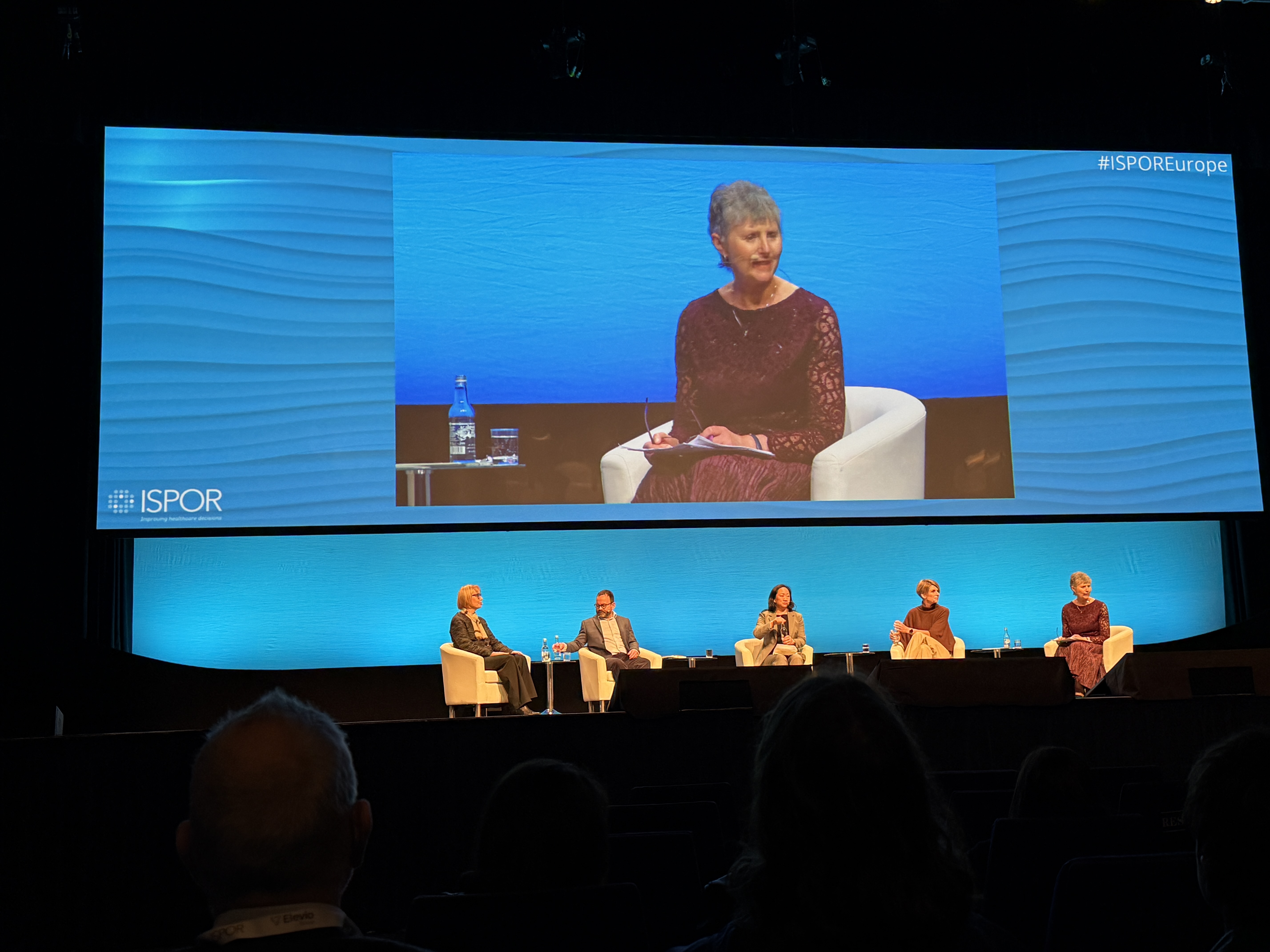
Moderated by Karen Facey (Universities of Oxford, Utrecht, Edinburgh and RWE4Decisions, the Netherlands), the panel brought together Maria Dutarte (European Patients’ Academy on Therapeutic Innovation [EUPATI], the Netherlands), Pall Jonsson (National Institute for Health and Care Excellence [NICE], UK), Sofie Gustafsson (Pfizer, Sweden), and Renske Los (Erasmus MC, the Netherlands). Together, they discussed how Europe’s evolving data landscape, shaped by initiatives such as DARWIN EU (Data Analysis and Real-World Interrogation Network in the European Union) and the forthcoming European Health Data Space (EHDS), could strengthen evidence generation and improve patient access, safety and outcomes across borders.
Discussion 1 – What’s in it for patients?
Facey opened by reflecting on Scotland’s strong data infrastructure but persistent challenges in connecting data for decision-making and involving patients in RWE generation. Gustafsson, bringing the pharma perspective, highlighted how real-world data (RWD) is now being used throughout the medicine lifecycle to accelerate development; for example, by identifying trial sites and understanding treatment effects. Los discussed the European Health Data and Evidence Network (EHDEN), which maps data from across Europe to a common data model, enabling replication of trial results using millions of patients. She stressed that quality assurance and transparency are essential to patient trust.
From the HTA perspective, Jonsson described how agencies like NICE are shifting from being “receivers” of data to active participants in evidence generation, noting that patient engagement and education in data strategy is crucial to avoid opt-outs and ensure equitable data use. Dutarte emphasized that while RWE offers clear potential patient benefits – such as faster access to effective therapies – patients are “not yet involved as true partners”. Through EUPATI and initiatives such as the IHI-GREG project, work is underway to provide tools and best practices, empowering patients to co-design studies and Dutarte advocated for transparency and feedback in data use.
Discussion 2 – Collaboration: what is the best way to achieve effective patient involvement?
Dutarte underscored that true collaboration begins with equality – patients must be regarded as partners, not data sources. She cited the Data Saves Lives initiative, which promotes transparency around who collects data, for what purpose and how patients benefit. Los shared lessons from the Health Outcomes Observatory (H2O) project, which integrates clinical and patient-reported outcomes to create disease-specific dashboards that facilitate dialogue between patients and clinicians.
Jonsson described how RWE is becoming more central to NICE’s decision-making, with patient involvement built into managed access programs and new frameworks such as early value assessments. Gustafsson added that industry must move from informed consent to early collaboration – understanding what data matters most to patients. Audience discussions reinforced that privacy-preserving, federated data analysis is key to maintaining both transparency and trust.
Discussion 3 – A patient-centered RWE future: what needs to happen?
Los called for greater transparency and inclusion of patient-reported data to build trust and relevance. Jonsson urged a renewed focus on patient-centered evidence within HTA frameworks, supported by policy reform and re-education of technical experts. Gustafsson envisioned a future where patients are empowered to control and share their data for personal and collective benefit, supported by interoperable infrastructure. Dutarte concluded that patient involvement itself must be recognized as a science, requiring methods, best practices and shared learning to ensure meaningful engagement.
Call to action
- Los: Collaborate openly and ensure transparency – quality data and clear methodologies build trust.
- Gustafsson: The European Health Data Space offers a unique opportunity to empower patients as data owners; we must equip them to use this power effectively.
- Jonsson: Patients and the public must be included in all data policy and governance decisions to secure confidence and participation.
- Dutarte: Create more multistakeholder dialogue opportunities like this one – with patients as equal contributors – to explore uncertainties and shape the future together.
Facey closed the session by highlighting the slogan of the ISPOR Europe 2025 host city – “People Make Glasgow,” reflecting the conference’s core message and emphasizing that it is ISPOR’s multidisciplinary community that truly drives its impact.
| Register for free today to become a member of The Evidence Base and receive the latest news straight to your inbox. |