

ISPOR Europe 2025 – Inside the second plenary: Pragmatic trials and the future of clinical evidence
At ISPOR Europe 2025 in Glasgow, organized by ISPOR — The Professional Society for Health Economics and Outcomes Research, the second plenary turned attention to a growing area of focus: pragmatic trials. Under the conference theme “Powering Value and Access Through Patient-Centered Collaboration,” the session “Pragmatic Trials—Bridging Research and Real-World Care” examined how more flexible, practice-based study designs can enhance the relevance of clinical evidence.
The session was moderated by Denis Lacombe (European Organization for Research and Treatment of Cancer [EORTC], Belgium), with contributions from Antonella Cardone (Cancer Patients Europe, Belgium), Francesco Pignatti (European Medicines Agency, Netherlands), Beate Wieseler (IQWiG, Germany), Natasha Azzopardi-Muscat (WHO Europe, Denmark) and Michael Zaiac (Daiichi Sankyo Europe GmbH, Switzerland). The panelists discussed the opportunities and challenges of embedding research into routine care, addressing questions of data quality, stakeholder engagement, and how pragmatic approaches could accelerate progress toward more patient-centered and efficient healthcare systems.
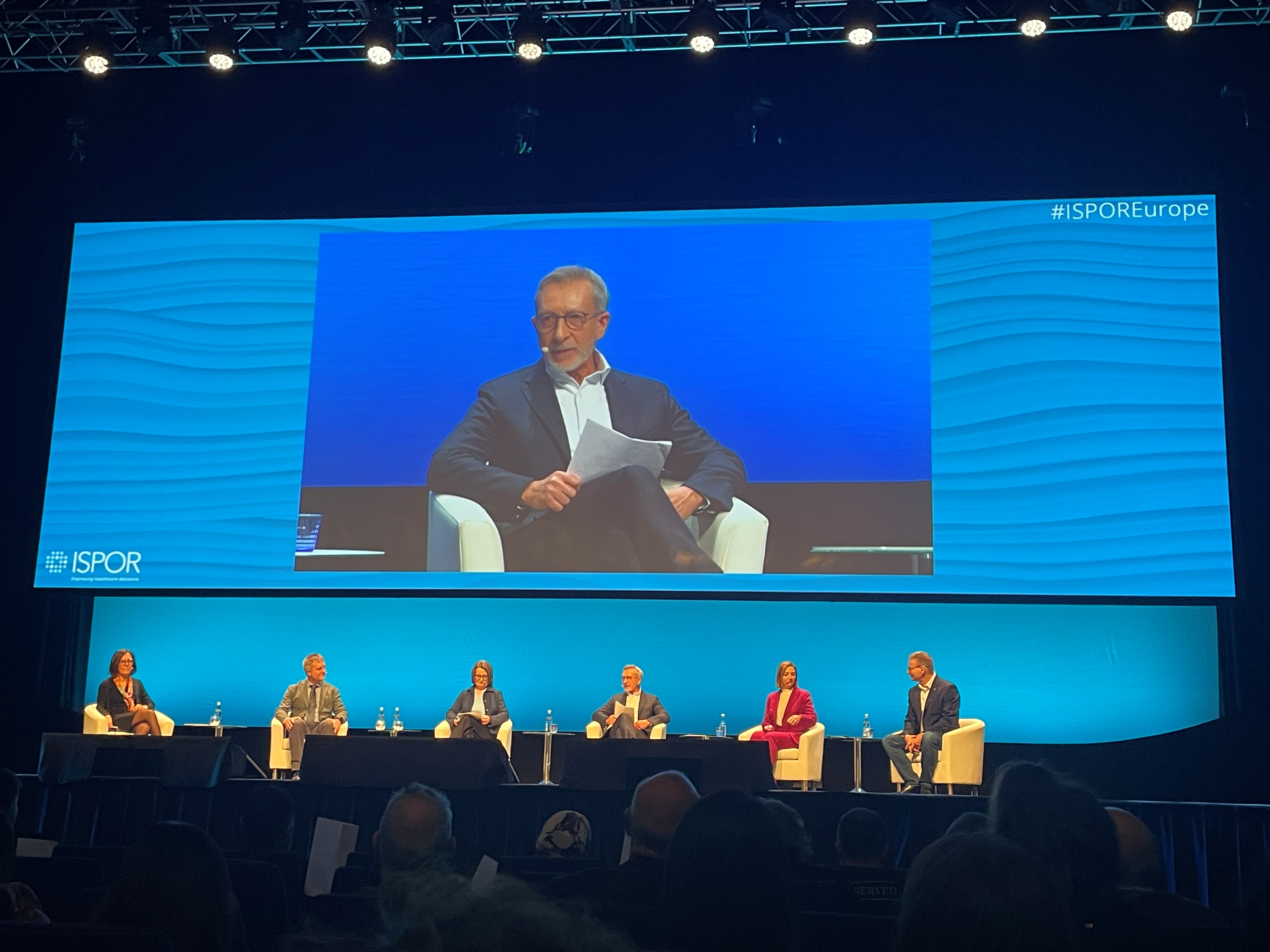
Lacombe opened the discussion by emphasizing the goal of pragmatic clinical trials: to achieve high external validity and deliver evidence that reflects how interventions perform in real-world settings. The plenary was structured around three discussions examining misconceptions, value and the future role of pragmatic clinical trials in healthcare systems.
Discussion 1 – Reframing pragmatic trials: myths, models and misconceptions
Pignatti began by challenging the misconception that pragmatic clinical trials are new or inherently problematic for regulators. In reality, many trials already contain pragmatic elements, such as broader eligibility criteria or simplified protocols. He stressed that the key is “how far you go in each element” – balancing flexibility with rigor.
Wieseler emphasized that pragmatic trials are still randomized and must be designed around clear decision-making questions for patients, clinicians and healthcare systems. They should complement traditional randomized controlled trials (RCTs) by answering real-world questions in both pre-approval and post-approval phases. Both speakers agreed that collaboration between patients, clinicians, regulators, HTA bodies and sponsors is crucial to reduce procedural burden and make trials more feasible and informative.
Discussion 2 – Unlocking value across the oncology treatment lifecycle
Cardone highlighted how pragmatic clinical trials can answer questions left open by regulatory studies, such as optimizing dose or treatment sequencing. She cited an example in colorectal cancer where a pragmatic clinical trial demonstrated that 3 months of chemotherapy achieved the same outcomes as 6 months, reducing toxicity to patients, and waste and cost to the healthcare system. Pragmatic clinical trials, she noted, also foster inclusivity by involving more diverse patient populations and greater patient input into design and data collection.
From an industry perspective, Zaiac described pragmatic clinical trials as integral to modern clinical development programs, highlighting their role in oncology. He noted how generative AI can enhance data extraction and quality but stressed the need for transparency to build trust. Wieseler observed that, under the new EU HTA Regulation, pragmatic elements will increasingly be necessary early in the development process to support both regulatory and HTA decision-making.
Discussion 3 – Building the future: learning healthcare systems and implementation
Azzopardi-Muscat reflected on the balance between accelerating innovation and addressing the operational realities of overstretched health systems. She argued that pragmatic approaches can help reconcile these goals by designing trials that are less burdensome for patients and clinicians, scalable across countries, and more adaptable to rapidly changing contexts. She called for “frank and honest discussions” early in trial design to align objectives and ensure sustainability.
Cardone concluded that the sustainability of healthcare systems depends on closer collaboration between all stakeholders – patients, regulators and industry alike.
Call to action
In closing, each panelist issued a call to action to further accelerate the use of pragmatic clinical trials:
- Cardone: Ensure the right regulatory features and guidelines are in place to enable pragmatic clinical trials (as discussed in the recent Cancer Patients Europe White Paper)
- Pignatti: Embed pragmatic elements systematically in clinical trials and strengthen stakeholder collaboration
- Wieseler: Use pragmatic clinical trials to generate the evidence needed for quality care within sustainable healthcare systems
- Azzopardi-Muscat: Factor in time – for both patients and clinicians – while blending scientific excellence with equity and inclusion
- Zaiac: Combine RCTs and pragmatic clinical trials to deliver evidence that satisfies regulators, payers and patients in a sustainable way
- Lacombe: Develop regulatory frameworks that support public health-oriented clinical trials across all therapeutic modalities
Takeaway
The speakers, representing patient advocacy, regulatory, HTA, industry and public health viewpoints, agreed that pragmatic clinical trials are essential to bridge the gap between research and real-world care. By combining the scientific rigor of randomized trials with the flexibility and relevance of real-world data, pragmatic clinical trials can generate the evidence needed to inform better decisions, faster. The challenge now lies in aligning regulatory and HTA frameworks, fostering early collaboration and ensuring that pragmatic design principles become a routine part of evidence generation.
| Register for free today to become a member of The Evidence Base and receive the latest news straight to your inbox. |