

ISPOR Europe 2024: Navigating the conference program – focus on artificial intelligence
It is not surprising that ISPOR—The Professional Society for Health Economics and Outcomes Research are including several sessions at ISPOR Europe 2024 (November 17–20, 2024, Barcelona, Spain) focused on the uses and applications of artificial intelligence (AI) in health economics and outcomes research. These presentations will provide insights into how AI, machine learning (ML) and advanced analytics are transforming evidence generation, decision-making, and the integration of real-world data (RWD) and real-world evidence (RWE) across the healthcare landscape.
Selected sessions
Ranked third in the ISPOR trends for 2024–2025 report, AI and ML in health economics can be used across a spectrum of use cases to enhance data analysis, aid diagnostics, support self-management apps, and organize complex data for healthcare insights, literature reviews, coding, and model development. Sessions in this area include:
Can We Trust AI Output? A Trustworthy AI Perspective for HEOR and RWE (Monday November 18, 10:15am – 11:15am)
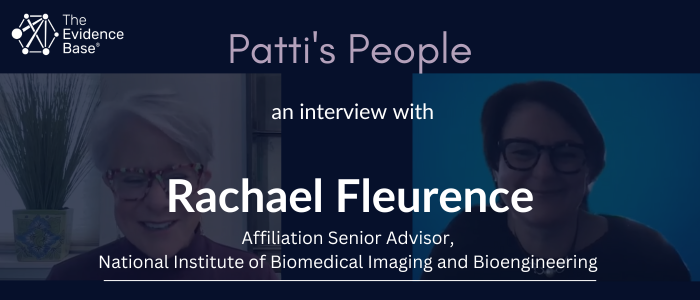
Establishing a framework for AI in HEOR and RWE is crucial for building trust and ensuring its broader adoption and effective integration into healthcare decision-making. In this session, Xiaoyan Wang (IMO Health, USA), Mitchell Higashi (ISPOR, USA), Rachael Fleurence (NIH, USA), Hua Xu (Yale University, USA), and Ganhui Lan (Pfizer, USA) will discuss the requirements for trustworthy AI, exploring its applications in HEOR, the challenges of validating AI outputs, and the importance of building reliable frameworks for HEOR and RWE across academic, pharmaceutical, and regulatory settings.
Hear more from Rachael Fleurence in the video below.
Harnessing AI to Better Understand Health, Value and Well-Being (Monday November 18, 11:45am – 12:15pm)
In this Exhibit Hall Theater, Richard Gliklich (OM1, USA) will present a series of case studies demonstrating how AI can analyze large-scale RWD for patient-level predictions, disease progression models, and healthcare value assessments, supporting more personalized, patient-centered healthcare innovations.
Harnessing the Power of AI in RWD: Enhanced Insights Through Machine Learning and Causal Inference Advances (Monday November 18, 11:45am – 12:45pm)
The multistakeholder panel, moderated by Jackie Vanderpuye-Orgle (Parexel International, USA) and including Patrice Verpillat (European Medicines Agency [EMA], The Netherlands) and Ipek Özer Stillman (Takeda, USA) will provide diverse insights into the use of RWD and causal machine learning to improve treatment decisions. Topics include regulatory perspectives on AI, target trial emulation, ML methods for addressing confounding, and manufacturer strategies for evidence generation and early-phase decision-making.
Can Generative AI Aid Readiness for Joint Clinical Assessment (JCA)? (Monday November 18, 1:45pm – 2:45pm)
Ramiro Eugenio Gilardino (MSD, Switzerland) will moderate a panel on generative AI's role in preparing for Joint Clinical Assessment (JCA) in Europe. Ipek Özer Stillman (Takeda Pharmaceuticals, USA) will discuss industry preparations, Jag Chhatwal (Mass General Hospital, Harvard Medical School, Value Analytics Labs, USA) will share technological applications, such as AI-driven PICO scenario simulations, and Diana Delnoij (Erasmus School of Health Policy & Management, Dutch National Health Care Institute, The Netherlands) will offer the HTA perspective, emphasizing AI's role and capacity building within HTA agencies.
Using Generative AI Methods for Evidence Generation and Health Technology Assessment: Perspectives From NICE and Industry (Tuesday November 19, 12:45pm – 1:45pm)
Stephen Duffield (NICE, UK) and Benjamin Bray (LCP Health Analytics, UK) will discuss the evolving capabilities of generative AI, including large language models like ChatGPT, in RWE generation and healthcare decision-making. The Exhibit Hall Theater session will provide an overview of current AI applications and explore implications for HTA from both NICE and industry perspectives.
Role of Real-World Evidence and Artificial Intelligence in Accelerated Approvals in Oncology: Current Status and Next Steps (Tuesday November 19, 1:45pm – 2:45pm)
This session will explore the role of AI and RWE in oncology accelerated assessments (AA) in Europe, addressing regulatory challenges and proposing recommendations for effective integration. Ramiro Eugenio Gilardino (MSD, Switzerland) will lead the discussion and be joined by Kapil Maheshchandra Khambholja (Catalyst Clinical Research, India), Jessica Santos (Oracle Life Sciences, UK), and Carlos Martin-Saborido (Spanish Ministry of Health, Spain) as they aim to reach consensus on a policy roadmap for integrating RWE and AI in oncology AAs.
HEOR in the Era of Generative AI: Navigating the New Frontiers (Tuesday November 19, 1:45pm – 2:45pm)
The ISPOR AI Working Group leaders will delve into the current and promising approaches to integrating generative AI within HEOR. Rachael Fleurence (NIH, USA) will discuss AI in literature reviews and evidence synthesis, Xiaoyan Wang (IMO Health, USA) on AI's role in developing synthetic control arms for trials, and Dalia Dawoud (NICE, UK) on how HTA might adapt to generative AI-driven submissions. Moderator Jag Chhatwal (Mass General Hospital, Harvard Medical School, USA) will set the scene by describing the current generative AI landscape and its integration with HEOR.
Use of Machine Learning Techniques to Create External Control Arms: Guidance for Submissions to Health Technologic Assessment (Tuesday November 19, 5:00pm – 6:00pm)
In this workshop, Florent Guelfucci (Syneos Health, France), Noemi Kreif (University of Washington, USA), and Imke Mayer (Owkin, UK) will discuss the use, acceptability and practicalities of using ML techniques for creating external control arms in clinical trials. The session will explore ML-based methods like G-computation, their benefits and challenges, and recent developments for submissions to HTA bodies, including data requirements and reporting checklists to meet HTA guidelines.
Finally It's Out! What the NICE Position on the AI Use in Evidence Generation and Synthesis Means for HTA Submissions – The Do’s and Don’ts (Wednesday November 20, 9:15am – 9:45am)
The recent NICE position statement on using AI in evidence generation for health technology submissions sets a precedent for other HTA agencies to follow. In this Exhibit Hall Session, Grammati Sarri (Cytel, UK) will introduce the NICE AI statement and relevant HEOR research, while panelists Sophia van Beekhuizen (Cytel, The Netherlands), and Grace Hsu (Cytel, USA) will discuss opportunities and challenges in applying AI to systematic reviews, effectiveness analysis, and RWE. The session will conclude with a proposed roadmap for AI integration in NICE submissions.
Latest research in AI
Across the three days of ISPOR Europe 2024, various poster presentations will explore the evolving role of AI applications in healthcare decision-making, including:
- Analyzing Generative AI Proficiency for ICD-10 Code Generation and Interpretation – Debra Winberg (Tulane University School of Public Health and Tropical Medicine, USA; Monday 18, Poster Session 1)
- Evaluating Large Language Models’ Performance in Content Generation for Literature Review Reports – Inês Moura Guerra (IQVIA, UK; Monday 18, Poster Session 1)
- Automating Systematic Literature Review Abstract Screening Using Large Language AI Models: A Development and Validation Study – Natalia Zdorovtsova (Lane Clark & Peacock LLP, UK; Monday 18, Poster Session 1)
- Human vs Machine: Gen-AI Frameworks and Recommendations in HEOR – Shilpi Swami (ConnectHEOR, UK; Monday 18, Poster Session 1)
- Enhancing Data Quality in Health Research: Performance Insights of a Clinical NLP Algorithm for Diverse Medical Domains – Clara Oeste (LynxCare, Spain; Monday 18, Poster Session 1)
- Utilizing Generative Artificial Intelligence in Network Meta-Analysis: Assessing the Effectiveness of GenAI as a Tool in Feasibility Assessments – Svenja Petersohn (OPEN Health, Belgium; Monday 18, Poster Session 1)
- Artificial Intelligence Tools for PICO Prediction: A New Reality or a Future Dream? – Paulina Rolska-Wójcik (Evidera, Poland; Monday 18, Poster Session 2)
- Use of Artificial Intelligence to Support Chart Review Studies: A Scoping Review – Brian Buysse, (Syneos Health, Spain; Monday 18, Poster Session 2)
- Is Artificial Intelligence Ready to Tackle Language Barriers for HEOR Research? – Danny Yeh (AESARA, USA; Monday 18, Poster Session 2)
- Leveraging Artificial Intelligence for the Generation of Computable Operational Definitions: Facilitating Real-World Evidence Research – Evelyn Rizzo (Mobility HEOR, USA; Monday 18, Poster Session 2)
- A General Framework for Early Health Technology Assessment (eHTA) to Support the Development of New Radiology Artificial Intelligence (AI) Tools – Erik Kemper (Erasmus University Medical Center Rotterdam, The Netherlands; Tuesday 19, Poster Session 3)
- Opportunities and Limitations in the Use of AI to Assist With Data Extraction in Systematic Literature Reviews – Kalliopi (Kelly) Roussi (Crystallise Ltd, UK; Tuesday 19, Poster Session 3)
- Streamlining Systematic Review Feasibility Assessments With Large Language Models: A Novel AI-Driven Workflow – Tim Disher (Loon/formerly Eversana, Canada; Tuesday 19, Poster Session 3)
- Using Large Language Models (LLMs) for Data Extraction in Literature Reviews: An Enhanced Approach – Julia Gallinaro (IQVIA, UK; Tuesday 19, Poster Session 4)
- Evaluating the Capabilities of AI Tools for Extracting Pricing and Reimbursement Insights – Graham Foxon (ReMAP Consulting, UK; Tuesday 19, Poster Session 4)
- Use of Artificial Intelligence and Machine Learning (AI/ML) in Systematic Literature Reviews (SLR): Review of State-of-the-Art Health-Technology Assessment (HTA) and Future Directions – Ketevan Rtveladze (IQVIA, UK; Tuesday 19, Poster Session 4)
- Optimizing Baseline Characteristics in Clinical Trials: Leveraging Machine Learning for Enhanced Trial Design and Cohort Selection – Sekhar Dutta (PharmaQuant Insights Pvt Ltd; Wednesday 20, Poster Session 5)
- Accuracy and Efficiency of Automated or Artificial Intelligence Tools in Systematic Literature Reviews: A Systematic Literature Review – Shona Lang (Mtech Access, UK; Wednesday 20, Poster Session 5)
- The Role of Natural Language Processing to Optimise SLRs for HTA: A Successful AI Pilot With NICE – Emma McKee (AstraZeneca, UK; Wednesday 20, Poster Session 5)
- Leveraging Generative Artificial Intelligence for Assessing the Quality of Network Meta-Analysis: Methodological Considerations and Early Findings – Aline Gauthier (Amaris Consulting, UK; Wednesday 20, Poster Session 5)
Coverage by The Evidence Base
The Evidence Base will be providing exclusive coverage of ISPOR Europe 2024 (November 17–20, 2024, Barcelona, Spain), providing daily rounds-ups of many of the sessions as well as deep dives into the three plenaries. Register on The Evidence Base and follow us on LinkedIn to make sure you don't miss any of our coverage and to ensure you stay up-to-date with the latest insights and developments from the conference.
| Register for free today to become a member of The Evidence Base and receive the latest news straight to your inbox. |