

ISPOR Europe 2024 daily round-ups: Day 2
Throughout this week, The Evidence Base is bringing you updates direct from the ISPOR Europe 2024, the European conference for ISPOR—The Professional Society for Health Economics and Outcomes Research taking place November 17–20, 2024 in Barcelona, Spain. Attendees have explored a diverse range of topics through plenary talks, workshops, issue panels, and forums, focusing on the latest developments in health economics and outcomes research (HEOR). Here, we highlight the key takeaways from Day 2 of the conference.
Welcome Address
President-Elect Eberechukwu Onukwugha (University of Maryland) welcomed attendees to Day 2 of ISPOR Europe 2024, emphasizing the global importance of HEOR. She highlighted the need to maximize the power of HEOR by continuing to address how HEOR is conducted, how talent is retained, and how infrastructure is built to maximize its impact across diverse settings. Onukwugha then introduced Avedis Donabedian Lifetime Achievement Award recipient, C. Daniel Mullins, who reflected on his 30-year career focused on patient-centered research. He emphasized the importance of building trust in research, especially in an era of declining public confidence, and highlighted the need for partnerships with patients to achieve meaningful, trustworthy, and equitable health outcomes worldwide.
Plenary 2 – Ready, Set, Go: The Last Sprint for the EU HTAR
With just 55 days to go until the EU Health Technology Assessment Regulation (HTAR) comes into effect, this is a topic that couldn’t be more timely. During Plenary 2 at ISPOR Europe 2024, an expert panel moderated by Anne Willemsen (Dutch National Healthcare Institute) explored what this landmark reform means for Europe’s healthcare landscape. Expert panelists, including Roisin Adams (National Centre for Pharmacoeconomics, Ireland), Vanessa Schaub (F. Hoffmann-La Roche), Michal Stanak (National Institute for Value and Technologies in Healthcare, Slovakia), and Valentina Strammiello (European Patients’ Forum) discussed HTAR’s potential to streamline clinical assessments, reduce duplication, and improve patient access to innovative treatments across member states. The discussion was a call to action for all stakeholders to collaborate and prepare for the opportunities and complexities ahead.
Read our in-depth summary of Plenary 2 here >>>
Spotlight Session – HEOR in the Era of Generative AI: Navigating the New Frontiers
Moderator Jag Chhatwal (Mass General Hospital, Harvard Medical School) began the session by describing the current landscape of generative AI and its integration with HEOR. An audience poll revealed that approximately 80% had already used AI in their work, and around 50% saw the greatest potential for AI applications in evidence synthesis and systematic reviews. Chhatwal introduced the ISPOR AI Working Group Report, highlighting applications of generative AI in literature reviews, real-world evidence (RWE), health economic modeling, and dossier development.
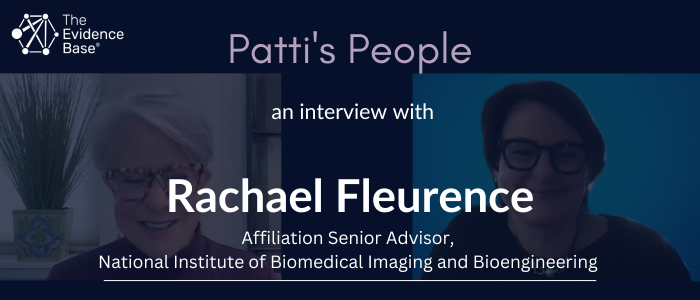
Rachael Fleurence’s (NIH) presentation centered on the application of generative AI in systematic literature reviews (SLRs), evidence synthesis, and RWE. AI was noted for enhancing search strategies, automating abstract screening, bias assessment, data extraction, meta-analysis, and report drafting. Fleurence emphasized that using AI for SLRs offers significant time savings, given the labor-intensive nature of these tasks. She also shared how large language models (LLMs) could extract insights from electronic health records (EHRs) and other unstructured data, improving efficiency and accuracy. However, she highlighted limitations, such as hallucinations, biases, and data privacy issues, emphasizing the continued need for human oversight. Fleurence concluded by stressing the necessity for evaluation frameworks to ensure trustworthy AI in HEOR, stating that "there are no shortcuts to high-quality science."
Xiaoyan Wang (IMO Health) provided insights into AI's role in the development of external control arms (ECAs) using RWE. Wang explained how LLMs could enhance the development of ECAs by unlocking data from unstructured notes in EHRs and even extracting data from social media. LLMs can also optimize model building, improve patient matching, and facilitate the use of real-world data (RWD) in ECAs. Wang emphasized that AI can lead to better matching processes and enable platforms that integrate RWE for improved trial outcomes.
Chhatwal elaborated on the application of generative AI in HEOR modeling. He noted that AI can assist throughout the modeling process, from conceptual development to model validation. While generative AI holds promise, like Fleurence, he acknowledged challenges such as hallucinations, inaccuracies, and inconsistencies. He offered several suggestions to overcome these limitations, including combining LLMs with traditional modeling approaches, fact-checking, and integrating rule-based methods to enhance transparency.
Dalia Dawoud (National Institute for Health and Care Excellence [NICE]) focused on the HTA perspective, highlighting how HTA agencies can utilize and regulate AI technologies. She outlined two primary roles for HTA agencies: using AI for internal operations and guidance development, and regulating/evaluating AI in digital health technologies and evidence generation. Dawoud emphasized the need for balancing AI's potential benefits with the associated risks, and she underscored the importance of meeting users' needs while maintaining transparency and rigor in HTA processes.
Dawoud also highlighted NICE's AI position statement, which aims to set expectations for using AI in evidence generation. The position statement is intended to guide the use of AI in a responsible manner, ensuring alignment with regulatory frameworks and ethical standards. Key elements of the statement include justifying AI use, maintaining transparency, meeting technical, scientific, and regulatory standards, and ensuring human oversight in the decision-making process. Dawoud stressed that submitting organizations must be accountable for their use of AI and comply with copyright and transparency requirements, while ensuring robust cybersecurity measures.
Watch our insightful interview with Rachael Fleurence here.
Concurrent Sessions
Day 2 of ISPOR Europe 2024 featured many concurrent sessions across the spectrum of HEOR research. Below are highlights of the session attended by Joanne Walker, Katie McCool and Laura Dormer of The Evidence Base.
Issue Panel – Comparing and Contrasting RWE Guidance: What Researchers Need to Know Considering the Global Picture
Moderated by Ulka Campbell (Aetion, Inc.), with panelists Patrice Verpillat (EMA), Páll Jónsson (NICE), and Solange Corriol-Rohou (AstraZeneca), the session explored the challenges and opportunities in harmonizing RWE standards across jurisdictions.
Campbell highlighted the proliferation of RWE guidance documents since 2016, noting the challenges researchers face in navigating diverse standards from organizations like the EMA, FDA, NICE, HAS, and IQWiG. She stressed the importance of harmonization, stating, "I think a universal taxonomy and terminology would help ensure clear communication between all stakeholders, decision makers, industry sponsors and facilitate the researchers' ability to adhere to those standards." This harmonization, she explained, aims to make guidelines more practical and accessible, ensuring decision-makers receive high-quality research.
From a regulatory perspective, Verpillat emphasized the EMA’s patient-centric approach, noting, "the patient voice guides every step of the way." He highlighted that evidence generation should be guided by purpose, data, knowledge, and expertise, with transparency underpinning societal trust. Verpillat explained, "The relevance is critical because we need to ensure at the end that with the reliability of the data, that it fits the question." He also stressed the need for clearly defined roles and responsibilities among all stakeholders, arguing that adherence to these principles paves the way for successful marketing authorization dossiers.
Jónsson provided the HTA viewpoint, observing that while regulators and HTA bodies often align on core concepts, their focuses diverge due to differing mandates. He remarked, “Focusing on the context is important; we need to see how they’re applied and how they work in reality." He discussed NICE’s transformation to address innovations such as digital health technologies while maintaining transparency, rigor, and independence. Jónsson acknowledged the challenges of harmonization, particularly in Europe, noting, "The PICO framework is very simple, but when looking at the European framework, it’s difficult to harmonize." He emphasized the fundamental role of transparency, saying, "The core essence of transparency is to create trust in the data." Jónsson also observed, "Core principles are aligned—everyone wants high-quality data, but we don’t actually know what that means," suggesting that focusing on scientific issues could help achieve alignment. He also referenced The Maze of Real-World Evidence Frameworks: From a Desert to a Jungle!, which illustrates the rapid growth and complexity of RWE guidance.
Corriol-Rohou shared the industry perspective, emphasizing the importance of early, cross-functional planning to align with global regulatory and HTA expectations. She noted, "A guideline is not a cookbook. When drafting a guideline, there is always the possibility to leave the door open for innovation." Corriol-Rohou highlighted international initiatives like the International Council for Harmonisation's (ICH) reflection paper and RWE4Decisions , which seek to align terminology and standards. She remarked, "What we expect as developers and sponsors is to have all the expectations aligned, so we’re pleased to see what is happening at the global level."
During the Q&A session, Campbell addressed researchers’ "thirst for a recipe" in RWE guidance. Verpillat explained, "If it’s a recipe then it will guide you step by step and it will be very fixed. So instead it gives you key steps to follow and allows flexibility." In response to an audience question about single-arm trials and the role of RWE, Verpillat reaffirmed the importance of randomized controlled trials but noted, "Our view is single-arm trials are good enough to give the evidence we need to make a decision."
The session highlighted the complexities of the RWE landscape and the growing momentum toward harmonization. As Campbell summarized, these efforts aim to provide clearer, more practical guidance to researchers, enabling high-quality evidence generation that meets the needs of regulators, HTA bodies, and industry stakeholders.
Exhibit Hall Theater – Planning With Payer Insights: Even the Best Economic Models Need Validation
Priti Jhingran (Genesis Research Group), Smita Kothari (Merck & Co., Inc.), and Carole Longson, MBE (consultant), highlighted the vital role of incorporating diverse stakeholder perspectives in developing and validating economic models. These models serve as crucial tools for demonstrating the value of healthcare interventions and securing reimbursement and access.
Jhingran underscored the foundational role of robust economic model frameworks, comparing them to a house frame: "If you get that right, everything else aligns." She highlighted the necessity of understanding what genuinely impacts patients’ lives, stating, "The goal for treatment [in Duchenne Muscular Dystrophy (DMD)] is to keep these patients functional—at the ambulatory stage." Delaying disease progression is not only valuable to patients and caregivers but also reduces healthcare costs, as progression to non-ambulatory stages increases financial and care burdens. A case study on DMD showcased the need to calibrate natural history data through stakeholder collaboration, ensuring models reflect real-world patient outcomes. Jhingran stressed, "Get multiple stakeholders in a room, and do this early to get a mitigation plan."
The presentation highlighted the role of insights in shaping economic models by aligning frameworks to product profiles, leveraging RWE with significant lead time, and tailoring input variables to specific markets. Jhingran emphasized the need for early, continuous stakeholder engagement, noting, “When you put the evidence in front of an HTA body, if they don’t have any understanding or awareness, why would they believe your evidence package?”
Kothari offered a life sciences perspective, emphasizing the need to view economic modeling holistically. She elaborated on the three key components of modeling: structural elements aligned to product profiles, RWE requiring lead time, and modifiable input variables based on country-specific data. She acknowledged the challenge of balancing perspectives, noting, "Unfortunately, we do have to make trade-offs." However, early insight gathering is vital, particularly for understanding disease natural history and planning for data-rich and data-scarce markets.
From the payer perspective, Longson emphasized clarity and relevance. "The decision maker is not an expert in modeling or the health technology assessor. Does this model make sense to them? Does it resonate with their stakeholders?" Longson advocated for multi-stakeholder input early in the process and emphasized the need to validate assumptions and ensure alignment with payer expectations. "Payers are only proxies for other stakeholders," she explained, emphasizing the need for direct engagement with clinicians, patients, and payers to build a reliable foundation.
During the discussion, Dominic Jones-Phillips (Genesis Research Group) highlighted the importance of early feedback. Jhingran reinforced this, noting, "If you don’t have the relevance, you are answering the wrong question." Together, the speakers outlined a roadmap for building robust, stakeholder-informed economic models that effectively support reimbursement decisions while addressing the complexities of global markets.
Exhibit Hall Theater – Using Generative AI Methods for Evidence Generation and Health Technology Assessment: Perspectives From NICE and Industry
Stephen Duffield (NICE) opened the session by providing an overview of AI applications for RWE and HTA, noting that generative AI is transforming workflows, from literature reviews to programming. He emphasized the importance of a risk-based approach to managing AI limitations, such as hallucinations, through expert oversight and prompt optimization.
Duffield outlined NICE's strategy on AI, which focuses on guidance for AI-based evidence generation, evaluating AI technologies, and using AI to enhance NICE's internal processes. NICE's newly-published Statement of Intent for AI promotes a safe, agile approach, collaborating with stakeholders. Their position statement, described by Dawoud in the Spotlight Session, provides expectations for AI-generated evidence, with a focus on transparency, ethical practices, and adherence to regulations. Ongoing initiatives include the HTA Lab, Predict-RWE framework, and pilot studies exploring AI in systematic reviews, diagnostics, and economic modeling.
Bray provided additional insights, highlighting the potential of AI to automate workflows, such as literature reviews and programming, and emphasizing the importance of a risk-based approach to manage AI limitations. Key applications include automating SLRs and programming with languages like Python and R, as well as generating RWE. Despite AI's rapid advancements, he noted that some manual processes still outperform automated methods, particularly in quality assessments.
Emma Clifton-Brown provided a detailed perspective from Pfizer, offering insights into how the company is navigating the integration of AI into HTA and evidence generation. At an affiliate level, Pfizer is still in the early stages of applying AI, particularly generative AI, to enhance various HTA-related activities. Emma emphasized that Pfizer is exploring the potential of generative AI to quickly analyze large datasets, generate valuable insights, and improve decision-making processes. This application aims to free up time for HEOR professionals, enabling them to focus on critical aspects such as strategic decision-making, stakeholder engagement, and more nuanced problem-solving tasks. Clifton-Brown also suggested one of the main areas of focus in using AI to enhance productivity and efficiency in developing HTA submissions, making them faster and more cost-effective. In addition, AI could be used to analyze past NICE submissions for insights that could guide future HTA strategies.
Clifton-Brown also touched on future steps for the industry, which include upskilling teams to fully leverage AI capabilities, particularly in HEOR and patient-reported outcomes (PROs) to better understand the patient experience. She reiterated that while AI has immense potential, collaboration with stakeholders, transparency, and early engagement with regulatory bodies like NICE are crucial to define what best practices look like in this evolving space.
You may also be interested in:

Workshop – From Data to Decisions: The Potential of RWE Transportability in Healthcare Decision Making
Blythe Adamson (Flatiron Health) led this workshop on the use of transportability analysis to improve the application of RWD in HTA, joined by Alexandra Starry (Cytel), Marian Eberl (Daiichi Sankyo Europe), and Stephen Duffield (NICE), who explored key frameworks and challenges.
Starry distinguished between generalizability and transportability, explaining that generalizability applies results to broader populations, while transportability adapts data for distinct populations, such as those in different countries. “We are seeing a growing trend of RWE from foreign sources to inform healthcare decision-making,” she said, pointing to regulatory guidance and the shift toward non-local data. However, challenges remain, including variability in data quality, external validity concerns, and local privacy rules. To address these, she stressed the need for a robust framework, emphasizing three steps: defining the target population, assessing data availability and quality, and selecting statistical methods while validating assumptions.
Eberl presented the industry perspective, highlighting the challenges of sourcing RWE in Europe. “Even if we have the data points, applying all criteria often leads to issues of sample size,” he noted. When adequate local data is not available, alternative approaches like chart reviews or cross-sectional surveys are often necessary, though Eberl called these 'last resorts'. He categorized transportability challenges into patient characteristics, treatment practices, and healthcare systems, stressing that local data is typically preferred by decision-makers. Eberl shared insights from a Daiichi Sankyo validation project adapting US data to Germany, which faced difficulties in sourcing validation data, achieving sufficient patient numbers, and addressing local disparities. He called for standardized methods, best practice guidelines, and consensus on addressing RWE limitations.
Adamson shared findings from a benchmarking study comparing survival outcomes in de novo metastatic breast cancer patients in the US and UK. “Everyone wishes they had local data,” she said, “but at the end of the day, we will not have perfect RWE from everywhere.” The study revealed similar patient characteristics and treatment patterns between the two countries, but survival outcomes diverged after 24 months, with UK patients not living as long as predicted. Adamson described the study as, “just one example of one combination of countries, in one cancer type,” and emphasized the need for diverse methods to evaluate transportability across contexts. “It’s important for us to look at geographical distances of data we are transporting,” she added, referencing Flatiron FORUM (Fostering Oncology RWE Uses and Methods)’s work connecting benchmarking findings across cancer types and countries. These studies also explore how results differ when using individual patient-level versus population-level data.
Duffield outlined NICE’s efforts to prioritize transportability within its RWE framework. “Context matters,” he said, stressing that international data must be systematically assessed for its relevance to local settings. Citing the Sudlow review, which mapped the UK’s data landscape, he noted growing access to global data but stressed the need for, “a systematic approach to selecting pre-specified RWE sources," to reduce uncertainty. Duffield also highlighted that, although transportability studies remain underutilized, pilot projects demonstrate their potential to improve decision-making.
Audience questions reinforced the session's key themes, with discussions on standardizing terms, the role of international collaborations, and determining population similarity. Adamson reflected on the importance of feasibility assessments in study design, while Eberl noted the early stage of this field and the need for more empirical examples. Closing the session, Adamson summarized, “There’s huge demand for this type of work,” underscoring the critical need to advance transportability research and its application in healthcare decision-making.
Forum – ISPOR Women in HEOR Session Gender Equity Along the Health Technology Development Pipeline: A Women in HEOR Forum
In this session, the Women in HEOR Forum brought attention to gender equity in the health technology development pipeline. Moderators Julia Slejko (University of Maryland Baltimore) and Olivia Wu (University of Glasgow) were joined by expert panelists Grammati Sarri (Cytel) and Ipek Ozer Stillman (Takeda) to share insights on addressing gender biases in healthcare research and policy.
Slejko introduced the session with an overview of the ISPOR Women in HEOR initiative, established in 2017 to promote leadership, networking, and mentorship among women in the field. Highlighting positive strides, such as increased gender diversity among ISPOR conference speakers, she emphasized the initiative's broader goal: improving organizational performance through diversity.
Sarri underscored persistent gaps in considering women’s health in HTA, citing misconceptions that women’s health equates to reproductive health. She highlighted systemic biases, such as delayed diagnoses for women, and advocated for adopting the SAGER guidelines to integrate sex and gender equity in research.
Stillman delved into the biases that are inherence in the research pipeline, pointing to missing sex- and gender-stratified data as a critical issue. She stressed the need for community engagement, stratified cost-effectiveness analyses, and equity-driven health policies. Stillman also raised concerns about how biases in historical data could exacerbate disparities in AI-driven research.
Moderated by Wu, the panel explored actionable solutions for advancing gender equity. Sarri highlighted awareness, evidence generation, and advocacy as essential steps. Stillman called for clearer guidance on incorporating the patient voice and innovative methods to address gaps in data and representation.
The session closed with a call to action for the audience to champion gender equity in their respective domains, emphasizing the societal benefits of closing the gender health gap.
Workshop – Real-World Evidence Policy: Is Harmonization Between Regulatory and HTA a Help or Hindrance?
This workshop, featuring Rita Peeters (J&J MedTech, Belgium), Katharine Cresswell (NICE, UK), Patrice Verpillat (EMA), and Niklas Hedberg (TLV, Sweden), explored the potential benefits and challenges of harmonizing RWE policies between regulatory and HTA bodies.
Peeters initiated the discussion with an overview of the evolving RWE landscape, emphasizing challenges such as data quality, interoperability, access, ethics, and varying EU frameworks. She highlighted the differences in evidentiary requirements between regulatory and HTA bodies, such as local data preferences and study design expectations. The focus on harmonization versus convergence was central, debating whether achieving aligned but distinct standards might be more practical than full harmonization. The goal is to integrate RWE into regulatory approvals and HTA evaluations more effectively.
Cresswell introduced the IDERHA initiative, a 5-year project involving 32 organizations, aiming to establish policy priorities and recommendations for integrating RWD and RWE. IDERHA’s global review of policies from 29 organizations found regulatory policies generally more detailed than HTA-focused policies, with a stronger emphasis on medicines than medical devices. Convergence was identified in contextualizing clinical trials and post-market surveillance; however, gaps persist in data quality criteria, analytical methods, and evidentiary thresholds. The next IDERHA phase focuses on actionable recommendations to bridge these gaps.
Verpillat emphasized the regulatory perspective, highlighting the differing priorities of regulators and HTA bodies. While regulators focus on safety and efficacy, HTAs prioritize comparative effectiveness, resulting in varied evidence requirements. He underscored DARWIN EU’s role in generating robust RWE for regulatory decisions and its potential for HTA applications through pilot projects. Collaboration between EMA and HTA bodies is advancing via joint scientific consultations under the EU HTAR framework. Verpillat advocated for convergence over harmonization, acknowledging the distinct roles of regulatory and HTA bodies.
Hedberg shared the HTA viewpoint, emphasizing Sweden's initiatives to leverage RWD effectively. While praising DARWIN EU’s pilot projects, he stressed the need for more efforts and scalable RWD use. He highlighted the importance of data quality: “Some data is better than none, but not all data is better than no data.”
During the audience discussion, Verpillat noted inconsistencies in terminology, emphasizing the need for clarity, particularly for RWD: “We need to know what we are talking about.” Hedberg called for universal agreements on when RWD can address research questions: “When is it good enough?” Verpillat and Cresswell stressed the need for quality study designs, robust analysis, and clearer standards to ensure consistent and actionable insights from RWD.
On demand ISPOR Europe 2024 sessions
Other sessions of interest included:
- EU Joint Clinical Assessment: Indirect Treatment Comparisons for Evaluating Relative Clinical Effectiveness Across Multiple PICO Questions – Moderator: Sophia van Beekhuizen (Cytel, The Netherlands)
- Role of Global Indirect Treatment Comparison (ITC) Programs in Supporting Europe’s Joint Clinical Assessments (JCA): Insights from Global and EU Experts – Moderator: Chris Cameron (EVERSANA, Canada)
- The Future of Single-Arm Trials and External Controls in Health Technology Assessment – Moderator: Martin Scott (Numerus, Germany)
- Cell & Gene Therapies: Five Years On – Real-World Data, Outcomes, and Evolution of Payers' Expectations – Speaker: Alberto Briones (Lifescience Dynamics, UK)
- Use of Machine Learning Techniques to Create External Control Arms: Guidance for Submissions to Health Technologic Assessment – Discussion Leader: Florent Guelfucci (Syneos Health, France)
- Exploring the Broader Impact of Health Technologies on Health Inequalities: Perspectives, Measures, Tradeoffs, Barriers, and Solutions – Moderator: Uwe Siebert (UMIT TIROL, Austria)
- From Methods to Implementation: Real-World and Regulatory Applications of Patient Experience Data Through Patient Experience Mapping & Patient Involvement – Discussion Leader: Silke Schoch (National Health Council, USA)
- Contextualizing Uncertainty in EU HTA by Coming to Terms With Imperfect Data: Can We Use Novel Analytic Methods to Quantify the Data Imperfections and Biases? – Discussion Leader: Grammati Sarri (Cytel, UK)
| Register for free today to become a member of The Evidence Base and receive the latest news straight to your inbox. |