

Innovation without access? The growing tension in rare disease coverage
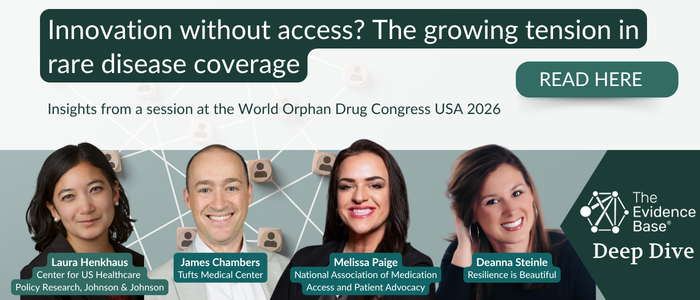
More rare disease therapies are reaching the market than ever before, offering new hope for patients with historically limited treatment options. Yet for many patients with commercial insurance in the US, access remains a significant challenge. At the World Orphan Drug Congress USA 2026, experts in payer policy, medication access, and patient advocacy examined the growing gap between therapeutic innovation and the coverage systems responsible for delivering it.
The rare disease landscape is undergoing a remarkable transformation. Therapies are reaching patients at a pace that would have been difficult to imagine a decade ago, driven by advances in genetics, biotechnology, and precision medicine. For many conditions that previously had few or no treatment options, new therapies are creating opportunities to alter disease progression and improve quality of life.
Yet for many patients in the US, particularly those covered by commercial insurance, regulatory approval is only one step in the journey. Accessing treatment often means navigating utilization management requirements that can delay or prevent access to care. As rare disease innovation accelerates, a critical question emerges: can coverage systems keep pace with the therapies they are intended to support?
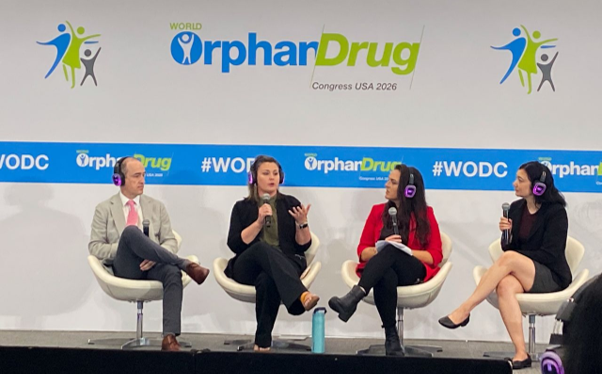
These issues formed the basis of the World Orphan Drug Congress USA 2026 session, "Coverage That Keeps Up With Innovation: Access to Rare Disease Therapies," moderated by Laura Henkhaus from the Center for US Healthcare Policy Research, Johnson & Johnson and featuring James Chambers of Tufts Medical Center, Melissa Paige from the National Association of Medication Access and Patient Advocacy, and patient advocate Deanna Steinle of Resilience is Beautiful.
Their discussion explored the growing disconnect between therapeutic innovation and the systems responsible for delivering treatments to patients. Drawing on payer research, front-line patient support experience, and lived experience of rare disease, the session examined what happens when access processes struggle to keep pace with scientific progress.
The expanding role of utilization management
Laura Henkhaus began by asking James Chambers to outline the role of utilization management in determining access to prescription therapies within the US healthcare system.
Chambers explained that, unlike single-payer systems where coverage decisions are often centralized, the fragmented US landscape consists of multiple commercial insurers alongside Medicare and Medicaid, each of which may apply different criteria when determining access to the same therapy. These decisions often take the form of utilization management tools, including step therapy requirements, prescriber restrictions, clinical eligibility criteria, and concurrent review or reauthorization requirements.
From a payer perspective, Chambers explained that these tools are intended to promote appropriate use of pharmaceuticals and ensure that "the right patient gets the right drug at the right time." However, he also acknowledged a broader economic reality: utilization management can limit or delay access and is likely to remain a permanent feature of the system. The challenge, he suggested, is how it is implemented.
Restrictions that appear reasonable on paper can create significant barriers in practice. A requirement to see a specialist may seem clinically appropriate but could require additional appointments, travel, and delays. Clinical eligibility criteria may impose thresholds that do not fully reflect how a disease affects an individual patient, while step therapy protocols may require patients to try lower-cost treatments before accessing the therapy recommended by their physician.
To understand whether these barriers reflect isolated experiences or broader trends in payer behavior, Henkhaus turned to Chambers' research examining coverage policies across US commercial insurers. Chambers highlighted work conducted using the Tufts Medical Center Specialty Drug Evidence and Coverage (SPEC) Database, which tracks coverage policies for specialty medicines and enables researchers to examine the types of restrictions imposed by health plans, how those restrictions have evolved over time, and how patient access may differ across insurers.
Drawing on analyses spanning nearly a decade, Chambers noted that orphan therapies historically received relatively generous coverage, reflecting both the severity of many rare conditions and the limited treatment options available. Health plans often applied fewer utilization management requirements to these therapies than they do today. However, he described a steady increase in utilization management requirements over time, meaning that patients are now more likely to encounter coverage restrictions than they were a decade ago. While the underlying drivers are difficult to determine, he pointed to broader financial pressures across the healthcare system as one potential explanation. At the same time, coverage policies themselves have become increasingly lengthy and complex, adding to the challenges faced by patients and providers navigating access requirements.
Chambers suggested that that one reason for the expansion of utilization management may be the need for coverage systems to keep pace with a rapidly evolving therapeutic landscape. Referring to the session theme of "coverage that keeps up with innovation," he noted that more than half of FDA approvals now carry rare disease indications. While this expansion of treatment options represents a significant advance for patients, he suggested that it is also prompting health plans to apply greater scrutiny through coverage policies and utilization management requirements.
Access delays and their consequences for patients
While utilization management is often discussed in terms of coverage policies and administrative processes, Henkhaus was keen to understand what those requirements mean in practice for patients seeking access to treatment. Inviting Steinle to share her experience, she asked what the process of accessing a medicine actually looks like from a patient perspective and how delays affect patients beyond the coverage decision itself.
Drawing on her lived experience with the rare neuromuscular condition, generalized myasthenia gravis (MG), Deanna Steinle described the challenges she encountered when attempting to switch to a newer therapy. Despite having been diagnosed in 2017 and working closely with her care team, she experienced a prolonged access process that left her without effective treatment for more than two months.
According to Steinle, the delay resulted in a significant deterioration in her condition. She described progressing from a state where she was independently walking and driving to becoming largely confined to bed, unable to perform many routine daily activities and requiring emergency interventions. Although she eventually gained access to treatment and experienced rapid improvement, she explained that doing so required the involvement of numerous healthcare professionals, practice staff, and industry stakeholders.
For Steinle, the experience illustrated how administrative processes can have direct clinical consequences. Throughout the discussion, she emphasized that access decisions are not simply policy decisions but can affect a patient's ability to maintain independence, manage their condition, and avoid preventable disease progression.
Melissa Paige expanded on this point from the perspective of supporting patients and healthcare providers navigating medication access. She argued that many of the outcomes most important to patients are not easily captured within coverage criteria or administrative processes. The ability to bathe independently, eat without assistance, participate in family life, or maintain daily routines may not appear in payer documentation, yet these factors can have a substantial impact on quality of life.
The implications also extend beyond the individual patient. Drawing on both her professional experience and her family's experience with Duchenne muscular dystrophy, Paige described the broader effects that delays in access can have on caregivers and families, including emotional strain, financial pressures, and the significant effort often required to navigate the healthcare system. While advances in rare disease research have created new treatment opportunities, she suggested that many of the practical challenges associated with obtaining access to those therapies remain largely unchanged.
As Paige observed, while stakeholders have become better at identifying barriers to access, "we still don't have the pathways to get these patients on treatment faster."
Patient heterogeneity and the limits of utilization management
A recurring theme throughout the discussion was the challenge of applying standardized coverage criteria to highly heterogeneous rare disease populations. Henkhaus highlighted patient heterogeneity as a defining characteristic of rare disease and questioned how utilization management tools and coverage frameworks can accommodate the considerable variation that exists between patients.
Steinle noted that MG is sometimes referred to as a "snowflake disease" because no two patients present in exactly the same way. Differences in disease presentation, treatment response, and individual goals mean that outcomes considered meaningful for one patient may not be relevant for another, creating challenges for coverage frameworks built around standardized criteria.
This challenge becomes particularly apparent during reauthorization, where patients must demonstrate ongoing benefit according to predefined criteria established by insurers. Steinle described situations in which measures used to assess treatment response did not fully reflect her day-to-day experience. While she may have demonstrated improvement in specific activities assessed during a clinic visit, those measures did not necessarily capture the broader impact of the disease on her ability to function consistently or sustain activities over time.
Paige reinforced this point by describing reauthorization as a significant hurdle for many rare disease patients. Reflecting on her experience supporting patients with Duchenne muscular dystrophy, she observed that "the reauthorization was the next starting line," noting that the celebration of securing initial treatment access is often followed by a new process of demonstrating ongoing benefit. In conditions where patients may not experience dramatic improvements but instead achieve disease stabilization, slower progression, or incremental functional gains, demonstrating value through standardized assessment criteria can be particularly challenging. As Paige noted, this raises difficult questions about how treatment success should be assessed when patients "are never going to get fully better, but they're making small improvements."
These challenges are also reflected in Chambers' research. Drawing on analyses of commercial coverage policies, he noted substantial variation in reauthorization requirements across insurers. As a result, the same therapy may be subject to different definitions of treatment success depending on a patient's health plan, creating additional complexity for patients, providers, and manufacturers seeking to navigate coverage requirements.
Chambers suggested that patient heterogeneity creates a fundamental challenge for coverage policy design. Given the degree of variation seen across many rare diseases, he argued that it can be difficult for insurers to develop standardized criteria that adequately reflect individual patient circumstances. As a result, flexibility and efficient appeals processes remain important components of access decision-making. He noted:
"For some of these rare diseases, that variability is so meaningful that it's almost impossible to design a coverage policy to provide sufficient flexibility for patients."
The hidden burden of navigating access
Beyond coverage policies and reauthorization requirements, the discussion also highlighted the substantial effort required to navigate the access process itself.
Paige described medication access as an often-overlooked component of healthcare delivery. Behind every approval or denial, she explained, is a network of nurses, medication access specialists, practice managers, pharmacists, and patient advocates working to help patients move through increasingly complex administrative processes. Much of this work remains invisible to patients and, in some cases, even to other parts of the healthcare system.
At the same time, many patients enter the process with limited understanding of insurance structures, coverage requirements, or the terminology used by payers. Steinle suggested that patients with rare diseases frequently become experts out of necessity, learning how to navigate authorization pathways, understand coverage criteria, research treatment options, and coordinate care while simultaneously managing a chronic condition.
The burden extends beyond administrative tasks. Steinle described the constant planning required to manage a rare disease, from identifying specialists when travelling to ensuring she could access appropriate care in an emergency. These considerations become layered onto the everyday challenges of living with a serious condition, creating additional practical and emotional demands for patients and their families.
Paige argued that this level of system navigation should not fall on patients. As she observed, "patients with rare disease should not have to become health insurance experts to survive." Yet many are required to learn the language of coverage policies, appeals processes, and benefit design simply to access therapies prescribed by their physicians.
What would coverage that keeps up with innovation look like?
Having explored the challenges associated with access, Henkhaus turned the discussion toward potential solutions.
For Steinle, a key priority was restoring greater authority to clinicians and care teams. As she remarked, "I want to give power back to my provider, to my doctor, and to my care team." Throughout the discussion, she returned to the view that treatment decisions should be guided by those who understand a patient's condition, history, and treatment goals rather than individuals reviewing documentation remotely. Greater trust in clinical judgement, she suggested, could help reduce unnecessary delays and ensure that decisions better reflect individual patient circumstances.
Paige focused on the need to recognize medication access as a component of healthcare delivery rather than an administrative function operating alongside it. Patients, she argued, require dedicated support throughout the access journey, with patient advocates, family access managers, and navigation services playing an important role in helping them move through increasingly complex systems. Reflecting on the years spent waiting for new treatment options to become available, she argued that the focus must now shift to ensuring patients can actually receive them, commenting: "We waited for so long for these drugs, let's let market access do their job now."
Patient organizations also have a role to play. Paige suggested that disease-specific access toolkits could help patients understand available therapies, support programs, clinical trial opportunities, and common coverage barriers. Improving access to information, she argued, would enable patients and families to make more informed decisions and identify sources of support earlier in the treatment journey.
Access must keep pace with innovation
As the discussion drew to a close, the panelists returned to a recurring theme: innovation alone is not enough if patients cannot access the treatments being developed.
For Steinle, the issue remained deeply personal. Reflecting on the barriers discussed throughout the session, she emphasized the importance of ensuring that patients remain at the center of both conversations and decisions. "It's really, really important and vital that we be the cornerstone not only of the conversation but of the decision-making process," she said. Without access, she noted bluntly, "we're not going to be here."
Chambers observed that the role of insurance coverage and access processes is becoming increasingly important in determining whether patients ultimately benefit from medical innovation. While researchers will continue to study these challenges, he suggested there is an urgent need for practical solutions that reduce barriers to care.
Paige echoed this sentiment, arguing that the pace of scientific progress must be matched by progress in access. While healthcare continues to deliver groundbreaking therapies, she noted that those advances cannot achieve their intended impact if patients face delays, denials, and administrative hurdles when seeking treatment. She concluded:
"The future of healthcare is not just discovering those therapies faster. It's delivering them faster, more equitably, and with the system designed to help those patients."
About the speakers
Laura Henkhaus, PhD
Center for US Healthcare Policy Research, Johnson & Johnson

Laura Henkhaus is a health economist with expertise spanning academic research, healthcare, and the biopharmaceutical industry. Currently, she is a Director at the Johnson & Johnson Center for US Healthcare Policy Research, whose mission is to lead robust scientific research to support the development of evidence-based policies that accelerate medical innovation and enhance patient value, access, and affordability. Across her career, her work has focused on measuring policy impacts, unmet needs, and the value of health technologies and patient programs, along with communicating findings to drive evidence-based decision-making. Laura holds a BS in Environmental Economics and Policy from the University of California, Berkeley and a PhD in Health Economics from the University of Southern California.
James Chambers, PhD, MPharm, MSc
Tufts Medical Center

James D Chambers is an investigator at the Center for the Evaluation of Value and Risk in Health at Tufts Medical Center and a Professor of Medicine at Tufts University School of Medicine. He developed the SPEC Database, a novel resource of specialty drug coverage policies issued by major US commercial health plans, which serves as the foundation for much of his research. His work uses mixed methods to examine health plan decision-making, highlighting variation in patients’ access to specialty therapies across commercial plans and in the use of utilization management tools. He has also assessed the factors influencing coverage decisions, finding that a drug’s cost-effectiveness is associated with the restrictiveness of plan policies.
He also developed a database of the added health gains and costs of new drugs compared to existing treatments, which he has used to evaluate the relative value of specialty vs non-specialty drugs, drugs for rare disease vs drugs for more prevalent conditions, and small molecule vs biologics.
James earned his MPharm from Queen’s University Belfast and worked as a pharmacist in the UK and Ireland before completing an MSc at the University of York and a PhD in Health Economics at Brunel University.
Melissa Paige, CPhT
National Association of Medication Access and Patient Advocacy

Melissa Paige is the President of the National Association of Medication Access & Patient Advocacy. Melissa's unwavering passion for the well-being of patients fuels her relentless pursuit of breaking down access barriers and advocating for the highest quality of care.
Her life's work revolves around making healthcare more accessible and compassionate for all, leaving an indelible mark on the industry she serves.
As a recognized expert in patient access programs and navigation, prolific public speaker and educator, Melissa applies her unique set of medical related knowledge, diverse pharmaceutical expertise, and leadership skills to oversee and coordinate process improvement projects that enhance business models and redesign workflows for improved efficiencies. Her passion for the patient drives her to break down access barriers and seek avenues for the highest quality care.
Deanna Steinle
Resilience is Beautiful

Deanna Steinle is an international speaker, consultant, and patient advocate working at the intersection of healthcare, industry, and lived experience. Her work centers on strengthening communication among patients, caregivers, and healthcare professionals, while advancing the recognition and fair-market-value compensation for patient expertise. She collaborates closely with pharmaceutical and industry teams to ensure patient perspectives are not only included but meaningfully integrated.
With academic backgrounds in Business, Science, and Anthropology, she brings a multidisciplinary perspective to her work. She is deeply interested in how culture, communication, and systemic structures shape health behaviors, access, and trust. Her experience includes global speaking engagements, appearances in an international film, podcast guest appearances, and serving as lead consultant on internal projects for industry partners. This work extends into her social media presence, Resilience Is Beautiful, where she helps build community in the online space, creating connections, increasing visibility, and supporting a more informed and engaged patient voice.
Across each space, she focuses on translating lived experience into insight that can drive meaningful and lasting change in healthcare.
Disclaimers
All opinions expressed are those of the speakers and do not necessarily reflect the views of Johnson & Johnson, The Evidence Base®, or Becaris Publishing Ltd.
Sponsorship for this Deep Dive was provided by Johnson & Johnson.