

Comparing GLP-1 anti-obesity medications through real-world patient profiles and depression outcomes
Comparing outcomes between GLP-1 and other anti-obesity medications is harder than it looks. Prescribing has risen quickly, patients are not assigned to treatment at random, and the evidence on mood and depression remains mixed. For HEOR and RWE teams working with electronic health record (EHR) data, the question is not only what happened after treatment started, but who was treated and what the records can and cannot show.
In this interview, Claire Campbell of Truveta discusses two studies presented at ISPOR Europe 2026 examining patient profiles and changes in depressive symptom severity among adults initiating GLP-1 versus non-GLP-1 anti-obesity medications.
Claire explores the methodological choices behind the research, the opportunities and limitations of electronic health record data, and what the findings mean for future evidence generation.
Read the full interview to find out:
- Why baseline patient profiles matter before any outcomes comparison
- How to distinguish genuine similarity between groups from gaps in documentation
- How statistical significance and clinical relevance should be read together
- Which next steps the authors suggest for research on anti-obesity medications and mental health
About the interviewee
Claire Campbell
Research Analyst, Dedicated Partnership, Truveta
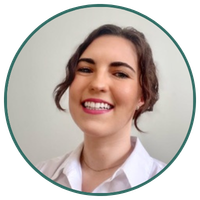
Claire Campbell, PhD, is a Research Scientist at Truveta. A health data scientist and neuroscientist with more than seven years of experience working with large, longitudinal health datasets, she specializes in behavioral and mental health analytics, with particular expertise in RWE and outcomes research. At Truveta, she partners with life sciences clients to design and deliver research studies using real-world EHR data, from study design through publication-ready analyses.
Dr Campbell received her Bachelor of Science in Neurobiology, Physiology, and Behavior from the University of California, Davis, and her PhD in Neuroscience from the University of Southern California. As an NIH-funded fellow there, she modeled neurodevelopment and mental health risk using large-scale neuroimaging, genomic and behavioral data.
Before joining Truveta, she was the founding data scientist at Uniq Care, a behavioral health platform, where she built its analytics infrastructure.
Acknowledgments
Claire would like to acknowledge the contribution of her co-authors:
- Sarah Eng, MPH, Research Scientist, Truveta
- Jeffrey Ratto, PhD, Senior Research Scientist, Truveta
- Ekaterina A. Khlystova, PhD, Research Scientist, Truveta
- Amy Austin, MHI, Research Scientist, Truveta
- Katherine Gilbert, MPH, Senior Manager, Partner Success, Truveta
- Sunny Guin, PhD, Senior Director, Partner Research Analytics, Truveta
- Vidya Venkataraman, MPH, PhD, Manager, Research Services, Truveta
We also want to thank the health systems that contribute data to Truveta that make all our work possible.
Disclaimers
All poster authors are employees of Truveta Inc.
The opinions expressed in this feature are those of the author and do not necessarily reflect the views of The Evidence Base® or Becaris Publishing Ltd.
 Sponsorship for this Interview was provided by Truveta